


Can Eggplant Be Frozen?
May 19, 2026
Leave a message


Prepare eggplant for the cooked texture it will have after thawing
The National Center for Home Food Preservation specifies peeled eggplant cut into roughly one-third-inch slices and water-blanched for four minutes in acidified water before cooling and packing. Roasted or grilled eggplant can also be frozen for application-led use. Commercial buyers should define slice or dice size, skin status, pretreatment, color, moisture release, pack format, and the final heating application.
Home preservation guidance and commercial procurement specifications answer different questions. Use the method in this article for practical direction, then confirm the requirements that apply to the actual product, process, and destination market.
Pretreatment
Decide whether the ingredient should be used frozen, thawed, blanched, cooked, drained, or portioned before it enters the final recipe.
Cut and skin
Check the variable that changes most after freezing: texture, released moisture, separation, color, aroma, or pack-medium behavior.
Cooked application
Confirm the written specification, current lot documents, packing, shelf-life statement, storage requirement, and a representative application test.
The Short Answer: Can Eggplant Be Frozen?
Yes, eggplant can be frozen. For the best quality, it should usually be blanched or cooked before freezing. Raw eggplant can technically be frozen, but the quality is usually weaker after thawing.
The best freezing method depends on the final use. If you want slices for frying, blanch and separate the slices before freezing. If you want eggplant for dips or sauces, roast it first and freeze the flesh or puree. If you want ready-meal convenience, freeze cooked eggplant dishes in portions.
| Eggplant Form | Can It Be Frozen? | Best Use After Freezing |
|---|---|---|
| Raw eggplant | Possible, but not ideal | Short-term cooked dishes only; texture may be weak. |
| Blanched eggplant slices | Yes | Frying, baking, casseroles, eggplant parmesan. |
| Roasted eggplant | Yes | Dips, purees, sauces, spreads, fillings. |
| Cooked eggplant dishes | Yes | Ratatouille, curry, stews, pasta sauce, ready meals. |
| Commercial IQF eggplant | Yes | Foodservice, frozen mixes, ready meals, industrial recipes. |
Why Eggplant Is Different From Many Other Vegetables
Eggplant has a porous, sponge-like flesh. That structure absorbs oil, sauces, marinades, and moisture easily. It also means eggplant changes noticeably during freezing and thawing.
When eggplant freezes, the water inside the flesh forms ice crystals. After thawing, the flesh becomes softer and releases moisture. This is normal. The problem is not that frozen eggplant is unusable. The problem is using frozen eggplant in the wrong application.
Frozen eggplant is weak for fresh texture, but strong for cooked recipes. It can work very well in dishes where the eggplant is supposed to become soft, absorb flavor, and integrate into a sauce or filling.
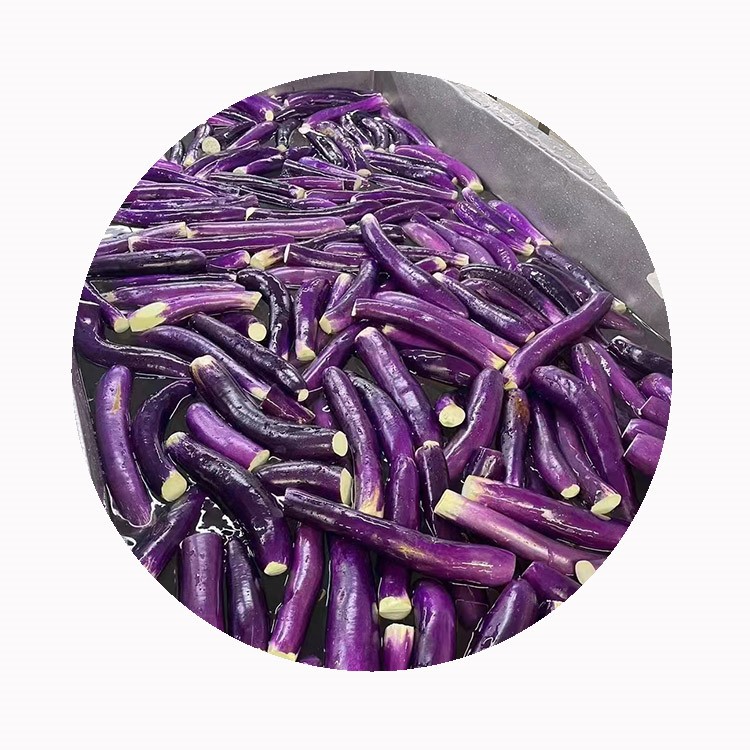
Can You Freeze Raw Eggplant?
Raw eggplant can be frozen, but it is usually not the best method. Raw frozen eggplant often becomes soft, watery, dark, or rubbery after thawing. It may also develop weaker flavor and less attractive color during storage.
If you only need eggplant for a short-term cooked dish, raw freezing may still be usable. But for better quality, blanching or cooking first is usually the stronger choice.
For B2B frozen vegetable use, raw frozen eggplant is usually not the most stable option unless the buyer has a specific processing step after thawing. Commercial buyers should confirm whether the product is raw, blanched, roasted, fried, grilled, or fully cooked.
Why Blanching Helps Before Freezing Eggplant
Blanching means briefly heating eggplant in boiling water or steam, then cooling it quickly. It is not meant to fully cook the eggplant for serving. It is a preparation step that helps protect frozen quality.
Blanching helps reduce enzyme activity that can affect color, flavor, and texture during frozen storage. It also softens the eggplant slightly, making it easier to pack and use later.
Eggplant also browns quickly after cutting. Using lemon juice in blanching water can help reduce browning and keep the slices more visually acceptable for later cooking.

How to Freeze Eggplant Slices
Freezing eggplant slices is useful when you want to use them later for frying, baking, casseroles, eggplant parmesan, or layered dishes. The goal is to protect color, reduce quality loss, and prevent the slices from freezing into one solid block.
Step 1: Choose Good Eggplant
Choose firm eggplants with smooth skin and uniform color. Avoid eggplants that are soft, shriveled, moldy, heavily bruised, or overmature with hard seeds. Freezing does not improve poor raw material.
Step 2: Wash and Peel if Needed
Wash the eggplant thoroughly. Peeling is optional, but peeled eggplant is often better when the skin is tough or when the final product needs a softer texture.
Step 3: Slice Evenly
Cut the eggplant into even slices. Uniform thickness helps the slices blanch, cool, freeze, and cook more consistently later.
Step 4: Blanch Briefly
Blanch the eggplant slices in boiling water with lemon juice. Do not overload the pot. Work in small batches so the water returns to boiling quickly and the slices heat evenly.
Step 5: Cool Quickly
Move the blanched eggplant into cold water or ice water immediately. Cooling stops residual cooking and helps prevent the slices from becoming too soft.
Step 6: Drain Well
Drain the slices thoroughly. Too much surface water creates ice crystals, clumping, and weaker texture after thawing.
Step 7: Separate the Slices
If you want to fry or bake slices later, separate them with freezer-safe wrap or parchment before freezing. This makes it easier to remove only the number of slices needed.
Step 8: Seal and Freeze
Pack the slices in freezer-safe bags or containers, remove as much air as possible, label the date, and freeze at 0°F / -18°C or below.
How to Freeze Roasted Eggplant
Roasting is often one of the best ways to freeze eggplant because it removes some moisture and develops deeper flavor. Roasted eggplant freezes well for dips, spreads, sauces, purees, soups, fillings, and Mediterranean-style recipes.
Step 1: Roast Until Soft
Roast whole eggplants, halved eggplants, slices, or cubes until the flesh becomes soft. The exact method depends on the final use.
Step 2: Remove Excess Liquid
Roasted eggplant can release liquid as it cools. Drain excess moisture if the final product needs a thicker texture.
Step 3: Portion the Flesh or Puree
Scoop the roasted flesh or blend it into puree. Freeze in recipe-size portions so you do not need to thaw a large block later.
Step 4: Pack Airtight
Use freezer-safe containers or flat freezer bags. Flat packs freeze faster and thaw more easily than deep containers.

How to Freeze Cooked Eggplant Dishes
Cooked eggplant dishes can often freeze better than raw eggplant because the texture has already been softened by cooking. This works well for recipes where eggplant is part of a sauce, stew, curry, casserole, or filling.
Good examples include ratatouille, eggplant curry, tomato eggplant sauce, eggplant stew, roasted eggplant dip, eggplant pasta sauce, eggplant casserole, and ready-meal portions.
| Cooked Eggplant Dish | Freezing Suitability | Preparation Tip |
|---|---|---|
| Ratatouille | Good | Cool fully and freeze in meal-size portions. |
| Eggplant curry | Good | Freeze after cooking; texture will be soft after reheating. |
| Eggplant parmesan | Good if assembled properly | Control moisture before freezing to avoid watery layers. |
| Roasted eggplant dip | Good | Stir after thawing if separation occurs. |
| Raw eggplant salad | Poor | Fresh texture cannot be restored after freezing. |
What Happens to Eggplant Texture After Freezing?
Frozen eggplant becomes softer after thawing. It may also release water. This happens because freezing changes the internal structure of the eggplant flesh.
This texture change is not always a problem. In many cooked recipes, soft eggplant is exactly what you want. The problem appears when frozen eggplant is expected to behave like fresh eggplant in a raw or crisp application.
| Texture Change | What It Means | Best Use |
|---|---|---|
| Softer flesh | Normal after freezing and thawing | Sauces, stews, curries, casseroles, dips. |
| More moisture release | Water leaves the eggplant structure | Drain before frying, baking, or layered dishes. |
| Darker color | Oxidation or insufficient pretreatment may show | Use in tomato sauces, curries, dips, and cooked dishes. |
| Less firm bite | Frozen eggplant is not like fresh raw eggplant | Avoid fresh salad or crisp applications. |

How Long Can Eggplant Be Frozen?
If eggplant is handled safely and kept continuously frozen at 0°F / -18°C or below, it can remain safe for a long time. However, its best quality does not last forever. Long frozen storage can weaken flavor, color, texture, and moisture performance.
For home use, frozen eggplant is generally best used within a practical best-quality window. Commercial frozen eggplant should be judged by the supplier's official shelf-life statement, packaging specification, storage temperature, and cold chain records.
| Eggplant Type | Quality Direction | Best Use |
|---|---|---|
| Raw frozen eggplant | Use sooner | Cooked dishes where texture is not critical. |
| Blanched frozen eggplant | Better quality stability | Frying, baking, casseroles, layered dishes. |
| Roasted frozen eggplant | Good for puree-style use | Dips, sauces, spreads, fillings. |
| Commercial frozen eggplant | Follow supplier shelf life | Foodservice, retail, ready meals, industrial recipes. |
What changes when this becomes a purchasing decision?
A home-freezing method answers whether an ingredient can be preserved and how it should be prepared. A commercial purchase requires a second layer of control. The same product name can cover different cultivars, maturity levels, cuts, pretreatments, glazing levels, pack formats, defect tolerances, and shelf-life declarations. We therefore begin with the buyer's recipe and work backward to the frozen specification.
For IQF eggplant, sample review should be tied to a repeatable method. Record the sample lot, storage temperature, thawing or cooking method, portion weight, time, and the result that matters to the final application. Visual inspection alone cannot establish microbiological status, cold-chain history, or conformance with every requirement. Those points belong in current documents, lot records, and agreed test procedures.
The most useful approval compares the product before and after the intended process. A beverage plant may measure puree yield and color. A bakery may assess water migration and filling stability. A foodservice operator may focus on portion control and cooking loss. A retail brand may also evaluate separation, visible defects, package presentation, and how the product performs after the consumer follows the label instructions.
Freezing does not sterilize food. It pauses microbial growth while the food remains frozen, but safe raw-material handling, sanitation, validated processing, protected packing, and controlled thawing still matter. Freezer storage time is also a quality question: flavor, texture, color, and separation can change even when the product has remained continuously frozen. This article uses preservation direction from NCHFP eggplant freezing guidance and NCHFP blanching guidance; the applicable regulation, commercial specification, and food-safety plan must still be confirmed for the destination market and product.
Before ordering, confirm product identity, cut or form, pretreatment, defect limits, microbiological criteria, foreign-material controls, packing, net weight, shelf life, storage temperature, traceability documents, loading plan, and the acceptance method for the intended recipe.
Should Frozen Eggplant Be Thawed Before Cooking?
It depends on the dish. Frozen eggplant can often go directly into stews, sauces, curries, and soups. For frying, baking, layered dishes, or eggplant parmesan, thawing and draining may give better moisture control.
| Dish Type | Thaw First? | Reason |
|---|---|---|
| Stews and curries | Not always | Cooking liquid can thaw and soften the eggplant. |
| Tomato sauce or pasta sauce | Not necessary | Soft texture integrates into sauce. |
| Frying | Usually yes | Drain surface moisture to reduce splatter and weak coating. |
| Eggplant parmesan | Usually yes | Moisture control prevents watery layers. |
| Dips and purees | Thaw or heat directly | Texture will be blended or mashed. |
Best Uses for Frozen Eggplant
Frozen eggplant performs best in recipes where softness, sauce absorption, and cooked texture are useful. It is not a good replacement for fresh raw eggplant texture, but it can be very practical in cooked dishes.
Ratatouille and Vegetable Stews
Frozen eggplant works well in ratatouille and vegetable stews because the dish already depends on soft cooked vegetables and sauce integration.
Curries and Spiced Sauces
Eggplant absorbs spices and sauce well. Frozen eggplant can be used in curry-style dishes, tomato-based sauces, coconut sauces, and spicy vegetable dishes.
Eggplant Parmesan and Casseroles
Blanched slices or pre-cooked slices work better than raw frozen eggplant for layered baked dishes. Moisture control is important so the final dish does not become watery.
Pasta Sauce and Lasagna
Frozen eggplant can be cooked into tomato sauce, vegetable pasta sauce, lasagna fillings, or Mediterranean-style pasta dishes. Soft texture is acceptable in these applications.
Dips, Purees, and Spreads
Roasted frozen eggplant is very suitable for dips, purees, and spreads. The texture is blended or mashed, so freezing damage is less noticeable.
Ready Meals and Foodservice Recipes
Commercial frozen eggplant can be useful in ready meals, frozen vegetable mixes, curries, sauces, rice bowls, pasta meals, and foodservice dishes when the cut size and cooking behavior match the recipe.
When Frozen Eggplant Is Not the Best Choice
Frozen eggplant should not be used in every eggplant recipe. If the final dish needs firm fresh texture, crisp edges, or dry raw slices, fresh eggplant is usually better.
| Use Case | Use Frozen Eggplant? | Reason |
|---|---|---|
| Fresh raw salad | No | Frozen eggplant becomes soft after thawing. |
| Crisp stir-fry with firm texture | Fresh is better | Frozen eggplant releases moisture and softens quickly. |
| Premium fresh garnish | No | Thawed texture and color are less clean. |
| Sauces, curries, stews | Yes | Soft texture is useful and sauce absorption is an advantage. |
Common Mistakes When Freezing Eggplant
Freezing Raw Eggplant Without a Plan
Raw eggplant can become weak after freezing. If the final recipe needs structure, blanch or cook the eggplant first.
Using Overmature Eggplant
Overmature eggplant can have harder seeds, tougher skin, and weaker eating quality. Start with firm, good-quality raw material.
Skipping Lemon or Anti-Browning Control
Eggplant browns quickly after cutting. Lemon juice in blanching water can help reduce discoloration and improve appearance.
Not Draining Before Freezing
Excess surface water creates ice crystals and weak texture. Drain eggplant thoroughly after blanching or cooking.
Freezing Everything in One Block
Large blocks are hard to portion and encourage repeated thawing. Freeze slices, cubes, puree, or cooked dishes in recipe-size portions.
Expecting Fresh Texture After Thawing
Frozen eggplant will be softer than fresh eggplant after thawing. Use it in recipes where softness is acceptable.
Commercial Frozen Eggplant vs Home-Frozen Eggplant
Commercial frozen eggplant is different from simple home freezing. A commercial product may be IQF diced eggplant, sliced eggplant, grilled eggplant, roasted eggplant, fried eggplant, breaded eggplant, eggplant puree, or part of a vegetable mix.
For buyers, the product name alone is not enough. The important question is whether the frozen eggplant format matches the final application. A ready-meal factory, foodservice distributor, retail frozen vegetable brand, sauce manufacturer, and bakery filling producer may need different specifications.
| Commercial Format | Best Application | Quality Focus |
|---|---|---|
| IQF diced eggplant | Curries, stews, sauces, rice bowls, ready meals | Cut size, free-flowing condition, moisture behavior. |
| Frozen eggplant slices | Eggplant parmesan, casseroles, frying, baking | Slice thickness, separation, blanching status, breakage. |
| Grilled or roasted eggplant | Mediterranean dishes, dips, sauces, foodservice | Flavor, char level, oil level, texture after thawing. |
| Eggplant puree | Dips, sauces, spreads, baby food-style products | Smoothness, color, viscosity, ingredient declaration. |
| Eggplant in vegetable mix | Oriental mixes, Mediterranean mixes, ready meals | Blend ratio, cut compatibility, cooking time, water release. |
What Food Businesses Should Check When Buying Frozen Eggplant
For commercial buyers, frozen eggplant quality depends on specification and application. Eggplant is highly texture-sensitive, so buyers should not select only by price or product name.
A ready-meal producer may need diced eggplant that holds enough structure after reheating. A foodservice distributor may need slices with stable portion size. A sauce manufacturer may prefer roasted eggplant puree. A retail frozen vegetable brand may care about visual appearance, free-flowing condition, and packaging quality.
Important points to confirm include:
- Product form: slices, dices, cubes, strips, roasted pieces, grilled pieces, puree, or vegetable mix
- Raw, blanched, roasted, fried, grilled, or fully cooked status
- Peel-on or peeled specification
- Cut size and size tolerance
- Seed maturity and raw material quality
- Color control and browning level
- Moisture release after thawing
- Texture after cooking or reheating
- Oil content if roasted, fried, or grilled
- Free-flowing IQF condition or block format
- Packaging format and portion size
- Storage temperature and shelf-life statement
- Microbiological and foreign material control
- Traceability and batch documentation
- Cold chain and loading conditions
- Application suitability for curry, sauce, ready meal, casserole, retail, or foodservice use
The best frozen eggplant product is not simply the firmest-looking sample. It is the product that performs consistently after thawing, cooking, reheating, mixing, and distribution.

Where GreenLand-food Fits Into This Topic
At GreenLand-food, we look at frozen eggplant from both the preservation side and the application side. For a home user, the question is simple: can eggplant be frozen? The answer is yes, but blanching or cooking first usually gives better quality than freezing raw eggplant.
For commercial buyers, the more useful question is: what frozen eggplant specification works best for my ready meal, curry, sauce, casserole, vegetable mix, retail frozen pack, or foodservice operation? In that case, cut size, cooking status, peel status, moisture behavior, packaging, food safety controls, and cold chain stability all matter.
Frozen eggplant can be a practical ingredient for importers, distributors, foodservice operators, ready-meal manufacturers, sauce factories, vegetable mix producers, and frozen vegetable brands. The key is to match the frozen eggplant form with the final recipe instead of choosing only by product name or price.
FAQ About Freezing Eggplant
Can eggplant be frozen?
Yes, eggplant can be frozen. For better quality, it should usually be blanched, roasted, cooked, or prepared into a dish before freezing.
Can you freeze raw eggplant?
Raw eggplant can be frozen, but it is usually not ideal. The thawed texture may become soft, watery, dark, or rubbery. Blanching or cooking first usually gives better results.
Should eggplant be blanched before freezing?
Blanching is recommended for better frozen quality because it helps protect color, flavor, and texture during storage.
Why does eggplant turn brown after cutting?
Eggplant flesh can brown after exposure to air. Lemon juice in blanching water can help reduce discoloration before freezing.
How do you freeze eggplant for frying?
Slice the eggplant evenly, blanch it, cool it quickly, drain well, separate the slices with freezer-safe wrap, seal airtight, and freeze.
Can roasted eggplant be frozen?
Yes. Roasted eggplant freezes well for dips, purees, sauces, spreads, soups, and fillings. Freeze it in recipe-size portions.
Does frozen eggplant get mushy?
Frozen eggplant becomes softer after thawing. This is normal. It works best in cooked recipes where soft texture is acceptable.
Do you thaw frozen eggplant before cooking?
For soups, stews, curries, and sauces, frozen eggplant can often be used directly. For frying, baking, or layered dishes, thawing and draining can improve moisture control.
What dishes work best with frozen eggplant?
Frozen eggplant works well in ratatouille, curries, pasta sauce, tomato sauce, casseroles, eggplant parmesan, dips, purees, stews, rice bowls, and ready meals.
Is frozen eggplant suitable for food businesses?
Yes, if the specification matches the application. Food businesses should check product form, cut size, raw or cooked status, peel status, moisture release, packaging, food safety controls, shelf life, storage temperature, and cold chain requirements before purchasing.
Confirm the frozen format against your real recipe
We supply frozen fruit and vegetable ingredients for importers, distributors, food manufacturers, foodservice operators, and private-label programs. Send us the application, preferred cut or form, packing, destination market, expected order quantity, and the quality points you need to verify. We can then discuss a relevant specification and sample plan.