


Asian vs European Pears for Frozen Dice: Texture and Cooked Uses
Oct 19, 2026
Leave a message

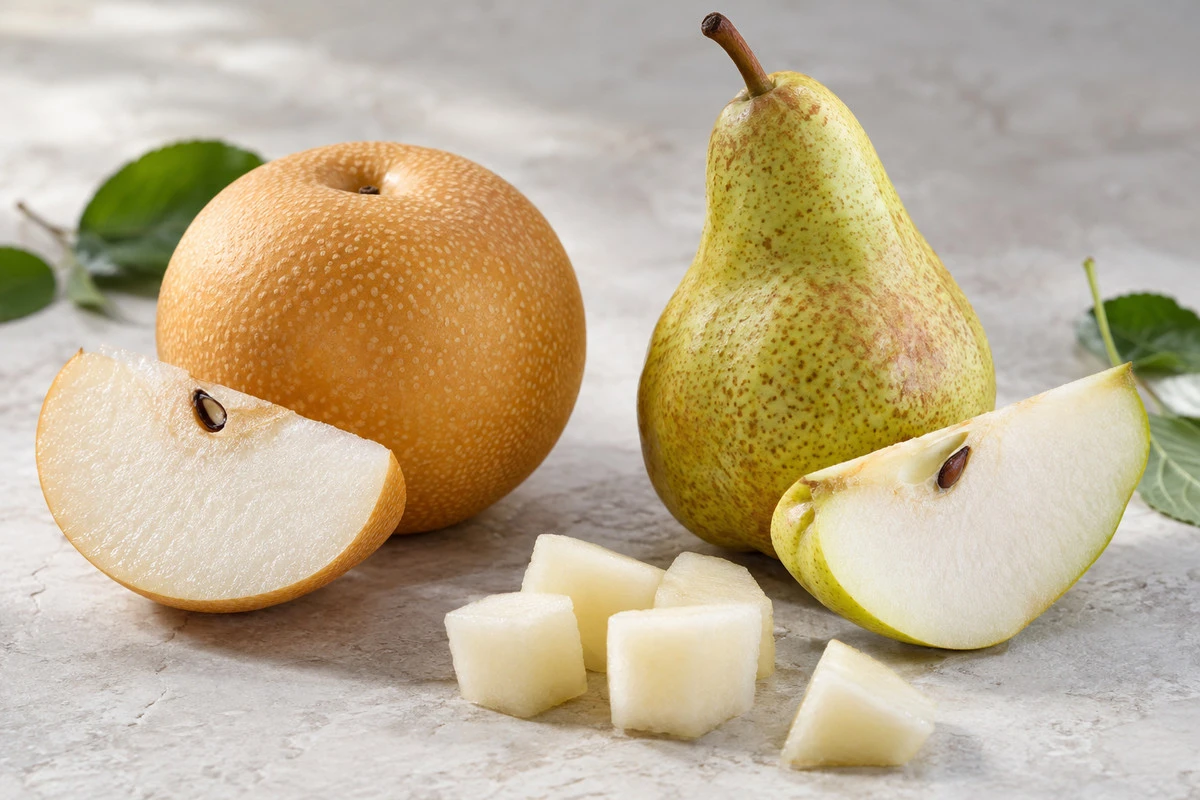
Choose by the finished result: recognizable tender dice in a pastry, soft fruit in a compote, or a consistent pear component in a cooked meal. Compare the two inputs with the same cut, recipe and evaluation endpoint. This guide explains which fresh-fruit differences matter, what freezing changes and how a buyer can define a repeat order from that comparison.
Asian and European pears start with different eating textures
Asian pear is a broad commercial group, often associated with round fruit and a crisp bite. European pears commonly have a more familiar necked or bell-shaped form and may become soft and aromatic when ripe. The appearance is useful for introducing the groups, but neither outline covers every cultivar. Some Asian pears are less round, and some European cultivars are purchased at a firmer stage for a specific processing purpose.
Oregon State University's fruit guide describes the usual distinction between European pears ripened after harvest and Asian pears generally ripened on the tree. For an ingredient buyer, the significance is the condition at the moment of preparation. A ripe fresh-eating sample and a firmer processing sample from the same broad group may enter the freezer with very different textures.
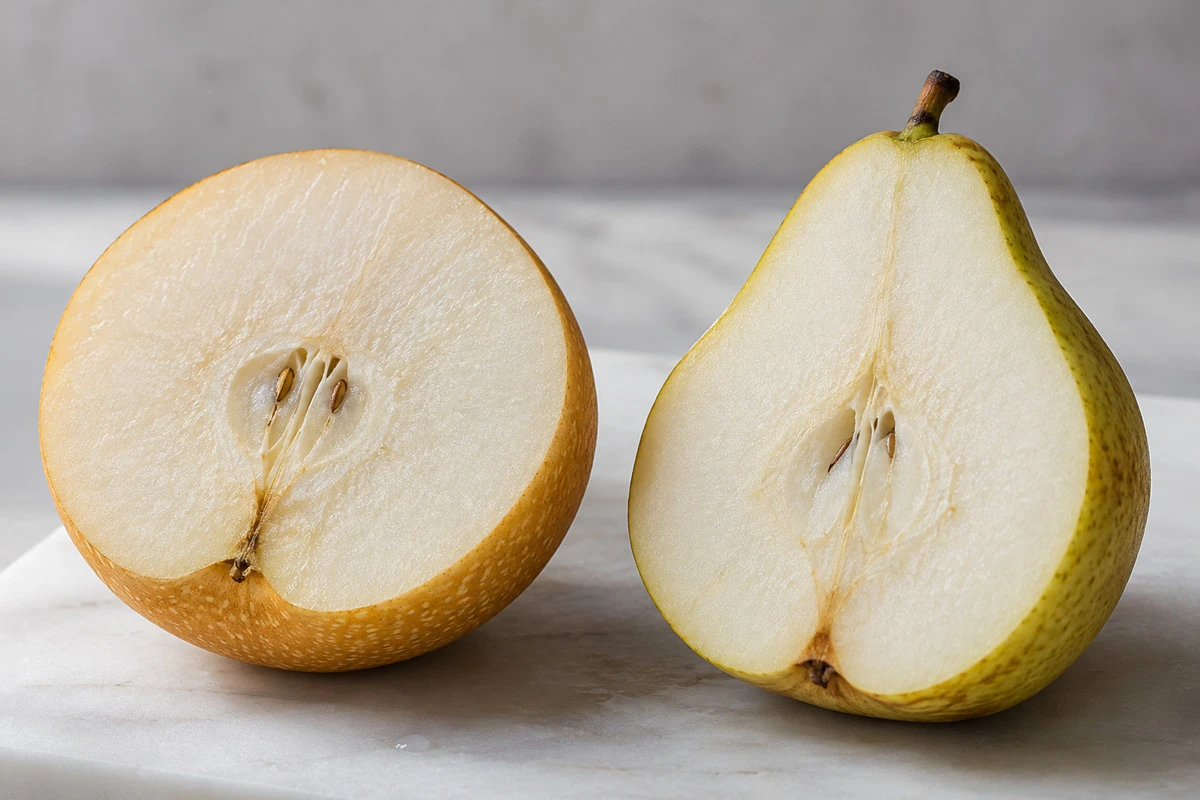
Fresh cut faces show characteristic shapes; frozen and cooked texture need their own evaluation.
| Question | Asian pear starting point | European pear starting point |
|---|---|---|
| Typical fresh eating texture | Crisp and juicy; cultivar dependent | Often softens toward a melting texture as it ripens |
| Maturity information to request | Named cultivar and condition when prepared | Named cultivar, ripening history and condition when prepared |
| Useful frozen-dice trial | Check remaining bite, juice and piece integrity after the intended cook | Check tenderness, aroma and piece integrity after the same cook |
| What the group name cannot establish | Thawed crispness, cooked yield or microbiological suitability | Cooked softness, intact-piece share or microbiological suitability |
These starting textures help frame the development question. If a food needs a distinct bite from the fruit, a crisp Asian type may be worth evaluating. If the food needs a tender pear character that blends into a cooked preparation, a suitable European type may be worth evaluating. Both statements are reasons to run a trial. They do not rank the groups for every bakery, dessert or meal application.
The terms Asian and European also describe fruit groups rather than shipment origin. An Asian pear cultivar can be grown outside Asia, and a European pear cultivar can be grown in Asia. Confirm country of origin separately from the fruit type. Where a label or customer brief requires a cultivar, that identity needs supporting records rather than inference from the trading company's location or the shape of the fruit.
Use the short comparison below to decide what to investigate, then move to named lots. The visible fresh-fruit differences are much easier to recognize than the performance of peeled frozen dice, which can look similar before cooking. A sound comparison therefore keeps both the identity and processing history of the samples available. Without that information, a preference for one cooked sample cannot reliably be repeated in a future purchase.
Cultivar and maturity decide how dice begin
A comparison becomes more useful when the supplier can identify the cultivar and preparation condition. Two samples labeled Asian pear may differ in flesh texture, juiciness, susceptibility to damage and ripening behavior. The UC Davis Asian pear fact sheet describes cultivar-dependent physical injury and ethylene responses. Its fresh-fruit observations support checking the specific material; they do not supply acceptance limits for frozen dice.
European pears also need a maturity description. A firm pear that has barely developed its eating aroma and a very ripe pear that yields readily under pressure will respond differently to cutting and handling. If the supplier uses the same cultivar name for both, the name alone leaves a large processing variable uncontrolled. Describe the condition approved for cutting and evaluate whether it remains practical during the production window.
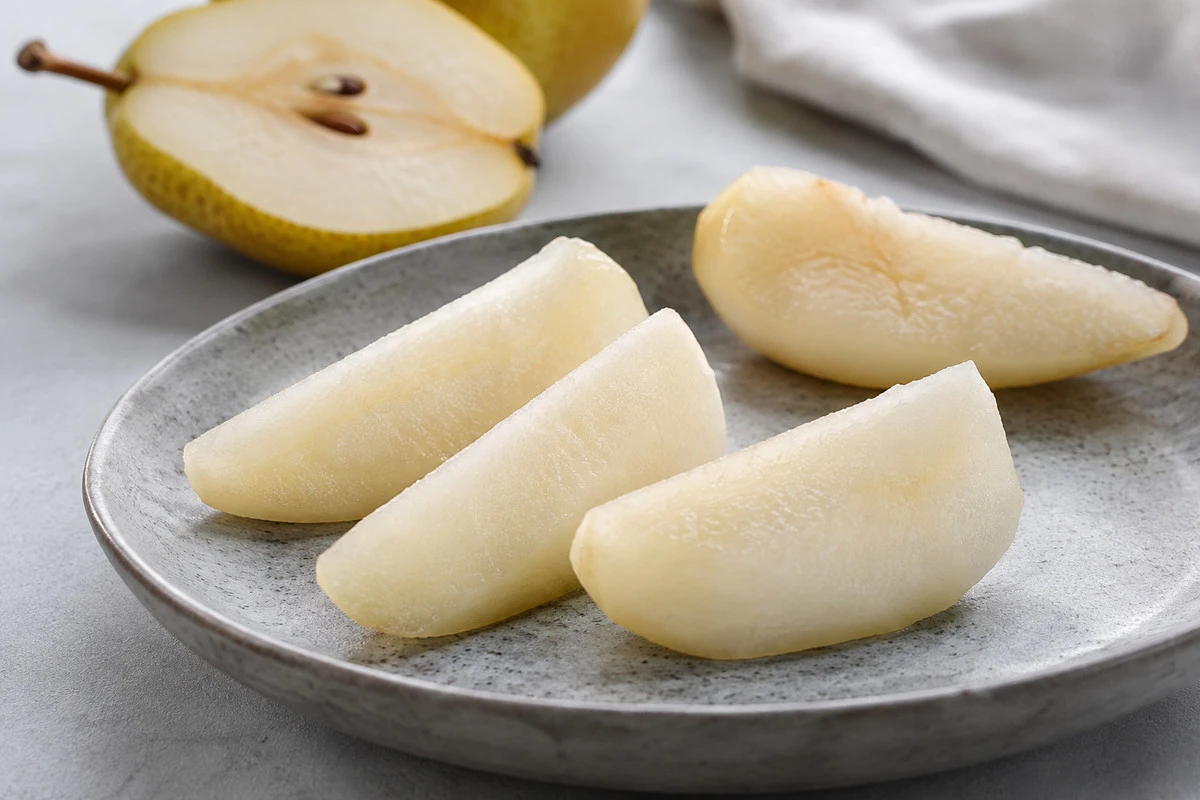
Peeled pear wedges illustrate a range of cut-surface appearance; firmness requires an agreed test.
Firmness can be a useful measurement when the method is agreed. A penetration result depends on factors such as probe size, test location, peel removal and sample temperature. A measurement on whole fresh fruit cannot simply be compared with a compression result on thawed dice. Use each test for its stated purpose and retain the method with the value. This prevents an apparently exact specification from comparing different physical properties.
Sensory quality should stay alongside physical measurements. A sample can retain its outline well but contribute little desirable pear flavor. Another can taste attractive yet become too soft for a visible inclusion. Evaluate aroma, flavor, graininess and the bite expected in the finished food. A purchasing decision based only on the highest initial firmness can select fruit that survives handling without producing the intended eating experience.
Small trial batches should represent the material planned for the order. If a supplier sends a hand-selected fresh pear for a tasting, it may introduce the cultivar but cannot represent a packed frozen lot. Ask for the actual prepared form and its relevant source or production information. We can then discuss which starting condition is important and whether a further sample is needed before the form is quoted for repeat supply.
Crop changes should be reviewed against the attributes that matter. A new harvest does not automatically invalidate an approved program, but it can change maturity distribution or sensory balance. Agree when a reference sample should be refreshed, especially if the recipe relies heavily on pear texture. The objective is to keep the useful result stable while acknowledging that the ingredient comes from a variable crop.
What freezing changes in pear dice
Freezing changes the way water is held within fruit tissue. After thawing, a pear cube may release liquid and feel softer than it did before freezing. The extent depends on the starting fruit and the process it experienced. A quick-frozen presentation can help preserve useful structure and allow portioning, but it cannot turn the fresh eating texture into an unconditional guarantee for thawed or cooked dice.
Home preservation guidance gives a useful warning about expectations. Oregon State's preserving-pears guidance is cautious about the quality of fresh pears after freezing. Household syrup packs, industrial unsweetened dice and cooked fruit preparations are different products. The sensible commercial response is to evaluate the exact supplied form under its intended process rather than dismissing the quality risk or borrowing a home result as proof of industrial performance.
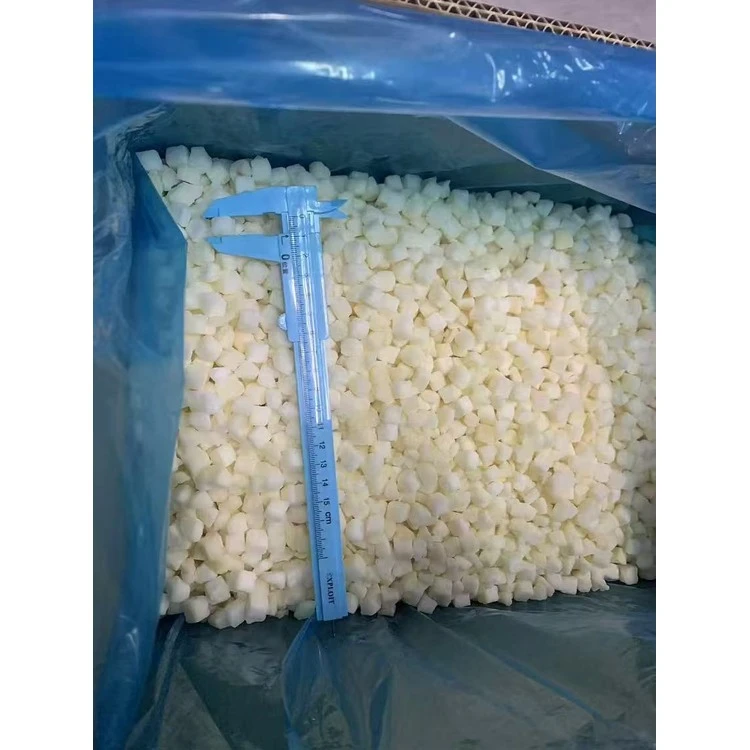
Published product photograph of peeled pear dice in a bulk liner. Cultivar and fruit group require source records.
A peeled frozen cube can also conceal the starting group. Color and apparent size may be similar across Asian and European fruit once skins and cores are removed. A supplier photograph can show the supplied cut and visible condition, while the source declaration establishes fruit identity. The genuine product photograph here shows pale pear dice in a bulk liner. It does not establish the cultivar or demonstrate a particular result after heating.
Decide whether the line will receive the fruit frozen, partially tempered or thawed under control. Frozen addition can be suitable for a process designed to handle its temperature and moisture load. A thawed input allows different dosing and inspection, but it creates a liquid fraction and a handling period that need control. Those routes should be evaluated separately because they change both processing behavior and the amount of liquid entering the recipe.
Cold-chain history remains relevant after the initial freeze. Partial softening followed by refreezing may affect clumping and physical condition, while dehydration can alter the exposed surfaces. A later low temperature reading cannot describe every earlier event. Review pack condition and the applicable temperature records together. A comparable sample trial should begin with material whose storage and handling history is understood well enough for the result to be interpreted.
For the actual comparison, inspect the fruit at the endpoint the customer experiences. An attractive frozen cube can become a soft filling, and a visibly softer thawed sample can still work in a compote. Keep frozen appearance, thawed condition and finished-food acceptance as separate observations. That gives the development team a way to explain its choice and prevents the purchasing team from assigning a fresh-fruit promise to a product sold for cooking.
Color, core removal and a clean pear cut
Peeled dice expose a large amount of cut surface. Their color depends on the fruit, preparation, any treatment used and the time and conditions before and after freezing. Browning should be evaluated in the condition relevant to the food. A pale frozen sample and a sample left exposed during an uncontrolled thaw are different observations, even if the original fruit came from the same lot.
Ask what the ingredient contains and how it was prepared. If an anti-browning ingredient or processing treatment is used, its identity and declaration requirements should be reviewed for the actual SKU and destination. Household lemon-juice or ascorbic-acid instructions are designed for their stated preservation method. They do not establish an industrial treatment concentration, an additive declaration or a shelf-life claim for a commercial frozen pear input.
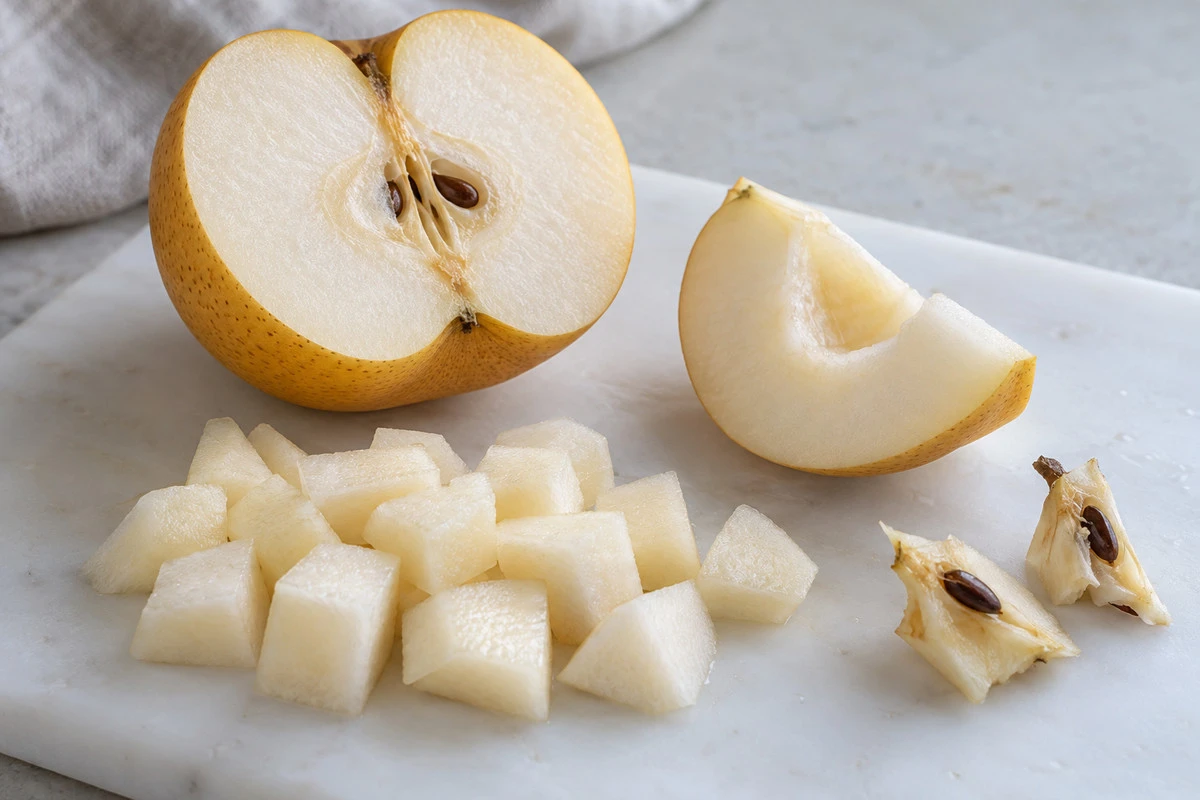
An illustrative preparation separates edible pear pieces from the removed core and seeds.
A white surface also leaves core removal unresolved. Pear flesh close to the seed cavity can carry tougher material, seed fragments or remnants that affect eating quality. The receiving method should distinguish those findings from ordinary fruit graininess or a naturally irregular cut. A hard core fragment in an otherwise soft filling has a different consequence from a small variation in cube dimensions, so combining them into one vague defect score loses useful information.
Cut size needs a distribution rather than a single attractive example. Nominal dimensions describe the intended cut; the agreed allowance for smaller pieces, larger pieces and fragments describes what the packed lot can contain. When comparing pear groups, keep the size basis as similar as practical. A smaller cube can cook and disperse differently from a larger cube, making the cut an alternative explanation for a texture preference.
Inspect fresh cut surfaces and finished food under consistent lighting. Strongly warm lighting can conceal pale brown edges, while a photograph with aggressive exposure correction can make both samples appear equally white. A retained visual reference is helpful when it represents the same serving or inspection condition. The purpose is a realistic agreement on acceptable appearance, including what remains visible in the recipe, rather than an unattainable photograph of perfectly identical cubes.
Color and core requirements should reflect the channel without losing their definitions. A pale dessert may make small brown edges conspicuous, while a darker cooked filling can make them less visible. Hard seed or core material still requires its own control. We would discuss the intended food and agree the relevant categories separately, so a change in presentation tolerance does not silently change the requirement for prepared edible fruit.
Choosing pear dice for fillings, compotes and cooked meals
A bakery filling needs fruit behavior that works with the surrounding pastry. Compare how much pear remains recognizable, how tender it becomes and where its released liquid goes. A firm Asian pear sample may retain a different bite from a ripe European sample, but the thickening system, fruit dose and bake can change the outcome. Evaluate a cut portion after the planned cooling period, when the filling and crumb have reached the condition in which they will be sold.
For a compote, the preferred result may be softer and less geometrically regular. Some intact pieces can provide interest, while smaller softened fragments contribute to the surrounding fruit base. Assess both the fruit and the liquid fraction. A cooked sample that looks generous in a pan may portion differently if most fruit fragments settle or if the liquid separates during the intended hold. The useful specification follows the served portion.
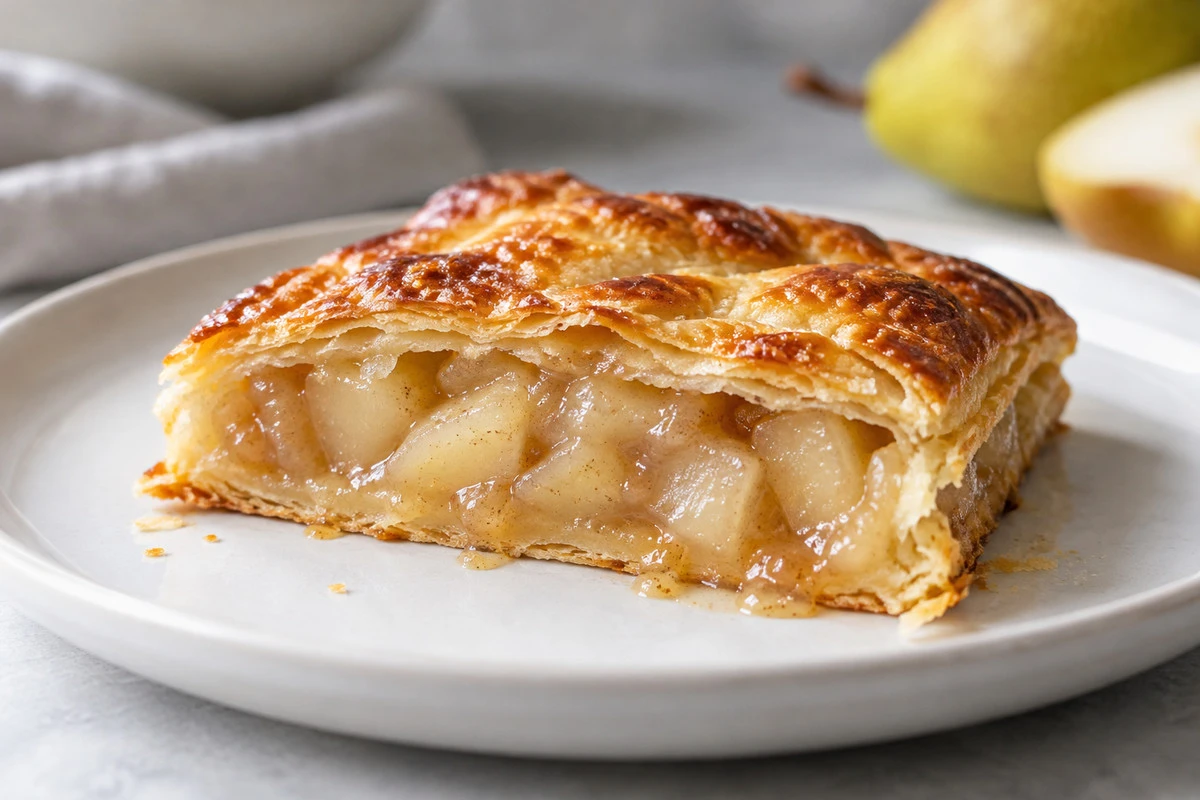
A cut pastry illustrates recognizable softened pear pieces within a cooked filling.
Cooked meals introduce another set of conditions. A fruit inclusion can experience mixing, filling, freezing and reheating after its first cook. A dice that passes a freshly cooked tasting may break down later or become too firm relative to the other ingredients. Include the planned final reheating route and serving condition in the comparison. For a visible inclusion, count or weigh the recognizable fruit using a definition that the team can repeat.
A pear sauce or smooth fruit base places less value on intact cube appearance. In that case, flavor, uniformity and recoverable material may deserve more weight than a tightly controlled geometric cut. Check how the prepared fruit breaks down under the intended process. Paying for a high intact-piece standard has a commercial purpose only if it improves the finished food or handling sufficiently to justify the difference.
Recipe substitution should begin with the same fruit mass and preparation basis, then move to an optimized formula if needed. Changing sugar, thickener and fruit dose at the same time makes it difficult to explain which ingredient caused the result. Once the initial comparison is understood, develop each route toward the target food and compare the resulting usable cost. The best purchasing choice may emerge after this second development step.
Food safety requirements follow the actual application. A pear component added before a controlled cooking process has a different use route from fruit folded into a cold dessert after the final effective treatment. Freezing and peeling do not establish suitability for addition without further treatment. Confirm that route with the supplier and the responsible food-safety team before using a sample in production. A texture approval should record what it covers so it is not mistaken for approval of every possible use.
A fair comparison uses the same preparation and endpoint
Begin a fair comparison with a defined question, such as which named pear input gives tender, recognizable pear pieces in the customer's baked filling. Prepare enough representative material to evaluate repeat portions, rather than choosing the best-looking pieces from each bag. Identify the lots before dividing them into the test portions. The method described here is a proposed development approach; the pictured ingredients do not represent completed trial results.
Keep the supplied forms comparable. If one offer is peeled dice and another is cored halves, they require different preparation and yield calculations. The genuine photograph of prepared pear halves illustrates that difference. A larger form may be useful for a separate process, but it cannot provide a fair direct comparison with packed dice unless the additional cutting step and its losses are included. Confirm the size and preparation before evaluating group differences.
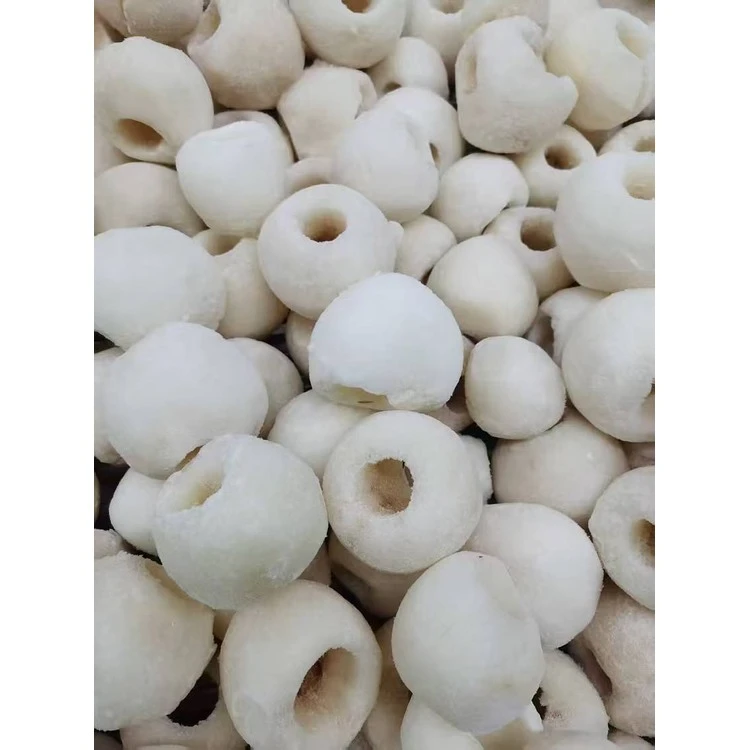
Published product photograph of peeled cored pear halves, a different supplied form from dice.
Use the same handling route for the initial test. Record whether fruit enters frozen or thawed, the amount of liquid retained, the batch size and the process endpoint. When thawing is part of the intended route, use a controlled procedure appropriate to the product and measure the relevant endpoint. A fixed short thaw time alone may leave one sample partly frozen and another fully softened, which changes both sensory and yield observations.
Define the denominator of any yield result. If the question is how much drained fruit remains, express that against the original input under a specified draining method. If the question is how much filling is produced, added sugar, water and other ingredients belong in the recipe balance. Those two percentages describe different outcomes. Report the collected liquid separately when it will be used in the food, so useful material is not automatically treated as a loss.
Taste coded samples at the same serving condition and describe the reason for preference. Useful observations include a tougher bite, graininess, weak aroma, softened edges or excess liquid around the fruit. Agree what counts as an intact or recognizable piece before reporting a percentage. A second evaluator should be able to apply the same description without needing the person who ran the first trial to point out acceptable examples.
Repeat the promising route with another representative portion or lot when the decision warrants it. An initial trial helps identify a direction; repeat work shows whether the result can support an order standard. If the samples differ in maturity, treatment or cut, keep those limits in the interpretation. The buyer can still approve a specific ingredient while acknowledging that the trial has not established a universal ranking of all Asian and European pears.
Turning the comparison into a repeatable pear order
The order description should state the fruit identity required, peeled and cored preparation, cut basis and the approved use. If a named cultivar is essential, confirm its availability and supporting records. If the buyer can accept more than one cultivar when the finished performance matches, describe that flexibility. A broad group name can guide sourcing while the sample and written limits define the ingredient actually accepted.
Our frozen pear product page presents peeled and cored dice and discusses halves as a separate form. It also highlights cut-face browning and core remnants. We would confirm the selected supply lot and its cultivar or fruit-type records before describing it as an Asian or European pear program. The two genuine photographs support the supplied-form discussion without identifying a cultivar from appearance.
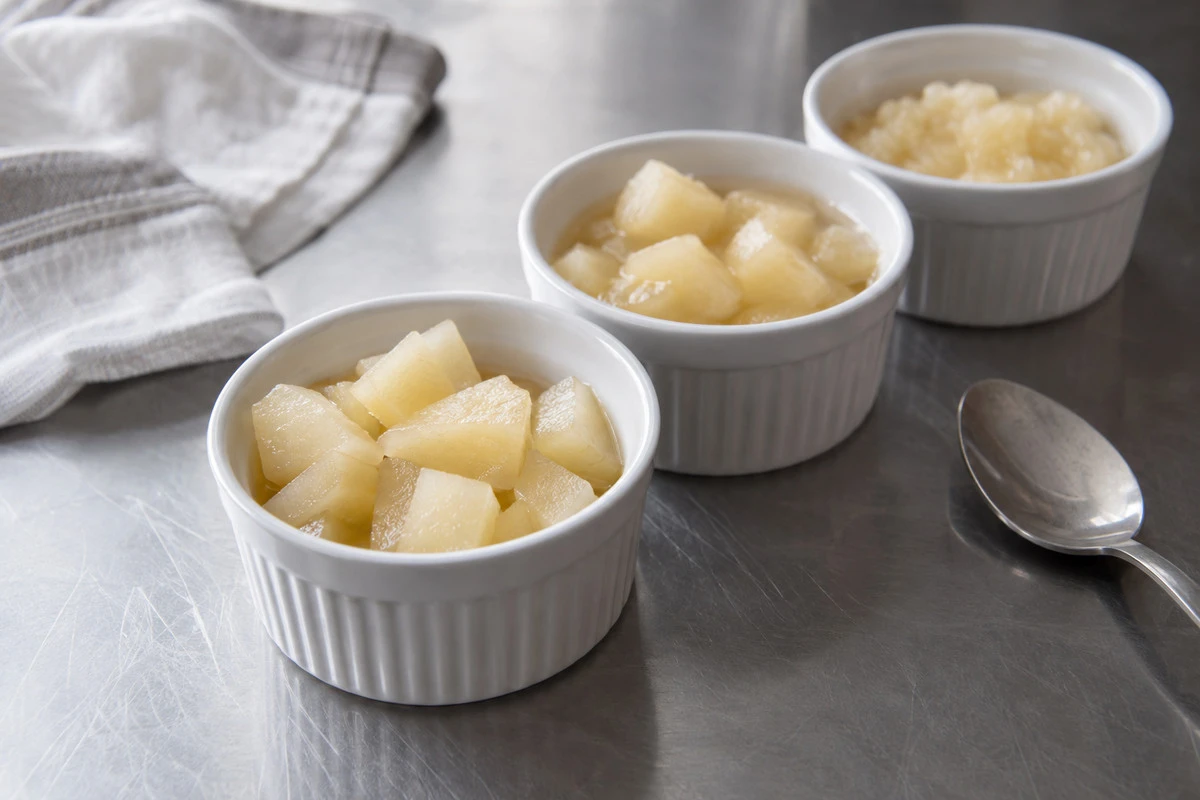
Illustrative cooked textures range from recognizable pieces to softened fruit. These dishes are not measured trial results.
Convert the approved trial into a small set of useful controls. These may include size distribution, appearance, core or seed defects, packed condition and the result after the agreed cook. Analytical measurements can be added when they help interpret flavor or formulation. Each requirement needs a method and a sample basis. A nominal cut size with no allowance or measurement method leaves the receiver and supplier free to judge the same lot differently.
Keep packing and handling connected to that result. A processor using a full unit per kettle may prefer a different pack from a bakery taking small portions through the day. Confirm liner protection, net weight, coding and how the opened material will be handled. A good application sample should not be approved in isolation from the pack that will supply routine production. Compression, repeated withdrawals and exposure during handling can all change the practical value of the form.
We can help review the application, preferred packing, quantity and destination, then confirm the detailed order basis with your team. Any requested certificates or reports need to relate to the actual facility, SKU or represented lot. The general frozen fruit quality guide explains how product, pack and receiving evidence connect. Exact stock, timing, test scope and private-label arrangements belong in the confirmed quotation.
Compare the final offers through the amount of acceptable food they produce. Include additional cutting, drained material that cannot be used, screening, recipe adjustments and handling where those costs apply. Higher-priced pear dice can be worthwhile when it delivers the required fruit portion with less work; a less restrictive presentation grade can suit a smooth cooked base. The useful decision is a named pear ingredient with a repeatable result in your food and a clear basis for reviewing the next shipment.
Continue reading about frozen fruit ingredients
Understand what separate frozen pieces contribute to portioning and which product requirements still need agreement.
Connect fruit specifications, packing, temperature evidence and application checks across the supply chain.
Discuss Frozen Pear with GreenLand-food
GreenLand-food is a professional frozen pear supplier and manufacturer in China, providing factory-direct wholesale supply for food manufacturers, importers and foodservice programs. We confirm the selected product identity and order basis before making an application commitment.
Tell us your application, preferred form, packing, quantity and destination. We can help confirm the specification, private-label needs and requested documents for your program.