


Evaluating Haskap Color Through Heating and Food Preparation
Oct 19, 2026
Leave a message

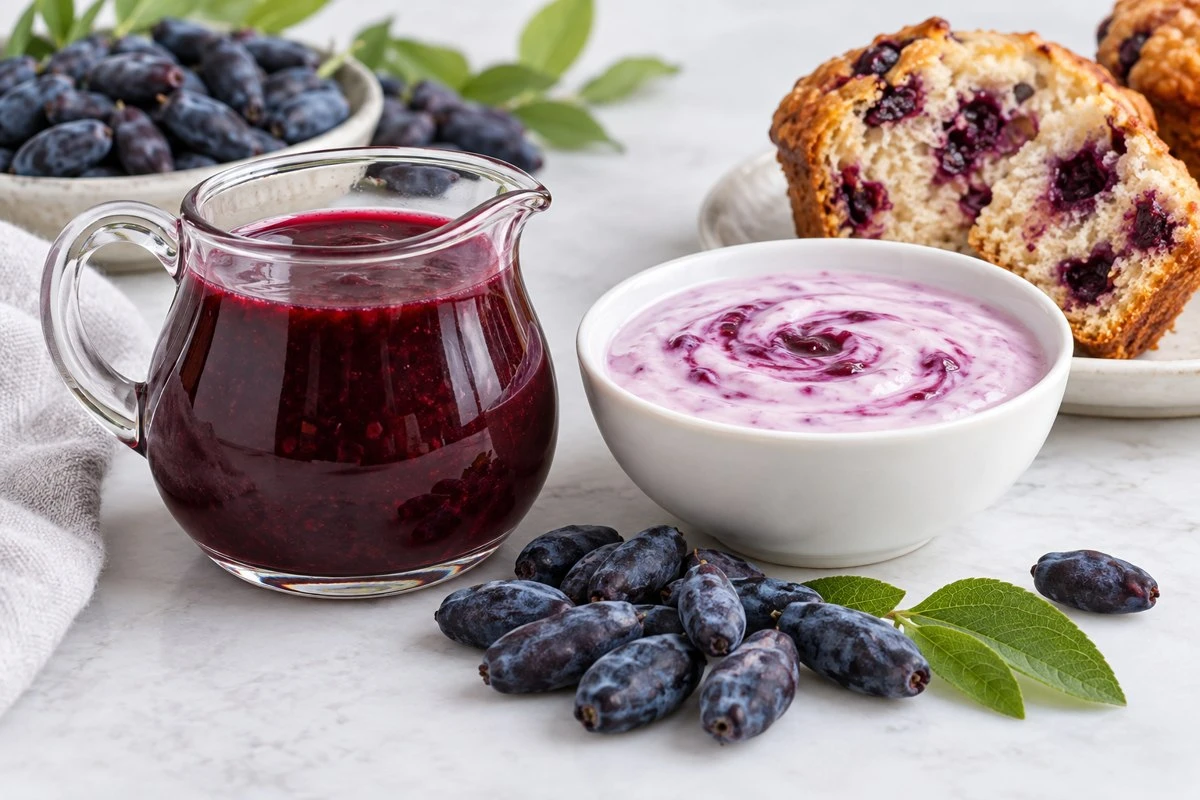
Define the color your finished food needs
Begin with the food the customer will see. A translucent ruby drink, a purple fruit swirl and distinct berry pieces in a pale muffin crumb have different appearance requirements. The same fruit preparation can perform well in one and disappoint in another. Write the target in terms of the product's presentation: overall hue, intensity, contrast with the surrounding food, distribution of colored particles and acceptable variation between portions. A single request for dark berries leaves most of that decision unresolved.
The stage of evaluation matters just as much. A fruit filling may be attractive immediately after cooking but spread color into pastry during holding. A yogurt swirl may begin with sharp boundaries and become more diffuse after stirring or storage. For an ingredient used in several products, identify which application controls approval and which need their own supplementary trials. This avoids treating success in a strongly colored sauce as proof that the same lot will give a neat inclusion pattern in a pale baked product.
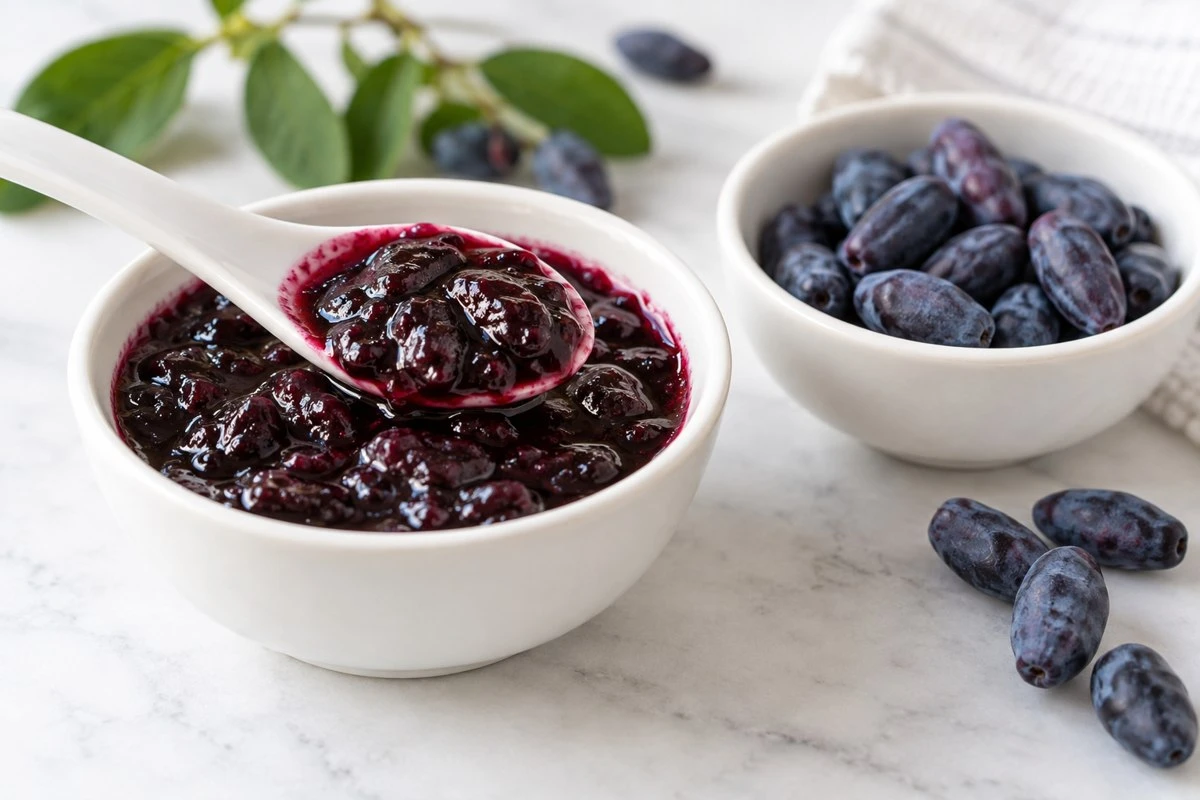
Illustrative haskap color target sample.
Ask the product team to select an actual acceptable reference whenever possible. It may be an approved pilot batch, a retained ingredient used in a fixed recipe or a finished food made by an agreed method. Document its age and storage history. A printed picture is convenient for communication, but it is affected by ink, paper and lighting. A photograph on two different screens can look different enough to create a false disagreement. Physical reference samples also change with time, so they need a review and replacement plan.
Decide whether the concern is a commercial appearance, a measured pigment concentration or both. These are related questions with different methods. A buyer who needs a consistent violet dairy preparation can begin with a controlled application test. A buyer making a specific compositional claim needs a suitable analytical method, sampling plan and evidence for that claim. Neither a dark photograph nor a high initial ingredient result establishes how much pigment remains in a finished food after processing and storage.
A useful trial brief names the product, recipe, preparation route, viewing stage and decision owner. It also records the changes being investigated. If fruit lot, fruit dose, acidity and cooking time all change together, it becomes difficult to explain why the color changed. Start with a manageable comparison that answers one question, and preserve its records before expanding. The result should tell purchasing what ingredient variation matters and tell production which operating conditions require closer control.
Distinguish a process-development target from a routine receiving check. Development may investigate several formulations and heating routes; receiving should use a stable, agreed method that staff can repeat. Once the target is established, simplify the routine check without losing the conditions that determine the result. Keep the more detailed development evidence available for investigations.
Start with an identified and traceable berry lot
Haskap is commonly associated with edible Lonicera caerulea fruit. Species identity must come from source records and the supplier's traceability system. Blue color, elongated shape and the word honeyberry on a sample bag do not provide sufficient confirmation. The wider honeysuckle group includes plants unsuitable for food use, and a processing trial is not a way to establish whether an unidentified berry is edible. Resolve identity and intended food use before sensory or application work begins.
GreenLand's current frozen haskap product page makes the commercial name conditional on source-record confirmation. The displayed original photograph documents dark elongated frozen fruit in a liner. It cannot prove botanical identity, anthocyanin content or performance during cooking. We use that distinction when discussing a sample request: the actual offered lot needs its identity record, while application suitability requires its own representative evaluation.

Original supplied-product photograph. The visible form does not establish species or lot acceptance.
For an identified lot, record the source, lot code, relevant dates, packing and frozen handling information available. Allocate enough material for the intended comparison and a retained reference. Samples should represent the offered material rather than the most attractive berries in the carton. If a commercial lot is a blend, the development sample needs to represent that blend or explicitly state its limitation. Cultivar information can be useful, but its absence should remain visible rather than being filled from the fruit's appearance.
Prepare the starting sample consistently. Whether the recipe uses whole frozen berries, thawed berries with all released juice, drained berries or puree will change the distribution of colored material. Draining away juice and then comparing the remaining berries with an undrained sample changes the ingredient itself. Record every separation, dilution and transfer. Where a recipe includes the released juice, mix and transfer it consistently; where it excludes it, measure and describe what was removed.
Historical primary research on frozen haskap storage shows why sample history belongs in the record. Its observations concern specified material, storage and analytical conditions. They do not establish a fixed loss for every commercial lot. For buyer work, the practical response is to compare samples with known histories and retain the original basis of measurement. That makes a later color difference easier to investigate without guessing whether it began in the fruit or the preparation.
If several portions are drawn from the same carton, record their location and allocation before testing. A portion rich in broken fruit can distribute pigment differently from one containing mostly whole berries. Gentle, appropriate sampling should represent the lot while preserving the physical state needed for the test. Document any unavoidable limitation in sample size.
Separate pigment change from dilution and pH
Anthocyanin-containing fruit can change visible color when its environment changes. With haskap, dilution and acidity deserve attention before a color shift is attributed to heating damage. Adding water changes the concentration and the way light passes through the sample. Adding a pale food changes the background and light scattering. Altering pH can change pigment appearance. These effects may occur together in a recipe, so a simple before-and-after photograph rarely identifies the cause on its own.
The University of Saskatchewan's juice and color investigation provides a useful primary demonstration of the effects of preparation, dilution and pH on haskap appearance. It was an exploratory kitchen study, not a set of commercial acceptance limits. Its value for a buyer is the experimental question: how does the same source behave when preparation conditions change? Any numerical limits for a supplied ingredient need to be established against the buyer's own product and method.
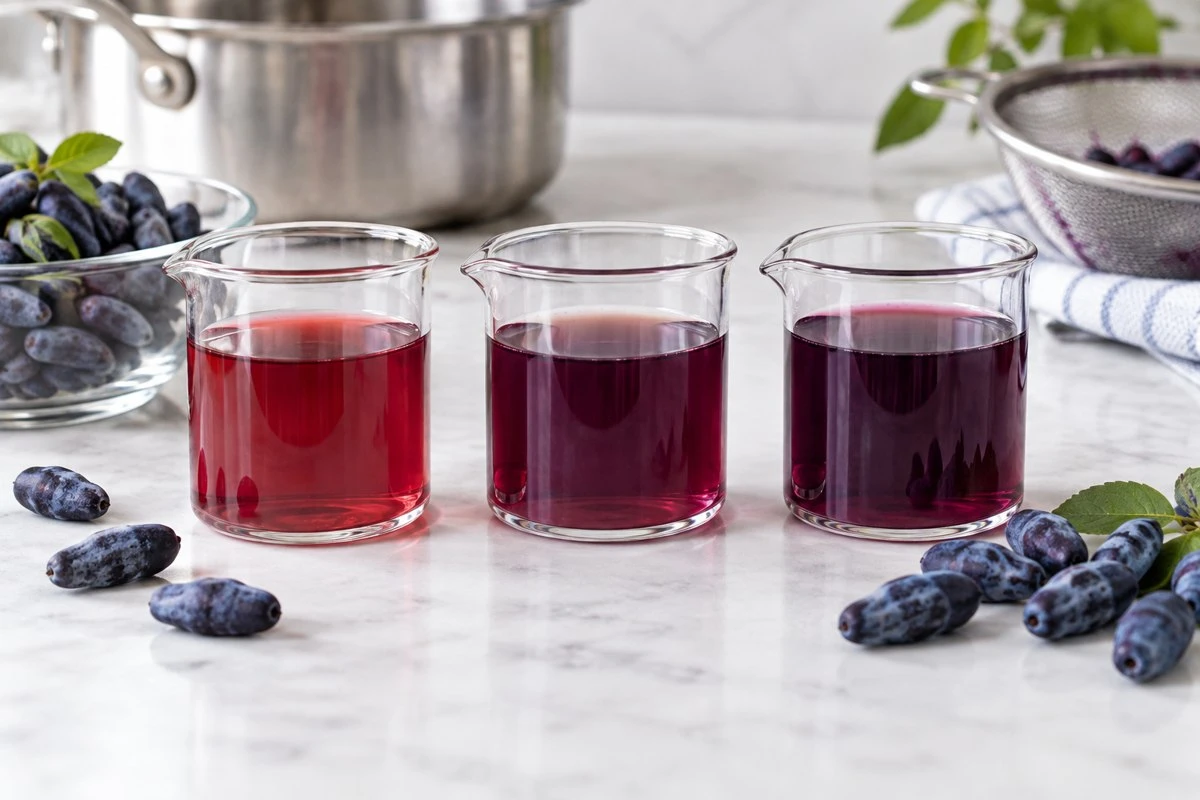
Illustrative haskap dilution and acidity samples.
When comparing heating treatments, keep the recipe and measurement basis constant. If one sample loses more water, it can appear darker even while some pigments have changed. Record initial and final mass, added water and any adjustment before viewing. If samples are restored to a common mass or solids basis for an analytical comparison, state that explicitly. The restored sample answers a different question from the unadjusted sauce as served. Both can be useful, provided that the record distinguishes them.
Measure pH with an appropriate calibrated method and record sample temperature and preparation. A surface color observation is not a substitute for that measurement. In a complex food, the fruit portion and surrounding material may differ, so specify whether the measurement concerns a homogenized final product or a separated component. Do not add acid solely to force a preferred hue without considering flavor, texture, ingredient declaration and the established food safety process. The formulation must work as a whole.
Also distinguish apparent pigment release from pigment preservation. Heating or crushing can move colored material from fruit tissue into the surrounding liquid, making that liquid look stronger. That observation does not by itself show that total anthocyanin content increased. If content is important, use a laboratory method suitable for the matrix and report the basis consistently. Keep sensory color, instrument color and chemical analysis as separate records that can be interpreted together, rather than allowing one attractive number or photograph to stand for all three.
A comparison can include a preparation control that receives the same mixing and dilution but follows a different, clearly documented heating history. Such a control can help isolate a question, provided both routes are safe for their intended evaluation. Do not confuse a research control with a commercially approved product or use it to imply validated shelf life.
Record the complete heating history
A cooking temperature printed on a recipe describes only part of the exposure. The food warms up, may remain hot during holding, travels through transfer equipment and cools at a rate influenced by package and batch size. Two batches can share a nominal endpoint while receiving different histories. For a haskap color trial, record the temperatures and times that the food actually experiences under the proposed process, using suitable equipment and an agreed measurement location.
A small saucepan trial is useful for screening a recipe, but it may heat and cool differently from a production vessel. Surface area, depth, mixing, evaporation and transfer losses can all change. Note the vessel, batch mass and agitation method in the development record. A gently stirred puree and whole berries folded into a filling are different physical systems. If the production process includes recirculation or prolonged hot holding, include a representative check before declaring the color target achievable at scale.
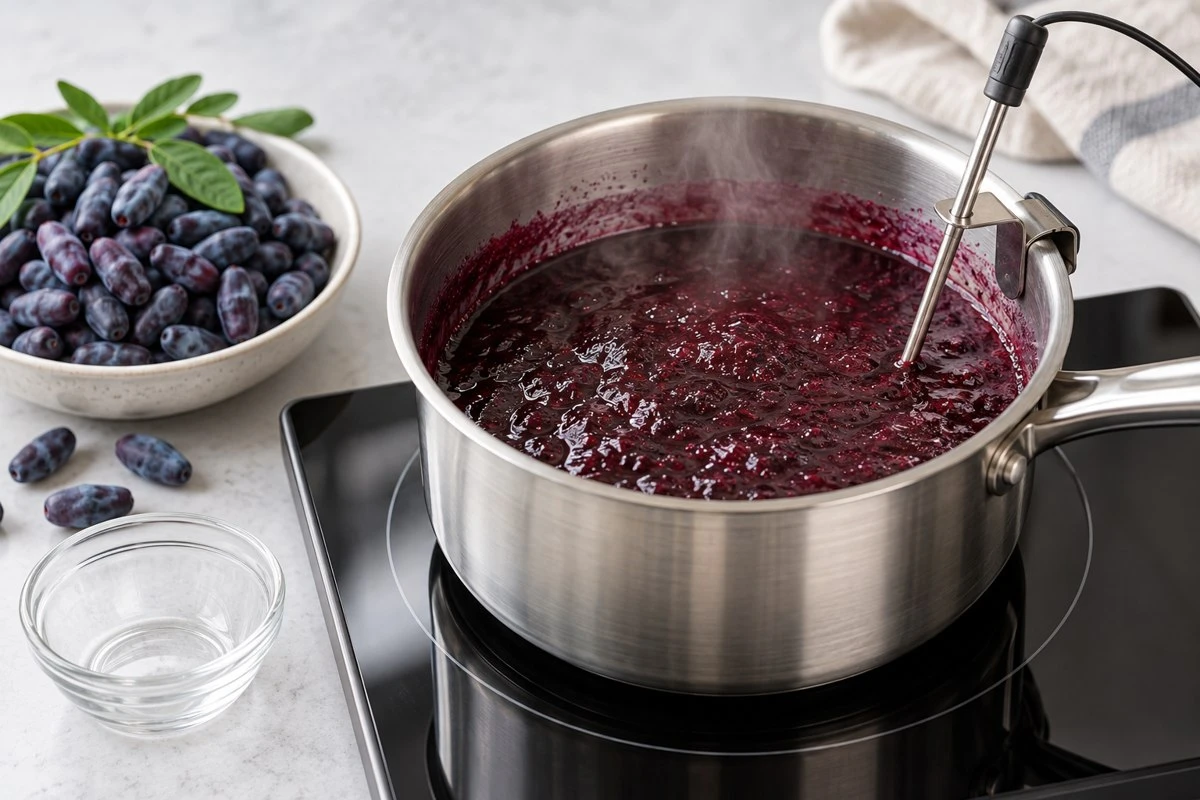
Illustrative haskap controlled heating probe.
The primary study Stability of Haskap Berry Anthocyanins at Different Storage and Processing Conditions examined several specific operations using chemical analysis. Its results support treating processing conditions as material variables. They do not provide a universal cooking limit, an acceptable color tolerance or a retention promise for a bakery or beverage. The intended food matrix and the analytical endpoint must match before numerical results can be transferred responsibly.
Set the safety process through the appropriate technical assessment for the actual product. A color comparison cannot validate pathogen control or shelf life, and brighter appearance is not a reason to reduce a required treatment. Within the established process, the development team can investigate whether formulation, scheduling, mixing or cooling changes help meet quality requirements. Each proposed change needs to be considered for its broader effect on the product and its safety controls, not just its effect on a photograph.
After heating, compare samples at the same defined stage and temperature. Hot foods can differ in viscosity, surface gloss and perceived intensity from cooled foods. Decide whether the buyer cares about the product after cooling, after a further bake, after blending into another food or after storage. A retained unheated reference may help answer a scientific question, but it does not replace an acceptable finished-food reference. Keep those roles clear so the final specification corresponds to what the customer will actually receive and use.
Pay attention to the delay between making and reading samples. If the first sample cools for much longer than the last, a comparison can include different settling and surface conditions. Plan the order, record preparation times and use a common viewing stage. Repeating the comparison can reveal whether the observed difference is consistent.
Compare color in the actual food matrix
Clear juice, puree, yogurt and cake batter present pigments in different surroundings. A pale opaque base can make a small amount of berry preparation visibly prominent, while a dark sauce may hide differences between fruit lots. Fat, protein, suspended solids and the product's own color can affect the observed result. The most dependable application check therefore uses the commercial recipe or a deliberately defined model that the buyer has shown to represent it.
For yogurt or a similar dairy preparation, decide whether the fruit is mixed throughout or remains as a separate layer or swirl. Those formats need different observations. A uniform blend can be judged for overall hue and consistency; a swirl also needs assessment of boundary movement, particle distribution and color bleeding during storage. Use the same mixing sequence and intensity across samples. Excessive mixing in one bowl can disperse the fruit more thoroughly and create a misleading impression that the berry itself has stronger color.
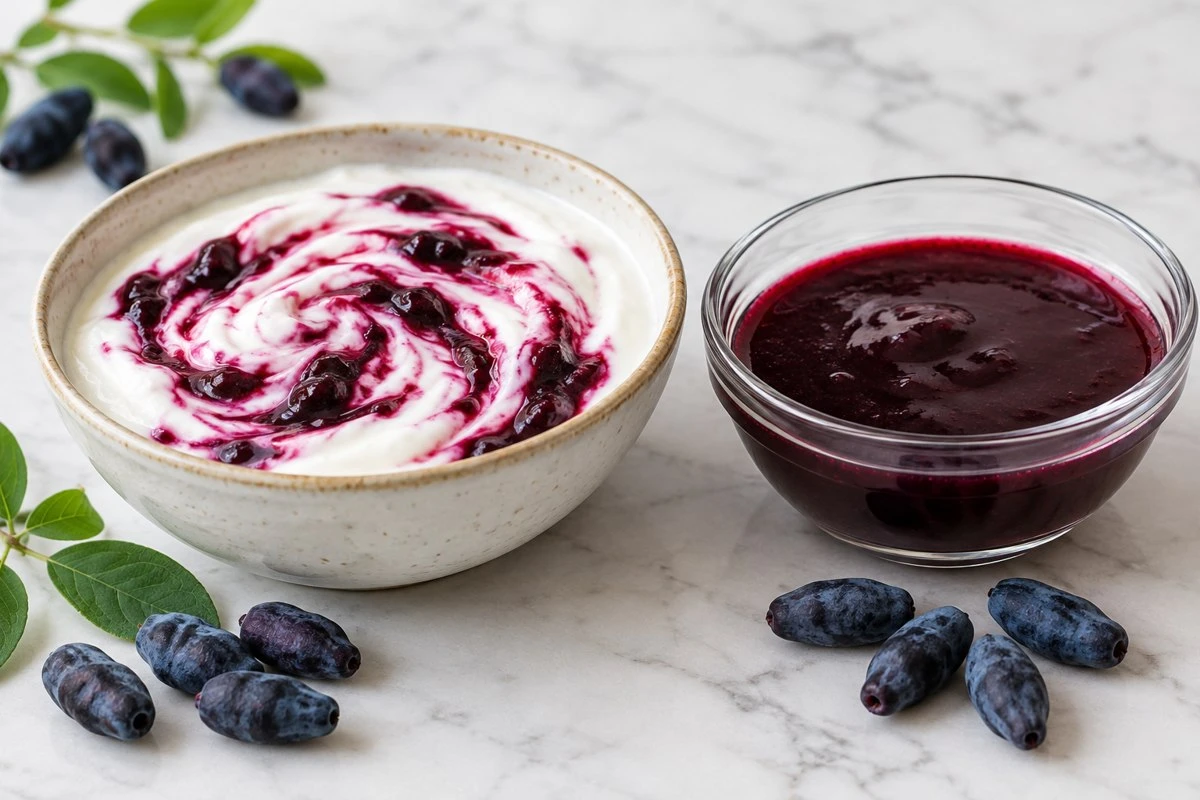
Illustrative haskap yogurt and sauce color.
In bakery products, assess the cut interior as well as the surface. The color near a fruit piece can differ from the surrounding crumb, and baking conditions can vary across a tray. Define the portion and location sampled, the cooling stage and the way the product is cut. If the formula uses leavening ingredients or changes in acidity, preserve their amounts during a fruit-lot comparison. A color result from plain fruit puree cannot predict every reaction in a batter with a different composition.
Extract studies need an especially careful boundary. A 2026 study of encapsulated haskap anthocyanins investigated an extracted-pigment system with selected carrier materials and storage conditions. That is useful evidence that the surrounding system matters. It is not evidence that adding ordinary frozen berries to food gives the same protection or performance. A whole-fruit buyer should avoid borrowing retention figures from specialized extracts or encapsulated powders to describe an unrelated ingredient.
For a supplier discussion, send the exact application question with the sample request. State the berry inclusion, whether released juice is retained, the heating route, the other major ingredients and the stage at which color is judged. If a formula is confidential, a controlled model can be agreed, but its relationship to the finished food should be understood. An application sample that predicts the buyer's product is more useful than a broad promise that the ingredient keeps its color in all cooking conditions.
For a multi-component dessert, inspect the assembled portion as well as the fruit preparation alone. Layers can move or exchange moisture during holding, and the consumer sees the combined result. The ingredient may meet its own color requirement while the assembled product needs a revised deposition or mixing method. Keep those responsibilities explicit.
Make visual and instrumental checks repeatable
A repeatable visual check begins with the same vessel, fill depth, background and lighting. Transparent liquid should be compared in matching containers because the path through the sample affects perceived darkness. Thick preparations need a consistent surface and portion depth. If the product contains pieces, decide whether it is mixed before viewing and how many portions are examined. These practical details often explain an apparent disagreement before any complicated chemical explanation is necessary.
Use coded samples when practical and give observers a clear question. Ask whether a sample falls within the approved appearance, whether the hue differs, whether there is more browning, or whether fruit color spreads differently. A general question about which sample looks best can mix color with gloss, viscosity and fruit-piece preference. Record those attributes separately. The person preparing the samples should keep the code key and the preparation record so that the observations can later be connected to the correct condition.
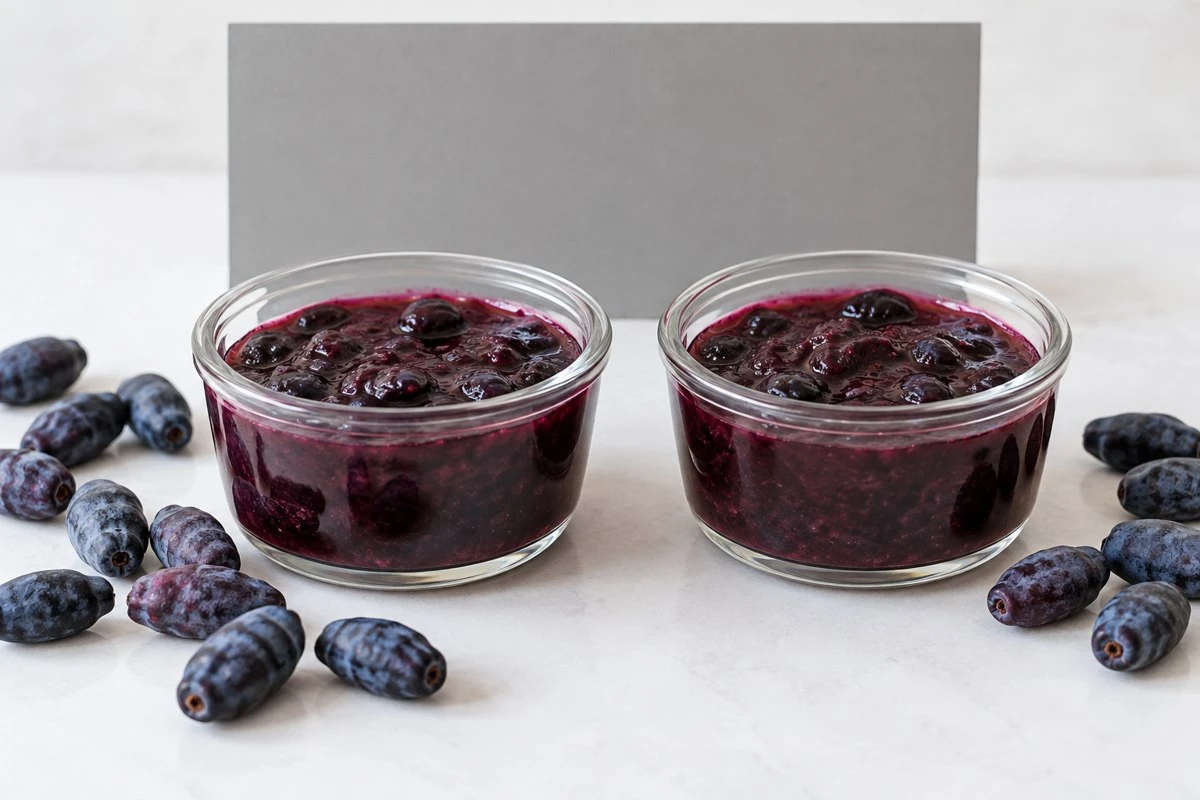
Illustrative haskap color viewing white background.
Photography supports the record when its conditions are controlled. Fix camera position, lighting, background, exposure and white balance as far as the equipment allows. Include a suitable neutral reference when useful, and avoid filters or automatic enhancements. Preserve the original files. A supplier and buyer may still see them on different screens, so photographic evidence should accompany the written method and observations. It should not become a precise numerical color tolerance without an appropriate measurement system.
If a colorimeter or spectrophotometer is used, agree the instrument method and sample handling with qualified staff. Record the measurement geometry, calibration, vessel, sample preparation and reporting convention. Replicate measurements can help describe variability, but repeated readings of one homogeneous cup do not replace sampling across the lot. Set acceptance limits only after the team understands both measurement variation and the range that remains acceptable in the product. An arbitrary difference value borrowed from another food can create unnecessary rejection or miss a meaningful defect.
A chemical assay answers another question. It may quantify particular anthocyanins or a defined total under the chosen method, while the color instrument describes optical properties. Use the appropriate laboratory and reporting basis if the purchasing agreement requires that information. Changes in extraction efficiency, moisture basis or sample preparation can affect comparisons. Keeping the raw observations, preparation details and method references together allows technical teams to investigate an unexpected result without treating a single value as a complete explanation of product quality.
Use retained samples to agree an acceptance window
An acceptance window should reflect the approved food, its expected variation and the method used to evaluate it. Begin with several representative development observations where feasible, rather than declaring one photograph the permanent target. Identify which differences matter to the customer and which fall within acceptable natural variation. A fruit swirl may tolerate modest variation in overall intensity while needing reliable separation from the surrounding yogurt. A clear drink may have a tighter requirement for haze or sediment than for a small hue shift.
Retain the relevant ingredient and finished-food references under a defined storage plan, with clear identification and review dates. Their quality can change, so they cannot serve indefinitely as untouched standards. Record when a reference is replaced and how the replacement was approved. If the reference is a prepared food with a short usable life, keep the recipe and procedure strong enough to recreate it using an appropriately controlled ingredient sample. The record should survive the disappearance of the original cup.
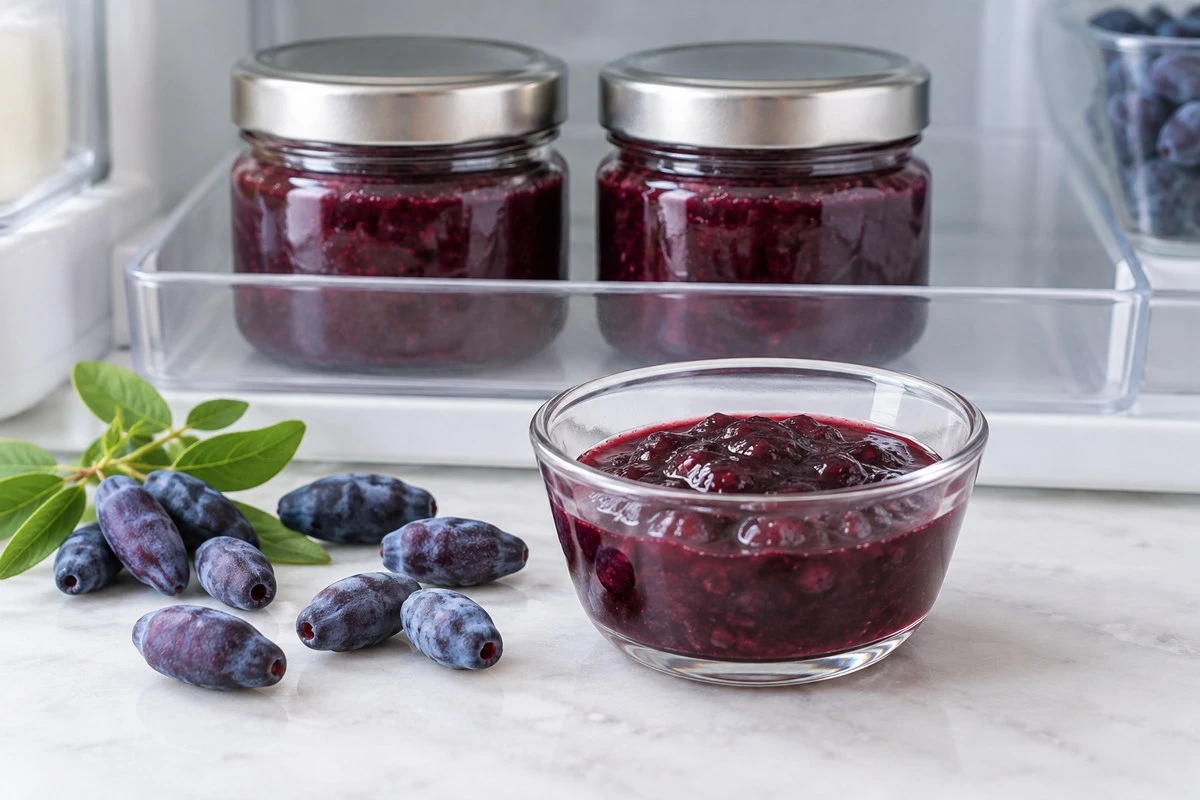
Illustrative haskap retained color samples.
Storage checks should follow the actual product and package. Light exposure, headspace, closure, distribution temperature and opening conditions may differ between a development jar and the commercial pack. A color study should use planned checkpoints that the technical team can justify, alongside the other quality and safety work required. The endpoint is an acceptable product throughout its supported life. An unchanged-looking sample is not proof of microbiological safety, and a visually changed sample does not automatically identify the chemical pathway responsible.
For purchasing, connect the agreed application test to the specification and sample approval. State the identified ingredient, lot or blend, packing, method, reference and decision process. If a future lot falls outside the appearance window, define how it will be retested and who reviews the evidence. Record any rework or alternative-use decision separately. A lot suitable for a dark cooked sauce may still need a different assessment for a pale dairy preparation, so approval should identify the application it actually covers.
We ask buyers to share the intended food, required form, packing, quantity, destination and supporting documents when discussing frozen-fruit supply. For haskap, confirmed identity remains the first requirement for the offered material. From there, a clearly described preparation and retained reference make color discussions more specific: the buyer can show the acceptable food, the supplier can trace the sample, and both can distinguish a fruit-lot difference from a change in formulation or processing. That is the foundation for a specification that production can use repeatedly.
Continue reading about berry preparation
Understand why colored material can remain in separated fruit solids.
Extend the trial into cake-layer holding, fruit distribution and moisture control.
Discuss frozen haskap berries with GreenLand-food
GreenLand-food is a frozen fruit supplier and manufacturer in China, offering factory-direct wholesale supply. For frozen haskap berries, the offered lot's identity and accepted market name require confirmation before specification approval.
Send your required product form, specification, packing, quantity, application, destination, private-label needs and requested documents so we can define the sample and sourcing discussion.