


Checking Frozen Haskap Lots for Species Records, Split Skins and Juice Loss
Oct 19, 2026
Leave a message

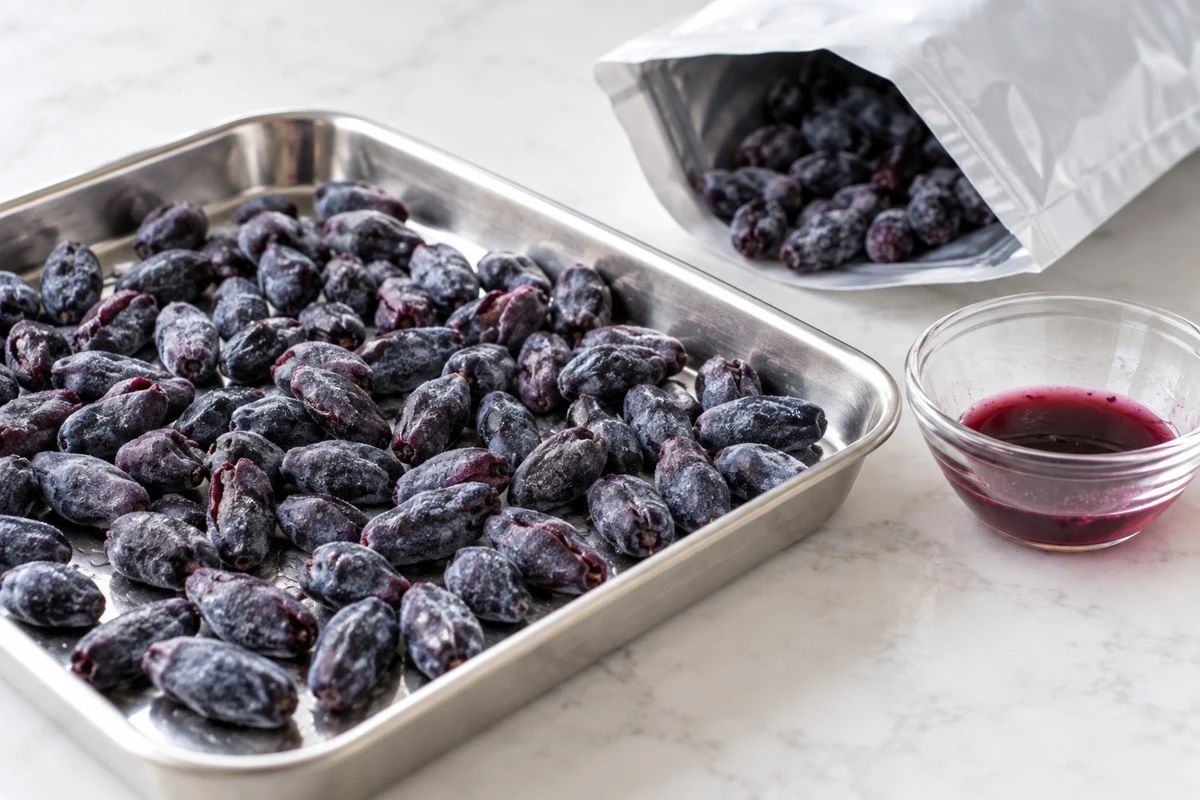
Confirm species records before judging a sample
The food commonly marketed as haskap or honeyberry is associated with Lonicera caerulea. A commercial name can vary between markets and languages, so the source record should include the scientific identity and the accepted ingredient description. Request enough information to connect that identity with the actual supplied fruit. A botanical name in a general brochure is weaker evidence than a controlled specification tied to a documented source and the lot offered for sale. Any uncertainty should be resolved before food-use approval.
Blue color and an elongated berry shape can support a discussion of appearance, but they cannot establish species. The RHS edible-honeysuckle guide distinguishes known honeyberry fruit from other honeysuckles, whose berries can be toxic. Edible haskap must therefore remain distinct from unidentified ornamental honeysuckle fruit. Do not use tasting, freezing or cooking as an identification test, and do not infer that a berry is edible because it resembles a supplier photograph. The responsible route is documented identity and, when needed, assessment by an appropriately qualified specialist.
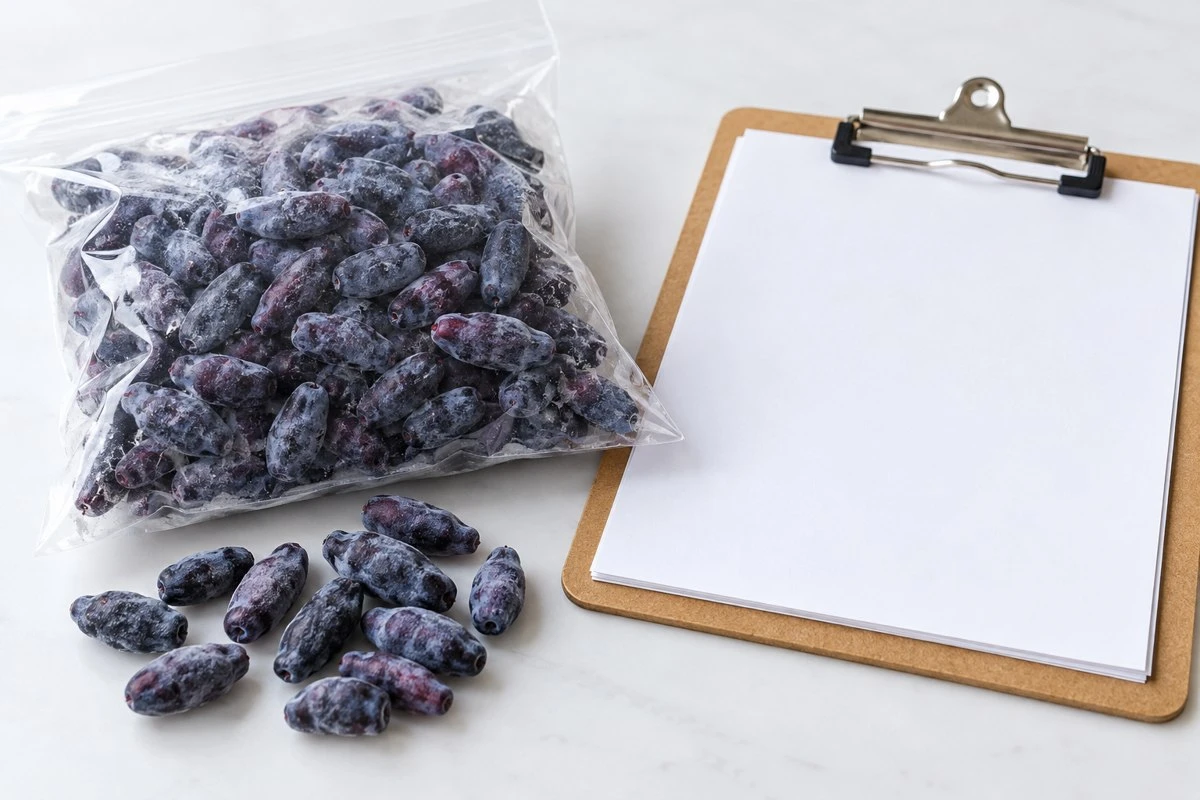
Illustrative haskap source record sample.
The University of Wisconsin honeyberry profile identifies the crop as Lonicera caerulea and describes substantial variation in fruit and plant traits. That is useful background for understanding common names and appearance. It does not authenticate an imported carton. A buyer still needs to establish what was harvested, who supplied it and how the supplier's identification records relate to the packed lot. Cultivar information can be useful when supported, but should not be reconstructed from a photograph.
GreenLand's current haskap sourcing page explicitly treats the commercial name as provisional pending source-record confirmation. Its real photograph shows dark elongated frozen fruit in a lined carton. That image is suitable for discussing received form and packaging, while identity and formal grade remain separate questions. We ask buyers to settle the accepted species and market wording before approving a specification, label or blend declaration against the offered material.
Keep identity review distinct from routine quality acceptance. A lot with excellent whole-fruit appearance still cannot be released if the identity file is unresolved. Conversely, a correctly identified lot may fail the buyer's physical or application requirements. Record these decisions separately, with the evidence and person responsible for each. This prevents a good sample photograph, an analytical certificate or a commercial quotation from being used to close an unrelated gap that it was never designed to answer.
The identity file should remain accessible to the people approving the purchase and the ingredient declaration. Record who supplied the evidence, when it was reviewed and which lot or source it covers. If the source changes, check whether the earlier confirmation still applies. A permanent product code should not conceal a change in underlying material.
Connect the sample to the offered frozen lot
A sample is useful only when the buyer understands what it represents. Ask whether it was drawn from the offered finished lot, from an earlier production, from raw material or from a specially prepared development batch. Record the lot code, available production and packing dates, pack format and the sampling method. If the supplier will deliver a blend of lots or cultivars, the sample should represent that blend or clearly disclose its limits. An approved sample does not automatically cover a different composition.
Agree a sampling plan appropriate to the shipment, risk and purchasing agreement. A single scoop from the top of one carton can miss variation between packs or within a pack. The plan should identify the units selected, how portions are taken and how they are combined or retained separately. Keep the original pack identities visible in the record. Where defects vary strongly between units, combining everything into one average may hide an important receiving problem that individual observations would reveal.

Original supplied-product photograph. The visible form does not establish species or lot acceptance.
Preserve the frozen state while receiving and allocating samples. Record the condition at arrival, the packaging integrity and any available transport temperature evidence. Temperature readings need their method and location; a surface reading is not automatically a core measurement. If the package arrives partly thawed, document the condition and discuss whether it remains suitable for the intended comparison. Re-freezing it and treating it as an untouched sample can obscure what happened and make later juice-loss results difficult to interpret.
Allocate separate portions for frozen visual inspection, controlled thawing, application work and retention when enough material is available. Destructive tests change the sample, so the same berries should not be repeatedly warmed, handled and refrozen between unrelated checks. Identify each portion and record its history. The retained portion should have a defined storage plan and purpose, such as resolving a later disagreement or comparing a subsequent shipment. Retention is useful only while the sample remains suitable for that purpose.
A published frozen-haskap supplier specification shows how identity, physical characteristics, analytical requirements and packing can be recorded separately. Its limits and shelf-life statements belong to that supplier's product and dated document. They should not be copied into a GreenLand contract or treated as industry law. Use the structure to identify missing fields, then agree requirements from the actual offered material, the buyer's process and the applicable destination obligations.
Where samples travel separately from a commercial shipment, compare their packaging and transport history before treating their conditions as equivalent. A small parcel can warm differently from palletized cartons. Record the distinction and request additional representative material when it affects the decision. Sample approval should describe its scope rather than imply that every future shipment has already been inspected.
Count split skins with an agreed definition
A split skin should be defined before counting begins. Decide whether the category includes a visible opening through the skin, a leaking picking scar, a partly crushed berry or several of these conditions. A small surface mark and a rupture exposing flesh can have different consequences in use. Photographic examples of accepted and rejected conditions can help align inspectors, provided they come from identified samples and remain attached to a written definition. A vague instruction to allow only good berries is difficult to enforce consistently.
Inspect under a defined condition. Frozen surfaces can hide a small opening beneath frost, while warming and handling can enlarge damage or create juice smearing that obscures the original state. State whether the primary inspection is performed frozen, partly tempered or after a separate thaw. Use a clean tray and a consistent observation method. Handle the fruit gently and avoid squeezing berries while deciding whether they were already damaged. The inspection procedure should not create the defect it is supposed to measure.
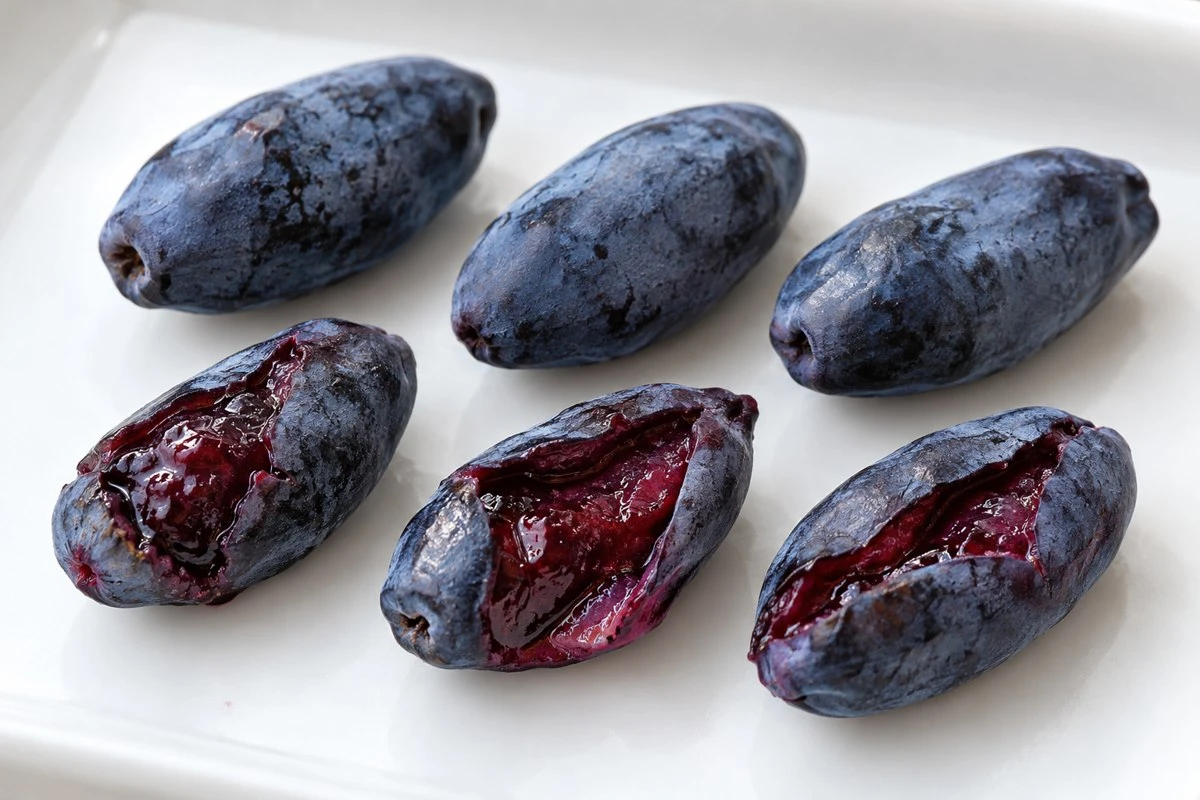
Illustrative haskap split skin comparison.
Choose the denominator deliberately. A count-based result describes the proportion of individual berries with the defined condition. A mass-based result describes the portion of sample mass assigned to a defect category. They are not interchangeable when fruit size varies. If the buyer uses count, record the number inspected and affected. If it uses mass, record the total inspected mass and the mass classified as defective. Keep small pieces or uncountable crushed material in a separately agreed category rather than forcing them into an unreliable berry count.
Consider how categories overlap. A berry may have a split skin, be crushed and carry attached stem material. The agreement should say whether it can be counted in several categories or assigned to one primary defect group. Without that rule, two inspectors can produce different totals from the same tray while both work carefully. Report the observations in a way that preserves the underlying evidence, and avoid adding overlapping percentages as if they described separate parts of the lot.
The importance of skin damage depends on the application. Whole-fruit decoration may require a different appearance from a cooked filling that intentionally breaks down the berries. However, suitability for processing does not remove identity, safety or foreign-material requirements. Utah State University's harvest guidance notes differences in picking-scar bleeding among cultivars. That supports checking the actual material and agreed use rather than assuming every visible juice stain means the same defect or requires the same commercial decision.
Train inspectors with a small set of representative examples before using the definition for acceptance. Compare their classifications and resolve ambiguous cases in the written method. This can be especially useful for picking-scar openings and partly crushed fruit. The purpose is consistent interpretation, not a cosmetic score that varies with the person holding the tray.
Measure released juice under a fixed thaw method
- Identify and weigh the agreed frozen sample portion.
- Thaw under the approved, recorded conditions with fruit above the collection vessel.
- Apply the agreed drainage endpoint and weigh the collected liquid.
- Calculate on the declared basis and interpret the result in the intended application.
Juice loss is meaningful only with a defined preparation. State the starting condition, sample mass, thaw environment, endpoint, drainage arrangement and drainage time. Include whether surface ice is included, whether the fruit is supported above the collected liquid and whether any pressure is applied. A sample drained gently over a sieve is different from one pressed through cloth. The buyer and supplier should use the same method when comparing results or investigating a claim.
A proposed approach begins with a weighed frozen portion in a suitable perforated support over a collection container. Use a controlled thaw procedure approved for the intended work, keeping the fruit separate from the collected liquid where the method requires it. At the agreed endpoint, allow the defined drainage period and weigh the collected liquid or the drained fruit according to the chosen calculation. Record transfer losses and any material remaining on the equipment. Do not change the method midway to make a sample look better.
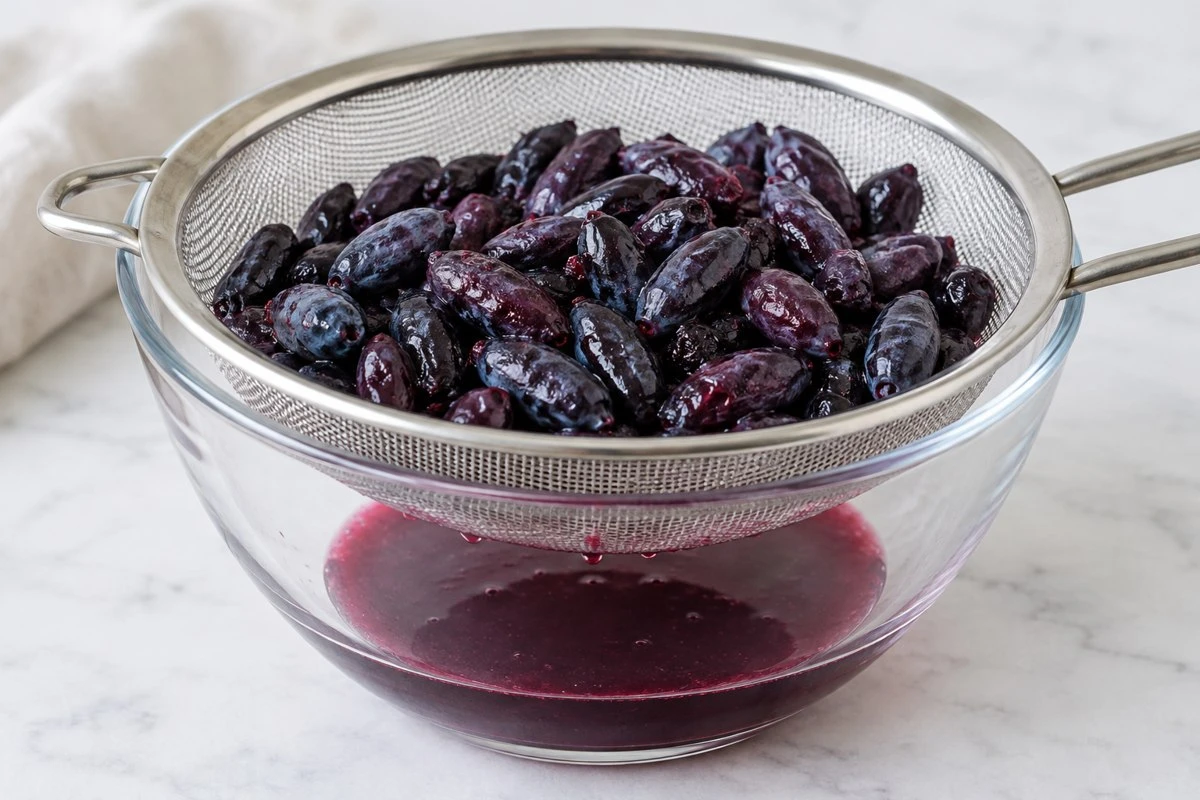
Illustrative haskap drained juice test.
If reporting collected liquid as a percentage, define it as the measured collected-liquid mass divided by the declared initial sample mass, multiplied by one hundred. Explain whether that initial mass includes visible frost or free ice. If reporting retained drained mass, define that separately and account for material lost during transfer. The two results may not add neatly to one hundred when solids, ice, evaporation or equipment residues are involved. A mass balance helps identify those differences instead of disguising them as fruit performance.
Thawing method can influence measured outcomes, and fruit varieties can behave differently. Primary haskap processing research examined thawing and other operations under specified analytical conditions. It does not provide a universal acceptable drip percentage for all buyers. An acceptance limit should follow the method used, the range observed in representative lots and the finished application. A number without those connections can reject useful material or accept fruit that performs poorly in the buyer's product.
For a sauce or beverage, released juice may remain part of the formulation and contribute useful flavor and color. For a whole-fruit topping, the same release may create staining or an unwanted liquid layer. Evaluate both the measured release and its consequence in use. Do not drain away juice during the laboratory check and then compare the remaining fruit with a production recipe that retains everything. The method should answer a clearly stated question about the buyer's process, with the result interpreted on that same basis.
Document the balance and collection-container tare so that small weighing errors are visible. Keep the collection vessel covered where the approved method calls for it, and avoid losing liquid during transfer. If the method changes, assign a new version and reassess comparability. Historical percentages calculated under another procedure should remain identifiable.
Interpret frost, clumps and packaging together
Frozen appearance provides clues that need context. A small amount of frost can obscure the surface, while large ice accumulation or strongly bonded clumps can make dosing and inspection difficult. Those observations should be recorded without immediately assigning a cause. Clumping can relate to product condition, packing and temperature history, but a photograph alone rarely proves when or why it developed. Combine the visual evidence with receiving observations, storage records and the pack's condition before deciding what investigation is needed.
Inspect the liner and carton as well as the fruit. Note tears, weak seals, staining outside the liner, deformation and evidence of liquid movement. If the product is intended for a process that retains all released juice, liner integrity can be commercially important even when fruit shape is less critical. A leaking pack changes the material delivered and complicates hygiene and handling. Record the affected unit, photograph the condition before moving contents and preserve relevant packaging for the agreed investigation procedure.
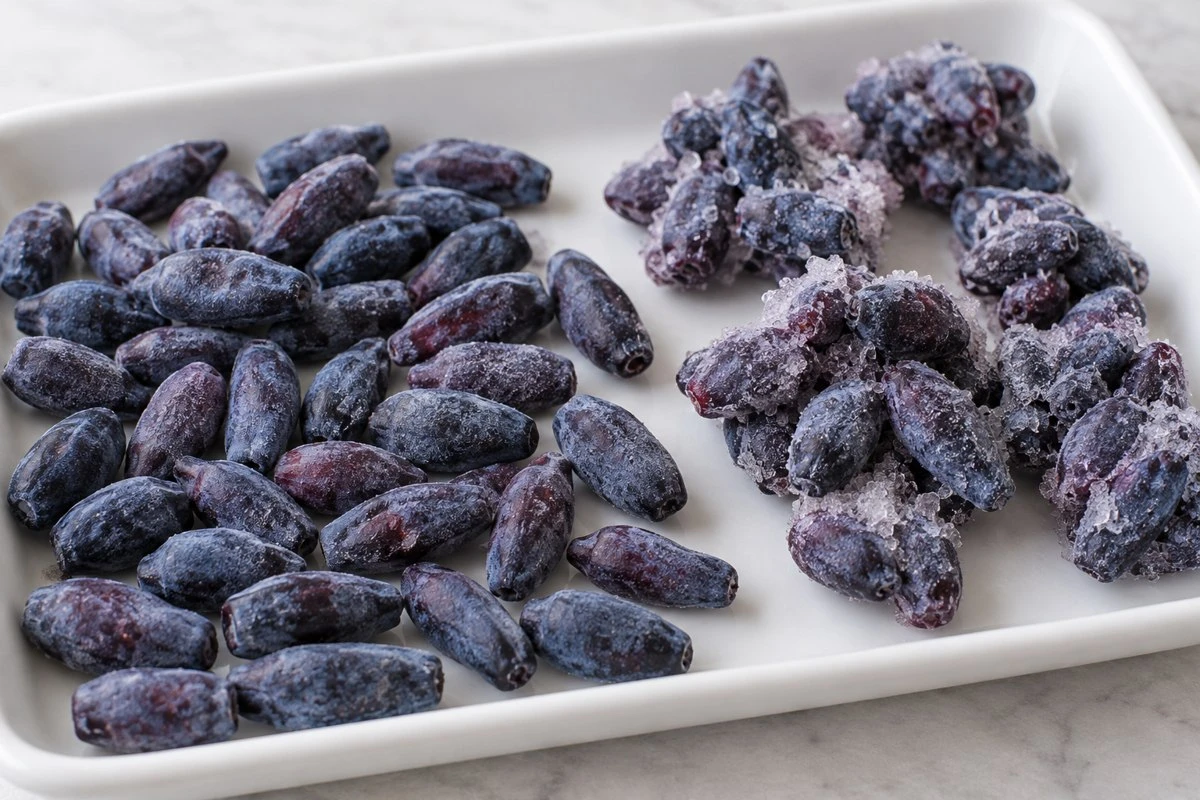
Illustrative haskap frozen clumps and frost.
Separate free-flowing behavior from fruit integrity. A lot may dose easily while containing many split berries, or form a manageable clump while retaining acceptable fruit pieces. Define the actual operational need, such as portioning from a bag or feeding a production hopper, and test it under representative conditions. Aggressively breaking a frozen block during inspection can create additional fractures. If de-clumping is part of the intended process, assess it as a controlled operation with its own effect on the fruit.
Review temperature information with its limitations visible. A logger may describe conditions at its location rather than every carton, and gaps in records should remain explicit. An acceptable arrival temperature does not prove the entire journey was identical. At the same time, a visual defect does not justify inventing a temperature excursion. The aim is to establish what is known, what remains uncertain and whether the lot can meet the agreed requirements. Escalate unresolved safety or identity questions through the buyer's established technical process.
Packing trials should reflect commercial handling. Compare the proposed pack size, liner and closure with the buyer's thawing or dosing method. A small sample pouch may drain, freeze and warm differently from a bulk carton. Confirm net quantity and the basis of the quotation, then assess how the buyer will open, transfer and use the fruit. These details help purchasing understand whether an apparently economical format introduces extra handling loss or labor that changes its value in the actual operation.
A commercial pack may also need to withstand the buyer's routine movement between receiving, storage and processing. Agree any handling trial with the supplier and use the intended liner and closure. Record leakage and fruit damage separately. Passing a pack-handling trial does not establish species identity or remove the need for the agreed analytical controls.
Trial the fruit in the intended application
A physical inspection describes the incoming ingredient; an application trial shows whether that ingredient suits a particular food. Start with the buyer's actual recipe and process where possible. A syrup, cooked filling, dairy preparation and decorative fruit portion need different outcomes. Set the relevant observations in advance, including texture, color distribution, free liquid, flavor and ease of handling. Keep the fruit addition and other ingredients consistent when comparing lots so that the trial isolates the effect the buyer wants to understand.
For a cooked filling, record whether the process aims to retain recognizable pieces or create a smooth preparation. A higher level of splitting may have little visible effect in a fully pureed product but could change the appearance of a whole-fruit filling. Evaluate the finished consistency after the agreed cooling and holding stage. A hot filling that looks suitably thick may release liquid or behave differently after cooling. Use the same measurement and observation stage across all samples.
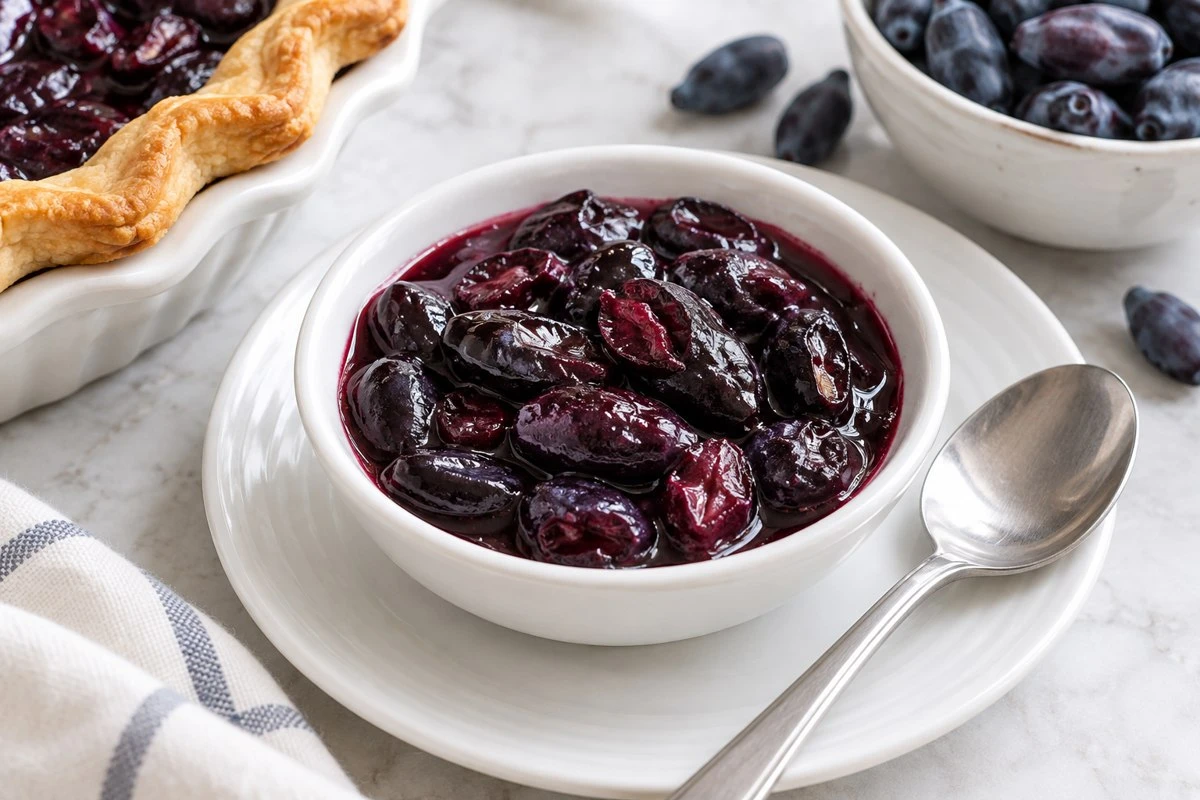
Illustrative haskap fruit filling trial.
For a dairy swirl or pale dessert, color bleeding and juice separation deserve particular attention. Decide whether released thaw liquid enters the formula, and keep that decision fixed. Observe the food after mixing and through the planned evaluation period. A dark fruit sample may deliver a desirable contrast in one format and an unacceptable overall tint in another. The appearance of the raw berries does not settle that question. Application approval should therefore name the food and preparation it covers.
For beverage use, the buyer may care more about extraction, strainability and flavor than intact skin. Even then, incoming defects can affect processing efficiency and the amount of material removed. Record the recovered liquid and solids using the same method for each lot, and taste only within the approved food safety procedure. No sensory trial should proceed on an unidentified ingredient. A satisfactory drink also does not erase foreign-material, analytical or documentation requirements in the purchasing agreement.
We can use an application brief to organize the sample discussion and the information requested from the supply chain. The brief should include the food, recipe constraints, product form, packing, expected volume and destination. Haskap-specific identity must be confirmed before approval of the offered material. Where the buyer has a critical texture or juice-loss requirement, share the actual test method and reference sample. This gives both parties a concrete basis for discussing suitability instead of relying on broad terms such as premium quality.
Write a lot decision that can be repeated
A useful lot decision states what was inspected, how it was inspected and which requirements were met. Identify the sample and represented lot, the documents reviewed, the physical observations and the application result. Keep a clear status for unresolved items. If identity is awaiting confirmation, the record should show that hold even when physical checks are satisfactory. If the lot is suitable only for a particular process, state that scope rather than issuing an unrestricted approval.
The purchasing specification should separate identity, physical quality, analytical requirements, packing and application performance. For each numerical limit, name its method and denominator. For each visual requirement, provide a written definition and appropriate reference examples. Agree the sampling plan, inspection state and retest procedure. A specification that simply lists low juice loss or minimal damage leaves the most important interpretation to the day of delivery, when the parties may have different incentives and little time to resolve ambiguity.
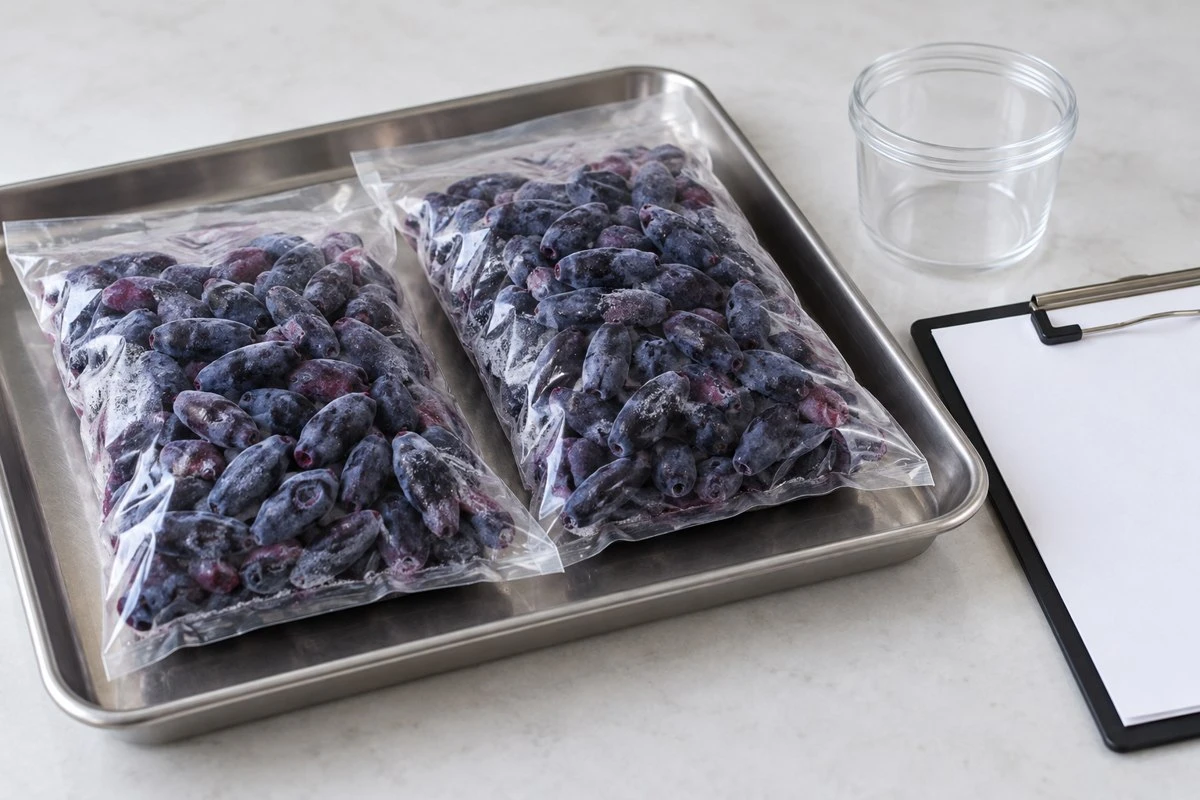
Illustrative haskap sealed retained sample.
Do not substitute another supplier's published limits for an agreed contract. A formal standard may apply in a particular context, but its scope and current applicability must be checked. Otherwise, the buyer and supplier should establish reasonable limits from the intended use and representative evidence. The same discipline applies to pesticide, microbiological and other analytical requirements: requested reports must match the product, lot and destination, with appropriate methods and interpretation. A certificate from an unrelated lot is not evidence for the shipment being accepted.
Define the handling of discrepancies before shipment. Decide how quickly the buyer reports a concern, which photographs and measurements accompany it, how retained samples are examined and who authorizes a disposition. Preserve original data and sample history. Repeated tests should follow the agreed method rather than progressively changing thawing time or defect definitions until a preferred result appears. If different laboratories or inspectors are involved, reconcile method differences before assuming the fruit itself changed.
The final commercial record can then connect an identified ingredient with a usable specification, pack and application. Share the required form, quantity, destination, private-label wording and documents when requesting a quote. We keep confirmation of the offered berry identity separate from price and packing discussions. That sequence helps the buyer approve a material it can trace, inspect and use consistently, while leaving any missing evidence visible until the responsible party supplies it.
Continue reading about berry preparation
Choose whether a test should describe the lot average or differences between individual packs.
Understand why a stable drainage result cannot establish every aspect of fruit structure.
Discuss frozen haskap berries with GreenLand-food
GreenLand-food is a frozen fruit supplier and manufacturer in China, offering factory-direct wholesale supply. For frozen haskap berries, the offered lot's identity and accepted market name require confirmation before specification approval.
Send your required product form, specification, packing, quantity, application, destination, private-label needs and requested documents so we can define the sample and sourcing discussion.