


Baking with Haskap Berries: Tartness, Juice and Color
Oct 19, 2026
Leave a message

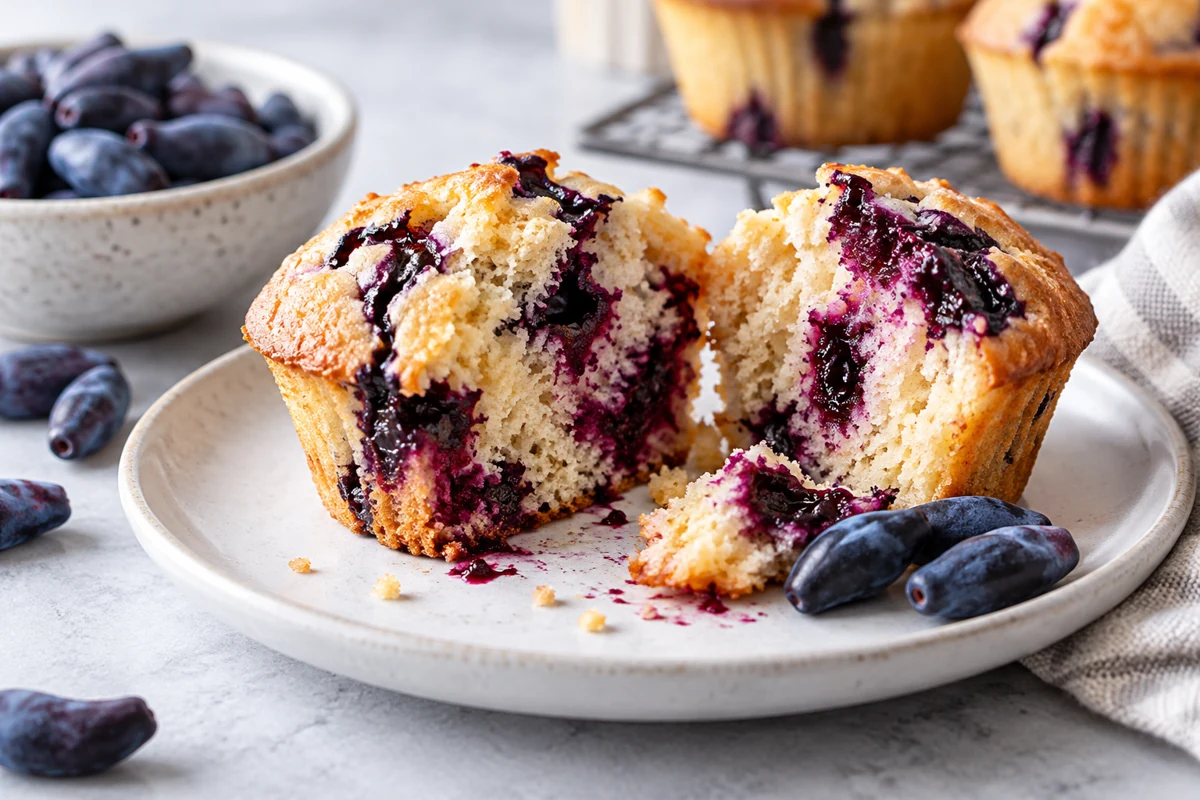
The most useful question is how the berry should behave in the finished serving. Distinct fruit pockets, a smooth purple filling and an evenly colored cake are different targets. At GreenLand-food, we use that application description to focus the frozen-ingredient discussion. Whole-berry appearance, breakage, thaw yield and added-ingredient status matter in different ways for each target. This guide explains the decisions behind a bakery trial rather than treating haskap as an automatic equal-volume replacement for every blueberry recipe.
Decide how the berry should appear after baking
Begin by describing the cut surface of the finished food. In a muffin, the goal may be separate dark fruit pockets with enough surrounding crumb to hold the piece together. In a tart, the fruit may form a coherent filling above a crisp pastry base. In a cake with a fruit layer, the important feature may be a clean boundary that survives slicing and storage. These visual descriptions also suggest physical requirements: piece size, filling thickness, fruit loading and the amount of moisture the surrounding structure can accept.
Haskap is commonly elongated, with thin skin and deeply colored juice. A frozen berry may look intact while its flesh becomes much softer on thawing. The shape can therefore survive early mixing better than the later eating texture suggests. Decide whether recognizable whole outlines are essential or whether broken fruit is acceptable. A formula that intentionally purees the berries can use a different appearance specification from a premium muffin where each fruit pocket is expected to remain visible.
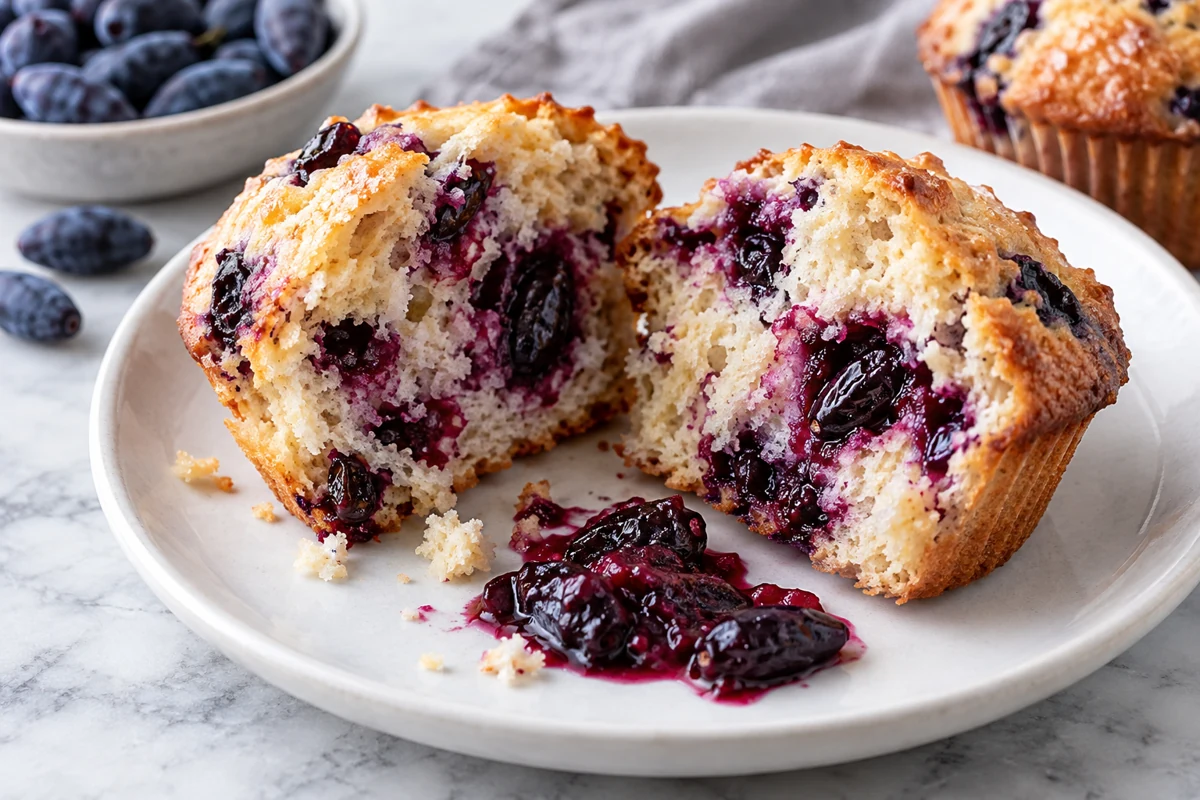
A baked inclusion and a softer fruit preparation ask different things of the same berry. Illustrative image.
The visible fruit percentage also needs a practical definition. More berries can strengthen flavor, but a crowded batter has less structure between wet inclusions. In a small muffin, a few large pieces may create weak spots that are less noticeable in a larger loaf. Compare the intended serving size and fruit distribution rather than assuming that a successful loaf formula can be scaled directly into miniature cakes. Depositing equipment and mixing time can add further variation when the trial moves beyond a bowl and spoon.
A useful development brief identifies the fruit form, the desired appearance and the condition in which the fruit enters the recipe. Frozen whole fruit, thawed drained fruit, cooked compote and a prepared filling should be treated as separate candidates. Each changes the movement of moisture and color. Photograph a representative cut surface after the agreed cooling period and keep the recipe record with it. The picture helps communicate the target, while the ingredient and process records explain how it was achieved.
Published haskap baking recipes show both direct fruit addition and separately cooked fillings. These are useful culinary routes to investigate, not universal performance guarantees. A practical trial should answer whether the berry's appearance contributes to the product's value and whether that appearance survives the expected hold. If the food will be frozen again after baking, include that cycle in the assessment. The product sold to the customer may have a different crumb and filling condition from the freshly baked development sample.
| Route | Useful target | Decision to record |
|---|---|---|
| Whole frozen fruit | Visible baked inclusions | Cold load and moisture near each berry |
| Thawed fruit | Controlled liquid addition | Juice accounting and fragile skins |
| Cooked filling | Defined fruit layer | Cooling, filling set and pastry contact |
Balance haskap tartness in the complete recipe
Haskap often brings a noticeable tartness that can stand out in sweet baked foods. Taste it within the complete serving, including pastry, icing, cream or other accompaniments. A berry that seems very sharp on its own may be balanced in a sweet muffin, while a mild fruit dose may disappear beside rich frosting. Establish the intended flavor before increasing sugar. Otherwise, the team may keep correcting a spoonful of fruit without considering the food the customer will actually eat.
Sugar has structural roles in baking as well as a sensory role. Changing it can affect batter behavior, browning, moisture and the way the crumb sets. A large increase made only to soften berry tartness can therefore create a new texture problem. Begin with a recipe developed for a similar wet fruit application, keep careful records and change one main factor at a time. If the fruit component is a separate filling, sweetness can sometimes be adjusted there without redesigning the entire cake or pastry.
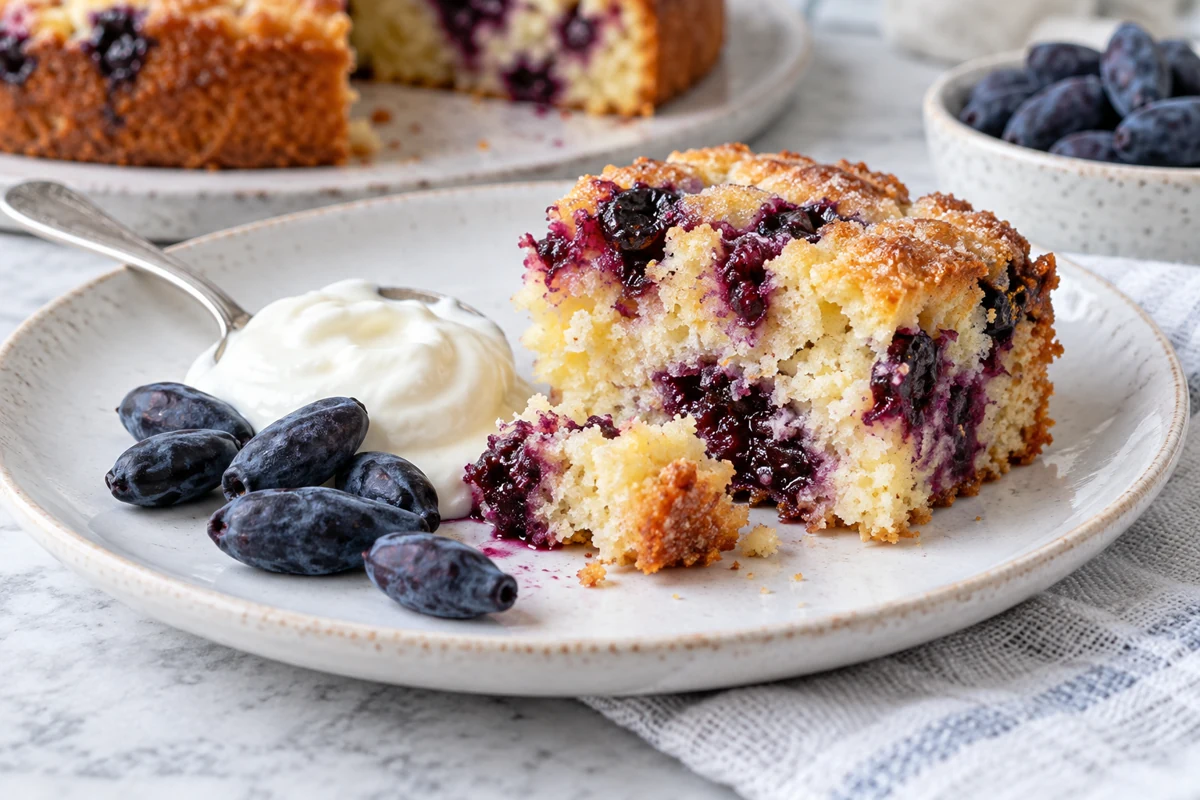
Taste the fruit with the cake and its intended accompaniment. Illustrative image.
Acidity also interacts with the recipe's leavening system. Do not add extra baking soda simply to make the berry taste less sour. The balance of acid and alkali affects gas production, flavor and color, and the change should be assessed within a properly formulated recipe. Haskap's purple pigments are sensitive to their surrounding conditions, so an alkaline adjustment can alter appearance as well as taste. The right response to an unwanted shade is to review the formula and process, not to assume the fruit lot is defective.
For commercial comparison, note the fruit's sensory profile and any agreed analytical values separately. Soluble solids and acidity measurements can help describe a lot, but they do not replace tasting the final bake. Two fruit samples can have similar measurements and still produce different aroma or astringency impressions. Conversely, a darker berry pocket may look more intense without tasting stronger. Keep viewing conditions and serving temperature consistent so those visual cues do not dominate the judgment.
The trial record should state the finished serving and the point at which it was evaluated. A warm cake, a chilled filled pastry and a room-temperature muffin present sweetness and acidity differently. Include the intended accompaniment when it is part of the product concept. If customers will add their own topping, assess the base product on its own as well. A balanced flavor specification describes the experience the buyer wants to reproduce; it should not promise that every haskap cultivar or crop has one fixed level of tartness.
Control juice before it reaches the crumb or crust
The water released by haskap needs a destination in the recipe. In a batter, it can soften the area around each berry before the crumb has set. In pastry, it can move into the base. In a cooked filling, it can become part of the thickened fruit phase. The same liquid is useful in one format and troublesome in another. Decide whether the recipe should retain all fruit juice, drain some of it, or convert it into a controlled filling before assembly.
If thawing and draining are part of the method, thaw under controlled refrigeration in a clean covered arrangement and collect the juice. Record the starting fruit mass, drained fruit mass and liquid recovered. Use the same mesh, drainage period and handling pressure for comparisons. Squeezing berries can increase the amount of liquid and pulp collected, so it should not be confused with gravity drainage. A recipe that names only a weight of berries is incomplete if different operators interpret that weight before and after draining.
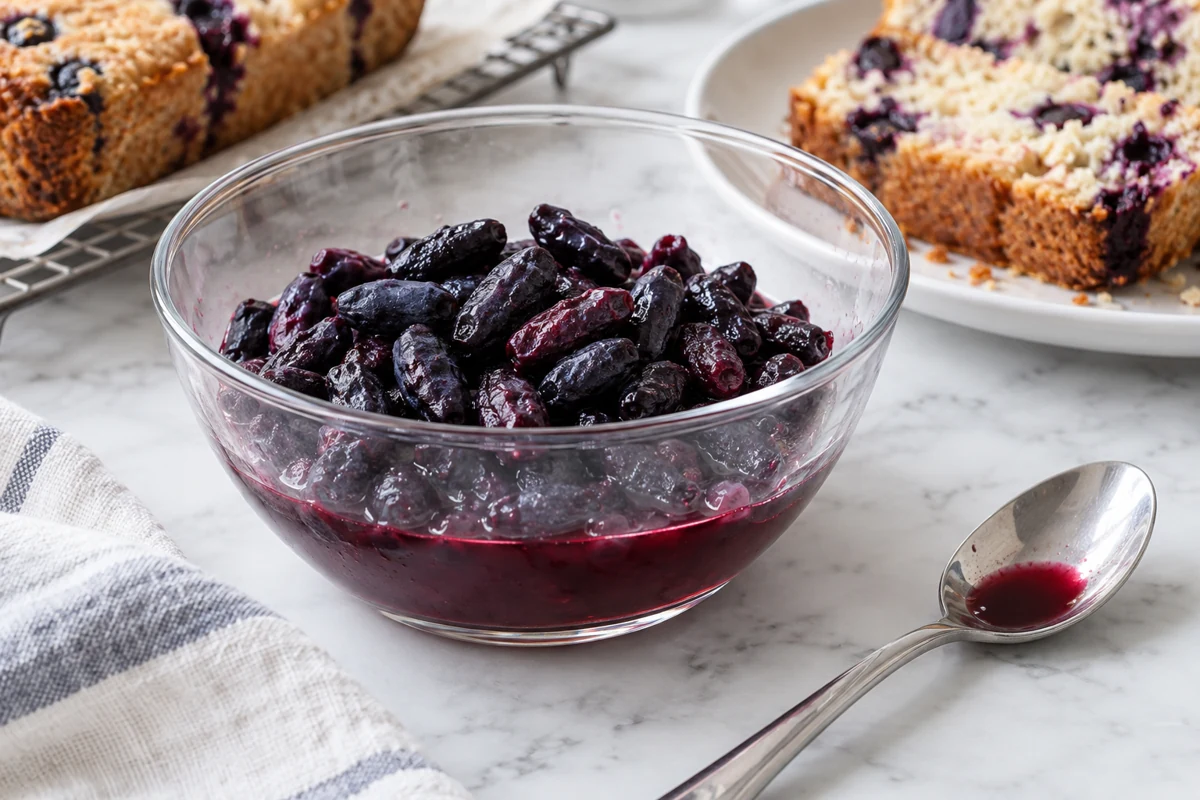
Released juice is a measured recipe input, whether retained or separated. Illustrative image.
The Haskap Canada Association's pie-filling recipe illustrates a useful culinary idea: drain thawed fruit and return a measured amount of the juice to the filling. Its broad claim comparing haskap juice with every other berry is not needed to use that principle. The practical value is knowing how much liquid enters the pan. For development, quantify the liquid and assess the resulting cooled filling under the actual pastry conditions. The recipe's measurements are not a commercial yield specification for an incoming lot.
Thickening needs to match the application. A sauce that pours pleasantly over a dessert may flow out of a cut tart. A filling that holds a sharp slice may feel pasty inside a small pastry. The gelling or thickening ingredient also has its own preparation requirements and tolerance of acidity, heat, freezing and reheating. Follow the relevant formulation and technical guidance. Adding more starch by instinct can conceal excess water temporarily while creating a dull or gummy eating texture after cooling.
Retained juice should remain traceable to the trial rather than being casually poured into another recipe. It carries color and flavor as well as water, so discarding it changes both yield and ingredient cost. If a bakery plans a separate use for the liquid, that use needs its own handling and safety requirements. Commercial buyers can compare the cost of the final acceptable baked food instead of price per kilogram of frozen fruit alone. A less expensive lot may require different drainage or filling preparation and produce fewer saleable portions.
Fold frozen berries into batter with restraint
For a recipe designed to accept frozen fruit, measure the berries while frozen and add them at the specified point in mixing. A brief gentle fold near the end can reduce early skin damage and streaking. It also helps keep the fruit from warming and releasing juice before the batter reaches the oven. This is a practical handling choice, not a guarantee of intact berries. Mixing equipment, batch size and the firmness of the fruit all affect how much damage occurs.
Avoid leaving a mixed batter standing while several other jobs are completed unless the formula has been designed for that hold. As the berries thaw, their liquid can spread and their weight distribution can change. The batter temperature and leavening behavior may also shift. In production trials, record the interval between fruit addition and depositing, then the interval before baking. An excellent first tray followed by a much wetter last tray can reflect process timing rather than a difference in the fruit itself.
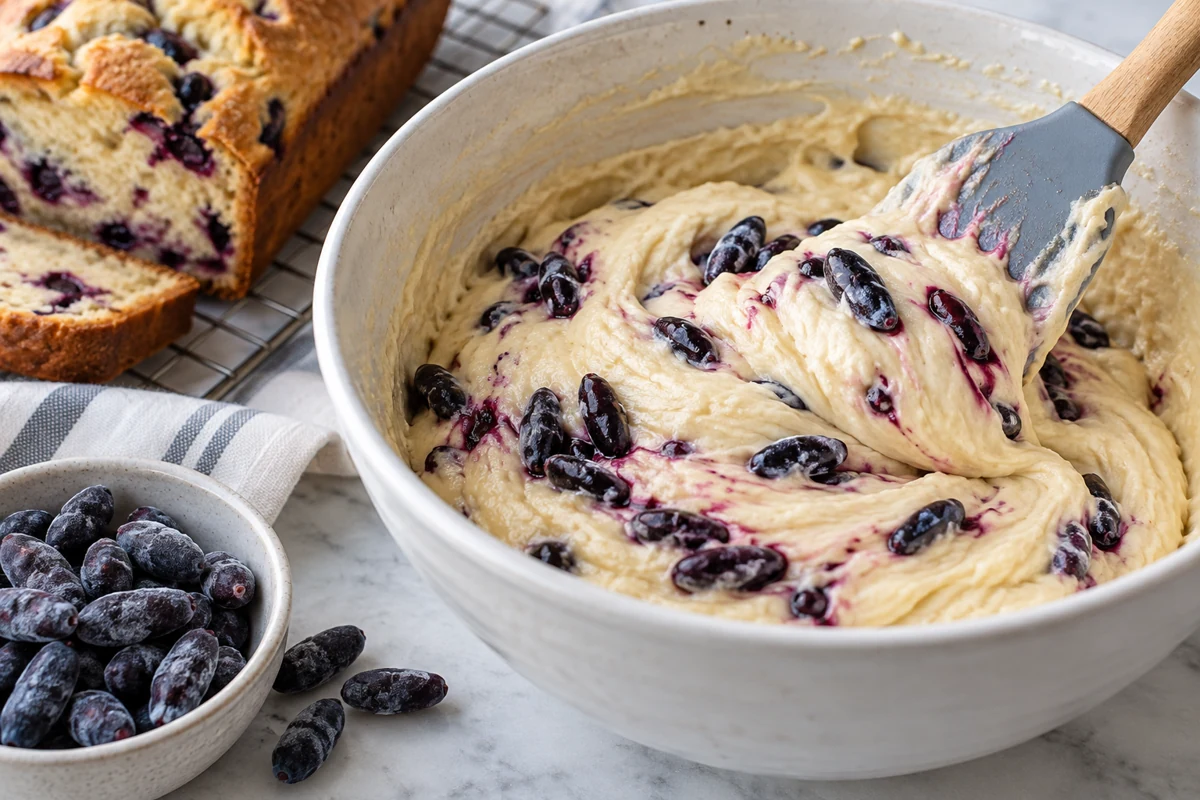
Gentle folding can limit skin breakage and purple streaking. Illustrative image.
Berry size and loading should be considered alongside batter viscosity. Large elongated pieces can create different pockets from small fragments, even when their total mass is the same. A very fluid batter may not support the desired distribution. Coating fruit with a small amount of flour appears in many baking methods, but it does not remove the water in the berries or guarantee that they will stay suspended. Use such a step only within a recipe that has been tested for the intended food and handling conditions.
Frozen fruit adds a cold load that can affect cooking near the inclusion. King Arthur Baking's discussion of frozen fruit highlights the difficulty of short cooking processes such as pancakes, where the exterior can brown while the area around cold fruit remains underdone. Evaluate the actual product through the applicable doneness and safety checks. A dark crust or the oven's set temperature cannot establish that every part of a commercial fruit-loaded product received the required process.
Keep the visual target realistic. Thin-skinned haskap will often stain some adjacent crumb, particularly when fruit breaks or juice is mixed through the batter. If pale crumb with sharply defined fruit pockets is essential, compare a lower fruit load, a different piece condition or a separately prepared inclusion. If a purple marbled crumb is welcome, controlled color distribution may be more useful than trying to eliminate it. The trial should show which appearance the customer accepts and whether the process can reproduce it without excessive handling losses.
Prepare fillings for pies, tarts and pastry
A separately cooked filling lets the developer assess the fruit phase before it enters the pastry. The berries can be thawed under the chosen procedure, combined with a measured amount of juice and prepared to the specified consistency. Cooling the filling under appropriate controls then makes it possible to judge its behavior during assembly. This route can be particularly useful when the pastry has a short bake or when the final dessert is assembled with a pre-baked shell.
The filling must still suit the next process. A filling used cold in a baked tart shell has a different history from one baked inside a closed pie. A pastry that will be frozen before baking adds another condition. Assess the thickening system, fruit particle size and moisture movement in that complete sequence. A spoon test in a bowl does not reveal whether a filling will leak through a folded seam or soften the base of a tart during an overnight hold.
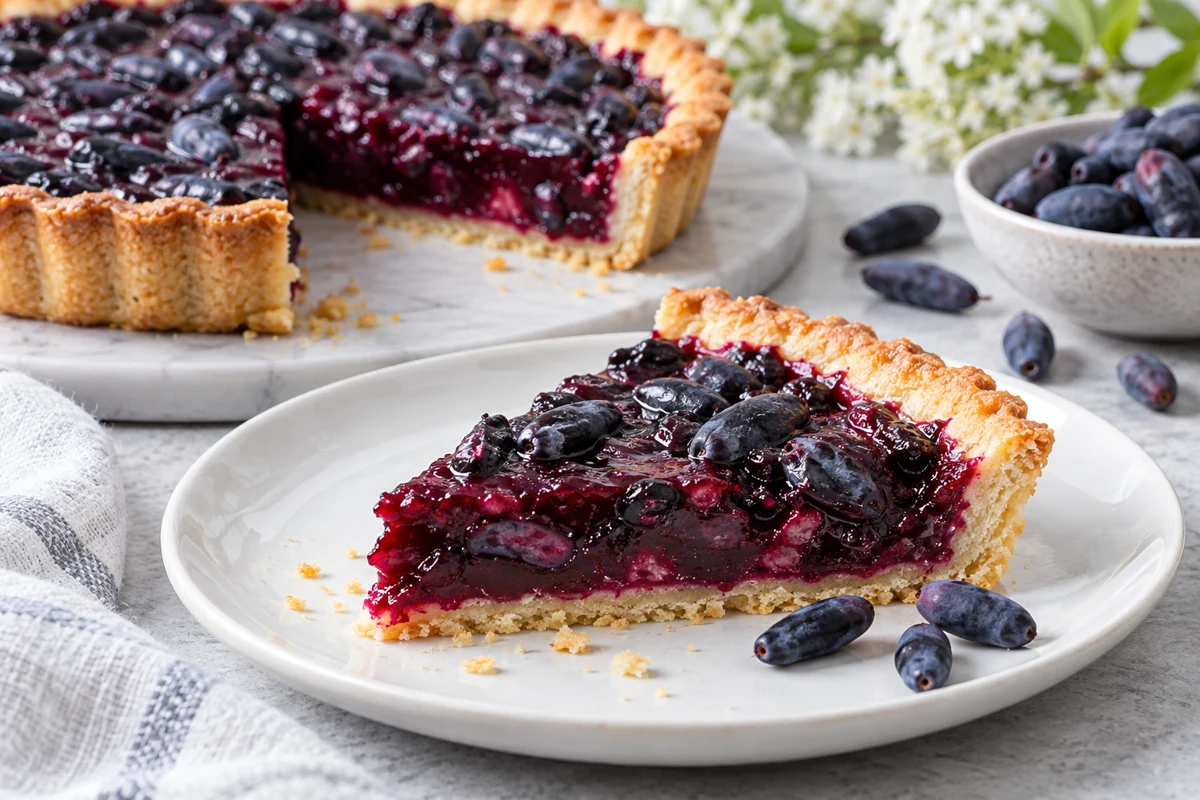
Assess the filling together with its pastry after cooling. Illustrative image.
Define the amount deposited into each piece. More filling changes the balance between fruit and pastry and may increase the distance heat needs to travel. It can also affect seam closure or overflow. Weigh representative portions during the trial and examine the cut product at the intended serving temperature. If the finished food is sold by weight, record cooking loss and usable yield as well. These measurements help distinguish fruit variation from differences in deposit weight and pastry thickness.
Fruit pieces and smooth puree produce different eating experiences. Whole or partly broken haskap can provide visible fruit within a filling, while puree gives more even color and fewer distinct pockets. Straining may remove some skin and seed material but changes yield and body. Decide whether that change improves the product enough to justify the extra step. A smooth filling is not automatically a higher grade; it is a different design choice that should be reflected in the ingredient description and trial record.
Food safety follows the complete preparation route. Frozen berries are not sanitized by freezing, and the FDA identifies survival of viruses as a concern in berry supply chains. A filling added after baking needs a suitable validated process and controlled handling of its own. For a commercially baked product, the responsible team should confirm that the actual fruit load and process meet the required controls. Neither a household recipe nor a photograph of bubbling filling proves that an industrial process is adequate for every hazard and pack format.
Judge color and texture after cooling and holding
Plan the assessment at the time the customer will receive or eat the food. Cooling allows crumb and filling structure to settle and can reveal moisture migration that was less obvious while the product was hot. A slice that collapses immediately after leaving the oven may simply have been cut too early, while a slice that becomes wet during the intended hold points to a different issue. Record the cooling and storage conditions so those observations can be interpreted correctly.
Haskap's pigments can produce deep purple fruit pockets, red-purple filling or a softer violet color when dispersed through a pale food. Their appearance depends on the formula and processing conditions. The published haskap anthocyanin research shows that processing and storage can affect pigment compounds, but a bakery photograph cannot measure their retention. Avoid claims that a brighter crumb proves higher antioxidant content. For a bakery buyer, the immediate task is usually a consistent, acceptable appearance in the complete product.
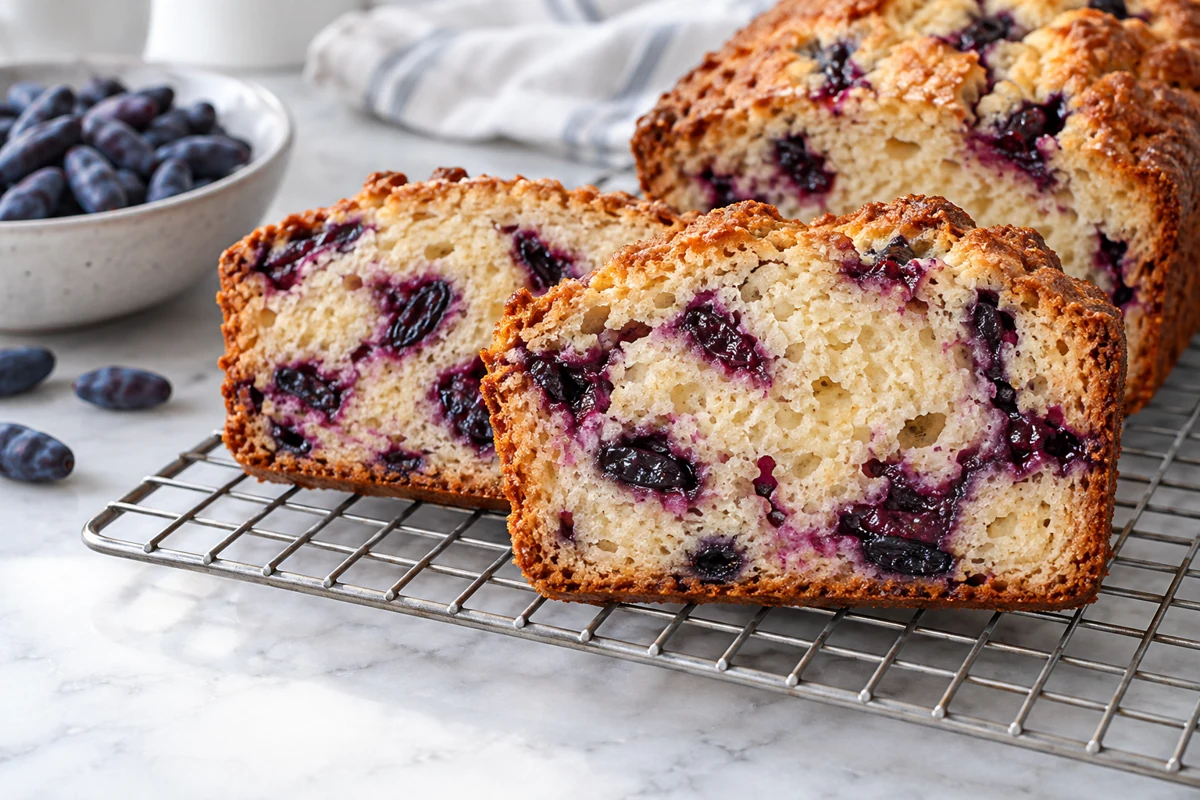
Sliced cooled loaf illustrates the inspection stage, not an approved production trial. Illustrative image.
Use the same cut thickness, plate, light and viewing time when comparing trial samples. A thick dark filling looks different from a thin smear of the same preparation. Phone cameras may adjust color automatically, particularly when a purple food sits against a white background. Photographs are useful records of distribution and gross appearance, but numerical color acceptance needs an agreed method. Keep the reference sample description alongside the image so the standard does not depend entirely on a screen.
Texture assessment should include the crumb close to the fruit, the structure farther away and the base or seam where liquid can collect. Look for gummy bands, wet patches, crumbling, filling leakage and unacceptable seed or skin feel. These are proposed observations for a trial, not claims that a particular lot has failed. Link each finding to a possible process question. A wet base may require a filling adjustment, whereas uneven fruit distribution may come from mixing, depositing or the size distribution of the berries.
If the finished bakery product will be frozen and thawed, test that actual sequence with the intended packaging and storage conditions. Freezing the finished product can change the relationship between fruit moisture and surrounding pastry. The target is the food at the end of its real distribution route. Agree on the acceptable hold and sensory standard with the customer and quality team. A successful fresh bake is valuable development evidence, but it should not be presented as proof of the same quality after a distribution cycle that has not been evaluated.
A repeatable application review
- Keep fruit lot, loading and the base recipe fixed for the first comparison.
- Record frozen or thawed state and any liquid removed or returned.
- Apply the intended bake and relevant doneness and safety checks.
- Cool fully before judging crumb, filling, color and moisture migration.
Approve frozen haskap against a bakery trial
Specify the berry identity and food-use documentation before evaluating its baking performance. Common names and a dark elongated appearance are insufficient to authenticate an unfamiliar ingredient. The supplier-listed bulk photograph helps show the offered physical form, while the botanical and commercial records establish what the material is. Request the relevant documentation for the destination and finished label. Keep any identity uncertainty visible until it is resolved rather than carrying a provisional market name into a product claim.
For whole-fruit bakery uses, discuss size range, intact and broken pieces, visible defects, added ingredients and frozen separation. For filling production, focus additionally on the agreed thaw or extraction method and the resulting flavor, liquid and body. These priorities should be connected to the buyer's recipe. A general statement such as premium berries leaves too much open to interpretation. An approved application sample and a written description of acceptable variation give the receiving team a more useful basis for comparison.

Existing GreenLand product-page photograph: visible bulk berry form only. Confirm botanical identity, lot specification and suitability for the intended process separately.
Run the first meaningful comparison with the same formula and process for each candidate lot. Use representative fruit, a fixed dose and consistent mixing, depositing, baking and cooling conditions. Record the cut-surface appearance, sensory balance and yield at the relevant time. Then investigate any required recipe adjustment as a separate trial. This sequence helps the buyer identify whether a change comes from the fruit or from the formulation. It also makes later supplier discussions more concrete than a report that the latest batch seemed different.
Order details should fit the bakery's working pattern. Confirm pack size, lot identification, frozen storage requirements, quantities, lead time and delivery destination. A large bag may suit a high-volume kettle but be inconvenient for small daily muffin batches. If the team must thaw only part of a block, discuss whether another supplied form would be more manageable. Availability and commercial terms need confirmation for the actual project. Do not assume that a catalogue category establishes every packing option or a standing production commitment.
Send GreenLand-food the product concept, target berry appearance, intended fruit state at mixing and the acceptance method your team wants to use. Include whether the finished food is sold fresh, chilled or frozen and whether fruit is added before or after the main heat process. Those details direct the sample and document discussion toward the relevant risks and performance needs. The strongest purchasing decision comes from a verified ingredient tested in the actual baked food, with enough records to repeat the result when a new lot arrives.
Related reading
What to Do With Frozen Blueberries
Review blueberry baking and dairy routes as a comparison framework, without assuming identical haskap performance.
How to Ensure Frozen Fruit Quality: From Field to Your Warehouse
Connect the application trial to incoming lot records, packaging and a defined acceptance method.
Source frozen haskap berries with GreenLand-food
GreenLand-food is a professional frozen haskap berries supplier and manufacturer in China, providing factory-direct wholesale supply for importers, food manufacturers, foodservice distributors, and private-label programs.
Send the intended preparation, fruit form, packing, quantity and destination. Confirm the botanical identity, agreed specification, microbiological route and documents for the actual SKU before approval.