


Freezing and Thawing Haskap Berries for Food Preparations
Oct 19, 2026
Leave a message

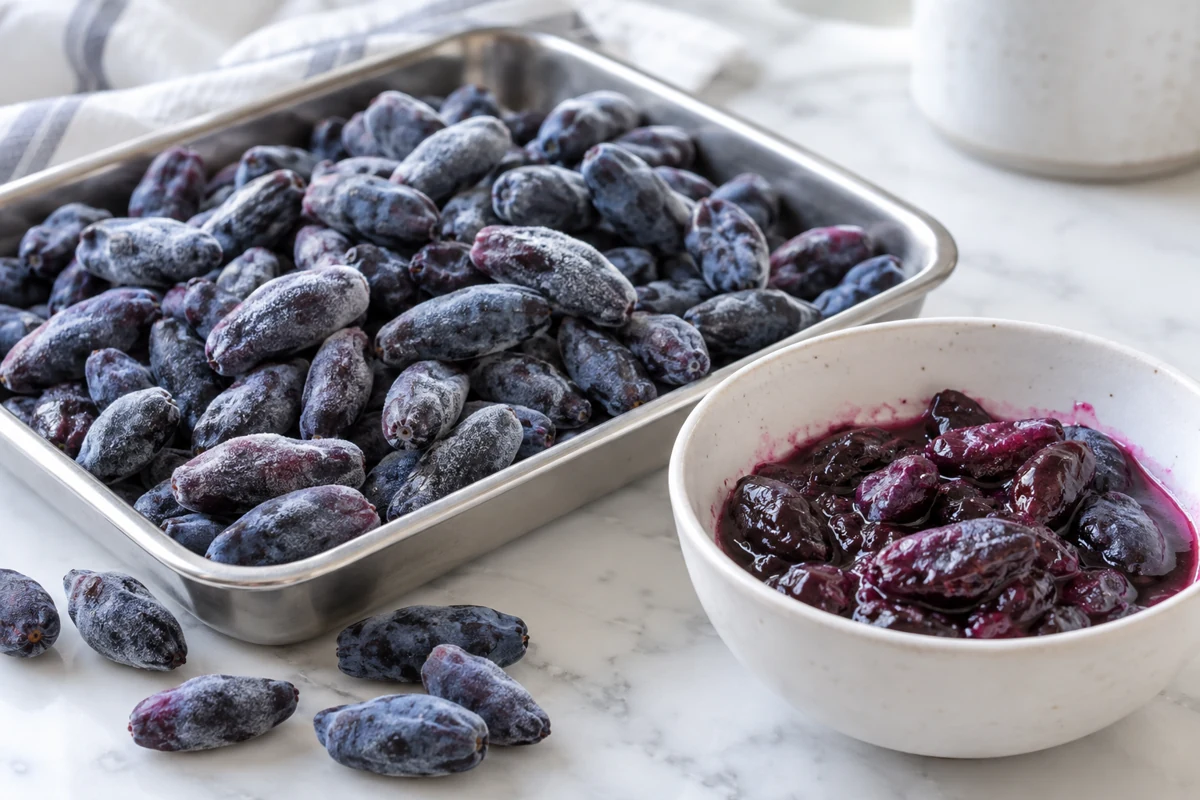
For a purchasing team, the useful specification describes both the frozen ingredient and its condition at the point of use. Free-flowing berries, drained thawed fruit and a fruit-and-juice mixture are different dosing materials. They can give different fruit distribution, water addition and color even when they begin in the same bag. We recommend defining that condition in the sample trial and carrying it into the order discussion. This guide covers edible cultivated haskap used as a food ingredient; a market name or dark berry photograph alone cannot establish the identity of an unfamiliar lot.
Choose the frozen state your preparation needs
Start with the role of the berry in the finished food. A bakery may want recognizable pieces surrounded by pale crumb. A sauce producer may want complete breakdown and uniform color. A dairy developer may need a prepared fruit ingredient with controlled solids and a verified microbiological route. These uses call for different handling even before sweetness or flavor is adjusted. Choosing the target first prevents an attractive frozen sample from being approved for a job it cannot perform after thawing.
Haskap commonly has an elongated shape, a blue surface bloom and deeply colored interior juice. The skin can remain visible after freezing while the flesh underneath has become more fragile. That is why a frozen visual inspection gives only part of the answer. The actual preparation should be examined when the fruit has reached the temperature and degree of softness used by the recipe. Appearance straight from the freezer does not predict how much colored liquid will move into a surrounding batter or yogurt.
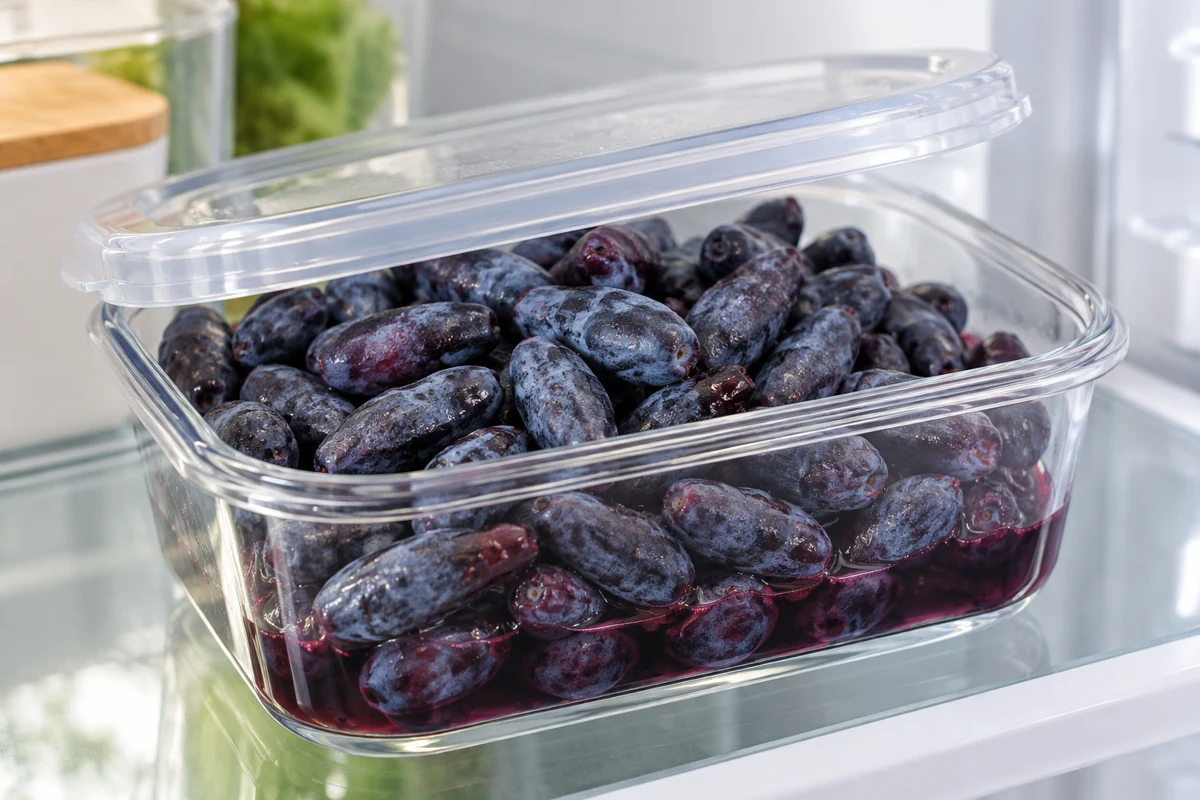
The covered container represents a refrigerated thaw; close the lid during normal handling. Illustrative image.
There are three useful starting conditions for development: berries used while fully frozen, partially softened berries, and fully thawed fruit with a defined treatment of its juice. Fully frozen fruit is convenient for portioning and may resist immediate crushing during a brief mix. Partial thawing can make pieces easier to divide or inspect, but an undefined partial thaw is hard to reproduce. Fully thawed fruit is easier to puree and measure as a liquid-containing ingredient, although it often loses the firm outline expected from fresh fruit.
The choice also changes the heat demand of a recipe. A cold mass of berries can delay heating near the fruit, particularly in a thin pancake or a short cooking process. It is not enough to see a browned exterior. Confirm the finished food is properly cooked under the applicable recipe and safety requirements. For a commercial product, the responsible food-safety team must establish the process rather than infer it from a domestic cooking time or the oven setting alone.
A useful trial therefore keeps the fruit state visible in its name and records. Write down whether the ingredient was frozen, partly thawed, fully thawed with juice, or thawed and drained. Include the method used to reach that state. The University of Saskatchewan describes haskap as suitable for several processed foods, including pastries and dairy products; that broad suitability is a starting point for development, not proof that one handling method fits every product. The final recipe and handling conditions decide which state is useful.
| Route | Useful target | Decision to record |
|---|---|---|
| Frozen directly | Suitable batter or heated preparation | Confirm cold load and final process |
| Thawed with juice | Sauce or measured fruit base | Include liquid in the formula |
| Thawed and drained | Defined low-drip inclusion | Record drained yield and juice destination |
Freeze sound berries in portions you can handle
For fresh berries being frozen in a kitchen, begin with sound edible fruit and remove leaves, stalks, damaged material and spoiled berries. Gentle handling matters because pressure can split soft skins before the fruit reaches the freezer. Work in manageable batches so that berries are not left in a deep, warm container while the rest of the preparation is completed. Freezing retains the ingredient's existing condition; it cannot restore damaged fruit or make spoiled material suitable for food.
Clean the fruit according to appropriate fresh-produce guidance and the supplier's instructions. A gentle rinse and thorough draining are common preparation steps for home freezing. Avoid prolonged soaking and aggressive rubbing that can damage haskap skins. Commercial frozen product should be handled according to its label and specification; an extra rinse is not automatically needed and is not a validated decontamination treatment. The receiving team should know whether preparation has already been completed and what further cooking is required.
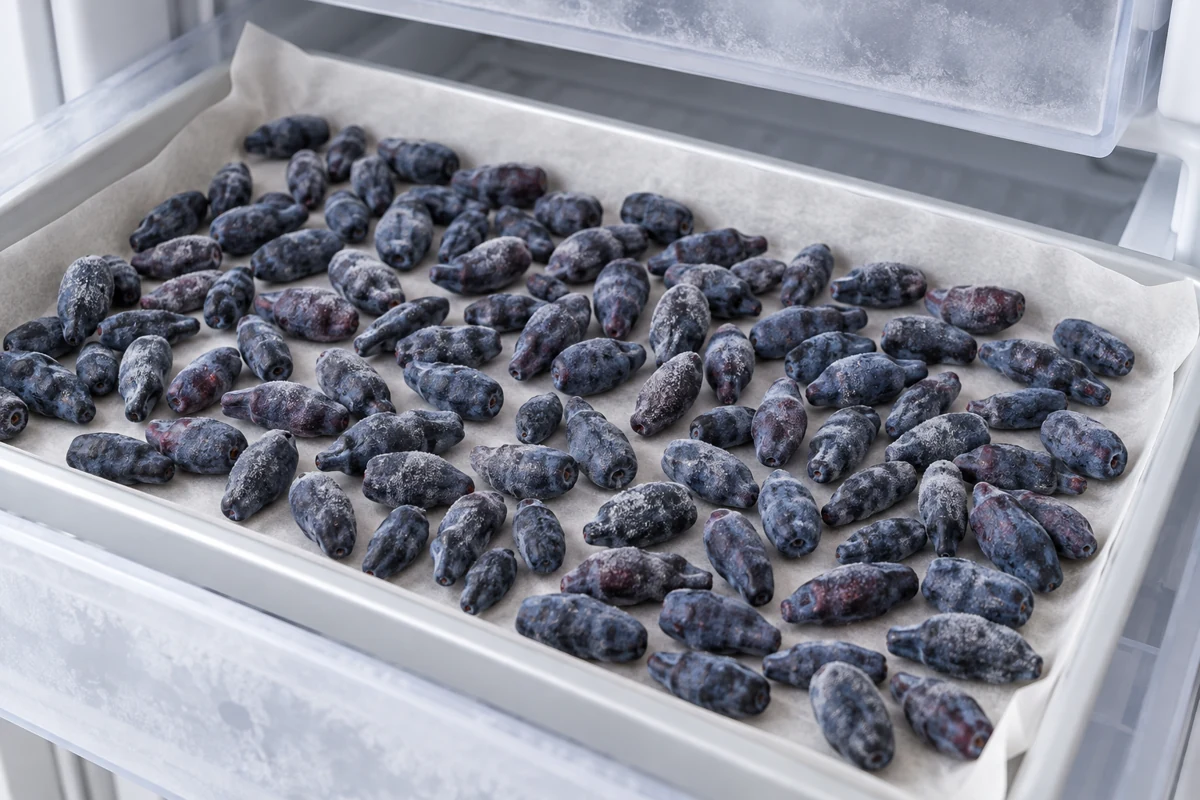
Separate berries in a single layer before moving them into a storage pack. Illustrative image.
Spread prepared berries in a shallow single layer when individual separation is wanted. Give them room to freeze rather than pouring a large pile onto the tray. The exact freezing time depends on the load, berry size, initial temperature and freezer performance. Check that the berries have become firm before transferring them to the final container. A time quoted for someone else's small tray should not be used as a guaranteed process time for a crowded freezer or a larger production batch.
Transfer the firm berries promptly into packaging intended for frozen food. Leaving them exposed for a long period increases the opportunity for moisture loss and odor pickup. Portioning by the amount used in one recipe avoids repeatedly taking out a large bag and warming the whole contents while measuring a small dose. Label the pack with its identity and freezing date, and retain any original lot information needed to trace bought-in fruit. A home tray-freezing method should not be described as an industrial IQF process without evidence of that process.
Unsweetened berries offer flexibility when the later recipe has its own sugar balance. Sugar-packed or syrup-packed fruit may be useful for a particular preparation, but the added ingredients must stay in the formula record. If one bag contains added sugar and another contains only fruit, equal gross weights do not provide equal amounts of berry. For a commercial ingredient, request the complete ingredient declaration and the basis of net weight before comparing prices or trial results. Record whether the sample contains loose ice or added liquid as well, since both can distort an apparently simple fruit-weight comparison.
Protect the frozen pack from moisture loss
After freezing, the pack needs to protect the fruit from drying, odor transfer and repeated warming. A suitable moisture barrier and a sound seal help preserve surface condition. Leave only the space needed for the chosen pack format and safe closure; do not force fragile berries into a container so tightly that they are crushed. Small foodservice packs and large processing bags face different handling conditions, so a successful small bag does not automatically establish the suitability of a bulk format.
Maintain the temperature stated in the product specification and storage instructions. Around minus 18 degrees Celsius is a common frozen-food storage reference, but the agreed requirement and actual product history govern the order. Air temperature at one moment cannot reconstruct the condition of every pallet through a journey. In commercial receiving, temperature records, packaging condition and representative product observations belong together. When they disagree, the lot needs review before being mixed into ordinary stock or used in a finished product.
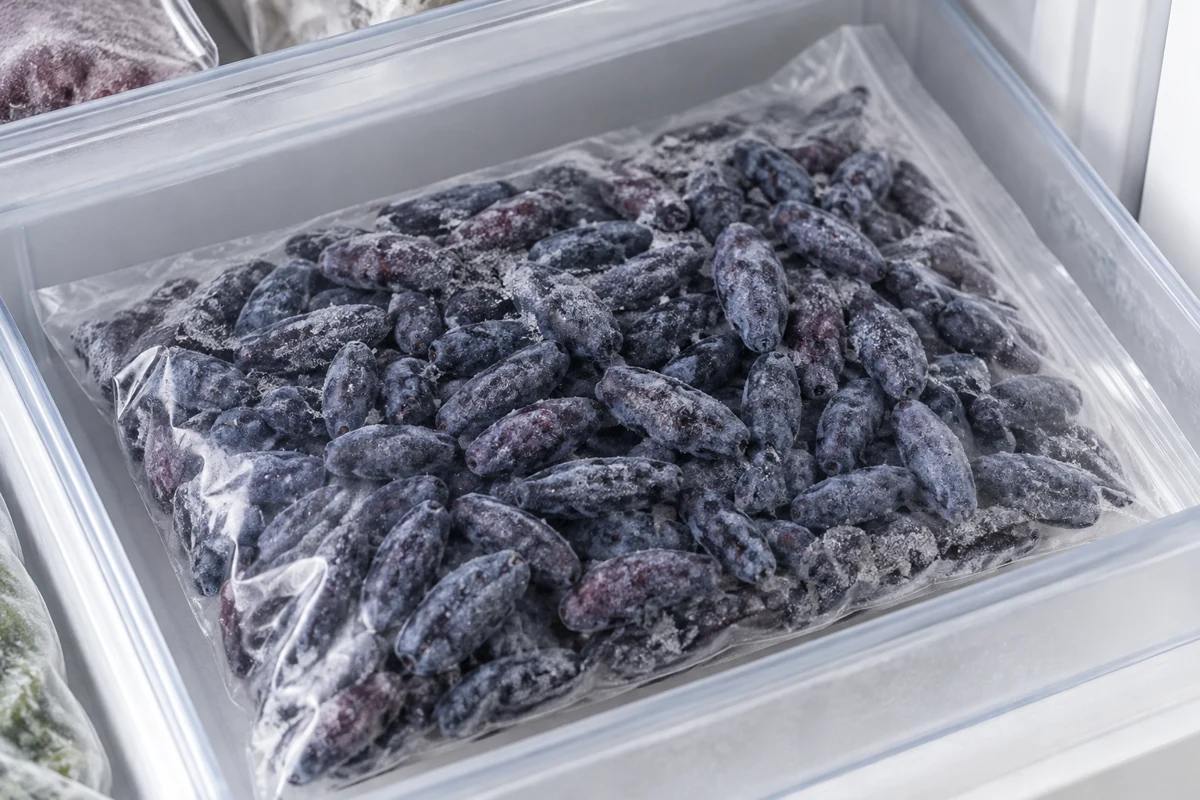
A sealed portion makes it easier to remove only the fruit needed. Illustrative image.
Surface frost, clumps and dry patches deserve investigation, but they do not each have one exclusive cause. Moisture entry, compression, loading conditions and partial warming can produce different combinations of visible defects. A bag that pours freely is easier to portion, yet free flow alone cannot prove that it has stayed within every required control. Equally, a few attached berries do not establish a safety failure by themselves. Describe the observed condition accurately and compare it with the accepted specification and supporting records.
Shelf life should come from the supplier's supported product specification and the buyer's intended application. A broad household freezing guide cannot set the commercial life of every haskap pack. Packaging, fruit condition, storage temperature, temperature variation and the quality attribute being measured all matter. A sauce may tolerate a change in whole-berry appearance that would be unacceptable for a visible fruit inclusion. That tolerance does not remove microbiological requirements or authorize the use of product beyond its approved conditions.
Research on haskap anthocyanins also distinguishes the initial freezing event from later frozen storage and thawing. The published study by Khattab and colleagues found different pigment behavior across those stages under its experimental conditions. It does not support a claim that every frozen lot retains a fixed percentage of its original color compounds. For a food developer, a practical response is to assess the actual lot in the actual recipe at relevant storage stages, while keeping the study's measurements separate from the appearance and safety of the finished food.
Thaw under refrigeration and keep track of the juice
When a preparation needs thawed fruit, move only the required quantity into a clean covered food container and thaw under controlled refrigeration. Allow space and time for the portion to soften without leaving it on a counter to speed the process. A shallow portion generally gives a more manageable thaw than a large dense block, but the operator still needs a defined endpoint. In a factory, the approved thawing procedure should specify load, container, temperature control, monitoring and the permitted period before processing.
Decide in advance whether the released juice stays with the berries. For a puree or cooked sauce, retaining it often makes sense because it contains part of the original fruit's water, flavor and color. If the recipe calls for drained fruit, collect the liquid in a clean vessel and measure it. Do not let the drainage decision change from one operator to another. A bag weighed before thawing and the drained fruit weighed afterward are different ingredients for formula calculations.
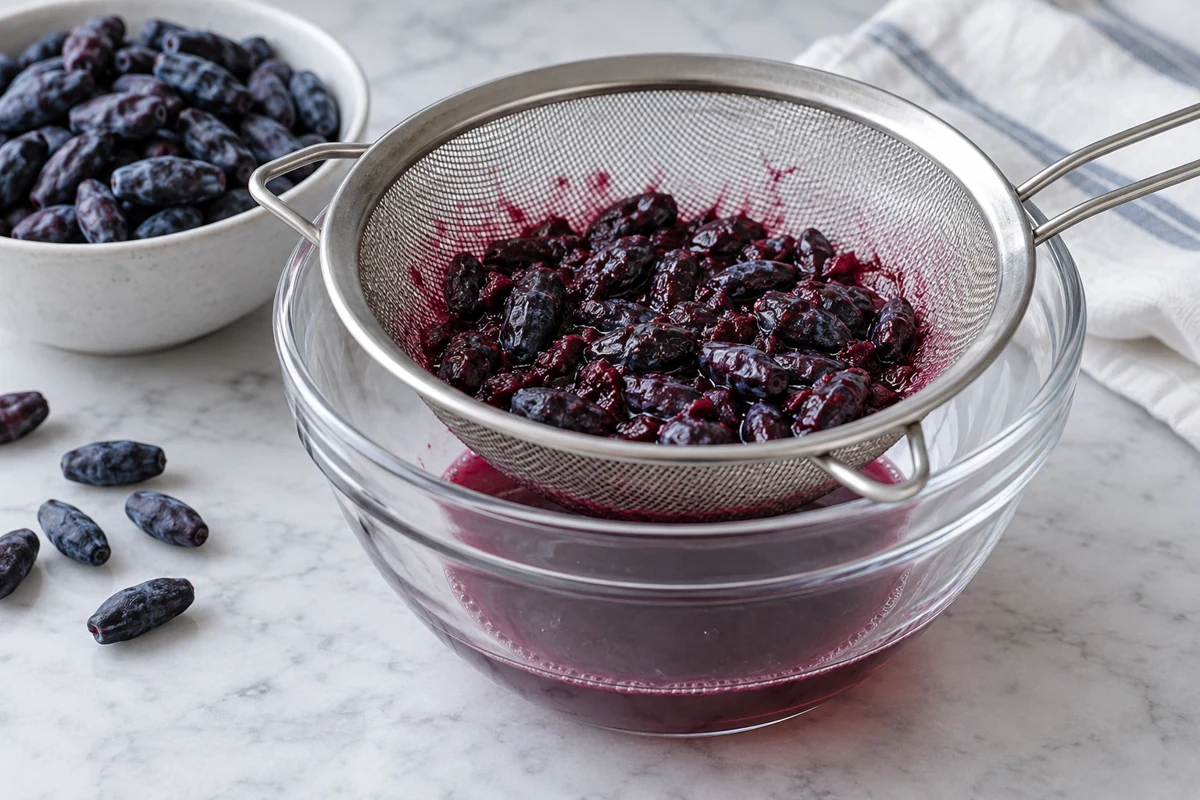
Collecting juice separately makes its weight visible before a recipe decision. Illustrative image.
Draining can be evaluated using a consistent mesh, sample mass, thaw endpoint and drainage period. Record those conditions alongside the result. A longer draining period, a finer mesh or pressure applied with a spoon can change the measured yield even when the fruit is unchanged. The comparison is only useful when the method is held steady. Gentle gravity drainage is also different from pressing: pressing breaks more tissue and moves more solids into the collected liquid.
For development, record the starting fruit mass, drained fruit mass and collected liquid mass, together with any residue left on equipment. These figures help explain where material went. They should not be presented as a universal haskap yield standard. If a trial loses material through spills or leaves substantial fruit on the sieve, that needs to be visible in the record. A neat percentage with an incomplete mass balance can give purchasing teams false confidence about usable yield and cost.
Microwave thawing needs particular care because uneven heating can change both texture and the later process. A laboratory result showing good retention of a pigment under one microwave treatment does not establish a broadly preferred thawing method for every berry application. If a recipe or approved production method uses microwave thawing, follow its specific instructions and proceed as required. Refrigerator thawing provides a practical controlled route for many preparations, but it still needs clean handling, defined timing and appropriate subsequent processing. Thawing does not itself make raw frozen berries ready to eat.
Use frozen berries directly when the recipe allows
Some preparations can use berries from frozen and avoid a separate thaw stage. This can be useful when intact frozen pieces are added near the end of mixing or when fruit goes directly into a cooked sauce. The method should already fit the recipe's heat capacity, mixing action and final texture. Adding frozen fruit to an established fresh-fruit formula without checking the result can change batter temperature, bake time and the amount of water released before the surrounding structure has set.
For muffins or loaf cakes, portion the berries while they are still frozen and minimize the time between mixing and baking. Gentle final folding can limit early crushing and purple streaking. It does not prevent juice release during baking, and it cannot guarantee a pale crumb. Berry loading, piece size, batter viscosity and the time spent in the mixer all influence the outcome. Record these together so a successful small trial can be repeated with the intended equipment and batch size.
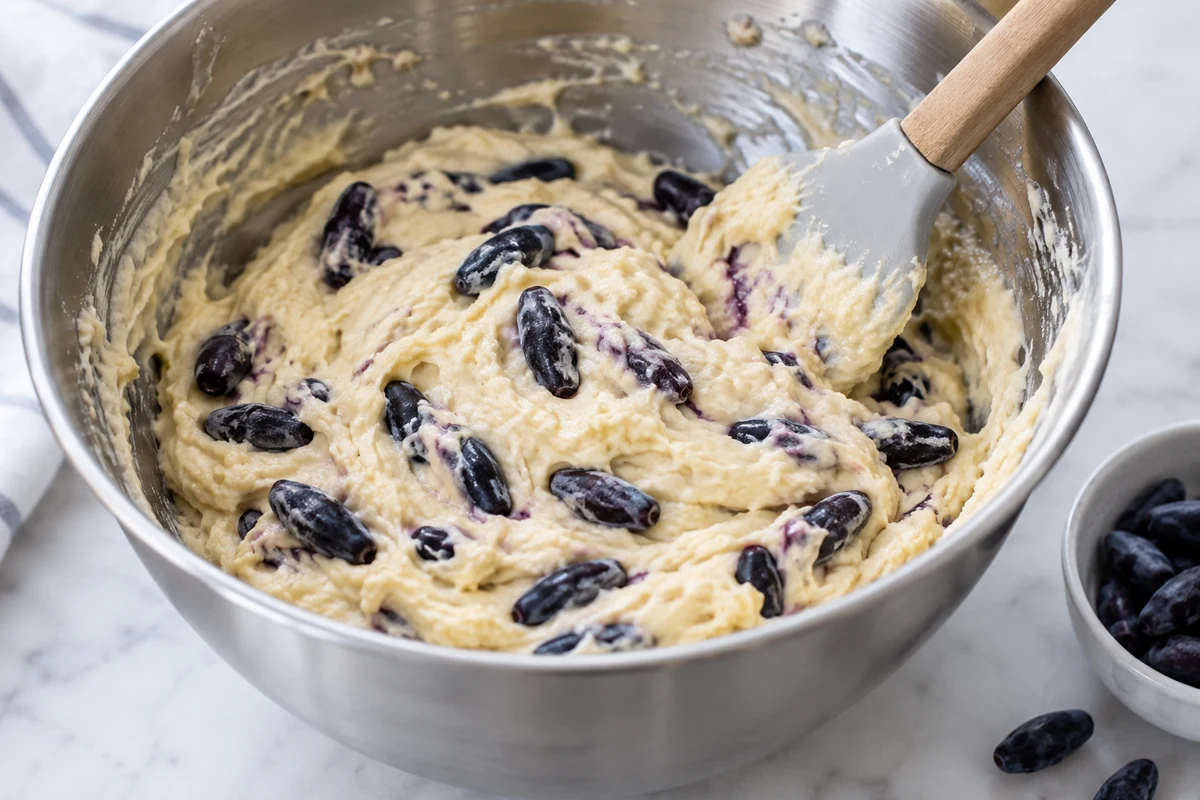
Frozen berries can enter a suitable batter directly, with gentle mixing. Illustrative image.
Short cooking processes need separate attention. A pancake may brown before the batter immediately around a large frozen berry cooks properly. A thin tart shell may become wet if a raw frozen filling releases more liquid than the formula can hold. In such cases, a controlled thaw, a cooked filling or a smaller inclusion may be a more useful development route. The choice should follow the food's structure and cooking requirements rather than a rule that frozen berries always go straight into every recipe.
Direct use in a blender is another physical option, but it does not resolve food safety. The FDA explains that freezing generally does not inactivate viruses that may contaminate berries. A smoothie, cold dessert or dairy mix that receives no further heat therefore needs fruit and controls suitable for that use. Washing, blending, acidity and a clean appearance do not replace verification of the microbiological route. Commercial buyers should identify the intended use clearly before approving the ingredient.
When the final preparation includes a validated cooking stage, record how frozen fruit enters that stage and how the process handles the actual load. A small pan of fruit and a large kettle of frozen berries do not warm in the same way. Avoid importing a household cooking time into a production specification. The useful purchasing question is whether the proposed fruit format, pack size and dosing method work within the buyer's established process. This connects frozen convenience to the equipment and food that will actually use it.
Compare thawed fruit by yield, texture and intended use
A useful sample review examines more than the color of the bag. First inspect the frozen material for the agreed form, separation, frost and visible damage. Then prepare a representative portion under the chosen thaw procedure. Look at the resulting pieces, juice and smell before the product enters a trial recipe. Any safety concern or unexplained abnormality needs the responsible quality team's assessment; sensory appearance alone cannot release a questionable lot for use.
For a whole-fruit application, consider whether the thawed pieces remain recognizable and whether the skins hold together during gentle mixing. The acceptable degree of split skin should be defined for that application. A jam kettle can tolerate loss of outline that would undermine a premium visible-fruit dessert. Even in a puree application, however, fruit identity, foreign material, flavor and microbiological suitability still matter. An application that breaks up fruit should not become a reason to accept poorly controlled raw material.
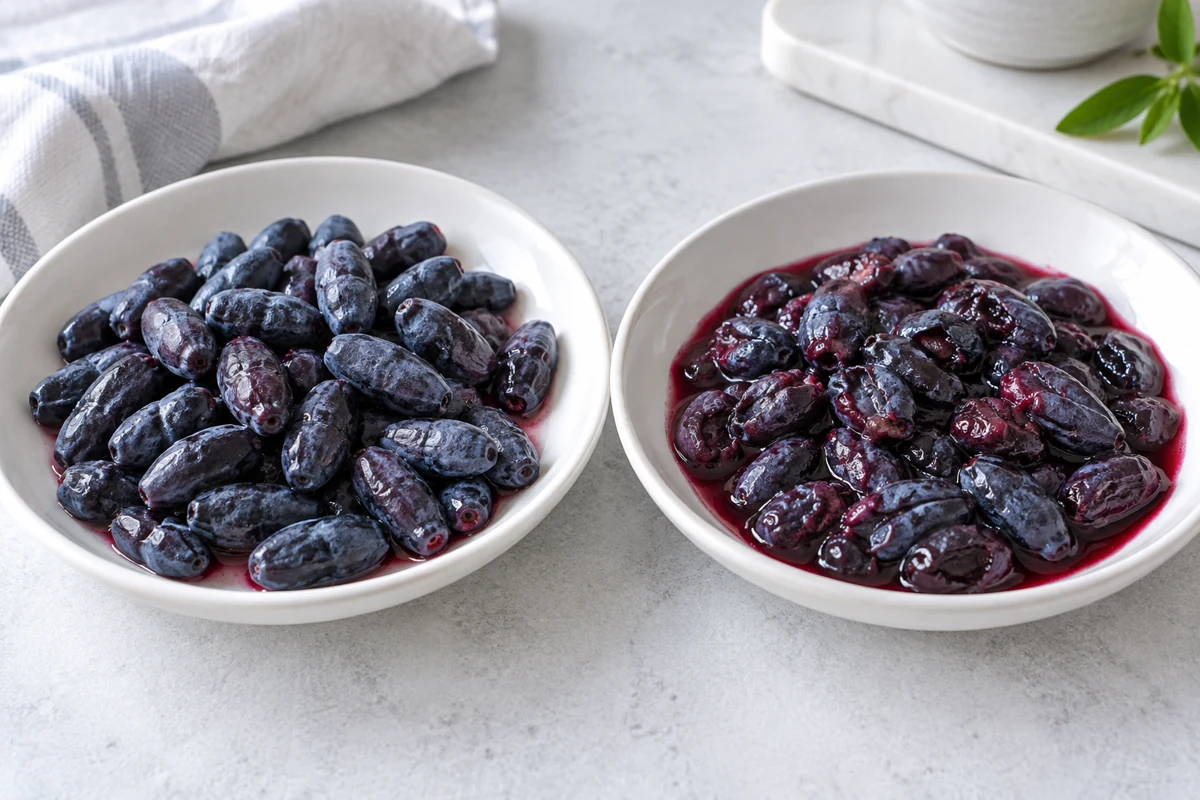
The two dishes illustrate texture differences to record; they are not measured test results. Illustrative image.
For a filling or sauce, compare the fruit and all retained juice under the same formulation. Record the amount of cooked product, its cooled consistency and its behavior after the intended hold. A preparation that seems thick while boiling may settle differently after cooling. The relevant endpoint could be a spoonable sauce, a stable pastry filling or a smooth puree suitable for dosing. Define that endpoint in words the production team can apply, then support it with the agreed measurements and sensory observations.
Color should be judged in context. Dark juice in a clear bowl, purple fruit in white yogurt and berry pockets in golden cake are different visual systems. Lighting, portion depth and the surrounding food can change how the same sample appears. Use consistent containers and viewing conditions for comparisons, and keep photographs as supporting records rather than analytical measurements. If a numerical color specification is needed, agree on the instrument and method rather than estimating values from a phone photograph.
Repeat the useful trial with representative material and the planned production conditions before treating the result as an order standard. One attractive sample can establish a development direction but cannot describe all future lots. Record the approved result, acceptable variation and the action required when a lot falls outside it. We use the application description to focus the supply discussion: whether your team needs intact pieces, retained juice, a predictable drained yield or a fruit ingredient that will be processed further determines which details need confirmation.
A repeatable application review
- Identify the lot and weigh a representative frozen portion.
- Thaw under the agreed refrigerated conditions in a covered vessel.
- Measure fruit and collected juice using the same separation method.
- Run the intended preparation and record the useful yield and texture.
Specify a repeatable frozen haskap order
An inquiry should identify the edible berry material and the required documentation for its botanical and commercial identity. Common names can vary between markets, so request the records that tie the supplied ingredient to the approved specification. The current supplier-listed photograph can show bulk form and visible condition, but it cannot authenticate a species, cultivar, treatment or certification. Confirm those points through the relevant records before using a name in purchasing, labeling or a finished-food claim.
Next describe the form and use. State whether you need whole frozen berries for direct addition, berries to be thawed and drained, or material intended for cooking and pureeing. Include the useful size range, allowable damage, expected separation and the agreed method for any thaw-yield comparison. If the product is sweetened or otherwise prepared, request its ingredient composition. Do not assume that every item sold under a frozen haskap name has the same form, added ingredients or intended use.

Existing GreenLand product-page photograph: visible bulk berry form only. Confirm botanical identity, lot specification and suitability for the intended process separately.
Packing should fit both the cold store and the recipe. A bulk bag that is economical to ship may be inconvenient if a kitchen uses only a small portion at a time. Repeatedly opening and partly warming a large pack can undermine the handling plan. Discuss inner packaging, carton arrangement, net weight, labeling and lot identification together with the expected order volume. Confirm available pack formats, minimum quantities and lead time for the actual order rather than treating them as permanent catalogue promises.
Ask for the documents needed by your quality team and destination market, including the agreed specification, traceability information and relevant release evidence. Explain whether the ingredient will receive a further validated process or enter a food with no further heat. This distinction should be resolved before approval. A certificate or a single test report has a defined scope; the buyer needs to check that scope against the particular product, lot and use. Do not infer ready-to-eat suitability from the fact that the fruit is frozen.
Our frozen haskap supply discussion starts with these application requirements. Send the recipe type, target fruit state, expected volume and destination together with any sample acceptance method already in use. A useful next step is an agreed sample trial with clear records of temperature, juice handling and finished-food performance. That gives both parties a concrete basis for the quotation and subsequent lot review, while preserving the difference between a proposed handling method and a process that your team has actually validated.
Related reading
How to Defrost Frozen Blueberries Without Losing Too Much Texture
Compare a blueberry thawing method with the haskap trial, keeping fruit identity and texture expectations separate.
How to Ensure Frozen Fruit Quality: From Field to Your Warehouse
Connect the application trial to incoming lot records, packaging and a defined acceptance method.
Source frozen haskap berries with GreenLand-food
GreenLand-food is a professional frozen haskap berries supplier and manufacturer in China, providing factory-direct wholesale supply for importers, food manufacturers, foodservice distributors, and private-label programs.
Send the intended preparation, fruit form, packing, quantity and destination. Confirm the botanical identity, agreed specification, microbiological route and documents for the actual SKU before approval.