


Can You Freeze Celery? Stalk Texture and Cooked Uses
Oct 19, 2026
Leave a message

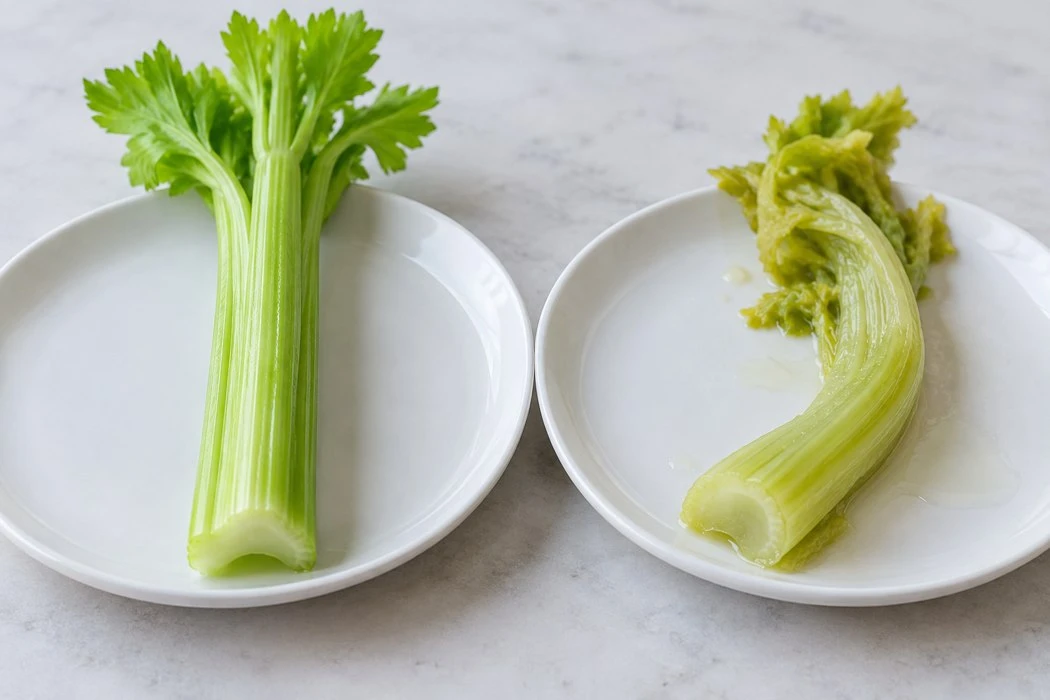
At GreenLand-food, we supply cut celery stalk pieces for agreed applications. We confirm the form and preparation status against the order because the word frozen does not tell a purchasing team whether the celery was blanched, how much leaf is present or how it will behave in a finished recipe. Those details belong beside the cut specification.
For a household freezer, follow an established preservation method and plan to cook the celery. For commercial purchasing, evaluate the actual frozen ingredient in the intended process. A photograph of bright pieces, a nominal cut size and a freezer temperature each answer only part of that decision.
What freezing changes in a celery stalk
A fresh celery rib carries water inside a structured plant tissue. Freezing turns part of that water into ice, and freezing and thawing can disrupt the tissue that supports a crisp bite. After the ice melts, the rib may bend more easily and release liquid. This explains why a bag can look attractive while frozen and behave differently when its contents reach the chopping board or pan. Frozen appearance is useful for inspecting the delivered form, but it is an incomplete test of eating texture.
The National Center for Home Food Preservation explicitly places frozen celery in cooked dishes because crispness is lost. That advice provides a practical starting point for home use. It does not mean every commercially frozen piece will have an identical degree of softness, or that all cooked celery should disappear into the dish. Raw material, rib thickness, preparation, freezing history and the buyer's cooking cycle can change the result. Judge the degree of structure that remains in the particular use you are developing.
Distinguish tenderness from strings. A celery piece can become soft in the surrounding tissue while a coarse strand remains noticeable during chewing. Longer cooking may change the overall bite without resolving every objectionable strand. Removing coarse material before freezing and agreeing an appropriate trim specification therefore have value even when the ingredient is intended for soup. A blender can make the bulk texture smoother while leaving strands that catch on a sieve or become apparent in a spoonful.
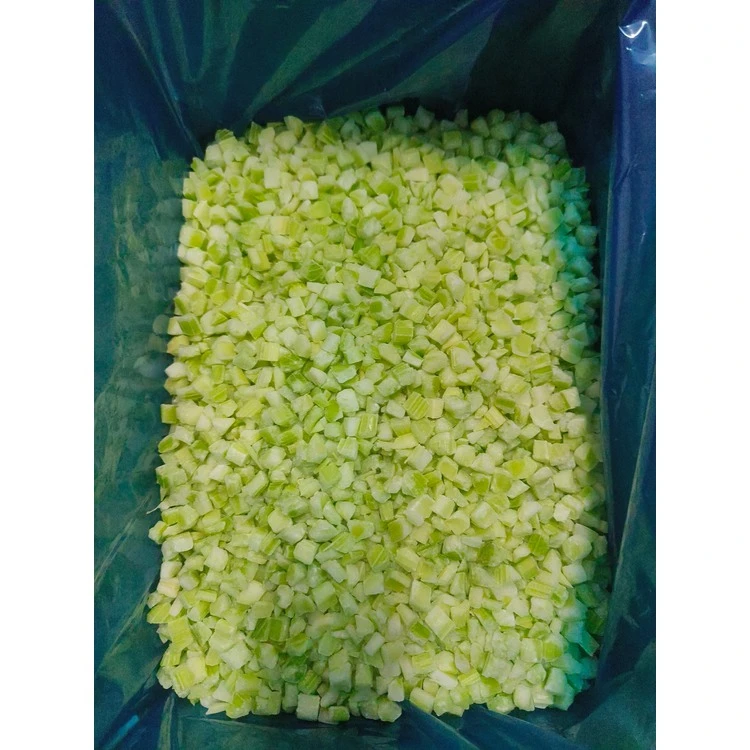
GreenLand product photograph showing the offered cut stalk form; a sample and specification establish the order limits.
Color also needs a realistic reference. Celery stalk tissue naturally ranges from pale areas to greener outer tissue. A requirement that every piece be the same shade can confuse normal anatomy with a genuine defect. Evaluate objectionable discoloration separately from the normal distribution in an approved sample. Photograph comparisons under the same light and on the same background; a blue bag liner or warm overhead lighting can make two acceptable samples appear more different than they are.
Freezing is a way of preserving a prepared ingredient, and the starting material still matters. Celery that was coarse, damaged or deteriorating before freezing does not become tender, sound raw material because it is cold. At home, preserve suitable celery while its quality is good. In purchasing, ask what the delivered specification says about sound material, coarse ribs, discoloration and foreign material. Each concern needs a definition that the supplier and receiver can apply to the same sample.
The photographed cut celery on our product page helps identify the offered stalk form. It cannot establish a tenderness value, a guaranteed leaf percentage or the thermal history of a particular lot. Use the image to begin a specification discussion, then connect the approved physical sample to written dimensions, treatment status and intended preparation. That combination gives the kitchen or factory a much more useful reference than the phrase fresh-like texture alone.
Reference: NCHFP guidance on freezing celery.
Prepare celery for the dish it will become
The preparation decision begins with the eventual dish. Long pieces can be appropriate when celery will flavor a stock and later be removed. Smaller pieces are easier to distribute through a soup base, filling or sauce. If a recipe calls for visible pieces in each serving, choose a cut that remains recognizable at service. Cutting everything extremely small may shorten the path to tenderness, but it can also change the appearance and distribution that made celery desirable in the first place.
For household preservation, the NCHFP celery method specifies washed, trimmed, tender stalks without coarse strings, cut into one-inch lengths. It calls for a three-minute water blanch, prompt cooling, draining, packaging without headspace, sealing and freezing. Keep that time attached to the method and cut it describes. A different industrial cut, load, machine or thermal process requires its own justified operating conditions; a home instruction is not a validated schedule for a commercial blancher.
Blanching before freezing and cooking the final meal serve different purposes. A blanching declaration helps describe the ingredient's preparation history, but it does not by itself establish ready-to-eat status or replace the user's required cooking instruction. Where a purchased bag supplies preparation directions, follow them. For a manufacturing ingredient, the technical agreement should state how the material enters the process and what subsequent treatment is required before the finished food is released.
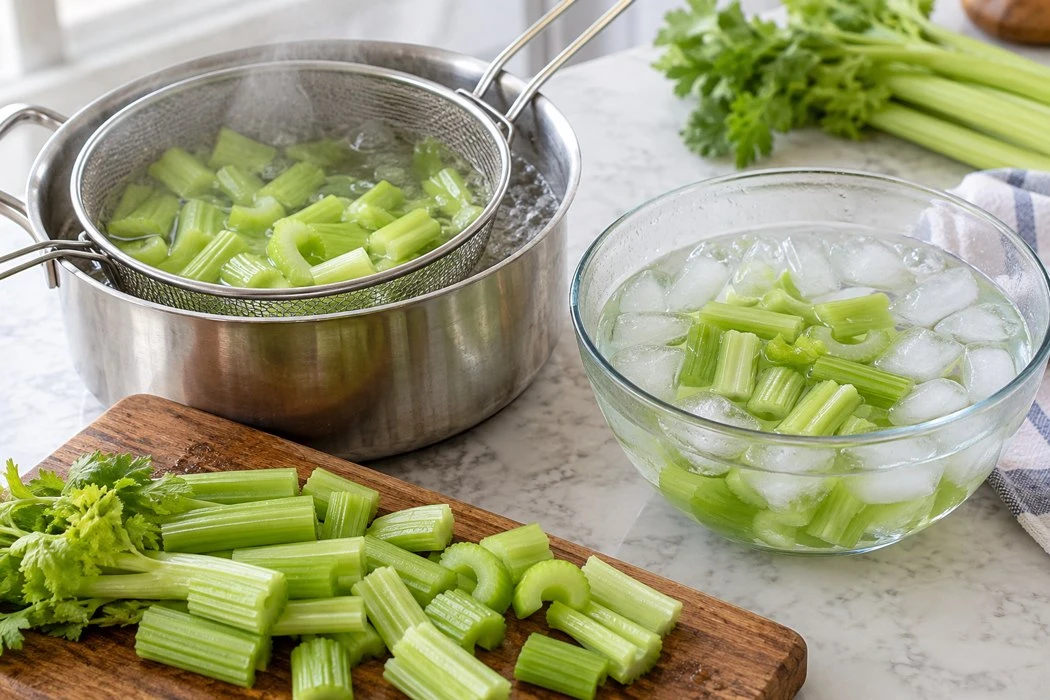
A household preparation scene showing cutting, blanching and cooling as separate operations.
Water remaining on prepared pieces can become surface ice or contribute to pieces freezing together. Drain according to the applicable method rather than assuming that wetter pieces are better protected. At a home scale, spread prepared pieces sufficiently for practical portioning if the chosen method allows it, then transfer them to suitable freezer packaging. Do not leave an uncovered tray indefinitely: the purpose is to produce usable portions, followed by effective protection in storage.
Package sizes should reflect the amount normally used. A large solid block may be workable for a full production kettle that consumes the entire block, but awkward for a kitchen that needs a small addition several times a day. Loose pieces offer flexible weighing when they remain free enough to separate. These are different operational choices. Ask whether the recipe uses an entire pack or a measured portion and assess the pack in that actual handling sequence.
Label a household package clearly enough that its contents and freezing date remain identifiable. For commercial packs, connect inner packaging, outer cartons and accompanying records to the same product identity and lot. Include the agreed storage condition and use instruction. A beautiful frozen cut in an unidentified bag creates avoidable uncertainty when staff change shifts or when the same kitchen holds several similar pale vegetables.
Before buying a large quantity, confirm whether the approved sample matches the form offered for routine orders. A hand-selected sample may make size and trim look more consistent than the full production distribution. Ask for a representative sample and retain its description, date and intended use. If a sample is prepared differently from the future supply, record the difference before interpreting its cooking result.
Use frozen celery in the right cooked applications
Soup is a useful starting application because the cooking liquid can accommodate moisture released by the celery. A clear soup with identifiable vegetables still needs a defined piece size and an acceptable bite at serving. A blended soup instead places more weight on aroma, smoothness, sieve residue and the amount of celery needed to give the intended character. The same lot may perform acceptably in one format and require a different cut or formulation in the other.
A sauce base often uses celery with onion, carrot or other aromatics. The celery may be deliberately softened until it integrates with those ingredients. In that setting, a tender frozen cut can be convenient, but the recipe still needs to account for released moisture and the time required to reach its intended consistency. Adding more celery to compensate for a weak tasting sauce also adds material and water. Compare flavor at the same finished batch weight before deciding that the ingredient itself is weak.
In a stock that will be strained, the final appearance of the celery pieces may matter less than flavor extraction and practical removal. Even there, stringy or fragmented material can affect straining and cleaning. A coarse piece that remains in the basket behaves differently from fine fragments that travel into the liquid. Define whether the ingredient will remain in the food, be blended or be removed; that single decision prevents many poorly matched purchase specifications.
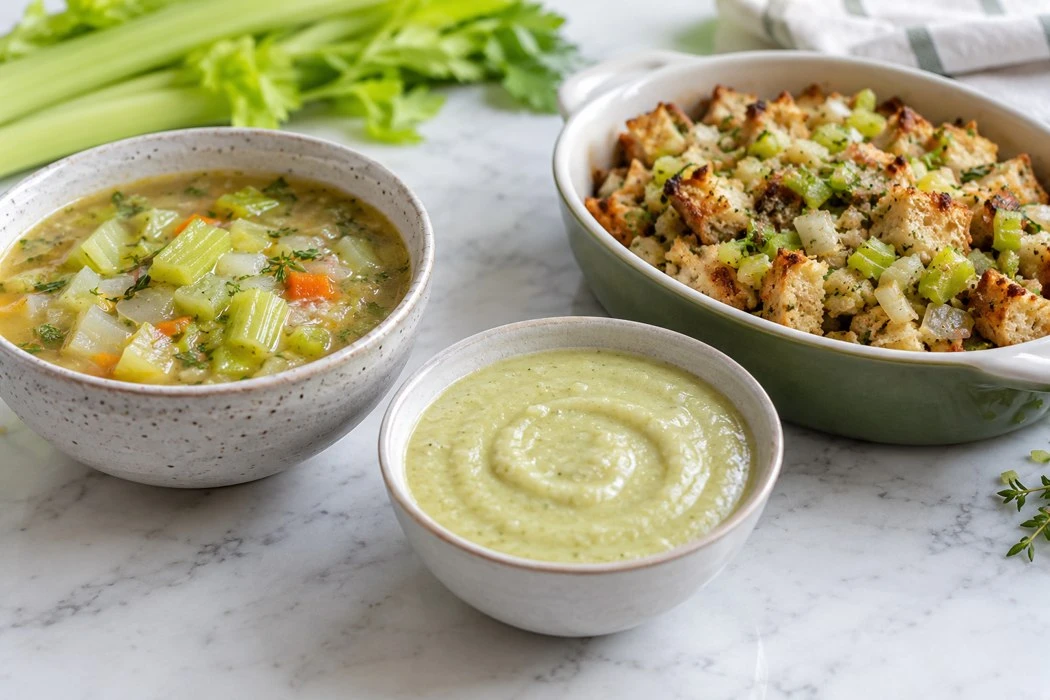
Cooked uses can require visible pieces, a smooth sauce or a moist filling.
Stuffings, pies and savory fillings need attention to both texture and moisture migration. Celery that releases liquid into a filling can change how wet the mixture feels and how the surrounding components hold together. The effect depends on the full recipe, including bread, starch, meat or other vegetables. Assess the cooled and reheated product as well as the mixture immediately after cooking. A filling that seems acceptable in the pan may behave differently after packing and another heating cycle.
For a stir-fry or a dish built around a crisp fresh bite, expectations need particular care. Frozen celery can be tested as a cooked ingredient, but it should not be approved on the assumption that it will reproduce the snap of a freshly cut raw stalk. The application may still work with a softer texture if the cut, sauce and other vegetables are chosen accordingly. Make that a deliberate recipe decision rather than discovering the difference after an order arrives.
Leaves require a separate decision. A small amount of celery leaf may be welcome in an aromatic base while visible dark fragments may be undesirable in a pale sauce. Stalk celery with a leaf allowance, a deliberate leaf ingredient and celeriac are different purchase descriptions. The name celery alone does not settle which part the recipe expects. State the intended stalk and leaf composition and inspect it in the sample used for development.
Our frozen celery product page describes cut stalk pieces for soups, sauces and mixed bases. It is a starting point for discussing the ingredient, not a promise that one cut suits every dish. Share a description of the finished application, the point of addition and whether pieces must remain visible. Those details help us confirm the sample and specification that your purchasing team should evaluate.
Manage water and cooking from frozen
For many cooked dishes, a frozen portion can enter the cooking process directly when that is consistent with its instructions. This avoids an uncontrolled thawing stage and keeps the portion connected to the frozen weight used in the recipe. It also changes the initial heating demand: the equipment must warm the cold ingredient and melt its ice before the cooking result can develop. A small pan and a heavily loaded kettle will recover heat differently.
Look at what the water is supposed to do. In a soup, it may become part of the cooking liquid. In a sauce that will be reduced, it may need to evaporate before the target consistency is reached. In a filling, excess water may need a defined draining or cooking step before mixing. These decisions should be made within the recipe. Discarding drip without recording it can change both the material yield and the amount of celery-derived flavor carried into the dish.
A wide pan with a manageable load provides a different evaporation environment from a deep pan piled with frozen ingredients. If the trial pan rapidly fills with liquid, record the batch weight and depth before extending the cooking time. Longer cooking may remove water while also softening the celery and its neighboring vegetables. A change in loading or sequence can sometimes achieve the intended result with a more controlled texture, but it must be checked in the actual recipe.
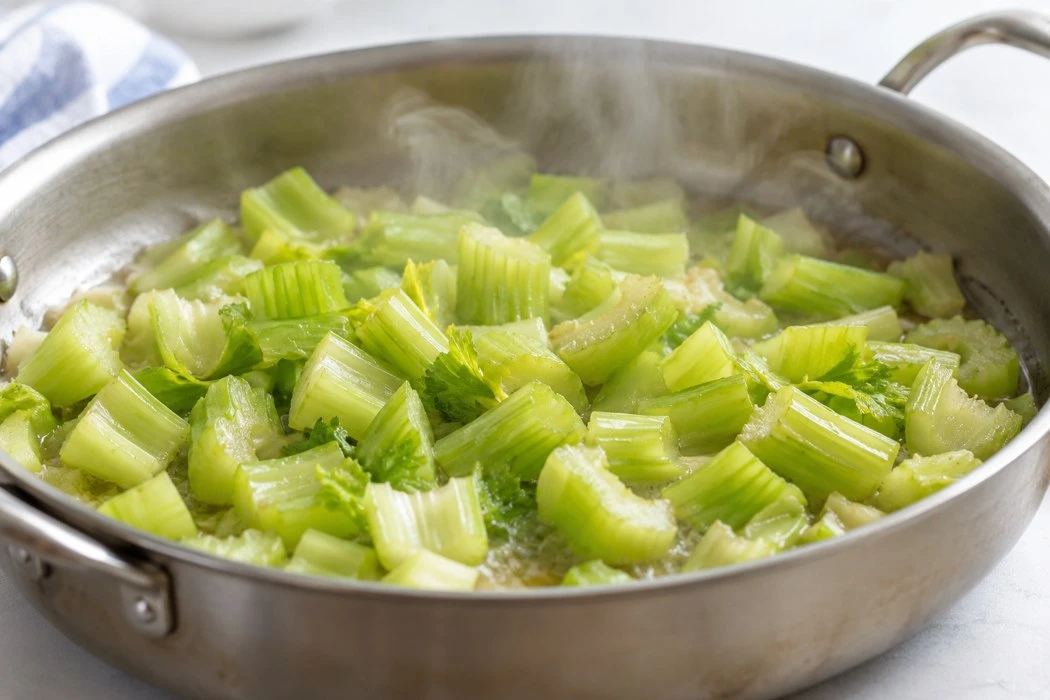
Pan load and evaporation affect how released water enters the recipe.
Do not interpret every ice crystal as proof of temperature abuse. Some frost or clumping can relate to surface moisture, packing and normal handling. Equally, a solid mass or a heavily iced pack deserves investigation because it can affect feeding and heating. Review package condition, product temperature evidence and storage history together. Appearance alone cannot reconstruct the complete cold chain or establish whether a particular lot remains acceptable for its intended use.
If a process needs thawed celery, define the thawing condition and the measurement point. A sample weighed with all its liquid is different from one weighed after a specified draining interval. Neither result can be compared fairly with an unexplained drained weight from another sample. Keep the sample covered and handled under the applicable food-safety procedure, and record whether the liquid is retained, measured separately or excluded from the formulation.
Use a simple mass record during development. Record the frozen input, any separately removed liquid or ice, the cooked output and the finished batch mass. These observations help explain a sauce that appears thin or a yield that changes between trials. They are development measurements, not laboratory proof of a mechanism. If several ingredients or settings change at once, the record can describe what happened but cannot isolate the celery as the cause.
Once the process is satisfactory, write the operational details clearly enough for another cook or operator to repeat them. Include the celery portion, the other ingredients, the sequence, load and finish criterion. The goal is a repeatable dish under the intended conditions. A single attractive trial photographed immediately after cooking gives much less confidence than repeated preparation with the same defined inputs.
Compare samples after the full cooking cycle
Choose the acceptance point before comparing suppliers or cuts. A celery piece tasted straight from a saucepan may still be held hot, mixed, packed, chilled or reheated before a customer eats it. The relevant sample is the food at that later point. For a restaurant soup, the intended service hold matters. For a ready meal, the reheated serving matters. For an industrial sauce, blending, pumping and any further thermal treatment may matter.
Begin with a reference that your team already understands. It could be the current accepted frozen ingredient or a clearly described fresh-celery recipe. If comparing fresh and frozen, explain the weight basis and preparation differences. Fresh purchasing weight may include leaves and trim removed in the kitchen, while the frozen ingredient is already cut. Equal purchased weights therefore do not automatically represent equal usable input or equal finished portions.
Keep the comparison small enough to control but representative of the intended equipment. Use the same base recipe, salt, liquid and other aromatics. Prepare separate batches with recorded celery weights. Serve the samples at comparable temperatures in plain containers and, when practical, conceal the ingredient identity from tasters. This reduces the influence of a supplier name or a brighter photograph on the assessment of the food itself.
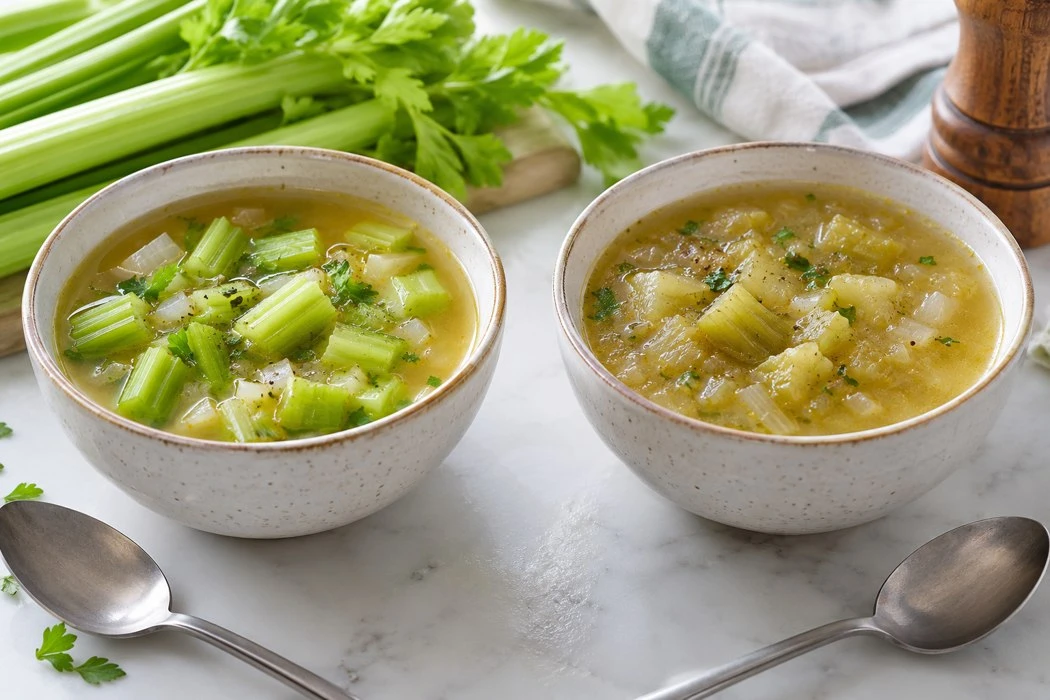
Use a clearly defined soup texture as the approval reference; these are illustrative appearances.
Ask focused questions. Can the diner recognize the intended celery pieces? Are coarse strings noticeable? Is the celery flavor suitable at the agreed dose? Does the sauce remain smooth after its full preparation cycle? Does the soup retain an acceptable balance after holding? A single overall preference score can hide the reason for a difference. Short written observations make the next purchasing or process decision more useful.
Record variation within the sample as well as the average impression. If most pieces are tender but a few thick ribs remain objectionable, a general statement that the celery is soft enough may overlook the actual complaint. Examine the pieces responsible and relate them to cut thickness, coarse material or a process difference. The aim is to identify a controllable specification or preparation change, without claiming a cause that the comparison did not establish.
Repeat a promising comparison before treating it as a stable result. One small bag cannot describe every production lot or every position within a larger pack. Agree how representative samples will be obtained and how future lots will be checked. Any numerical acceptance limit should identify the sample basis, method and decision rule. A photograph and a tasting note can support that agreement, but neither supplies a complete lot acceptance plan on its own.
Keep the final approved reference alongside the written specification and trial record. If the recipe later changes from a chunky soup to a finely blended sauce, revisit the acceptance criteria. The same visual defect may have a different practical effect, while an overlooked string or leaf fragment may become more noticeable. A sample approval is most useful when its application and limits remain explicit.
Buy celery against a useful specification
Start the inquiry with the ingredient identity: frozen cut celery stalk pieces. State whether leaves are allowed and whether the finished recipe needs visible pieces. Then describe the cut, including the dimensions that matter for the process and the acceptable distribution around them. A nominal dice size is a helpful shorthand, but celery ribs are curved and variable in thickness. The receiving method should explain which dimensions are measured and how irregular pieces are treated.
Describe the preparation status you require and ask for confirmation against the actual offer. Avoid inferring blanching, cooking or ready-to-eat status from a photograph or from the term IQF. Individual quick freezing describes a freezing approach; it does not settle every preceding operation or the final use instruction. Your technical agreement should identify the process information and supporting records needed for the destination and application.
Specify defects in terms that affect the food you plan to make. Coarse strings, excessive leaf, objectionable discoloration, damaged pieces and foreign material deserve distinct consideration. A universal phrase such as premium quality can conceal very different expectations. Use an agreed sample and written definitions to establish what a receiver should separate, count, weigh or assess after cooking. Keep sensory approval and food-safety release requirements clear in their respective records.
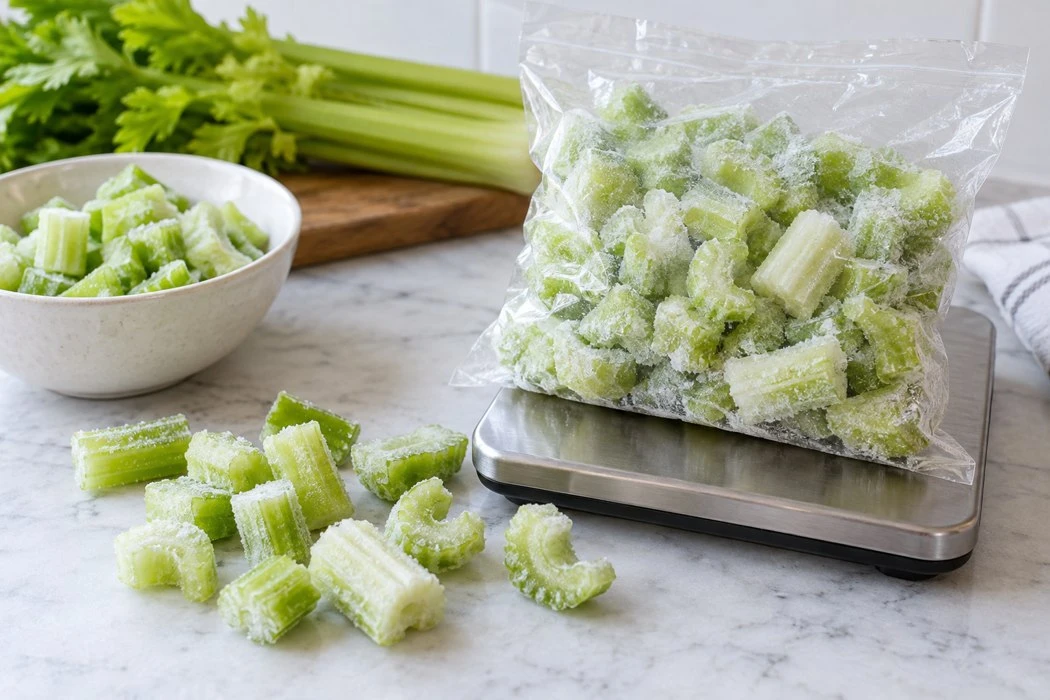
Choose a pack that supports the portion used in the recipe.
Packing should support the portion size and the handling system. A foodservice kitchen may value a pack that can be opened and used without prolonged exposure of the remaining product. A manufacturer may consume a larger unit within a defined process. Confirm net weight, inner-bag protection, carton condition and lot identification. Ask how the quoted format and quantity relate to the shipment plan rather than assuming a standard pack will fit every operation.
Storage life belongs to the approved product and its specified conditions. Household guidance or another supplier's technical sheet cannot establish the shelf life of your GreenLand order. Request the applicable specification, date marking and storage instruction for the offered SKU. Review remaining life at dispatch and arrival in relation to your planned use. If the route or stockholding period changes, confirm that the agreed product and documentation still support the schedule.
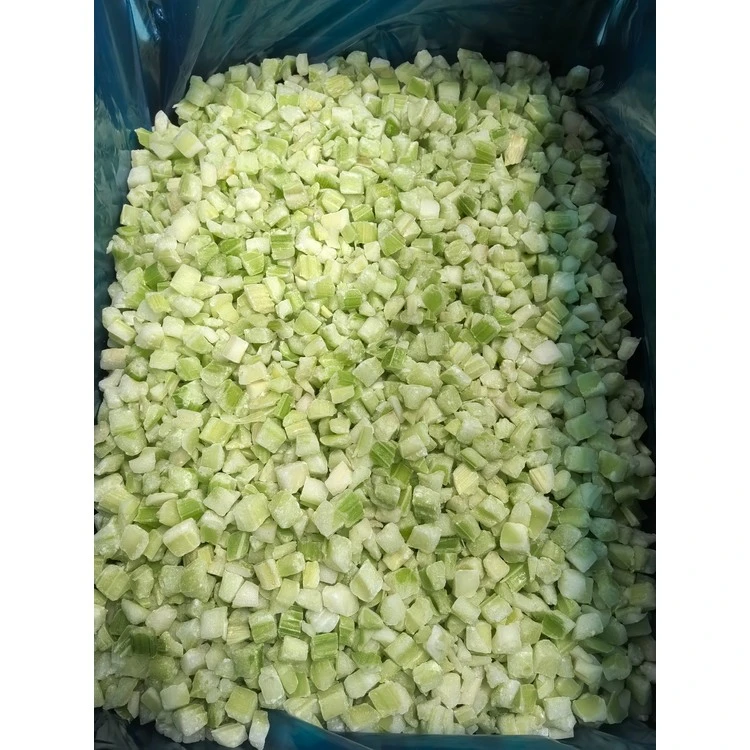
GreenLand product photograph showing the offered cut stalk form; a sample and specification establish the order limits.
We help your purchasing team connect the sample to a practical inquiry: the target dish, celery form, cut, leaf allowance, pack, quantity, destination and requested records. Where a different form or finish is required, availability and suitability need separate confirmation. That discussion makes a frozen celery order easier to assess and gives receiving staff a clear basis for checking what arrives.
Keep the first production feedback specific. A comment such as too soft is more useful when it includes the lot, preparation method, hold time, photographs and the point at which the difference appeared. It may lead to a changed cut, a revised loading step or a different acceptance limit. The evidence should guide that decision so the next delivery is evaluated against a shared, workable expectation.
Discuss the offered form through our frozen celery product page.
Source frozen celery with GreenLand-food
GreenLand-food is a professional frozen celery supplier and manufacturer in China, providing factory-direct wholesale supply for importers, food manufacturers, foodservice distributors, and private-label programs.
Send the product form, specification, packing, quantity, application, destination, private-label needs, and requested documents.