


Tomato Wedge Breakage During Mixing and Filling: How to Design a Comparison
Oct 19, 2026
Leave a message

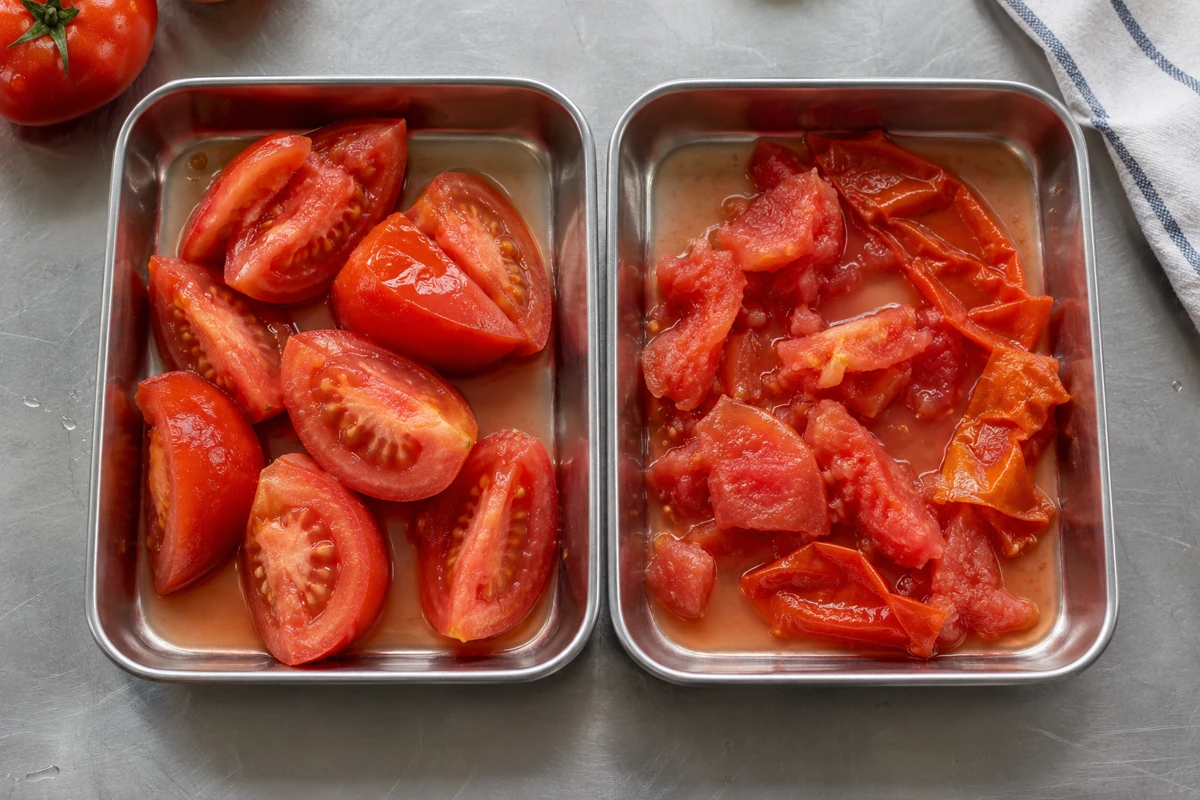
This article proposes a comparison that a food manufacturer can adapt with its development and quality teams. It contains no performed trial or universal acceptance percentage. We supply frozen tomato wedges for cooked uses and agree the form and relevant defects against a sample. The buyer's actual mixing, transfer, filling and cooking route determines what needs to be tested.
Define breakage before comparing samples
An intact-looking tomato skin can hold together after much of its flesh has dispersed. A large fragment can also look substantial while no longer having the geometry the buyer ordered. Decide which observation matters for the application. A ready meal may need a recognizable wedge in each portion; a sauce may accept irregular pieces but reject conspicuous loose skins. These are different product decisions, so a single informal judgement of damage cannot serve both.
Write a short operational definition for each category. A retained wedge could require a continuous outer skin, an identifiable tapered cut shape and a specified amount of attached flesh. A broken piece could be material that fails that agreed geometry. Detached skin should have its own description when it affects the dish. Use actual sample photographs to discuss borderline examples, then retain the approved definitions with the method. The definitions need to be usable by another inspector.
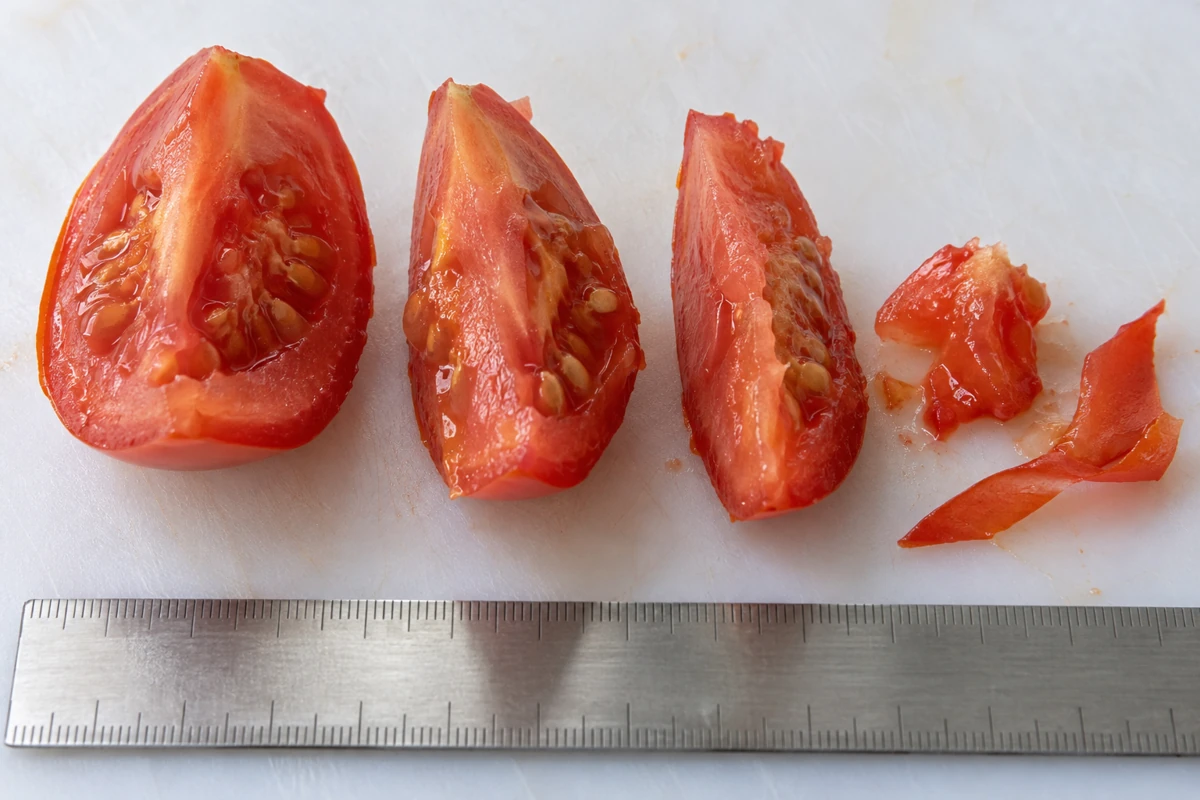
Cut geometry and the boundary between a retained wedge and a fragment need an agreed definition.
Specify the state in which the judgement is made. Frozen, thawed, mixed with sauce and fully cooked pieces present different surfaces and different possibilities for separation. A fragment frozen against another fragment can appear to be a larger piece. A sauce-coated wedge may be difficult to distinguish without an agreed recovery procedure. Choose a preparation state that answers the trial question and apply it consistently. Do not compare one candidate frozen with another after cooking.
The National Center for Home Food Preservation notes that tomatoes lose solidity on thawing and recommends cooked uses. That supports realistic expectations about the material; it does not supply a commercial wedge breakage standard. Commercial cut geometry, freezing history and declared treatment must be confirmed for the product being offered. Descriptions such as IQF or premium cannot replace an application-specific definition of a satisfactory piece.
Decide how to handle small fragments before anyone sees the result. A minimum observation size may be useful, provided the excluded material is accounted for separately and the rule is agreed. Otherwise, an inspector may count one broken wedge as two pieces while another ignores both fragments. Keep original piece recognition, fragment counts and discarded material distinct. A method that produces a convenient percentage while hiding much of the tomato is unlikely to support a repeatable purchasing decision.
Build a fair incoming sample baseline
Start with the condition of the material entering the process. A filling comparison cannot isolate process damage if one batch starts with many more broken wedges. Take an incoming sample using a plan appropriate to the pack and lot. Avoid picking only the large visible pieces from the top of an opened bag. Where practical, distribute sampling across more than one pack and across relevant positions, retaining the identity of each sampled unit.
Record the received product form, lot code, pack size and handling history available to the trial team. Confirm skin and seed retention, maturity range, wedge geometry and preparation status. The raw tomato photograph on the product page shows whole intake material with pale or green shoulders; it is not a reference for a red-ripe finished wedge grade. A comparison of two frozen candidates needs their own actual finished samples, rather than an assumption drawn from a general intake image.
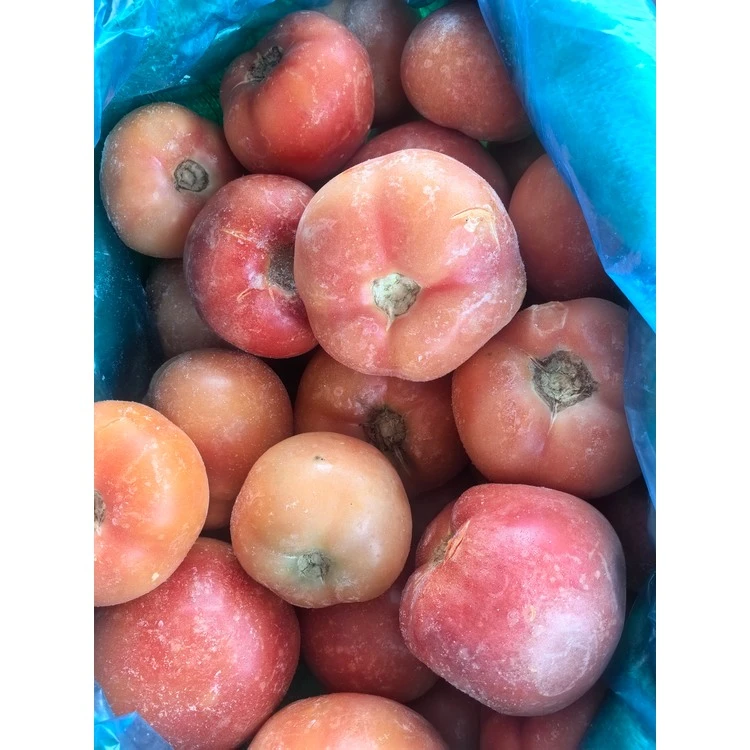
Actual raw-material reference; pale or green shoulders do not define an approved red-ripe finished grade.
Examine the cut distribution as well as the average. Two samples with the same mean piece weight may contain different proportions of very thin wedges and thick pieces. These differences can influence how the pieces encounter a tool, pass through a transfer route or appear in a portion. Record a practical description or an agreed size distribution when relevant. Keep the sampling method manageable enough that it can also be repeated for a later order.
Bring each candidate to the specified entry state without giving one an extra handling advantage. If the process uses product directly from frozen, compare that route under the same practical conditions. If controlled thawing is required, define the conditions and include any released liquid according to the recipe plan. Do not leave one sample on a bench while another remains frozen, then interpret the difference solely as a supplier or cut-quality effect.
Preserve the baseline record before the process starts. Take photographs at matching scale with a plain background and consistent lighting. Note clumps, loose frost and obvious pre-existing fragments separately from the later process observations. Where the sample is destructive, recognise that the incoming and final observations are different samples from the same material. You cannot calculate the fate of individual original pieces unless those same pieces have actually been tracked through a suitable method.
Locate damage between mixing and filling
Map the route the ingredient actually travels. A useful stage sequence may include incoming material, the mixed product in the vessel, product after transfer, product at the filling outlet and sealed portions. The appropriate points depend on the equipment. If there is no pump or intermediate hopper, do not invent one in the method. The purpose is to identify where a meaningful change occurs, using sample points that the team can access safely and consistently.
Sampling at each stage should answer the same visual question. A ladle that crushes the pieces can create apparent damage that did not exist in the vessel. A narrow sample valve may exclude the largest wedges. Explain how each sample is taken and whether the sampling route could change the material. If stage methods necessarily differ, record that limitation and avoid presenting a small difference as a precise measure of equipment damage.
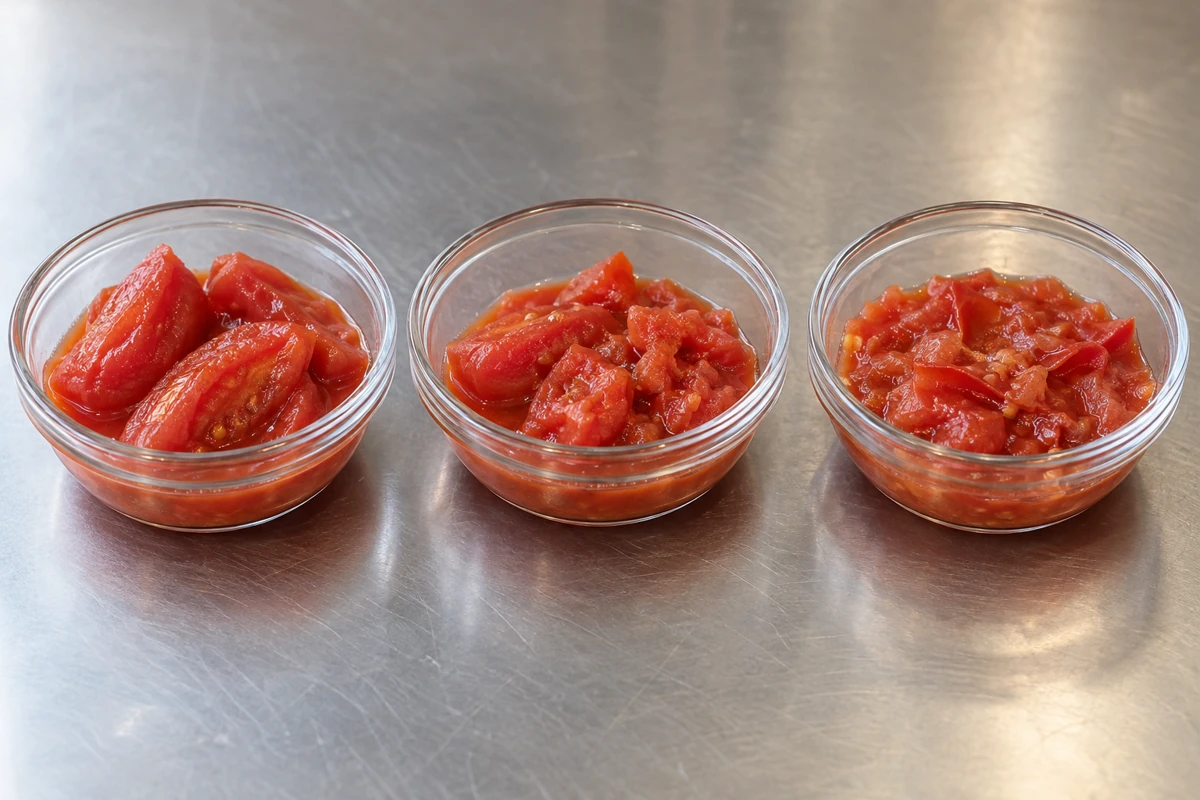
Illustrative samples show the material a stage comparison would assess; no trial result is represented.
Match the stage samples to the production timeline. Product at the filling outlet may have experienced a longer residence or different vessel level than the first kettle sample. A late-fill sample is not automatically the same population as an early mixer sample. Include the relevant mixing duration, holding interval, fill level and position in the filling run. These observations help distinguish a transfer effect from the accumulated handling that occurred before transfer.
Equipment manufacturers describe particulate food processing in terms of recipe-dependent mixing, gentle handling and thermal treatment. Tetra Pak's tomato preparation material illustrates why smooth and particulate products require different process choices. Its equipment descriptions are supplier information, and their stated capacities apply to those systems. They do not establish that GreenLand-food operates that equipment or that your frozen wedge will pass a particular fitting without damage.
Use the stage comparison to narrow the next question. If most of the visible change appears between the mixer and the filling outlet, inspect that part of the route before changing the incoming specification. If pieces are already extensively fragmented in the mixer, a filling adjustment may have little visible benefit. A stage difference suggests where to investigate; it does not by itself establish the precise mechanical cause. Confirm the suspected cause with a controlled change and another observation.
Change one process condition at a time
State the decision in a sentence before designing the run. For example, a developer might ask whether a different addition point preserves more recognizable wedges through an otherwise unchanged route. Another question might concern a transfer arrangement or a mixing duration. Keep those questions separate where possible. A trial in which the tomato lot, sauce recipe, vessel load and filling setup all change can compare two production scenarios, but cannot attribute the difference to one setting.
Set the common conditions explicitly. These include the tomato lot or candidate allocation, sauce formulation, ingredient ratio, initial product state, batch quantity, equipment configuration, heating route and assessment method. Some conditions will vary naturally during a real run. Record those values or observations instead of calling the conditions identical. If an important factor cannot be controlled, include it in the interpretation and consider whether another comparison is needed.
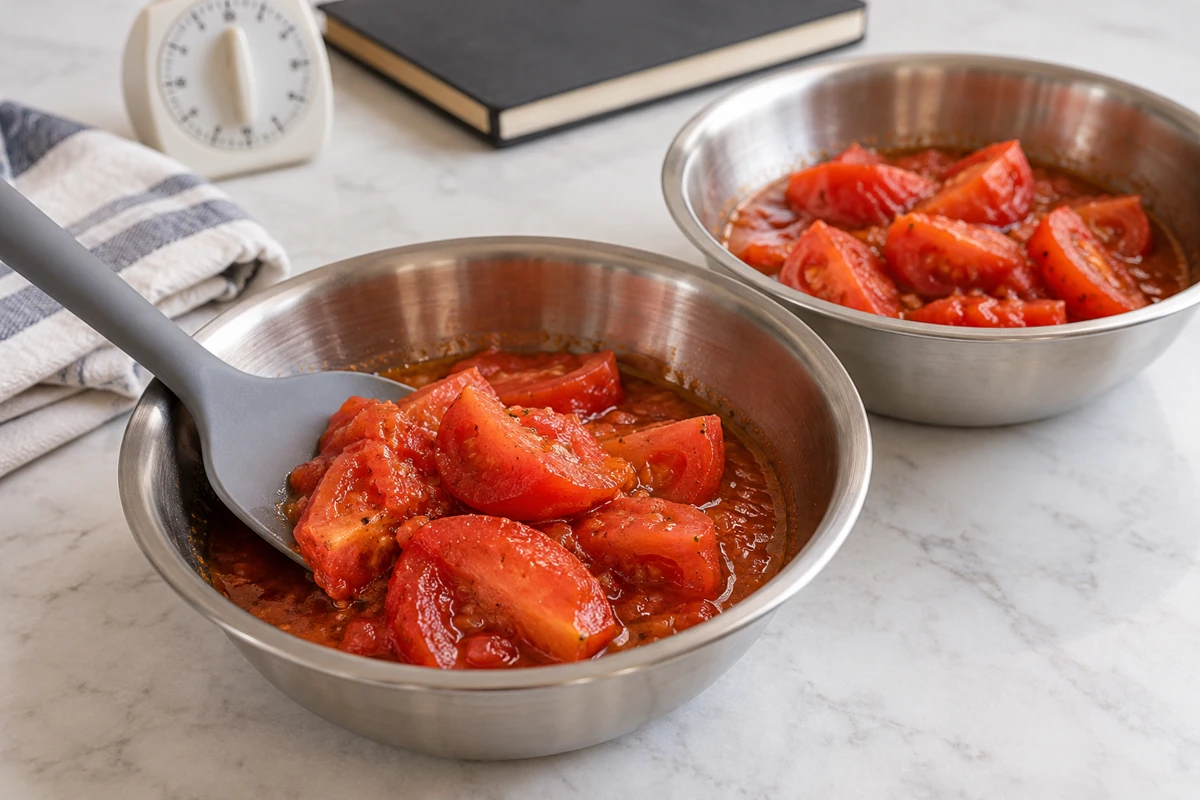
A proposed small-batch comparison should retain a common recipe and handling basis.
An actual comparison can follow this sequence, adjusted to the site's procedures:
- Approve the retained-piece definition, sample plan and intended finished-food checks before the run.
- Establish the incoming condition for the allocated material and record the common recipe and entry state.
- Run each proposed condition in the agreed order, collecting samples at the named stages without selective picking.
- Assess samples using the same preparation and recovery method, retaining the observations and photographs.
- Review repeat runs and cooked portions before deciding whether the difference supports a process or specification change.
Decide replication and run order with the people responsible for the study. Repeated observations from one bowl are not equivalent to independent production runs. Where order could influence the result, such as increasing hold time during sequential tests, consider a balanced plan or clearly record the limitation. A supplier comparison may also need more than one lot if the purchasing decision concerns continuing supply. One development run can identify a useful option without proving broad consistency.
Keep food safety and equipment constraints within the plan. A lower speed, shorter mixing period or later ingredient addition must still achieve the required distribution and approved processing conditions. The quality team should assess any proposed change against the site's validated process and product requirements. Never stop heating early simply to obtain more attractive pieces. The trial should identify a workable operating choice that meets the complete product specification.
Measure retained pieces and released liquid
Choose measurements that can be performed consistently and that reflect the intended use. The word breakage may hide several different outcomes: fewer recognizable wedges, more fragments, separated skins, more visible liquid or a lower usable portion yield. These outcomes can move in different directions. Select a small set that answers the decision, then preserve the original observations so the summary percentage can be checked.
A count-based retained-piece percentage needs a defined population. If individual original pieces are tracked, the denominator can refer to those original pieces. With independent samples taken at different stages, report the retained category within each sample and explain the counting rule. Do not call the difference an exact survival rate of the same pieces. Fragmentation changes the number of objects, so total piece count can increase even as the desired form is lost.
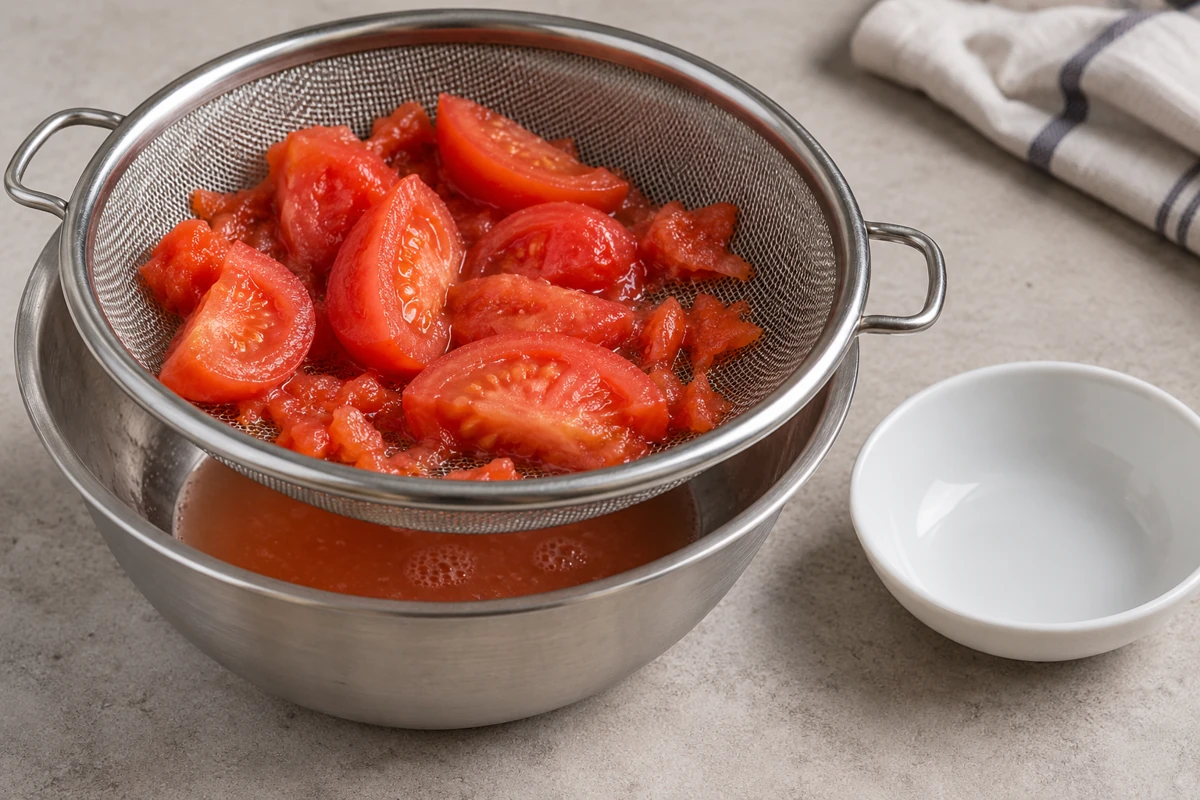
The recovery procedure determines which pieces and liquid are included in a mass observation.
Mass-based observations require equal care. Recovered solids may contain adhering sauce, absorbed or trapped liquid, seed material and fragments. Define the sieve or recovery method, any drainage interval and what is weighed. Apply the same preparation to every candidate. A more viscous sauce can leave more material on the sieve without demonstrating better wedge retention. If rinsing is used for an analytical purpose, record it and recognise that it changes the material being assessed.
| Observation | What it helps compare | What must accompany it |
|---|---|---|
| Recognizable wedge category | Presence of the agreed geometry in a sample | Definition, assessment state and counting denominator |
| Recovered tomato material by mass | Material retained by the stated recovery procedure | Sample mass, sauce treatment, sieve and drainage conditions |
| Detached skin | A visible defect affecting eating quality | Count or mass basis and the assessed portion size |
| Released or separated liquid | The product's liquid balance under the chosen method | Starting state, collection method and observation interval |
Report the units with every result, including the basis for any percentage. Avoid a summary table that shows only a final score without the underlying sample sizes. Retain unusual observations and failed samples rather than quietly removing them. If the method itself produces inconsistent recovery, repair that method before ranking candidates. Precision in a spreadsheet cannot compensate for an undefined category or a sample procedure that changes between runs.
Read the numbers beside the cooked result
A retained wedge can still fail the finished food. Its skin may be conspicuous, its flavour contribution weak, or its distribution uneven across portions. Conversely, a softer piece may fit a sauce application well even if it scores poorly on a visual geometry criterion designed for a ready meal. Evaluate the candidate in the actual recipe and serving route, using the product target established before testing.
Prepare portions through the relevant cooking, storage and reheating stages. Use the same portion size and normal serving method. Examine whether recognizable tomato appears where the customer expects it, whether loose skin is objectionable and whether liquid separates during the agreed observation period. Record the observations with the preparation conditions. A plate arranged carefully by the developer is useful for explaining a target, but it does not demonstrate normal depositor or service performance.
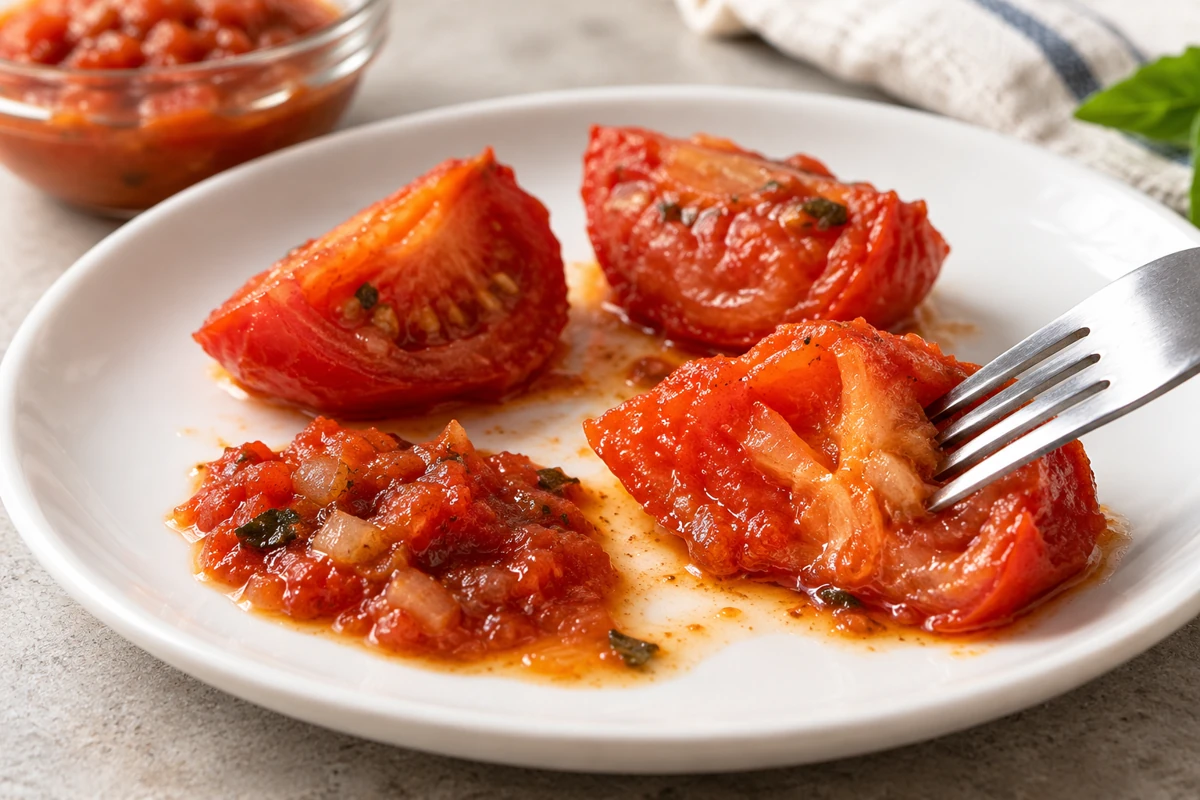
The cooked sample lets a buyer examine flesh, skin and sauce together.
Texture instruments can provide helpful information when their method matches the question. Probe geometry, sample orientation, temperature and the part of the tomato tested can influence the reading. A skin penetration measurement is not interchangeable with the mechanical response of a mixed portion. If instrumental texture is part of the specification, agree the method and specimen state along with the limit. Avoid transferring a threshold from a different tomato form or process without justification.
Original research on processed diced tomato texture compared instrumental measurements with descriptive sensory assessment and found that classifications were not identical. That is a useful reason to read measurements alongside an application assessment. It does not validate the present proposed trial, and processed dice differ from frozen wedges. Keep the material and method boundaries visible whenever research informs a purchasing discussion.
Consider the commercial effect after the quality target is satisfied. An ingredient that needs extra sorting, additional sauce adjustment or more difficult portioning can change operating cost even if its quoted price is attractive. Calculate those effects from the buyer's actual observations and yields. Do not present an assumed improvement as a measured saving. The practical comparison is between usable products under a defined process, with the evidence retained for the purchasing team.
Consider disagreement between inspectors as part of method development. Ask two trained observers to assess suitable samples independently using the proposed categories, then review the examples they classify differently. The aim is to find a definition that can be applied consistently. If every borderline piece requires the original developer's personal judgement, the method is not yet ready for routine receiving. Improve the reference descriptions before turning the result into a supplier acceptance requirement.
Preserve results that point in different directions. A candidate may have a higher retained-wedge count but also more noticeable detached skin, or an acceptable appearance with poorer portion distribution. Report that combination clearly and let the finished-product target determine the decision. Combining all observations into an unexplained score can hide the reason one candidate was selected. Keep any weighting explicit and agreed before it is used to rank a lot or change a commercial order.
Agree acceptance and a repeatable order record
Convert the development outcome into a specification that another team can apply. Confirm the exact tomato form, cut distribution, maturity range, skin and seed retention, declared preparation and packing. Our frozen tomato reference product is wedges; whole, diced and puree products require separate confirmation. An attractive test result from a different form cannot approve a wedge order automatically.
Separate incoming acceptance from finished-process acceptance. Receiving staff can inspect pack identity, frozen condition, visible cuts and defined defects. A finished-food requirement may need the approved preparation method before it can be judged. State who performs each assessment, which sample is used and how the result is recorded. This avoids rejecting material with a test that was never part of the agreed order, or accepting it solely because the carton looks satisfactory.

Actual frozen wedge product view; the prepared result needs its own acceptance reference.
Attach the relevant method revision and reference photographs to the approval. Where a judgement is subjective, keep examples of the acceptable boundary and train the people using them. If a count or mass limit is agreed, include the denominator, units and sampling basis. A term such as minimal breakage has little operational value until the parties agree how it is observed. Any customer-specific limit should be identified as an agreement rather than an industry law.
Link the sample to the lot and retain the commercial context. Confirm quantity, pack format, destination, intended application and requested documents before the order. Keep correspondence on process status and use instruction with the product file. Relevant reports need their own product, lot, method and date scope; a photograph or an unrelated certificate cannot establish those facts. The document set should allow the buyer to connect the approved material to what arrives.
When a later run differs, review the incoming baseline and the stage observations together. A changed tomato distribution, a different sauce condition and an altered holding interval can each affect the conclusion. Preserve evidence before deciding which party or process is responsible. A well-defined comparison gives both teams a way to investigate the difference and make a specific correction. It also makes the next trial smaller and more informative because the unresolved question is already clear.
Continue reading about cooked tomato ingredients
Understand the texture and preparation changes behind choosing a frozen tomato for cooked use.
Compare cooked application routes when a recipe can use softened tomato and released juice.
Trace the stage at which tomato skin damage appears before assigning a cause to a lot.
Source frozen tomatoes with GreenLand-food
GreenLand-food is a professional frozen tomatoes supplier and manufacturer in China, providing factory-direct wholesale supply for importers, food manufacturers, foodservice distributors, and private-label programs.
Send the product form, specification, packing, quantity, application, destination, private-label needs, and requested documents.