


Frozen Tomato Wedges in Ratatouille: Keeping Pieces Intact Through Reheating
Oct 19, 2026
Leave a message

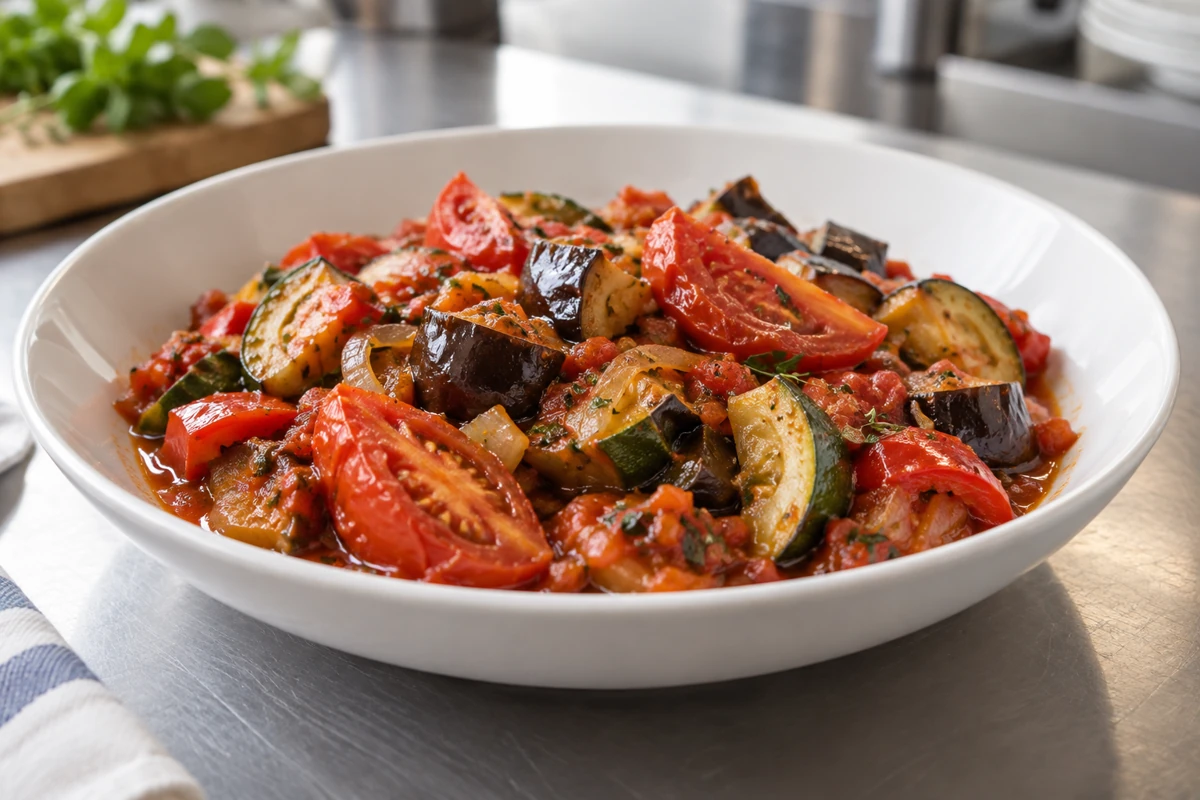
We supply tomato wedges for cooked applications and confirm the actual preparation status against the order. For ratatouille, the useful purchasing reference is a sample prepared in your process. Its appearance, skin texture, released liquid and distribution across portions provide a clearer basis for approval than the appearance of frozen pieces alone.
Define the piece you want after reheating
Ratatouille recipes cover a wide range of finished textures. Some cooks want a soft vegetable stew in which the tomatoes become part of the sauce. A prepared-meal developer may want visible tomato wedges among aubergine, courgette, pepper and onion. Both are plausible targets, but they require different expectations at purchasing and during cooking. Before comparing ingredients, decide what a customer should recognize on the plate and how much variation is acceptable within a portion.
Describe a recognizable wedge using observable features. The piece might need a continuous section of outer skin, a visible curved side and sufficient attached flesh to distinguish it from loose pulp. A detached strip of skin should be recorded separately. There is no universal minimum size or permitted breakage percentage for every ratatouille. A buyer can agree those limits against photographs and a prepared sample, then use the same descriptions at approval and receiving.
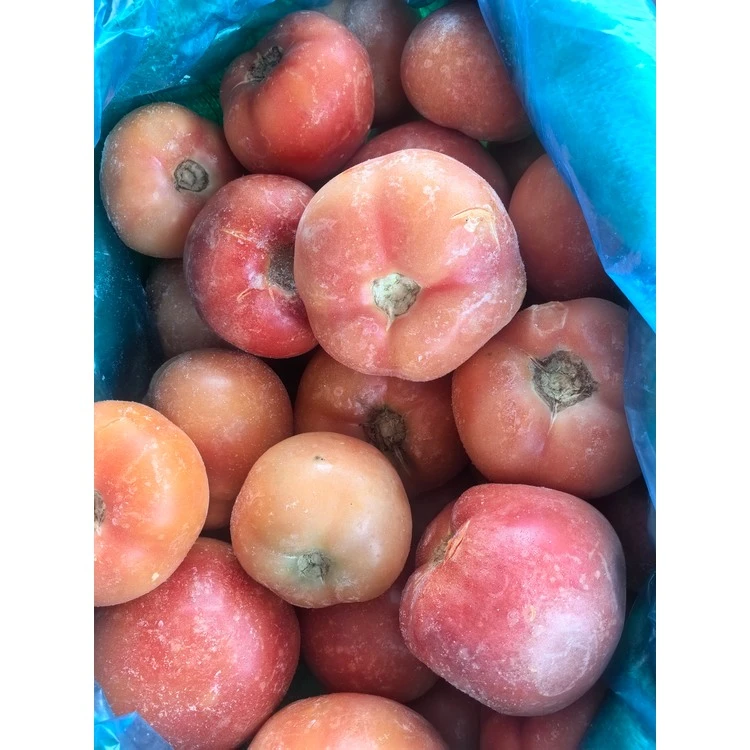
Actual raw-material reference; pale or green shoulders do not define an approved red-ripe finished grade.
Maturity and cut geometry belong in that discussion. A thin wedge with a broad exposed cut face may behave differently from a thicker wedge, even when both were cut from the same tomato. Skin retention, seed cavities and the amount of flesh attached at the narrow end also affect what the serving spoon picks up. Asking only for a wedge count leaves much of this variation unspecified. Ask to see the actual distribution and confirm whether a count refers to cuts per fruit or pieces in a sample.
The original whole-tomato intake photograph shown here includes pale and green shoulders. It illustrates the raw material reference on our product page; it does not define an approved red-ripe finished grade. For your order, specify the accepted maturity and colour range explicitly. A photograph cannot establish the variety, firmness distribution or readiness of another lot, and visual sorting cannot establish microbiological suitability. Keep the raw material reference and the prepared acceptance reference in their proper roles.
The National Center for Home Food Preservation advises using thawed frozen tomatoes for cooking or seasoning because they lose solidity. That is a sound starting expectation for ingredient development. Commercial preparation and freezing conditions can differ, but an IQF description alone does not promise a fresh slicing texture. Agree a tender cooked result that the actual product can achieve, then examine how consistently it survives the rest of the route.
Follow the tomato through its heat history
Draw the complete preparation route before choosing a cooking adjustment. The tomato may enter a kettle frozen, partially thawed under controlled conditions, or already incorporated in a prepared component. It may then pass through blending, depositing, chilling, frozen storage and another heating stage. Record the actual route for the intended product. A kitchen test that stops at the first cook cannot answer what a customer receives after a later reheating cycle.
Freezing and subsequent heating both influence the texture the buyer experiences. The useful questions are where the pieces spend time, which movements they encounter while soft, and whether the desired appearance survives until consumption. Do not assign all loss of shape to the freezer. A long reduction after addition, a recirculation step, an extended holding period or rough portioning may account for a meaningful part of the observed damage. These possibilities need a comparison, rather than a confident diagnosis from one finished bowl.
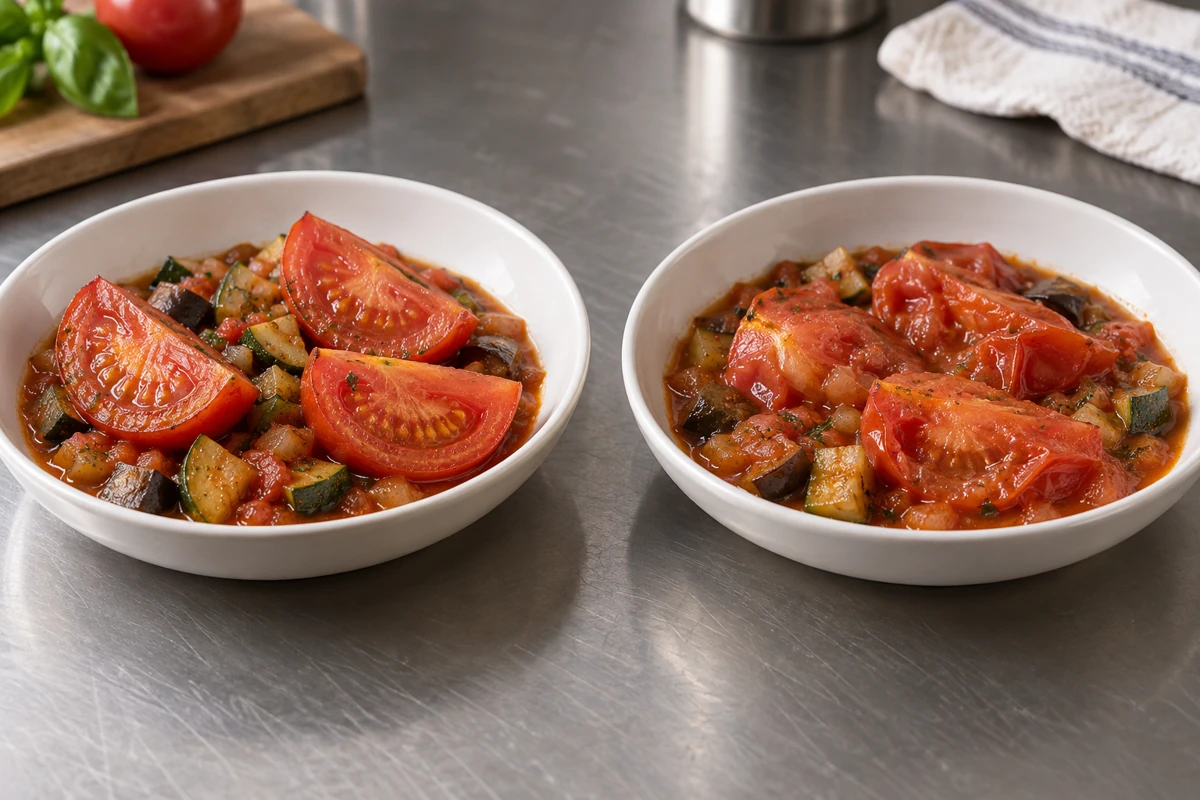
Illustrative portions show the piece edges, attached skin and flesh a preparation comparison can examine.
Prepare a short route record with the ingredient state at entry, load size, actual heating equipment, mixing practice and next handling stage. If the sauce is cooled and reheated, record those stages separately. Include the size and depth of the retail tray or foodservice pan. These details make repeat tests interpretable and help a supplier understand why a sample prepared in a small saucepan differs from one processed in the customer's vessel.
Confirm the product's declared heat treatment before relying on it. Peeled, blanched, raw frozen and cooked ingredients are different specifications. A surface colour or a photograph of frost does not identify the treatment. We confirm the available preparation status for the approved SKU and communicate it with the use instruction. The customer's food safety team must establish the necessary processing conditions for its recipe, packaging and distribution route. Appearance cannot demonstrate that the food received adequate treatment.
The two dishes illustrated here represent possible texture states for discussion, rather than a measured time series. They help identify the question to ask during a trial: does the second exposure leave a useful piece, a loose skin or dispersed flesh? Keep your own stage photographs under consistent light and at matching scale. Record them with the actual process observations so later reviewers can distinguish a real change from a difference in framing or serving.
Balance sauce liquid before adding wedges
A ratatouille formula contains several sources of water. Courgette, aubergine, peppers, tomato pieces and any added tomato component all contribute to the finished sauce. The final consistency depends on their condition, proportions and preparation. If the surrounding vegetables still need a long reduction when the wedges enter, the tomatoes may receive more heat and movement than the appearance target allows. An early sauce check can therefore be more useful than simply searching for a firmer wedge.
Evaluate the surrounding base first. Cook the other components to the condition needed for your recipe and assess how much further concentration remains necessary. A broad pan, a deeper kettle and a covered tray will not lose water at the same rate. Write down the equipment and load used for the comparison. A visually thick sauce in a very small test batch may be a poor reference for a much larger covered production load.
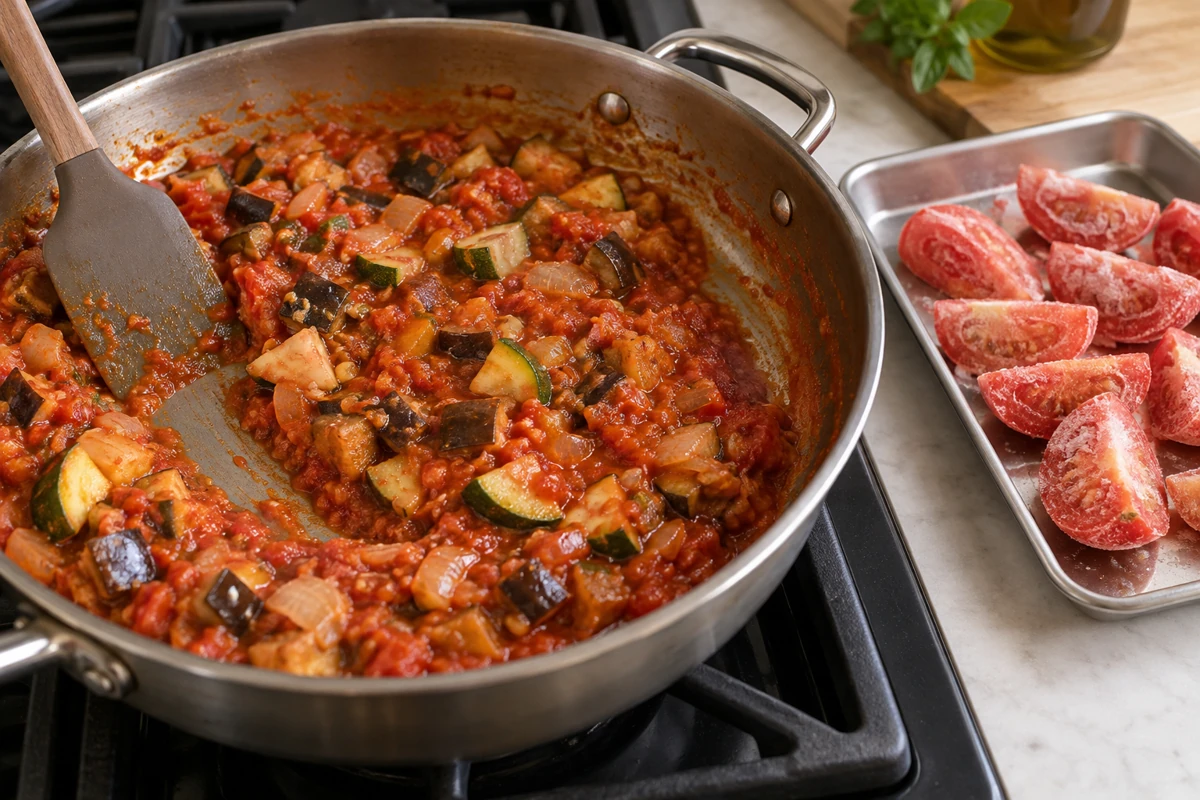
The surrounding base can be assessed before fragile wedges enter the pan.
Retain the liquid balance as part of the formulation record. If a development method drains thawed tomato, account for what is removed and what the recipe loses with it. Discarding liquid can change flavour, soluble solids, yield and the effective ingredient cost. Alternatively, the recipe may be designed to retain that liquid and reduce another water addition. Neither route should be hidden inside a vague instruction to drain well. Define the preparation state and apply it consistently to every candidate.
Keep a separate sauce component when the recipe needs both background tomato flavour and visible pieces. This is a formulation option to test, subject to the ingredients actually available. A sauce or paste contribution can be evaluated independently from the amount of wedge material. It does not follow that our wedge SKU includes puree, diced tomato or a particular concentrate. Those are separate product forms, and availability, composition and labelling need their own confirmation.
Measure consistency at the stage that matters for serving. A pan can appear watery just after frozen ingredient addition and then become acceptable after the agreed preparation. Conversely, a sauce may look thick while hot and release visible liquid during holding. Examine the finished portion after its actual waiting period. Record a repeatable observation, such as a defined rest before photographing, instead of changing the sauce until one attractive image can be taken. This keeps the recipe decision connected to the product the buyer will use.
Add and move the pieces with care
Ingredient order is a useful variable for a controlled kitchen comparison. One route can incorporate the wedges earlier; another can add them after more of the surrounding base has been prepared. Keep the other conditions as similar as the process allows. The later route still needs enough treatment to meet the approved cooking instructions and distribute the ingredient evenly. It should not be adopted solely because the tomatoes look more attractive at an earlier stopping point.
The action of the tool matters as well as the number of movements. A broad spoon that supports a tender piece from below interacts differently from an edge repeatedly cutting through the same area. In a kitchen trial, observe where the tool contacts the tomatoes and whether pieces are trapped against the vessel. Photograph the handling action if it helps the team reproduce it. Avoid giving a universal number of folds or a mixer speed without examining the equipment and recipe.
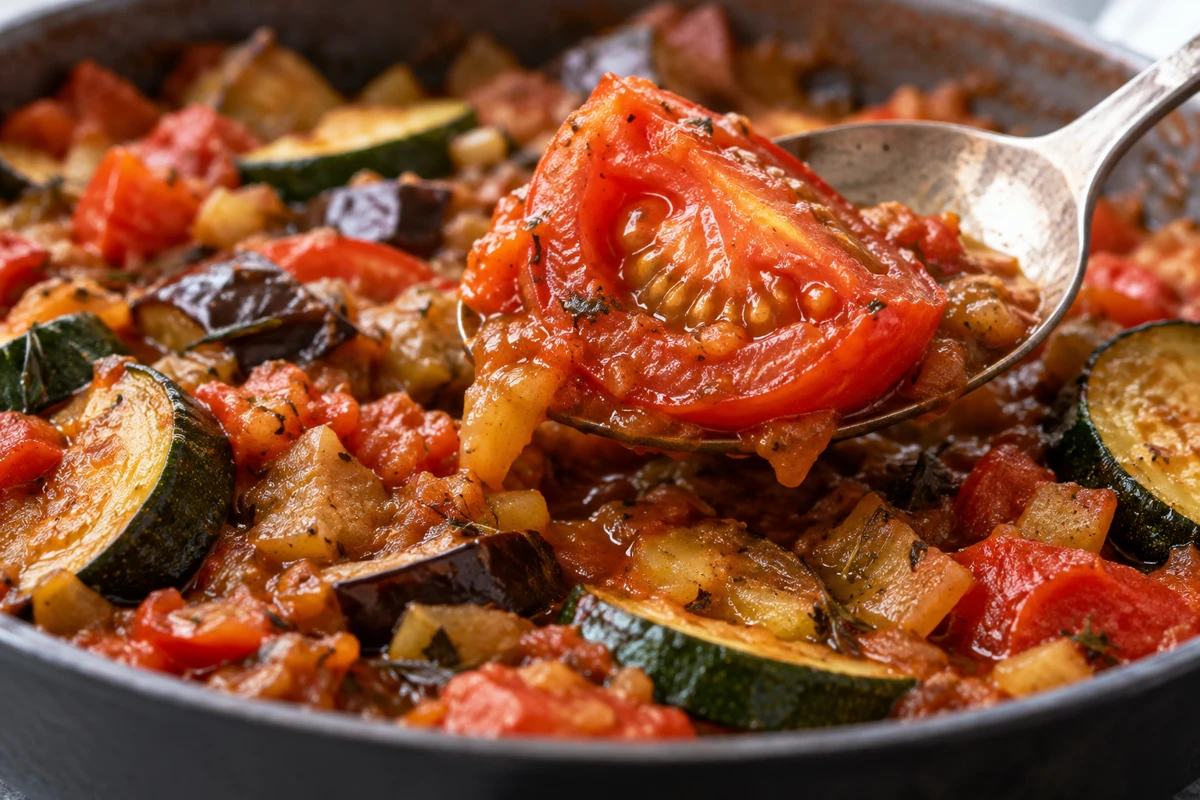
A broad spoon supports the softened flesh and attached skin from underneath.
For larger production, document the actual agitator, vessel geometry, fill level and mixing time. Speed alone is an incomplete description of the movement experienced by the ingredient. A value transferred from a different vessel can produce a different result. If the process includes pumping, a transfer hose, a hopper or a depositor, assess the pieces after those stages too. A satisfactory kettle sample does not prove that the filling route preserves the same distribution.
Uniform distribution is a separate requirement from piece survival. Gentle movement that leaves most wedges at the top or bottom of the vessel can produce inconsistent portions. Take samples from appropriate positions and from the beginning, middle and end of filling where practical. Inspect the actual portions for tomato presence, surrounding vegetable balance and sauce coverage. The process has to achieve the agreed distribution while preserving enough of the desired shape.
At GreenLand-food, we use the buyer's application description to discuss a suitable sample and specification. Send the entry state, intended dish and handling route with the inquiry. We can confirm the offered wedge form against that request, while any change to the customer's equipment or validated process remains a development decision for its own team. The photograph of a supported spoonful explains a handling principle; it is not a claim that a particular commercial line has been installed or tested.
Reheat and serve within the approved process
Reheating exposes a prepared dish to another combination of time, temperature and movement. Keep the package instructions and the applicable food safety controls as the starting point. A change intended to preserve tomato appearance must still deliver the required treatment throughout the portion. Steam, bubbling sauce or a hot edge cannot establish the temperature at the coldest relevant location. Use the appropriate verification method for your product and equipment.
A shallow tray and a deep pan present different development questions. The load, portion thickness, starting temperature and heating method all affect how the product warms. Record the exact configuration when you compare ingredients. If the commercial serving uses a deep foodservice pan, evaluate that route as well as a small plated sample. The same applies to microwaveable retail trays, where the actual pack and consumer instructions belong in the validation work.
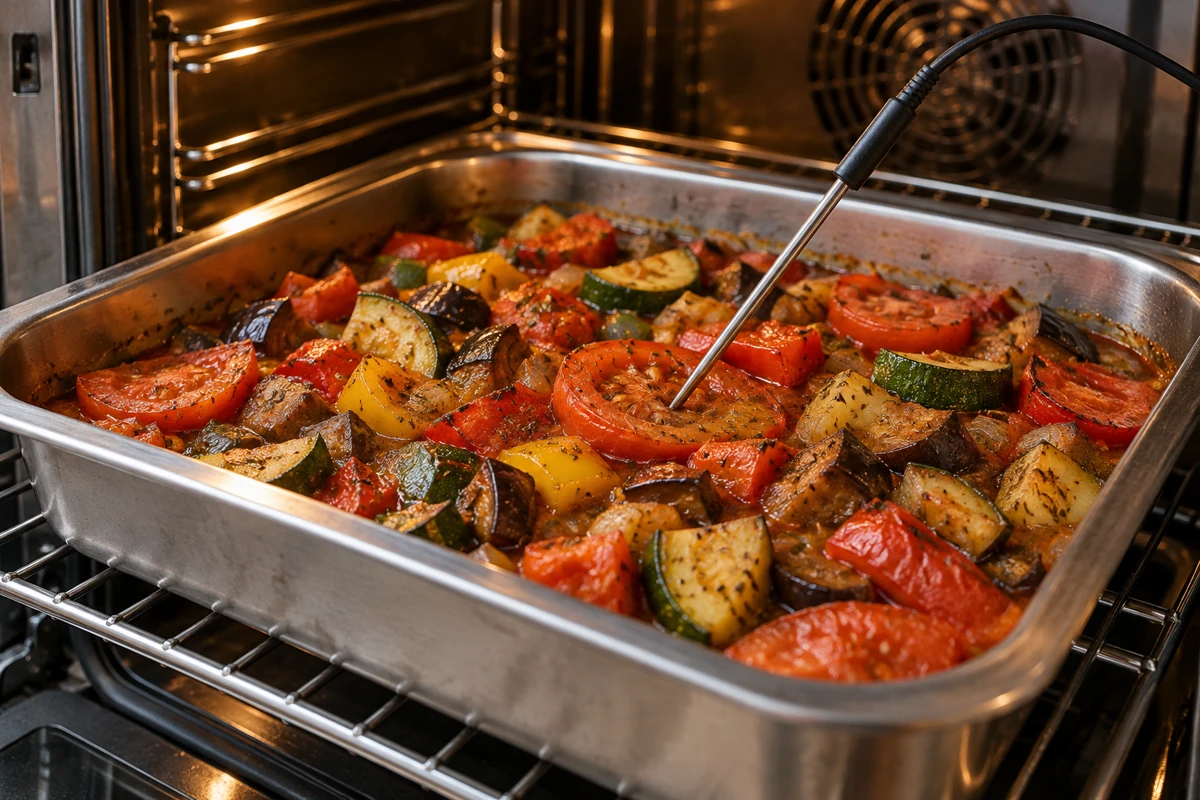
Tray depth, portion distribution and the approved heating process belong in the reheating assessment.
Movement after heating can still change the appearance. A wedge may retain its shape in the tray but break during transfer to a serving dish or during repeated stirring on a service counter. Include the normal serving utensil and portioning action in the assessment. Examine the first and later portions when the intended holding practice makes this relevant. This reveals whether the problem is initial heating, holding, handling or a combination of stages.
Published prepared products show why instructions must remain specific to the item. Picard's ratatouille provides cook-from-frozen directions that vary with the amount prepared. Those directions belong to its formulated product. They cannot establish a cooking schedule for bulk tomato wedges, a different recipe or another pan. Use such examples to identify the variables to document, then establish your own appropriate instructions.
When the operation uses chilled or frozen intermediate storage, review cooling and storage controls with the responsible food safety team. A thick bulk dish needs a process suited to its volume and packaging. Preserving visible tomato shape does not justify leaving food at an uncontrolled temperature or reducing a necessary heating step. Keep the appearance assessment alongside the safety records, with each judged on the evidence appropriate to it. A good development decision has to satisfy both requirements.
Compare samples in the finished ratatouille
Prepare a comparison around the specific decision. If the question is whether two wedge specifications perform differently, use the same surrounding recipe and preparation route for both. If the question is ingredient order, use the same tomato lot while changing that step. Changing the lot, sauce concentration, pan size and addition point together may produce two different dishes, but it will not show which change caused the difference.
Define the observation states before starting. An incoming frozen photograph establishes the material presented for the trial. A sample after initial cooking shows the first prepared state. A portion after reheating and normal service shows the result most relevant to the customer. Keep those observations distinct, and explain whether any samples are tracked through the route or are separate samples taken at each stage. Sampling itself should avoid unnecessary crushing or selective removal of the best-looking wedges.

Example portions and separated skin illustrate observations for a proposed comparison.
Choose a few measurements that reflect the target. These could include the proportion of recognizable pieces under an agreed definition, detached skin in a prepared portion, visible liquid after a defined rest and the consistency of tomato distribution across portions. A simple count and a weight-based yield answer different questions. Write the denominator with the result. Avoid presenting the mass of sauce-coated recovered pieces as the original mass of intact tomato.
Include eating quality in the decision. A piece can remain visually coherent while its skin is unpleasantly chewy, or become softer while still giving a satisfactory tomato contribution to the dish. The original processed diced-tomato texture study is a useful reminder that instrumental and sensory classifications need not tell the same story. Its processed dice are a different material from frozen wedges, so its results do not establish an acceptance limit for this application.
Repeat the comparison enough to see whether the apparent difference survives normal variation, using a plan agreed by the development and quality teams. Retain the recipe revision, sample identity, photographs and observations with the conclusion. A single attractive bowl can suggest an option worth exploring. It cannot establish repeat-order consistency, a guaranteed retention percentage or commercial shelf life. The comparison proposed here is a method a buyer can adapt; no physical trial results are claimed.
Retain a few unarranged serving photographs as well as any carefully prepared reference plate. A developer can unintentionally select the largest wedges and move them to the surface, making a sample look more consistent than ordinary portions. Photograph the normal serving action and the portion it produces before making adjustments for presentation. Use the same dish size and camera distance for each candidate so piece size can be judged fairly. Keep the evaluation portion separate from a promotional photograph.
If the product will serve more than one channel, name the route each approval covers. A ratatouille sold in a retail tray and the same recipe held in a foodservice pan may need separate preparation checks. One approved appearance does not establish every route. A purchasing file can retain a common ingredient specification while recording distinct application observations. That gives the development team room to adapt the recipe without silently changing what the supplier has agreed to deliver.
Write the purchasing specification around the dish
The order specification should connect the ingredient that arrives with the ratatouille result you approved. Confirm tomato identity, wedge geometry, accepted maturity, skin and seed retention, processing status and the relevant defect definitions. State whether the approval sample is assessed frozen, after a controlled preparation, or after the full recipe route. A frozen visual limit and a finished-dish limit should be recorded separately so receiving staff know which inspection can answer each question.
Our frozen tomato product page uses wedges as the reference form. Whole tomatoes, dice and puree are separate forms and need separate confirmation. For this application, tell us how the wedges enter the recipe, whether released juice remains in the dish and what a customer should see after reheating. These details guide a more useful quotation and sample request than a general demand for premium tomatoes.

Actual frozen wedge product view; the prepared result needs its own acceptance reference.
Agree the sampling method with the acceptance limit. Specify where the sample comes from, how much is inspected and how the material is handled before assessment. Record tolerances in terms that receiving staff can apply consistently. If a defect is counted, define the unit; if it is weighed, define the material and preparation state included. Keep images of acceptable and unacceptable examples with the written description, especially where wedge recognition involves judgement.
Packing should suit the buyer's handling route. Confirm inner-pack weight, liner or bag arrangement, carton identification and the quantity normally opened for one batch. Large packs can be economical, but their handling should match actual production consumption and the product's use instruction. Discuss smaller packs or private-label requirements as a confirmed commercial specification, with artwork and availability reviewed for the order. Do not assume a photograph establishes a standard pack or an available minimum quantity.
Finally, link the approved sample, specification revision and shipment identity. Request the documents appropriate to the destination and the buyer's quality programme, and confirm their scope before production. At receipt, review lot identification, pack condition and temperature evidence together with the agreed product observations. If the prepared result differs, retain the stage records before assigning a cause. That record gives both purchasing teams a practical basis for investigating the difference and agreeing the next order.
Continue reading about cooked tomato ingredients
Understand the texture and preparation changes behind choosing a frozen tomato for cooked use.
Compare cooked application routes when a recipe can use softened tomato and released juice.
Trace the stage at which tomato skin damage appears before assigning a cause to a lot.
Source frozen tomatoes with GreenLand-food
GreenLand-food is a professional frozen tomatoes supplier and manufacturer in China, providing factory-direct wholesale supply for importers, food manufacturers, foodservice distributors, and private-label programs.
Send the product form, specification, packing, quantity, application, destination, private-label needs, and requested documents.