


Can You Freeze Romanesco? Blanching, Floret Form and Color
Oct 19, 2026
Leave a message

The main quality questions are whether the florets retain useful shape, acceptable color and the bite required by the dish. Freezing cannot restore an old or damaged head, and a well-shaped frozen piece can still soften during later cooking. The result depends on the starting material and the complete preparation, storage and cooking sequence.
Romanesco-specific instructions online often borrow timing from broccoli or cauliflower without explaining the scope. This guide keeps that distinction visible. The National Center for Home Food Preservation provides an authoritative cauliflower method; a commercial processor needs a validated process for its actual Romanesco cut and equipment. For buyers, the useful decision is whether the supplied frozen sample performs in the intended application under the agreed instructions.
Choose the cooked result before freezing
Decide what you want to make before choosing the freezing form. A vegetable side needs recognizable crowns and a suitable stem bite. A mixed meal needs pieces that distribute and cook with the other ingredients. A blended soup may place more emphasis on flavor and usable yield than on intact points. These uses can justify different preparation choices even when they start with the same Romanesco head.
Freezing changes the way a vegetable should be evaluated. Water in plant tissue freezes, and later thawing and cooking can alter firmness and water retention. A frozen floret that looks crisp in a bag does not establish a fresh-like bite after preparation. The sensible benchmark is the final cooked dish. Test that result before deciding whether the freezing approach has met its purpose.
Keep visual shape and texture as separate observations. A floret may retain a clear spiral outline while becoming more tender than a fresh raw piece. Another may have a pleasant bite but lose several fine tips during handling. For a visible side dish, both may matter; for a soup they may carry different importance. Describing the result precisely prevents a useful product from being judged against an unrealistic expectation.
The intended cooking route affects the choice too. Roasting, steaming and cooking within a sauce expose the piece differently. A long thick stem can complicate the balance between a cooked center and an intact crown. Preparing more uniform florets before freezing gives the later cook a more consistent starting point, but it does not remove the need to follow the appropriate cooking instructions.
If a recipe depends on raw crispness, compare fresh and frozen options in the actual formulation. Do not assume freezing followed by thawing reproduces a freshly cut vegetable platter. Commercial frozen products may also require cooking before eating. The product information determines the preparation requirement, even when a consumer recipe describes fresh Romanesco as suitable for raw use.
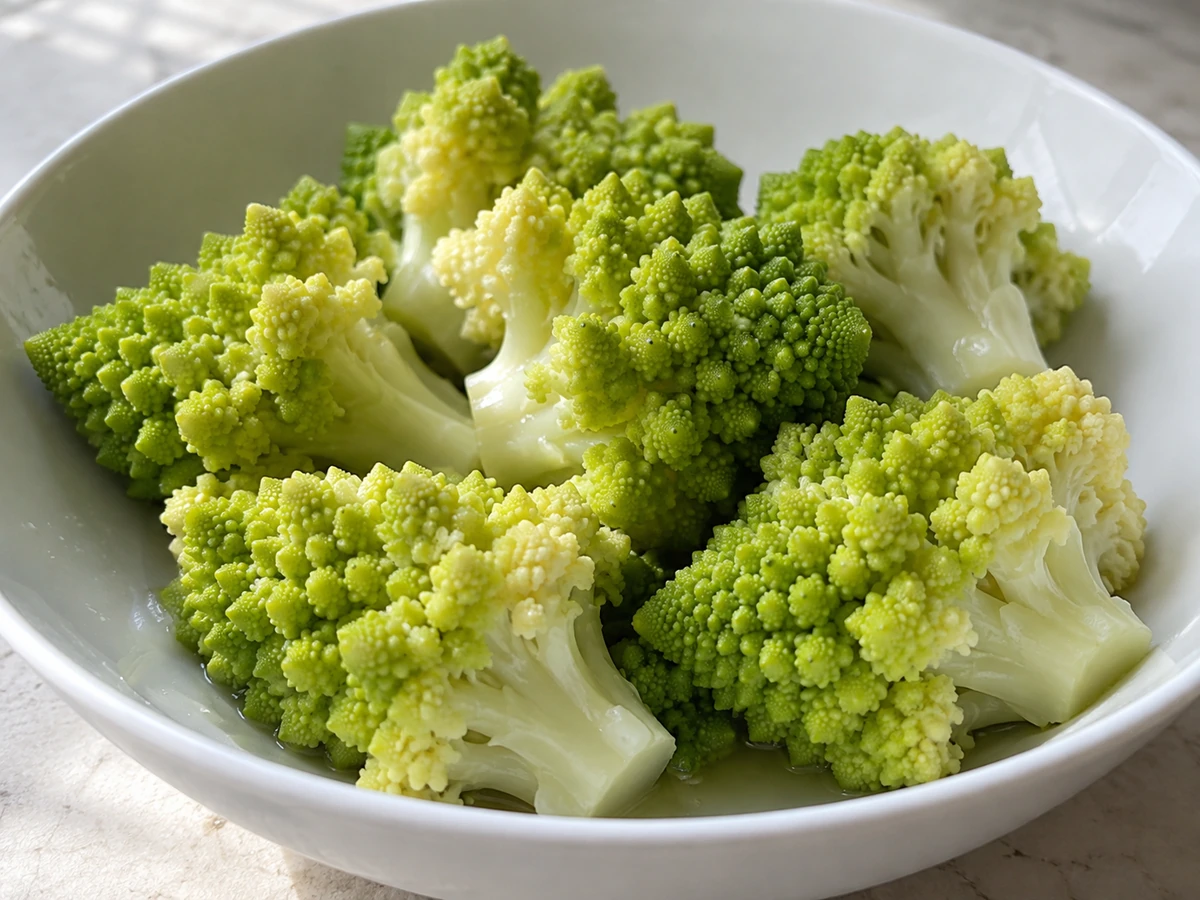
Cooked florets retain recognizable crowns above their pale cut stems.
For a buyer, write the application outcome before requesting a sample: visible pointed crowns after steaming, manageable pieces in a meal compartment, or a component that holds together after reheating. That short description helps connect the freezing form to something measurable. It also gives the supplier a clearer basis for discussing size, trim and preparation than a broad request for the best frozen Romanesco.
Use a small practical trial before freezing or ordering a larger quantity. Prepare the proposed floret form, preserve it under suitable instructions and cook a representative portion as intended. Record the result and any compromise that matters. A trial cannot establish commercial shelf life or process capability, but it can reveal whether the chosen form suits the dish before more resources are committed.
Start with sound Romanesco and workable florets
Begin with sound material. Look for a compact head with a recognizable green pointed structure and avoid using deterioration as something freezing will solve. The growing-head image provides a botanical reference; it does not define the condition of an individual purchase. Examine the actual head, including the stem and areas between clusters, before preparing it under normal clean food-handling conditions.
Remove the outer leaves and trim the base as appropriate to the intended product. Separate florets by following the stem branches where practical. A cut through a stem junction can preserve more crown shape than repeated cutting through the pointed surface. Work with a stable board and suitable clean knife, and choose a floret size that can be handled and heated consistently.
Uniformity matters more than making every piece look identical. Natural Romanesco contains a range of cluster sizes. Group pieces that are reasonably similar for preparation, and avoid mixing very large thick bases with tiny fragments in one undefined blanching load. If the objective is a visible side, retain complete small crowns where available instead of reducing everything to irregular crumbs.
Do not equate minimal stem with optimal preparation. The attached stem supports the crown and provides a place to handle the piece. An unnecessarily long or thick base can create a different cooking requirement, while excessive trimming can weaken the floret or remove usable food. Choose a consistent trim that fits the dish, then use it throughout the trial so the result can be interpreted.
Wash and inspect the prepared material according to appropriate food-handling guidance. Pay attention to the spaces between pointed clusters without scrubbing so aggressively that the tips break away. Remove unsuitable material before freezing. A clean-looking photograph cannot verify that a commercial raw-material control or washing process has been completed; those requirements need their own documented procedure.
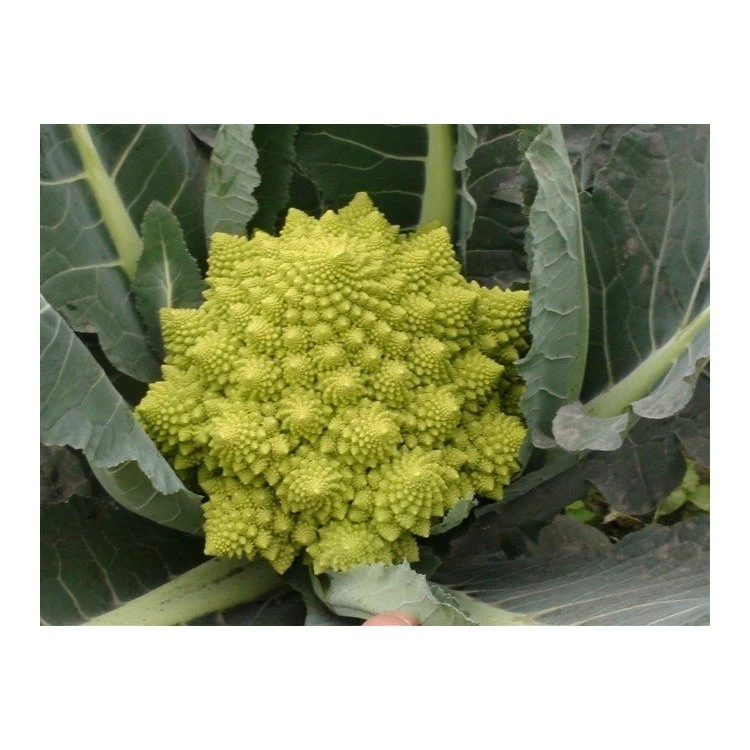
Romanesco raw head among leaves
For commercial enquiries, specify the supplied cut rather than assuming that every processor begins with the same raw form. Share the preferred crown dimensions, attached-stem description and intended cooking use. The finished frozen sample is the relevant reference for the order. A fresh whole-head image can explain identity, but the actual floret sample shows what the buyer will portion and cook.
Keep a preparation note for the trial, including the approximate form and any grouping by size. If the later result is uneven, the note helps distinguish a broad size range from a possible process problem. Without that record, a large soft crown and a firm small-looking piece may seem contradictory until the stem thickness and original cut are considered.
Use blanching guidance with the right scope
Blanching is a short heat treatment used in vegetable freezing to control quality changes associated with enzyme activity. The National Center for Home Food Preservation's blanching guidance explains why the treatment and its duration matter. Too little or too much treatment can impair the intended result. It should be followed as a defined preservation step, rather than improvised solely from the color of the vegetable.
The center's cauliflower method specifies prepared pieces about one inch across, a three-minute water blanch and prompt cooling, draining, packing and freezing. That is authoritative guidance for the cauliflower preparation described on that page. It is a related reference for understanding the sequence, not evidence that every Romanesco floret size or commercial blancher has been validated with the same time.
The cited page does not provide a Romanesco-specific blanching time. For a home batch, ask a local extension or preservation adviser whether its cauliflower method applies to the Romanesco cut you plan to use. Keep the recommended piece size, loading and timing convention together. Combining a large floret from one recipe with a shorter treatment from another would create a method that neither source describes.
Water blanching and steam blanching are different procedures. Their timing conventions and equipment requirements should not be interchanged. Follow the chosen guidance on loading, heat recovery and the point at which timing begins. A pot crowded with prepared fresh florets may recover its boil more slowly than the stated method allows. Keep the cut, vegetable load, water quantity and timing convention together when following the chosen guidance.
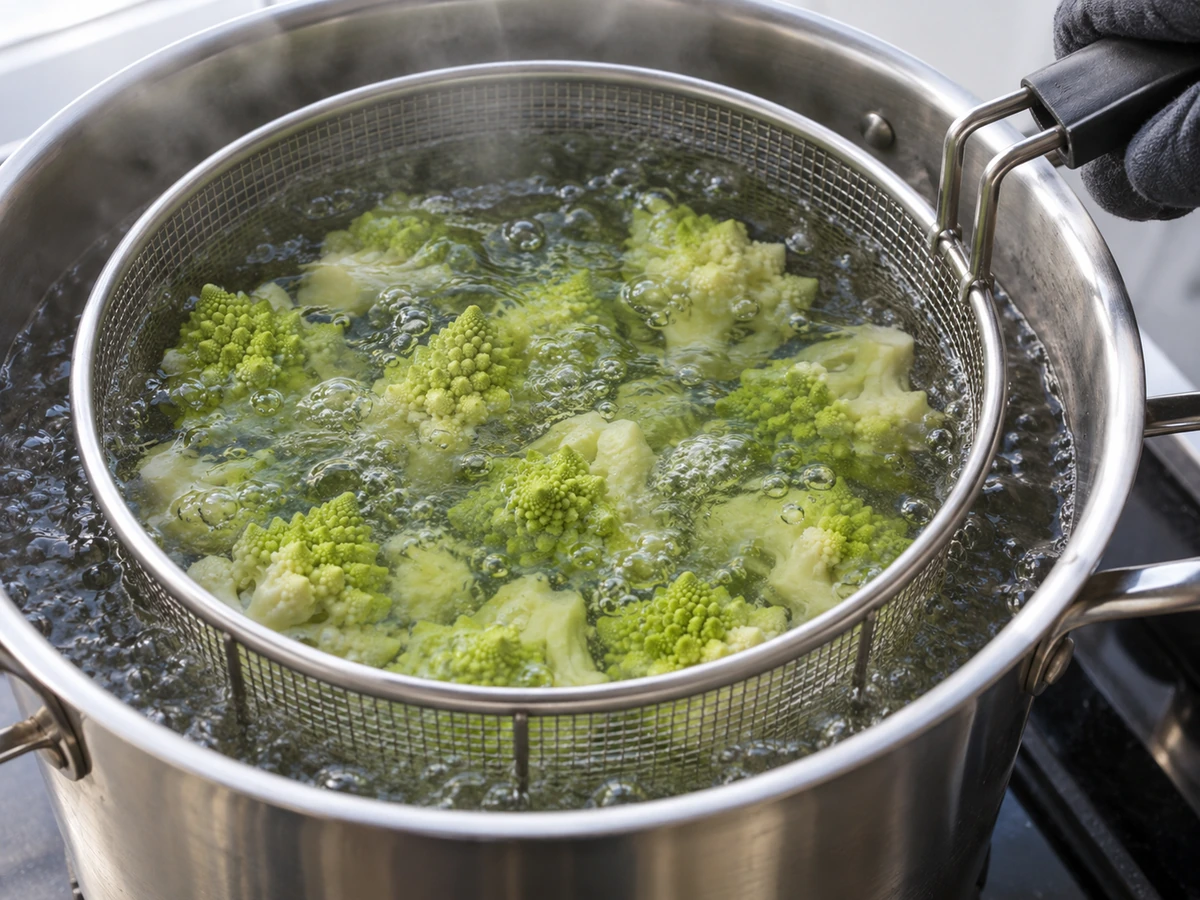
Bubbling water surrounds Romanesco florets in the basket.
In commercial production, the processor should establish and verify the treatment for the actual cut, throughput and equipment. Relevant evidence may include the process description and the quality-control basis required for the order. Ask for confirmation appropriate to the product instead of assuming that a generic flow diagram establishes performance. The buyer does not need to prescribe an unsupported home-kitchen time to a production line.
Blanching should also remain distinct from the final cooking requirement. A product can be blanched for freezing and still require cooking before eating. The instruction for the finished frozen SKU determines its intended preparation. A green appearance, a brief dip in hot water or a freezing step is not proof that the food is ready for raw consumption.
For a trial record, retain the source instruction, cut description, batch amount and actual method used. If color or texture later disappoints, those details support a focused review. Changing the treatment simply because one sample looked brighter can create a different problem during storage. Evaluate the complete intended result and make changes within an appropriate validated or authoritative procedure.
Cool and drain without damaging the points
Cooling follows the blanching step promptly under the chosen guidance. Its purpose is to bring the heat treatment to an end in a controlled way. Prepare the cooling arrangement before starting, so hot florets are not left waiting while a bowl or draining tray is found. The equipment and water capacity should suit the batch rather than becoming warm immediately after loading.
Move the pieces gently. A basket or suitable perforated utensil can support the florets and reduce repeated contact with their points. Avoid pouring from unnecessary height or compressing the crowns beneath a heavy mass. The material has received heat and may be more vulnerable to handling than it was before blanching. Preserving shape requires attention during this transfer as well as during cutting.
Use the cooling method and duration given by the applicable guidance. Check that the process works for the load and cut rather than assuming the outside temperature represents the center of every thick stem. In commercial operation, cooling water and handling conditions belong within the processor's controlled system. A generic photograph of an ice bath does not establish an industrial cooling or hygiene procedure.
Drain thoroughly after cooling. Water trapped on the surface can later freeze around adjacent pieces and make portioning more difficult. A perforated tray gives water a route away from the florets without requiring forceful squeezing. Handle the material gently enough that removing excess water does not become a new source of fragments. The goal is a well-drained piece with its useful crown intact.
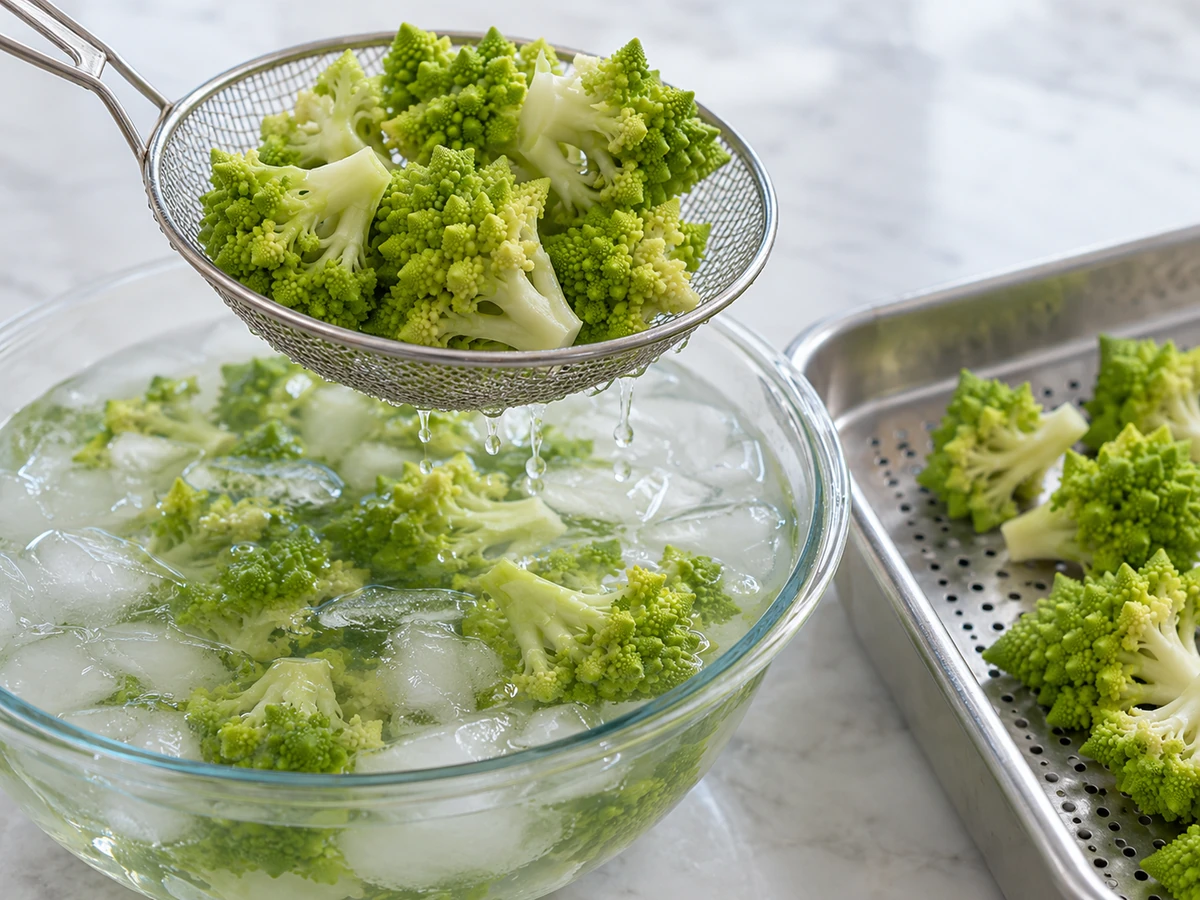
Water drips from the lifted florets above the ice bath.
Do not interpret draining as a reason to leave prepared vegetables warm for an extended period. Follow appropriate time and temperature controls and move into the freezing and packing sequence promptly. A towel, tray or spinning device also needs to be suitable and clean. Evaluate whether any mechanical action damages the points before making it part of a repeatable preparation method.
Inspect the drained form before freezing. This is a useful point to see whether the chosen trim, heat treatment or handling has already weakened the crown. A photograph can record the condition for comparison with the later frozen and cooked samples. Keep that observation separate from claims about safety or storage life; appearance is only one part of the evidence.
If many tips are already detached, investigate the preceding steps before blaming freezing. Review the starting form, load, treatment and transfers. A frozen package cannot restore the original silhouette. Correcting damage before the freezer often gives a clearer route to improvement than changing storage duration or seasoning after the product is cooked.
Freeze separated pieces and protect them in the pack
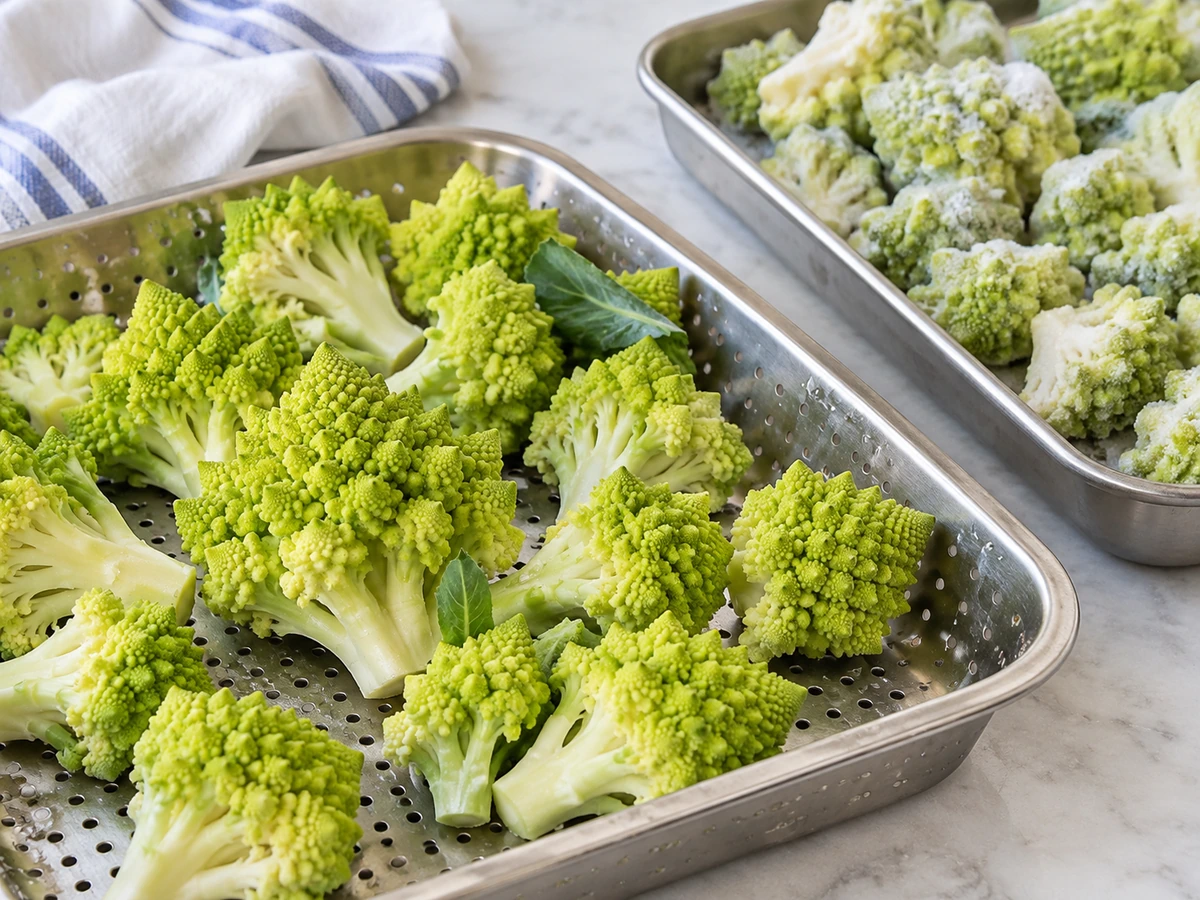
Separate pieces are easier to portion than a single mass when only part of a pack is needed. For home preparation, suitable tray-freezing guidance can help keep drained florets apart before final packing. The pieces should freeze promptly in an appropriate arrangement, then be protected in suitable freezer packaging. A tray is a stage in the process, not long-term protection from drying or contact with other foods.
Choose packaging that suits the shape. A rigid container can protect delicate crowns from pressure, while a freezer bag may use space efficiently if handled carefully. Excessive compression or an aggressive vacuum setting can damage points even when air removal is otherwise useful. The best arrangement is one that protects the product and fits the actual freezer and portioning routine.
The NCHFP freezing pointers emphasize prompt freezing, suitable package loading and cold storage. Follow the applicable guidance and monitor the freezer. Do not add an uncontrolled large warm load and assume the air setting alone proves that every piece froze as intended. The amount introduced and the available capacity affect the process.
For commercial individually quick-frozen Romanesco, separability should be considered alongside crown condition and the agreed specification. IQF does not define every aspect of quality or guarantee that a product will stay separate through any handling history. Ask how the supplied form is expected to be stored and used, and inspect the received sample under those conditions.
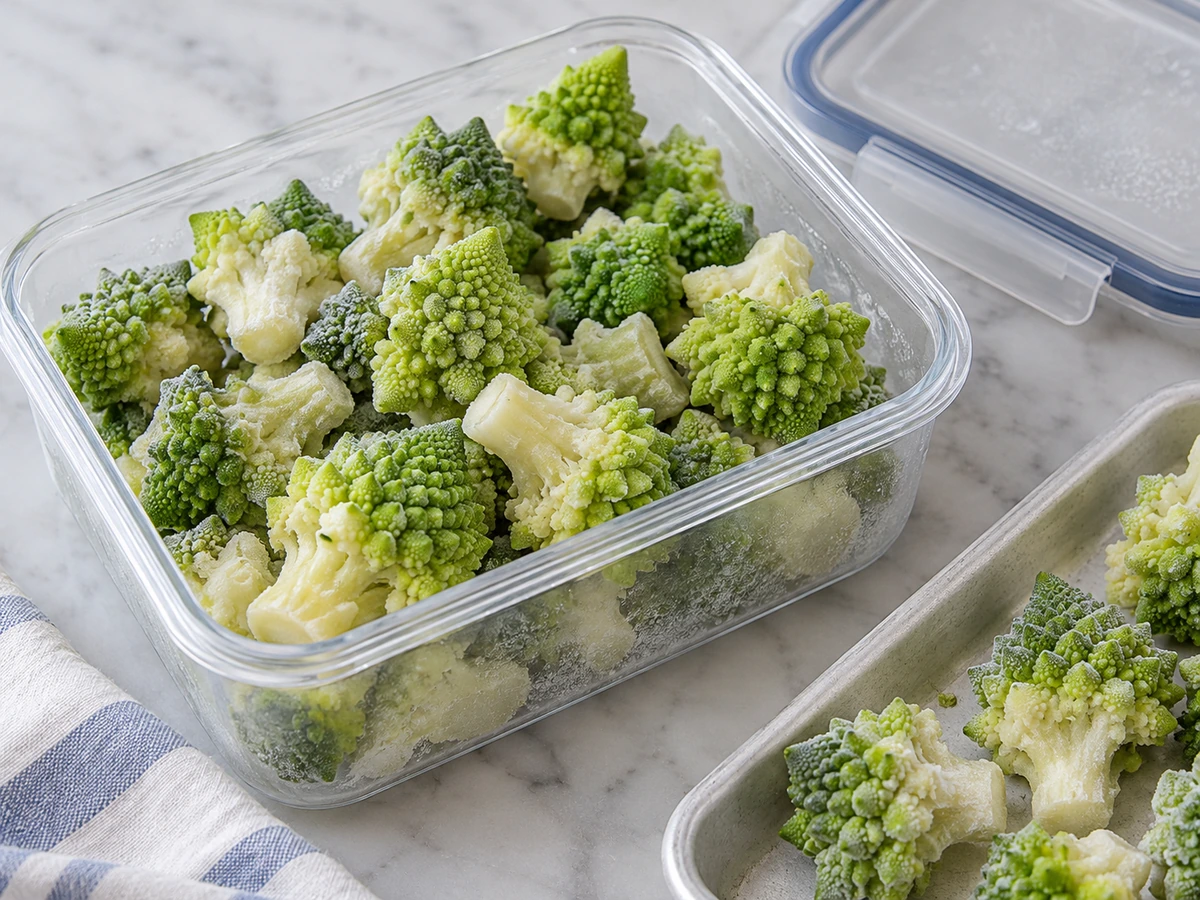
Separated frozen florets fill a rigid container with its lid ready beside it.
Label home-prepared packs so their identity and preparation date remain clear, and follow suitable storage guidance. For purchased product, retain the supplier's lot and date information and use the stated storage conditions and shelf-life basis. Do not transfer a duration from another supplier's mixture or a consumer website to a different Romanesco product. Packaging, process and storage history can differ.
Keep frozen product under its specified conditions during repeated use. Remove the needed portion using clean suitable handling, close the pack as intended and return it promptly to the appropriate storage. A pack that is repeatedly warmed during portioning no longer follows the same history as an unopened pack maintained under stable conditions. Record unusual receiving or storage events for review.
Freezing is not a way to make unsafe material safe. FDA food-storage guidance explains that freezing prevents growth but does not kill most bacteria. Appropriate preparation, storage and the required final cooking remain necessary. The decision about a temperature-abused product belongs in the applicable safety procedure, not in a visual check for attractive frost.
A home tray-freezing trial and a commercial IQF process can both aim for separate pieces, yet they do not establish equivalent freezing rates or storage performance. A household tray has its own loading and airflow limits; a processor has a defined equipment and production arrangement. The appearance of loose florets alone cannot quantify either process. For a commercial claim, ask for the relevant process and shelf-life basis for the supplied SKU. For home preparation, stay within suitable preservation guidance and freezer capacity. Keeping those scopes distinct allows the useful idea of separable pieces without promising that two very different systems produce identical results.
Judge color, texture and shape after cooking
Judge suitability after the product has completed its intended cooking method. A frozen sample is useful for checking separability and the visible cut, but the finished dish reveals bite, water release and retained shape. Use the actual instructions and a representative load. Evaluate the point at which the product will be eaten, including normal holding or reheating where relevant.
Look at color under consistent lighting. Frost and surface moisture can change how a frozen piece appears, while sauce and surrounding ingredients alter the cooked impression. Record whether the serving has an acceptable natural Romanesco color for the application. Avoid treating a specific photograph's vivid shade as a universal target across cultivars, processing states and viewing conditions.
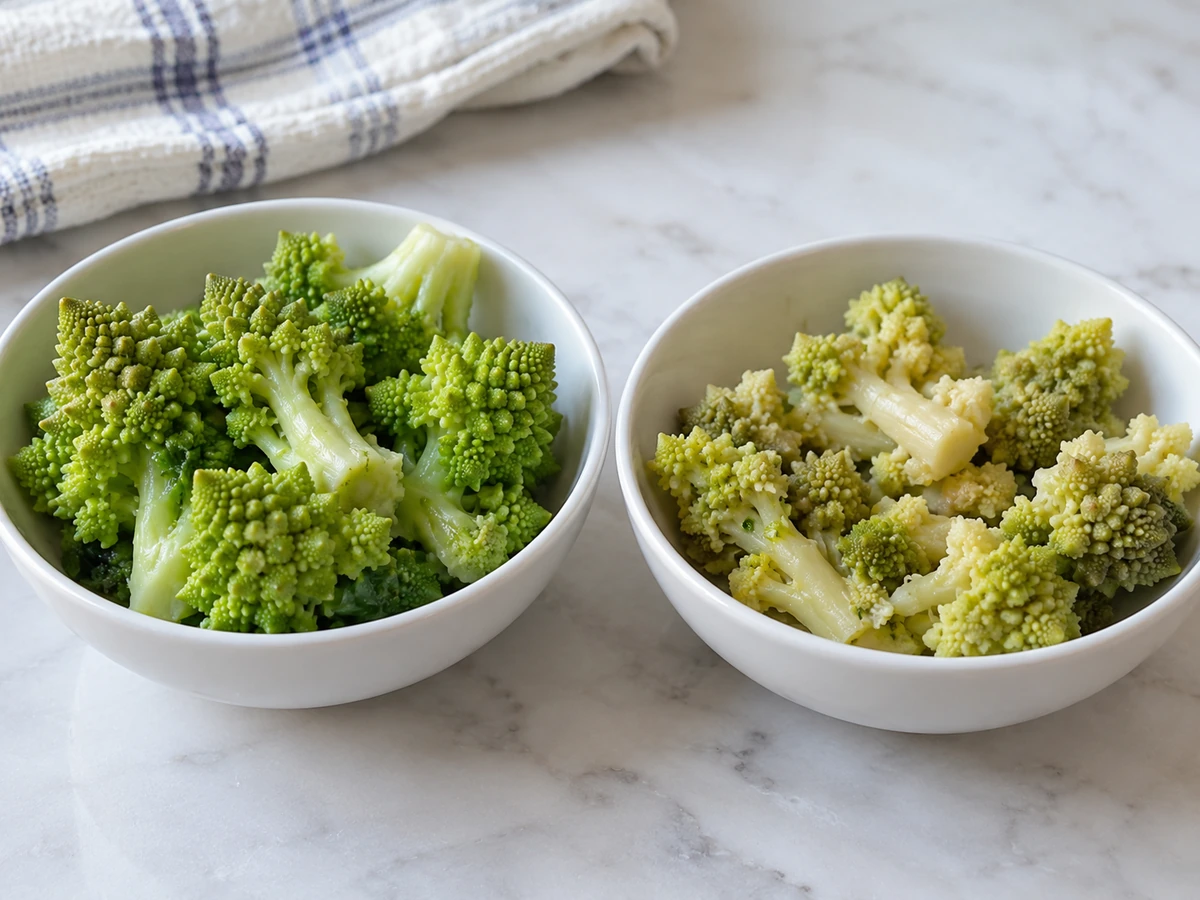
The bowls show differences in color and crown condition after cooking.
Assess crown integrity with a clear observation. Does the piece remain recognizable when lifted? Are the main points attached? Do fine fragments collect in the serving liquid? These questions are more useful than a vague claim that freezing preserved everything. The desired level depends on whether Romanesco is a central plated feature or one component among several vegetables.
Check the stem and crown together for texture. A stem can remain firm while small outer points become soft, especially when the size range is broad. If the result is uneven, review the cut and cooking load alongside the preservation method. Increasing final cooking time may solve the stem problem while reducing crown definition, so identify the actual imbalance before choosing a correction.
Water release also needs context. Compare the same portion and preparation method, including any added water, draining and sauce. A visible pool may come from several parts of the process. Do not diagnose slow freezing or a broken cold chain from the plate alone. Our frozen vegetable texture article provides a wider framework for reviewing those possibilities.
Where comparison matters, retain the source and preparation details for each sample. Independent frozen and cooked portions can show general differences, but they do not track the survival of the same individual florets. If a test follows particular pieces, keep their identities clear. Choose the method that fits the question and report it accurately rather than giving a precise percentage unsupported by the trial design.
Decide whether the result suits the application. A tender sample with a clear crown may be excellent for a cooked side even though it no longer resembles raw crispness. A sample that loses much of its shape may still require a different form or use. Make that decision from the intended dish and the agreed quality criteria, while keeping safety acceptance separate.
Confirm commercial frozen suitability with a sample
For commercial purchasing, request a sample of the finished frozen form being proposed for the order. Share the application, cooking route and appearance requirement so the supplier understands why crown size and stem trim matter. A whole fresh head can illustrate identity, but it cannot establish the performance of a prepared frozen floret after distribution and cooking.
The sample request should include a description of the preferred dimensions and trim, with photographs where useful. Explain whether the product will be a visible side, a blend component or an ingredient in a prepared meal. Add the expected quantity, packing, destination and required documentation. This allows the commercial discussion to address the order as well as the vegetable itself.

Actual frozen Romanesco sample florets
Ask for the proposed storage and preparation instructions and the specification basis. Confirm the treatment state and intended use rather than inferring them from the word frozen or from an illustration of blanching. If a particular safety, certification or destination requirement matters, identify it explicitly and obtain the appropriate current evidence for the product and facility concerned.
Run the sample through the actual application. Inspect it frozen, prepare it under the intended method, then complete normal transfer, sauce addition and reheating where relevant. Record the shape, color, stem bite and practical yield that matter to the finished product. A controlled small trial helps select a candidate, while broader verification may be needed before a large launch or long-term specification is approved.
When the sample needs adjustment, give a specific observation. Long stems dominating the portion suggest a different discussion from fragile crowns or poor separability. An uneven cooked result may require a narrower size range or a review of the preparation method. Evidence that identifies the issue is more useful than a general request for higher quality and makes the next sample easier to evaluate.
We can work through these requirements for GreenLand-food frozen Romanesco with your purchasing team. The product page provides the starting form; the agreed specification and approved sample define the order. Our specification guide explains how to connect product descriptions, methods and acceptance records.
Keep the suitability decision tied to its evidence. Record the sample identity, method and intended application, and review the conclusion when the cut, packing, process or finished meal changes. Romanesco freezes usefully when its prepared form and later cooking are designed together. The practical result to preserve is a recognizable, enjoyable cooked component that performs in the buyer's real serving.
Source Frozen Romanesco with GreenLand-food
GreenLand-food is a professional frozen Romanesco supplier and manufacturer in China, providing factory-direct wholesale supply for importers, food manufacturers, foodservice distributors and private-label programs.
Send your product form, specification, packing, quantity, application and destination. Include private-label needs and requested documents so we can confirm the supply details with your purchasing team.