


How to Cook Frozen Napa Cabbage for Soup, Hot Pot and Stir Fry
Oct 19, 2026
Leave a message

There is no single cooking time that covers fine chopped napa, broad leaf pieces and a frozen block. The starting treatment, size of the ribs, amount added and equipment all change the result. A commercial product may also have a specific preparation instruction that takes priority over a method developed for fresh cabbage.
For a foodservice kitchen or ready meal manufacturer, the useful goal is a repeatable portion. The cabbage should reach the intended tenderness without making the broth unexpectedly weak, leaving excessive liquid in a pan or collapsing during service. We would choose the frozen cut and kitchen method together, then assess the finished meal after its actual holding and reheating stages. The following approach is a development guide; it does not replace the validated cooking instructions for the product or any other ingredient in the dish.
Start with the frozen cut and its preparation instruction
Open the product description before choosing the method. Confirm that the ingredient is heading napa-type Chinese cabbage and identify whether it is finely chopped, broadly cut, individually separated, compressed or frozen in a block. Look for the stated pretreatment and intended use. "Frozen" describes its temperature state; it does not establish that it is fully cooked or ready to eat.
The difference between leaf and rib is particularly useful here. Napa has a thin crinkled blade attached to a much thicker pale rib. The University of Minnesota crop guide describes its tender heading form. In the pan, the blade and rib do not behave as identical pieces. A cut specification that manages rib size can make a combined mixture easier to cook than one containing very fine leaf fragments and large dense ribs.
A fine chop is useful where small cabbage particles should disperse through a soup base or filling. It cannot deliver the broad recognizable leaves expected in some hot pot bowls. Larger cuts provide that visual presence, but their thickest ribs set a different cooking requirement. If the food depends on those larger pieces, start the sourcing conversation with a prepared sample or a clear photograph of the desired result.

Small pale rib pieces and green leaf fragments form a fine chopped cabbage mixture.
Loose frozen pieces can often be portioned directly into a suitable cooking process, subject to the package directions. A block needs the route specified for that block. It may be intended for a controlled thawing or preparation step, or for equipment able to heat the entire mass effectively. Breaking a block into uneven chunks and assuming the same cooking time as loose pieces makes the result harder to control.
Check the practical condition of the pack as well. A few attached pieces may be ordinary for the agreed product, while a fused mass that prevents normal dosing may be a receiving concern. Photograph the condition before changing it and compare it with the specification. Frost or clumping alone cannot reconstruct the entire temperature history, so use available records and pack evidence together.
When the instruction calls for thawing, use the site's controlled method and keep the cabbage protected and identified. Record whether the recipe weight means frozen incoming material or prepared drained solids. That distinction determines how much cabbage and water enter the dish. A kitchen method becomes easier to repeat when the first line tells the cook exactly what condition and quantity to start with.
Add napa to soup after the broth has developed
Develop the broth before adding the delicate cabbage. Aromatics, stocks and slower ingredients can need more time than napa leaves. If the cabbage enters at the beginning of a long simmer, it may reach the preferred texture well before the rest of the soup. Keeping the cabbage addition as a defined stage gives the kitchen a clearer way to control both rib tenderness and leaf integrity.
For an initial trial, use a known quantity of broth and a weighed cabbage portion in the intended pot. Add the cabbage in the state required by its instructions, distribute it gently and observe the time needed for the broth to recover. A frozen load absorbs heat. Increasing the portion without changing the pot or heating capacity can therefore extend the early low-temperature period and alter the final texture.
Released water becomes part of the soup unless the process deliberately removes it. That can be useful when it is allowed for in the formula, but it can also dilute seasoning and reduce the expected proportion of visible solids. Compare the soup after the cabbage has cooked, rather than tasting and correcting the stock before the frozen ingredient has released its liquid. Keep any final seasoning adjustment separate in the trial note.
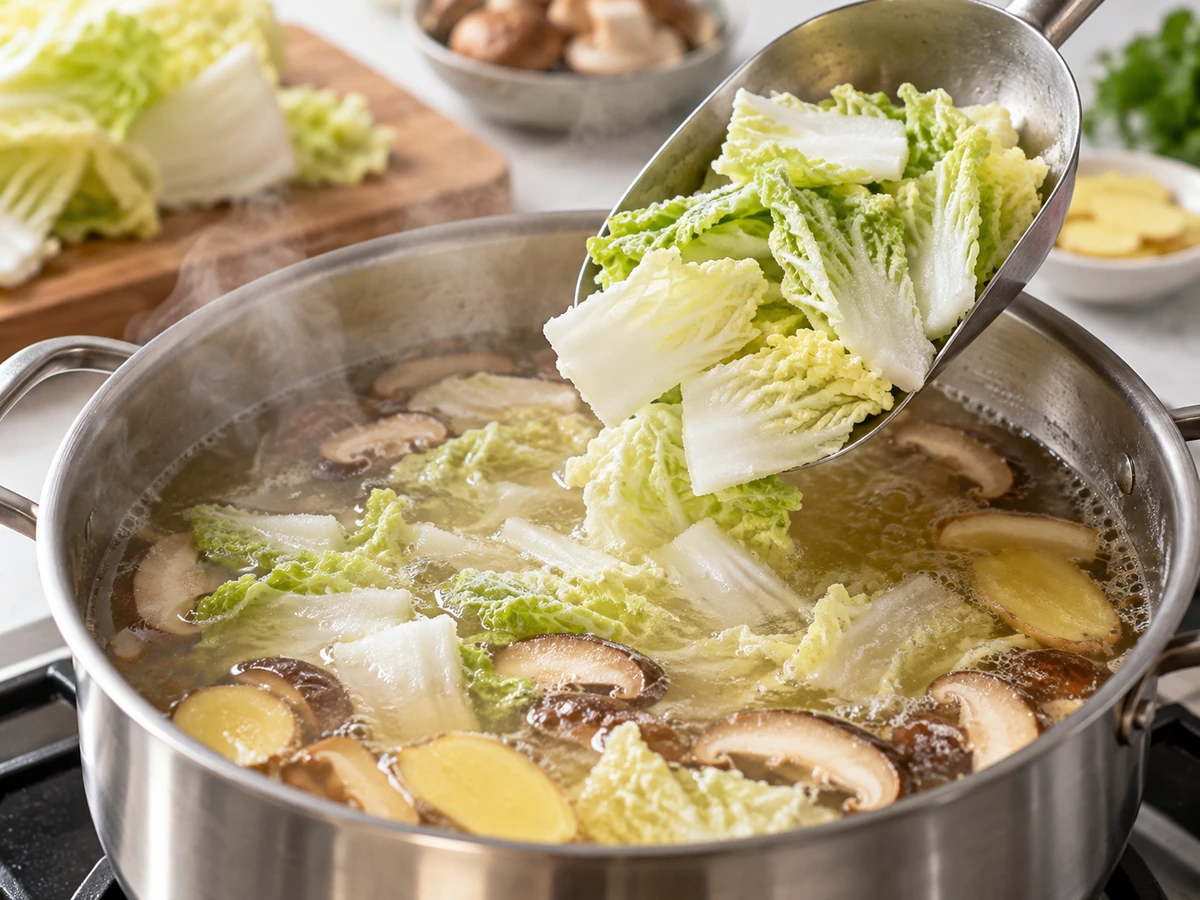
Separated frozen napa pieces enter a pot of simmering vegetable broth.
Broth style changes what the reader or diner notices. Clear soup reveals small leaf fragments and sediment readily. A thick soup may conceal those particles but still change in consistency as water is released. A noodle soup also contains another material that takes up liquid during holding. The cabbage should therefore be tested in the actual base and with the intended noodles, starches or other vegetables.
Stir gently enough to distribute the ingredients without repeatedly tearing the softened leaves. Fine chopped cabbage may need even suspension through a batch, whereas broad pieces may be better handled with a ladle or a gentle fold. The appropriate action depends on the food and vessel; vigorous stirring is not a substitute for enough heating capacity or a suitable cut.
Our frozen vegetables for soups and stews guide considers the broader questions of fines, broth clarity and holding. Napa adds a specific leaf-and-rib problem to that framework. Record whether the final bowl contains the intended balance of recognizable ribs and leaves, whether the broth remains at the target strength, and whether later servings resemble the first. Those observations are more useful for repeat production than a general instruction to cook until the cabbage looks soft.
Manage hot pot portions as the broth returns to a simmer
Hot pot brings ingredients into the broth repeatedly, so the conditions keep changing throughout service. A large initial portion of frozen cabbage can reduce the broth temperature sharply. Later additions may meet a smaller volume of more concentrated broth, or a vessel already crowded with other food. A method that works for the first portion may therefore need a practical rule for subsequent additions.
Keep the cabbage portion small enough for the equipment and service style. Spread separate pieces into the liquid so broth can circulate, rather than piling a dense mound above the surface. If the product is portioned in a block, follow its specific instruction and validate that format in the actual vessel. The visible boil around the outside does not prove that a dense cold center has reached its required endpoint.
Fresh-cabbage hot pot recipes describe a wide range of preferred textures, from a little remaining bite to very soft broth-soaked leaves. Those preferences explain why copying a minute count from another recipe can be misleading. Establish the desired cooked rib texture for the menu, then test the actual frozen cut and portion against that target while meeting the product's cooking requirements.
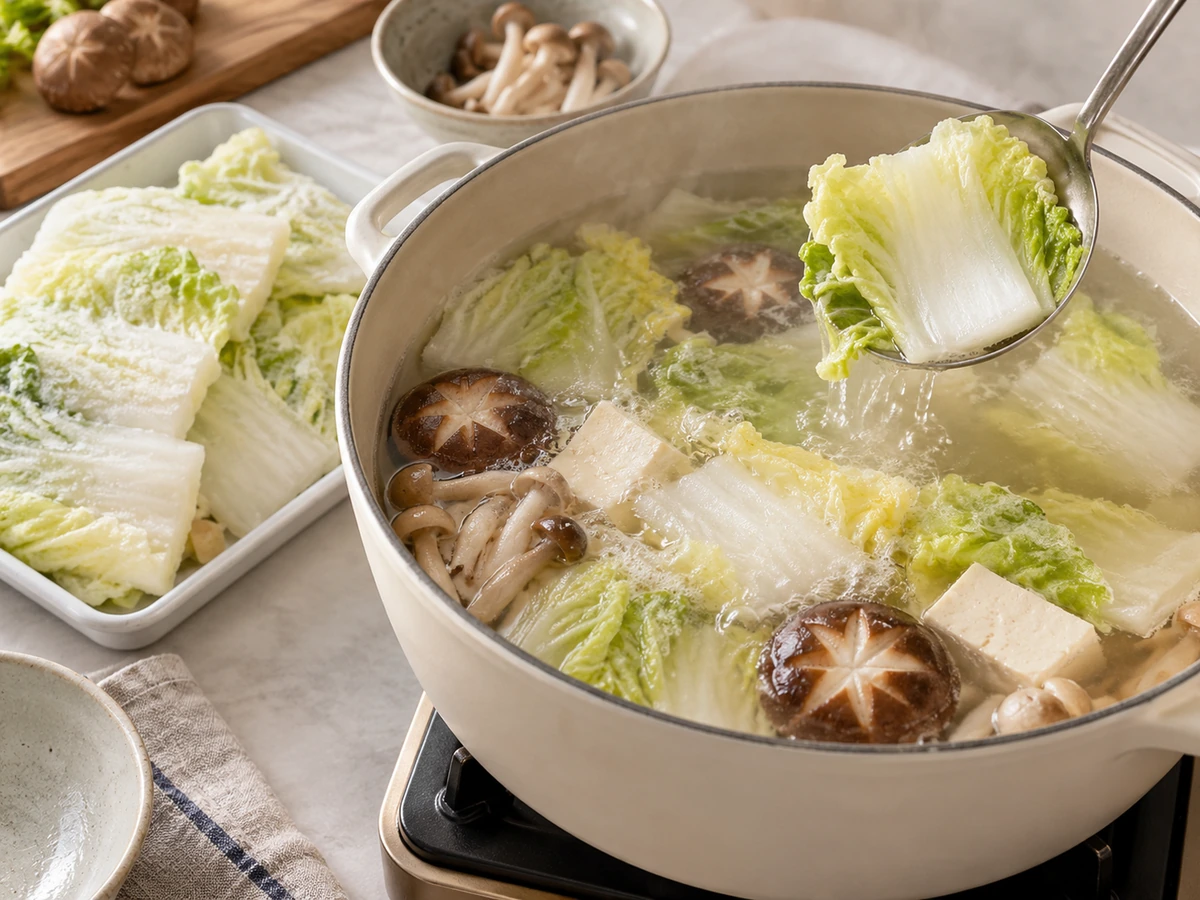
Broth remains visible around napa leaves, mushrooms and tofu in the hot pot.
The vegetable's residence time in the pot matters as much as the moment it first becomes tender. Pieces left at the bottom while other food is cooked continue to soften. Where the service model allows it, cook and serve a manageable portion before adding more. In a shared pot, provide a clear preparation instruction and preserve the distinction between ingredients with different cooking requirements.
Broth dilution and evaporation can occur in the same service. Frozen cabbage adds water while the hot vessel loses water as vapor. The balance depends on loading, lid use, heat and duration. A kitchen that changes the broth by taste alone may still produce inconsistent bowls during a busy period. Establish how broth is replenished and when seasoning is checked under the menu's normal service conditions.
Keep utensils and ingredient handling aligned with the site's food-safety controls, especially when raw animal ingredients are present. A cabbage texture observation cannot determine whether another ingredient has been cooked safely. For product development, a vegetable-only trial can help isolate the cabbage behavior first; the complete meal then needs its own cooking validation and service assessment.
For a purchased hot pot kit, confirm that the cabbage cut, portion location and preparation language match the tested kit. A recipe designed for loose leaves cannot automatically be transferred to a compact frozen kit with dense components. Reproduce the consumer or kitchen instruction as written and check the result without quietly rearranging the ingredients to make the trial succeed.
Give stir fry enough space for released water to escape
Stir fry asks the pan to heat cold pieces, evaporate released water and finish the food before the tender leaf deteriorates. The available hot surface and energy supply place a limit on the load. When too much frozen cabbage enters at once, the pan can behave like a shallow simmering pot. Turning the burner higher may not compensate quickly enough for the added cold mass and water.
Begin with a modest portion in a wide pan appropriate for the equipment. Use the product's required preparation route, then spread the cabbage so that wet surfaces can contact the pan and vapor can escape. Keep the lid off during the evaporation stage unless the tested method needs a covered heating phase. Stir or turn enough to prevent local scorching while avoiding unnecessary breakage of the softened leaves.
If the supplied cut keeps thick ribs separate from leafy pieces, staged addition may help align their cooking. Many frozen cuts, however, arrive already mixed. Sorting each handful at the stove may be impractical and can make portions inconsistent. In that case, a narrower rib-thickness distribution or another cut may solve the problem more effectively than an elaborate cooking sequence.
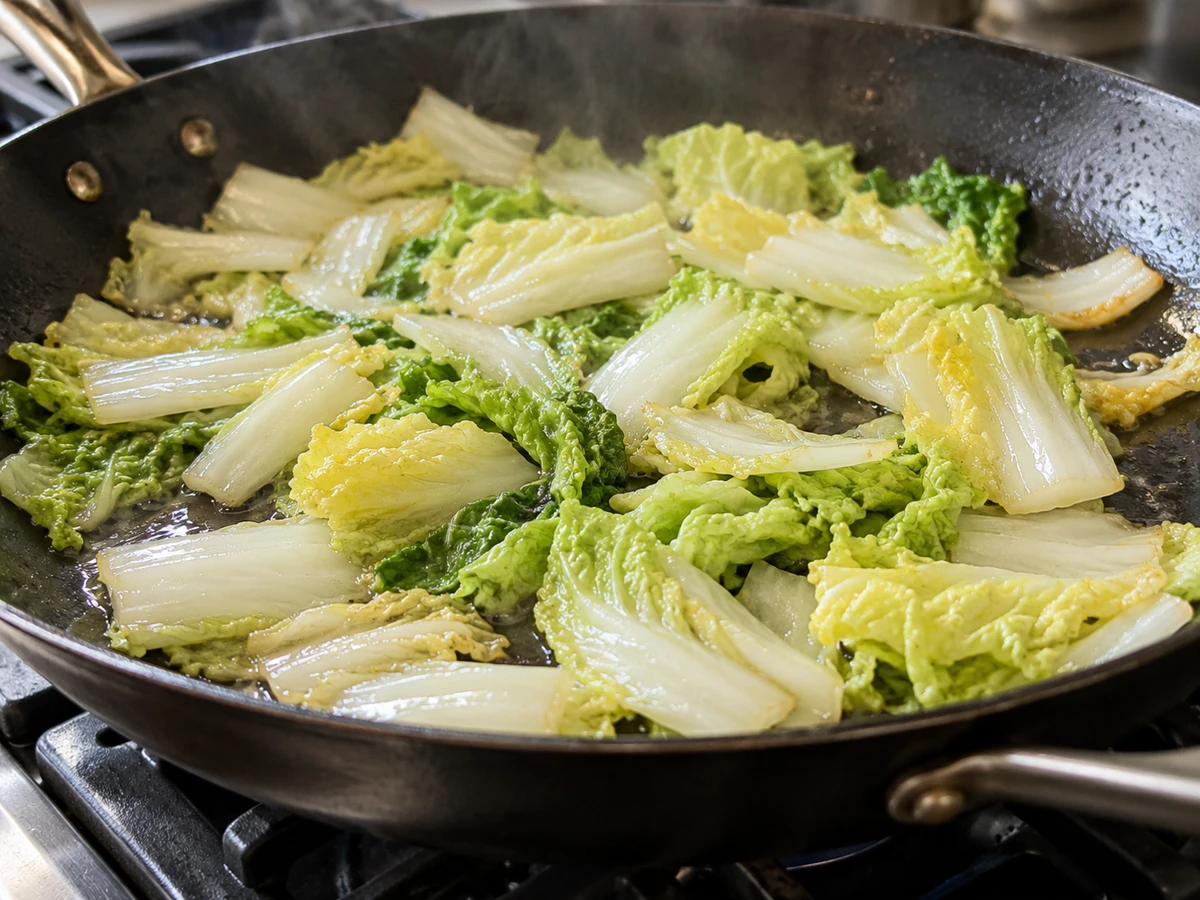
Napa leaf-and-rib pieces cook in a shallow layer across a wide pan.
Watch the water before adding a thick sauce. A sauce that coats well in a dry trial can become thin when mixed with a wetter lot or larger portion. Where the recipe permits, complete the main evaporation stage before finishing with sauce and delicate aromatics. Avoid leaving garlic or other small ingredients against the hot pan while a long wet phase is still needed, because they can burn in localized dry areas.
Some napa dishes deliberately use a small amount of liquid to soften the ribs and create a glossy sauce. That is a valid result when it is the recipe's intention. It should have a defined amount and endpoint. A controlled saucy cabbage dish and an unexpectedly watery stir fry may look similar during cooking, but the approved finished texture, concentration and serving consistency distinguish them.
When direct cooking gives an unacceptable amount of liquid, compare a second method only if the product instructions and site controls permit it. Controlled thawing and drainage may help a particular cut, but it introduces yield loss, handling time and another temperature-controlled step. Record those consequences rather than treating drainage as a free correction.
Check the cabbage on the plate, including the liquid that collects after a short normal service interval. A pan can appear dry at removal while the served portion continues to release moisture. If that affects rice, noodles or another meal component, include the complete plated or packed meal in approval. The cooking method should produce a portion that remains suitable where it is actually eaten.
Set the endpoint by rib tenderness and leaf condition
The preferred quality endpoint combines rib tenderness, leaf condition and the role of the cabbage in the meal. A rib may need to bend easily in a soft soup but retain a more distinct bite in a vegetable side. The leaf should have the intended tenderness without becoming a loose mass of fragments. State these expectations in terms that another cook can observe on the actual product.
Take representative pieces from different parts of the pot or pan, including the thicker ribs. Selecting only a thin leaf from the surface can give an overly optimistic impression of the batch. If the product is fine chopped, assess a spoonful containing both pale and green pieces and compare its distribution with the intended portion. A pleasant single piece cannot represent a very uneven mixture.
Keep sensory quality separate from required safety verification. Softness, color and steam can help judge the eating result, but they cannot replace a required time-temperature endpoint or a product-specific validated method. The National Center for Home Food Preservation's cabbage guidance directs frozen cabbage toward cooked use; it does not make every briefly heated cabbage product ready to eat.
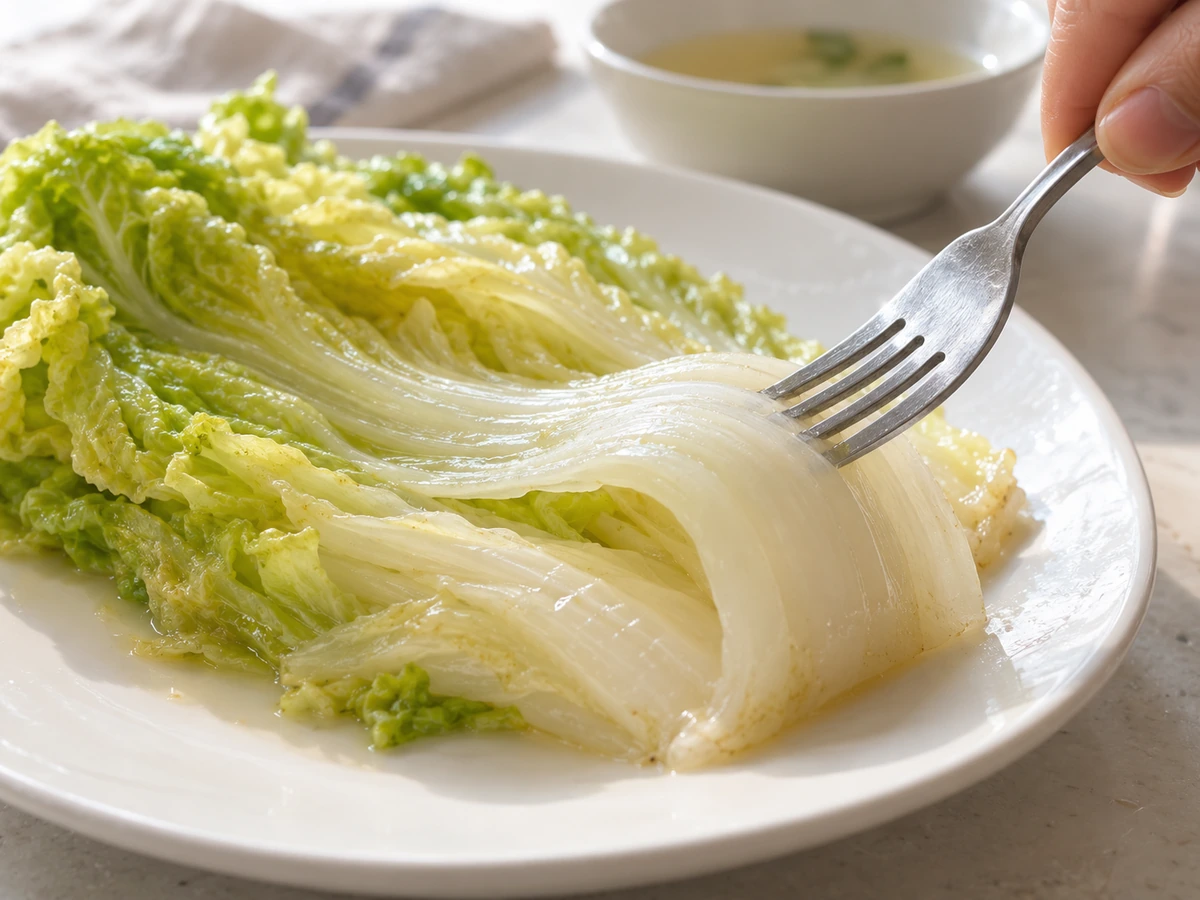
A cooked white rib bends under gentle pressure while its attached leaf remains visible.
Use a reference prepared under the approved method to make texture language more concrete. A photograph can show intact leaves, visible rib pieces and the amount of free liquid, while a written sensory description captures what a photograph cannot show. If instrumental texture testing is proposed for a commercial program, agree the sample preparation and method before assigning a numerical limit.
When leaves become too soft while ribs remain firmer than desired, consider the geometry first. Thick ribs paired with very small leaves create a narrow cooking window. A change in cut may be more practical than extending the cook, which can further damage the leaves. Confirm the treatment status as well, since an unfamiliar lot may start from a different degree of softening.
When the entire batch is soft and wet, review loading, the total cooking history and any holding stage before attributing the result to freezing alone. When edges scorch around cold or firm pieces, examine contact, heat distribution and batch depth. One symptom can have several causes, so preserve the initial method and change one major factor at a time in the next trial.
We would record an approved endpoint with the sample identity and preparation instruction. That allows later discussions about "too soft" or "too much rib" to refer to a shared result. Without that reference, a kitchen may keep adjusting the cook while purchasing continues to order a cut that cannot reliably produce the desired meal.
Keep holding and reheating inside the cooking trial
Many cabbage dishes are consumed after a delay. Soup may wait through service, a central kitchen may send portions to another location, and a ready meal may be cooled, packed, frozen and reheated. Each stage can change leaf integrity, rib texture and free liquid. Approval at the moment of first cooking leaves those later changes untested.
Choose the actual service or manufacturing route before designing the trial. Record the site's required holding, cooling and reheating controls, then assess quality within those conditions. Do not invent a convenient room-temperature rest solely to make tasting easier. A quality test should remain inside the food-safety system that will govern the finished product.
For soup, compare the first and later portions using the normal serving method. Leaves can settle or collect around other ingredients, so the cabbage distribution may shift even when the recipe weight stays unchanged. Ladling from the surface and then from the bottom can reveal uneven solids, while a clear broth makes increasing fragments easy to see. Agree a practical mixing and portioning method if needed.
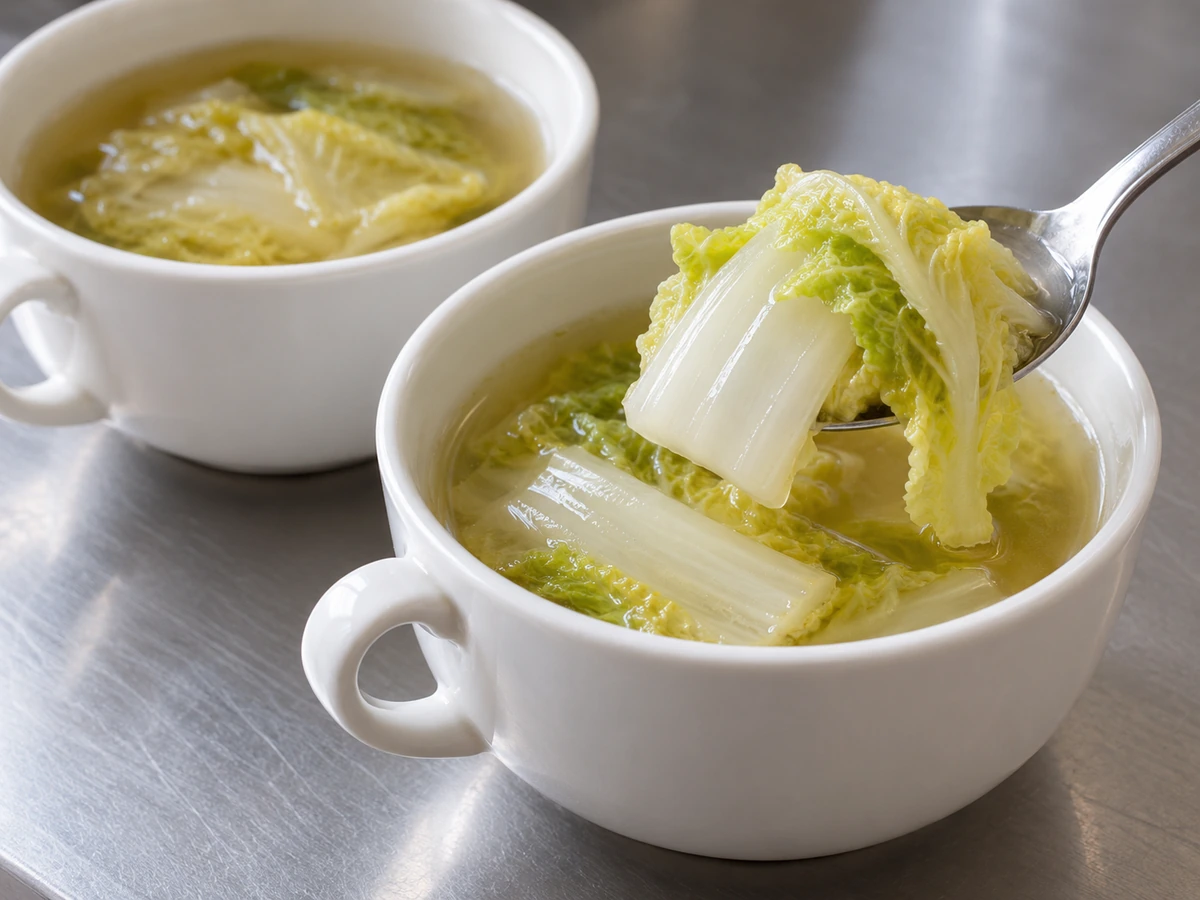
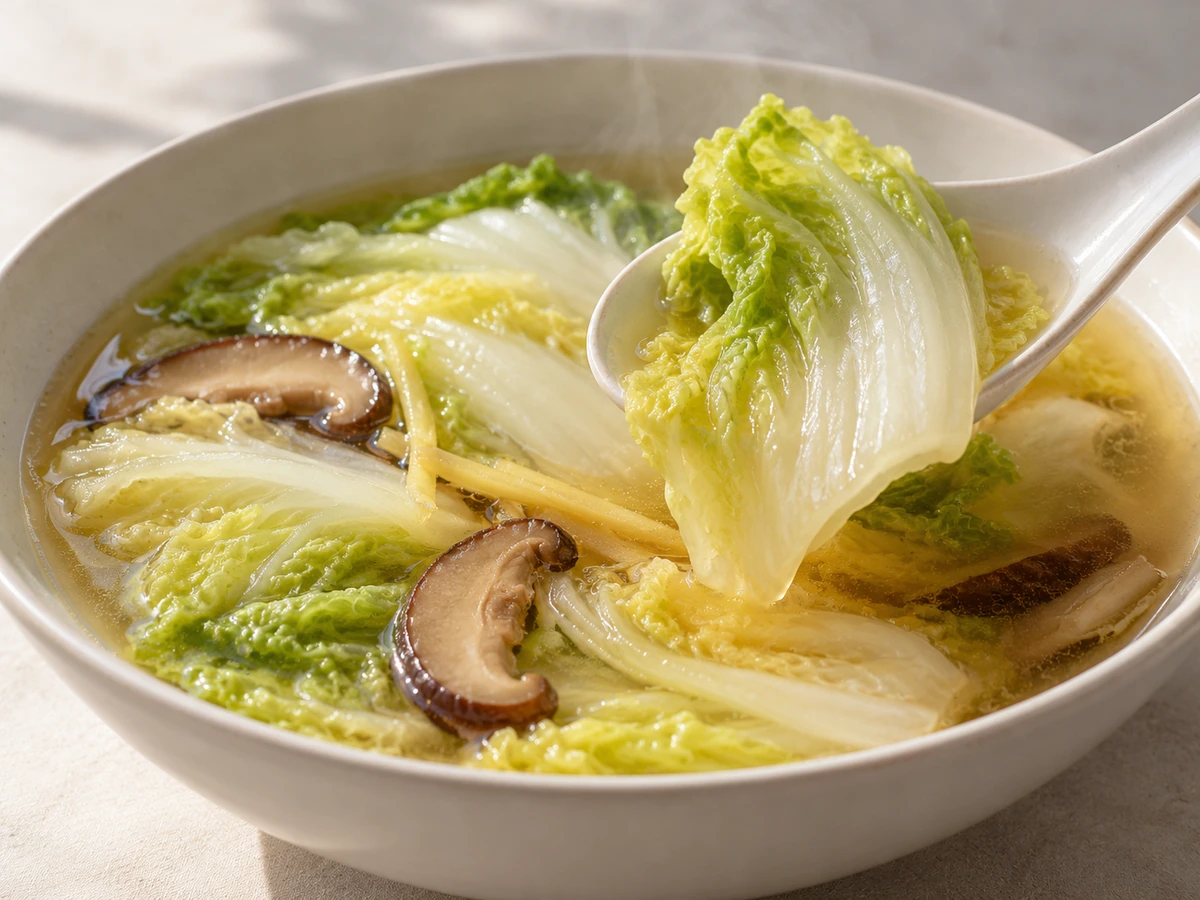
A spoon lifts a recognizable rib and folded leaf from one of two soup portions.
For a packed meal, inspect where the cabbage liquid travels. It may soften noodles, collect around rice or thin a sauce in an adjacent compartment. The cabbage may be acceptable on its own yet cause an unwanted change in the complete meal. Test the actual tray, fill weight and reheating instruction rather than evaluating the vegetable in a separate open dish.
Reheating can also make thick ribs the limiting pieces while delicate leaves have already received substantial heat. A slightly different cut or initial cooking endpoint may improve the complete result, but any change must remain compatible with required safety controls. Record the full heat history so the development team understands what the ingredient experiences before it reaches the customer.
If a lot performs differently after holding, retain its identity, pack condition and available storage evidence. Check whether the starting cut, pretreatment or clumping changed. Then repeat the approved kitchen method before drawing a conclusion. A single service batch prepared under a different load is weak evidence of an ingredient defect.
The commercial result should include the longest normal quality exposure the product is expected to face. That might be the later portion in a service window or the consumer's reheated meal. Use observed acceptable performance to set the practical use instruction and supply criteria, and keep any broader shelf-life claim tied to the actual product's supporting study and label.
Turn the kitchen result into a repeatable cabbage order
Once a kitchen method works, purchasing needs enough detail to obtain the same ingredient again. Record the heading Chinese cabbage identity, cut form, important rib dimensions, preparation status and freezing format. Include the proportion or distribution of leaf and rib only where it materially affected the result, and define how that property is assessed. A vague request for "good soup cabbage" will not preserve a successful trial.
The GreenLand frozen Chinese cabbage page provides the product route for discussing the available form. We would use the kitchen's finished result to confirm which cut and handling condition are appropriate, then agree the sample, specification and packing for the order. The actual product photograph illustrates a fine chop; broader hot pot cuts require their own confirmation and sample.
Write the preparation basis beside the recipe quantity. If the kitchen uses a measured frozen portion directly, preserve that instruction. If it weighs drained cabbage after an approved preparation step, define that step and account for its yield. Using the same number with a different mass basis can change both the amount of vegetable and the water entering the food.

Chopped pale ribs and green leaf pieces cover the sorting surface.
Include the practical receiving checks that protect this method. The pack should identify the agreed product and lot, arrive in the required condition and allow the intended portioning. The sample should show the agreed cut distribution without an unexpected concentration of hard basal pieces, excessive fines or a form that cannot be handled as planned. Set acceptance and investigation rules before a shipment creates a disagreement.
Quantity and case format should fit usage. A restaurant taking small portions may need a different inner pack from a factory using a complete bag per batch. Confirm storage, handling, label language and private-label needs with the destination and expected order volume. Ask for the documents actually required for that product and market, with their availability and scope confirmed before shipment.
A useful repeat-order file keeps the ingredient specification and kitchen method together. It includes the accepted sample, the key trial observations, the finished portion reference and any documented preparation limits. If the cabbage changes, the team can see which part of the method needs review. If the kitchen changes equipment or portion load, it can assess that change without assuming the previous trial still applies.
The final supply discussion can therefore remain focused: which napa form is needed, how it will be cooked, what the served meal should look and feel like, and what quantity and packing make that method practical. Those details give GreenLand and the buyer a clear basis for confirming the product before committing to routine supply.
Source Frozen Chinese Cabbage with GreenLand-food
GreenLand-food is a professional frozen Chinese cabbage supplier and manufacturer in China, providing factory-direct wholesale supply for importers, food manufacturers, foodservice distributors and private-label programs.
Send your product form, specification, packing, quantity, application and destination. Include private-label needs and requested documents so we can confirm the supply details with your purchasing team.