


How to Cook Frozen Romanesco Without Losing the Spiral Shape
Oct 19, 2026
Leave a message

The spiral shape is easiest to lose when several pressures arrive together: a wide range of floret sizes, a heavily loaded vessel, prolonged cooking and repeated stirring. Changing the seasoning will not resolve those problems. A better method matches the frozen form, the amount being cooked and the final service conditions.
The guidance below is for plain frozen florets unless the product instructions say otherwise. A seasoned mix, a steam-in-bag pack or a product already cooked to a different degree needs its own directions. For foodservice and prepared meals, we recommend a small trial in the intended equipment, followed by a trial at normal operating load. That is how a promising cooking method becomes a repeatable serving with recognizable Romanesco crowns.
Read the frozen product before choosing a method
Begin with the label and specification. Confirm whether the Romanesco is plain, seasoned, part of a mixture or supplied with a specific cooking instruction. Check whether the directions require cooking from frozen, a covered vessel, stirring or a particular endpoint. These details take priority over a fresh-vegetable recipe. Frozen florets may have received a processing heat treatment, but that does not establish that the purchased product is ready to eat.
The distinction is visible in current commercial information. Ardo's Romanesco floret page says to cook before eating and directs users to the packaging for cooking time. A separate Bonduelle precooked three-vegetable mix provides different instructions for a portion and a whole bag. These examples show why the product state and load belong in a cooking instruction; their times are not a transferable rule for every frozen Romanesco.
Keep the unopened product under its specified frozen storage conditions until preparation. Remove only the amount needed for the batch. When the instructions call for cooking from frozen, avoid an unplanned thaw on the preparation bench. It changes the starting condition, adds handling and makes a later comparison with the original cooking trial less useful. If a process deliberately includes thawing, it needs an appropriate controlled procedure.
Inspect the form before loading. Pieces that separate readily can be spread without crushing. A solid clump may create an uneven load and encourage forceful separation. Do not hammer a bag or strike the florets against a worktop to break it apart. Preserve evidence of an unusual receiving condition and review it through the normal quality process. Cooking cannot repair missing crowns or explain the entire history of a damaged pack.

Actual frozen Romanesco florets
Set aside any product whose condition requires a safety decision under your operation's procedures. Appearance and smell alone cannot establish microbiological safety. For acceptable product, distinguish ordinary small fragments from the florets intended for presentation. If the approved specification allows fragments, decide how the kitchen will use them without repeatedly sorting a whole batch during service.
The first useful record is simple: product identity, lot, starting condition, floret form and pack instructions. Add the equipment and intended portion before testing. When a result changes later, those details help determine whether the difference came from a new product, a different load or a change in handling. They also prevent a successful trial with one SKU from becoming an unsupported instruction for another.
Match floret size to the cooking load
Romanesco's thick stem and fine outer tips do not respond at the same rate. A batch of similarly sized florets gives the cook a narrower range to manage. If one tray contains very large pieces alongside small crowns and loose tips, the small material may soften while the larger stem centers still need more cooking. More stirring does not remove that mismatch and can make the damaged material harder to recognize.
Assess both crown width and stem thickness. Two florets with similar overall height can have different thermal behavior if one has a long narrow stem and the other a short thick base. A caliper photograph is useful for understanding the form, but the kitchen trial needs the actual delivered size distribution. Select representative pieces rather than testing only the most attractive ones from the top of the pack.
Load depth is a separate control. A shallow tray or basket exposes pieces differently from a deep pile. In a steamer, dense loading can obstruct circulation. In an oven, close contact and released moisture can change surface drying. In a pan, a large frozen addition can cool the cooking surface and create a pool of liquid. The equipment may still complete cooking, but the appearance can differ from a small trial.
For a first test, record the frozen mass and how it occupies the vessel. A photo of the load is often easier for kitchen staff to reproduce than an instruction such as do not overcrowd. Include the tray size or pan diameter and whether the florets are in one layer or more. When scaling up, increase available cooking area or validate the greater load instead of simply multiplying a timer setting.

Caliper reference for Romanesco floret size
If a few oversized florets must be divided, follow the operation's safe handling method and work through the stem junction where practical. Avoid forcing a knife through a hard frozen piece in a way that can slip. A routine need to recut a substantial share of every pack usually belongs in the purchasing discussion. An agreed floret size can reduce labor and make the cooking method more consistent.
Our cut-size guide for frozen vegetables explains the broader relationship between dimensions and application. For Romanesco, the practical question is whether the stem can reach the required cooked state while the crown retains the intended silhouette. That question should guide both the sample request and the load used during preparation.
Portion count can make load control easier for a plated service, but weigh a representative load as well. Ten large florets and ten small florets do not create the same thermal demand or serving weight. When staff use a scoop, verify the amount the scoop actually delivers with the agreed product. When they count pieces, keep the size specification connected to that count. A practical instruction can state the normal load and show its arrangement in the vessel, allowing a new operator to recognize an overloaded basket before cooking begins. This also makes a supplier sample comparison fairer because both samples receive a comparable preparation.
Steam gently when the spiral must remain green
Steaming is useful when the desired finish is a clean green crown with little browning. Use equipment suitable for the product and follow its instructions. Keep the florets above the water in a perforated insert or tray, with enough space for steam to circulate. Water touching the base of a few pieces creates a different cooking exposure from steam around the rest, so check the setup before loading.
Prepare the steamer as directed before adding the frozen portion. Spread the florets gently rather than packing them tightly into the basket. Place larger stems where the equipment provides effective circulation, without assuming that the same position works in every steamer. Close the lid or chamber and begin timing according to the agreed method. Opening repeatedly can change the conditions and makes the result harder to reproduce.
Check doneness through a representative thicker stem using a clean appropriate utensil, while meeting the product's safety instructions. A softened outer tip does not prove that the center has reached the required state. For a foodservice procedure with a defined temperature endpoint, use the specified measurement method. Color is an appearance observation and should remain separate from that endpoint.
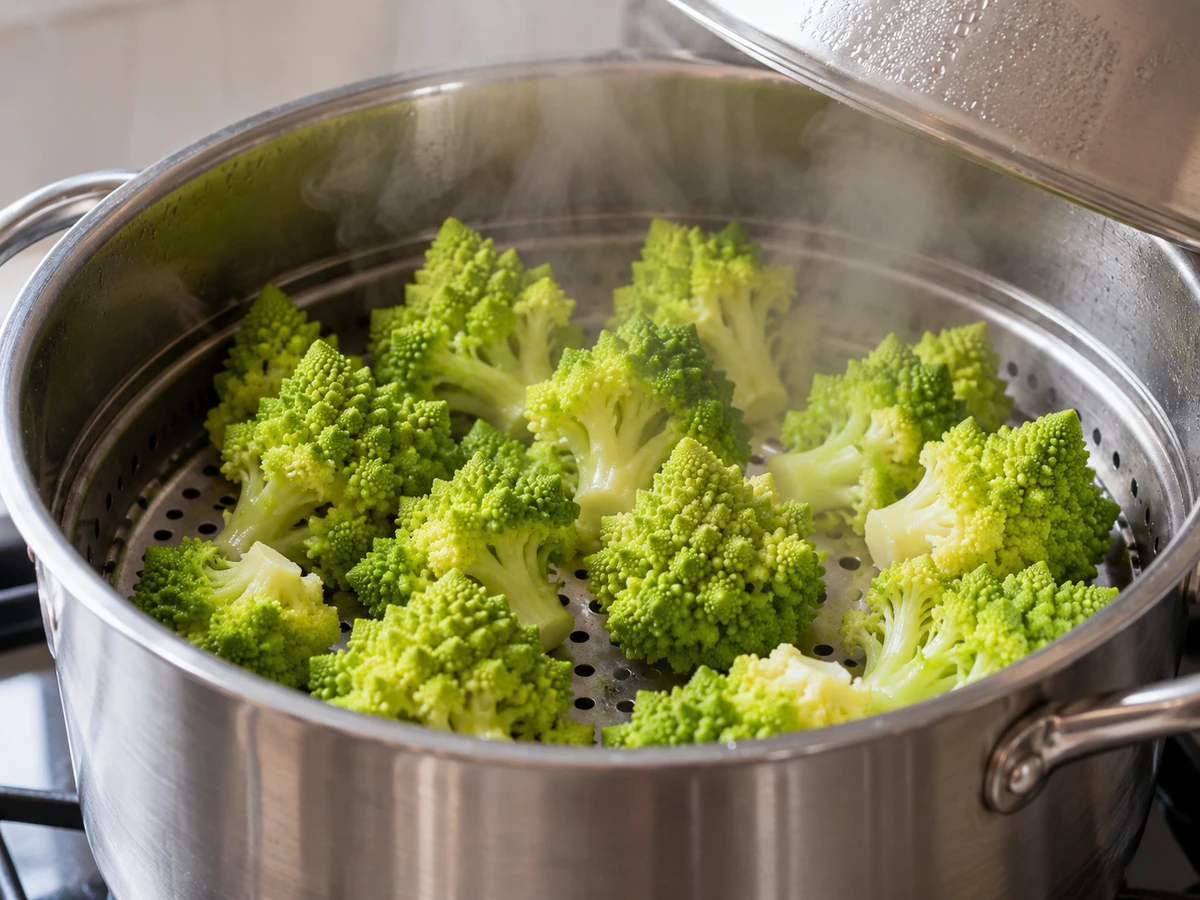
Romanesco in a shallow steamer layer
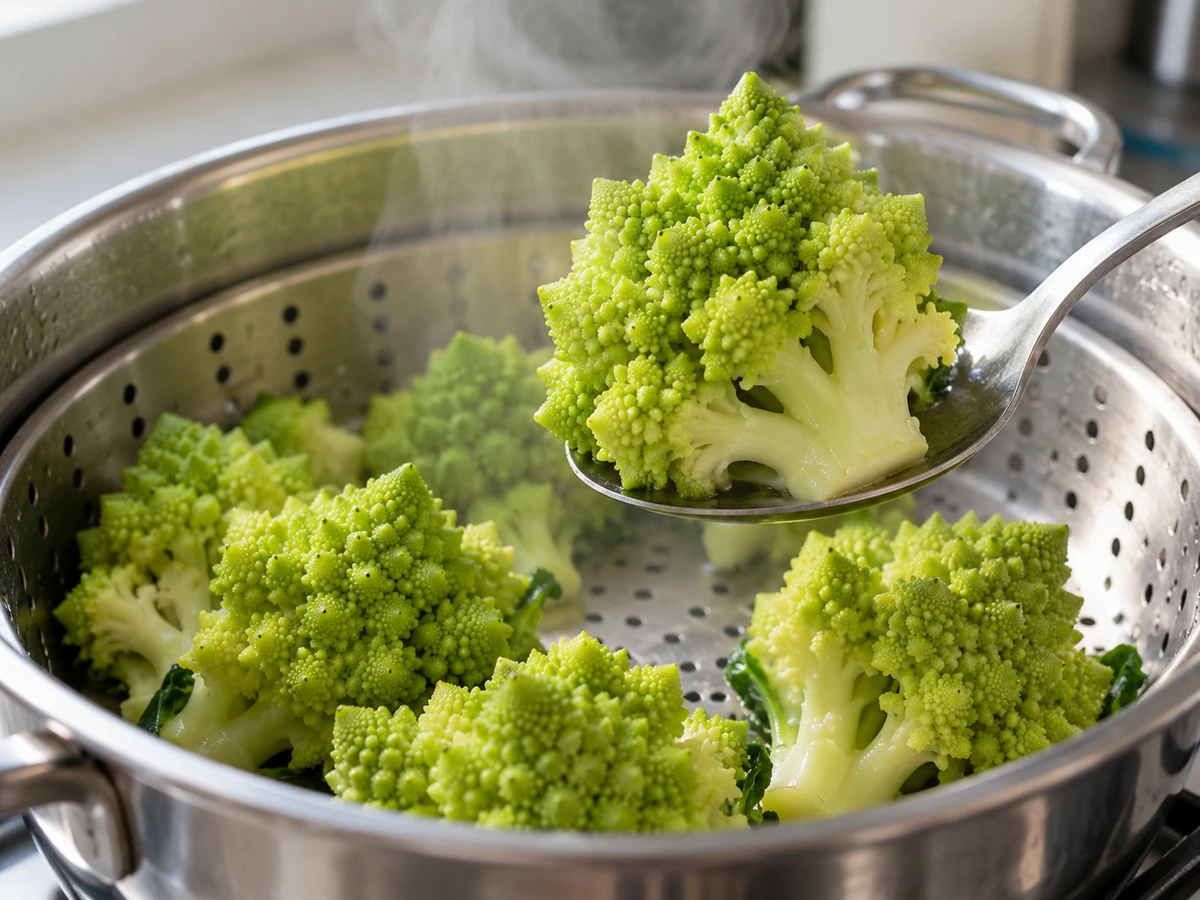
Lift florets from underneath when transferring them. A broad perforated spoon supports the stem and allows water to drain. Tight tongs gripping the crown can concentrate pressure on the delicate points. Avoid pouring a heavy basket of cooked florets from a large height, especially when the final dish needs individual intact pieces. The transfer is part of the cooking method because the diner sees its consequences.
Drain any water that would collect beneath the serving, then finish promptly with the planned seasoning. A small amount of oil or butter can coat the surface without repeated tossing. If lemon or another acidic dressing is used, assess the color at the actual service interval and apply it at a stage that suits the finished dish. A bright appearance immediately after steaming is only one point in the preparation sequence.
When steaming gives a weak result, change one variable at a time. Reduce an excessive load, narrow the floret range or adjust the cooking exposure within a validated process. Record whether the defect is a hard center, soft crown, lost tips or excess surface water. These observations lead to different corrections. Extending every batch until the largest stem is very soft may sacrifice the appearance of most of the portion.
For a new steamer, note where condensate collects and how the tray is removed. Water draining from a lid onto the finished portion can change the result even when the cooking exposure is consistent. Open equipment according to its safe operating procedure and keep the transfer route clear. A small adjustment to the receiving tray or draining stage may improve the serving without changing the product or shortening its required cook.
Roast with space for water to escape
Roasting suits a dish that benefits from browned edges and a drier surface. Preheat the oven and use an appropriate tray. Follow any specific product directions for oven temperature and cooking. Spread the frozen florets so air can move between them, and keep large piles out of corners. The empty space on the tray helps distinguish roasting from cooking a crowded mass in the moisture released by its neighbors.
Apply oil in a controlled amount. A light coating can help distribute seasoning and support the desired surface finish, while excess oil can collect in the tray and disguise the source of liquid. Use the same oil amount per batch during trials so the kitchen can judge changes in loading or cooking separately. Add delicate seasonings at a suitable stage if they would burn before the stems finish cooking.
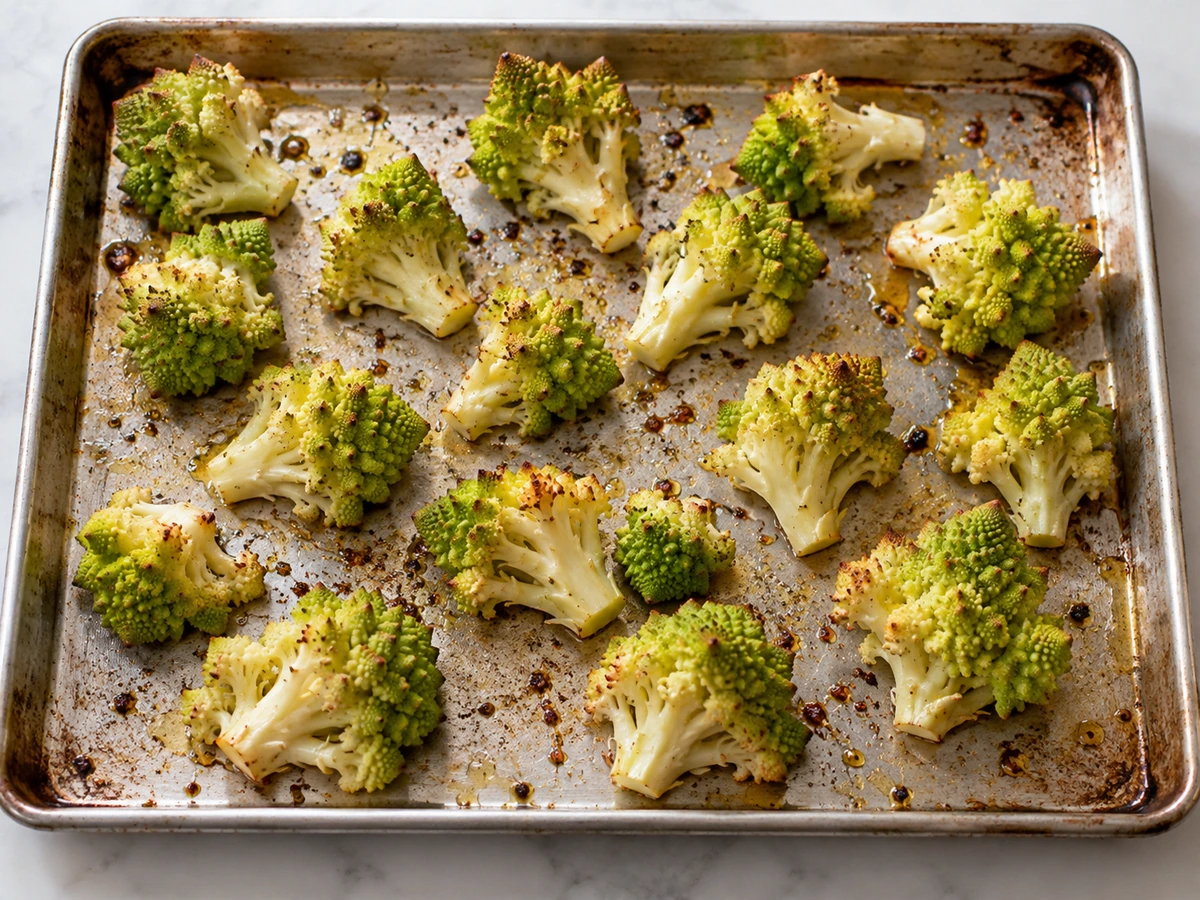
Romanesco florets spaced on a roasting tray
Observe the tips early in the trial. Romanesco has fine protruding points that can darken while the thicker center still needs heat. If the crown becomes too dark before the stem is ready, simply increasing heat is unlikely to resolve the imbalance. Consider a more suitable floret size, a different tray position, the appliance's convection setting or a validated combination of moist and dry cooking.
Turn only as much as the method needs. Slide a broad spatula beneath the stems and move a small group gently. Repeated shaking or aggressive tossing can break crowns against the tray. For pieces intended to remain upright in a plated side, the handling trial should include the transfer from roasting tray to service vessel. A beautiful tray can still become an unattractive portion if the final movement is forceful.
A proposed comparison can help the kitchen choose its own route: roast one representative load directly according to suitable pack guidance, and test a separately validated moist-heating stage followed by brief surface browning if the application calls for it. Compare the complete cooked result, labor, water in the tray and tip retention. Do not assume that adding a preliminary cooking step is always beneficial; it can also soften the crown before handling.
For larger operations, document tray loading, rack position and any rotation. Airflow can differ across a fully loaded oven. Check representative trays and pieces rather than approving a method from the easiest position alone. Once the load works, retain a photograph of the expected finish and a description of the acceptable stem texture. This gives staff a more useful target than an instruction to roast until perfect.
Use the pan and microwave without crushing the crowns
A frying pan offers convenient control over a small portion, provided the product is suitable for that method. Use the specified starting conditions and an appropriately sized pan. If the method includes a short covered stage to heat the florets, measure any added water and keep the quantity consistent. The later uncovered stage can allow excess moisture to leave, but it cannot compensate for an arbitrary starting load or an undefined cooking endpoint.
Let the pieces settle between movements. The temptation to stir continuously can increase breakage without improving the result. Use a broad utensil beneath the stem and turn the florets gently when needed. Watch whether the pan contains a shallow coating of moisture or a substantial pool. If the latter persists, review the load and the starting product condition before adding more heat or more fat.
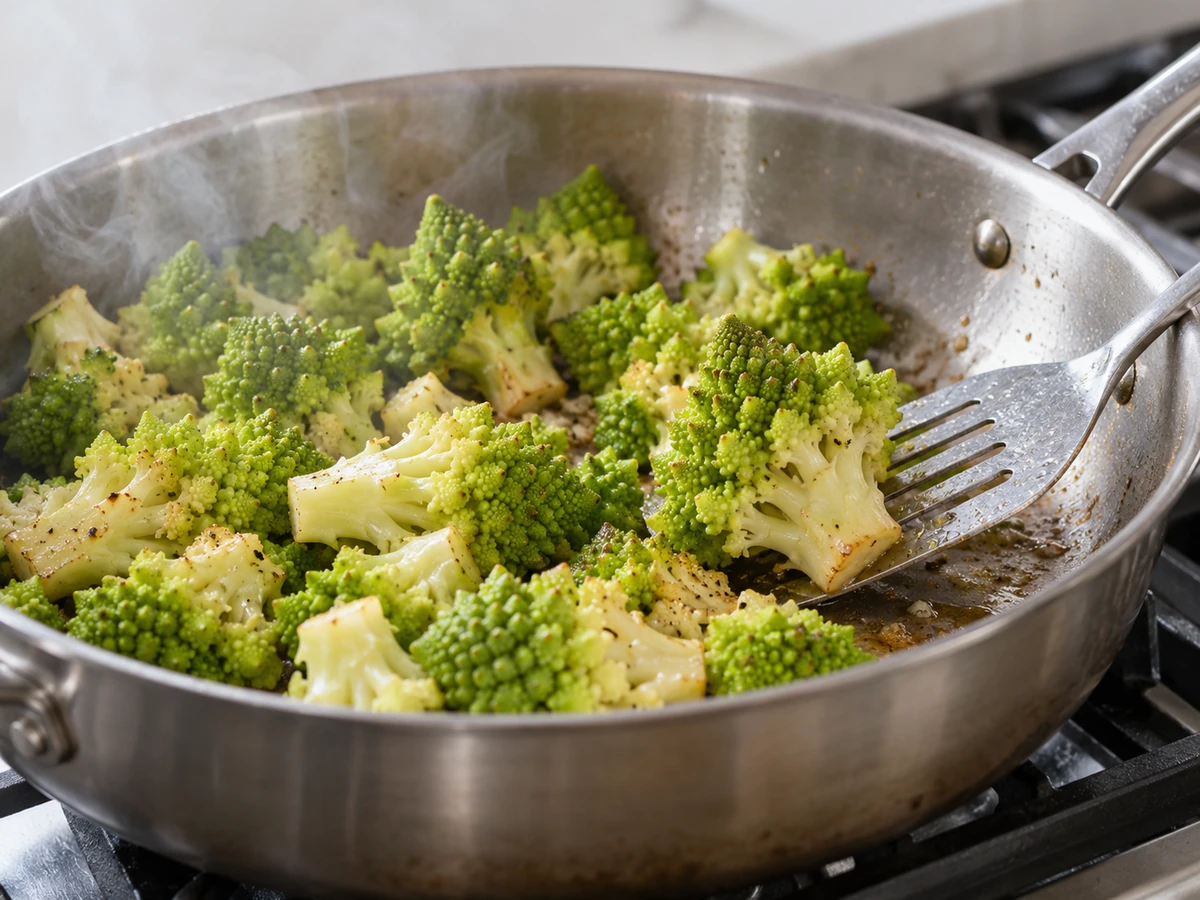
Broad spatula turning Romanesco by the stems
Microwave preparation depends strongly on the portion, vessel and appliance. Use a microwave-safe container and the covering method specified for the product. A covered bowl, a vented film and a purpose-designed steam bag are different systems. Do not transfer instructions from one to another solely because the vegetable name is the same. Follow the directions for stirring, standing and completion where provided.
When stirring is required, redistribute the pieces gently so differently exposed areas exchange position. Support the florets from below and avoid crushing them against the bowl. Check the required endpoint in representative thicker pieces according to the operation's procedure. A visibly steaming bowl can still contain unevenly heated areas, and the points may look cooked before the densest stems meet the intended result.
Choose the method around the service requirement. A pan can support a small batch finished to order, while a microwave may fit a defined packaged portion. Scaling either into an improvised large batch can change heat distribution and handling. Compare the same amount, final serving vessel and holding interval when deciding which route works best. Otherwise differences in portioning may be mistaken for a difference between appliances.
Record the details that staff can reproduce: portion mass, pan or bowl, lid, appliance setting, any added water and the required completion check. Include a gentle transfer into the final dish. A short practical instruction built from a successful trial is more useful than a long collection of approximate times gathered from unrelated products. Keep any alternate method separately validated instead of combining fragments of several instructions.
Plan sauce, holding and reheating around the final shape
The final shape depends on what happens after the heat source is turned off. A deep pile of hot florets, a long wait under cover or repeated movement through a sauce can change the serving. Include these steps in the trial from the beginning. The desired result is the Romanesco that reaches the diner after normal service, not the floret photographed at the moment it leaves the steamer.
For a sauce-based dish, consider placing a measured amount beneath the florets or coating them with a small number of gentle movements. A heavy sauce can fill the spaces between points and hide the spiral. If the appearance is a selling feature, inspect the assembled plate from the diner's viewpoint. If the sauce is intended to conceal the vegetable, the purchasing requirement for perfect crowns may deserve reconsideration.
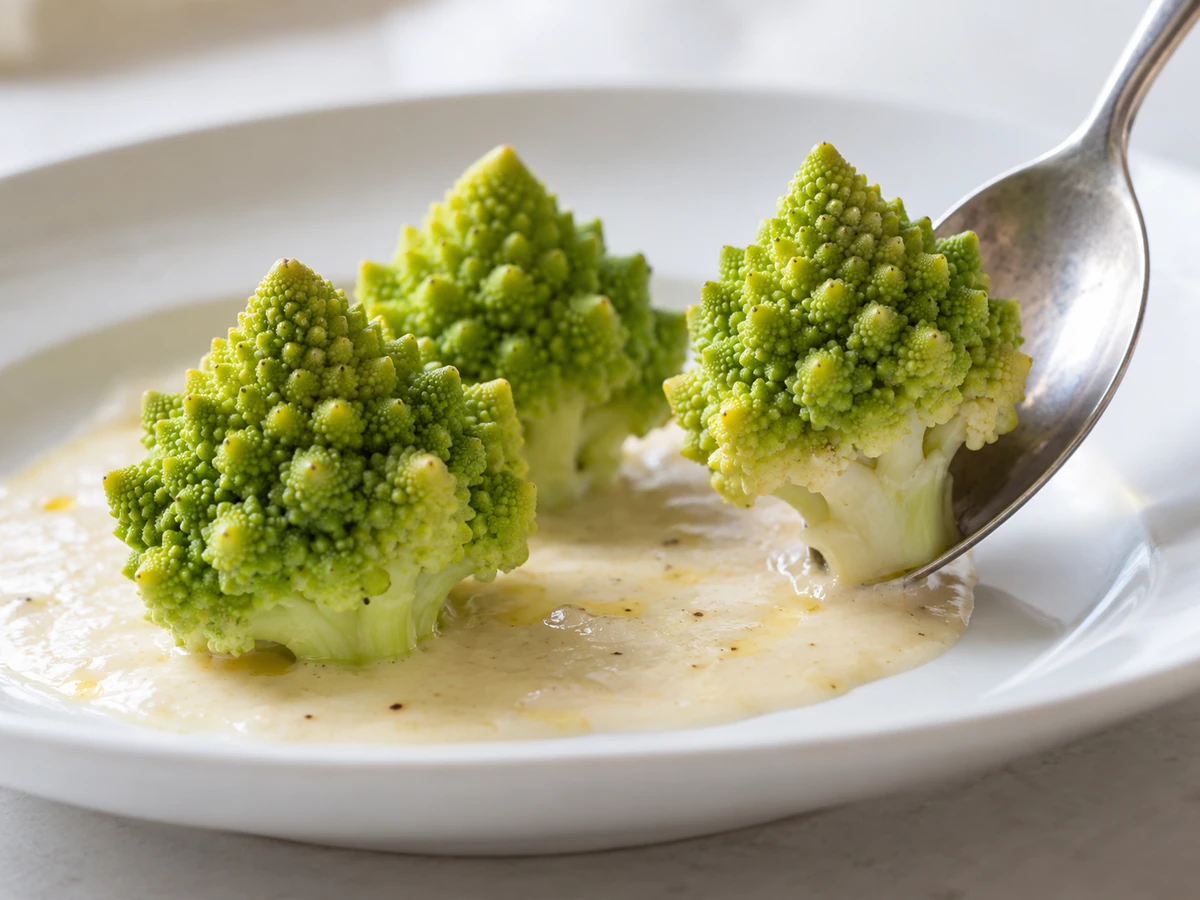
Sauce placed beneath a Romanesco portion
Prepared meals add further heat and time. A Romanesco component may be cooked during assembly, chilled or frozen as part of the meal, and reheated by the customer. Each stage affects the texture and the work needed to move the piece. Evaluate the complete authorized production and reheating sequence with the food-safety controls required for that product. A supplier's plain-floret cooking method is only one part of the finished-meal process.
Holding should follow the operation's validated time and temperature controls. Within those controls, assess how the crown and stem change during the intended service interval. If appearance deteriorates before the expected service ends, smaller replenishment batches may be more practical than preparing a large quantity far in advance. The appropriate solution depends on equipment, demand and the finished dish.
Use utensils that fit the serving. A broad spoon or scoop can support the portion, while an undersized tool may force repeated movements. Avoid compressing florets to achieve a neat container fill. If the target weight requires a deep pile, reconsider the serving vessel or floret size rather than pressing the crowns flat. Presentation and portion control should be designed together.
When the same product works immediately but fails after reheating, investigate that later stage before rejecting the ingredient. Our discussion of why frozen vegetables become mushy provides broader diagnostic context. For Romanesco, retain photographs at the relevant stages so the team can see where the pointed structure is lost and test a specific correction.
Build a repeatable kitchen trial for purchased florets
A useful kitchen trial begins with the intended product and a representative sample. Record its identity and condition, then select a normal cooking load. Keep the trial's purpose narrow: for example, obtaining a green intact crown with an acceptable stem bite after the normal serving transfer. That description gives the chef, purchasing team and supplier a shared result to discuss.
Run the proposed method as written. Note the equipment, load, starting temperature condition, added water or oil, covered stages, movements and required endpoint. Photograph the frozen load and the finished serving under similar light. Separate the observations about safety-process completion from the observations about appearance and texture. Both matter, but one should not be inferred from the other.
Repeat at the actual operating scale. A successful small bowl does not establish performance in a full catering tray, and an empty oven can behave differently from one carrying a normal production run. Include the staff actions, transfer distance and service interval. If the routine process involves a sauce or reheating, complete those steps before deciding whether the sample is suitable.
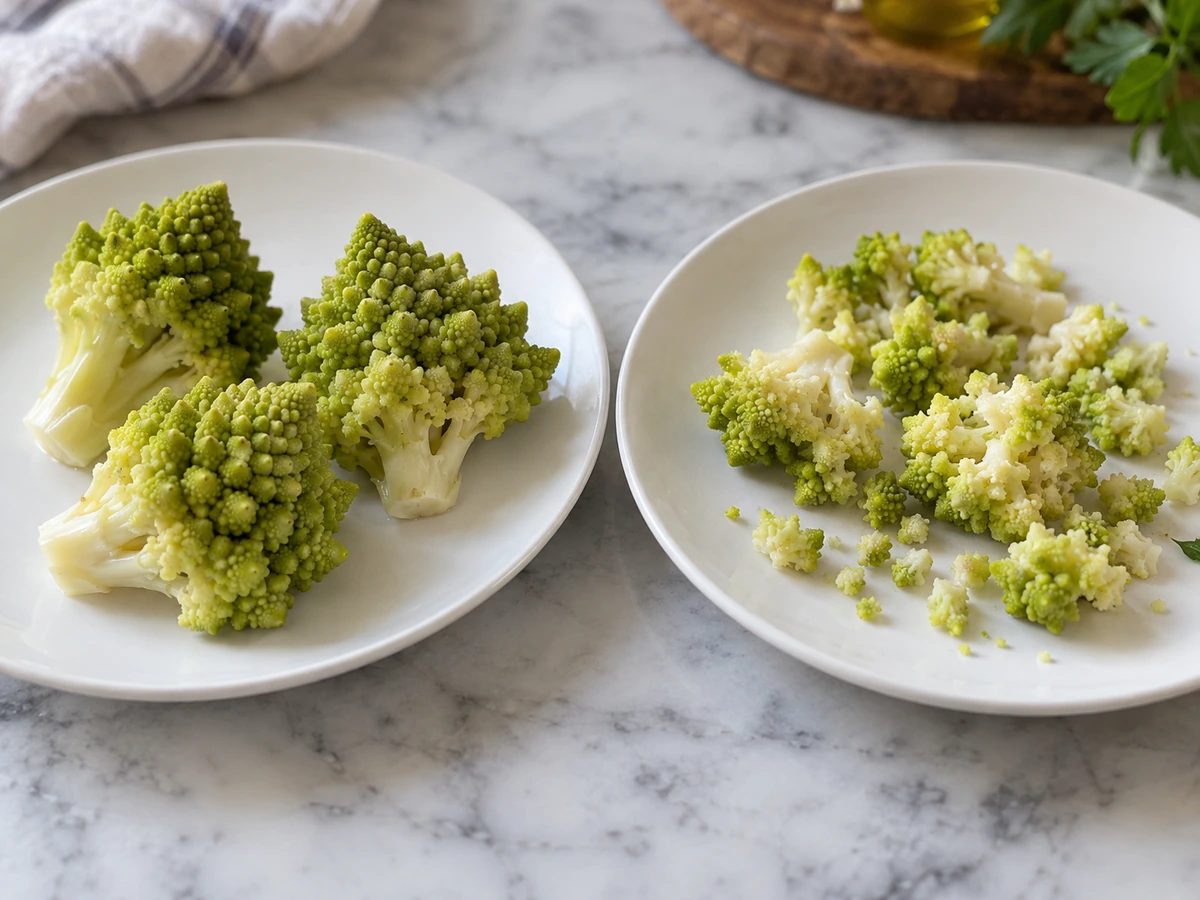
Two Romanesco servings after different handling
When a change is needed, adjust one practical cause and retain the comparison. If stems remain too firm, investigate size and heat penetration. If points detach during serving, examine the softness at transfer and the utensil. If water collects, distinguish liquid released during cooking from water deliberately added or retained during draining. Specific observations produce a shorter route to a useful correction.
Share the resulting application brief when enquiring about frozen Romanesco supply. We can work through the requested floret form, trim, packing and sample basis with the purchasing team. Include the quantity, destination and any required documents so the discussion addresses the actual order. Confirm the proposed specification rather than assuming a photograph establishes future delivery performance.
Keep the approved kitchen instruction with the product specification and review it when the SKU, floret range, equipment or final meal changes. If a later batch fails, compare its actual load, thickest stems and serving transfer with that approved record before changing the timer. This makes the next trial a test of a specific difference.
Use a simple comparison sheet during development. Give each tested method its own column and record the same observations: required cooking completion, stem bite, crown retention, liquid in the serving and labor for transfer. Comparing those attributes across steaming, roasting or a pan method can reveal a tradeoff the tasting alone misses. A method with slightly more browning may also need more careful handling, while a clean green finish may suit the service vessel better.
Include a second operator once the method looks promising. Ask that person to follow the written instruction without extra coaching, then compare the serving with the approved reference. If the result depends on an unstated judgment, make that judgment visible in the instruction. This practical reproducibility check helps turn a chef's successful demonstration into a usable kitchen procedure and identifies unclear wording before the method is used for a larger order.
Source Frozen Romanesco with GreenLand-food
GreenLand-food is a professional frozen Romanesco supplier and manufacturer in China, providing factory-direct wholesale supply for importers, food manufacturers, foodservice distributors and private-label programs.
Send your product form, specification, packing, quantity, application and destination. Include private-label needs and requested documents so we can confirm the supply details with your purchasing team.