


Pomelo vs Grapefruit: Segments, Membranes, Taste and Food Uses
Oct 19, 2026
Leave a message
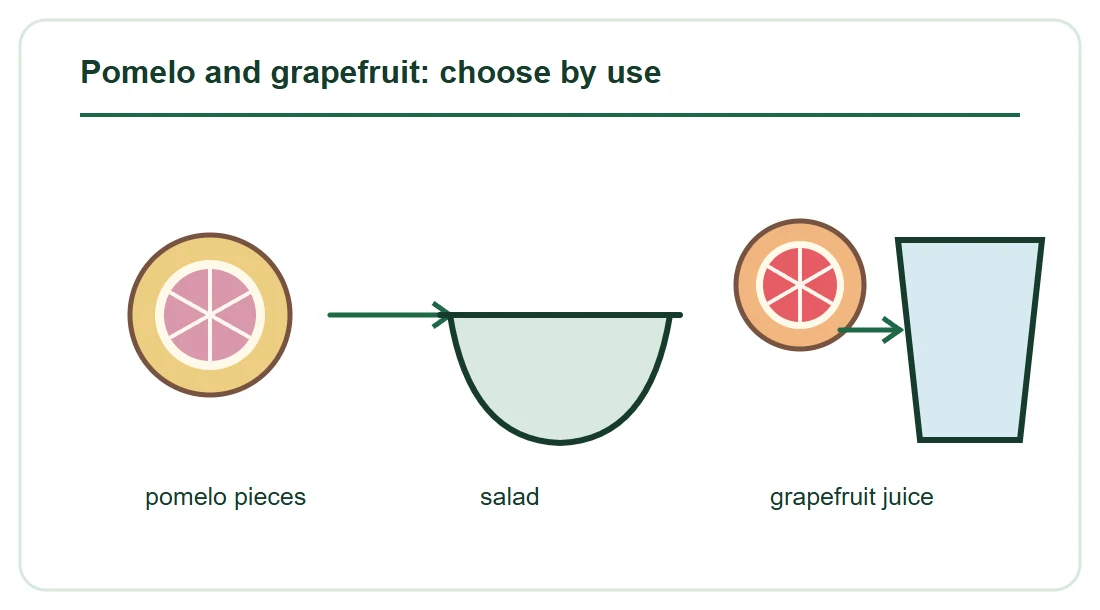
Grapefruit is commonly juicier and more assertively tart or bitter. The practical difference is how you prepare and use the edible pulp: peel a pomelo, open the segments and remove the membrane for a fruit salad; cut or spoon a grapefruit when juice and a sharp citrus note are part of the dish. Variety and ripeness can change either flavor, so taste the actual fruit rather than trusting the name alone.
GreenLand-food's frozen pomelo pulp is another form again. The product photograph shows coarse pink pulp fragments in a bag, not perfect peeled segments or fresh grapefruit halves. A drink maker might welcome fragments that disperse; a chef who needs intact segment pieces should test that requirement separately. This guide explains the fruit difference first, then shows how to choose the right pomelo form for a finished food.
- Pomelo is generally firmer and less bitter; grapefruit is commonly juicier and sharper.
- Remove pomelo membranes for clean edible pulp; the GreenLand frozen offer is coarse fragments, not intact segments.
- Test the offered pulp in the actual drink, dessert or salad before substitution.
The short answer: they are related, not interchangeable
Pomelo is commonly identified as Citrus maxima; grapefruit as Citrus × paradisi. Their family connection explains the shared segmented interior, but it does not make the two fruits one culinary ingredient. A University of California Riverside paper describes pummelo as generally larger, with firmer flesh and often a thicker rind than grapefruit. It also cautions that some pummelo varieties have unpleasant flavor. That caveat matters: "pomelo is sweeter" is a useful starting expectation, not a universal sweetness promise.
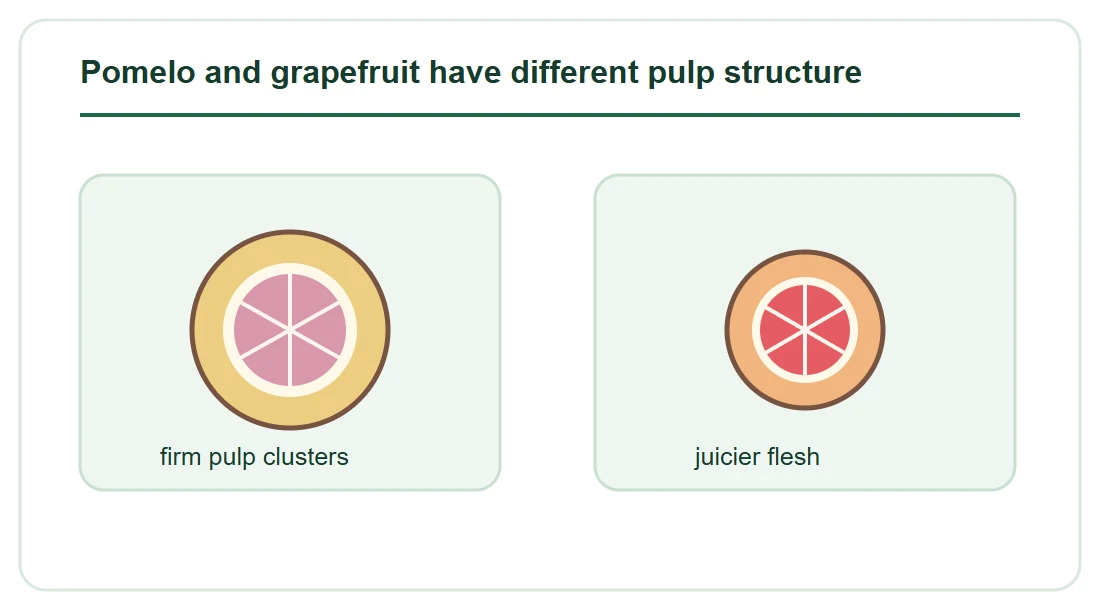
Pomelo and grapefruit have different pulp structure. Original schematic illustration.
The University of Arizona Cooperative Extension compares ways of eating both fruits and notes that grapefruit bitterness may be reduced by avoiding the rind's white layer and the segment walls. Its discussion of pummelo includes peeled segments for salads. The difference is therefore visible on the cutting board. With a pomelo, the edible vesicles often come away from a tougher membrane and hold as a cluster. With a grapefruit, a knife or spoon can release juicier flesh but often leaves more free liquid in the bowl.
| Kitchen check | Pomelo | Grapefruit |
|---|---|---|
| Rind and pith | Usually very thick | Generally thinner |
| Segment flesh | Firmer vesicles that may separate | Juicier flesh, more free juice |
| Typical taste | Often mild and less bitter; variety varies | Often sharper or bitter-sweet; variety varies |
| Best first trial | Membrane-free pieces in a composed dish | Juice, spooned half or citrus dressing |
Neither fruit is one fixed color. White, pink and red flesh may occur, and color by itself does not identify the fruit or guarantee sweetness. When selecting an ingredient, use the botanical or common identity, the edible form and an actual sample. A drink developer seeking grapefruit bitterness may find mild pomelo too quiet; a salad maker seeking separate pomelo vesicles may find grapefruit too wet. They can both be good citrus choices while doing different jobs.
Medication can change the choice. The U.S. Food and Drug Administration says pomelos might have the same effect as grapefruit juice with some medicines. If your medicine interacts with grapefruit juice, the FDA advises not eating pomelo; check the medicine label and ask your doctor or pharmacist about your specific medicine. This warning does not mean every medicine interacts with either fruit. See the FDA grapefruit and drug guidance.
Peel, pith and membranes change the eating task
Start with the whole pomelo if you want to understand the labor hidden by a ready pulp product. Its rind may take several deep scores before you can remove it by hand. Under the colored peel is substantial white pith. Then each large wedge has a papery wall around the juice sacs. For a salad with clean pulp pieces, open that wall and lift the edible vesicles away. If the wall remains, the bite may be leathery or bitter compared with the flesh. A portion of clean pulp therefore weighs less than the whole fruit a buyer carried into the kitchen.
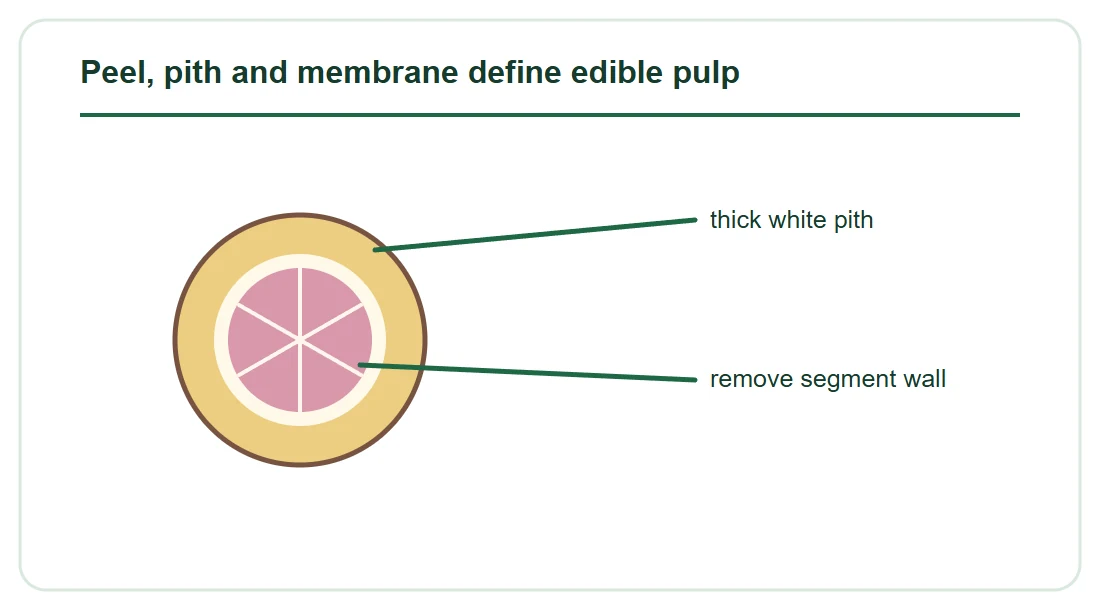
Peel, pith and membrane define edible pulp. Original schematic illustration.
Grapefruit can also have bitter pith and segment walls, yet many people cut it across the middle and eat with a spoon. For a plated citrus salad, a cook may cut away the peel and pith with a knife and remove flesh between the membranes. The technique resembles pomelo segmenting, but the grapefruit usually sheds more juice. Put a bowl under the work if that juice belongs in a dressing. Do not let it accidentally turn a dry salad into a pool of diluted dressing.
The University of California's citrus guide says a pummelo is best eaten peeled and segmented with the membranes removed and describes firmer, less juicy flesh than grapefruit. That supports a simple prep trial: weigh a whole fruit, weigh the clean edible pulp, and examine what was discarded. Repeat with the grapefruit variety under consideration. This is useful for a restaurant recipe and for costing a fruit cup, but it is a sample result, not a universal edible-yield percentage.
Seeds need a separate check. Some pomelo cultivars contain many seeds while others have few; grapefruit also varies. Remove visible seeds before a spoon dessert or drink. Where pulp will pass through a pump, look for hard seed fragments and coarse membrane pieces in the actual ingredient, because a machine may make a small defect more consequential than it appears in a hand-served bowl. Define which plant parts are permitted in the purchased material rather than assuming the word "pulp" has one standard cut.
If you compare labor cost, time the entire preparation rather than the final peeling alone. Washing, opening the thick rind, removing pith, lifting clean pulp, picking seeds and cleaning the station all contribute. A ready frozen pulp can move some of that work upstream, but it may arrive in a different piece form. Compare the cost and usable yield of the form you can actually serve, with the same plate or drink target for both options.
Taste the pulp rather than judging the rind
Pomelo often has a gentle sweetness and floral citrus note with less of the persistent bitter finish many people associate with grapefruit. Grapefruit may combine sweet, tart and bitter impressions, sometimes very strongly. These are descriptions to start a tasting, not promises about an offered lot. A pale pomelo can taste lively; a red grapefruit can taste sweet. Weather, cultivar, maturity, storage and how much membrane enters the sample change the sensory result.
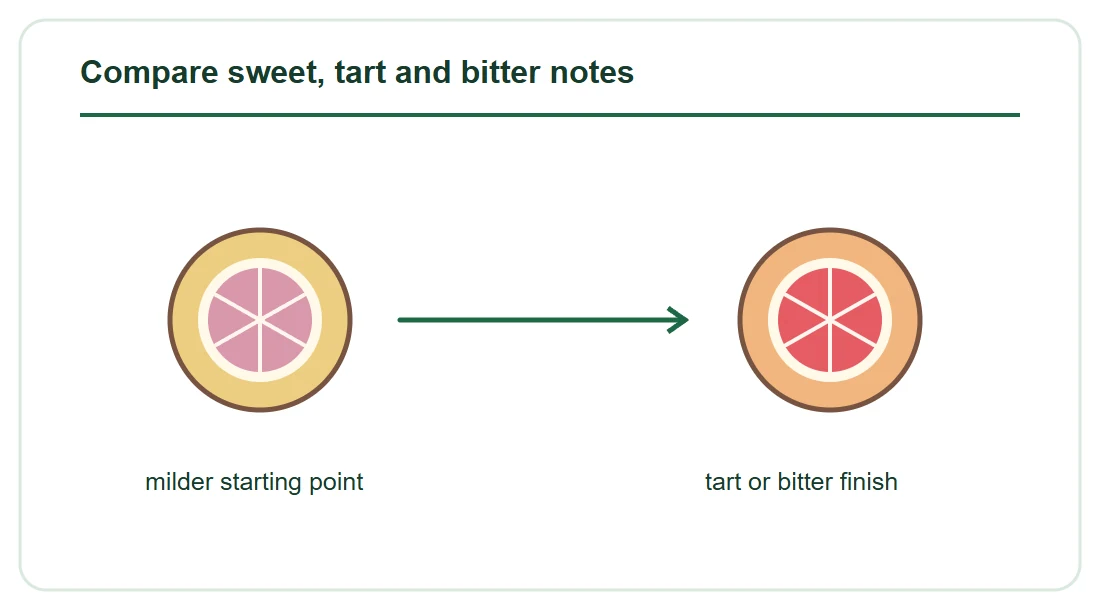
Compare sweet, tart and bitter notes. Original schematic illustration.
Taste three parts separately before writing a recipe: a clean membrane-free pulp sample, a pulp sample with some wall attached, and any juice that accumulates. The comparison reveals whether apparent bitterness comes from the flesh or from the preparation. It also reveals whether the useful flavor is carried by an intact vesicle or by released juice. A fruit salad may value the first; a sauce may use both. Do not smooth away those distinctions with a single score such as "citrus taste: 8/10."
Test at serving temperature. Cold suppresses some aroma and can make a bitter finish more apparent as the fruit warms. In a beverage, sweetener, acid and dilution can make pomelo seem delicate next to lemon or grapefruit. In a dairy dessert, a fragrant mild citrus can be more noticeable because there is less competing acidity. Make a small standard base, add a measured pulp portion, taste immediately and after the normal hold. If the intended dish is cooked, taste after cooking; the raw sample alone does not predict the finished aroma.
The comparison source at Pomelos.org describes a mild sweet pomelo and a more assertive grapefruit; extension sources support the general texture distinction while warning that pomelo varieties differ. When these accounts disagree with a specific sample, the sample should control the recipe. A buyer can write an agreed reference flavor description using ordinary sensory language-sweetness, acidity, citrus aroma and any bitter finish-then retain the sample and preparation method used to set it.
Use pomelo segments where texture matters
Pomelo works well when the diner should notice separate pieces of citrus. In a Thai-style pomelo salad, clean pulp meets herbs, aromatics, shrimp or another protein, and a dressing. The pulp's relatively firm juice sacs can keep a granular, lifted texture instead of collapsing into a wet citrus slurry. Add the dressing close to service and turn gently. Pressing or prolonged mixing can break the vesicles even when the starting fruit is firm.
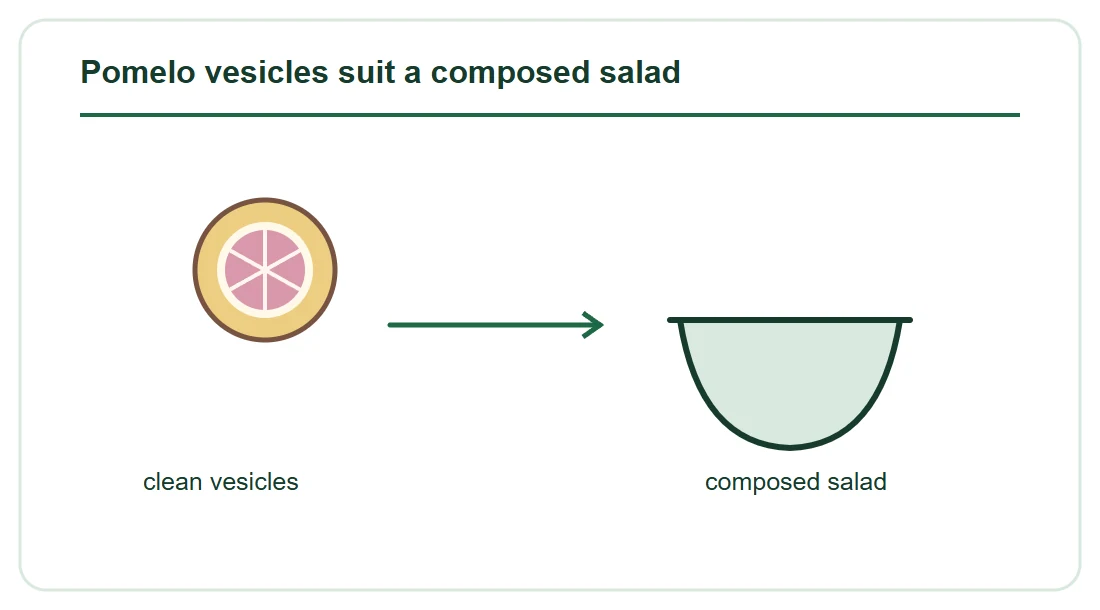
Pomelo vesicles suit a composed salad. Original schematic illustration.
For a fruit cup, pair pomelo with softer fruit and compare the piece size before adding syrup or juice. A large cluster can be attractive in a plated dessert but awkward in a spoon cup. Smaller hand-separated groups can distribute more evenly. Do not chop so finely that the customer loses the defining pomelo texture. If the cup will stand cold for several hours, judge it after that hold. A good fresh-looking mix immediately after assembly may release liquid or lose distinct color later.
Pomelo can also bring a contrasting citrus note to a grain salad or a chilled seafood dish. The job is less about making the salad acidic than offering a sweet-sharp bite with separated pulp. A recipe that needs a strong acid dressing should still add acid as a controlled ingredient. Pomelo alone may not deliver the same sharpness as grapefruit juice or lime. In a warm dish, fold pulp in late and check how much intactness remains after heat; a long simmer would erase the very structure the chef selected.
The University of Arizona guide names pummelo in a shrimp and chicken salad, while the older UC citrus research describes hand eating, salads and fruit cups as suitable uses for firmer pummelo flesh. These are culinary examples, not proof that every frozen pomelo bag will hold intact clusters. Fresh clean segments and coarse frozen pulp fragments are distinct specifications. A supplier photo showing fragmented pulp should be read literally.
Use grapefruit where juice and sharpness matter
Grapefruit earns its place when the free juice or bitter-tart edge is part of the finished food. A breakfast half is the obvious example: a spoon releases juicy flesh without the labor of peeling an entire pomelo. A dressing or drink can use grapefruit juice for a stronger citrus line. That does not mean every grapefruit is equally acidic or every pomelo cannot be juiced; it means the usual physical texture makes the first recipe choice easier.
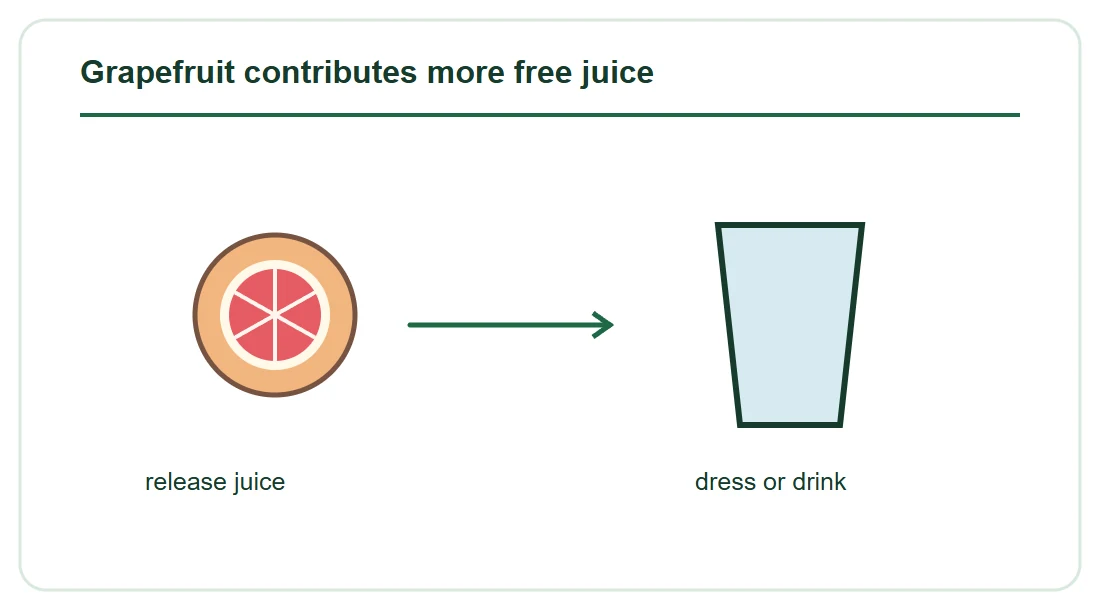
Grapefruit contributes more free juice. Original schematic illustration.
Try grapefruit supremes in a salad and capture their juice in a bowl. Use a measured portion of that juice in the dressing instead of pouring it all in by habit. Too much liquid can thin a vinaigrette and weigh down greens. If the bitterness is attractive, keep a little of it; if it overwhelms the dish, remove more pith and membrane and balance with other ingredients. The University of Arizona notes the role of segment walls in grapefruit bitterness, so preparation is part of flavor control.
In a drink, build two trial formulations at equal final serving volume: one with grapefruit juice and one with pomelo pulp or expressed pomelo liquid. A weight-for-weight fruit substitution will not preserve the same liquid level, color, bitterness or mouthfeel. Grapefruit juice can run straight through a strainer; coarse pomelo pulp may leave fiber and require a different process. For a frozen dessert, test both the flavor and the physical ice or pulp texture after the normal freezing and thawing cycle.
The USDA frozen-grapefruit grade page assesses grapefruit segment wholeness, color, defects and character. That standard belongs to frozen grapefruit. It should not be used as an unannounced grade for GreenLand pomelo pulp, whose visible form is coarse fragments. If a buyer needs a count of intact pieces, the buyer and supplier must define a pomelo-specific sampling and acceptance method.
What a frozen pomelo-pulp bag actually contains
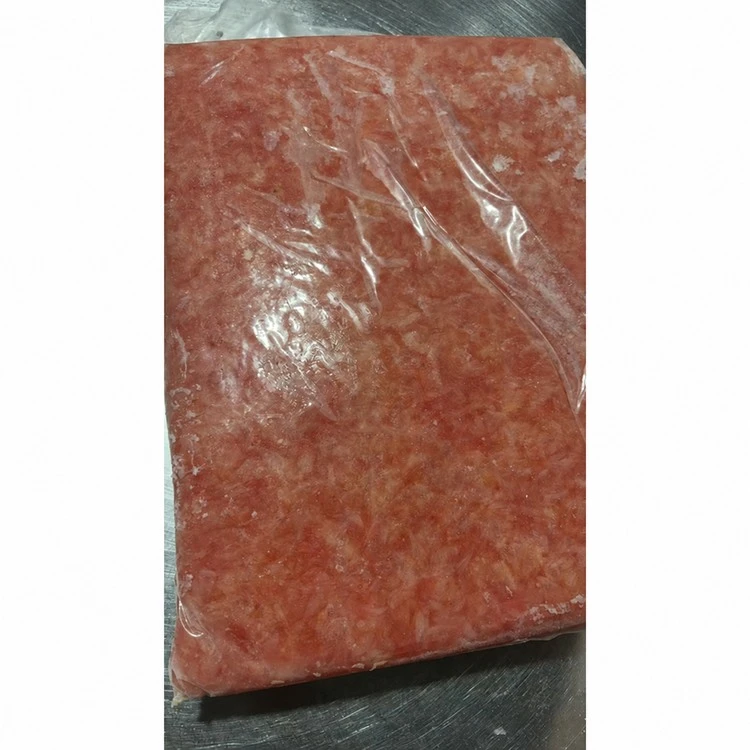
GreenLand's current frozen-pomelo category and product detail page show a bag of coarse pink pulp fragments. It is a real product photograph and a useful form cue. It does not show peeled, single intact segments sitting in a tray, nor does it disclose a universal sweetness, piece size or membrane tolerance. The category's concept graphics describe possible inspection and use ideas, but they are illustrations rather than additional photographed lots.

The business identifies this product as red-fleshed pomelo; the pictured carton says GRAPEFRUIT. The discrepancy requires product-identity and label reconciliation before an order is released.
Our supplied carton photograph illustrates a naming problem that must be resolved before shipment. The business identifies the product as pomelo / red-fleshed pomelo, while the carton is printed "FROZEN GRAPEFRUIT SACS" and "Ingredient: Grapefruit". We would first confirm the botanical identity and the actual ingredient specification with the supplying factory, then ask the importer to confirm the destination product classification and permitted local-language name. GreenLand would align the approved label, specification, invoice, packing list and declaration description, retain the agreed versions and obtain the importer's approval before release. If the wording remains inconsistent, the order stays on hold for correction. The photograph records the discrepancy; it does not establish a legal commodity classification.
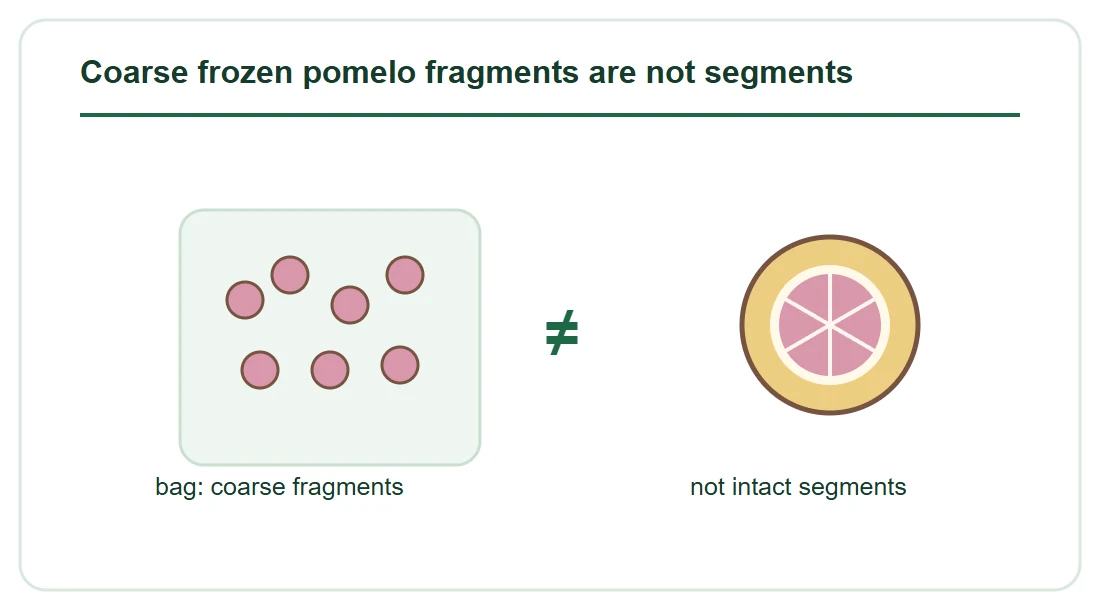
Coarse frozen pomelo fragments are not segments. Original schematic illustration.
"Pulp" can be used loosely in trade. Some buyers mean separated vesicles; others mean crushed fruit for a beverage base; still others expect spoonable chunks. Before a trial, place a small weighed frozen sample on a tray. Note large clumps, free fragments, visible membrane and any seeds. Prepare it according to the offered handling instruction and let it reach the temperature at which the final kitchen or line will use it. Then record the retained piece structure and released liquid. That trial turns an ambiguous noun into visible, repeatable observations.
The freezing process may make a portion softer or wetter than the fresh fruit pictured in generic citrus comparisons. Do not promise fresh segment crunch from a bag of frozen pulp. For a smoothie or fruit base, softer pulp may be exactly what the recipe needs. For a salad that relies on visible defined segments, a fragmentary form could be the wrong purchase even if its flavor is good. Run the application before asking the supplier to quote a large volume.
Check whether the offered product is sweetened, treated or packed with any other ingredient, using its current specification rather than a category image. The customer must also confirm any required cooking or ready-to-eat status for the intended use. A frozen-fruit photograph cannot settle those food-safety questions. GreenLand-food can provide the offered specification and lot records for discussion; the customer's product-development and food-safety teams decide whether the ingredient fits their process.
Discuss the frozen ingredient for your production
Frozen Pomelo Pulp
Beverage and dessert formulation trials.
Confirm for your order: Business-identified pomelo and coarse-pulp form; membrane/seed limits and identity/label agreement.
View product & supply detailsFor a commercial trial, send your required form, application, pack, quantity and destination. We can discuss the offered sample and the order specification with you.
Request Specifications & QuoteTrial pomelo pulp in drinks, desserts and salads
For a drink trial, weigh a small portion of the frozen pulp and a fixed amount of the beverage base. Blend or stir exactly as production would. Record whether the pulp disperses evenly, floats, settles or blocks a straw. Taste immediately, then after the expected cold hold. Measure the final serving volume so a change in pulp or released water does not become an unnoticed dilution change. A filtered clear beverage and a cloudy pulpy drink need different acceptance descriptions.
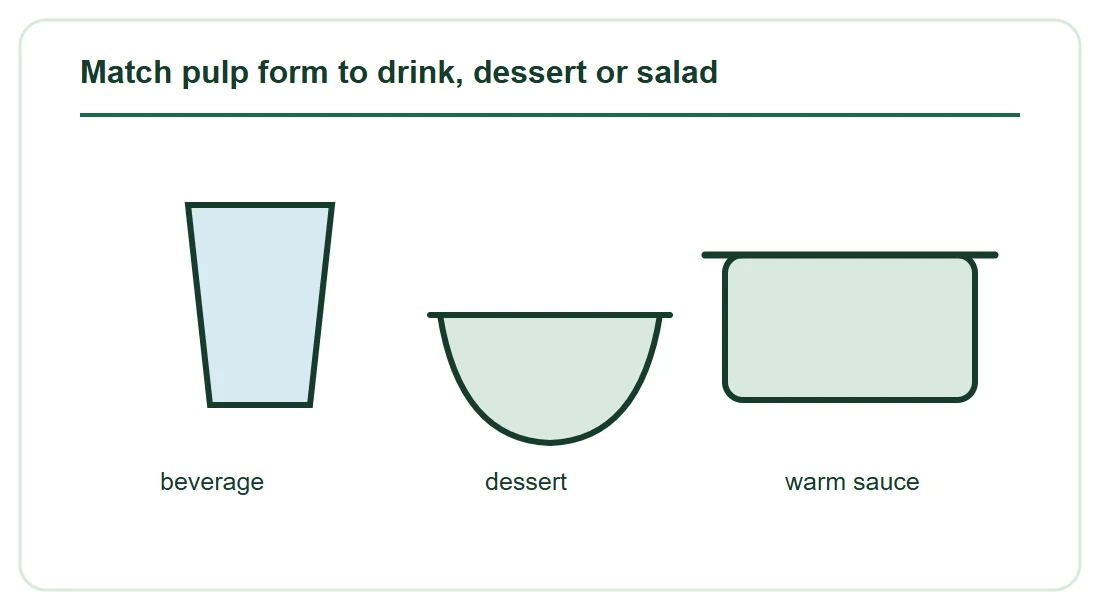
Match pulp form to drink, dessert or salad. Original schematic illustration.
For a dessert, decide whether pomelo should appear as visible fruit or as a flavor layer. In a chilled yogurt cup, a coarse pulp fragment may give a pleasant bite but release juice into a white layer during display. In a baked filling, heat and a starch system may disperse or bind the fruit differently. Prepare a controlled sample, chill it, and look at the fruit distribution after the normal holding period. If the recipe includes gelatin or another setting agent, follow that formulation's validated method rather than generalizing from an uncooked cup.
For a salad, test the exact offered frozen pulp after the intended thaw. Drain a measured portion only if the salad recipe can spare that juice; otherwise incorporate it deliberately into the dressing. Fold in gently and check the finished plate after service delay. If all that remains is fine citrus debris, specify a coarser form or use fresh hand-cleaned segments. If the fragments keep a pleasant distinct bite, record the accepted appearance and handling method so the next kitchen shift can reproduce it.
A fair comparison uses identical base recipes and ingredient weights, with the pomelo form as the main changed variable. Keep a written observation of sweetness, bitterness, color, pulp size, free juice and texture. An approval based only on taste may overlook a settling or appearance failure. Conversely, rejecting a perfectly useful beverage pulp because it is not an intact segment applies the wrong visual standard. The correct decision follows the role the fruit plays in the final food.
Specify the usable pulp and test the final food
Start a purchase brief with "frozen pomelo pulp" and then define what "pulp" means in the application: coarse vesicle fragments, approximate piece expectation, acceptable visible membrane and seed conditions, and whether free juice is part of the supplied weight. Ask GreenLand-food for a current representative sample and product specification before turning a draft description into a contractual tolerance. The pictured pink bag identifies a real commercial form, but the photo cannot measure every future carton.
Bag of coarse frozen pink pomelo pulp fragments.
For a beverage, the main test may be dispersion, flavor and pumpability. For a visible dessert, it may be color and piece retention. For a salad, it may be membrane cleanliness and a gentle, not soggy, bite. The same lot could suit one use and fail another. State the application at the inquiry stage so the supplier can discuss the offered material against the right outcome rather than quoting an unspecific "pomelo."
Keep grapefruit as a separate comparator when developing a replacement recipe. A grapefruit recipe may rely on juice, bitter finish and a particular acid balance. A pomelo pulp recipe may rely on pale floral flavor and texture. Reformulate the sweetener, acid and water if needed, then run a small sensory trial. No botanical relationship makes a one-for-one substitution automatically right.
The receiving record should connect the agreed sample, the lot identity and the customer's final application test. If later deliveries differ in color, free liquid or membrane remnants, the team can determine whether the incoming product changed or the kitchen treatment changed. GreenLand-food can respond to a defined observation and trace the offered lot; the customer releases its own finished drink, dessert or meal under its own controls. That division keeps the fruit comparison practical and the product claim precise.
Questions about pomelo and grapefruit
Is pomelo a grapefruit? No. They are related citrus fruits, but pomelo is commonly identified as Citrus maxima and grapefruit as Citrus × paradisi. Their usual rind, flesh texture and flavor differ, while particular varieties still need tasting.
Why remove pomelo segment membranes? The walls can be thick and chewy or add unwanted bitterness. Opening them releases the edible juice vesicles for eating, salads and fruit cups. Check the actual fruit because membrane thickness varies.
Can frozen pomelo pulp replace grapefruit juice? Only after a recipe trial. Coarse pulp brings solids and may offer less free liquid or a milder bitter note than the grapefruit juice a recipe expects. Adjust the base and taste the finished serving.
Are GreenLand's frozen pomelo pieces intact segments? The current product photo shows coarse pink pulp fragments in a bag. Ask for a current sample and written piece expectation if intact segments are important to the finished food.
Clarify a separate fruit-identity question before planning a blend.
Consider how pulp form changes a drink process.
Place pomelo pulp among other offered fruit forms.
Source frozen pomelo pulp with GreenLand-food
GreenLand-food is a professional frozen pomelo pulp supplier and manufacturer in China, providing factory-direct wholesale supply for importers, food manufacturers, foodservice distributors and private-label programs.
Send us the product form, specification, packing, quantity, application, destination, private-label needs and requested documents.