


Cucumber Round Cuts: Peel Edge, Seeds and Thaw-Drip Acceptance
Oct 19, 2026
Leave a message

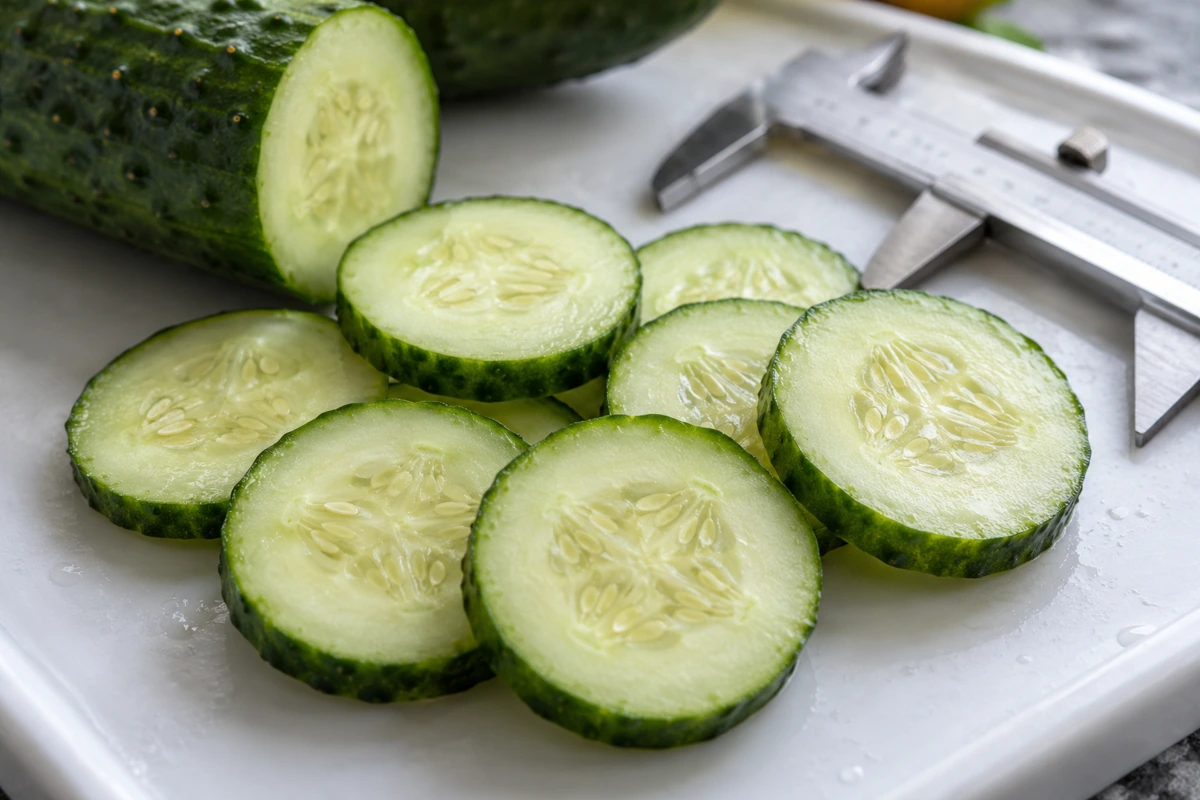
The specification should tell receiving staff what to inspect, how to classify a piece and which results require action. It should also distinguish a buying tolerance from a regulatory or commodity standard. At GreenLand-food, we discuss round diameter, thickness, peel retention, seed-core condition and the proposed application with the buyer before sample approval. The methods below are proposals for an agreed inspection plan; they are not reported lot results or universal acceptance limits.
Define the round before judging its defects
Describe the product in words that a supplier, buyer and receiving inspector can interpret in the same way. A round is a transverse slice of cucumber. State whether its peel is retained, whether end pieces are permitted and how the seed center is expected to appear. Identify any added ingredient or treatment through the actual specification. Avoid letting a catalogue name carry details that were never agreed.
The GreenLand-food cucumber product reference shows peel-on rounds for processed uses that accept moisture release. The available offer and sample need confirmation for each program. A different peeled form, reduced seed center or special cut should be reviewed separately. A prototype prepared by trimming standard rounds in the buyer's kitchen is not evidence that the trimmed form is the commercial offer.
Record diameter and thickness as different attributes. Diameter affects the outline, number of pieces in a portion and passage through some feeders. Thickness affects piece mass and the behavior of the cut during preparation. If a buyer only writes "small slices," a supplier may reasonably understand something different from the application team. Include an agreed range and a method for handling irregular or angled cuts.
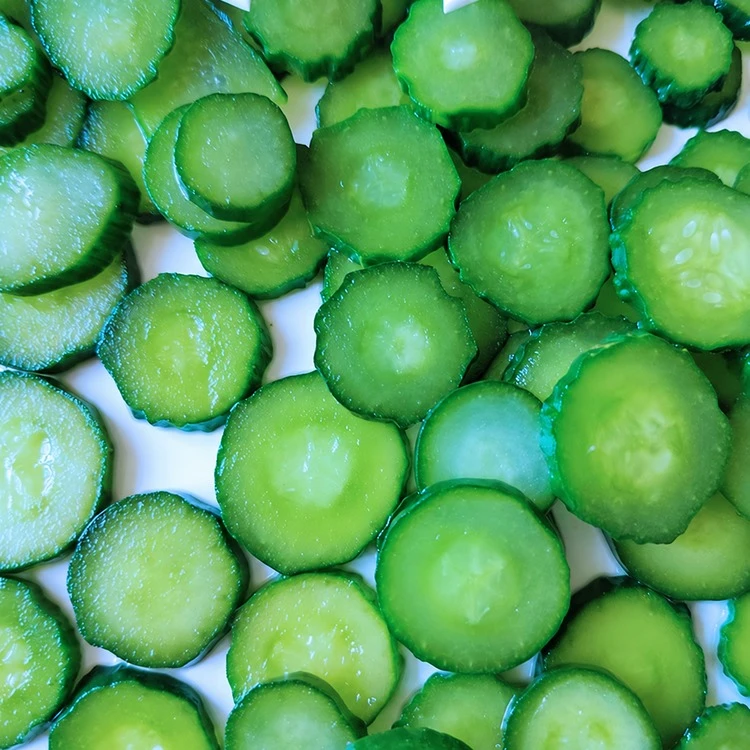
The actual product reference shows the round form that the written cut description should identify.
Specify the condition in which a dimension is measured. A firm frozen round and a soft thawed round can respond differently to a measuring tool. Pressing the flesh changes the reading. The inspection method should identify the tool, measurement position and handling needed to obtain a useful result. Record when an irregular edge makes a single diameter unsuitable and explain how the agreed method resolves it.
Use reference photographs with scale and written definitions when available, but do not rely on an attractive photograph alone. A picture can show peel retention or an acceptable outline; it cannot supply a missing tolerance. The same applies to a sample that is approved verbally and then consumed during testing. Retain the specification and records needed to explain exactly what was accepted.
Fresh whole-cucumber grades provide useful background vocabulary, but they describe another product state. USDA AMS cucumber grades address fresh whole cucumbers and their dimensions and defects. Do not present a fresh grade name or whole-fruit size as an established frozen-round tolerance. The frozen cut needs its own agreed acceptance basis and destination review where applicable.
Choose the attributes that affect the intended food. A visible round in soup needs a workable outline and handling integrity. A puree may tolerate more shape variation while requiring suitable peel and seed behavior. Keep the common product description stable, then add application requirements that can be tested. This directs inspection toward the defects that survive into the final food.
Separate normal peel edges from physical damage
A peel edge gives a cucumber round its familiar dark outline, but its presence and condition should be assessed separately. A complete rim, a partly missing rim and a detached strip are different observations. Record what the buyer wants to control: visual continuity, loose peel fragments, damage to adjacent flesh or an unwanted texture after processing. One broad "skin defect" category may hide several causes.
Normal cut shape needs an agreed reference. A round may have a slightly irregular outline from the cucumber's natural form. That differs from a torn edge or a missing section caused during cutting or handling. The inspection plan should explain which observations are normal variation and which enter a defect count. Otherwise, two inspectors can disagree while both believe they are following the specification.
Examine the edge after the preparation that matters to the application. A peel rim can remain attached while the flesh softens, or a strip can loosen during stirring. If the round will be cooked, include the agreed cooking and handling route before judging the prepared edge. If it will be blended, inspect the finished particles. Frozen appearance alone may miss the problem that the customer later sees.
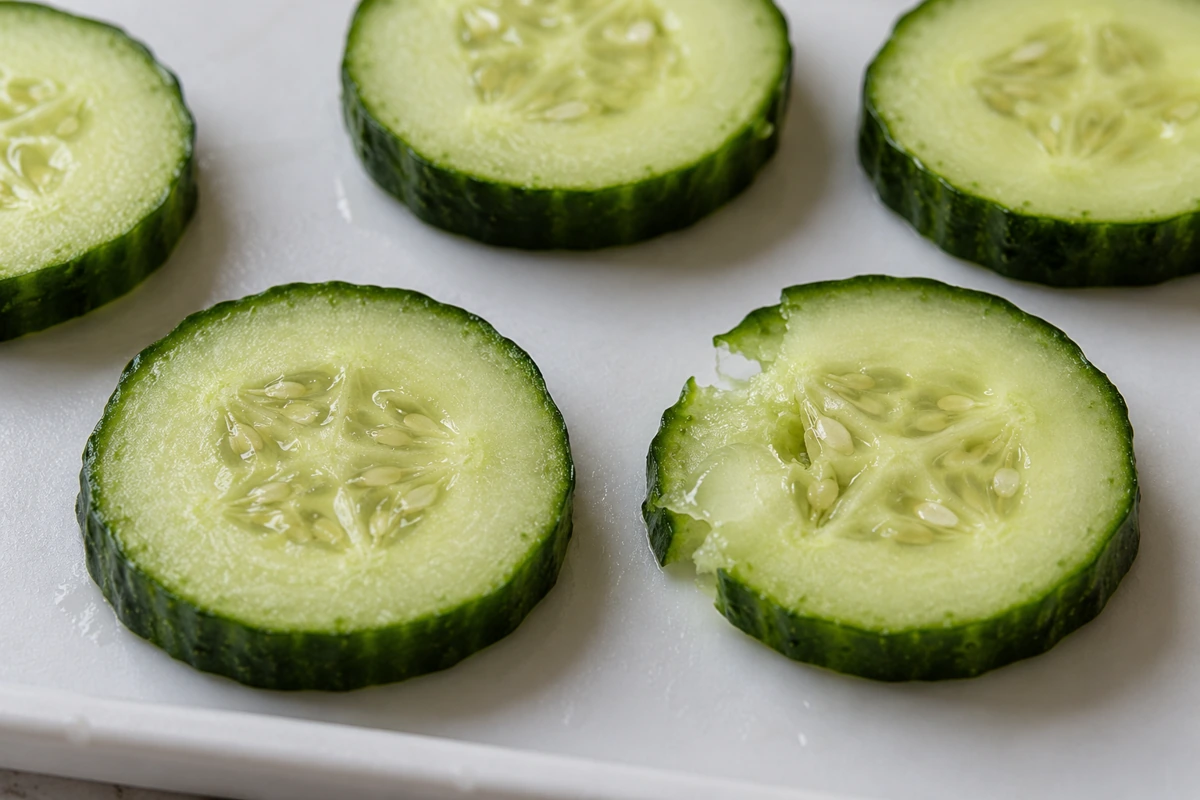
An intact rim and a missing edge illustrate different observations for a defect definition.
Avoid confusing a color description with evidence of safety or processing history. A dark green peel can be visually desirable, but it does not establish species identity, a kill step or the complete cold chain. Discoloration deserves assessment against the specification and any relevant investigation. The action depends on the actual observation and context, rather than an unsupported rule that every dark area has the same cause.
Define how loose peel is counted. It can be measured as fragments within a weighed portion, as affected rounds or through another agreed method. Those denominators answer different questions. A few large fragments may represent little mass but remain conspicuous in a light sauce. Recording only a mass percentage could conceal the visual issue. Choose a measure aligned with the finished product.
For a peel-related complaint, retain clear photographs of the prepared pieces and the original package identity. Include the preparation method and when the edge separated. A close-up taken after repeated forceful stirring cannot establish that the supplier delivered detached peel. The receiving and application records together help determine whether the ingredient, method or their combination needs attention.
When peel is important to brand appearance, compare the actual serving condition under ordinary light. A glossy wet round under strong lighting can appear more saturated than a piece in broth. Agree a useful physical or photographic reference with its viewing conditions, then confirm the current sample. The objective is a repeatable appearance decision, without treating every harmless variation in green as a rejection.
Inspect the seed center after preparation
The cucumber seed center is a separate structure from the outer flesh. Its size, softness and integrity can influence both the visible round and the finished mouthfeel. Inspect it directly rather than assuming that a complete peel rim means a complete usable disk. A round can keep its outline while the central tissue loosens, opens or detaches during preparation.
Start with the offered material and a truthful description. "Seedless" should not be inferred from small or pale seeds in a photograph. If a buyer requires a particular seed condition, describe that requirement and confirm how the supplier can meet it. A tolerance for visible mature seeds is different from a requirement for an intact center, and neither automatically specifies the other.
The assessment state matters. NCHFP's freezing guidance describes the softer texture expected in thawed cucumber. Inspecting the prepared center reveals whether that change is acceptable for the application. It does not by itself diagnose how the raw material was grown or prove an exact processing cause. Keep observations factual before assigning responsibility.
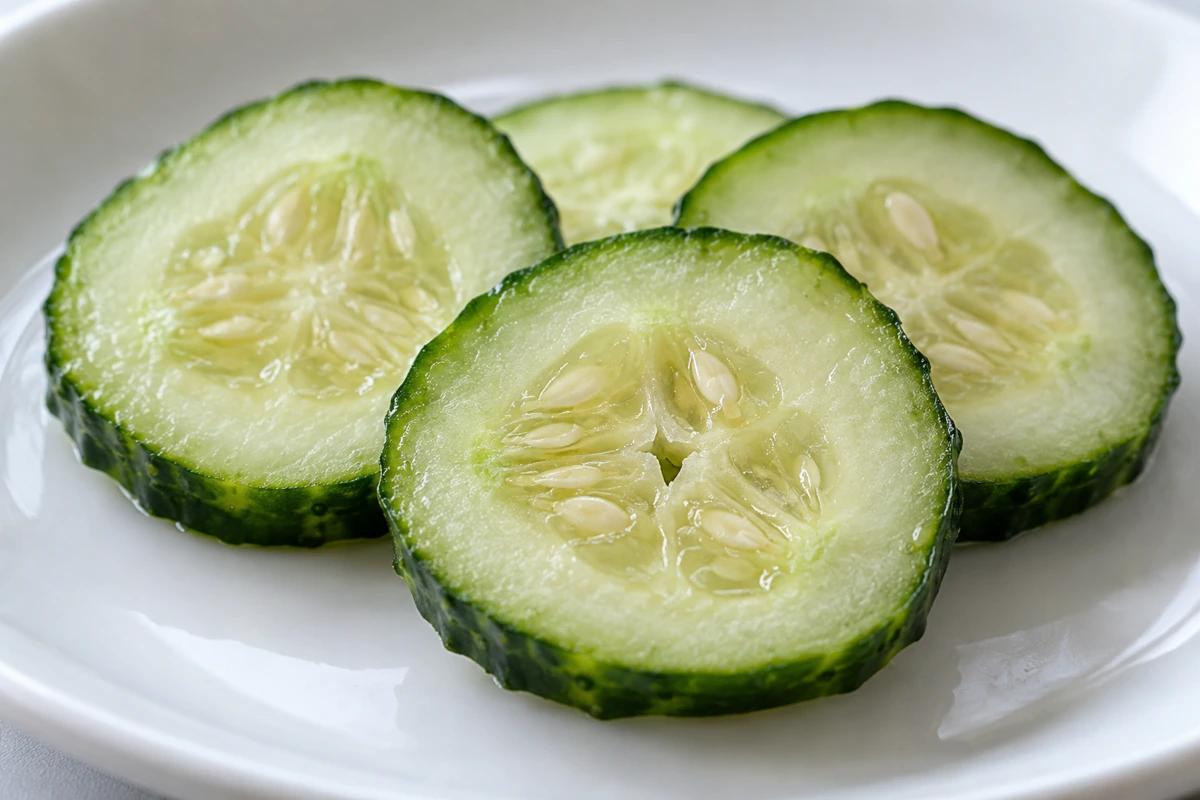
The seed center can be assessed separately from the outer flesh and peel; this is an illustrative prepared state.
For visible pieces, define central opening and center loss in practical terms. A small hole, a split that reaches the edge and a detached central plug may need different classifications. If dimensions or proportions are used, specify how they are measured. A photograph with an approved example can help, provided it is tied to the written definition and is not used to invent an unstated numerical limit.
For a blended application, the relevant result may be residual seed fragments and sensory texture. Evaluate the final blend under the actual process and serving conditions. If screening is part of the route, record its effect on recovered output. A center that looks untidy before blending may be acceptable afterward, while a visually complete center can still contribute an unwanted particle sensation.
Take care when separating cosmetic and functional defects. A visible center difference may be harmless in a puree but significant in a premium piece soup. An intact center might be central to portion appearance but less important to a sauce. State the application reason for each limit so that the supplier understands why the buyer needs it and receiving staff know how to interpret a borderline observation.
Keep seed-center findings distinct from general softness and breakage. An affected round can have more than one characteristic, and the counting rules should state whether it appears in multiple attribute totals. A total of attribute incidences can exceed the number of defective pieces without being an arithmetic error. Label the totals clearly so that a complaint report does not appear to claim more individual rounds than the sample contained.
Use defect definitions that inspectors can repeat
Useful defect language tells inspectors where to look and what to record. Separate an incomplete round, a split round, a torn edge, detached peel, center loss and visible foreign material. The appropriate categories depend on the specification and risk review. Avoid an undefined "bad pieces" column, since it prevents the supplier from understanding whether the issue concerns appearance, handling or a potentially different problem.
Choose how fragments enter the count before the sample is inspected. If a round breaks into several pieces, counting every fragment as one original round can inflate the denominator. A mass-based fragment measure answers another question. The plan should state whether the assessment counts intact units, reconstructs original pieces where feasible or weighs a separate fraction. Use the same convention for the approval sample and delivered lots.
Define the sample state at each stage. A frozen visual inspection can capture received shape and clustering; a prepared inspection can capture what happens during thawing or cooking. Keep those records separate. If all defects are counted only after a harsh preparation, the report may misattribute process damage to receipt. If only frozen pieces are inspected, it may miss the central collapse that affects the food.
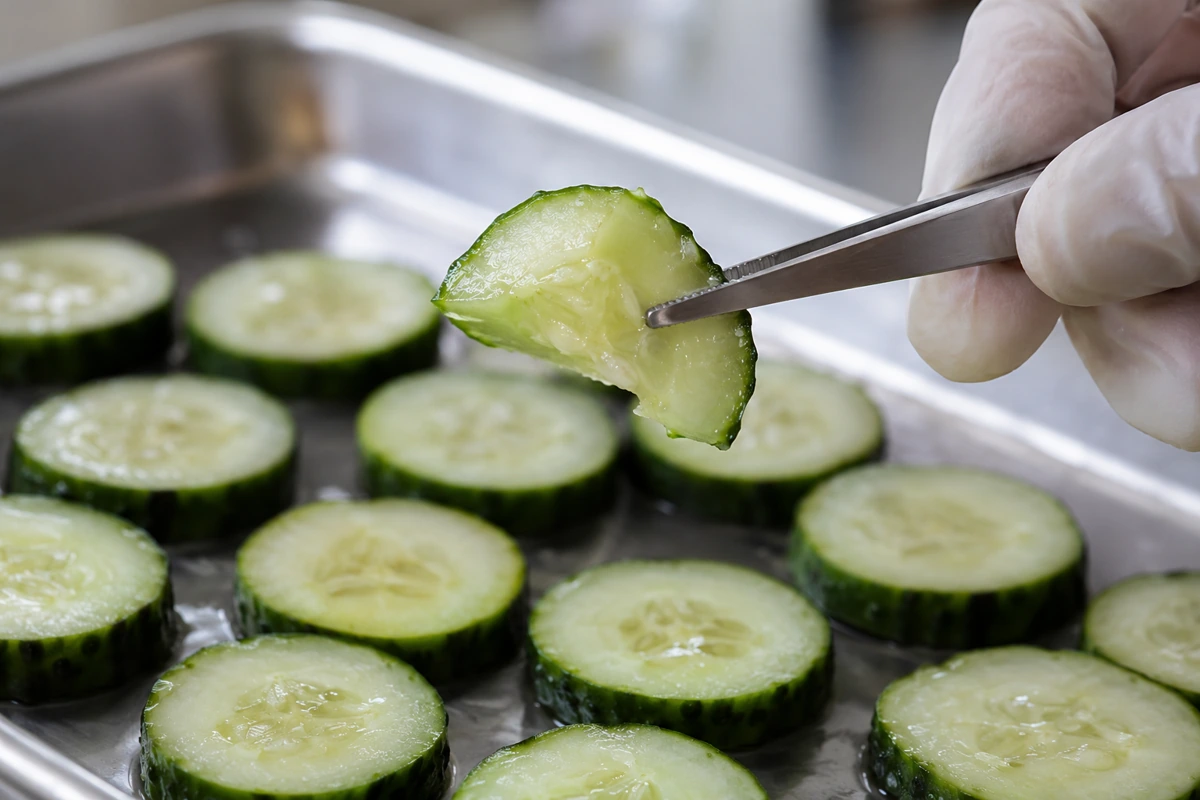
A broken half-round illustrates shape loss; the counting convention should be agreed before inspection.
Train the method with actual examples when the program begins. Two inspectors can independently classify the same small set, then review disagreements against the definitions. This is a proposed way to refine the method, not a claim that any such trial has been performed. Revise ambiguous wording before it becomes part of a high-volume order, and retain the approved version.
Do not turn every attribute into one combined percentage unless the rule explains how overlaps are treated. A split round with a damaged peel edge is one affected unit but two observations. A combined defect limit may count the unit once, while attribute limits count both incidences. State which total controls acceptance and which totals help diagnose causes. That distinction makes supplier discussions much clearer.
Include the action for an unexpected observation. Receiving staff should know when to hold material, preserve evidence and contact the technical team. A blog cannot set the business's hazard response or replace its applicable food-safety procedures. The purchase plan should identify the responsible people and the documents needed to decide disposition, especially when the observation falls outside the agreed cosmetic categories.
Keep terms consistent from enquiry to complaint. If "intact" means a complete disk with attached center in the specification, it should retain that meaning in the sample report and incoming inspection. Changing the definition after delivery makes a comparison unfair. That record lets both parties assess the lot against the same requirement.
Measure thaw drip with a fixed method
Thaw drip is a method-dependent observation. Define it before assigning a limit. A practical proposed measure is the collected liquid mass divided by the initial frozen sample mass, expressed as a percentage, with both masses obtained under the agreed procedure. Other conventions can be used, but their results should not be compared as though the denominators and handling were identical.
Write down how the sample is selected, its input mass and the condition in which it is prepared. Identify the thawing route approved for the ingredient and the endpoint used for the test. Keep the container and loading arrangement consistent. An overnight test in one shallow layer can produce a different separation history from a densely filled container assessed at another endpoint, even before draining begins.
If drainage is part of the method, define the sieve or separation equipment, sample depth, drainage interval and whether pressure is applied. Pressing or squeezing removes liquid differently from passive draining. The receiving team should not improvise that choice. Record transfer losses and material left on equipment when they affect the interpretation, rather than treating an imperfect mass balance as an exact result.
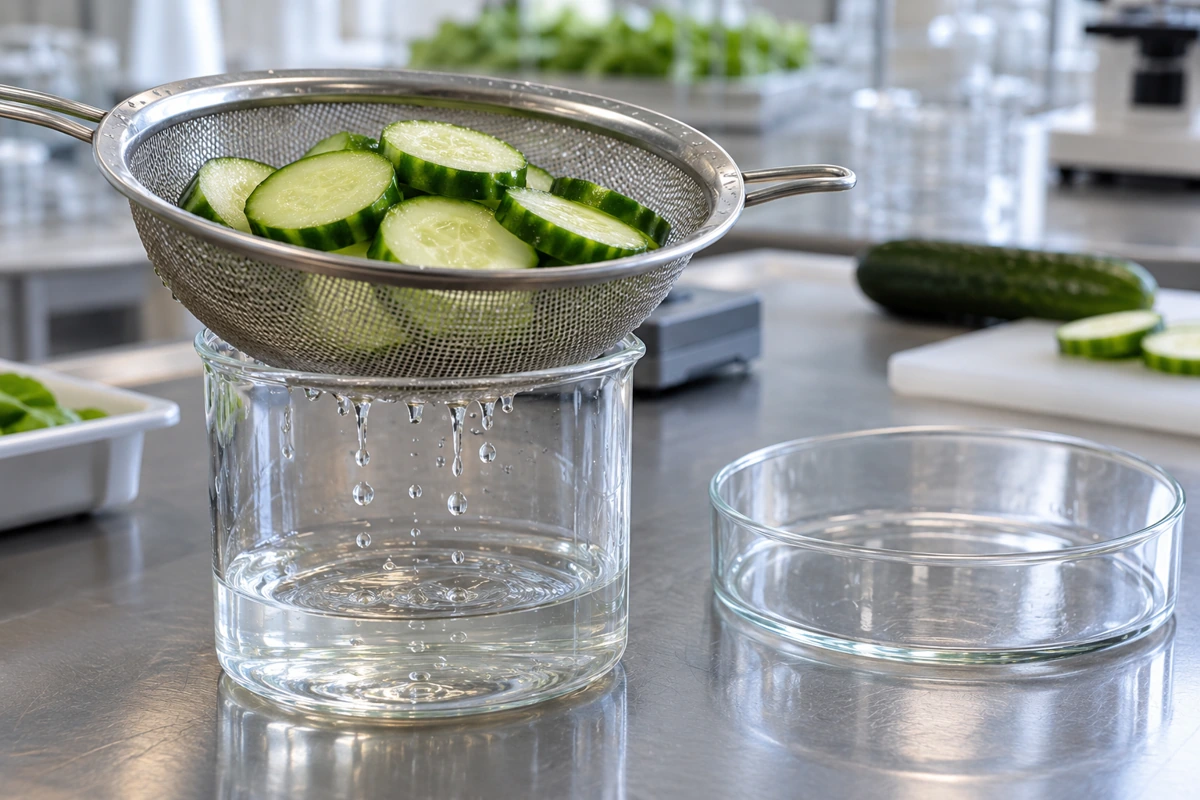
Illustrative passive-drainage arrangement; agree the equipment and method before comparing results.
- Identify representative material and record the initial frozen sample mass.
- Use the ingredient's approved thawing route and the agreed endpoint.
- Separate liquid with the specified equipment and drainage conditions, without an unrecorded squeeze.
- Weigh the collected liquid and recovered pieces; note fragments and transfer losses.
- Calculate and report the agreed measure with its denominator and method revision.
Measure recovered pieces as well as collected liquid when usable yield matters. A broken fragment lost through the sieve is different from cucumber liquid passing through it. If both are included in one discard mass, explain that the measure is process loss rather than pure thaw drip. A buyer needs to know what the number represents before using it to calculate an ingredient cost.
Keep a separate application test. A soup may retain released liquid, so the main issue is formula balance and flavor. A drained preparation may discard it, making recovered mass a direct costing factor. No single thaw-drip threshold is appropriate to every use, and this article supplies no universal commercial limit. Agree a target after representative samples have been evaluated in the actual food.
Repeat a comparison when handling differences could explain the outcome. Use the same method and appropriate representative portions; do not simply average unrelated tests. A sample from the top of one bag and a more heavily iced portion from another may not represent the same material. Record where portions came from and how the agreed sampling plan addresses variation within the lot.
When a number becomes a purchase criterion, include the method revision with it. A receiving laboratory can otherwise apply a familiar house method while the supplier uses a different one. Both may obtain internally consistent results that cannot be reconciled. Shared definitions, preparation and reporting are what turn a drainage observation into a defensible acceptance decision.
Compare the same cut in the intended processes
Compare the same offered cut across the preparation routes relevant to the program. Frozen receipt, controlled thawing and cooking reveal different attributes. A frozen round can be assessed for received geometry and surface condition, while the prepared round can be assessed for softness, center integrity and handling. The comparison should say what each state can establish and which decision it supports.
For a cooking trial, use the recipe's actual sequence, loading and handling as closely as practical. Record the cucumber mass, pan or vessel, liquid input, the supported cooking procedure and the point of evaluation. A small gently stirred portion cannot automatically represent a large kettle with different mixing and holding. Scale changes may require another application trial before the result becomes commercial approval.
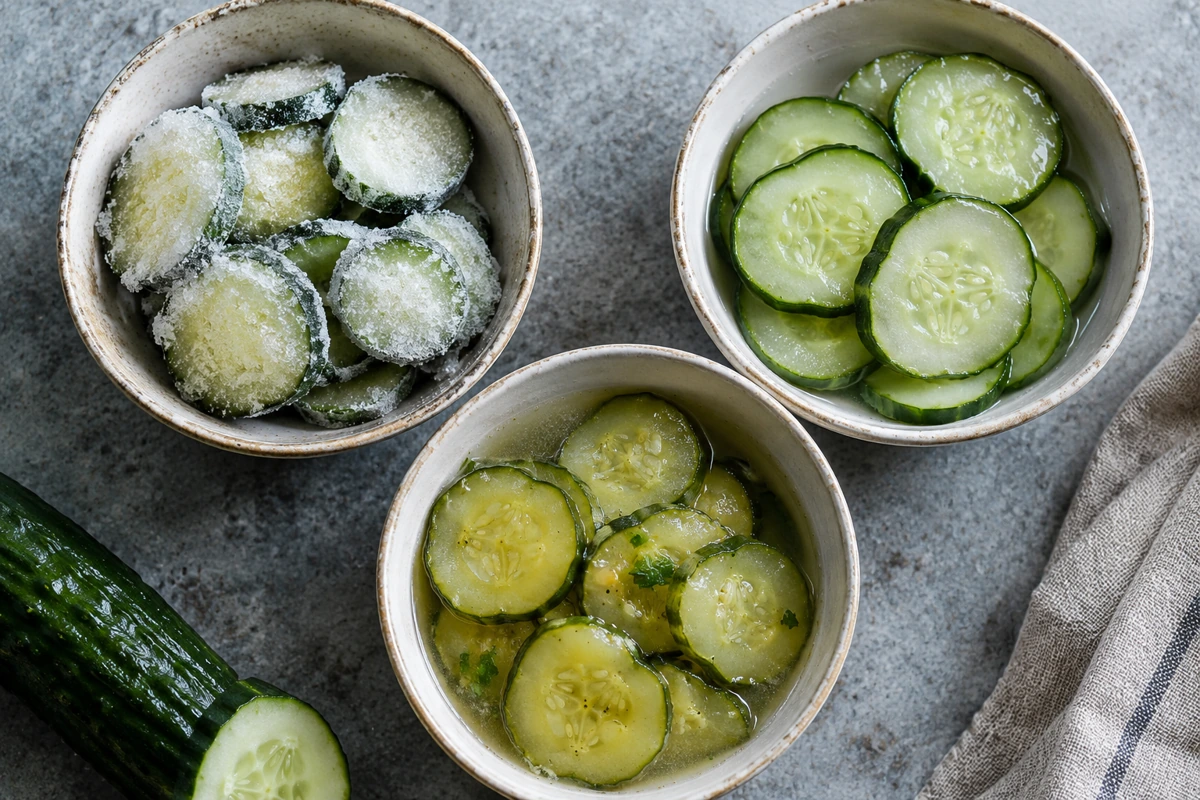
Illustrative frozen, thawed and cooked states show why the assessment condition must be identified.
| Assessment state | Useful observations | Decision supported |
|---|---|---|
| Frozen receipt | Cut geometry, clusters, surface condition and pack identity | Whether the delivered form matches the receiving description |
| Prepared by agreed thawing route | Shape, seed-center integrity and collected liquid | Whether the ingredient meets the defined preparation and yield test |
| Cooked in the intended food | Piece survival, particles, flavor and formula balance | Whether the application is acceptable after normal handling |
If both thawed and frozen inputs are possible, compare them deliberately. Record any liquid drained from the thawed portion and account for it in the formula. Keep the amount of cucumber material and the way yield is calculated clear. A stronger soup made with a drained portion may simply contain more retained cucumber solids per serving than the comparison recipe.
Observe the round through normal transfer and serving. It may survive in the pan but break during ladling, pumping or packing. Include the relevant handling step and inspect the condition the customer receives. Excessive laboratory handling can also create damage that the normal process would not produce, so the proposed test needs to reflect the operation rather than challenge the product arbitrarily.
For a sauce or puree, inspect recovered output and particle behavior. A whole-round acceptance rule can be unnecessarily restrictive when the process intentionally destroys shape. The same program may still need control of peel fragments, seed sensation and water release. Align inspection with the function the ingredient performs, while retaining the product identity, preparation and safety requirements that apply to every route.
Use photographs as supporting records with truthful scope. Show the actual sample state, include the method reference and retain its identity in the private record. An illustrative photograph in an article explains what to look for; it is not evidence of a performed product trial. Keep those uses distinct when preparing a specification annex or resolving a delivered-lot concern.
Once a route is selected, avoid switching the acceptance preparation informally. A sample approved after gentle thawing may not survive a different cook and hold. A change in recipe, equipment or portioning should trigger the appropriate review. The agreed method belongs with the order so that a future lot is assessed against the food the buyer actually plans to make.
Tie sampling and acceptance to the offered lot
Sampling connects the specification to the delivered lot. Define the lot identity, where units will be selected, how portions are taken and which test results control acceptance. The quantity and distribution should be appropriate to the program and agreed between the parties. One convenient handful from an opened bag cannot establish the full condition of a shipment, especially if the sampling method is not recorded.
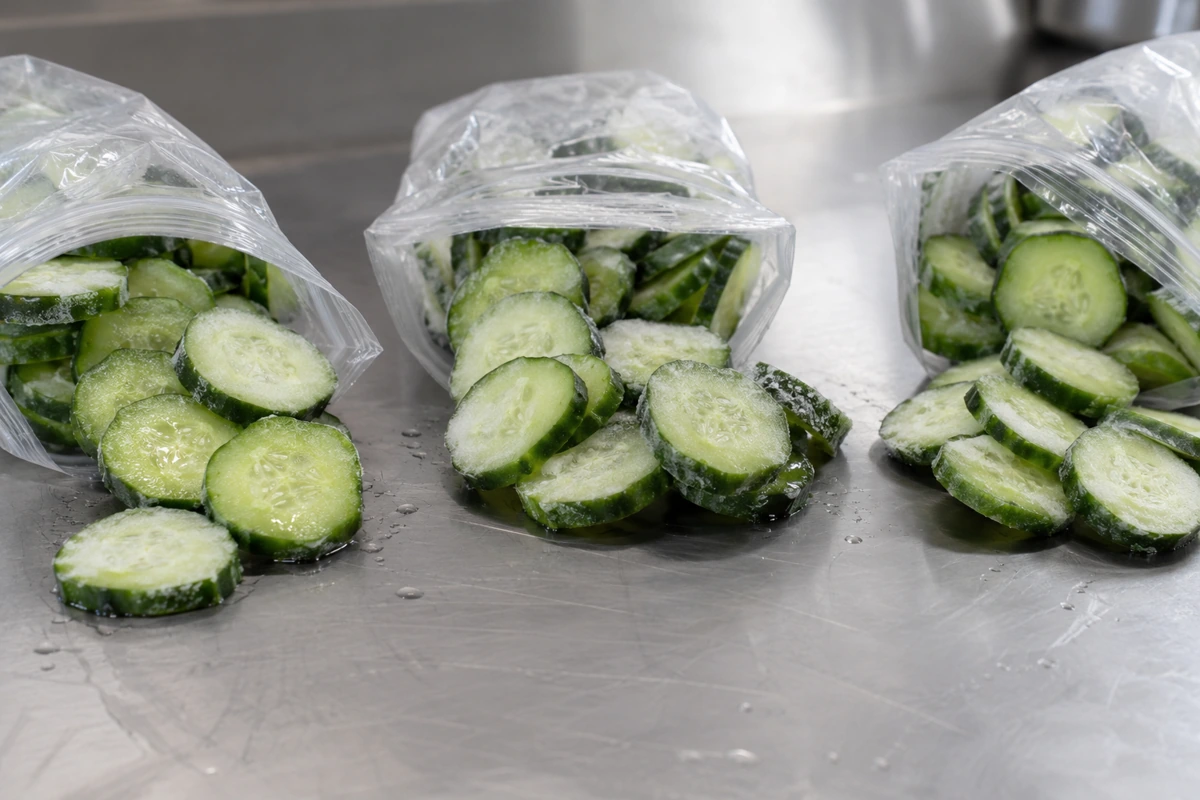
Illustrative portions for discussing a frozen cucumber sampling plan.
Retain the link between outer cases, inner packs and the sample. Record any condition that affects interpretation, such as damaged packaging, unexpected clustering or a missing preparation instruction. These observations may require investigation in addition to cut inspection. A normal-looking round does not resolve a traceability discrepancy, and a single cold reading cannot reconstruct an entire delivery history.
State limits and actions clearly after sample evaluation. A diameter or thickness range needs a defined measurement and tolerance convention. Defect criteria need their counting basis. Thaw drip needs its method and denominator. Decide which observations cause a hold, which permit an agreed concession and who can authorize disposition. Those actions belong in the commercial and technical agreement before the first large order.
Keep acceptance limits distinct from the variability observed in a small sample. An approval trial may help identify a workable range, but it does not prove the complete long-term distribution of a supply program. Ask for representative material and agree how changes will be communicated. Review future receipts against the same specification and use real results to refine the program when appropriate.
If the sample fails, describe the failure with enough evidence for a focused response. Identify the cut, lot, method and stage where it became unsuitable. Provide measurements and photographs that correspond to the agreed test. A complaint saying only that cucumber was "too wet" cannot distinguish unexpected thaw drip, a changed formula, an inconsistent draining method or a different intended use.
We help buyers define the form and documentation required for frozen cucumber supply. Send the application, destination, quantity, packing and proposed acceptance approach. We can discuss a representative sample and the actual offer before the purchase specification is fixed. Keep the approved cut and preparation together so that both the supplier and receiving team are working toward the same result.
Discuss Frozen Cucumber with GreenLand-food
GreenLand-food is a professional frozen cucumber supplier and manufacturer in China, providing factory-direct wholesale supply for importers, food manufacturers and foodservice programs. We confirm the offered form, preparation status and specification against your intended application.
Send the product form, specification, packing, quantity, application, destination, private-label needs and requested documents so we can discuss a representative sample and the current supply offer.