


Frozen Cucumber for Blended Drinks: Water Release and Texture Testing
Oct 19, 2026
Leave a message

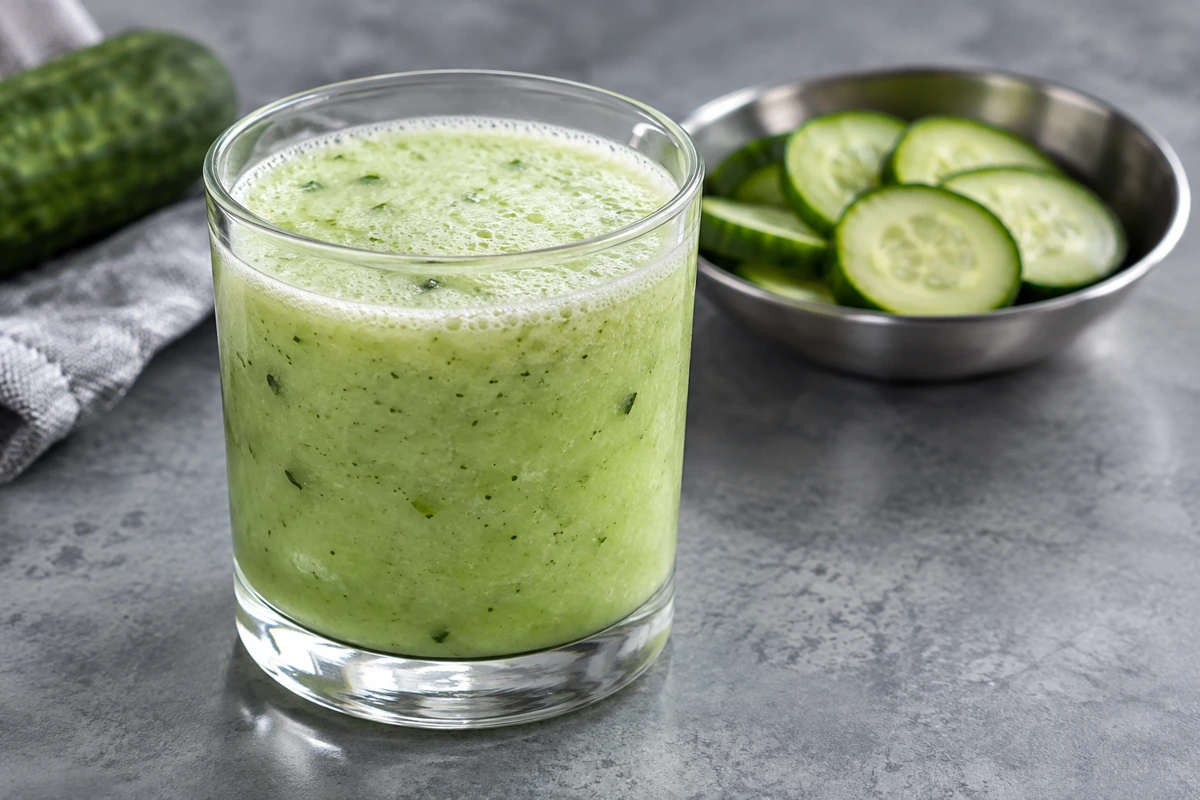
Begin with the product's intended use and cooking directions. Once that is resolved, run a measured trial in the actual blender and serving format. The useful result is a drink with acceptable flavor, texture and consistency throughout its planned service period. At GreenLand-food, we discuss the offered cucumber form, preparation status and sample specification before agreeing a beverage application. The following trial approach is a development proposal; it does not establish ready-to-eat status or report completed sample results.
Confirm the preparation route before blending
The first question is whether the frozen cucumber can enter the proposed drink through the route you intend to use. A product requiring cooking cannot be taken straight from the freezer into a drink served without that step. Confirm the exact SKU, current label, ingredient declaration, preparation instructions and supplier specification. Ask about the use you actually plan, including what happens after any cooking and cooling.
FDA's ready-to-cook guidance explains that bacteria can survive freezing and that required cooking directions must be followed. A powerful blender, an acidic fruit or an attractive green color does not establish an adequate safety process. Resolve the preparation route before anyone tastes an uncertain ingredient.
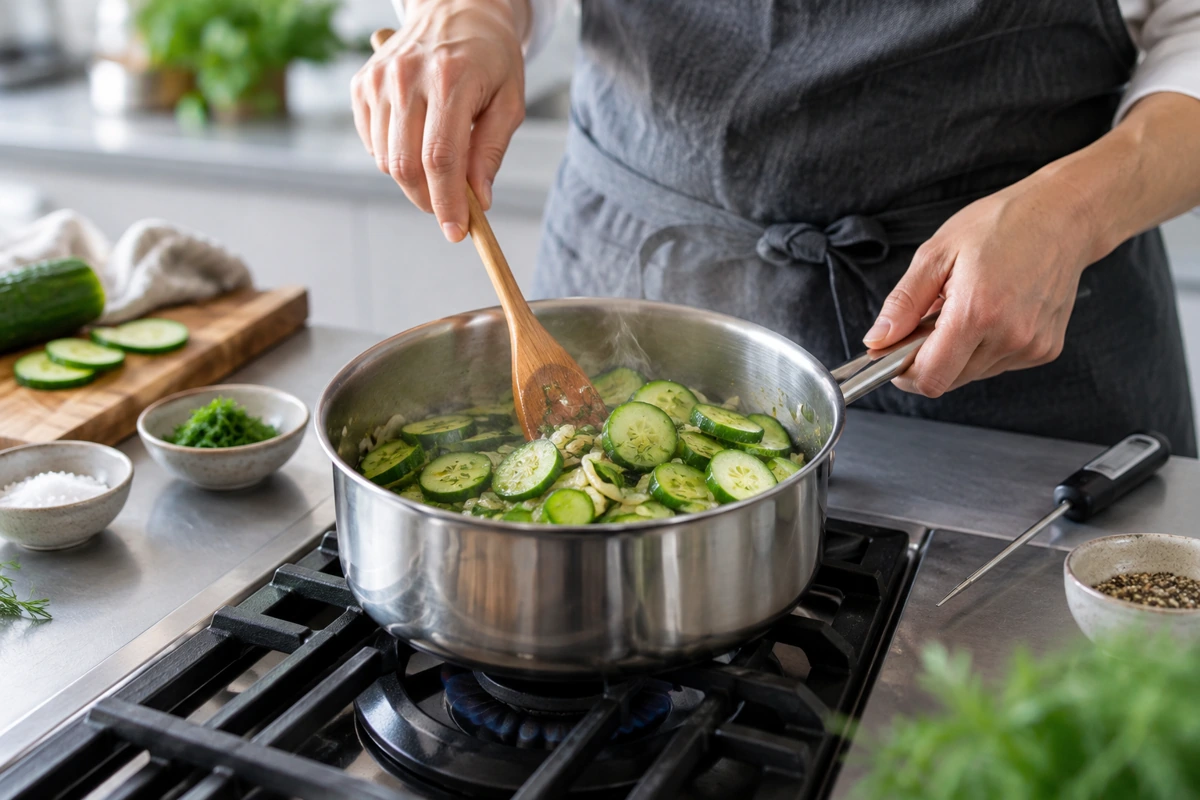
Cooking may be part of a supported preparation route. This illustrative scene supplies no validated process parameters.
There are distinct routes to consider with the buyer's technical team. A documented ingredient supported for no-cook use can be evaluated under its stated conditions. A cook-required ingredient needs a suitable validated preparation route before a cold drink, where that route is feasible for the operation. A product with unclear status needs clarification before use. These routes have different handling, labor and formulation implications.
If cooking is part of the route, expect to evaluate the ingredient after that preparation. It may bring different moisture behavior, color and flavor from an untreated fresh cucumber. Cooling and subsequent handling also belong in the operation's food-safety system. A kitchen cannot assume that a home recipe's brief heating instruction validates a commercial batch or its chilled distribution period.
The question sent to a supplier should be concrete: identify the proposed beverage, whether it is served without further heat, the manufacturing or foodservice setting and the destination. Request confirmation for the actual offered ingredient. A general reply that cucumber is used in smoothies leaves the decisive process question unanswered. Keep the response with the specification used for the trial.
Treat microbiological documentation within its real scope. An individual result describes a sample and method; it does not automatically establish suitability for every use or replace a required process. Likewise, a supplier's general quality-system information does not specify how a particular cucumber cut should be handled in a drink. Agree the applicable controls and requested records for the actual program.
Our spinach smoothie guide explains the adjacent intended-use decision for another frozen vegetable. Its product details do not transfer to cucumber. It is useful as a way to frame the conversation: resolve the ingredient and preparation requirements first, then optimize the beverage that the supported route allows.
Check the offered cut and seed center
The offered cut determines what the blender receives. The GreenLand-food frozen cucumber reference shows rounds with a green peel edge and seed center, intended for processed uses that tolerate moisture release. Confirm the current offer for the order. A photograph of rounds does not establish a peeled puree, a seedless specification or a no-cook beverage ingredient.
Record slice thickness and the approximate diameter range when feeding behavior matters. Larger or joined pieces can enter a blender differently from small loose pieces, particularly in a small vessel or automated feeder. The relevant question is whether the approved portion can circulate and blend under the equipment maker's instructions. Avoid trying to solve an incompatible frozen block by leaving it on the bench to soften unpredictably.
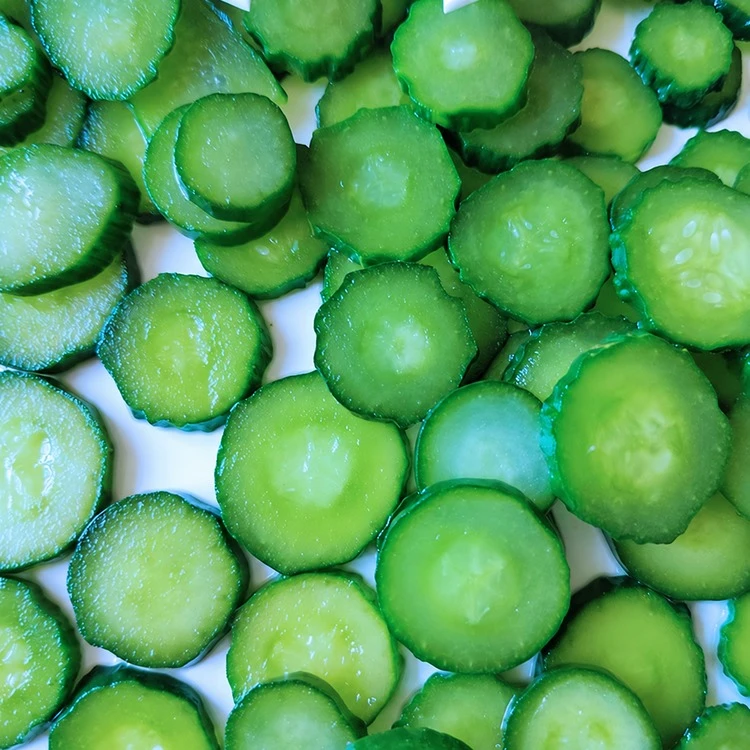
The photographed reference form retains peel and seed tissue, which the beverage trial needs to assess.
Peel retention affects what is visible in the glass. A darker rim can create green flecks that are attractive in one product and unacceptable in another. A pale smoothie advertised with a smooth appearance may require a different particle result from a thick vegetable drink where visible plant material is expected. Agree the desired appearance in the finished base, since other green ingredients can conceal the source of a defect.
The seed center needs its own sensory check. Soft seed tissue may blend easily, while more noticeable fragments or detached seeds can change the drinking experience. Inspect a prepared single-ingredient sample before adding strong fruit flavors. That gives the development team a clearer view of what the cucumber contributes and makes it easier to diagnose a gritty or uneven final drink.
Keep "seedless" precise if it appears in a purchasing brief. It can refer to a type of raw material or a processing expectation, and it should not be inferred from a photograph. If a specific seed condition is essential, request a written description and representative sample. A supplier needs to know whether the requirement concerns visible seeds, hard fragments, screening losses or another measurable feature.
Check the sample as supplied, including any frost, ice and clumping, before preparing it. Record the pack and lot, then take portions under the approved handling procedure. A trial made by selecting only the prettiest loose rounds may hide the feeding and dosing behavior of a normal bag. Include material representative of what the operator will encounter in routine production.
An alternative peeled, chopped or pureed form may be worth discussing if the offered round cannot meet the intended drink. Its availability, preparation and price need separate confirmation. Do not approve a prototype made from specially trimmed laboratory material and then order standard rounds as though both were equivalent. The commercial sample must represent the ingredient the team can actually buy.
Count cucumber water in the drink formula
Frozen cucumber is part of the drink's water and solid balance. When it warms, its frozen water becomes liquid within the formula. That is different from adding an ingredient that keeps the drink permanently thick. The trial should identify how much cucumber, other liquid, fruit, ice and any thickening ingredient enter the vessel, all on a consistent measurement basis.
Use mass for the development record where practical. A scoop of loose rounds can contain varying spaces between pieces, and a cup of foam does not represent the same mass as a cup of settled liquid. Weigh the cucumber portion and each base ingredient. Note whether the cucumber is dosed frozen, prepared and cooled, or thawed under an approved route, since those states bring different starting conditions to the blender.
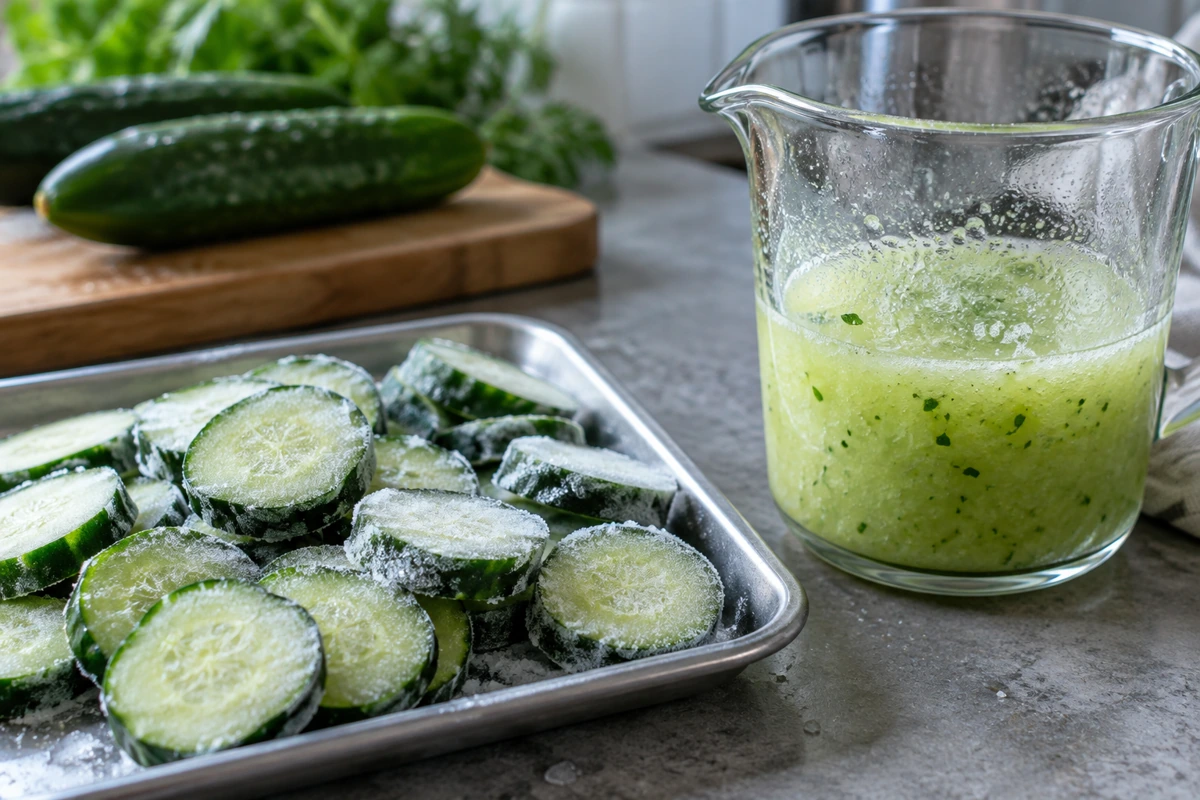
Both cucumber input and added liquid belong in the formula record; the scene illustrates that comparison.
Begin with a defined reference formula and change one purposeful variable at a time. For example, compare a selected cucumber input with a second input while keeping the other ingredient masses and blender procedure consistent. If both the liquid level and fruit content change at the same time, the team cannot tell which adjustment improved the drink. The aim is a useful formulation comparison, not a claim that one universal ratio suits every recipe.
Consider liquid retained during preparation. If cucumber is cooked or thawed and then drained, record the starting mass, prepared mass and the liquid discarded. A formula based on drained cucumber needs a clear purchasing-cost calculation. If the preparation liquid is retained, it enters the flavor and water balance and must be accounted for in the recipe. The two approaches should not share one ambiguous cucumber quantity.
Added ice can hide the ingredient's contribution during the first sip. A very cold sample may appear thick while a later sample becomes watery as the ice melts. Assess the drink at its actual service condition and intended interval, with a method approved for that product. Record the starting temperature and the point of sensory evaluation so that the team compares like with like.
Taste the cucumber contribution without assuming that a higher percentage is always better. A formula can become weak, grassy or unbalanced even when its viscosity is acceptable. Fruit sweetness, acidity and dairy or plant bases alter that balance. Keep the same supporting ingredients when comparing cucumber samples, then make flavor adjustments in a separate stage once the ingredient behavior is understood.
The NCHFP discussion of thawed cucumber texture supports expecting a structural change after freezing. The final drink's liquid behavior still depends on the complete formula and process. Measure and observe that system directly rather than treating a general freezing explanation as a predicted viscosity or an exact replacement rule.
Match loading and batch size to the blender
Use the equipment intended for service or pilot production as early as possible. A small home blender and a commercial vessel can differ in blade geometry, working volume and circulation. A recipe that succeeds only at one unusually small load may create problems when staff fill the normal vessel. Record the model, container, batch input, loading sequence and program used for each comparison.
Vitamix's equipment guidance describes adding liquids before frozen ingredients for its full-size containers. That is manufacturer-specific advice, not a rule for every mixer. Follow the current instructions for the actual machine, including its limits and safe use of any tamper. Keep hands and utensils out of an operating vessel except as expressly supported by its design and instructions.
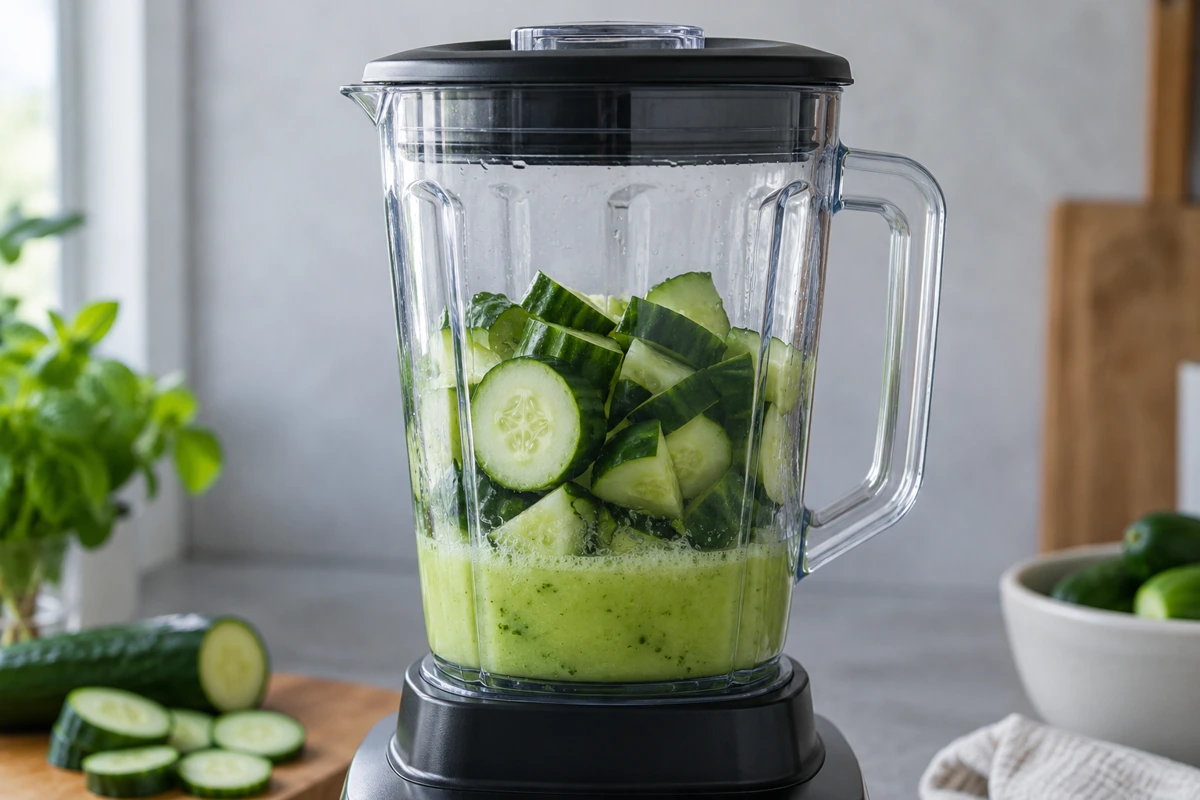
An illustrative loading arrangement with liquid below the pieces; follow the instructions for the actual equipment.
Observe whether ingredients circulate through the blades. A pocket of air, a stationary frozen mass or excessive foam may prevent uniform processing even when the motor is running. Stop and assess the cause under the machine's instructions. More time is not automatically a useful correction: it changes the product's temperature and may change the drink while leaving a loading problem unresolved.
Keep any adjustment in the record. If an operator adds liquid to restart circulation, weigh that liquid and include it in the formula. An unrecorded splash can make an otherwise repeatable sample appear unexpectedly thin. The same applies when a technician stops to scrape the container or breaks up a cluster before blending. The approved procedure needs to be feasible and consistent for normal staff.
Check output mass as well as input. Some blend remains on the vessel walls, around the blade assembly or in a transfer jug. That residue affects the number of saleable portions and can differ between a thick smoothie and a thin cucumber drink. Use the same recovery procedure when comparing formulas so that one sample is not credited with a more thorough scrape than another.
Screening requires a separate decision. Passing the blend through a sieve can reduce visible peel or seed fragments, but it changes output, solids and labor. Record the mesh or equipment, input mass and recovered beverage. A screened prototype may look excellent while creating too much loss or an impractical cleaning step for the intended operation. Decide whether that treatment belongs in the commercial process before approving it.
For a foodservice program, write a procedure staff can execute during a busy period. It should identify the approved ingredient portion, preparation route, base formula, loading and serving practice. A lengthy bench intervention that requires constant judgment can be difficult to reproduce. If the process remains sensitive, discuss another cut or packing format instead of relying on an operator to compensate for every bag.
Look for peel flecks, seeds and foam
Inspect mouthfeel before the drink receives toppings, a straw or a decorative garnish. Pour it into the intended serving vessel and taste it through the method customers will use. A broad straw can carry particles that settle below a narrow one, while sipping from a glass makes foam and surface material more noticeable. The serving format belongs in the acceptance test.
Peel flecks can be judged visually on a light background and in the actual beverage. Record whether they are fine and evenly distributed or remain as larger fragments. Use consistent light when comparing samples; a drink photographed in strong green backlighting can look very different from one served under ordinary counter lighting. A promotional image should not become the reference for a precise color acceptance.
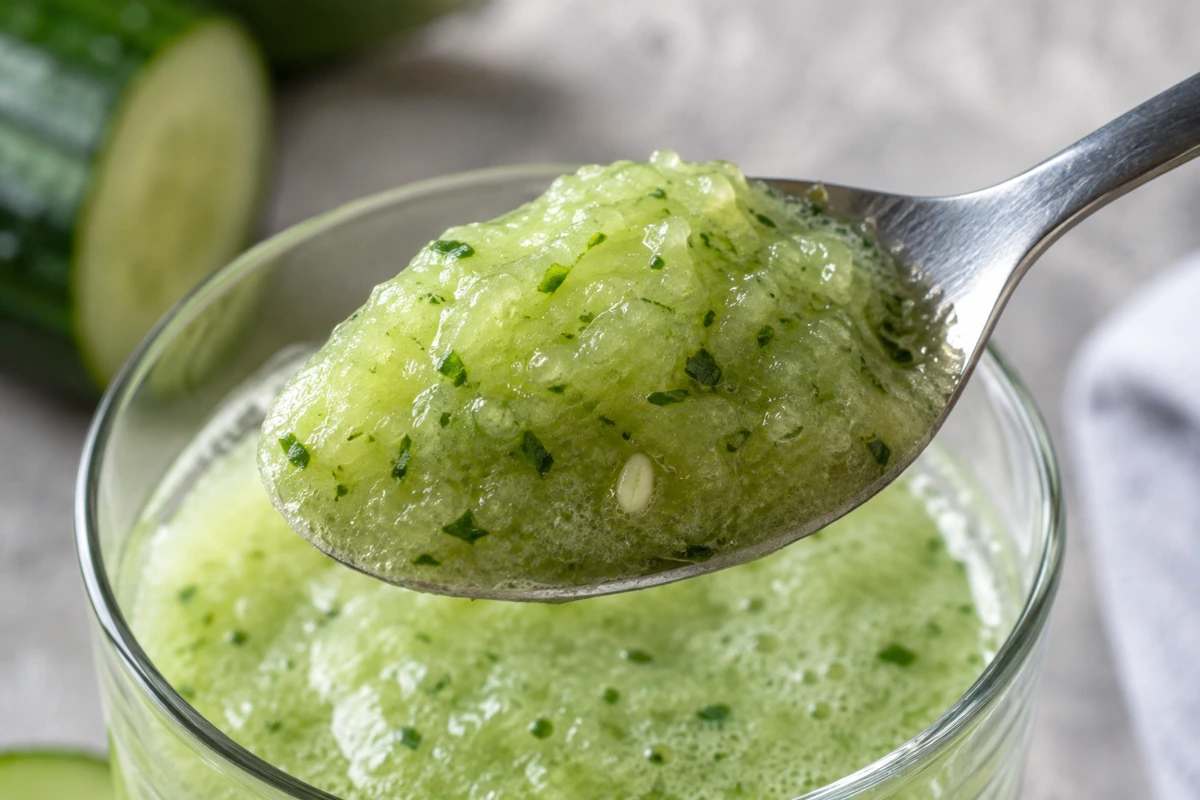
Visible peel flecks and a seed fragment show the particles a sensory trial should examine.
Separate visible particles from their sensory effect. A few flecks may be acceptable while a tough fragment remains unpleasant. Seed fragments may be hard to see against a pale base but still register during drinking. The panel's notes should identify the sensation and, when possible, the material responsible. "Not smooth enough" needs a more useful description before a supplier or process team can act on it.
Foam needs a defined observation point. Note the surface layer immediately after pouring and again at the intended service point. Some aeration may be desirable for a freshly blended drink, while excessive foam can interfere with fill consistency and presentation. An apparent full cup can settle below the expected level. Measure portions using a convention that matches the sale and the operation's quality system.
Evaluate cucumber flavor alongside the physical observations. A sample that blends finely can still have an unsuitable peel note or weak flavor after dilution. Start with a simple common base, then confirm the accepted sample in the final formula. Strong mint, citrus or fruit can make different cucumber samples seem similar during a quick tasting, yet their texture or separation may remain different.
Give the tasting team an agreed reference and descriptive vocabulary. Compare a limited number of clearly identified samples under the same preparation and service conditions. Avoid asking for an overall preference before checking the specific attributes that matter to the product. An operator may prefer the sweetest sample even though it leaves the largest peel fragments or gives the lowest recoverable yield.
Record acceptance in terms the supplier can relate to the offered ingredient. A request for a different peel condition, seed-center standard or cut distribution is more actionable than an instruction to make the drink "premium." Keep recipe and equipment causes visible too. The ingredient should be judged against the agreed method, with responsibility for each process step understood by both teams.
Evaluate the drink after its intended hold
The glass immediately after blending is only one observation. Define how long the drink will wait before service, what container it uses and which temperature controls apply. Then assess it under those actual conditions. A made-to-order smoothie and a beverage filled for chilled distribution have different development and safety requirements. A short kitchen hold trial cannot establish the shelf life of a bottled product.
Look for a clear liquid layer, solids collecting near the base, changes in foam and a watery edge at the surface. Describe their location and extent consistently. A photograph can document appearance if the glass, fill, lighting and observation time are controlled. It should not be presented as evidence of shelf stability or microbiological acceptability. Those questions require the appropriate product and process validation.
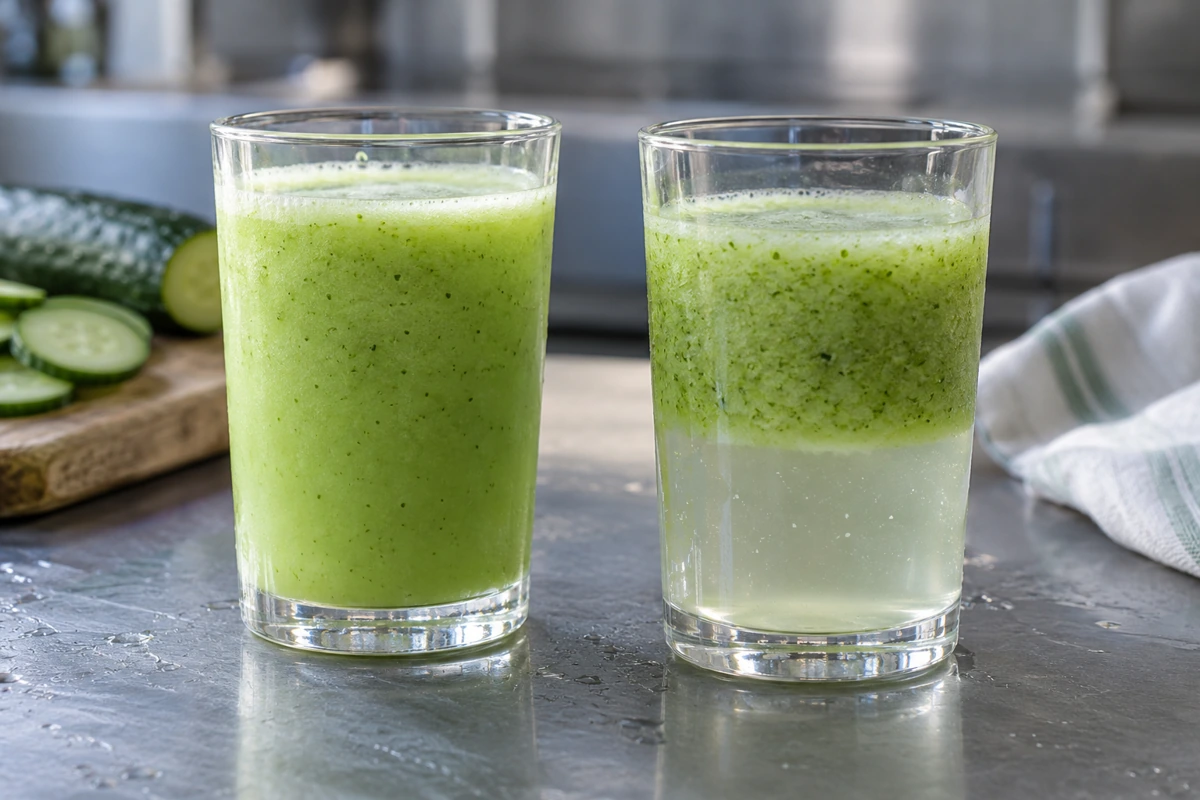
Illustrative uniform and separated drink states; no elapsed time or measured stability result is claimed.
Decide whether remixing is part of normal service. A beverage that needs gentle stirring before immediate serving may suit one counter operation. It may be unsuitable for a sealed pack where the customer expects uniformity without intervention. If shaking or stirring is proposed, test its practical effect and confirm the relevant labeling or handling implications through the operator's normal review.
Retest flavor and mouthfeel after the hold. A visible layer may be only part of the change: particles can settle unevenly, making the first sip and last sip different. Take the sample in a way that represents customer use. Do not stir one candidate vigorously and assess another without mixing, since that changes the comparison. Record the handling applied to each glass.
Keep the final base formula in the test. A cucumber blend that separates in water may behave differently with fruit solids, a dairy base or another permitted ingredient. That observation can guide development, but each added ingredient changes the complete product. Confirm ingredient compatibility and process requirements before using a thickener or emulsifier simply to hide a weak result.
If the drink fails the hold target, identify the failure before extending blending or adding solids. Determine whether the problem is particles, liquid balance, foam or another characteristic. Make a focused revision and repeat the same hold procedure. A useful record shows what changed and why; it does not describe several unrelated adjustments as a successful cucumber trial.
Once the service behavior is acceptable, set the operating limit through the business's technical process and applicable requirements. Keep that instruction distinct from the frozen cucumber's storage statement. The ingredient's frozen shelf life cannot be copied onto a prepared drink, and a visually uniform beverage does not prove safety. Purchasing and operations need the same approved route when the sample becomes a menu item or production formula.
Translate the trial into a repeatable purchase
Translate the accepted trial into a specification that survives a supplier, pack or operator change. Identify the cucumber form and preparation status, peel retention, relevant cut range, seed-center expectations and frozen condition. State the sample method used for approval. A new ingredient that meets only the name "frozen cucumber" may behave differently enough to alter the drink, even when the formula is unchanged.
Calculate cost per accepted serving using recoverable output. Include the cucumber input, any preparation or screening loss, base ingredients and the output left in the equipment. A lower price per frozen kilogram can be offset by greater discard, extra labor or fewer consistent portions. Keep the arithmetic tied to observed trial data when it becomes available; no assumed yield is offered here.
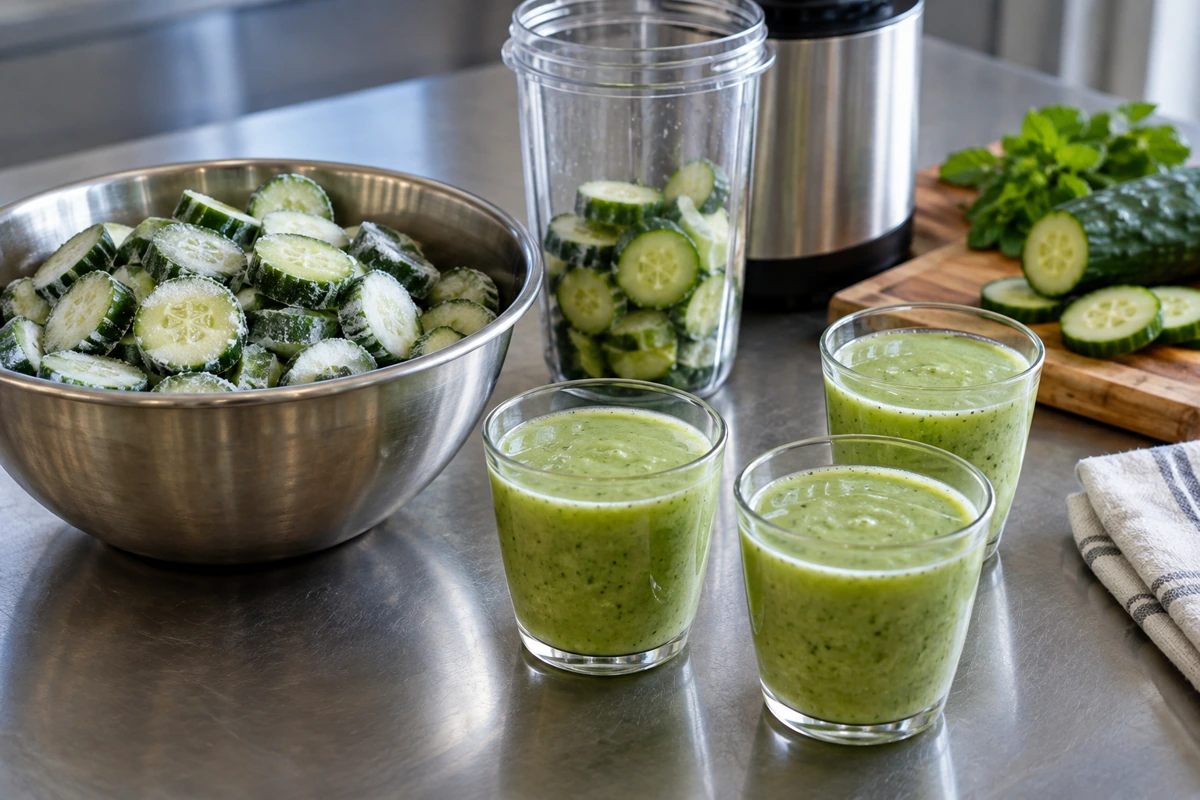
A small batch and serving cups illustrate portion recovery, which needs measurement in the actual trial.
Choose packing around normal use. A large bag may suit an industrial batch, while small foodservice portions can reduce repeated opening and weighing. Confirm the actual available format, inner-bag and carton specification, labeling needs and handling instructions. If a portion pouch is proposed, approve the portion mass and practical dosing rather than assuming that any small package automatically improves consistency.
Consider the supply period and representative variation. Ask whether samples reflect the proposed commercial product and confirm any changes that require renewed approval. A crop, preparation or cut change can matter to peel appearance and seed texture. Agree how the supplier will communicate a relevant change and what the buyer will retest. This is more useful than keeping a reference photograph without its specification revision.
At receipt, link the lot to its current documents and inspect pack integrity and frozen condition. Confirm that staff retain the preparation instructions after cases are opened. Keep an uncertain or discrepant ingredient out of the beverage route until the technical question is resolved. A cold bag and an accepted flavor sample answer only part of the program's requirements.
We help purchasing teams discuss the offered frozen cucumber supply against the actual beverage brief. Send the destination, intended process, quantity, pack and requested records with the texture goals. The next useful step is a representative sample evaluated under the agreed preparation and blending method, followed by a written acceptance that the commercial operation can repeat.
Discuss Frozen Cucumber with GreenLand-food
GreenLand-food is a professional frozen cucumber supplier and manufacturer in China, providing factory-direct wholesale supply for importers, food manufacturers and foodservice programs. We confirm the offered form, preparation status and specification against your intended application.
Send the product form, specification, packing, quantity, application, destination, private-label needs and requested documents so we can discuss a representative sample and the current supply offer.