


Can Cucumbers Be Frozen? Texture, Water Release and Suitable Uses
Oct 19, 2026
Leave a message

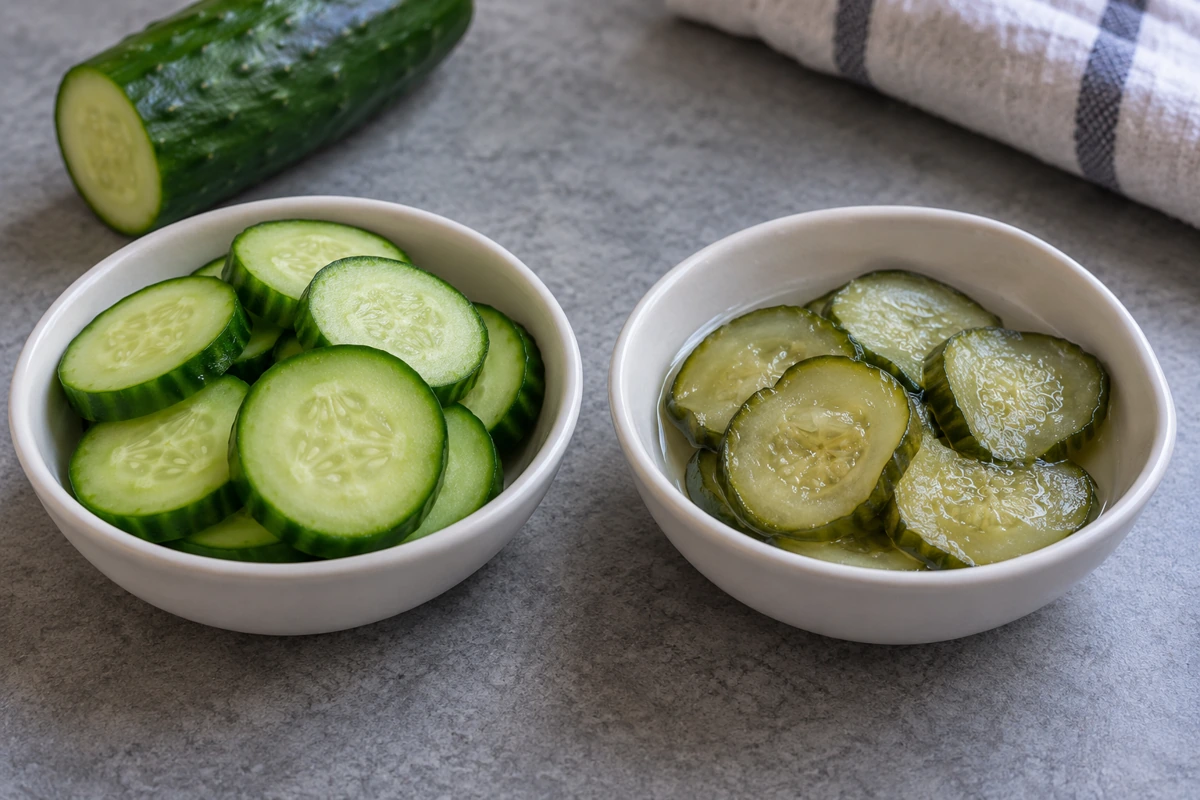
For a home cook, that means deciding the future recipe before filling the freezer. For a food manufacturer or foodservice buyer, it means approving the ingredient in the actual preparation route. Cut shape, seed-center condition, packing and the way liquid is handled all affect the useful result. We supply frozen cucumber against an agreed form and specification; the sample and its intended application determine whether that form works for your operation.
What freezing changes in cucumber
A frozen cucumber slice can look reassuringly round while it remains hard. The useful assessment begins after it reaches the condition in which it will be eaten or processed. The National Center for Home Food Preservation explains that cucumbers are among the crisp vegetables likely to become soft and limp after freezing because of changes to their water-rich tissue. Freezing preserves an ingredient while also changing its texture.
The visible consequences need separate descriptions. A slice may remain complete but bend easily. Its center may become more translucent, or the seed area may loosen while the peel rim stays recognizable. Liquid can collect below the pieces. Calling every one of these observations "mushy" gives a purchasing team very little information about the problem it needs to solve. Describe shape, resistance to handling, seed-core integrity and free liquid separately.
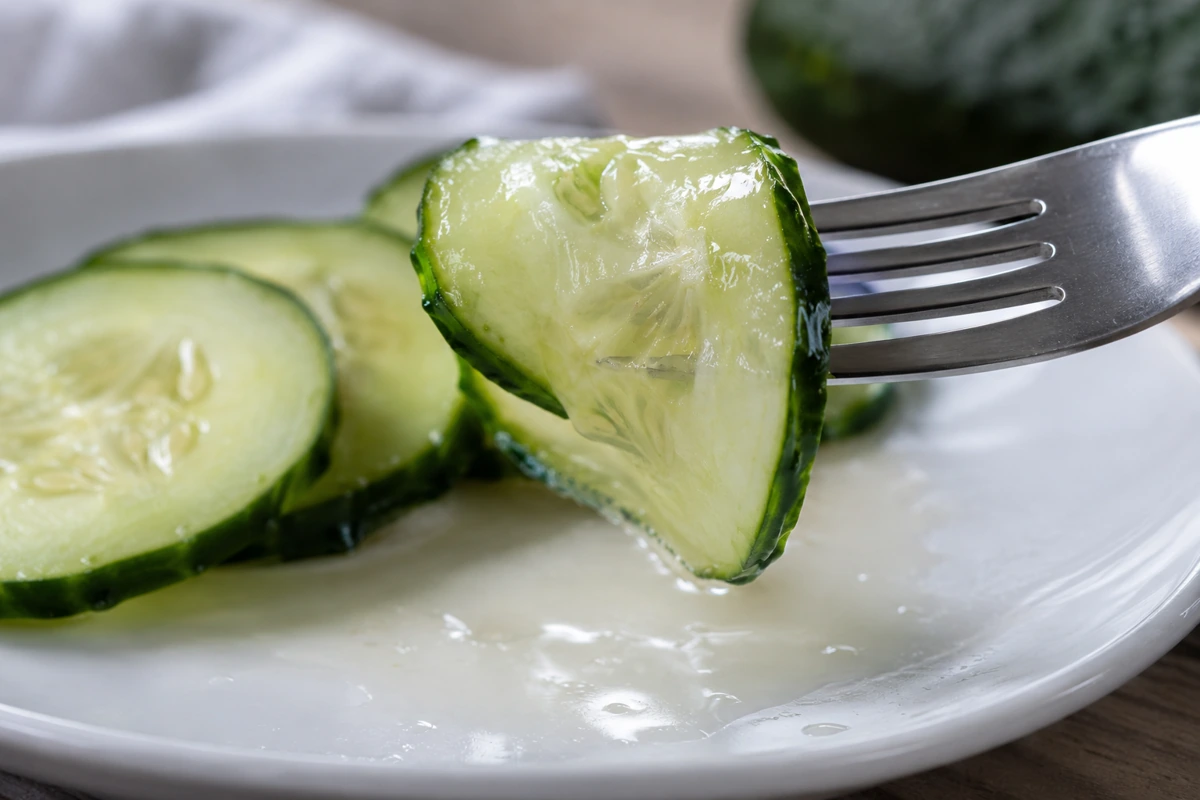
A softer round can remain recognizable while bending during normal handling.
Fast freezing and steady frozen storage matter for quality, yet they do not justify a promise that cucumber will eat like a fresh salad slice. A buyer should evaluate the actual sample rather than buying an expected texture from the letters IQF. Free-flowing pieces are useful for dosing; they do not, by themselves, establish how much liquid those pieces will release or how they will feel after preparation.
Consider the difference between recognition and bite. A green peel edge can make a cooked slice easy to recognize in a soup even when its flesh is tender. In a sandwich, the same tenderness may make the slice unsuitable because the expected experience depends on crispness and a dry bread surface. Both results can arise from the same offered cut. The finished product decides which observation matters.
It also helps to distinguish cucumber softness from damage that developed before freezing. Bruising, decay or an unsuitable raw material cannot be corrected by placing the product in a freezer. Likewise, an attractive frozen appearance cannot establish safe intended use. The technical review should identify what the ingredient is, how it was prepared and what handling it requires before the team starts improving the recipe.
For a meaningful fresh-versus-frozen comparison, start with comparable material and identify the change you want to assess. A mature cucumber with a large seed area and a smaller cucumber with a different center can already behave differently before storage. Comparing unrelated ingredients can wrongly attribute every difference to freezing. When a paired comparison is practical, keep the cut and preparation consistent, then describe the resulting change without claiming that it predicts every cultivar or commercial process.
Start with the cucumber form you actually have
Start with the ingredient named on the offer. GreenLand-food's frozen cucumber product reference describes rounds with a visible peel edge for processed applications that tolerate moisture release. We confirm the actual preparation status, cut and available packing for the order. A different form needs its own availability check and sample; a generic discussion of frozen cucumber does not establish that every form is supplied.
The diameter of a round influences how it sits in a serving spoon or feeder, while thickness influences the amount of material in each piece and the way it handles during preparation. Record both dimensions when shape matters. "Slices" can describe a wide range of products. A thin round used in a fine sauce trial should not become the approval sample for a thicker piece intended to remain visible in soup.
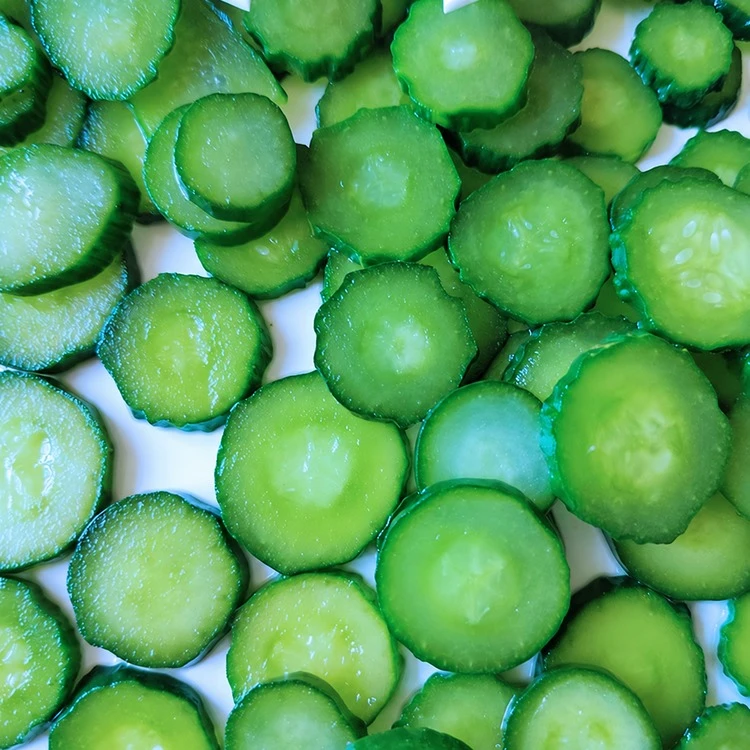
The offered product reference shows cucumber rounds with green peel edges and visible seed centers.
Peel retention deserves its own decision. A green rim helps identify cucumber in a cooked dish, but it can leave visible flecks after blending. A peeled ingredient gives a different visual result. That difference belongs in the product description and application test. It should not be left for receiving staff to infer from a small catalogue photograph or from the color of a drink made with other ingredients.
Look at the center as well as the edge. Seed size, the amount of soft central tissue and the way that area survives preparation can change the appearance of a round. If an intact disk is important, inspect the prepared piece for openings and partial collapse. If the recipe will puree everything, assess the finished mouthfeel and any screening losses. There is little value in rejecting harmless shape variation that disappears in an approved process, while accepting a central texture that causes trouble in the finished food.
For a household surplus, the same reasoning applies without a purchase specification. Cut a small amount into the form you expect to use, freeze it and try it in that recipe. Keep the rest fresh while the trial tells you whether freezing is worthwhile. A single successful use is a useful kitchen decision; a continuing commercial program needs representative samples and a repeatable method across the offered supply.
Portion appearance can also vary even when the frozen input mass stays constant. A serving made from larger rounds contains fewer individual pieces than a serving made from smaller rounds. If the customer expects cucumber on every spoonful, inspect several normal portions rather than one carefully arranged bowl. A piece count can support that observation, but it needs to be read alongside the input mass and diameter range. It should not replace the agreed net weight or turn natural size variation into an undefined defect.
Prepare small portions for the freezer
At home, begin with sound cucumber and the preparation instructions appropriate to your recipe. Wash it, remove unsuitable portions and decide whether the peel and seed center should remain. Cut pieces to a consistent form so that the trial represents what you plan to store. Freezing an intact cucumber simply postpones the cutting problem until the flesh is harder to handle and, after thawing, softer than you wanted.
For loose portions, arrange prepared pieces separately on a clean shallow tray suitable for freezing. Once firm, transfer them promptly to freezer packaging and remove excess air before closing it. University of Minnesota Extension describes tray freezing as a way to keep pieces from forming one block. That is a portioning advantage. It does not make the thawed texture equivalent to fresh cucumber.
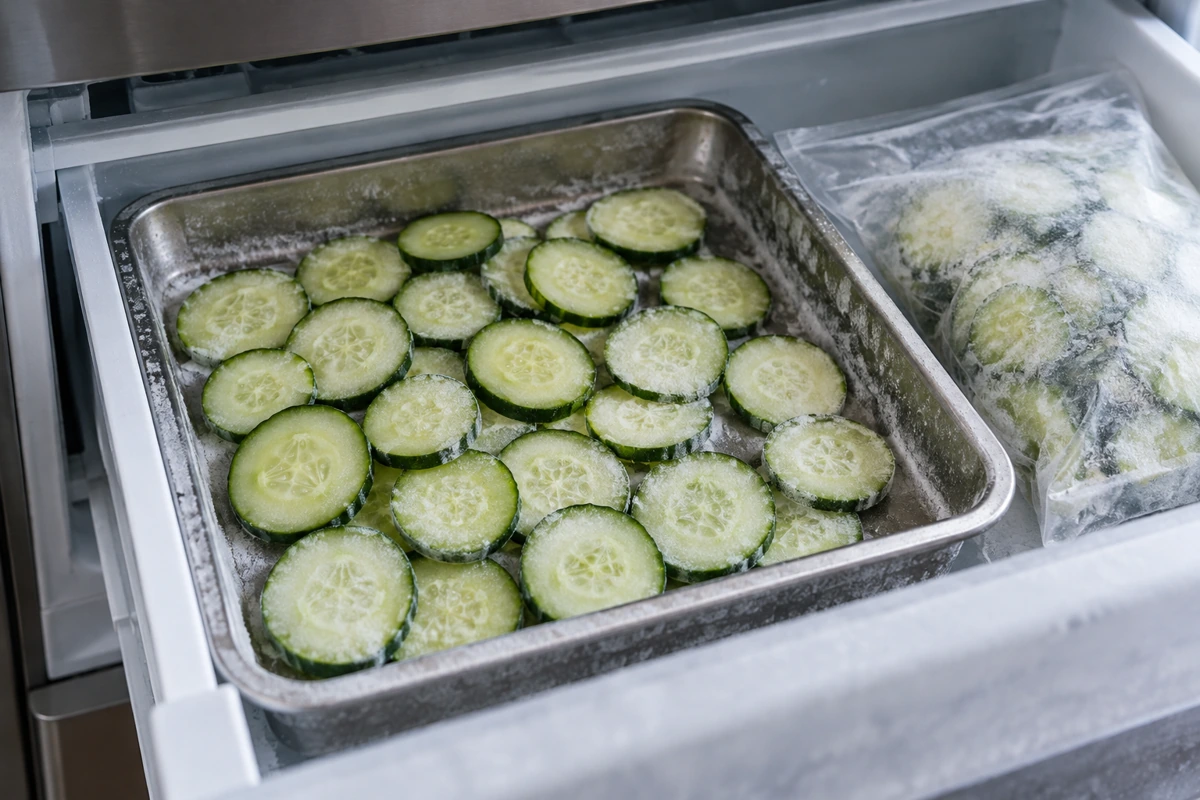
Separated pieces support small-portion retrieval; the image illustrates a home tray-freezing arrangement.
Pack in quantities that suit the planned meal. Repeatedly opening a large bag to retrieve a few pieces creates avoidable handling and makes it harder to keep the remaining product consistently frozen. A small, flat portion is easier to identify and use. Mark the contents, preparation form and date on your own package so that the cucumber is used for the recipe it was intended to serve.
Avoid converting a home preservation idea into an unverified processing instruction. A general vegetable blanching table is not a cucumber-specific industrial process. A freezer-pickle recipe includes salt, acid, sugar or other steps that give it a different identity from plain frozen rounds. If you want a marinated product, follow an appropriate tested recipe and treat its flavor and texture as part of that recipe. Do not transfer its expected result to untreated cucumber.
Use a reliably maintained freezer and follow the appliance and packaging guidance. A frozen product's useful quality depends on its preparation, package and temperature history, so one storage period should not be presented as a guarantee for every home batch or commercial pack. For purchased frozen cucumber, the current label and approved supplier specification govern storage and use. Keep those instructions with the product, especially when an opened outer carton contains inner bags with less information.
Keep a plain frozen portion distinct from a marinated or seasoned preparation in the freezer record. Its next use may depend on whether salt, acid or other ingredients were added. A package that says only "cucumber" can create an unwanted flavor or formulation change when retrieved later. If you are testing several preparations at home, make the differences clear on your own labels and use each through its intended recipe. This small record is especially helpful when the trial portions look similar while frozen.
Choose a use that tolerates a softer piece
A useful application accepts what cucumber becomes during its preparation. A cooked soup can retain visible tender rounds while using the released water as part of its broth. A puree or sauce can incorporate softer flesh, provided that its final body and flavor remain acceptable. A blended beverage can use the ingredient only when its documented preparation and intended use support that route; freezing is not permission to serve a cook-required ingredient without cooking.
Fresh salad, cucumber water and a blended drink also ask different questions. Salad needs bite and a clean serving surface. An infusion may need only flavor transfer and an acceptable appearance in water. A smoothie needs controlled particles, liquid balance and service behavior. Success in one gives little assurance about the others. Define the intended result before comparing samples, or the same product may appear to pass and fail on the same day.
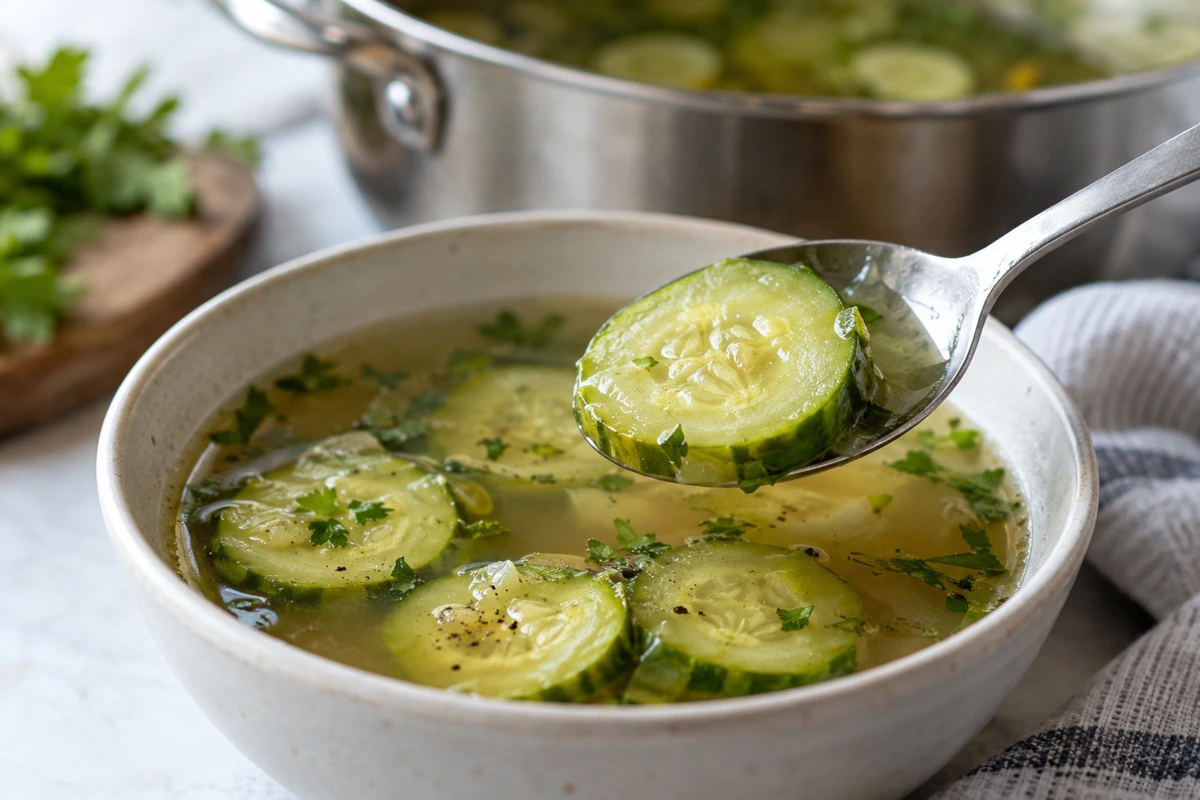
Tender cucumber rounds can remain visible in a cooked broth when the recipe accepts their softer texture.
| Use | Texture needed | Trial focus |
|---|---|---|
| Raw salad or sandwich | Firm bite and a reasonably dry serving surface | Plain thawed cucumber is normally a poor match |
| Cooked soup | Recognizable tender pieces | Shape on the spoon and liquid retained in the broth |
| Cooked puree or sauce | Acceptable particles and final body | Peel, seeds, concentration and any drained yield |
| Blended drink | Supported preparation route and controlled mouthfeel | Ingredient status, water balance, particles and service behavior |
Oregon State University Extension identifies the poor raw-salad texture of thawed cucumber and distinguishes marinated freezer products. That supports a cautious application choice. It does not establish that every cooked cucumber formula will be successful. The flavor concentration, texture of the other ingredients and the way a portion is served still need a recipe trial.
In a clear soup, inspect the round on the spoon and taste the broth after the cucumber has released liquid. In a thick sauce, look at coating and any watery edge after holding. In a puree, inspect the amount of peel visible and whether the seed area creates an unwanted sensation. These are different acceptance observations, even though each begins with the same vegetable.
A home cook may decide that a small frozen portion is useful for one family recipe. A manufacturer needs to carry that decision through processing, packing and distribution. If the finished soup is itself frozen and reheated, include those steps in the trial. If the sauce is chilled before service, assess it after the actual planned hold. Approve the condition the customer receives, including the last preparation step that can alter the cucumber's texture.
A useful comparison follows the same ingredient through the service customers actually experience. A clear broth can accommodate a recognizable tender disk; a pale sauce can make peel fragments more conspicuous; a thick blend can hide some shape differences while still exposing seed texture. Judge those effects on the actual spoon, plate or glass. Appearance in an ingredient bowl is useful background, but it should not be the only reason an application is accepted.
Test water release before fixing the recipe
A water-release trial becomes useful when another person can repeat it. For a proposed bench method, choose a representative portion from the actual sample, record its frozen mass and prepare it under a defined route. If thawing is part of that route, use the controlled conditions approved for the ingredient. Keep the container, thaw endpoint and handling sequence consistent between samples. A result obtained after aggressive squeezing cannot be compared fairly with one obtained by gentle draining.
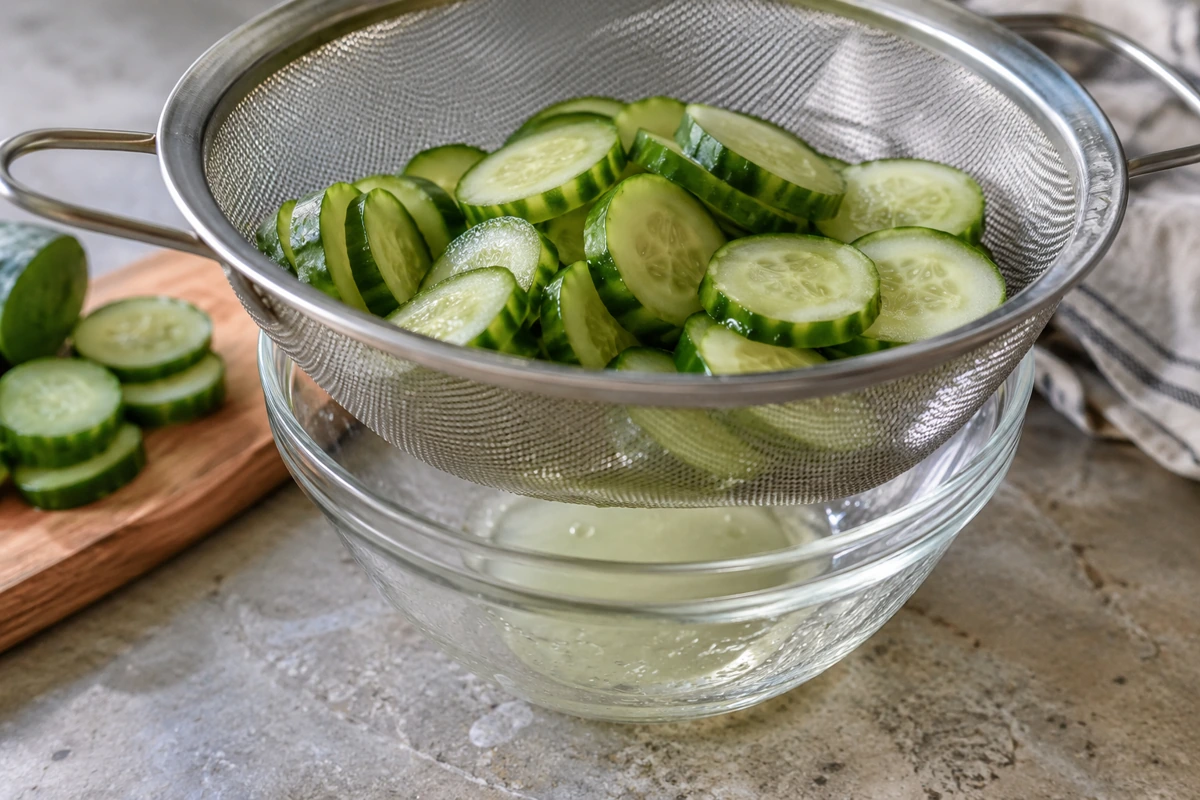
A sieve and collection bowl illustrate one drainage arrangement; any reported result needs a defined method.
If the method includes draining, record how the liquid is separated: the sieve, its loading depth, the drainage period and whether any pressure is applied. Weigh the recovered pieces and, when useful, the collected liquid. Define the denominator before expressing a percentage. Liquid mass divided by the original portion mass is a different measure from liquid mass divided by the combined recovered pieces and liquid. The number becomes meaningful through its definition and method.
There is no universal thaw-drip limit offered here. The acceptable value depends on the dish and the commercial agreement. A soup may retain the liquid, while a drained filling may discard it. The first needs control of formula water and flavor; the second needs control of recovered ingredient yield and waste handling. A low price per frozen kilogram can be misleading when much of that kilogram is discarded before the recipe is assembled.
Keep a mass balance without pretending that every gram will be recovered perfectly. Some material remains on the sieve or bowl, and evaporation or transfer can affect a small test. Note unusual losses instead of forcing the arithmetic to fit. Photographs of the prepared pieces help explain shape and appearance, but they should be tied to the written method and actual measurements if they become an approval record.
After measuring, make the intended food. A favorable drainage number can still accompany an unsuitable seed texture or weak cucumber flavor. Conversely, a sample with appreciable released liquid may work well when the formula deliberately retains it. The decision needs both the measured ingredient behavior and the finished application. Repeat a comparison when a handling difference could explain the outcome, then agree the acceptance basis before scaling the purchase.
If costing is part of the trial, write the calculation in the same terms as the kitchen uses. A process that discards liquid should record recovered ingredient mass before the remaining recipe ingredients are added. A process that retains everything should record the final dish output and normal portion. These approaches give different useful yields. Comparing only the weight of a prepared bowl can hide that difference, especially when extra water or another ingredient was added during the test.
Keep portioning and frozen condition consistent
Frozen condition affects how smoothly a cucumber ingredient enters the kitchen or line. Examine whether the pieces are loose, lightly joined or present in larger clusters. Record visible surface ice and packaging damage separately. These observations can help identify a handling problem, but a cluster or photograph alone does not establish the complete temperature history. Review the available records and the current product specification together.

Loose portions can be easier to retrieve than a joined mass; confirm the actual frozen condition and packing.
Choose a pack that fits normal dosing. A large industrial bag can be practical for a mixer that uses its contents promptly. A foodservice operation making small batches may need a different inner-pack size so that staff can retrieve a portion without leaving the rest exposed. The relevant quantity is the amount used in a normal production or service interval, along with the operation's approved handling practice.
Net weight and usable yield answer different purchasing questions. Confirm what the offered net weight represents, including any added ingredients or liquid, and evaluate recoverable material under the approved preparation. If the operation uses all the cucumber and its released water, the costing method differs from a process that drains and rejects part of the mass. Agree the convention so that suppliers and buyers compare the same thing.
At receipt, retain the link between the delivered case, inner bag and sample lot. Check seals, readable identity and the declared storage and preparation instructions. An inner bag that becomes separated from its outer carton should still be manageable under the buyer's traceability system. If information is missing or conflicts with the specification, resolve it before use rather than treating a familiar product name as sufficient identification.
Opened-pack practice belongs in the operating procedure. Decide how a remaining portion will be protected, identified and kept under its approved condition. Do not repeatedly thaw cucumber to make it easier to scoop. If the offered form cannot be dosed through the intended equipment without that workaround, revisit the form or packing choice. A compatible pack and portioning method can be more useful than an attractive photograph of individually separated pieces.
A portioning trial can reveal a packing mismatch before the first commercial order. Ask the intended operator to retrieve the normal input using the available equipment and approved handling practice, then observe time, spillage and remaining product condition. This is a proposed practical check, not a completed facility trial. Include the normal opened-pack routine rather than a special demonstration with an untouched sample. If the process depends on unusual intervention, discuss a different pack or confirmed form while the program can still be adjusted.
Approve a sample against the finished application
For commercial supply, define the finished application in the enquiry. Explain whether the cucumber will be visible, pureed, drained, cooked or used in a beverage, and whether the process includes a subsequent safety treatment. The frozen cucumber category can frame the product discussion, while the current written specification resolves the order. An application name such as "smoothie" is not enough to establish ingredient suitability.
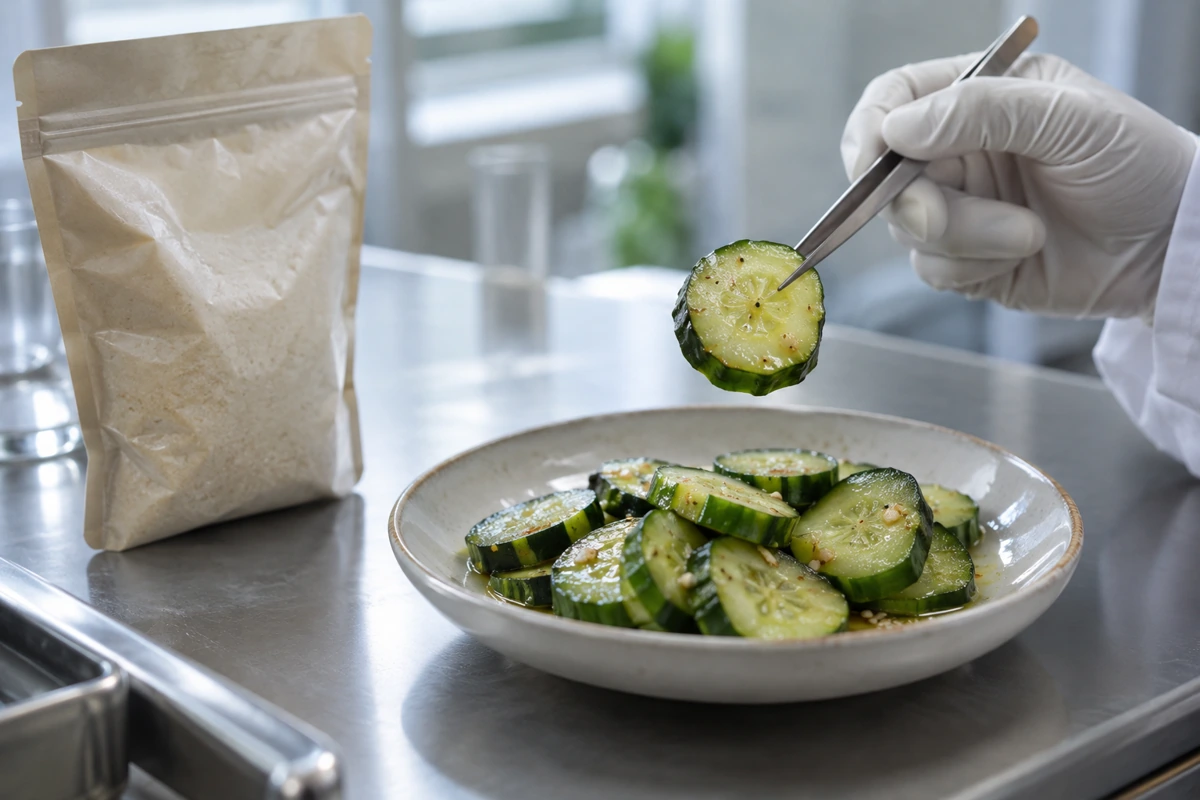
Illustrative sample review of cooked cucumber shape and edge integrity.
FDA's ready-to-cook guidance explains why required cooking directions still matter for frozen food. Confirm the status of the exact ingredient and follow its supported route. A taste panel should not begin with an uncertain no-cook product. The buyer's technical team needs to resolve that admission question before treating a delicious trial as an approved formulation.
Request a sample that represents the offered cut, preparation, packing and supply period. Keep its identity, specification revision and preparation method together. Record the result in the terms that affect the application: intact rounds, peel and seed appearance, recovered mass, released liquid, flavor and performance after the planned hold or reheating. The sample approval should say which of those observations are required and which are informative.
If a result is weak, identify the cause before changing several variables at once. A sauce can appear thin because more liquid entered, because the base formula changed or because the serving temperature differed. A round can break because the cut changed or because it was stirred more forcefully. A focused repeat makes the supplier discussion more productive and prevents a recipe adjustment from hiding an ingredient inconsistency.
We help purchasing teams turn those observations into a practical order brief. Confirm the required form, proposed acceptance method, inner bag and carton, quantity, destination, sampling needs and requested documents. Lead time and availability are agreed against that actual request. Keep the approved preparation beside the specification so that future receipts are judged in the same way. The useful question then becomes whether this frozen cucumber works consistently in the food you intend to make.
The approval record should be usable by someone who did not attend the tasting. Include the ingredient identity, the application, the method revision and a clear description of an acceptable prepared result. State which observations trigger a repeat trial or supplier discussion. Retain any actual sample photographs with their context. A purchasing or quality colleague can then reproduce the decision with the specification and method in hand.
Discuss Frozen Cucumber with GreenLand-food
GreenLand-food is a professional frozen cucumber supplier and manufacturer in China, providing factory-direct wholesale supply for importers, food manufacturers and foodservice programs. We confirm the offered form, preparation status and specification against your intended application.
Send the product form, specification, packing, quantity, application, destination, private-label needs and requested documents so we can discuss a representative sample and the current supply offer.