


What Are Haskap Berries? Honeyberry Names, Taste and Food Forms
Oct 19, 2026
Leave a message

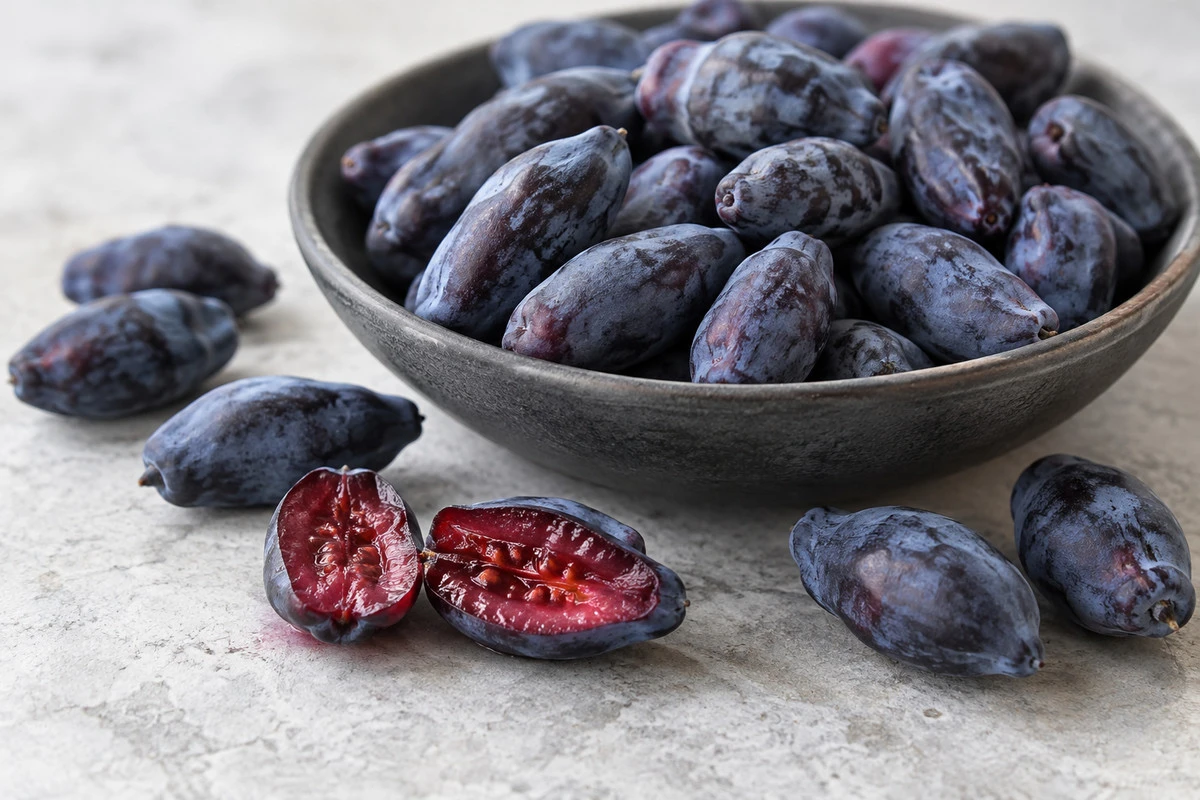
For a food business, the next question is which form to use. Whole frozen fruit can provide a recognizable inclusion; crushed fruit and puree distribute flavor and color differently; strained juice removes much of the visible fruit structure. A good choice starts with confirmed identity and the finished food you want to make. The sections below explain those differences and the information needed to turn an unfamiliar berry into a workable ingredient.
Haskap, honeyberry and the identity behind the names
Haskap and honeyberry are common names used within the edible blue honeysuckle trade. Their use has a horticultural history, and a seller may use one name more narrowly than another. A food manufacturer should therefore connect the common name to a botanical declaration and the particular source material. The University of Saskatchewan fruit program identifies its haskap resources under Lonicera caerulea and separates cultivar information from processing information.
This is especially useful when an ingredient travels through several languages and trading companies. A local crop name, a translated product name and an English invoice description can refer to the same material, but that relationship needs a source record. Ask which name appears on the grower or processor documentation and how it connects to the packing lot. A scientific name typed into a quotation without that connection adds little confidence.
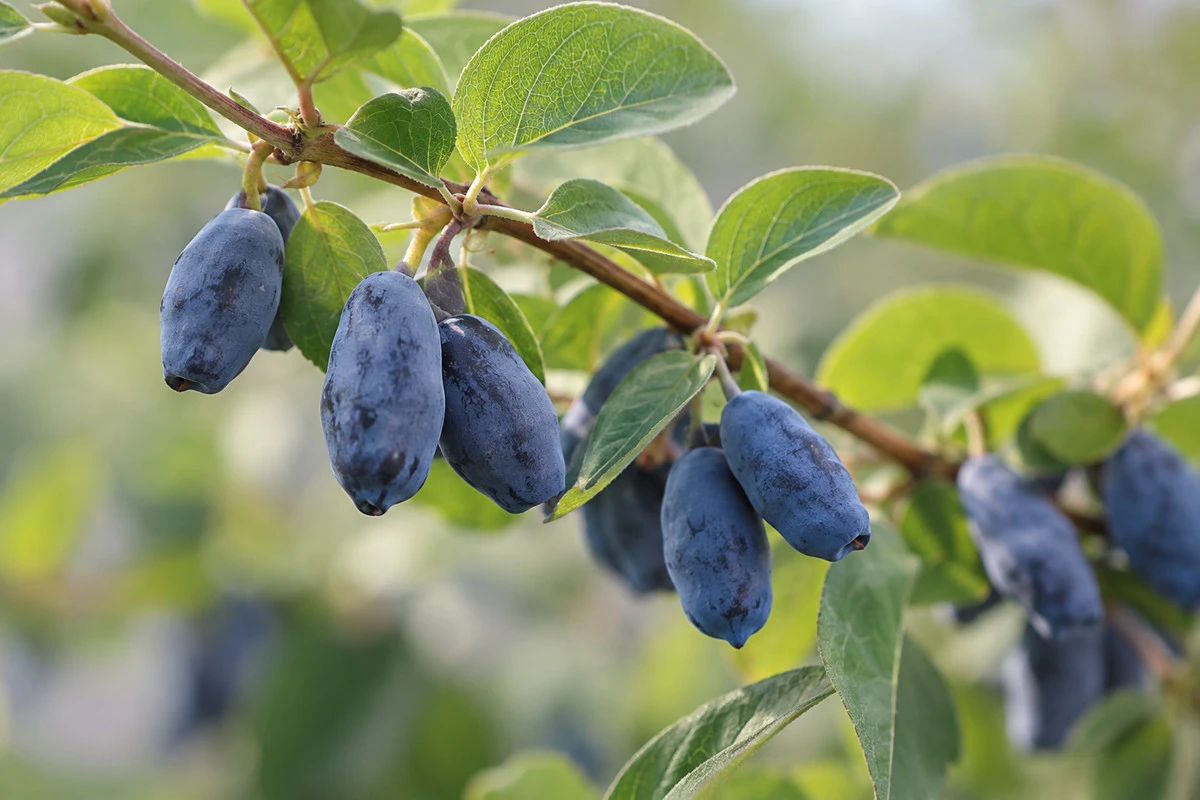
A cultivated blue honeysuckle scene illustrates the plant context; source records establish an ingredient's identity.
The wider honeysuckle family contains plants with different food suitability. Buying edible cultivated fruit through an identified food supply chain avoids the uncertainty of recognizing an ornamental or wild plant from a photograph. This article describes an established food crop; it provides no basis for collecting or eating unidentified honeysuckle berries. An image can illustrate an appearance while leaving the underlying species record unresolved.
Cultivar is a second layer. It may help explain fruit shape, picking behavior or sensory variation, but a familiar cultivar name does not establish the condition of the lot in front of you. If cultivar identity is essential to a retail claim or a development brief, it should appear in the agreed records. Where mixed cultivars are acceptable, describe that arrangement rather than asking the packing operation to supply an undocumented single-cultivar story.
The word honeyberry can also create an expectation of honey-like sweetness. Treat the name as identification language. Taste the approved fruit preparation before designing a sweetness claim or choosing a dose. A purchasing team that first learns the ingredient through a sweetened retail product may otherwise assume that the unsweetened frozen input will have the same balance. Keeping the ingredient name, formulation and sensory description separate makes the first development discussion much clearer.
Recognizing the fruit and its delicate skin
A typical haskap berry is a small blue fruit with an irregular outline, often longer than it is wide. The outside may carry a pale natural bloom. Shape can range beyond the narrow fingerlike examples often used in publicity. Utah State University Extension describes substantial cultivar variation, including rounder and oblong fruit. A rigid visual template based on one photograph would exclude some legitimate forms and still fail to authenticate an unknown fruit.
The thin skin and tender interior matter once the berry becomes an ingredient. Whole fruit can look intact while frozen, then soften and release strongly colored liquid during handling. Small seeds may remain perceptible in a smooth preparation even when they are unobtrusive in a whole berry. The practical question is whether the skin and seed texture fit the eating experience, rather than whether the fruit has an attractive frozen appearance alone.

Published product photograph of dark elongated berries in a bulk liner. Commercial identity requires confirmation from source records.
Look closely at the picking end and the surfaces of separated fruit. Some berries may show a small opening or a split; others may have skins folded against nearby pieces. These observations help describe physical condition. They do not tell you when damage occurred or establish a temperature history. A berry damaged during harvest, a mechanically crushed berry and a fruit that softened during handling require different evidence if a commercial concern needs investigation.
The published GreenLand product photograph here shows dark elongated fruit in a bulk liner. It supports a discussion of packed form and visible condition. The source page retains a requirement to confirm the commercial identity from source records, so the photograph should not be used to authenticate a species or cultivar. We would resolve that identity before using the material for a product declaration or an application approval.
For an inclusion that remains visible, retain an agreed picture of the acceptable fruit alongside a written description. Show the condition in which the fruit will actually be judged: frozen, thawed under an agreed method, or incorporated in the food. That reference can capture a natural range of shape and surface bloom without suggesting that every berry must look identical. It also helps the receiver distinguish an expected agricultural variation from an appearance that needs a closer review.
What haskap tastes like, and why lots vary
Haskap is commonly described through familiar berry flavors, with sweetness, acidity and a characteristic tartness. Those descriptions are useful introductions, but they cannot predict the balance of a commercial lot. University of Wisconsin Extension describes a berry flavor with an added tang and discusses its use in several processed foods. For formulation, the more useful description is the one produced in your chosen base at the intended fruit level.
Begin sensory work with the same preparation for each sample. A very cold berry can seem firmer and release flavor differently from a fully thawed one. If one sample is sweetened and the other is unsweetened, the comparison is about two preparations as well as two fruit lots. Agree the serving temperature, fruit concentration and base before discussing which sample tastes stronger. That keeps later recipe changes tied to a known starting point.
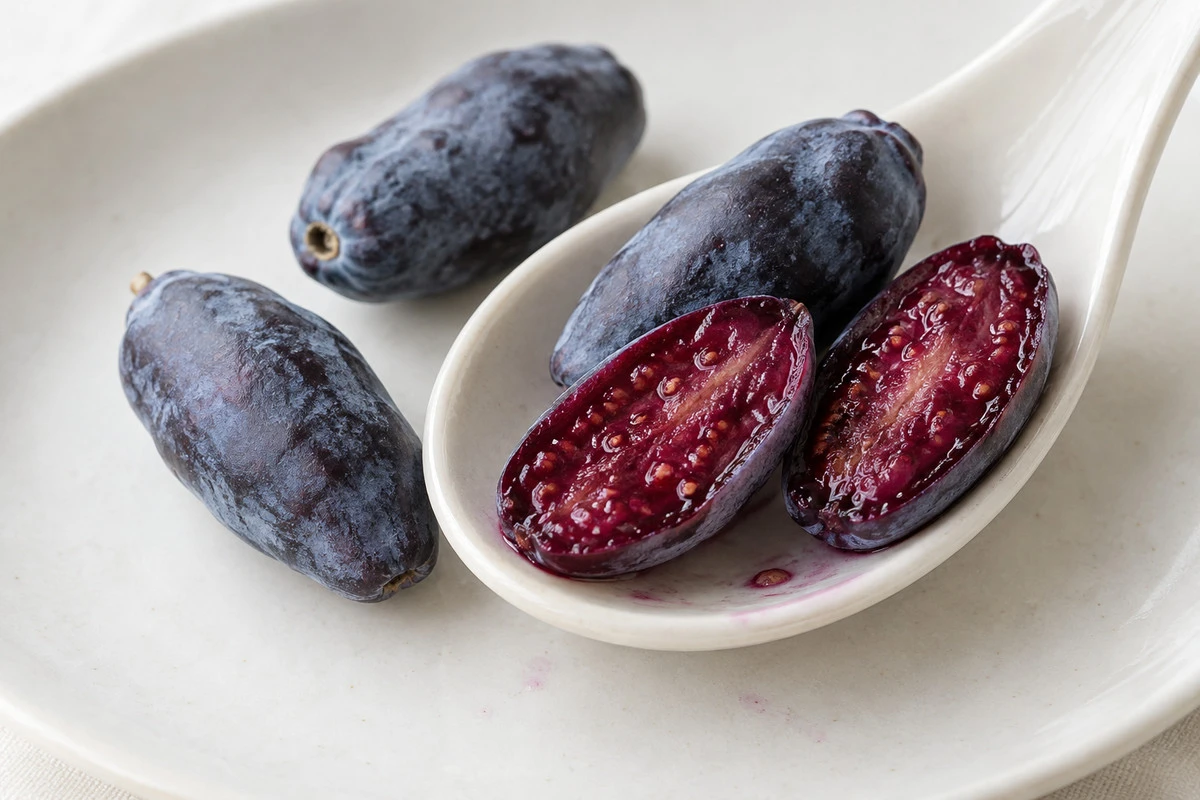
The cut fruit illustrates a thin skin, colored flesh and small embedded seeds.
Maturity and cultivar should remain visible in the discussion. A blue exterior alone is an incomplete maturity assessment. When a supplier provides maturity information, connect it to the sensory condition of the approved sample and any measurements chosen for the recipe. Avoid converting a general harvest description into an exact sweetness promise. The crop, handling and formulation all contribute to the flavor that reaches the finished product.
Soluble solids and acidity can help explain differences, but they answer different questions. A soluble-solids reading is influenced by the prepared sample and its dissolved components. Acidity and pH describe other aspects of the system. If those measurements matter, specify how the sample is prepared, the measurement temperature and the analytical basis. Numbers from different sample preparations can look comparable while representing different material.
A useful early tasting can compare the fruit in a simple unsweetened preparation and then in the intended sweetened base. The first view helps the team understand the ingredient; the second establishes whether the formula needs adjustment. Record a clear sensory description such as persistent tartness, obvious skin texture or a mild berry note. A preference ranking alone gives the supplier little guidance about what must stay consistent in the next lot.
Set the acceptable range around the food's purpose. A concentrated fruit layer in a sweet pastry can tolerate a different acid impression from a lightly flavored beverage. A cultured dairy base introduces its own acidity and aroma. Approval should therefore include a finished-food reference when possible. The same haskap lot can perform convincingly in one application and require further development in another, even when its raw-fruit measurements are unchanged.
Whole berries, crushed fruit, puree and juice
Whole frozen berries retain the identity of individual fruit. If they are supplied in a free-flowing format, a kitchen or line can remove part of a pack while keeping the balance frozen. The phrase whole still needs a physical definition: it may describe the original fruit form while allowing an agreed proportion of splits or broken skins. Confirm the packed condition and intended use rather than relying on a product name to define every acceptance point.
Crushed fruit keeps more visible structure than a smooth puree. Pieces of skin, seeds and uneven fragments can contribute a rustic appearance and a different mouthfeel. That can work well in a fruit layer or cooked spread. For equipment, however, the largest remaining fragments may matter as much as the average consistency. A sample should pass through the intended pump, depositor or screen before the format is approved for routine production.
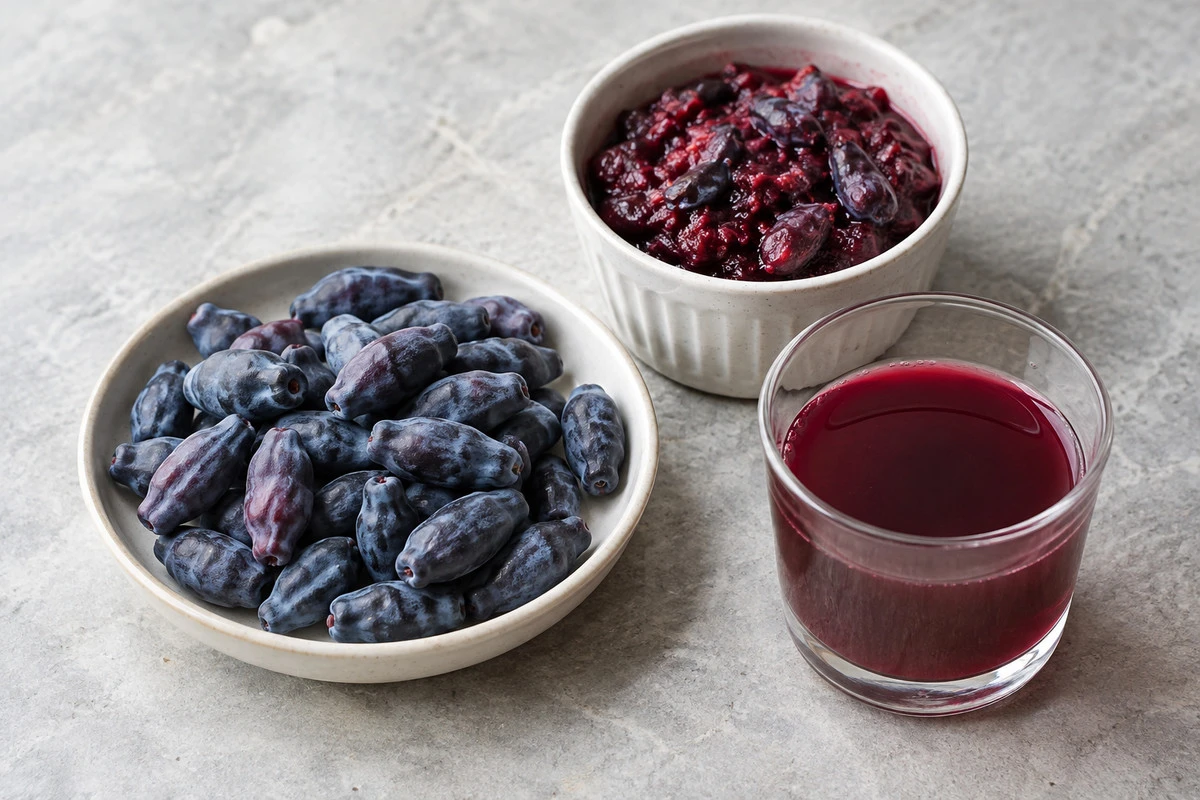
Whole fruit, crushed fruit and strained juice retain different amounts of visible fruit structure.
Puree brings the fruit into a more uniform mass, but the word does not specify a screen size, seed content or heat treatment. Two purees can differ in texture and behavior even if both are described as unsweetened haskap. Clarify whether the material is whole-fruit puree, whether it has been screened and what additions or processing steps apply. The ingredient statement and the process record complete the physical description.
Juice and strained beverage bases serve a different purpose. Removing skins or coarse solids changes the fruit fraction carried into the liquid and creates a separate material stream. A buyer should know whether the product is direct juice, a sweetened base, a concentrate or a reconstituted ingredient. Color intensity in a clear glass cannot establish that identity. A concentrated product also needs its own dilution basis before its price is compared with whole frozen fruit.
Dried pieces and freeze-dried powders may appear alongside frozen haskap in the wider market. Their water content, handling and dose are different, so substitution needs a formula calculation and a trial. A spoonful of powder cannot be compared with the same spoon volume of juicy berries. The illustrations describe possible food forms; availability from GreenLand-food depends on the confirmed SKU and quotation. Our frozen fruit range provides the sourcing context for discussing an actual frozen input.
Matching the fruit to the finished food
Start application development by deciding what the customer should see and feel. In a pastry with a visible fruit layer, some recognizable pieces may be valuable. In a smooth beverage, those same skins and seeds can create an unwanted sensation. A fruit preparation for yogurt may sit between those requirements, combining a consistent base with a controlled amount of fruit structure. The required form follows that eating experience.
Bakery work should consider where the juice goes. A filling can retain liquid within its own structure, while fruit mixed through batter distributes moisture and color into a much larger mass. Neither result can be predicted from a bowl of frozen berries. Evaluate the intended bake, cooling period and serving condition. Cut the finished food and examine fruit distribution and the surrounding crumb as well as the appearance on top.
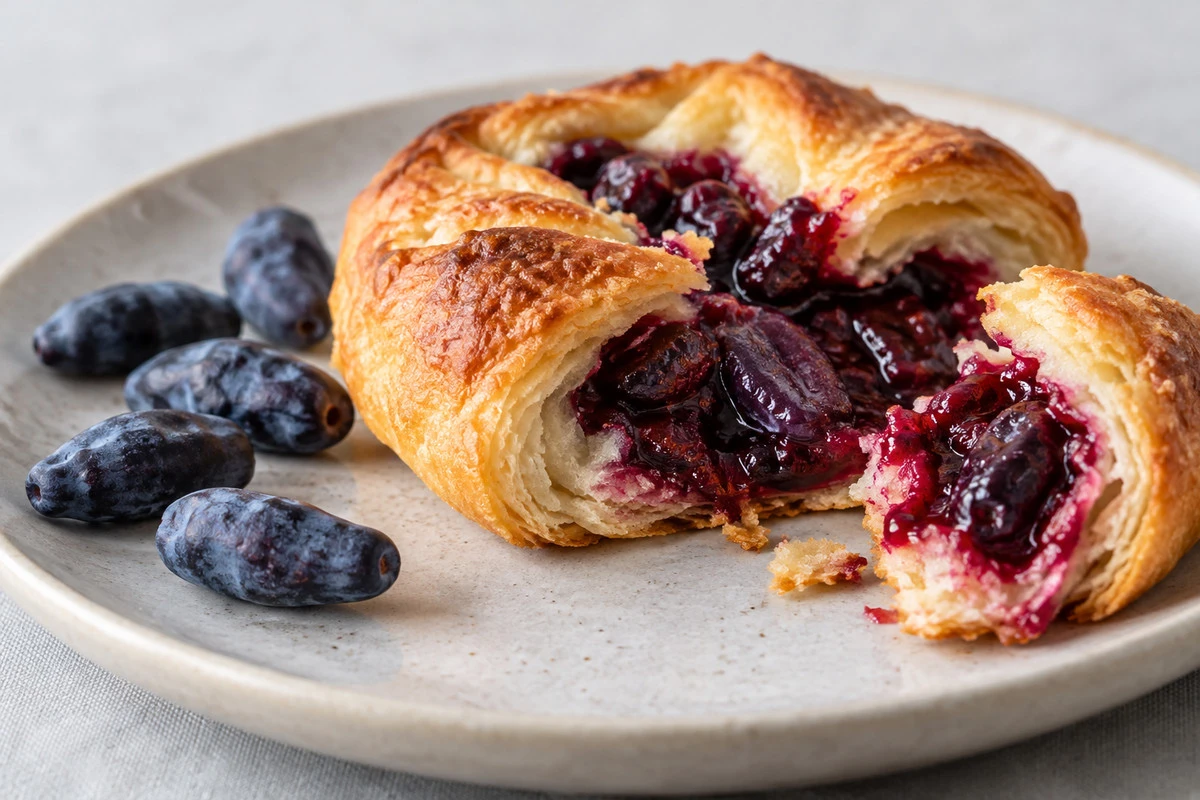
A cooked fruit filling illustrates how softened berries can remain visible within pastry.
A jam or cooked fruit layer can make use of softened fruit, provided its identity, condition and safety requirements are acceptable. The development task includes balancing fruit, sugar, acidity and the chosen gelling or thickening system. A berry's reputation for strong color says little about the final set. For shelf-stable products, use an appropriate established or validated process; an attractive thick spread is not evidence that a storage method is safe.
In yogurt and ice cream, the fruit preparation enters an already structured food. Consider whether the process uses a smooth blend, a ripple or discrete pieces, and where the ingredient is added relative to the controlled process steps. Fruit intended for addition without a later effective treatment needs suitable controls for that route. A raw frozen berry and a prepared fruit ingredient approved for direct addition cannot be assumed to have the same use status.
For drinks, define the desired amount of visible material and the expected service period. A screened liquid, a cloudy fruit drink and a drink with suspended fruit pieces need different physical targets. Observe settling, foam, flavor and color in the actual diluted formula. A concentrated sample can look rich and convincing while becoming too weak or too acidic at the commercial serving dose. The trial should include that final dilution.
Commercial grade can then reflect the process. A line that breaks down all fruit may have less reason to pay for a very high intact-fruit share, while a visible inclusion program may justify it. That judgment requires a sound, suitable ingredient in both cases. Lower presentation requirements do not make decay, foreign material or unresolved identity acceptable. We can discuss a sample and form against the finished-food target before setting a repeat-order specification.
Frozen handling and the intended use
Freezing keeps an ingredient available beyond its fresh harvest window and allows controlled portioning, but the route through storage and use still matters. Protect sealed packs, keep lot identification readable and avoid unnecessary warm handling. If only part of a pack is required, remove the scheduled quantity with clean equipment and return the balance promptly to its specified frozen storage. The working instruction should fit the pack and production schedule.
Freezing does not provide a general microbial kill step. University of Minnesota Extension's fruit-freezing guidance explains that microorganisms may survive frozen storage. For a commercial haskap ingredient, confirm whether the approved route includes cooking, another effective controlled treatment, or addition without further treatment. Washing and a satisfactory visual inspection do not establish the suitability of that last route.
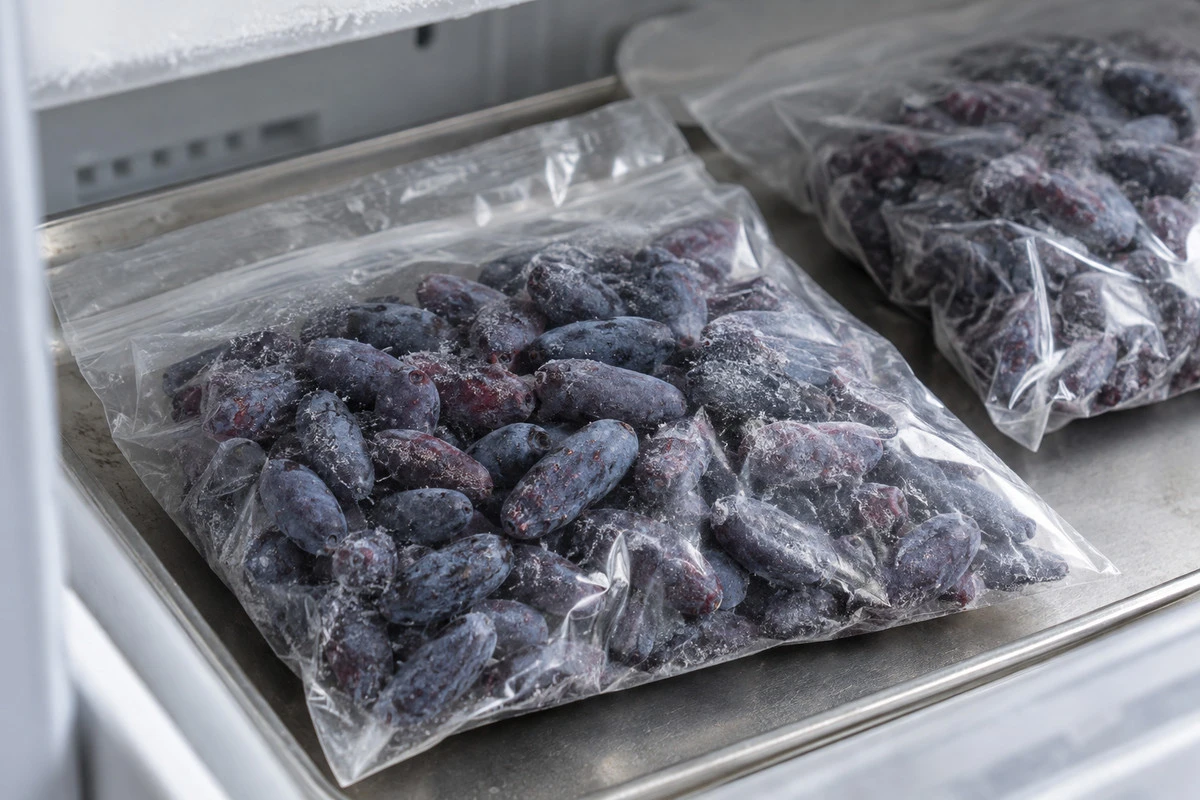
Sealed small portions illustrate a way to organize frozen fruit handling.
A thawing method should also match the job. For a cooked preparation, the process may be designed to receive frozen fruit. For a measured sensory or physical comparison, controlled refrigerated thawing can make the sample condition more reproducible. In either case, keep time, temperature, vessel and handling consistent with the approved procedure. A small laboratory dish and a deep industrial container have different heat-transfer conditions, so the same clock time need not create the same endpoint.
Released purple liquid is part of the material balance. Decide in advance whether it stays with the fruit, is incorporated elsewhere in the formula or is excluded under a defined method. Draining one sample heavily while using all liquid from another creates a different ingredient comparison. It can change the fruit dose, the amount of water added to the base and the flavor delivered per portion. Retain the preparation record with any reported yield.
Frost, clumps and damaged liners deserve a recorded review, especially when they interfere with dosing or suggest a handling concern. They cannot reconstruct the entire temperature history by themselves. Connect physical observations with the relevant storage and transport records. If a lot needs investigation, preserve the packaging identification and representative material before it is mixed into production. That evidence is far more useful than a photograph taken after the original packs have been discarded.
Shelf life belongs to the actual product, pack and storage conditions. A household berry-storage recommendation should not become a commercial warranty for a different pack or preparation. Agree the production date, remaining life at receipt and the basis of the declared life with the supplier. The receiving and production teams then work from the same frozen ingredient description instead of relying on a broad expectation that all berries last equally well.
What to confirm before ordering a haskap ingredient
The first commercial description should connect four things: confirmed fruit identity, supplied form, intended food and packing. For example, a developer might seek unsweetened whole frozen edible blue honeysuckle fruit for a cooked fruit preparation, with the final identity supported by source records. That sentence gives the supplier a useful starting point without inventing a cultivar, grade or ready-to-eat status that has not yet been confirmed.
Our frozen haskap product page describes the marketed whole elongated form and the need to confirm its identity and order basis. We would review the source declaration and the selected supply lot before finalizing an ingredient name or label. The public listing provides a route for that discussion; it is not a substitute for the order's supporting evidence.
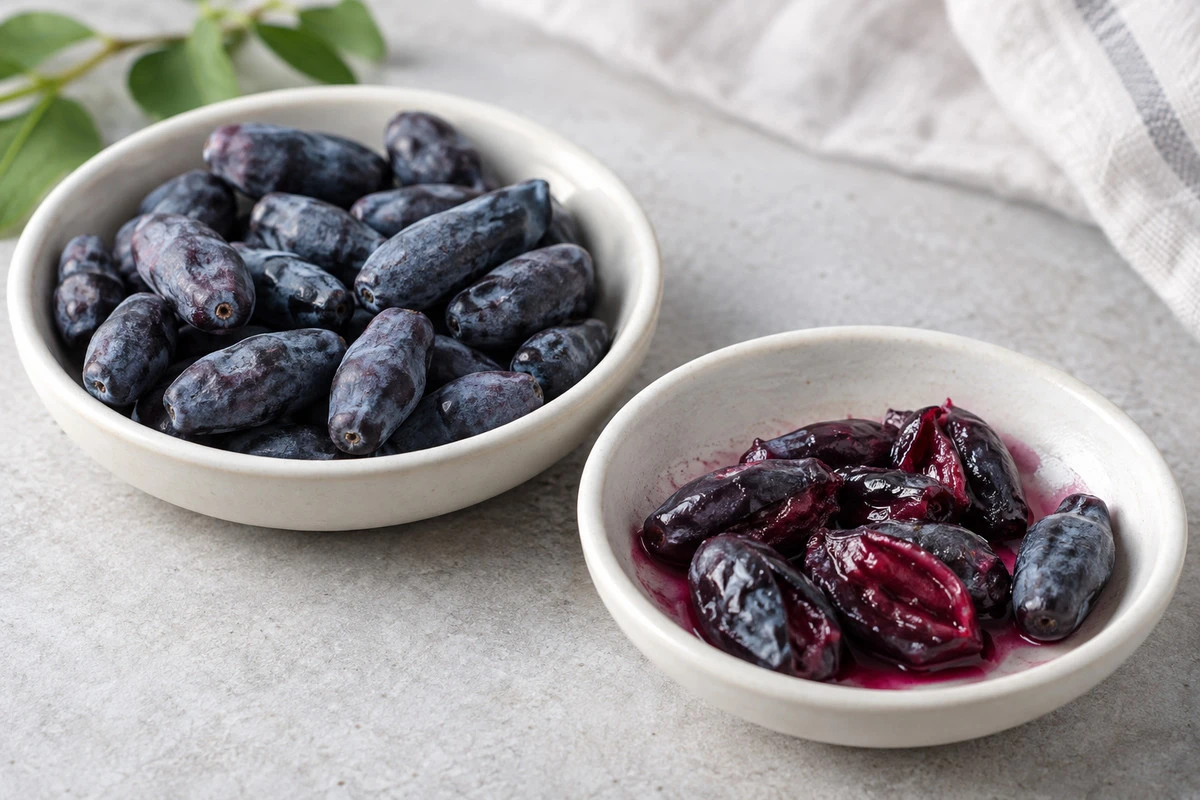
Illustrative intact and split fruit show why a whole-fruit description needs an agreed physical condition.
Once identity is resolved, choose the attributes that actually affect the application. Whole-piece condition can matter in a visible inclusion. Texture and coarse fragments can matter in a screened preparation. Flavor and acidity may guide the dose in a beverage or dairy base. Ask for the measurements needed to interpret those requirements, with their sample preparation and units. An extensive list of numbers is useful only when the team knows which decision each number supports.
Approve the sample in the condition supplied and in the intended food. Keep enough description to repeat that evaluation when the next lot arrives. If a supplier changes the fruit source, cultivar mix, processing route or pack, agree which changes require review. Some changes may have little effect on a cooked smooth base yet matter greatly to a recognizable whole-fruit inclusion. The scope of approval should follow those consequences.
Packing discussions can stay practical. Tell us whether the fruit will be removed in small portions, tipped into a kettle as a full unit or repacked for another channel. That helps establish a useful bag or carton size and the protection needed during handling. Quantity, destination and the planned production window then allow the quotation to address supply timing and the requested document set. Exact pack options and lead time remain subject to the confirmed program.
When comparing offers, relate the ingredient price to usable output in the finished food. A cheaper lot may need a higher dose, more screening or extra handling; an expensive presentation grade may add little to a fully processed product. Use the same recipe and preparation basis for that comparison. A well-defined haskap ingredient gives the purchasing and development teams a common reference for the next order, including what the fruit should contribute and how its suitability will be checked.
Continue reading about frozen fruit ingredients
Understand what separate frozen pieces contribute to portioning and which product requirements still need agreement.
Connect fruit specifications, packing, temperature evidence and application checks across the supply chain.
See why a soluble-solids reading alone cannot describe a fruit ingredient's sugar profile or sensory balance.
Discuss Frozen Haskap Berries with GreenLand-food
GreenLand-food is a professional frozen haskap berries supplier and manufacturer in China, providing factory-direct wholesale supply for food manufacturers, importers and foodservice programs. We confirm the selected product identity and order basis before making an application commitment.
Tell us your application, preferred form, packing, quantity and destination. We can help confirm the specification, private-label needs and requested documents for your program.