


Frozen Broad Bean Size, Skin and Maturity: A Buyer Quality Guide
Oct 19, 2026
Leave a message

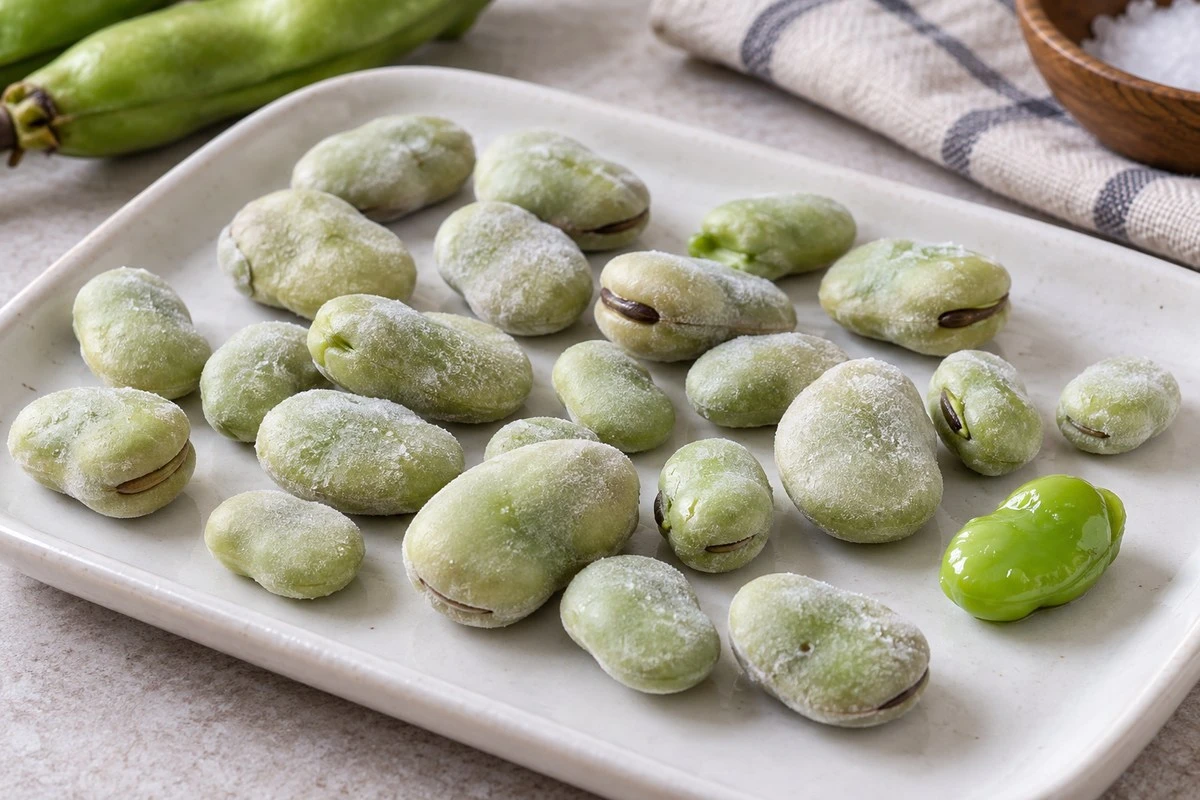
This guide concerns frozen green shelled broad beans, also called fava beans, with their individual seed coats retained unless the specification says otherwise. The pod has already been removed. Dried mature fava beans and peeled frozen cotyledons need different reference descriptions. As North Carolina State Extension's botanical profile illustrates, Vicia faba seeds are flattened rather than spherical, and the crop is used at different stages for green vegetables and mature dry seeds. Those distinctions matter when a quotation offers only a size number and a grade name.
When we discuss a broad-bean program with a buyer, the most useful starting point is the finished dish. A visible vegetable side, a mixed rice meal and a smooth puree can accept different appearances and textures. The specification should protect that intended result without adding an expensive restriction that changes nothing in the food.
Define size without treating it as a maturity grade
Size is valuable because it influences portion appearance, distribution and the consistency of a cooking trial. It is also relatively easy to misunderstand. A broad bean has a length, width and thickness. Two beans can look equally broad from above while having different thicknesses. A photograph beside a ruler may communicate approximate scale, but it does not establish the measurement that a supplier used to assign a size category.
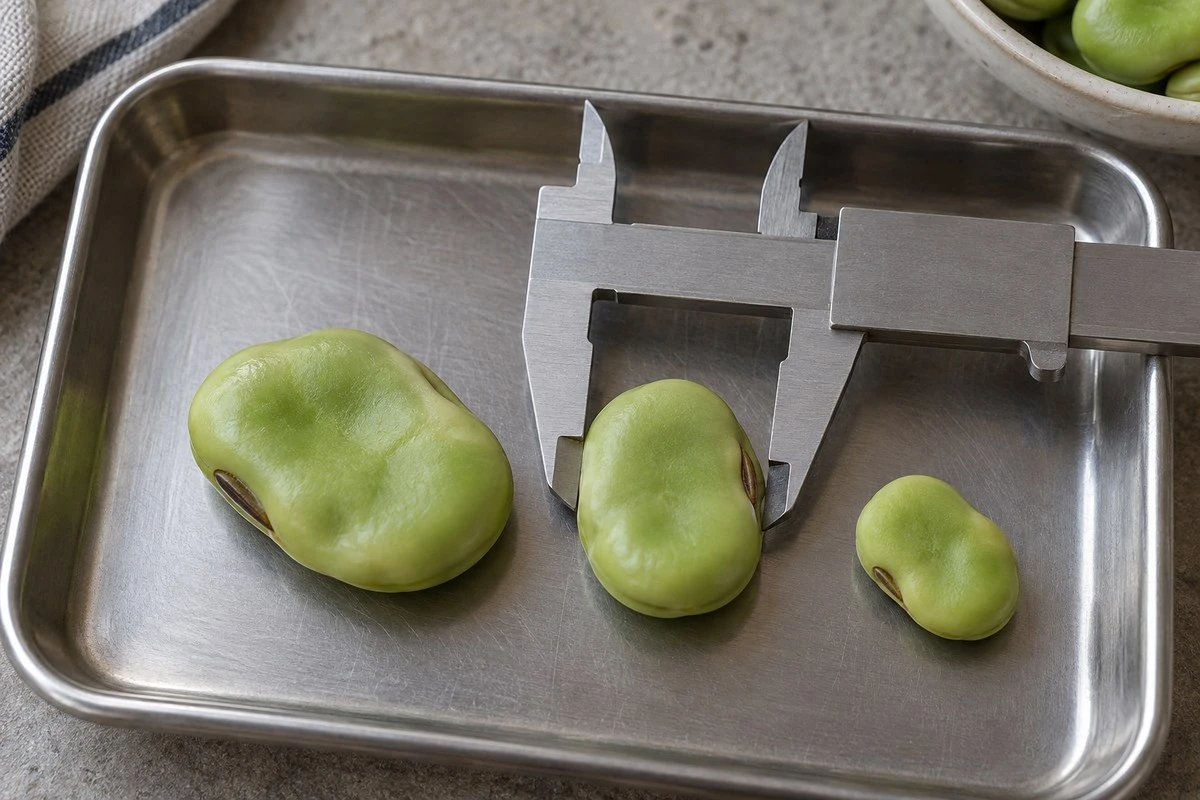
Broad bean width observed separately from its length and thickness.
Ask whether a quoted range comes from a sieve, an individual dimension or another documented method. If a sieve is used, identify the aperture shape and the procedure, because an irregular flattened seed can pass an opening in more than one orientation. If a caliper is used, define where and in which direction the measurement is taken. A width measurement should not later be compared with a supplier's thickness measurement as though both describe the same distribution.
The condition of the sample belongs beside that method. Record whether the beans are frozen, thawed for inspection, or cooked, and how surface ice is handled. Measuring a frost-covered frozen seed and a drained cooked seed can produce different observations. Inspection preparation should be consistent and should not replace the storage or cooking instructions for the product. Keep the portion used for measurement separate from material that will return to production.
A size band also needs an agreed allowance for material outside it. A sample average hides the spread: a mix of very small and very large beans can have the same average as a much more uniform lot. Ask for the distribution and the basis on which it is calculated. A proportion by number answers a different question from a proportion by weight. Larger beans contribute more weight per piece, so switching the denominator can change the apparent result even when the sample has not changed.
For a visible meal component, consider what the distribution means in a serving. If a portion is assembled by weight, smaller beans can give more individual pieces; if the operator counts pieces, the portion weight may vary. Neither arrangement is inherently wrong. The buyer should decide which outcome the dish needs and confirm it in a representative portion. A narrow size specification is most useful when it solves an identifiable appearance, dosing or cooking problem.
Maturity needs its own evidence. Variety, growing conditions and harvest stage can affect size, while processing and the final cook affect eating texture. We would therefore avoid approving a lot as tender solely because it falls within a small size band. Equally, an unusually large bean should be assessed against the agreed size tolerance and cooked result rather than rejected under an undefined assumption that all large beans are old. Keeping those decisions separate makes the specification easier to explain and the rejection reason easier to investigate.
Assess the seed skin and the inner bean separately
In a shelled skin-on broad bean, the seed coat still surrounds the green interior. It is not a remnant of the outer pod. That distinction should be clear in the product name and sample approval, especially when different purchasing teams use "shelled," "peeled" and "double peeled" loosely. A buyer expecting exposed green cotyledons will not receive the same preparation convenience from a bean that has only been removed from its pod.
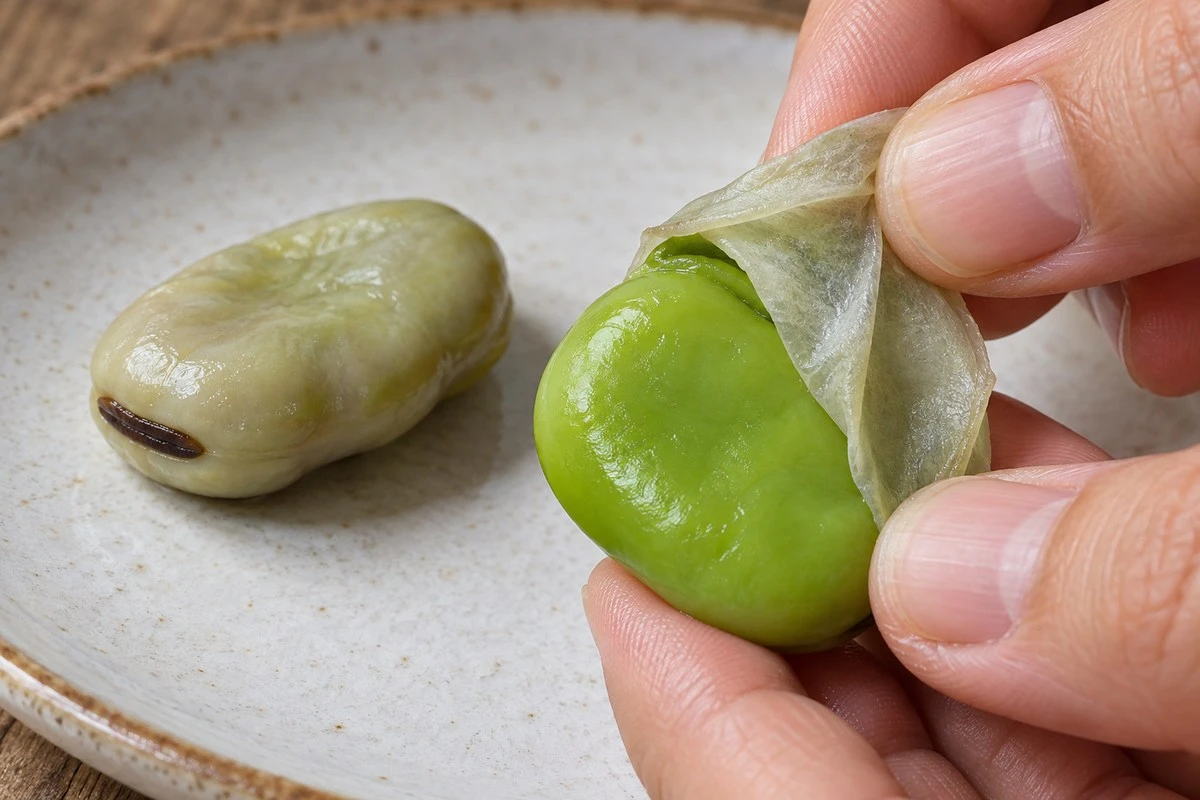
Cooked broad bean seed skin separated from the green inner cotyledons.
A cooked bean may have an acceptable soft interior but a skin that the customer finds too resistant. Another may have a relatively unobtrusive skin while the middle remains firmer than the intended dish allows. A single score such as "hard" combines these different observations and makes corrective action uncertain. Record whether the resistance comes from the outside, the center, or both, then compare the same attributes in a retained reference prepared by the same method.
For a practical assessment, evaluate a whole cooked bean and examine a separate cooked bean with its skin removed. The purpose of the second observation is to understand the source of the texture, not to silently change the product presented to the customer. If the finished dish uses skin-on beans, its acceptance decision still needs to include the whole bean. A peeled test can explain a complaint but cannot erase a skin problem in the actual meal.
Describe the interior in plain terms the team can repeat: smooth, creamy, firm, grainy or dry-feeling, for example. Describe the skin separately as unobtrusive, resistant, loose or detached where those words fit the observation. Agree reference examples before attaching scores. A numerical scale with no shared description can make two assessors appear to disagree about a lot when they are simply using the same number differently.
The approved form should also state whether natural splitting or detached skins are acceptable and where they become a problem. A loose skin in a puree may be noticed as a small piece that survives blending or straining. In a vegetable side, the issue may be presentation or the way the skin separates during eating. Changing to peeled supply might solve that particular problem, but it changes the ingredient specification, yield and potentially the behavior of the bean during mixing.
Do not promise that a longer cook will solve every skin issue. Additional heat may soften the interior beyond the desired point before the outside matches the customer's preference. The useful question is whether the specified bean can reach an acceptable whole-bean result within the actual process. If it cannot, the team can consider a different skin state, grade or recipe with a new trial rather than continue adjusting the cooking time without recording the change.
Texture approval is also separate from suitability for people with G6PD deficiency. UCLH's patient guidance identifies broad or fava beans as a trigger to avoid. Peeling, small size or a tender cooked result must not be represented as removing that concern. This is a product-identity and communication matter, not a defect that a purchasing team can solve by choosing a more tender lot.
Describe color, damage and fragments consistently
Visual inspection works best when every person is looking for the same thing. "Good green color," "few broken beans" and "clean product" may be useful first impressions, but they are incomplete acceptance rules. The specification needs descriptions of the material being counted, the sample preparation and the reporting unit. Reference photographs can help align judgment, provided they show the actual product form and are not treated as evidence of a numerical result.
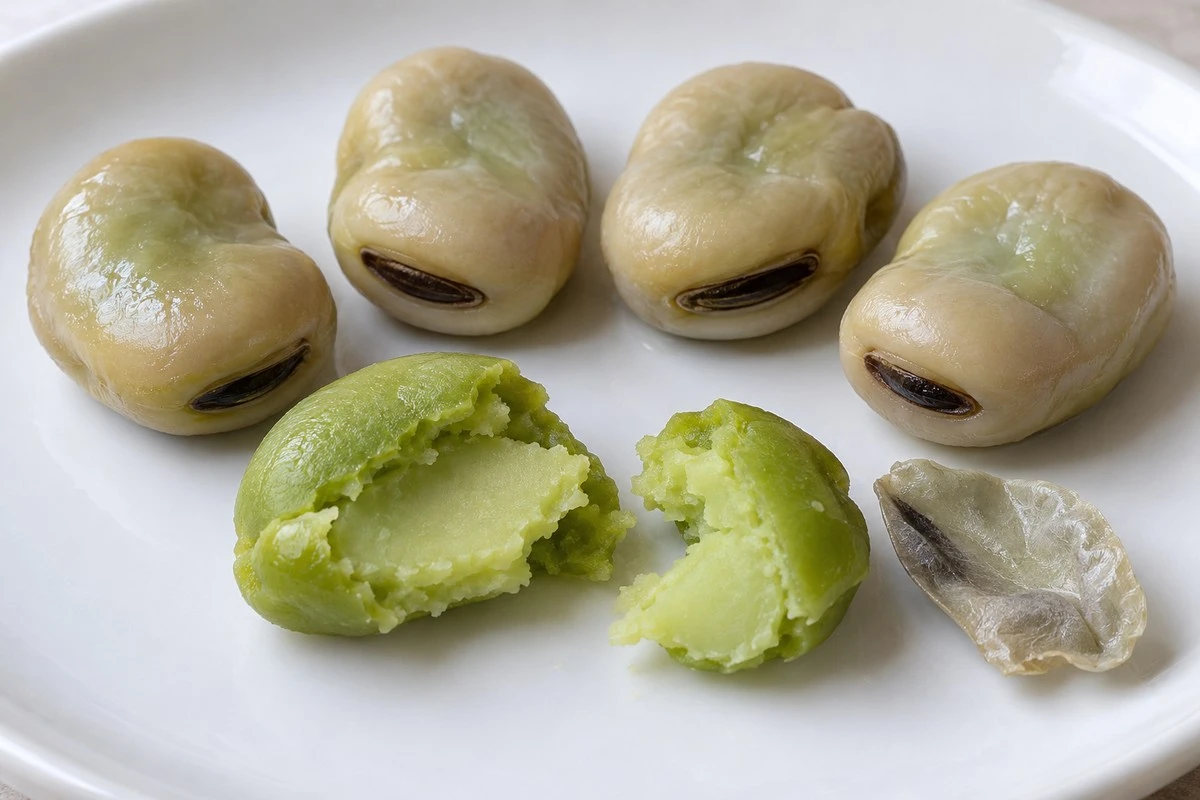
Intact broad beans, broken bean pieces and a detached seed skin.
Separate an intact bean with a cut skin from a bean whose cotyledons have split apart. Also distinguish detached seed coats, small bean fragments and other plant material. These can have different effects on portion appearance, handling and yield. A buyer may choose to group some defects for commercial acceptance, but that grouping should be agreed rather than improvised after a shipment has arrived. State how a bean with more than one visible defect is counted so that the same piece does not inflate several totals unexpectedly.
A published IQF broad-bean specification, revised in 2018, illustrates why this detail matters: it uses different sample bases for different defect observations and distinguishes damaged beans, skin cuts and plant material. It is a historical supplier document, not a current GreenLand standard. Its numerical limits should not be copied into an order without considering the method, application and agreed requirements. The useful lesson is to put the definition and method beside each limit.
Color needs an equally clear reference. Frost, lighting and the wetness of a sample can change its appearance in a photograph. Compare samples under consistent conditions and state whether color is judged frozen, after preparation for inspection, or after the standard cook. A photo of a peeled vivid green interior cannot fairly serve as the only color reference for an intact pale green skin-on bean. Keep the reference image and the accepted physical sample tied to the same form.
The hilum, the seed's attachment mark, deserves explicit treatment when appearance is important. A dark mark near the edge should be distinguished from broader discoloration or other damage, then handled according to the agreed defect definition. Do not assume that every dark area is the same, or that a familiar-looking mark automatically overrides a contractual appearance requirement. A close photograph and, where appropriate, examination of the interior can help clarify the observed condition before a lot decision is made.
Source documents also have boundaries. Canada's official faba-bean grading factors are part of a grain grading system. Their descriptions and thresholds should not automatically become acceptance criteria for frozen immature green vegetables. Similarly, a standard for frozen green or wax bean pods concerns a different product. Check species, plant part and preservation form before adopting a table that happens to contain the word "bean."
Physical contamination and signs of deterioration require the applicable food-safety and quality procedures, not a casual trade-off against attractive color. Keep these decisions distinct from an agreed commercial allowance for harmless appearance variation. A photograph can support an investigation, but it cannot establish the absence of microbiological or chemical hazards. The inspection report should identify what was actually checked and avoid implying that a visual pass releases every other requirement.
Judge maturity in the complete cooking process
The most useful maturity discussion ends with the intended eating result. In frozen green broad beans, the buyer may notice differences in skin resistance, interior texture, mealiness and flavor after preparation. Those observations are relevant to the application, but they should not be converted into an invented universal maturity number. A size category, a harvest description and a cooked texture result answer different questions and should remain separate in the approval record.
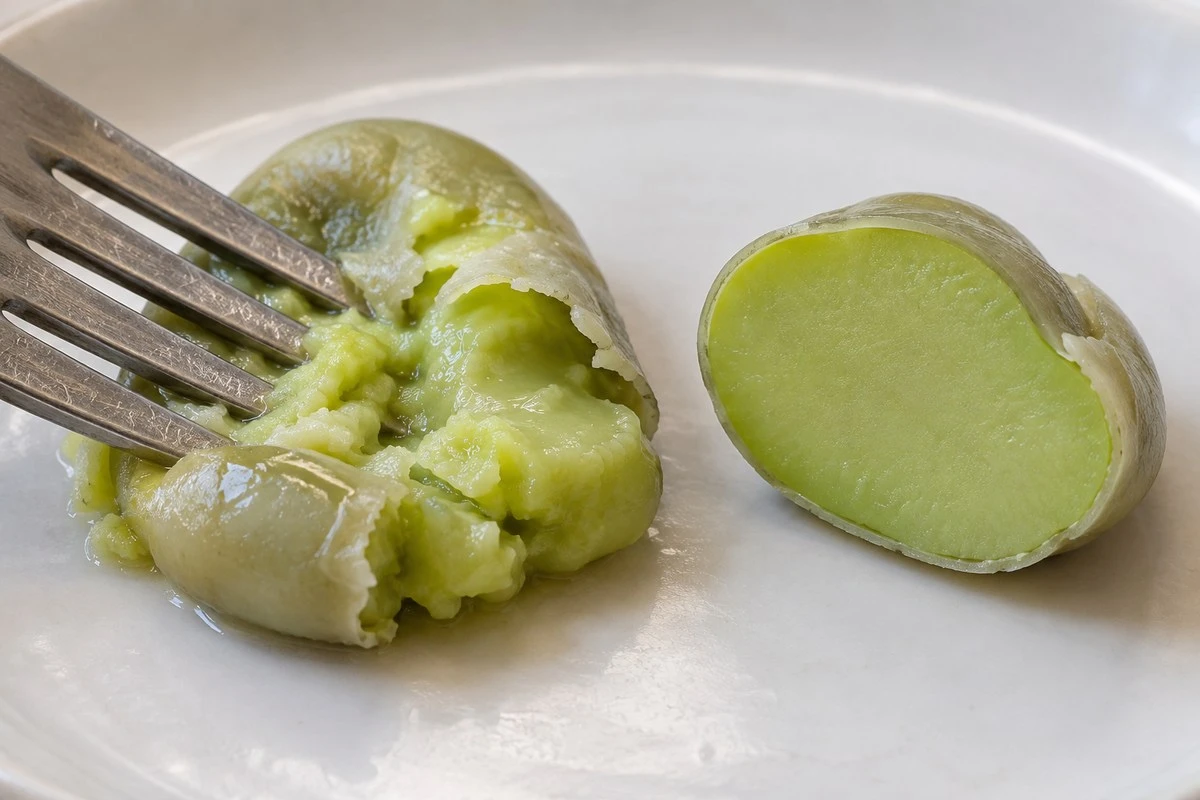
Cooked bean interiors examined for texture as well as outer appearance.
Use the product's cooking instructions and the customer's validated process as the starting conditions. A tasting comparison should not encourage undercooking in pursuit of a firmer bean. Once the required process conditions are established, keep the variables that affect the comparison consistent: bean mass, starting state, water or sauce quantity, equipment, loading and the time at which the sample is assessed. If an operator changes the procedure for one candidate, record that change rather than treating the results as directly comparable.
The complete process may include more than the first cook. A bean used in a prepared meal can undergo mixing, a hold, cooling or freezing and reheating before it is eaten. Assess the relevant final stage as well as the immediate cooked sample. A lot that looks attractive when drained may shed skins during mixing, become too soft after reheating, or feel firmer when eaten at the actual serving temperature. These are application results that a raw photograph cannot settle.
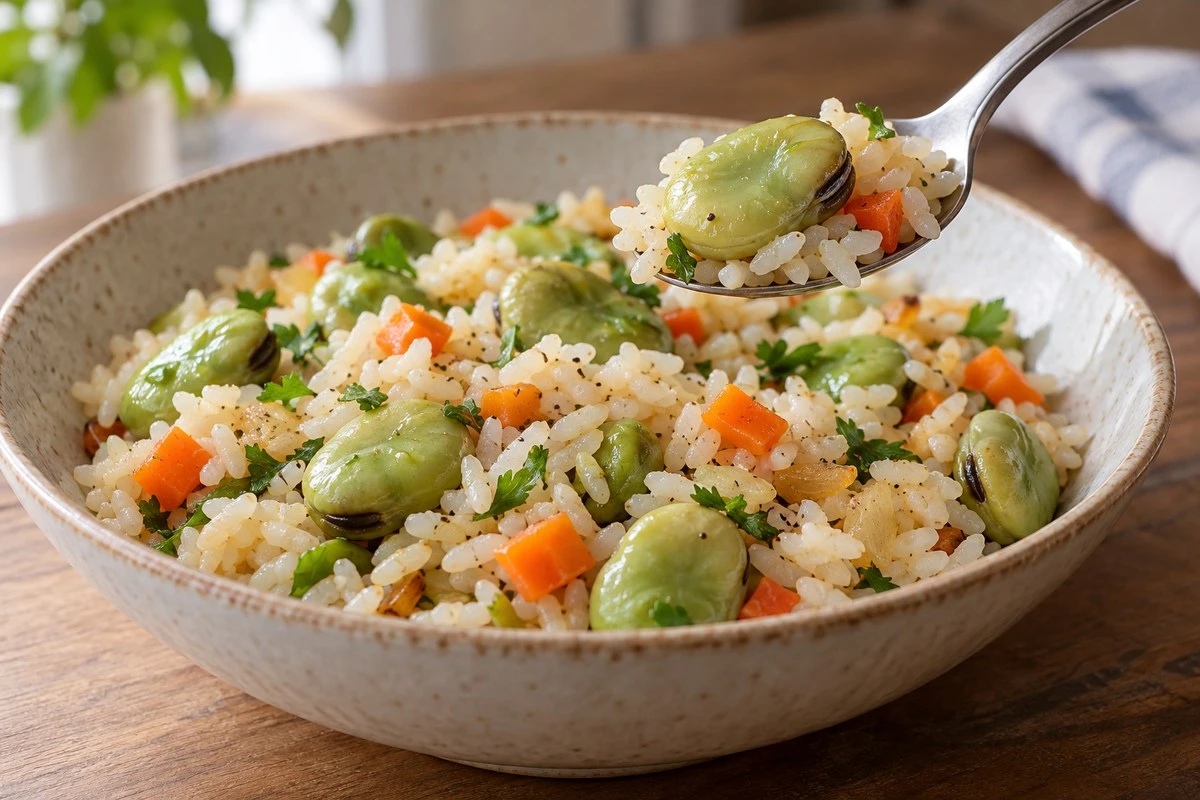
Broad bean texture assessed in the finished rice dish.
For example, consider two candidate lots intended for a rice dish. Both meet the agreed size distribution. In an illustrative trial, one keeps an acceptable whole shape after the full meal process but has a resistant skin; the other has a more acceptable bite but breaks during the normal mixing step. The decision is not simply which lot is softer. The team needs to decide whether either meets the meal's combined texture and presentation needs, or whether changing the product form or handling method is justified. This example describes a possible decision, not a reported GreenLand trial result.
Use multiple observations rather than selecting one attractive bean from each sample. Record whether a concern is widespread or limited to a few pieces, and keep the product identities concealed during comparison when practical. A short agreed vocabulary is more useful than a long score sheet that assessors interpret differently. When the customer says "too mature," ask what was noticed in the food and under which preparation conditions. That answer gives the supplier a concrete starting point for investigation.
Instrumental testing can add information if its method and relevance are established. It should identify the product stage, preparation, equipment settings and what the result is intended to predict. A tenderometer or alcohol-insoluble-solids limit used for peas should not be transferred to broad beans without evidence that it serves the intended purpose. Similar purchasing concerns do not make different crops interchangeable test materials. Where no validated numerical relationship exists, an agreed cooking assessment with clear references may be the more defensible acceptance tool.
For repeat orders, keep a record of the accepted result and the conditions that produced it. If a later crop or processing change affects the bean, the customer can run a focused comparison against that record. This allows the program to respond to meaningful variation without demanding that every physical attribute repeat an old number that was never linked to meal quality.
Make the sample and acceptance rule reproducible
A well-written defect limit still depends on the sample used to evaluate it. Before inspection, define the lot and identify the cartons or production units it represents. Product collected from an easy-to-reach corner of one open carton may be useful for a quick look, but it should not be presented as proof of uniformity across an entire shipment. The sample plan should reflect the lot structure, the buyer's requirements and the purpose of the check.
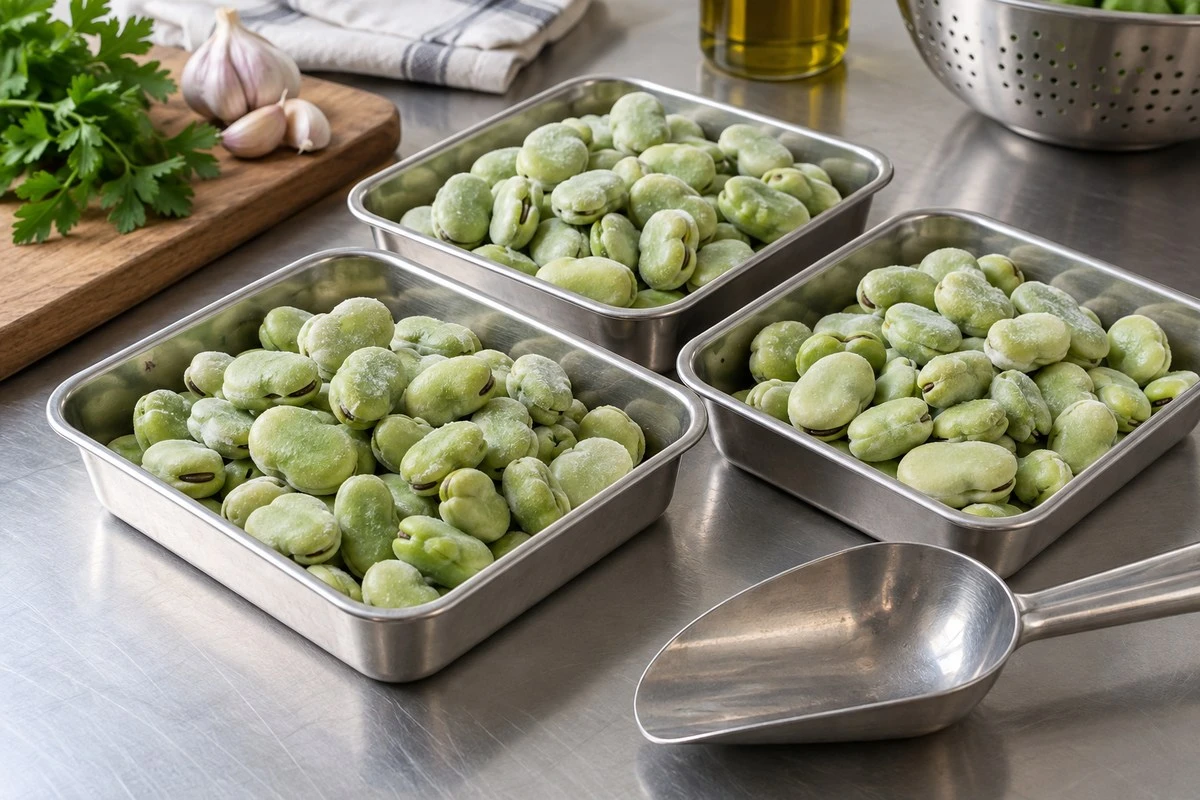
Separate frozen broad bean samples kept visible before comparison.
Keep representative sampling distinct from a targeted investigation. If a carton looks damaged or contains an unusual clump, examining it separately can help identify a problem. Mixing that deliberately selected material into an otherwise representative sample without explanation makes the result difficult to interpret. Record where each sample came from and why it was taken. The inspection can then report both the general lot findings and the condition that prompted closer attention.
Sample handling can introduce another source of variation. Note the product's condition on receipt, storage conditions and the preparation used before measurement or cooking. An inspection sample left warming on a desk should not later be compared with a promptly handled frozen reference as though their histories were identical. Follow the site's food-safety procedures for sampled material and keep analytical or inspection portions out of saleable stock unless a suitable controlled procedure allows their use.
The reporting basis should stay visible throughout the calculation. If split material is assessed by weight, identify what was included in the split category and which prepared sample weight forms the denominator. If an appearance defect is counted by number, state the number of beans examined and how partial pieces were treated. Do not change the basis between the supplier's report and the customer's arrival inspection merely because a different result format is more convenient.
A simple hypothetical example shows the problem. An inspector reports five affected beans but does not record how many beans were examined. Another reports five grams of affected material in a weighed portion. Those records cannot establish agreement or disagreement about a defect percentage. Both need a defined denominator, and they may still describe different methods. Before debating whose number is correct, make the sample preparation, classification and calculation comparable.
Agree what happens near an acceptance boundary. The procedure can define when a second sample is taken, who reviews an ambiguous defect and which retained material is available for comparison. A retest should answer a documented uncertainty rather than continue until a preferred result appears. If a result cannot be reproduced because the original portion was discarded or its preparation was undocumented, acknowledge that limitation and determine the next action through the agreed quality process.
The retained reference itself needs care. Identify its batch, approval date, storage conditions and intended role. A deteriorated reference is a poor basis for judging a new lot. Photographs preserve visible examples but cannot preserve eating texture or prove the current condition of the stored sample. For a complaint about cooked skin resistance, retain enough information about the cooking method and final dish to make a meaningful comparison, not only a picture of the unopened carton.
Agree the supply specification before ordering
An effective specification translates the preferred sample into terms that procurement, production and quality teams can all use. Start with product identity: frozen green Vicia faba seeds, pod removed, skin-on or peeled, and the intended whole or split form. Confirm the treatment and cooking instructions applicable to the offered product. A grade name such as "premium" or "Grade A" should be accompanied by the actual agreed attributes rather than used as a substitute for them.
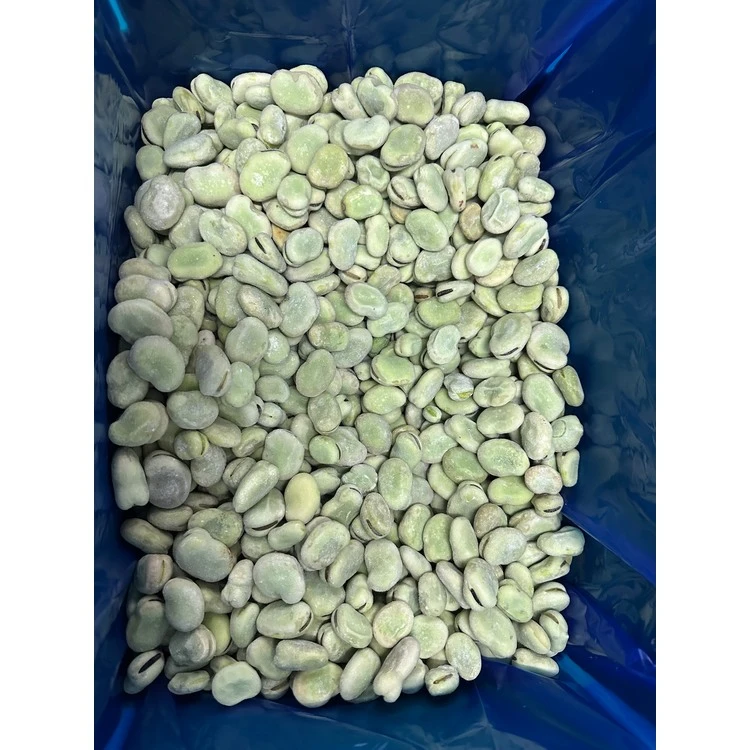
Shelled skin-on broad beans in a lined carton.
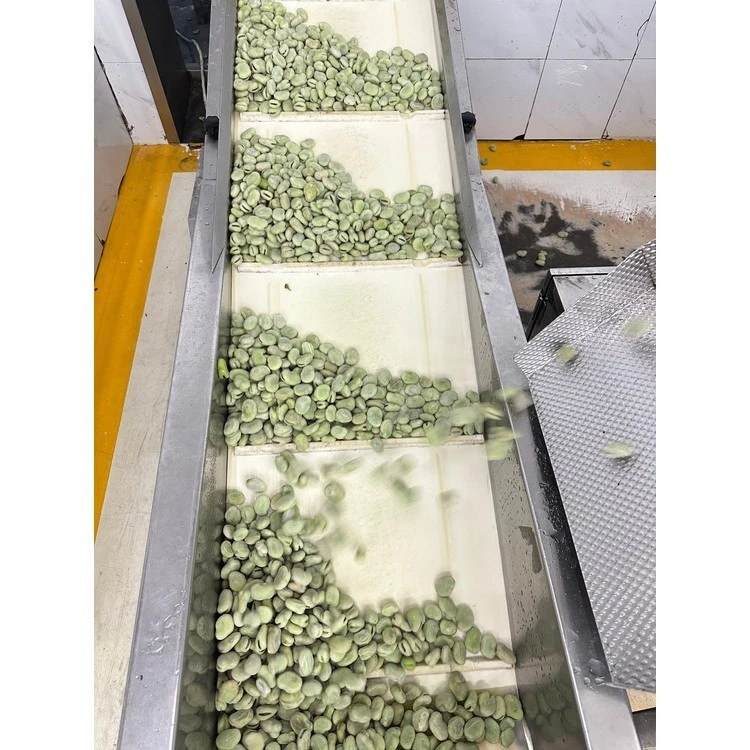
Shelled broad beans at a conveyor transfer point.
For size, include the measurement method, sample state, distribution and out-of-range allowance. For skin and texture, identify the agreed cooking assessment and reference descriptions. For color and defects, attach clear definitions, the reporting unit and any reference photographs that help distinguish borderline examples. This does not require an unwieldy document. A concise specification is effective when each line leads to a repeatable observation and an understandable decision.
The commercial details should support the same product definition. Confirm packing format, net quantity, shipment quantity, destination, delivery timing and the documents needed for the program. If peeled product is being considered as an alternative to skin-on beans, quote and approve it as a distinct form. A lower purchase price for one form does not establish a lower cost in the finished dish when preparation loss, labor or rejected portions differ.
Ask how the approved sample relates to the offered lot and how meaningful changes will be communicated. A sample provided during development may not represent every later crop or production run. Where a change could affect the agreed size, appearance or cooked result, arrange the appropriate review before shipment. The customer can then accept the change, request further comparison or revise the order with a clear technical reason. This is more useful than relying on a generic assurance that the new product is equivalent.
Condition on arrival also belongs in the discussion. Packing integrity, frozen handling and lot identification help preserve the product that was approved and make discrepancies traceable. Large clumps or unusual ice should be recorded and investigated in context; a photograph alone does not establish exactly when or why a handling problem occurred. Keep the incoming observations, transport records and comparison samples connected to the same lot before assigning a cause.
For a quotation from GreenLand-food, send the intended application together with the form, size requirement, packing, quantity and destination. Where available, include the accepted sample description and the cooking conditions used to judge it. We can use those details to discuss the relevant broad-bean specification and what needs confirmation for the proposed supply. The aim is an ingredient the operation can use consistently: the right appearance in the portion, an acceptable skin and interior after preparation, and a lot record that makes later quality decisions clear.
Continue reading
How to Choose the Right Cut Size for Frozen Vegetables
Translate an application requirement into a measurable size distribution and tolerance.
Quality Inspection and Sampling Plan for Frozen Vegetables
Define the lot, sample selection and retest rule behind an incoming quality decision.
Source Frozen Broad Beans with GreenLand-food
GreenLand-food is a professional frozen broad beans supplier and manufacturer in China, providing factory-direct wholesale supply for importers, food manufacturers and foodservice buyers.
Send your product form, specification, packing, quantity, application, destination, private-label needs and requested documents so we can review the proposed order.