


Frozen Broad Beans for Puree and Dip: Skin and Smoothness Trials
Oct 19, 2026
Leave a message

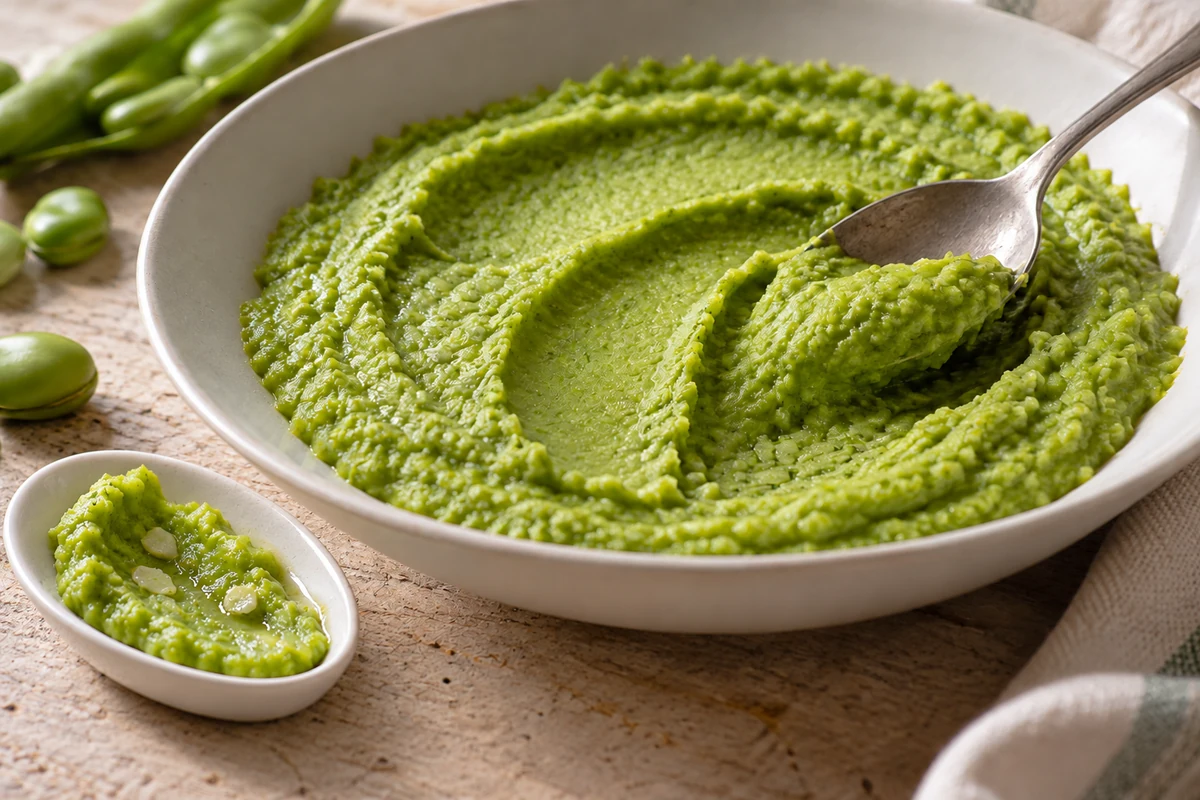
For a fine, uniform dip, begin by comparing a skin-on sample with a peeled sample from the same representative lot. Keep the cooking route, bean concentration, added liquid and serving temperature controlled. Then assess the texture again after the intended cooling, storage and portioning process. A spoonful that looks smooth while warm may behave differently in a chilled retail cup or after reheating as a plated puree.
We help buyers define the broad bean form before sampling. Shelled beans have had their pods removed; the coat around each seed may still be present. Peeled cotyledons are a separate specification and need their own availability, damage and yield review. That distinction gives development and purchasing teams a clear starting point for a useful comparison.
Define the puree or dip you need
A smooth puree, a rustic mash and a thick dip can all be successful broad-bean products. They ask different things of the ingredient. A plated puree may need to hold a clean spoon mark while spreading easily under another component. A dip may need to cling to a vegetable stick without feeling pasty. A rustic spread may deliberately retain small pieces that would be defects in a fine sauce.
Describe that target before selecting a bean grade or a blender setting. Use an accepted reference where possible, and explain how it will be served. The reference should include temperature and formulation, because a warm sample with added oil cannot be compared fairly with a colder, more concentrated sample. A shared visual and tasting description is more useful than a broad instruction to make the product creamy.
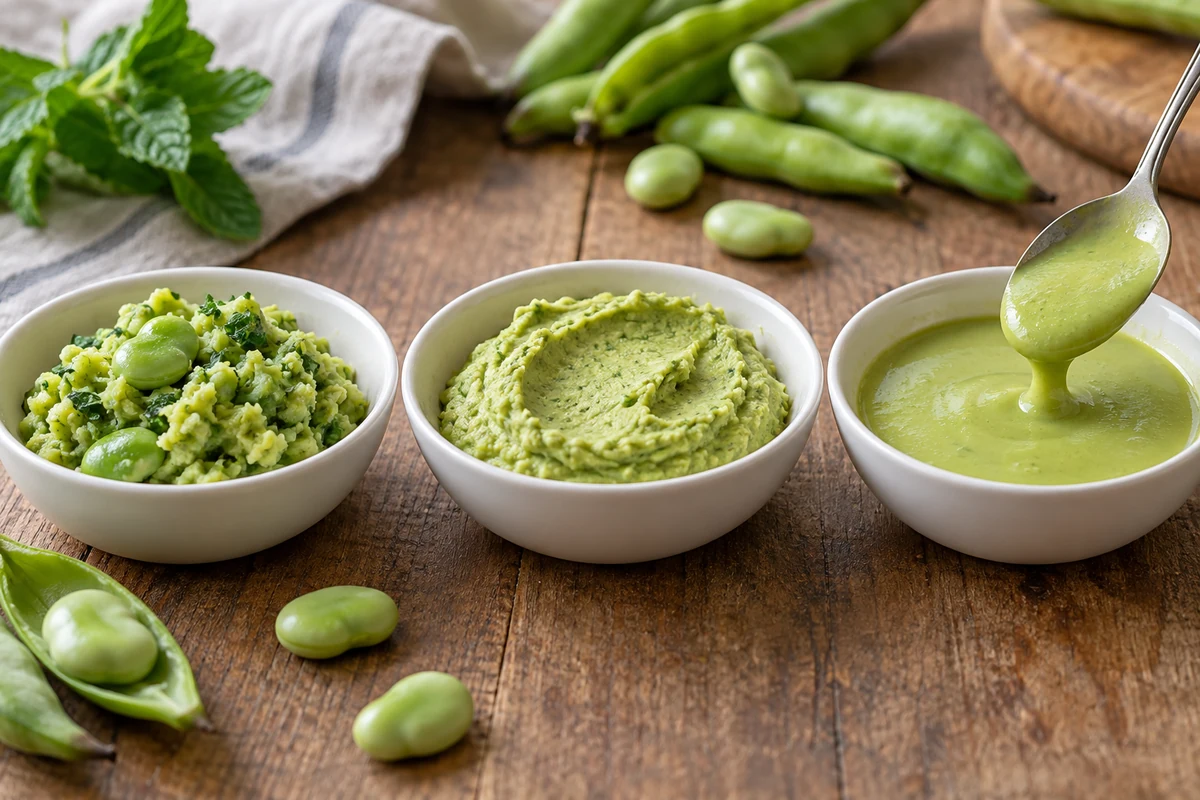
Rustic mash, thick dip and softer broad bean puree. Illustrative food photograph.
Broad beans are Vicia faba, also called fava beans. They are supplied in green vegetable forms and as mature dried seeds. Kew's species account describes those different uses. A dip made from cooked dry mature favas can be worthwhile, but it is a different development route from a green frozen-bean puree. Keep the starting material clear in the recipe and buying specification.
Virginia Cooperative Extension's faba bean hummus publication demonstrates both green and dried forms. Its green-bean preparation includes skin removal before the peeled amount is measured for blending. That is a useful reminder that an ingredient quantity can refer to prepared flesh rather than purchased beans. Its particular recipe and tasting results should not be treated as a universal formula for every commercial dip.
Decide whether the finished food will contain other legumes, dairy ingredients, tahini or oil. These additions affect flavor, texture and labeling independently of the broad bean. During the first bean comparison, hold the rest of the recipe steady. Once the ingredient's contribution is understood, formulation changes can be tested deliberately instead of obscuring the reason one sample appears smoother.
The intended filling and serving equipment also matters. A dip that spreads well with a spoon may need further review before it can pass consistently through a nozzle. A puree that pours easily may be too loose for a retail cup designed to support a garnish. Test the actual function rather than approving a texture only from a photograph.
Keep the acceptance description specific enough to use at repeat production. It might address visible skin flecks, gritty particles, spoon resistance and separation during the intended hold. The limits should come from the customer's use and trial results. There is no single smoothness score or bean size that makes every broad-bean dip suitable for every market.
Separate skin fragments from a firm bean centre
When a puree feels rough, examine the particles before extending the blend. A thin flexible fragment may be seed coat, while a firmer pale particle may be part of an insufficiently softened interior. Other ingredients can contribute particles too. Identifying the source helps the team choose a useful correction and avoids adding water to a problem that originates elsewhere.
Take representative beans from the prepared batch before blending. Assess the seed coat and the interior separately after the documented cooking process. Cut or gently press several beans, including different sizes, and record whether the centre breaks down consistently. This is a quality observation; it does not establish that the required food-safety treatment has been achieved.
The difference between shelling and peeling is central. A bag of shelled broad beans can still carry all of its individual seed coats. Those coats may be acceptable in a coarse mash, but they can remain noticeable in a fine dip. A peeled comparison makes the contribution easier to see. Use beans from the same lot where feasible so maturity differences do not dominate the result.
The Action on Salt broad-bean dip recipe removes the skins but deliberately retains some mash texture. It illustrates that peeling and pureeing are separate decisions. Removing skins does not require an entirely smooth finish, and keeping skins does not guarantee that a longer blend will produce the finish a buyer wants.
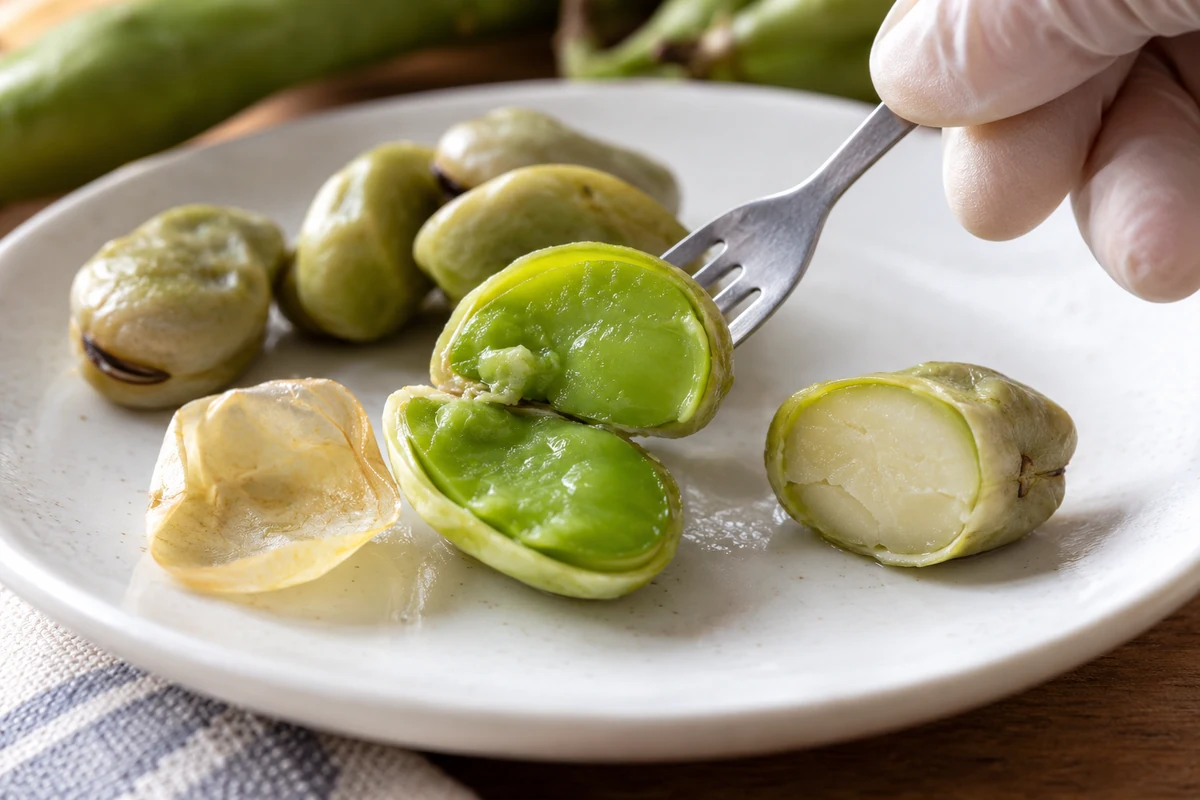
Seed-coat fragments and bean interiors examined separately. Illustrative food photograph.
Maturity should be evaluated alongside skin state. A batch may contain beans that soften at different rates, even within a relatively uniform size range. If a few interiors remain firm while most of the batch becomes very soft, simply processing the entire batch longer may create another quality compromise. Record the distribution of the issue and discuss the raw-material grade with the supplier.
Use a thin smear on a plain plate to examine visible fragments. Compare the smear with the spooned sample rather than relying on one view. A glossy surface can conceal small pieces until the dip is spread thinly. Photograph representative samples under the same lighting and at the same thickness so color and texture observations remain interpretable.
For tasting, separate roughness from thickness. A thick sample can feel heavy even when its particles are fine; a thin sample can still contain noticeable skin flecks. Ask assessors to describe the feature they perceive. That language helps development distinguish a concentration adjustment from a raw-material or preparation issue.
If the skin-on version meets the intended target, retaining the skins may avoid unnecessary handling and yield loss. If it does not, compare peeling, suitable screening or a separately sourced peeled form. Each route has different operating implications. The preferred option is the one that delivers the accepted finish consistently at the required volume.
Measure peeling and screening losses
Peeling changes the quantity available for the recipe. The purchased frozen weight includes material that may be discarded, together with any loose surface ice or drainage loss. Record those components separately so a usable-yield calculation can be understood. A single final weight without a preparation method is difficult to compare across suppliers or trials.
Set a clear weighing sequence for the trial. Begin with the net frozen input, record the prepared drained mass, then measure the peeled flesh and discarded material. State when the beans are weighed and how they are drained. Avoid comparing one sample immediately after draining with another that has stood for a long period, because the difference may reflect water handling rather than bean recovery.
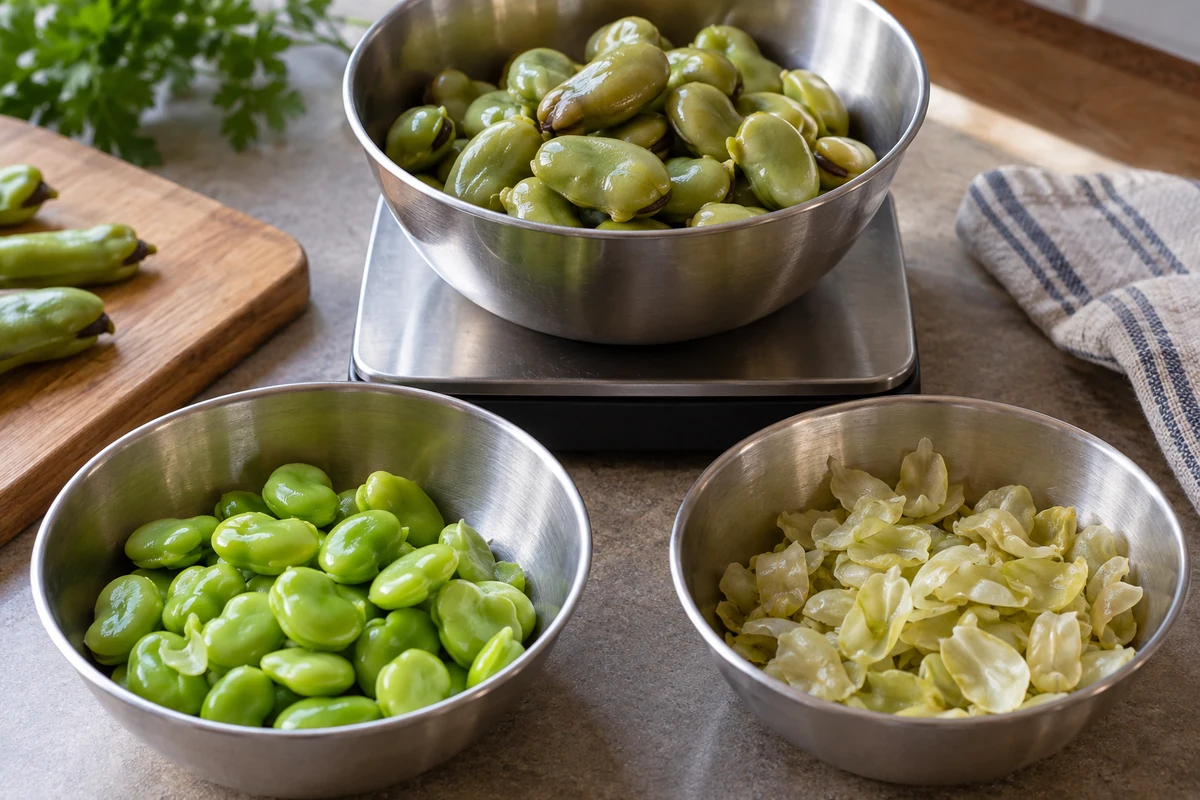
Separate broad bean flesh and skins for yield measurement. Illustrative food photograph.
Where screening follows blending, measure the feed, the accepted puree and the residue under the same procedure. A sieve can retain skin fragments and other coarse material, but it can also hold useful flesh. The result depends on screen opening, loading and the force applied. Those details should be recorded before the yield is used to compare commercial options.
A proposed bench comparison can use equal prepared bean masses for the texture assessment and equal purchased masses for the cost assessment. These answer different questions. Equal prepared mass shows how the edible ingredients behave in a formulation. Equal purchased mass shows how much approved product each purchasing route delivers. Keep the two calculations separate in the trial report.
Do not assign a universal percentage to peeling loss. Bean size, maturity, coat condition, preparation and operator technique can change the result. Measure the actual sample, repeat the observation on representative material and use the agreed method when discussing acceptance. A quoted yield without that context can give false precision to an otherwise uncertain comparison.
Labour belongs beside material yield. Hand peeling a small bowl may be a useful way to establish the desired texture, but it can become a different proposition at production scale. Record handling time, the amount processed and any damage caused. If a supplier offers a peeled form, compare its price and piece condition with the full cost of preparing the skin-on form in the buyer's operation.
Screening capacity can also limit output. A fine result from a small sieve does not establish that a production line can achieve the same recovery and throughput. Evaluate the intended equipment or a representative pilot arrangement before approving the route. Changes in batch size or pressure can alter both the residue and the finished texture.
Consider a dip producer comparing hand-peeled beans with a skin-on blend passed through a screen. The hand-peeled sample may give a clean texture but require substantial preparation time. The screened sample may be faster to prepare yet retain more bean flesh with the discarded skins. Weigh both routes through to the filled, accepted dip and record the handling time. If the screened route needs extra water to pass through the equipment, include that change in the formulation comparison instead of crediting the added water as improved bean yield. The decision then rests on a product that meets the same texture target.
Use the result to make a product-specific decision. A fine plated puree may justify additional separation, while a rustic dip may gain little from the same work. The costing should follow the accepted application. Buying a whole, visually premium grade for a fully blended product can be unnecessary if a different approved piece distribution gives the same flavor, safety status and texture.
Control the blend before adding more liquid
The first blending trial should hold bean concentration and added liquid steady. Otherwise a sample can appear smoother simply because it has been diluted. Measure all additions, including water retained in other ingredients, and record the prepared bean mass. Once the base comparison is understood, adjust the recipe to meet the final texture target.
Equipment and batch loading need to be repeatable. A small quantity can circulate differently from a full processor bowl, and different blade arrangements can produce different particle distributions. Record the equipment, loading and processing sequence used for the accepted sample. When transferring to production, verify that the larger system produces a comparable result rather than copying a household blending time.
Add liquid in controlled increments when the recipe requires adjustment. Observe whether it improves movement through the blender, changes spoon resistance or creates a watery finish. Record the total addition in the final formula. A verbal instruction to add water until smooth leaves production staff to solve the same problem differently on every batch.
Oil, tahini and other rich ingredients can influence perceived smoothness, but they also change the product's flavor and composition. Use them at the intended formulation level during acceptance. A development sample made unusually rich to conceal graininess may not represent the product that can be sold at the agreed cost or declared nutritional composition.
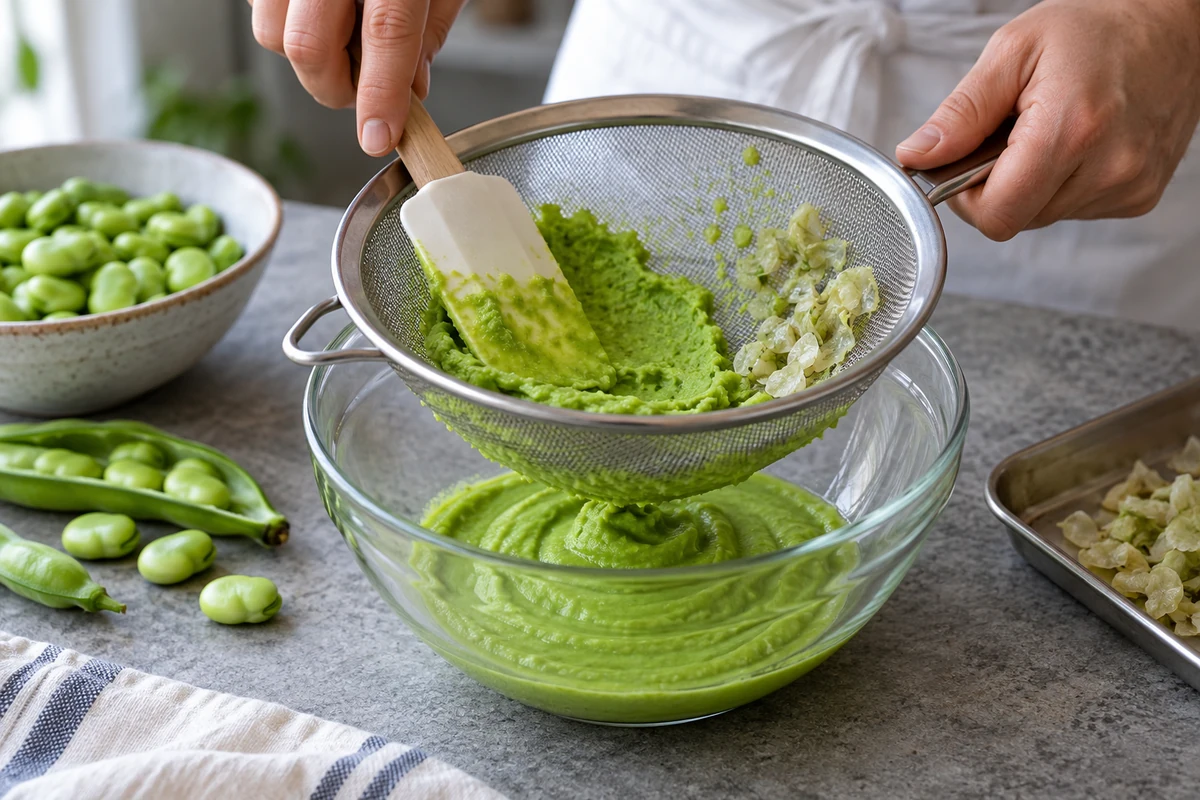
Screening a broad bean puree to inspect retained fragments. Illustrative food photograph.
Check the blend temperature as part of the process record. Processing and previous cooking affect the temperature at which the sample is assessed. The useful comparison is between samples under the same defined conditions. If the dip is sold chilled, return to that serving condition before deciding whether more liquid is needed.
Screening can be used as a diagnostic even when it is not part of the final process. Examining the retained material may show whether the roughness comes mainly from skins, firm interiors or another ingredient. Record that observation and then test a correction at the relevant stage. The diagnostic result does not by itself prove that routine screening is the most economical solution.
Keep flavor review connected to texture. Removing skins, changing the amount of liquid or adding more oil can alter the balance of the dip. Taste the revised version at its intended serving temperature with the planned accompaniments. A technically smooth sample may still need a different seasoning balance, and that adjustment belongs in the approved formulation.
Retain a small reference portion before each deliberate adjustment. Comparing only the latest version makes it easy to lose track of whether an addition actually improved the dip. Use the same serving utensil and sample temperature for the comparison, and identify each version in the trial record. The retained portions are for a controlled assessment under appropriate handling conditions; they do not create an extended storage allowance for the food.
Once the target is reached, document the stopping point. Excessive processing can add time without a useful improvement, while insufficient processing leaves avoidable variation. The aim is a repeatable finished texture within the buyer's process, supported by an ingredient specification that gives the blender a consistent starting material.
Check the texture through cooling and service
Assess the product at the point where the customer uses it. A warm puree, a chilled dip and a thawed frozen component can behave differently even when they originate from the same batch. Record the storage route, package and serving temperature in the trial plan. That makes later comparisons more useful than tasting samples whenever they happen to be available.
For a chilled dip, observe firmness, spreading and any visible liquid separation after the intended hold. Use the planned pack depth and fill quantity where practical. A small open tasting bowl exposes the product differently from a sealed retail cup. The package can also influence the appearance of the surface and the customer's first impression when it is opened.
If the finished puree will be frozen, evaluate the actual freezing, storage and thawing route before approving the formulation. Check whether the product remains uniform, whether liquid separates and whether the required handling changes its texture. These are proposed acceptance observations. A successful small trial does not establish a universal freezer life or authorize a shelf-life claim for every pack.
The required shelf life must be supported for the real product, formulation, process and distribution conditions. Recipe websites often provide household storage suggestions, but those are not a commercial validation for a broad-bean dip. Agree the testing and review needed with the team responsible for the finished food before setting the label or shipment plan.
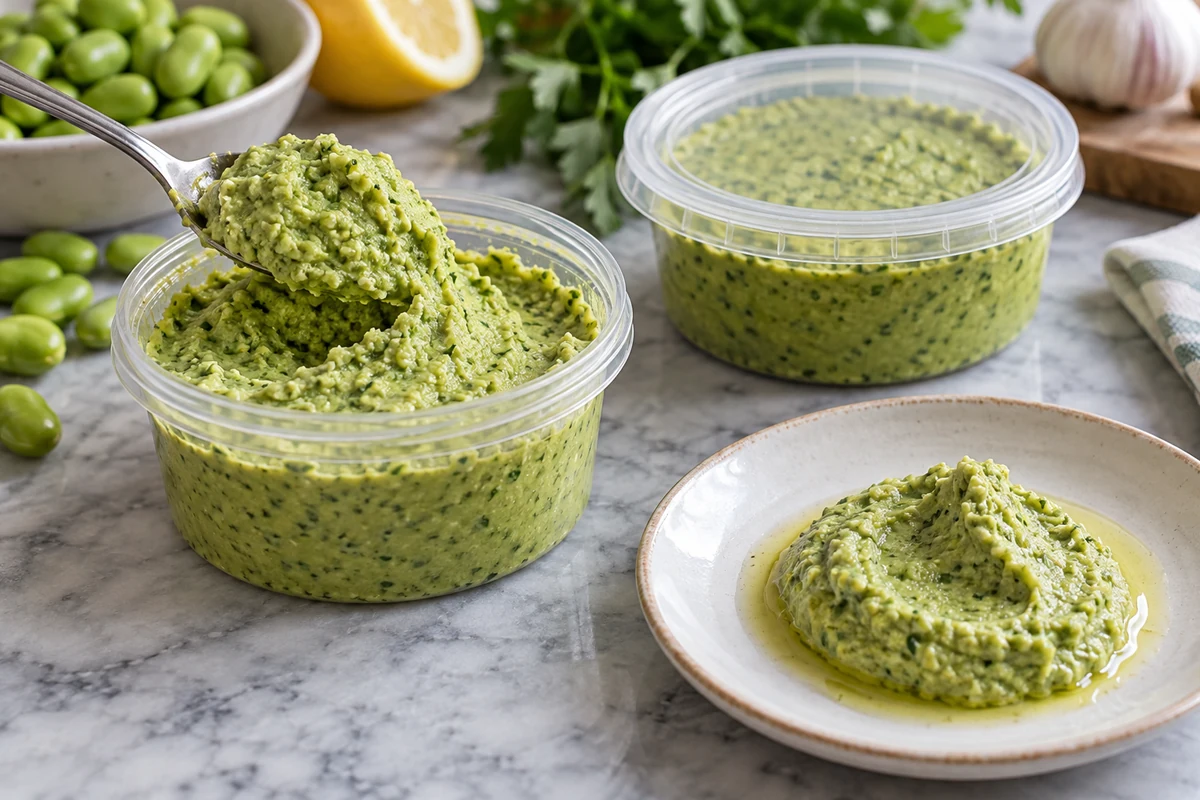
Broad bean dip checked for firmness and liquid separation. Illustrative food photograph.
Food safety remains distinct from smoothness. A tender bean or a fine puree does not prove that the required heat treatment has been achieved. Obtain the ingredient's actual processing state and further-use instruction. Blanching and freezing should not be assumed to make a bean suitable for a no-cook dip; the complete process must address the intended use.
Post-cook handling deserves particular attention when the product will be eaten without another heat step. Peeling, blending, filling and serving all occur after parts of the preparation have been completed. Use the appropriate hygienic controls and validated cooling and storage arrangements for the operation. An attractive puree cannot supply evidence about those controls.
Broad beans also remain fava beans after pureeing. UCLH identifies them as a possible trigger of haemolysis in people with G6PD deficiency. Peeling, cooking, freezing and blending should not be presented as making the dip suitable for that group. Keep the identity clear in the formulation and customer information.
Review all other ingredients for the intended market. Tahini, dairy components or other additions may require specific declarations and handling controls. A broad-bean replacement in an existing dip does not automatically preserve its label claims. Recalculate and review the actual finished recipe, including any changes made to achieve the desired consistency.
Turn the accepted dip into a bean specification
The incoming specification should reflect what the trial demonstrated. Identify broad beans as Vicia faba and state the maturity, shelled or peeled form, piece condition and documented processing state. Include relevant limits for loose skins, damaged pieces and visible discoloration. Those requirements are more useful when they are connected to the puree's actual acceptance criteria.
The GreenLand frozen broad bean reference describes shelled beans and confirms skin state separately. We discuss an alternative peeled form only with its own sample and availability confirmation. The photographed commercial form helps the buyer recognize what is being offered, while the specification and process documents establish the details that a photograph cannot show.
- Record the accepted finished texture and serving condition, including whether visible bean pieces are intended.
- Attach the incoming bean identity, skin state and actual treatment requirements to the formulation used in the trial.
- Define the preparation, drainage, peeling or screening method used to calculate usable yield and assess residue.
- Retain the blending and filling conditions, representative sample observations and any approved formulation adjustments.
- Agree which future changes require a repeat trial, and identify who can approve the revised ingredient or process.
Sampling should capture normal lot variation. A hand-selected bowl can understate the range of skin condition or maturity found in a case. Agree how samples are taken and how many portions are assessed for the relevant characteristics. The method should be practical enough for the supplier's review and the buyer's receiving checks to use consistently.
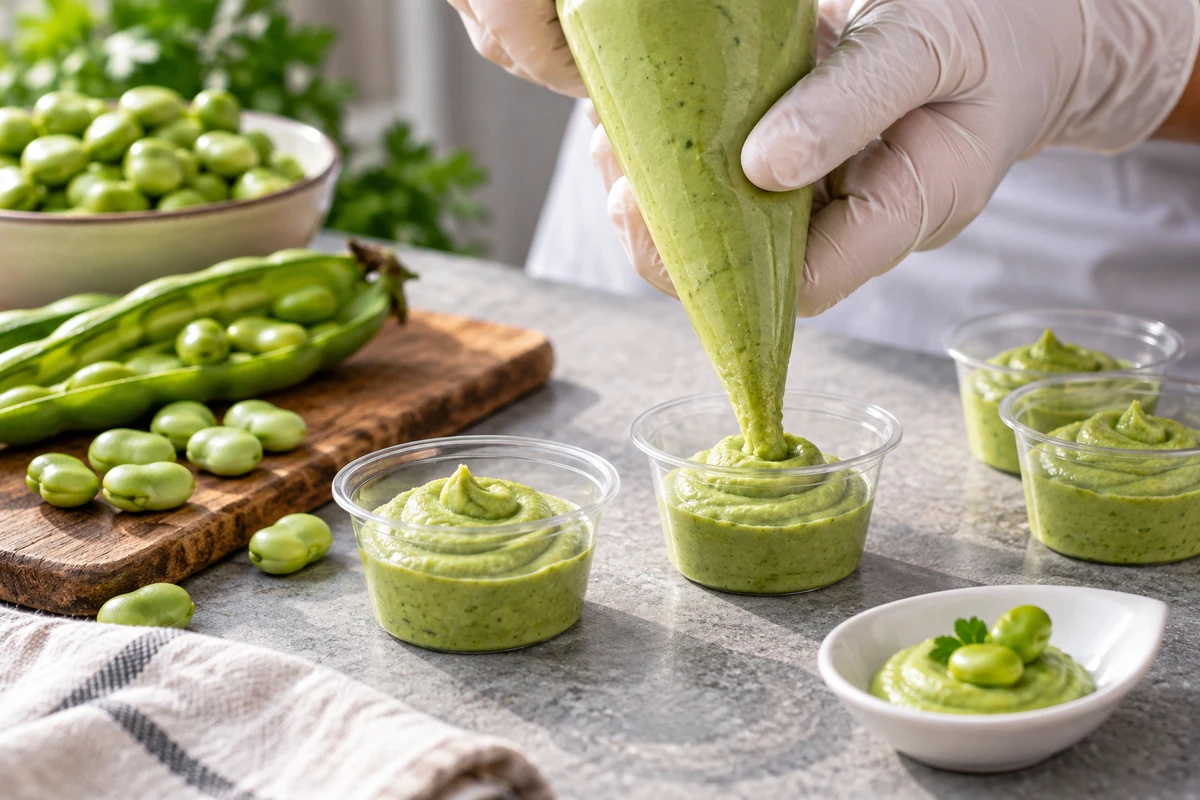
Broad bean puree portioned into small dip cups. Illustrative food photograph.
Packing should support the buyer's preparation schedule. Specify the inner-bag size, net weight and lot coding around the amount processed in each run. A large bulk pack may suit continuous production, while smaller units may reduce repeated handling in a kitchen. Confirm any private-label artwork and instructions after the supplied form and use route are settled.
Calculate cost from the usable finished quantity. Include purchased beans, peeling or screening loss, preparation labour and any additional formulation ingredients. Keep the comparison tied to a dip that meets the same acceptance target. A lower price per kilogram can lose its advantage if the process discards more material or cannot achieve the required filling rate.
For the supply discussion, share the destination, quantity, pack, intended application and requested documents alongside the accepted sample description. We can then confirm the available form and order basis. Crop timing, production arrangements and shipment lead time should be confirmed for that specific requirement rather than assumed from a general frozen-vegetable offer.
Keep the finished-product file and the ingredient file connected through lot identification. If a later batch becomes rougher, firmer or more prone to separation, the team should be able to compare the beans, preparation and formulation with the accepted reference. That gives both buyer and supplier a concrete starting point for correction and helps preserve the texture the customer expects.
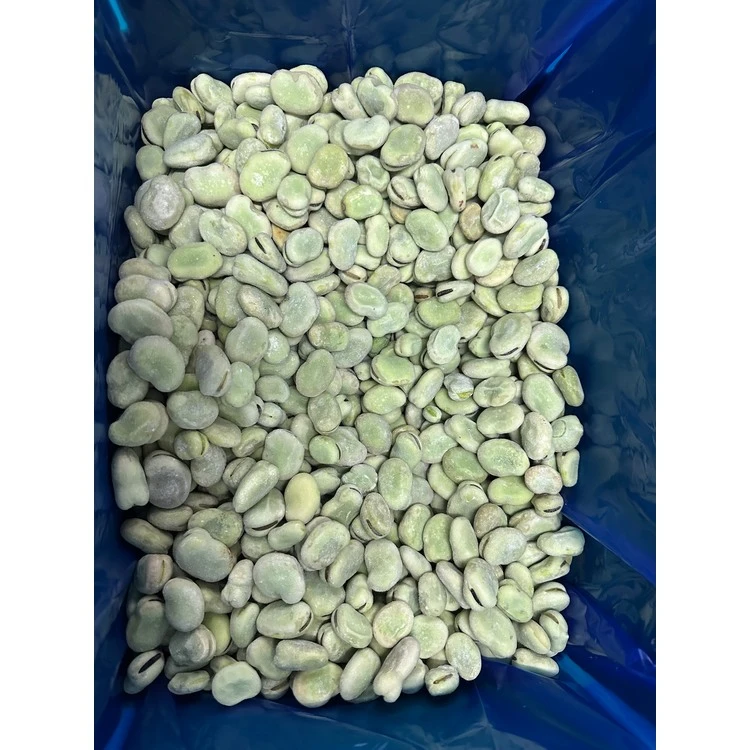
Shelled skin-on broad beans in a lined carton.
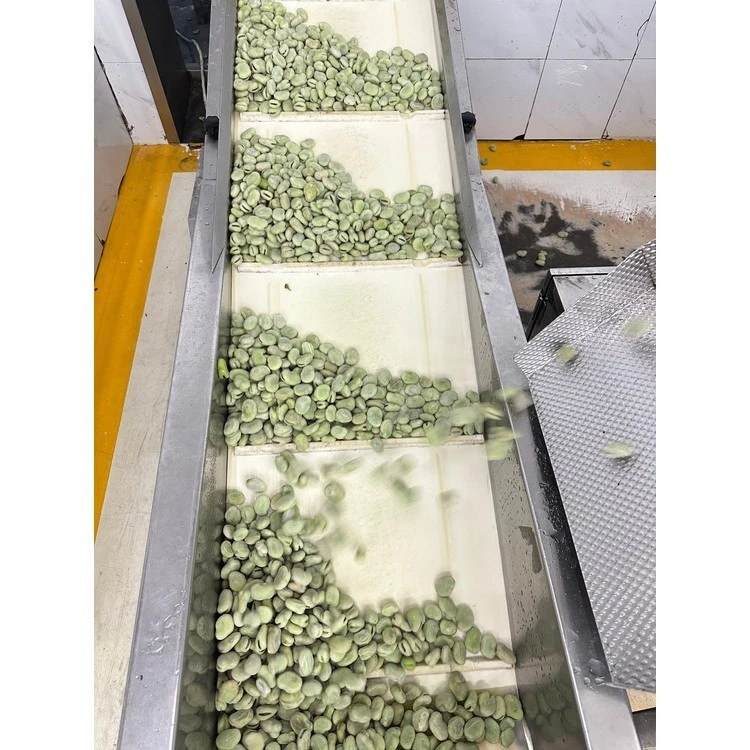
Shelled broad beans at a conveyor transfer point.
Continue reading
Edamame Hummus: Test Soybean Identity, Smoothness and the Label
Explore another green bean dip, including smoothness, liquid addition and the soy and sesame decisions in its formula.
Source frozen broad beans with GreenLand-food
GreenLand-food is a professional frozen broad beans supplier and manufacturer in China, providing factory-direct wholesale supply for importers, food manufacturers, foodservice distributors, and private-label programs.
Send the product form, specification, packing, quantity, application, destination, private-label needs, and requested documents.