


Fava Beans vs Lima Beans: Are They Interchangeable in Frozen Foods?
Oct 19, 2026
Leave a message

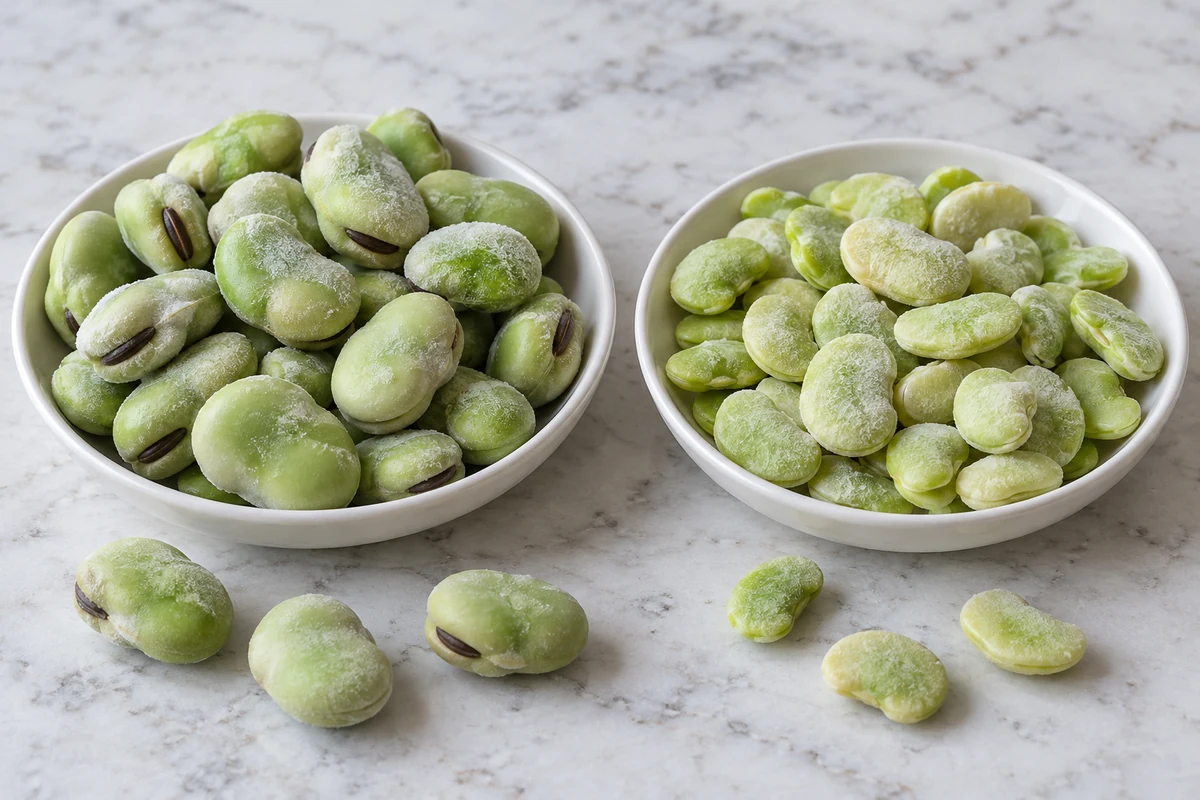
Fava beans are broad beans, Vicia faba. Lima beans are Phaseolus lunatus, also sold under names such as butter beans. Both can contribute a substantial bean component to a stew, vegetable mixture or puree. The better choice depends on whether the recipe needs an intact skin, a tender green centre, a creamy texture or a particular recognizable flavor. A successful kitchen substitution may still require changes to the order specification, ingredient declaration and production instructions.
For a buyer evaluating frozen broad beans, the most useful first sample is the exact proposed commercial form. Ask whether it is shelled with its seed coat retained, peeled, merely blanched or documented as fully cooked. Then compare it with the lima bean actually being replaced. This keeps the decision connected to the product your factory or kitchen will receive.
Identify the bean and the supplied state
The names describe two separate crops. Kew's botanical records identify Vicia faba as the broad or faba bean and Phaseolus lunatus as the lima bean. Regional names can overlap, so the purchase description should include the scientific identity where confusion is possible. A photograph of a green, flat bean is useful supporting information, but it cannot replace an agreed identity on the specification.
Maturity changes the comparison. A green, succulent seed supplied as a frozen vegetable differs from a mature dry seed that has been soaked and cooked. Canned beans introduce another processing history and often a packing liquid. A substitution assessment should therefore begin with a complete description of both samples, including whether they are weighed frozen, drained, peeled or ready for incorporation into the recipe.
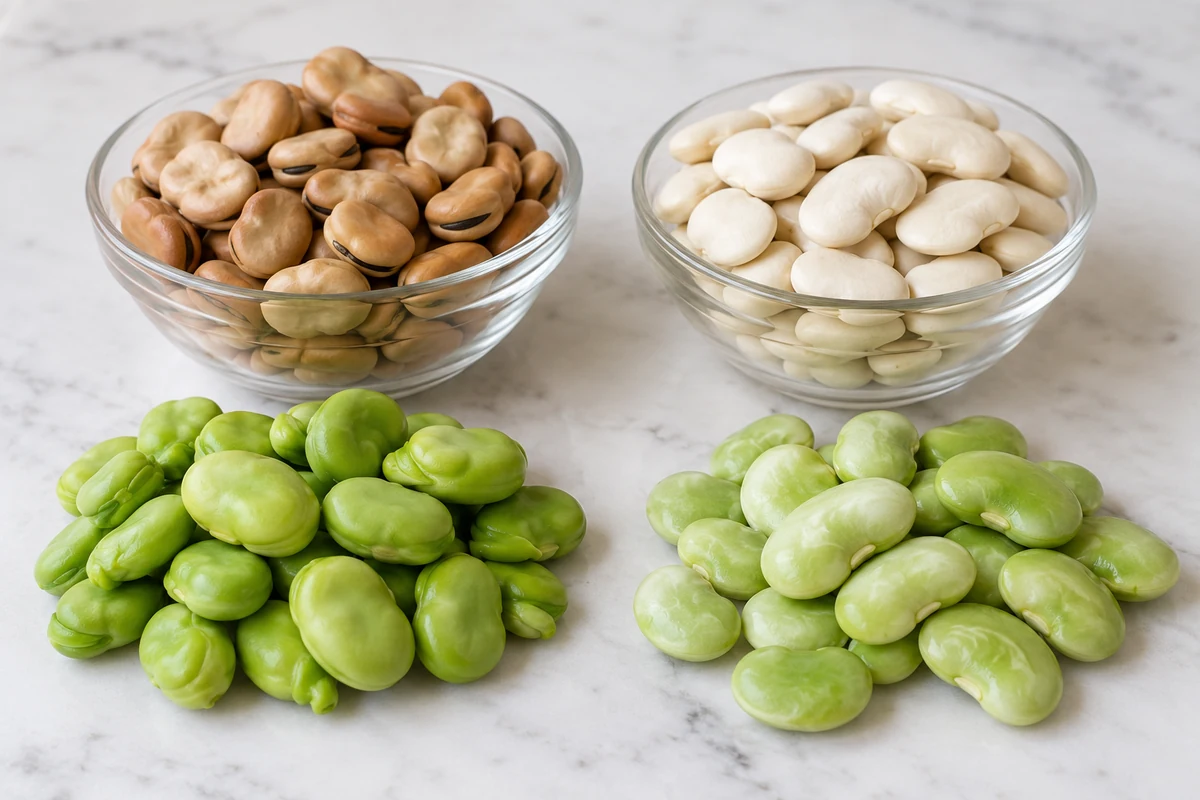
Green and dried forms of fava and lima beans. Illustrative food photograph.
The USDA's inspection instructions for frozen lima beans describe the product in terms of succulent seeds and distinguish varietal types. That distinction helps explain why a dry butter bean and a frozen green lima bean should not be treated as equivalent raw materials. The document is a quality reference, rather than a validated cooking schedule for a manufacturer's particular equipment.
Size is also an incomplete shorthand. Small-seeded and larger lima types exist, while broad beans vary with cultivar and harvest maturity. "Baby" on a product description does not by itself establish a universal tenderness advantage. Measure the proposed lot and assess its cooked texture. A small bean with an unexpectedly firm seed coat can be less suitable for a smooth filling than a larger bean that peels and softens consistently.
For frozen fava beans, distinguish shelling from peeling. Shelling removes the pod around the seeds. Peeling removes the coat around each individual seed. A carton of shelled broad beans may still contain entirely skin-on beans. If the purchasing team requests "shelled" and the development team expects bright green peeled cotyledons, both teams can use the same word while anticipating different ingredients.
Record heat treatment separately from physical form. Blanching, cooking and freezing describe different operations, and the word IQF describes separation during freezing rather than readiness for consumption. A frozen bean can still require a full cooking step. Obtain the supplier's intended-use instruction for the exact SKU and make sure the recipe process supplies any further treatment required.
This identification work takes little time compared with a failed production trial. It also makes quotation comparison more useful: two offers that use different maturity stages or skin states may have different preparation costs even if their carton descriptions initially look similar. We use the approved form and application to guide the next sampling discussion, rather than asking a buyer to approve an unspecified "bean substitute."
| Comparison point | Fava / broad bean | Lima / butter bean |
|---|---|---|
| Species | Vicia faba | Phaseolus lunatus |
| Frozen form to confirm | Green shelled seeds; seed coat may remain | Green succulent seeds; varietal types differ |
| Size and eating quality | Evaluate actual cultivar, maturity and preparation | Evaluate actual type and preparation; baby and larger types vary |
| Substitution review | Skin loss, G6PD suitability and documented cooking state | Original recipe identity and documented cooking state |
Compare skin, maturity and usable yield
The seed coat is often the most visible difference during a fava substitution trial. Skin-on broad beans can provide an attractive whole-bean appearance, but the coat may remain noticeable when the interior is already tender. Peeling can reveal a brighter green interior and change mouthfeel. It also removes purchased material and adds handling. Those effects belong in the comparison before a price decision is made.
Lima beans also have seed coats, and their condition matters during cooking and mixing. Evaluate split skins, loose skins and broken interiors in both products. Avoid assuming that all favas hold their shape or all limas collapse. A result observed in one pot can reflect the cultivar, maturity, freezing history and heat exposure as much as the species name.
Use a defined weighing sequence when peeling is part of the proposed process. Record the net frozen input, the drained amount at a specified point, the usable peeled amount and the material rejected. If the control recipe uses unpeeled lima beans, keep that control on its normal preparation route. Forcing both samples through unnecessary peeling can hide the commercial difference you are trying to measure.
For example, a development kitchen might start each route with the same purchased mass, prepare each according to its documented instructions and then compare the usable quantity available for a fixed number of meals. That is a proposed trial design, not an assumed yield. The weights will show whether a lower ingredient price is offset by peeling loss or whether a more expensive prepared form reduces labour sufficiently for the application.

Removing the seed coat from a cooked broad bean. Illustrative food photograph.
Water complicates the arithmetic. One sample may carry loose surface ice, another may retain cooking liquid, and a third may have been drained for much longer. Set the draining method and weighing time before comparing results. Use the same sieve or screen where appropriate, and avoid pressing one sample while leaving the other untouched. A water difference should not be mistaken for better edible-bean recovery.
Maturity deserves its own observation. Assess several beans from different parts of the sample for skin resistance and interior tenderness after the planned cook. A narrowly graded size range can still contain variation in maturity. If a few beans remain firm while the rest break during mixing, the trial should record that unevenness rather than reporting only an average texture score.
The cost calculation becomes more practical when expressed per acceptable finished portion. Include the purchased ingredient, edible recovery, additional preparation labour and any change in production throughput. Keep one-off development work separate from repeat operating cost. A supplier sample that needs hand peeling may help prove a flavor concept, but it does not establish a viable process at the buyer's intended volume.
A peeled alternative also needs its own damage allowance. Exposed cotyledons may split during handling, and broken pieces can be acceptable in a puree while undesirable in a plated side. Agree those limits around the intended dish. Buying the visually finest whole bean for a fully blended product can add cost without improving the result the customer actually experiences.
Choose the replacement around the finished dish
The recipe's purpose determines how much difference is acceptable. In a strongly seasoned stew, the bean may mainly supply a tender bite and visible pieces. In a lightly dressed vegetable side, its flavor and skin texture are more exposed. In a puree, uniform smoothness and the amount of added liquid may dominate. A single tasting score cannot represent all three uses.
Start with the plain cooked beans so the development team can recognize the ingredients' own flavor and texture. Then assess them in the real formulation. Broad beans can bring a distinct green, earthy character, while some lima preparations give a mild, creamy impression. Treat those descriptions as tasting directions to examine in the actual samples, rather than guarantees for every cultivar or treatment.
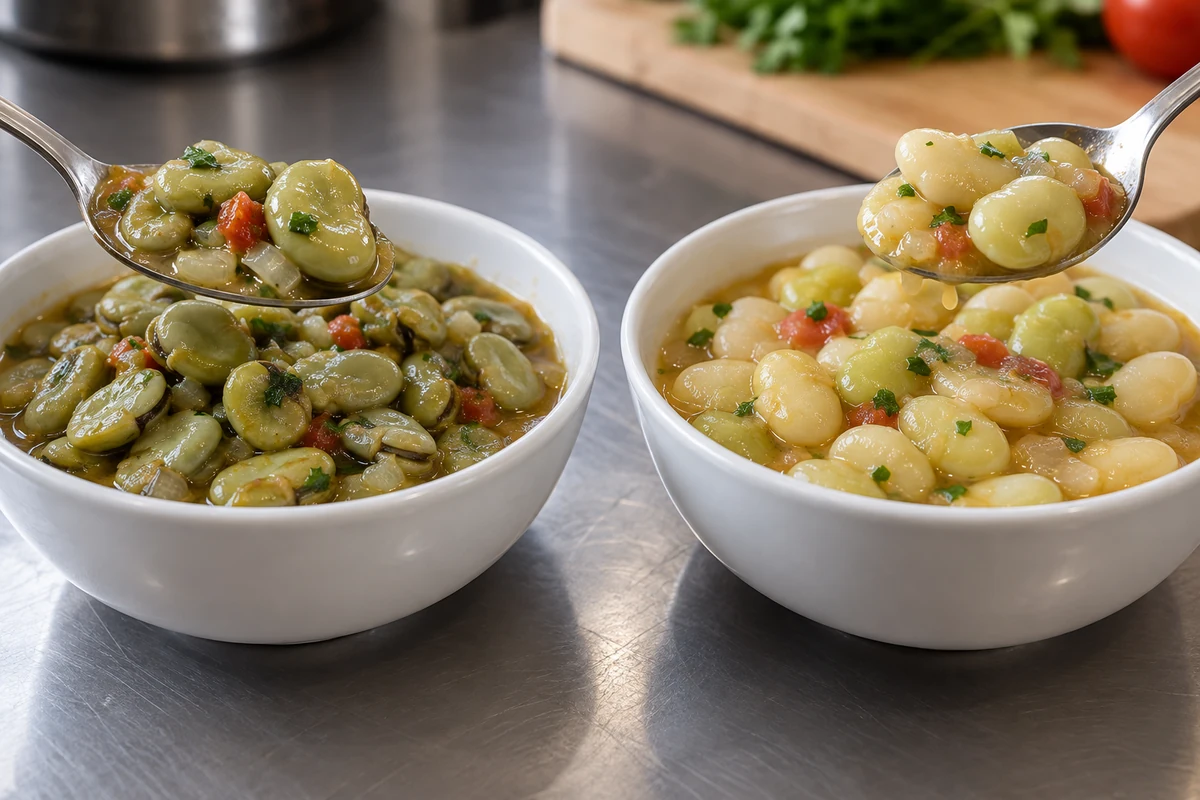
Fava and lima beans assessed in the same stew. Illustrative food photograph.
For a vegetable mixture, compare the bean's dimensions with the other pieces. A larger broad bean can change the apparent proportion of beans even when the ingredient weight remains constant. It may also distribute differently through portioning equipment. Count or visually assess the beans in multiple filled portions so the first attractive tray does not conceal uneven distribution across the run.
In a sauce, check both the beans and the liquid around them. Broken interiors can increase body, while loose skins can create visible flecks. Either effect may be acceptable in a rustic stew and unacceptable in a clear vegetable broth. Stirring intensity should resemble the actual kettle or kitchen method. Gentle spoon handling can give an optimistic impression of a bean that will face pumps or repeated mixing later.
For a smooth dip, the seed coat becomes particularly important. A fava replacement may need peeling, a different cooking endpoint or a different blending arrangement. Compare the puree before adding large amounts of oil or water, because dilution can conceal the ingredient's contribution. Then adjust the formulation deliberately and record the final recipe separately from the initial matched comparison.
The replacement also changes the food's identity. A menu or retail name that specifically promises lima beans cannot silently become a broad-bean product. Even when the final dish is sold under a broader name, the ingredient list and supporting specification need to describe what is actually used. Review any nutrition calculation against the actual prepared form and complete recipe, rather than carrying over a value for the original bean.
Reheating can change the ranking. A sample that is pleasantly firm immediately after cooking may become too soft after meal assembly, freezing and reheating. Another may retain a noticeable skin after the sauce and other vegetables are ready. Evaluate the full intended route, including any intermediate hold. The preferred ingredient is the one that produces an acceptable meal at the point of eating.
For this reason, we ask buyers to describe the serving route before selecting a sample. A school meal component, a retail frozen tray and a restaurant side can use the same species while requiring different limits for breakage, skin and portion consistency. That application detail helps the supplier propose a form worth testing and helps the buyer avoid approving a substitute on appearance alone.
Keep the safety and ingredient review species specific
Fava beans require a clear G6PD consideration. University College London Hospitals lists fava or broad beans among triggers of a haemolytic crisis in people with G6PD deficiency. A substitution from lima to fava therefore introduces a consideration that cannot be resolved by saying the beans are cooked, peeled or frozen. Do not present any of those operations as a guarantee of suitability for people with G6PD deficiency.
That issue is separate from checking cooking instructions or ordinary ingredient allergen information. A purchasing decision should communicate the changed identity to the team responsible for the product's label and intended consumers. Where a particular customer group or institutional menu has exclusions, review those requirements before the trial proceeds to a wider tasting or production approval.
Lima beans have their own natural-toxin considerations. Kew's lima profile warns against eating them raw because of cyanogenic compounds. The practical consequence for a frozen-food buyer is to obtain and follow instructions supported for the exact product and process. A generic time borrowed from a different bean, a home recipe or a differently prepared dried product is an inadequate basis for industrial release.
Freezing does not establish that either ingredient is ready to eat. Likewise, the presence of a blanching step does not by itself prove a validated pathogen or natural-toxin control. Ask what treatment has actually been applied and what further preparation is required. The answer needs to be linked to the product supplied, with responsibility for the remaining process clearly assigned.
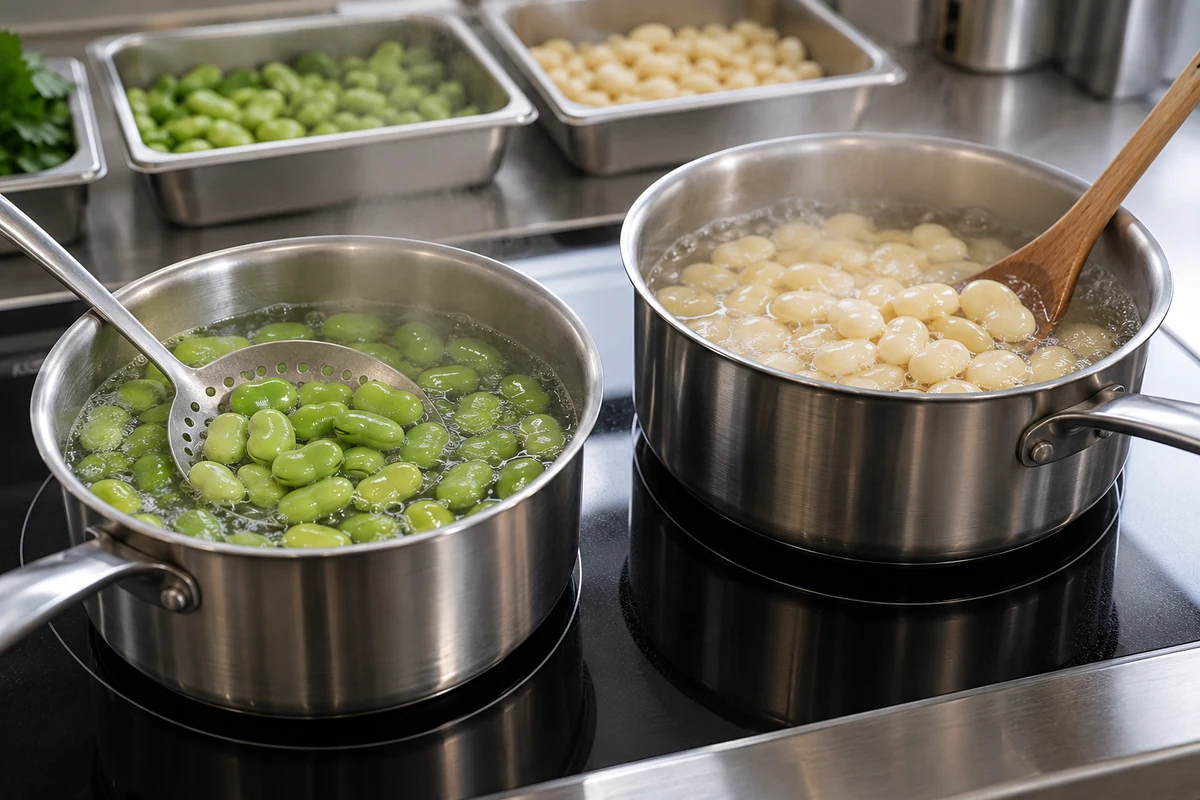
Separate preparation of broad beans and lima beans. Illustrative food photograph.
A proposed substitution should therefore have two separate approvals: suitability for the recipe and suitability for the documented food-safety process. A bean can taste tender and still lack the processing evidence needed by the buyer's quality team. Conversely, a safely prepared bean may fail the texture requirement. Keeping these decisions explicit prevents a pleasant tasting session from becoming an unintended release decision.
Review the complete ingredient system as well. Sauces, seasonings and shared production may introduce allergens or other declarations independently of the bean. Removing one species does not establish the absence of every relevant allergen. Any claim on the finished product should be reviewed against its real formulation, supplier information and destination rules.
The replacement record should identify the responsible reviewer and the documents needed before use. That can include the signed specification, actual treatment status, intended-use instructions and agreed supporting reports. A general certificate or a clean-looking product photograph cannot answer whether a particular lot has undergone the required process. Ask for evidence that addresses the specific concern and retain it with the approval.
If the supplier cannot resolve the processing state, pause the ingredient change. There is little value in optimizing a reheating instruction for an ingredient whose starting state remains uncertain. Once the technical basis is clear, the cooking and sensory trial can concentrate on the variables the buyer can meaningfully control, such as portion weight, mixing intensity and finished texture.
Run a matched cooking and reheating trial
A useful trial begins with a written objective. Define what the replacement must preserve, such as intact pieces in a vegetable mixture, a smooth dip at the existing solids level, or a tender bean after a retail meal is reheated. Decide which changes are acceptable and which would require a new product description or formulation approval. This keeps the trial from drifting toward whichever sample looks most appealing on the day.
- Confirm each sample's species, maturity, skin state, lot identity and documented preparation route. Keep the reference product on its normal approved route and prepare the proposed replacement according to its own supported instructions.
- Record input weights, any peeling or trimming loss, draining conditions and usable prepared weight. Make enough portions to assess variation rather than relying on one selected bowl.
- Compare the plain prepared beans, then incorporate them into the same base recipe at the agreed edible-bean level. Record any deliberate change to liquid, seasoning or mixing.
- Put both versions through the intended assembly, storage, holding and reheating route. Review appearance, skin resistance, interior texture, loose skins, breakage and sauce behavior at the point of service.
- Repeat the selected approach with another representative lot or a larger production trial before setting routine purchase limits. Retain the accepted sample description and the actual settings used.
These steps are a quality development sequence. They do not provide a universal heating schedule or replace process validation. The buyer's technical team must establish the appropriate safety controls for the product, equipment and intended use. Record that approval separately from the comparative tasting results so the two kinds of evidence remain clear.
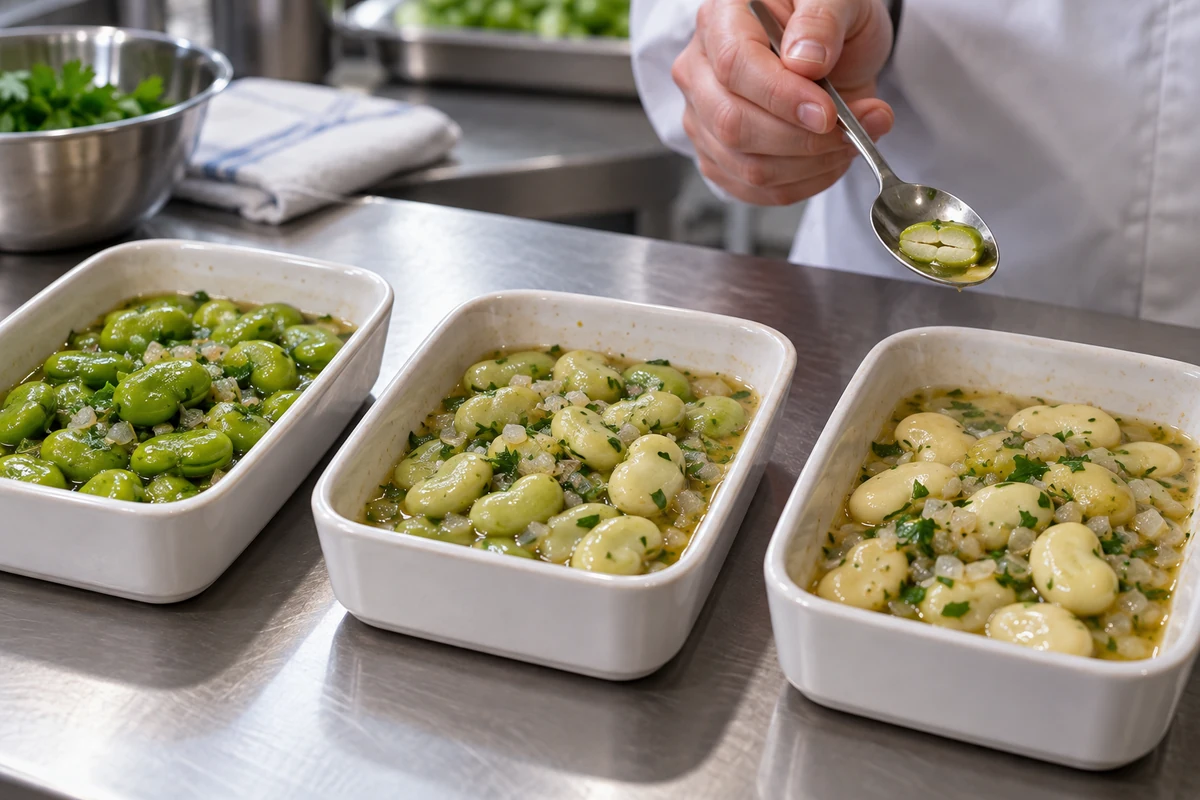
Comparing bean texture after meal reheating. Illustrative food photograph.
Use descriptive observations that another person can repeat. "Good texture" is difficult to investigate later. "Seed coat noticeably firmer than the interior after the approved reheat" gives the supplier a specific issue to examine. Similarly, record whether broken pieces appeared during cooking, mixing or reheating. That timing helps distinguish a raw-material issue from excessive mechanical handling.
For a puree, assess smoothness at the temperature at which it will be served or filled. For a whole-bean meal, examine several portions after the normal hold. If the trial includes freezing, use the intended package and realistic fill depth. A thin sample bag and a deep meal tray can give different freezing and reheating behaviour, so the package belongs in the trial description.
Keep development changes traceable. Once the team adjusts the sauce or bean level, the result is a revised formulation rather than a direct unchanged-recipe replacement. That may be the right commercial choice, but it should be presented accurately. The purchasing team can then compare the cost and supply implications of the approved new recipe instead of assuming a one-for-one swap has been established.
Write the accepted replacement into the order
The final specification should describe the ingredient that passed the trial. State the species, frozen form, skin condition, size or piece distribution, maturity expectations and actual processing state. Add measurable limits for the defects that affected the application, such as loose skins, broken cotyledons or darkened pieces. Reference the agreed sample method so receiving staff can assess the same characteristics consistently.
Our frozen broad bean product page describes a shelled form with skin condition confirmed separately. The real product photograph shows that shelled reference form. They do not establish availability of a peeled grade, a specific maturity distribution or ready-to-eat status. We confirm any alternative form and the supporting use instructions against the proposed order.
Packing should support the process the buyer actually uses. A kitchen that portions small quantities from each bag has different handling needs from a plant that empties full liners into a batch. Agree net weight, inner-pack arrangement and lot identification around those operations. If peeling occurs at the buyer's site, include the preparation space and labour in the commercial comparison before choosing a larger pack solely for its unit price.
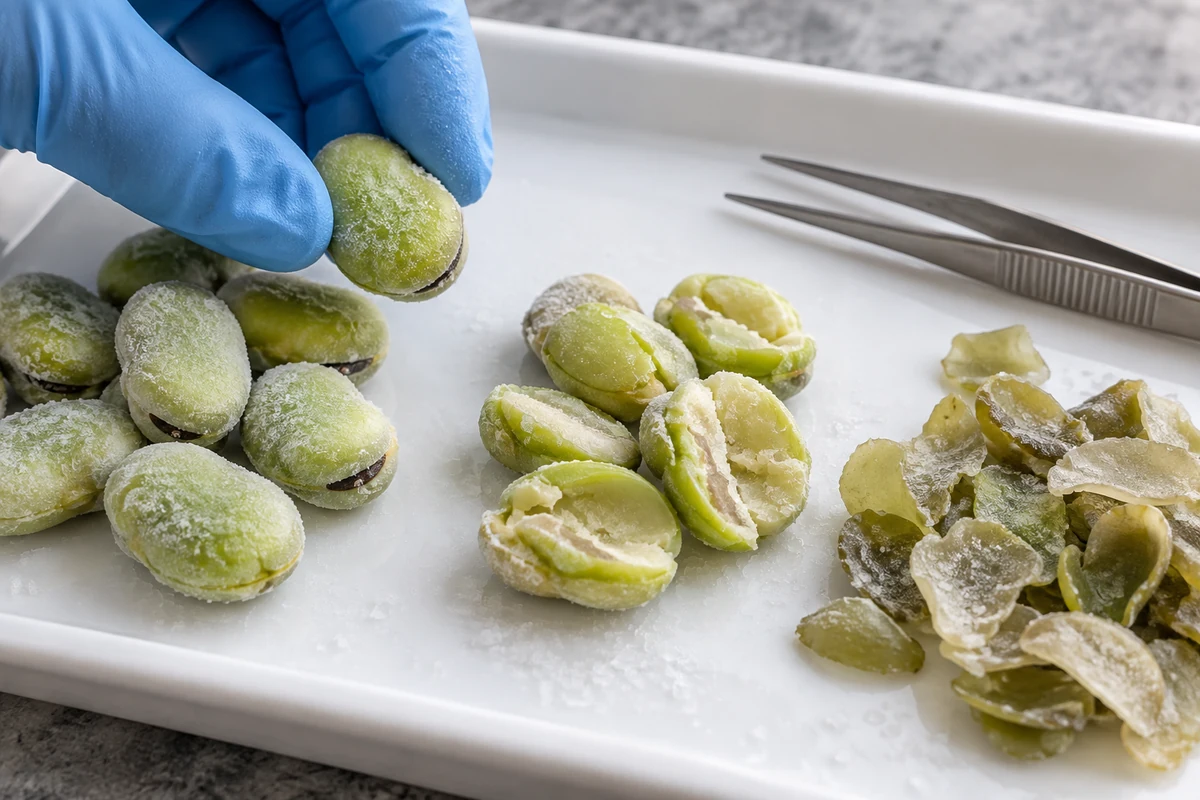
Intact broad beans, split pieces and loose seed coats in a sample. Illustrative food photograph.
Ask for quantity and lead time against the defined grade and pack. A supplier's general ability to offer frozen beans does not establish an immediate stock position for every size, skin state or private-label format. Confirm the shipment window, destination and requested documentation after the product description is stable. That gives both parties a clear basis for availability and price.
At receipt, review the frozen condition, packaging integrity and lot identity together. Record unusual clumps, excessive frost or damaged liners for investigation under the agreed acceptance method. Those observations can identify a concern, but a photograph alone cannot reconstruct the entire temperature history. Keep any available transport records with the case and sample evidence so the disposition is based on the whole shipment file.
A replacement approval should also define how changes are handled. A different cultivar, maturity range, skin-removal route or cooking state may require another application trial even if the product name remains the same. Agree which changes need advance notice and who can approve them. This is particularly useful when purchasing across crop seasons or adding a second source for continuity.
Retain the original reference product and the accepted replacement specification as separate records. They may both remain useful for different customers or recipes. A fava substitution that improves a dip does not automatically replace lima beans in every frozen meal. The lasting value of the trial is a clear, repeatable decision for a specific dish, backed by the correct identity, preparation and supply agreement.
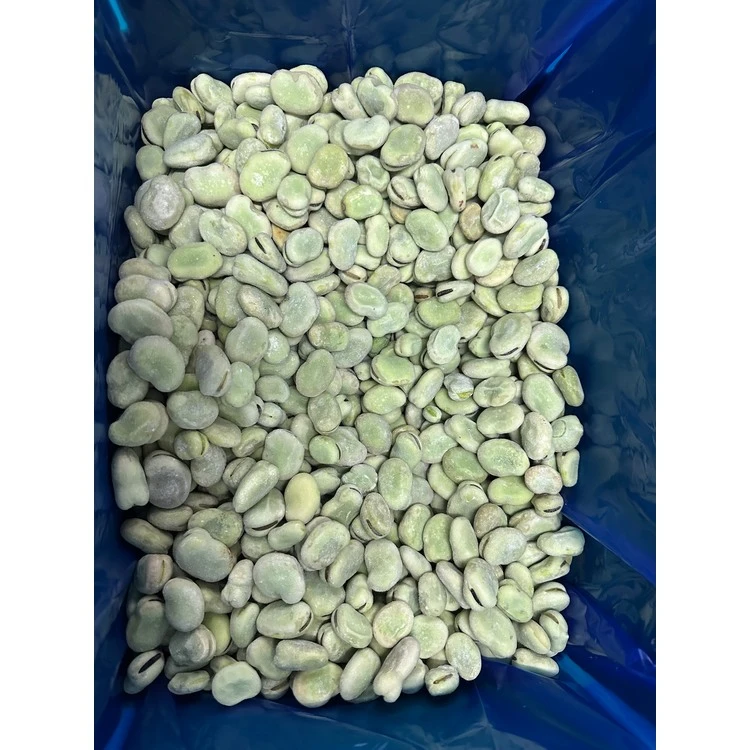
Shelled skin-on broad beans in a lined carton.
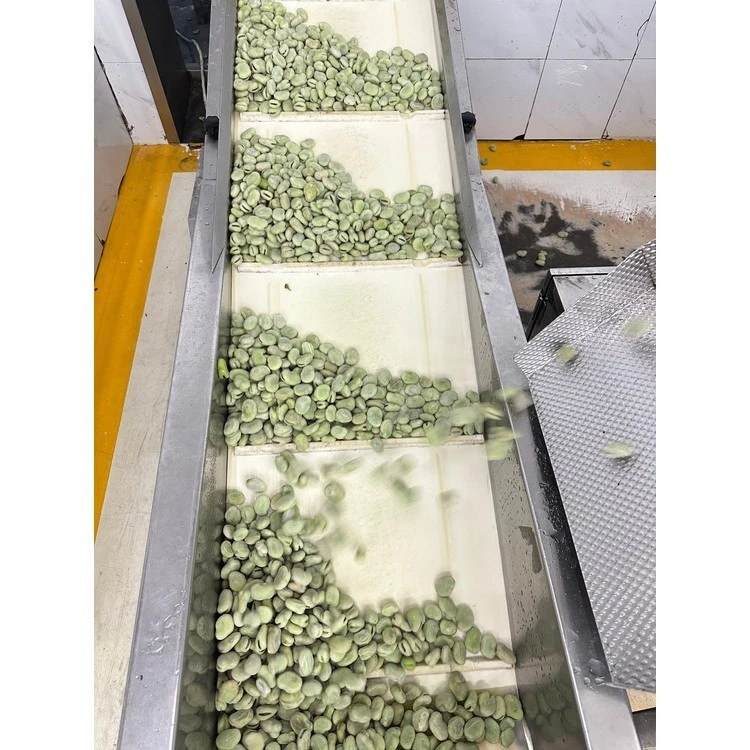
Shelled broad beans at a conveyor transfer point.
Continue reading
Are Edamame and Lima Beans the Same?
Compare another green-bean substitution and understand why introducing edamame requires soy labeling review.
Source frozen broad beans with GreenLand-food
GreenLand-food is a professional frozen broad beans supplier and manufacturer in China, providing factory-direct wholesale supply for importers, food manufacturers, foodservice distributors, and private-label programs.
Send the product form, specification, packing, quantity, application, destination, private-label needs, and requested documents.