


Frozen Garlic Scapes: Fibrous Ends, Cut Length and Lot Acceptance
Oct 19, 2026
Leave a message

The method below is a proposed framework for a buyer and supplier to adapt. It does not set a universal defect percentage, sampling size or legal tolerance. Those values need to be agreed for the actual order and use. The aim is to make an acceptance decision reproducible, so that receiving staff can explain what they observed and why the lot meets or departs from the specification.
Define the scape and the defect before sampling
Garlic scapes are the flowering stems of garlic. They should be distinguished from cloves, flat garlic leaves and other green allium products. The Washington State University growing guide identifies scapes as immature flower stems and describes their culinary use. This botanical identity is useful background, but the appearance of a stalk cannot establish the treatment, storage history or quality of a commercial frozen lot.
Begin the specification with the usable material. State whether the product consists of stalk sections and how the upper bud area and lower ends are treated. If those structures are allowed in the product, define how they are assessed in the intended dish. If they are excluded, make the exclusion clear enough that an inspector can recognize it. A vague requirement such as clean tender scapes leaves too much room for different interpretations at production and receipt.

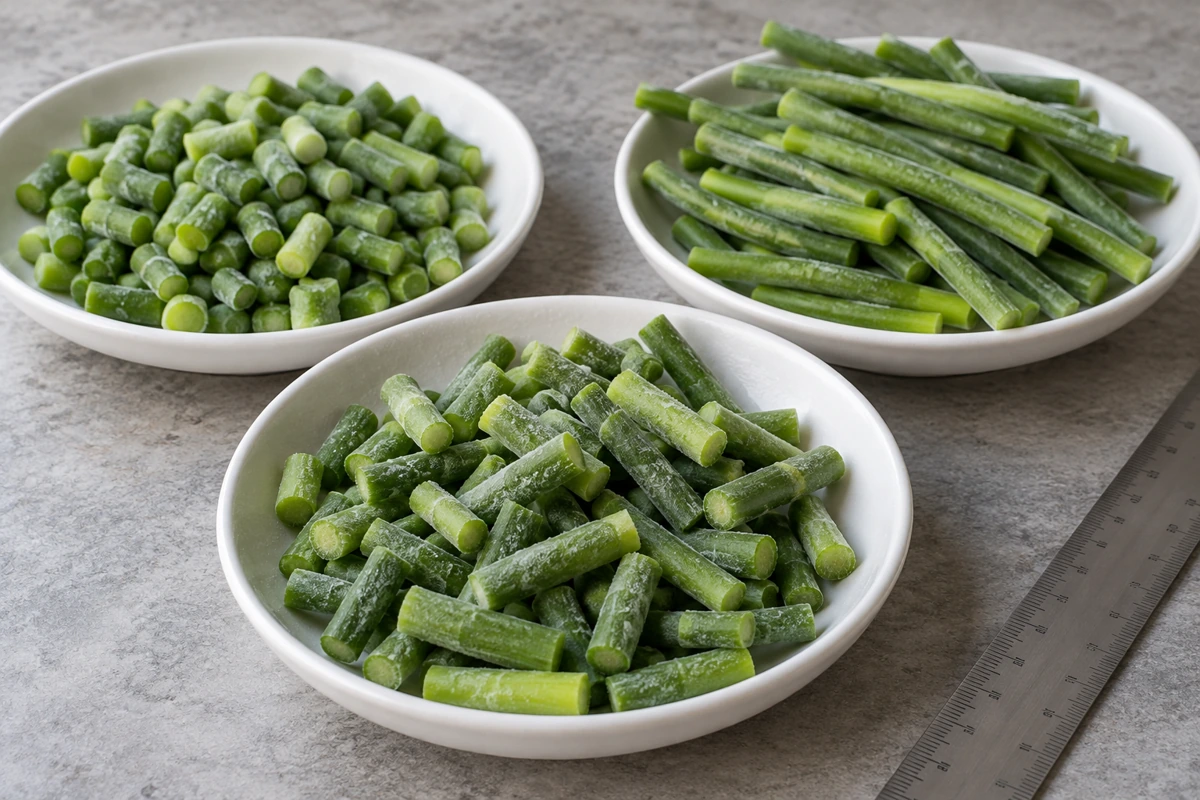
Whole scapes and cut stalk sections provide a raw-material reference for the usable form.
Fibrous should describe a recognizable condition. For this purpose, a buyer might define a persistent strand that remains after the agreed cooking method and interferes with a clean bite. That definition is different from ordinary firmness in an incompletely prepared piece. It is also different from a visible vascular line that causes no eating problem. Agree the observation with safely prepared examples before turning it into a numerical acceptance rule.
Keep cut defects separate from eating defects. A long piece may still be tender, and a short piece may still contain resistant fiber. A pale end, a broken segment and a piece of foreign material also require different descriptions and responses. Combining them under one general defect number can conceal a serious issue within an otherwise acceptable average. Food-safety concerns should follow the appropriate hold and investigation process regardless of cosmetic acceptance.
The reference photographs show the product's whole and cut forms. They are useful for discussing morphology and visible preparation. They do not prove that a new shipment has the same cut distribution or cooked result. Use the actual lot sample to make that assessment, and retain the original product and sample identifiers throughout the evaluation.
Document the intended application at the same time. A short inclusion for a cooked dumpling filling has different requirements from a recognizable vegetable piece in a stir-fry. A tolerance that works for one should not be transferred automatically to the other. The application tells the team which differences matter and which observations are simply descriptive.
Draw a sample that represents the lot
The lot boundary comes before the sample size. Identify which production, packing or shipment units the result will represent. A container can contain more than one lot, and one lot can be distributed across several pallets. If the identity is unclear, a favorable sample cannot resolve that uncertainty. Match the cases, inner packs and supporting documents before interpreting the inspection result as a lot decision.
Agree how increments will be selected across that boundary. The plan may need to cover different cases, pallet positions or production segments, depending on the order and the relevant quality system. The number and location of increments should come from the approved sampling arrangement. Do not choose only the most accessible open carton or the top layer of attractive pieces, because that can omit variation the buyer will encounter during normal use.
A practical sampling sequence is:
- Confirm the lot identity and the units included in the inspection.
- Select unopened packs or case locations according to the agreed plan.
- Collect the required increments while preserving their location and pack identity.
- Allocate material to frozen appearance, cut measurement and cooked assessment without selecting the best pieces.
- Retain the agreed reference material and record any departure from the method.
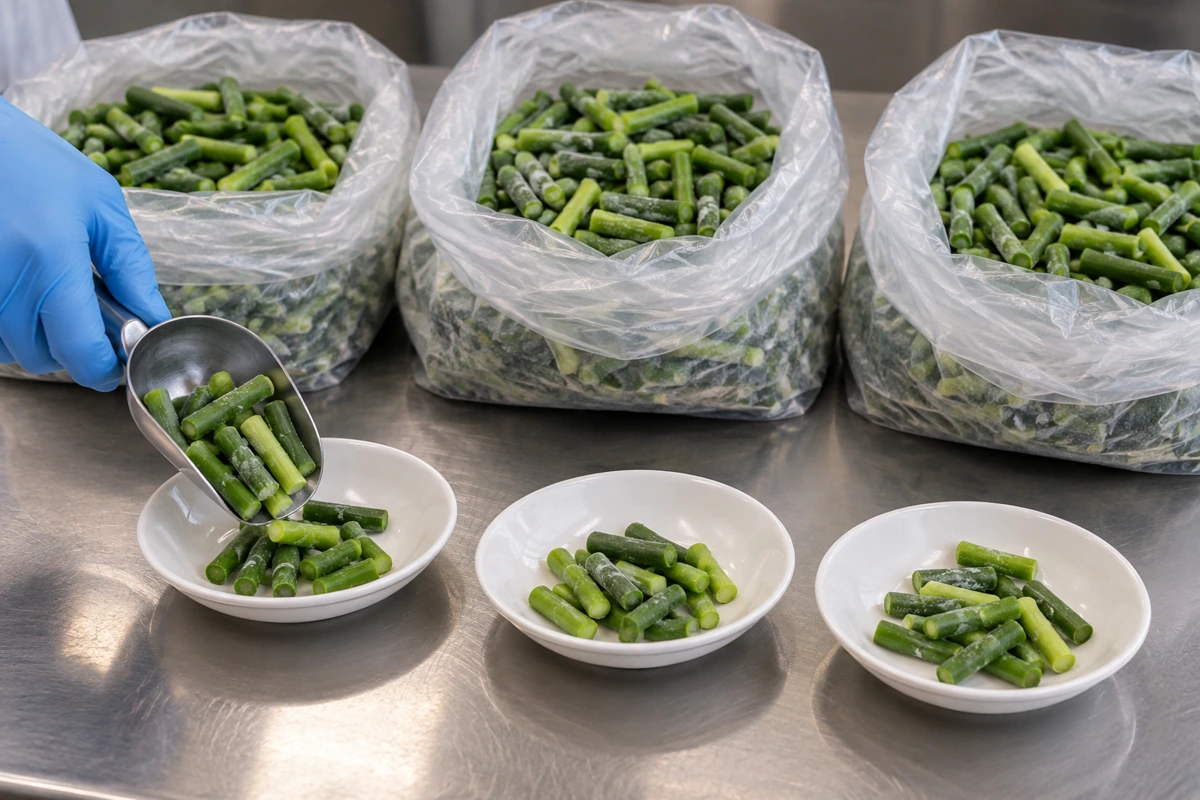
Retaining increment identity helps reveal variation between sampled packs.
Keep increments separate initially when the team needs to detect variation between bags or locations. A composite sample may be appropriate for some measurements, but it can hide a localized problem if all observations are reduced to one average. Record which results came from separate increments and which came from pooled material. That distinction is valuable when deciding whether to investigate one affected area or the wider lot.
Handle the sample under the product's required conditions. Unnecessary warming can change the frozen appearance and the ease of separation before the inspection begins. Use suitable clean tools and containers, record any controlled thaw required by the method, and avoid damaging pieces during collection. A long piece broken by the sampling tool should not be silently counted as a short production fragment.
The sample needs enough material for the intended cooking trial as well as the physical checks. A tiny sample may allow a photograph but fail to reproduce the normal pan charge or filling batch. Discuss this requirement before shipment of a development sample. The receiving team should know whether the material is for preliminary product exploration or for a formal acceptance decision under the order agreement.
Finally, record who performed the inspection and which procedure version was used. These details are useful when two teams disagree. A difference in method can produce a difference in result even when both teams work carefully. Reconciliation starts by comparing the actual sampling and preparation steps.
Measure cut length without hiding the tails
A nominal cut length describes the intended setting or target. It does not describe every piece in the bag. For a buyer, the practical questions are how widely the pieces vary, how many are unusually short or long, and whether that variation affects feeding or eating. A single average can conceal a mixture of fragments and long stalk sections that happens to fall near the target value.
Agree the measurement condition before starting. Frozen pieces may be difficult to separate without breakage, while thawed pieces may bend or deform. The procedure should state how the sample is prepared, whether a curved piece is measured along its centerline or by another defined approach, and how broken pieces are treated. The method needs to be simple enough for both supplier and receiver to repeat.
Use a suitable scale or measuring tool and record the units. If a length band is specified, classify pieces against the same boundaries at both ends. Clarify how a piece exactly on a boundary is counted. These small details prevent avoidable disputes when the result lies near an agreed limit. A photograph beside a ruler can support the record, but it should show the relevant scale clearly and use a view that does not distort the apparent length.
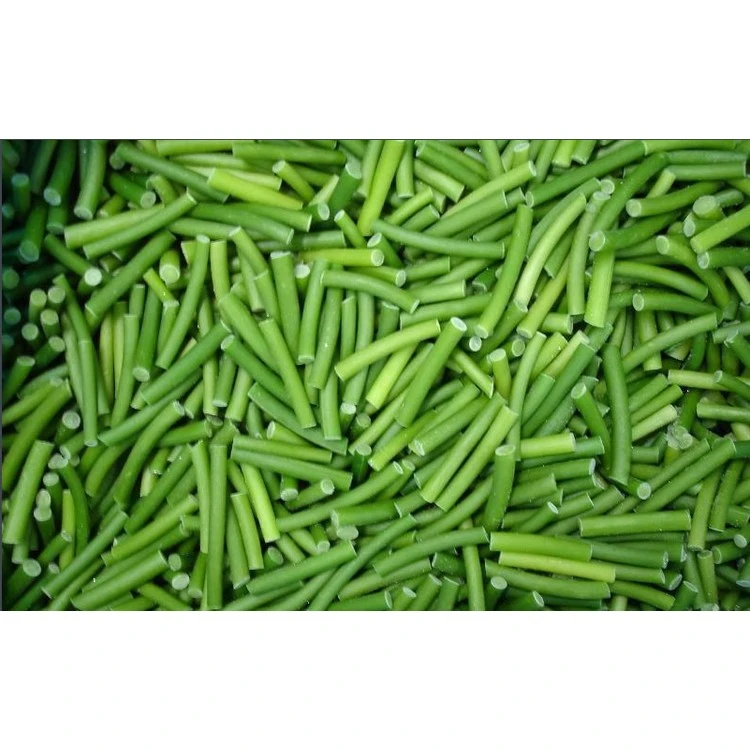
A cut-stalk sample makes the visible length distribution easier to examine.
The denominator matters. A count-based result describes how often a piece occurs; a mass-based result describes how much product weight it represents. Short fragments can be numerous while contributing relatively little mass. Long thick pieces can contribute substantial mass with a small count. Neither measure is universally superior. Choose the basis that fits the application and state it explicitly in the specification and report.
| Observation | Count basis can reveal | Mass basis can reveal |
|---|---|---|
| Short fragments | Frequency of small pieces in a portion | Share of ingredient weight present as fragments |
| Long pieces | Likelihood of an oversize piece being encountered | Weight represented by the oversize fraction |
| Fibrous pieces after cooking | Frequency of an objectionable bite | Weight of material classified under the agreed method |
Retain the distribution rather than reporting only pass or fail. The buyer may discover that the lot meets the limit but creates a practical feeding problem at one end of the range. That information can improve the next specification without rewriting the result of the current inspection. Acceptance and product improvement are related but separate decisions.
If diameter varies enough to influence the recipe, record it as an additional observation. Length alone may not explain different cooking behavior. Avoid creating unnecessary measurements that no one uses, but include the dimensions that affect the actual process. The purpose of inspection is a useful decision, not the largest possible table of numbers.
Assess fibrous ends after a controlled cook
Cooked assessment should reproduce the intended use closely enough to distinguish acceptable firmness from persistent fiber. Establish the product quantity, equipment, liquid or oil addition, preparation route and serving condition. Follow the applicable safe cooking instructions before tasting. A method designed only to make a sample easy to chew can conceal the behavior that occurs in the buyer's real recipe.
Prepare the reference and test sample under comparable conditions. If one sample starts frozen and the other has been thawed and drained, the comparison includes a handling difference. If one pan is crowded, its heating and evaporation may differ from the other. Keep those variables controlled, or record the difference and explain why it is part of the intended use. The evaluation should reveal the ingredient's performance through the chosen process.
Observe the safely cooked pieces in more than one way. A fork can help separate softened tissue and reveal a persistent strand. A normal bite shows whether the material remains objectionable during eating. For a minced filling, spread a portion thinly and inspect whether long fibers remain visible or pull through the mixture. Use the observation most relevant to the finished product instead of insisting on one universal test.

A lengthwise cut reveals the internal grain; the eating assessment remains a separate check.
Record the condition of the problem piece. Was it a thicker lower-stem segment, an upper tip, a long cut or a piece that appeared otherwise ordinary? Keep examples where practical and photograph them under consistent lighting. The information can help the supplier improve trimming or sorting. A report that says fibrous without describing the piece gives little direction for corrective work.
Avoid assigning tenderness from color alone. Bright green pieces can remain resistant, and a color change during cooking does not establish a particular fiber level. Likewise, easy fork penetration through the outer tissue may coexist with a persistent inner strand. The agreed method should focus on the eating defect that matters rather than a convenient visual substitute.
When assessors disagree, compare their preparation and interpretation before averaging their scores. One person may be judging initial firmness while another is judging the strand left after chewing. A small set of agreed reference examples can improve consistency. Record the descriptive terms and the decision rule so that new staff can learn the same distinction.
A failed fiber result should not automatically lead to longer cooking. Extra exposure may damage otherwise suitable pieces and change aroma or yield. Investigate whether the material itself falls outside the intended application. Any proposal to use the lot in another product needs a separate quality and safety decision, with the actual alternative use assessed on its own merits.
Separate frozen appearance from eating quality
Frozen appearance provides useful information about packing and handling. Inspect whether the pieces are loose, lightly clustered or joined in a compact mass; whether there are visible fragments; and whether the bag contains unusual ice or damaged material. These observations can affect portioning and recipe loading. They should be recorded separately from the cooked texture result so that the cause and practical consequence remain clear.
A cluster does not reveal the complete temperature history. It may warrant investigation, especially when it differs from the approved reference, but the decision should also consider packaging, records and product behavior. Avoid diagnosing a specific thaw-and-refreeze event from a photograph alone. A current temperature reading is similarly limited: it describes the condition at that point, while the route history may require other evidence.
Check packaging integrity before attributing a problem to the vegetable. A damaged liner can expose pieces to drying or contamination and can introduce foreign-material concerns. A poorly closed inner pack may behave differently from an intact one within the same outer case. Record the pack identity and preserve the relevant evidence rather than mixing all material together immediately.
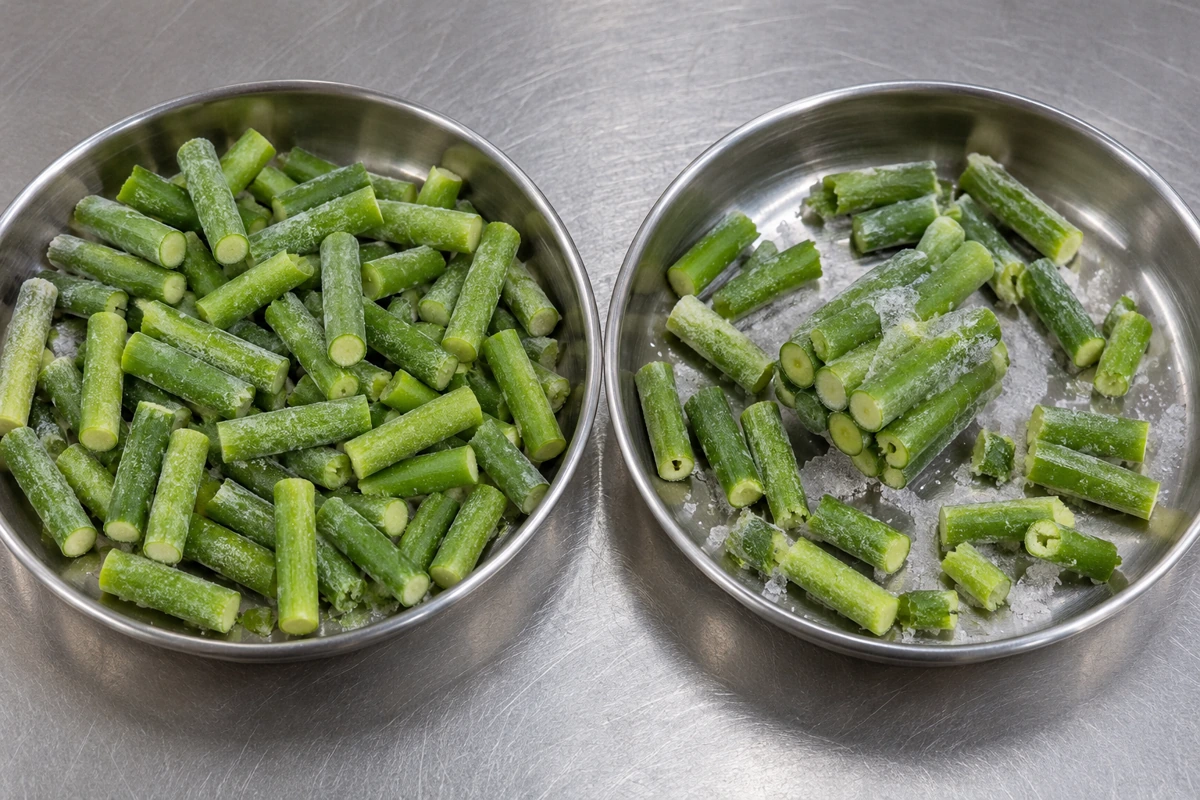
Record clustering, fragments and surface condition separately from cooked tenderness.
Some visible variation may be acceptable for one application and unsuitable for another. A short fragment may disappear harmlessly into a cooked filling but create a poor appearance in a vegetable side dish. A paler stalk section may affect presentation without causing a texture defect. Define these characteristics in relation to the agreed product, and keep any safety concern outside a purely cosmetic scoring exercise.
The National Center for Home Food Preservation makes clear that freezing does not sterilize food. Therefore, visual acceptance is not microbiological release. Where testing or process verification is required, confirm the product, lot, sample basis and scope of the evidence. A report for a different SKU or an unidentified sample cannot establish the status of the cases being received.
For practical receiving, use a short observation form that preserves these distinctions. Include pack condition, frozen form, cut distribution, cooked result and the required record checks. The form should make it possible to explain why material is accepted, held or rejected without relying on a single overall impression. A concise, well-defined record is more useful than a long checklist with ambiguous terms.
Write a practical acceptance decision
The acceptance decision should follow the agreement that existed before the lot was inspected. Define which observations are informational, which have negotiated limits and which require a hold regardless of other results. A change in the buyer's preference after receipt is a different issue from a lot that fails an agreed specification. Keeping that distinction clear supports fair and useful communication.
Use explicit units and denominators in the result. For example, a report can state that the specified number of pieces was examined and identify the fraction classified under the agreed fibrous-piece definition. This article supplies no numerical limit because the acceptable level depends on the application and contract. The actual report should state the observed result, the agreed limit and the method reference without substituting a generic industry figure.
Define how overlapping defects are handled. A piece can be both long and fibrous, or both broken and discolored. The report may need separate counts for each characteristic while also identifying the number of affected pieces overall. Without a rule, one team may count the piece twice and another once, creating an apparent disagreement that comes from arithmetic rather than product quality.

A reference comparison needs the same preparation and serving conditions.
The response to a marginal or failed result should also be agreed. Options may include holding the lot for investigation, obtaining additional information, conducting an authorized repeat assessment or rejecting the affected material. An additional sample should follow a defined plan; repeatedly sampling until a favorable result appears undermines the original decision. Preserve the first result and the reason for any further work.
Separate commercial disposition from a safety release. A buyer may accept a cosmetic deviation through an authorized concession, but that does not resolve an identity discrepancy, a required cooking-status issue or a food-safety concern. The responsible quality team should determine the appropriate route. The supplier and buyer need a clear contact and record for any concession so that the exception does not silently become the next order's normal standard.
Include the final decision and its scope in the report. State which lot and quantity it covers, whether any portion remains on hold and what follow-up is required. A simple accepted stamp without that context can be misapplied to other cases. The receiving team should be able to connect the decision to the material released for use.
Where an alternative application is proposed, evaluate it separately. A cut unsuitable for a visible stir-fry inclusion may or may not work in a finely processed cooked product. The proposal needs evidence from the alternative process and the relevant safety controls. Reclassification should be a deliberate decision with traceability, rather than an informal way to avoid recording a failed original use.
Carry the approved reference into repeat orders
An approved reference should include both the ingredient and the method that produced the accepted food. Retain the specification version, sample identity, photographs, physical measurements and cooked assessment. Where a physical reference is kept, define its storage and review period so that deterioration in the reference itself does not distort later comparisons. A photograph remains useful for shape and color, but it cannot preserve aroma or mouthfeel.
The repeat-order file should state which changes need review. A different cut, treatment, pack or source material can affect performance even if the product name remains frozen garlic scapes. The supplier should know which characteristics are critical to the buyer's application. The buyer should also communicate changes in cooking equipment or formulation that could alter the result attributed to the ingredient.
Use the receiving history to improve the specification thoughtfully. If repeated lots show a wide distribution near the limit, investigate whether the target and production method are aligned. If the buyer repeatedly performs extra trimming, record that labor and yield loss rather than treating it as invisible kitchen work. The evidence can support a better cut or preparation request for future orders.
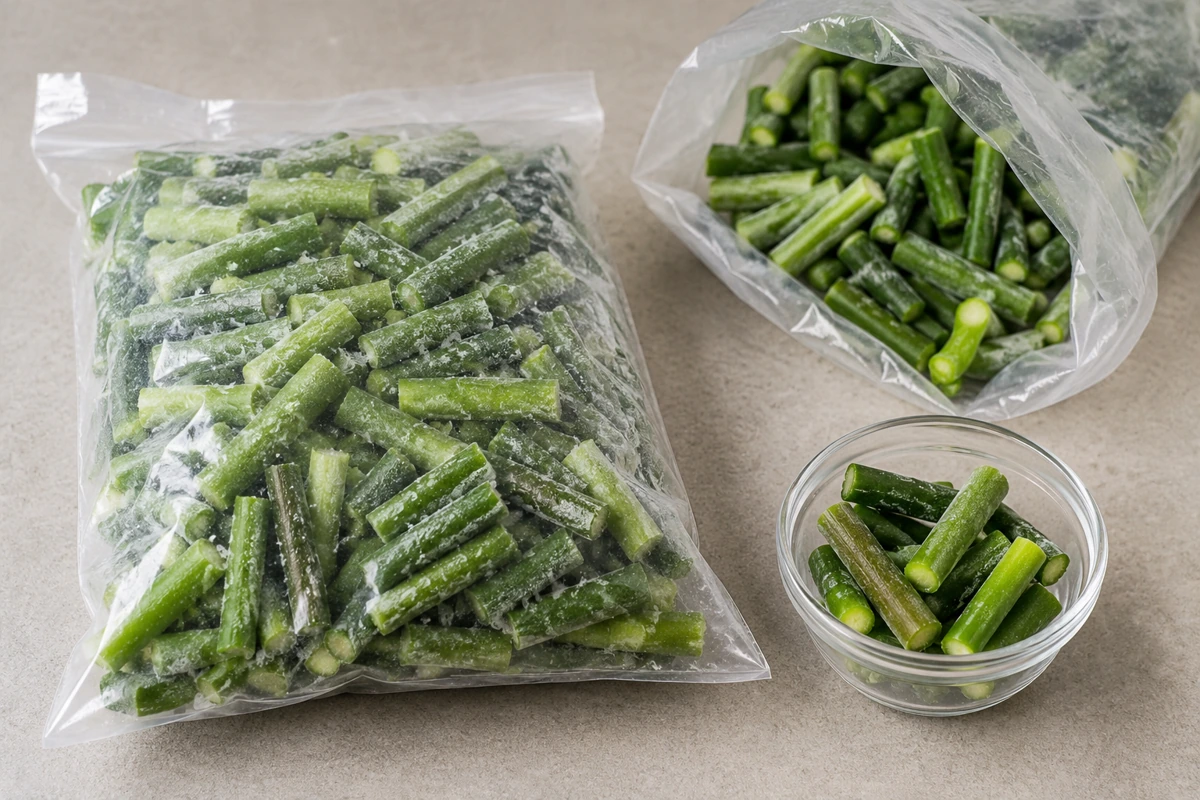
Keep the reference material connected to the agreed product and packing format.
Packing can improve consistency as well as convenience. An inner bag matched to the process charge reduces the need to estimate portions or leave opened material in circulation. A bulk pack may suit a line with controlled feeding and storage. Confirm the format through the actual handling trial, including opening, dispensing and the way fragments settle within the bag.
At GreenLand-food, the frozen garlic scapes product page is the starting point for discussing the proposed cut and application. Send the specification, cooked reference, packing, quantity and destination, together with the records required by your purchasing team. The sample and acceptance method should be agreed before a commercial shipment is treated as approved supply.
This leaves the receiver with a decision that can be explained: the correct product was sampled under an agreed plan, its cut distribution was measured on a stated basis, and its cooked performance matched the intended food. That record makes a future disagreement easier to investigate and a successful order easier to repeat.
Source frozen garlic scapes with GreenLand-food
GreenLand-food is a professional frozen garlic scapes supplier and manufacturer in China, providing factory-direct wholesale supply for foodservice, importers and food manufacturers.
Send your product form, specification, packing, quantity, application, destination, private-label needs and requested documents. Include your prepared-product reference so we can discuss the cut and order requirements.