


How to Cook Frozen Garlic Scapes: Tenderness and Aroma
Oct 19, 2026
Leave a message

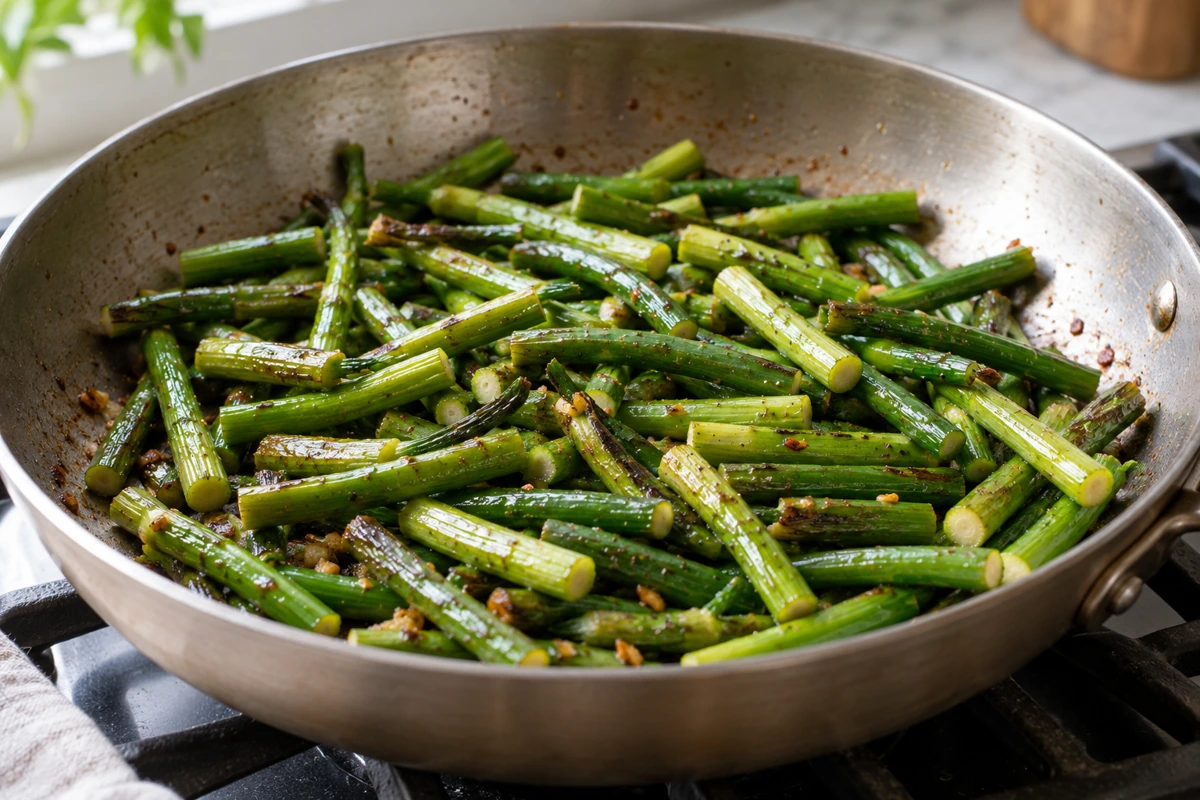
For a kitchen or food manufacturer, the useful question is how a particular frozen cut behaves in a repeatable recipe. Cut length, stalk maturity, any treatment before freezing, loading weight and the time spent in sauce all affect that result. We use those variables to frame a sample discussion, so that a pleasant first tasting can become a practical specification for repeat orders.
Read the frozen product before choosing the pan
Garlic scapes are the immature flowering stems of garlic. Their cylindrical stalks behave differently from cloves, chopped garlic leaves or spring onions. Illinois Extension describes their firm raw texture and notes that they may be frozen raw or after blanching. Consequently, a bag marked frozen garlic scapes does not, by itself, identify the amount of preparation already performed. That distinction belongs in the product specification and the cooking instruction.
A useful first inspection starts with the label and the unopened pack. Confirm the product name, cut, lot code, storage instruction and any declaration about heating before use. Look at the condition of the inner bag and whether the pieces are loose enough to portion. A compact frozen mass may need a different handling arrangement from loose pieces, even if both came from the same vegetable. Avoid breaking a large block with a knife or striking it against equipment; a suitable pack format should make ordinary portioning manageable.
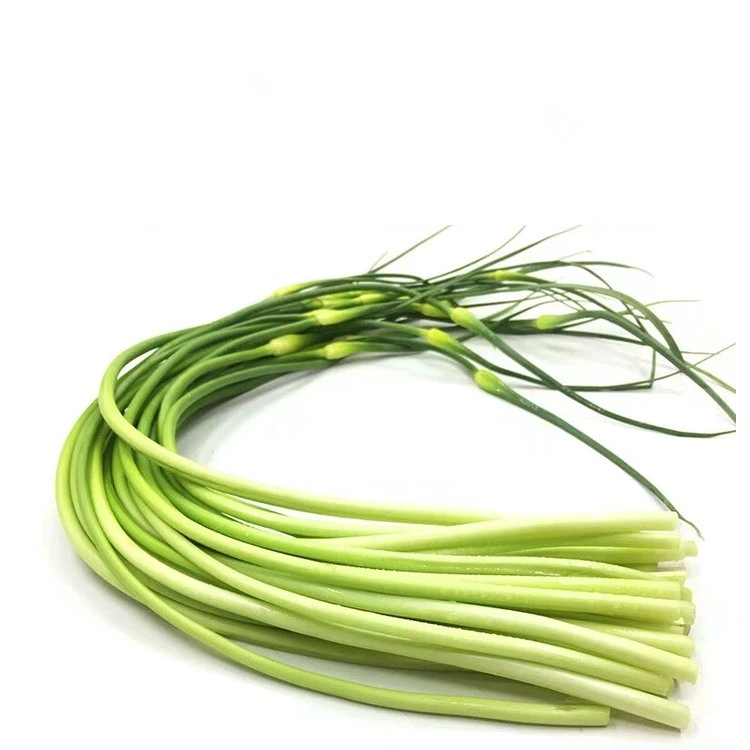
Whole scapes show the lower ends and upper structures considered during trimming.
Then take a representative portion for the recipe trial. Include the range of pieces present rather than selecting only the straightest green segments at the surface. A dish can taste excellent when tested with the most attractive pieces and disappoint when the remainder of the carton contains thicker lower-stem sections or many short fragments. Keep a small uncooked reference from the same lot so that an unexpected cooked result can be compared with the original cut distribution.
The real product photographs help identify stalk form and cut appearance, but they cannot establish the treatment of a future shipment. For that, ask for the specification and sample tied to the proposed order. A fresh whole-stalk reference is useful for understanding which part is being cut; it should not be read as a photograph of the finished frozen lot. Our frozen garlic scapes product page gives the relevant supply route for discussing those details.
Make the intended serving route explicit before tasting. A hot stir-fry, a soup ingredient and a chilled prepared salad place different demands on the same stalk. The FDA guidance on ready-to-cook foods emphasizes following cooking directions because freezing does not reliably remove harmful bacteria. A green color, a soft thawed texture or a brief blanch is not evidence that a product is ready to eat. Complete the required preparation before any sensory assessment.
Choose a cut that can become tender
Tenderness begins with the usable part of the stalk. Cooking softens plant tissue, but the result can still include resistant strands from a mature or poorly trimmed section. The cut end and the upper bud area deserve particular attention when whole scapes are being prepared. A buyer receiving cut frozen pieces has less opportunity to identify where each segment came from, which makes the supplier's trimming standard and the cooked sample more useful than a general promise of tender quality.
Cutting across the stalk changes the length of material in each mouthful. Shorter segments can be easier to distribute through rice, noodles or a filling, while longer pieces give a more recognizable vegetable appearance. These are application choices. There is no single length that guarantees tenderness across all harvests, diameters and preparation routes. A fine cut can reduce the length of a strand without making the underlying tissue suitable for every dish.
For a side dish, test whether the cooked piece can be bitten cleanly and whether the remaining tissue feels pleasant after several chews. For a filling, spread some of the finished mixture thinly on a plate and check whether individual stalk pieces protrude or pull away from the surrounding ingredients. For noodles, assess whether the scapes stay distributed when the food is lifted with the actual serving utensil. Each observation reveals something that a photograph of the raw cut cannot answer.
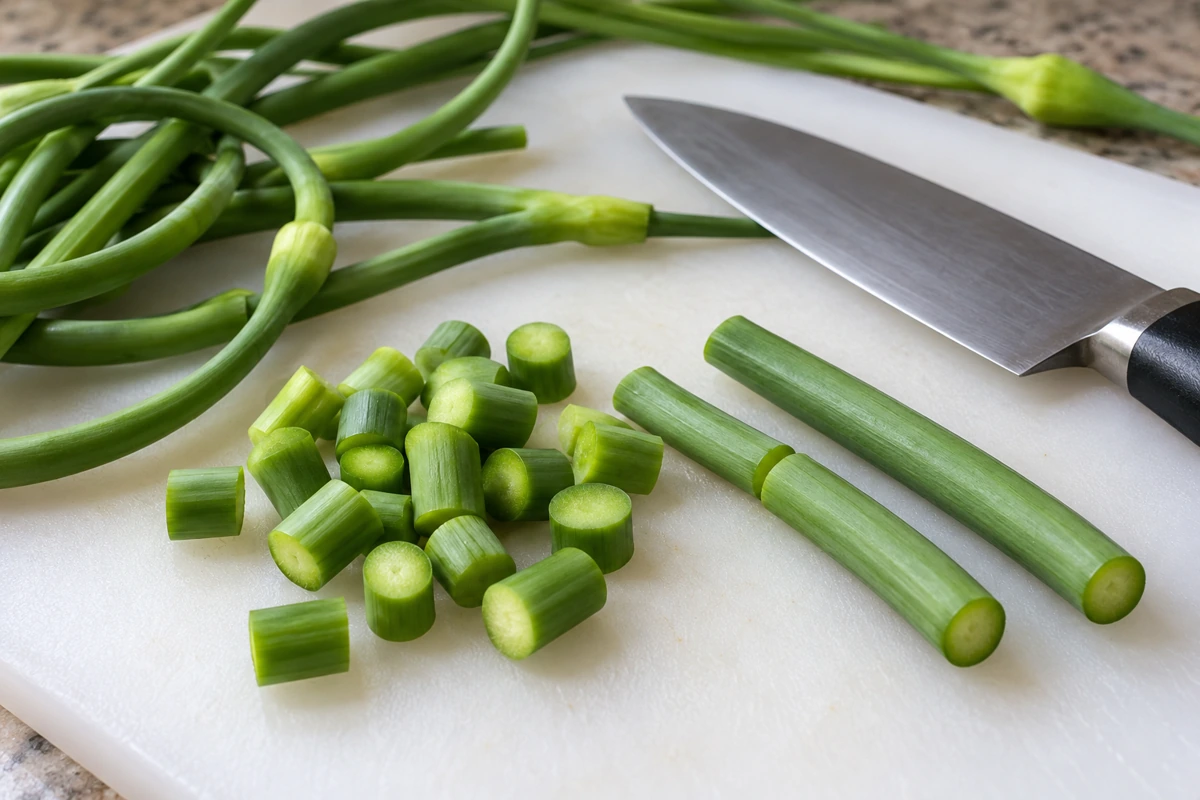
Cutting across the stalk shortens the length of material in each bite.
Diameter should be recorded alongside length when it varies substantially. Two segments of equal length may warm and soften differently if one is much thicker. Conversely, a thin piece is not automatically tender if it came from a fibrous section. Keep these variables separate during development: first compare the accepted stem material, then examine the proposed cut distribution, and finally run the cooking method. Changing all three together makes it difficult to explain why the outcome improved.
The practical purchasing decision is the cut that performs consistently with the equipment and serving format already in use. A restaurant finishing small orders may tolerate a wider range than a manufacturer feeding a portioning machine. If an application requires an unusually short cut, discuss the likely increase in fragments and the method used to measure the distribution. A nominal length alone can hide a mixture of very short and very long pieces. Ask how many pieces fall outside the agreed band and how the sample will be drawn.
Manage meltwater before building browning
Frozen pieces bring ice into the pan. As that ice melts, the water must either remain in the recipe or leave as vapor. When a large cold charge enters a small pan, the immediate result can be simmering in released liquid. Adding more oil does not remove that water. Increasing heat without allowing enough time and exposed surface may instead scorch the bottom while the center of the pile remains wet.
For a sautéed finish, use a pan and loading weight that let the pieces move and contact the cooking surface. Start with the product's cooking instructions, then establish the practical batch size through a small trial. Allow the heating and water-release stage to occur before deciding whether the pan needs extra liquid or oil. If a covered stage is used to help heat the pieces, remove the cover when the recipe needs evaporation and surface color. Keep the method consistent between trials.
The purpose of the water is worth considering before it is discarded. In a soup or sauce, released juice may belong in the finished food. In a dry rice dish, it may need to evaporate before other ingredients are combined. Draining changes both yield and the amount of material entering the recipe, so record it as a deliberate operation. Comparing one sample with all its liquid and another after uncontrolled drainage can produce a misleading difference in flavor strength.
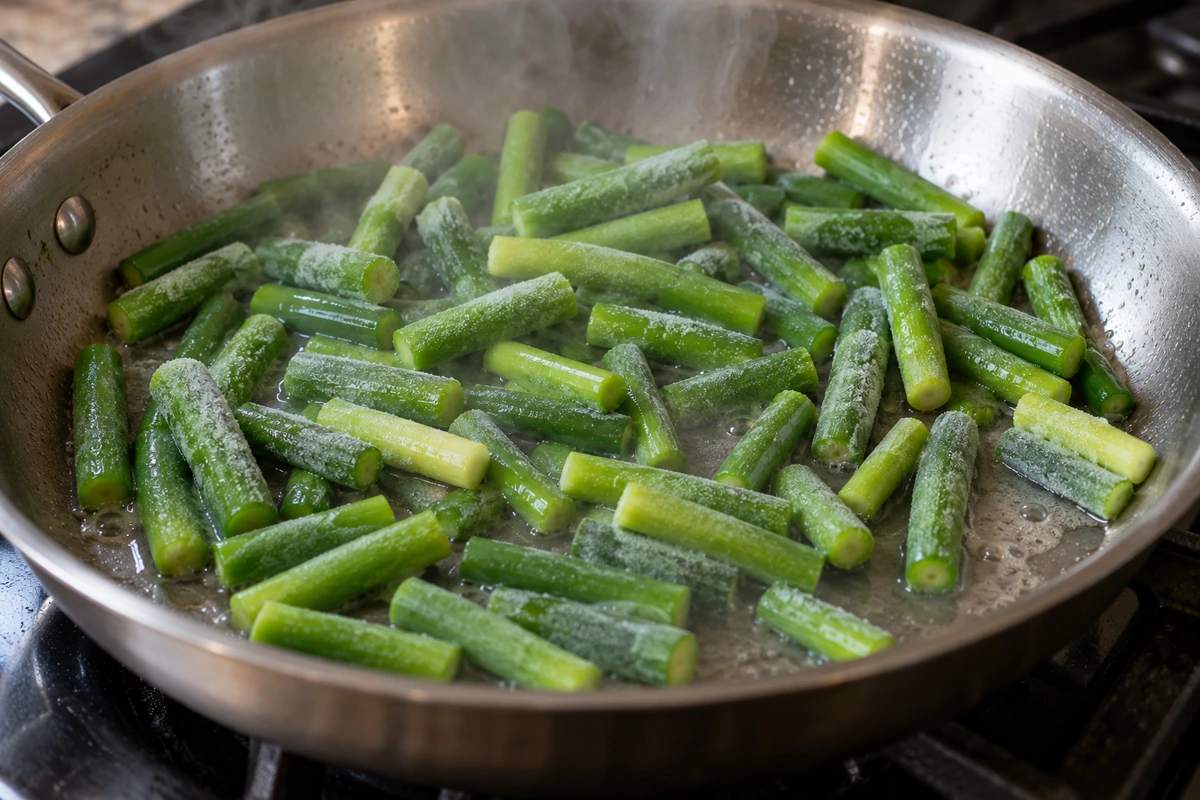
Released water needs a place in the recipe or time to evaporate before a dry finish.
A repeatable kitchen sequence can be written in four operations:
- Weigh the frozen portion and use the agreed pan, heat setting and preparation instruction.
- Heat the pieces through while observing how much free liquid appears and whether the charge remains easy to turn.
- Continue the chosen moist or dry cooking route until the required preparation is complete, then assess the stalk texture.
- Add the finishing sauce or glaze at the established point, and record the cooked yield and serving result.
This sequence is a development method, not a universal time-and-temperature instruction. The required safe process must come from the product and the operator's food-safety controls. Within that boundary, separating the stages makes the cooking result easier to diagnose. A sample that needs prolonged evaporation may require a smaller pan charge or a different ingredient arrangement; it does not necessarily need a stronger burner setting.
Keep other wet vegetables out of the first comparison unless they are part of the fixed trial recipe. Mushrooms, onions and a thin sauce can each add water. Establish how the scapes behave on their own, then restore the complete dish and measure the combined effect. This avoids blaming the frozen scapes for a moisture problem caused by the total loading pattern.
Choose the cooking route for the dish
A dry finish, a moist finish and a staged combination give different results. In a dry finish, the goal may be a lightly blistered surface and a distinct stalk bite. In broth, the goal may be a tender vegetable piece that contributes gentle garlic character throughout the liquid. In a prepared meal, the scapes may need to remain acceptable after both initial cooking and a later reheating cycle. The first tasting should reproduce the final route as closely as practical.
The following comparison describes development priorities, rather than fixed recipes or guaranteed outcomes.
| Cooking route | Useful trial observation | Common adjustment to evaluate |
|---|---|---|
| Sauté or stir-fry | Surface moisture, clean bite and distribution through the dish | Pan loading and the point at which sauce is added |
| Soup or braise | Tenderness after the intended simmer and flavor in the liquid | Cut length and total exposure to moist heat |
| Roast or tray finish | Dry edges, local browning and uneven pieces | Tray loading, turning and size distribution |
| Cook, chill and reheat | Bite and aroma after the complete service cycle | Initial cooking endpoint and final reheating method |
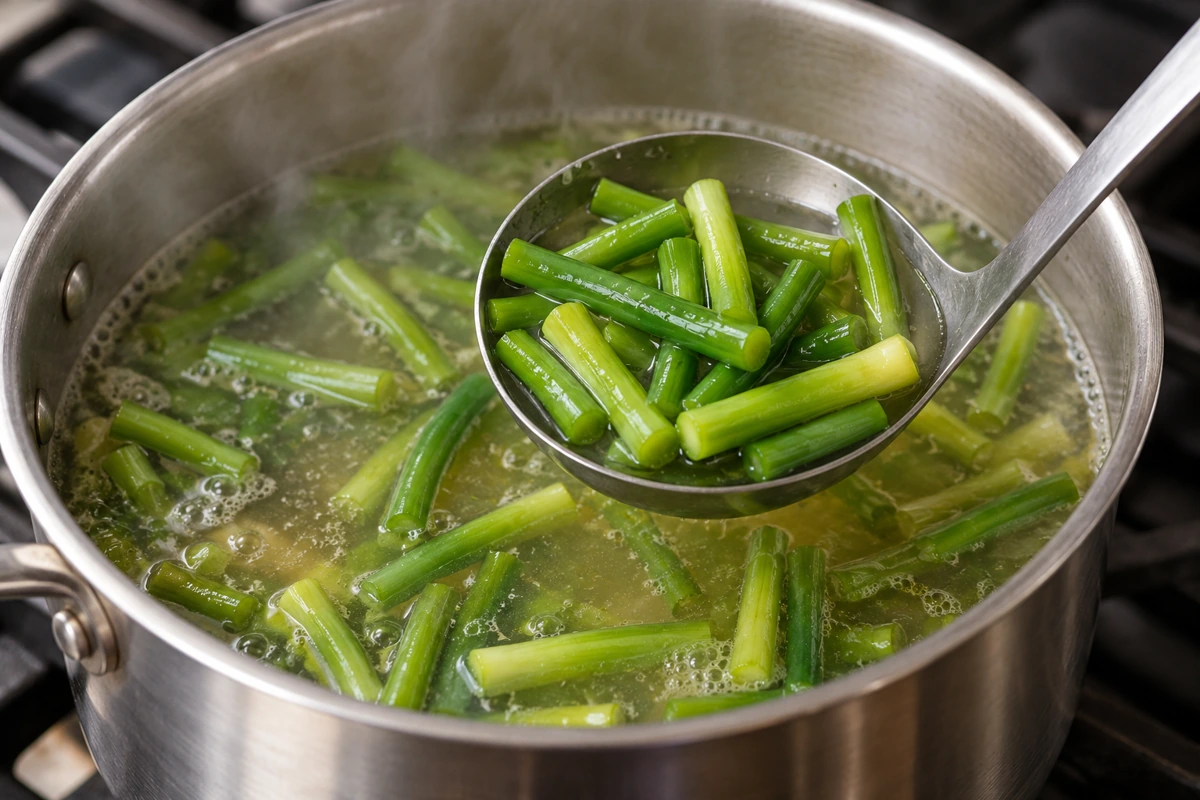
A moist cooking route keeps the released liquid within the dish.
A soup can make use of the released water, but it does not automatically make every fibrous stalk pleasant to eat. If the fibers remain after the intended simmer, longer cooking may weaken the surrounding tissue while leaving an unsatisfactory strand. Consider a different trim or cut before extending the process indefinitely. A recipe should not require excessive cooking simply to compensate for raw material that falls outside the desired eating quality.
Roasting requires attention to the mixture of sizes on the tray. Short fragments can dry at the edges while thicker pieces remain firm. Use the actual proposed cut during the trial, including its normal variation. A carefully hand-selected tray can conceal the problem that appears when an operator empties a whole bag onto a production tray. Record loading depth and whether the pieces are spread or piled, because those details influence how water leaves the food.
For a chilled or frozen prepared meal, evaluate the serving portion after the full validated cycle. Scapes that have an attractive bite immediately after the first cook may soften further during reheating. A sauce can also become thicker or thinner as it interacts with the other components. Keep the initial sample, the assembled meal and the reheated portion linked to the same trial record so that the team can locate the stage responsible for a change.
The best route is the one that meets the dish's sensory requirement within its operating constraints. Choose the result first: a separate vegetable bite, a soft aromatic inclusion or a dispersed seasoning. Then select the cut and method that deliver it without making the rest of the recipe difficult to control.
Judge aroma in the complete recipe
Garlic scapes contribute a green garlic character, and their cooked impression differs from the intensity of a freshly cut clove. University of Kentucky's scape resource illustrates several uses across butter, grilled vegetables, hummus and pesto. That range is useful because it shows why a single raw tasting cannot predict the effect in every food. Fat, salt, acidity, dilution and cooking exposure all change the context in which the aroma is perceived.
Start a formulation comparison with equal weighed additions of the same prepared scape basis. If one portion is weighed frozen and another after drainage, the apparent flavor difference may partly reflect different ingredient quantities. Use the same final recipe yield as well. A reduced sauce can taste more intense simply because it contains less water, while a larger batch of broth can make an otherwise suitable addition seem weak.
Taste the scapes within the intended food at its normal serving temperature after the required safe preparation. A concentrated spoonful from the pan can exaggerate the garlic note relative to the complete serving. In noodles, rice or a filling, examine several portions to see whether the ingredient is distributed evenly. A few long pieces may create an uneven experience even when the average addition rate is correct.
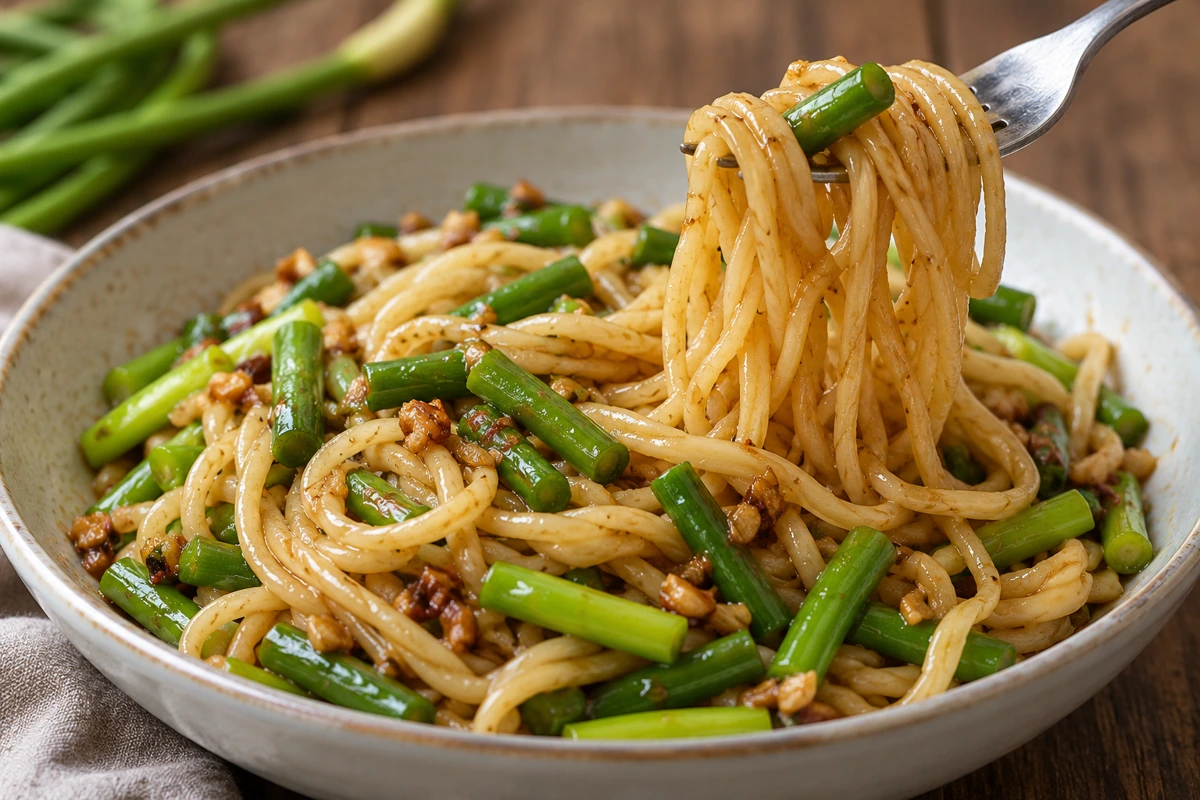
Assess garlic character in a normal serving with the other recipe ingredients.
Finishing ingredients should enter the comparison in a controlled order. A sweet glaze can brown quickly and obscure the condition of the stalk surface. A strongly flavored oil or spice mixture can mask the distinction between two lots. Establish the base result first, then add the normal finish and decide whether the difference still matters. The final recipe is the acceptance context; the simpler base helps explain what changed.
Where a product is held before service, assess it after the normal holding interval under the operation's established controls. Aroma and texture at immediate plating may differ from those after distribution, holding and reheating. Write down when the tasting occurred and which stage the panel preferred. An approval that says only good garlic flavor leaves the next operator guessing about the actual serving condition.
Avoid using an aroma preference as a safety decision. A normal smell does not establish microbiological suitability, and a muted smell does not prove that the cold chain failed. Unexpected odors, damaged packs or an unexplained handling history should be investigated through the appropriate quality and safety process. Sensory observations are valuable when they are recorded alongside the product's identity, treatment and storage evidence.
Find the cause of a tough or watery result
A tough result can arise from several different situations. The stalk may contain persistent fibers, the cut may be too long for the mouthful, or the thickest pieces may not have received enough of the intended cooking exposure. These causes call for different responses. Pull apart a safely prepared sample with a fork and examine whether the tissue is uniformly firm or whether soft flesh surrounds a resistant strand. Record that distinction before changing the recipe.
If the entire piece is firm, review the cooking method, loading weight and size distribution. If the exterior is soft while long fibers remain, review trimming and raw-material suitability. If only a small group of pieces behaves differently, retain those pieces and compare them with the rest of the sample. A few problem segments can be concealed by an average tenderness score, particularly when the finished product is sold in small individual portions.
A watery result also needs a clear reference. Measure the final yield and observe when liquid appeared. Water may come from ice on the ingredient, from the vegetable tissue, from another ingredient or from a deliberately added sauce. Evaporation can differ because of pan shape, loading and lid use. Record these conditions before assigning a defect to the scapes. Repeating the same recipe with a known accepted lot can help isolate the ingredient effect.
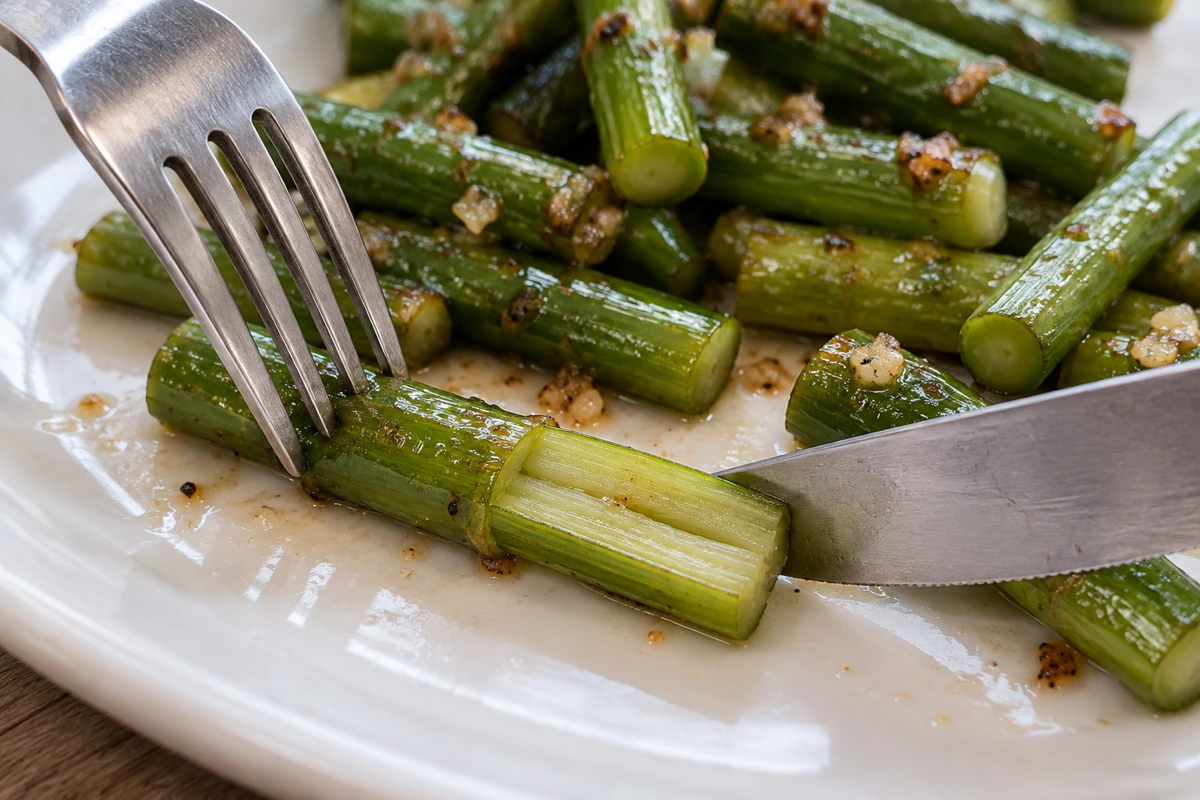
Splitting a cooked stalk exposes the internal tissue for texture inspection.
Color should be considered with the food's intended appearance. Light blistering may be welcome in a stir-fry, while extensive darkening may be unsuitable for a green vegetable inclusion. Pale cut ends can have a different visual impact from dark scorched surfaces. Photographs taken under the same lighting and against the same plate are helpful for discussion, but an image cannot replace the texture and aroma assessment.
When a trial fails, change one major variable at a time where possible. Reduce the charge while retaining the cut, or compare a shorter cut under the same cooking method. Keep a written reason for the change. This approach can reveal whether the current ingredient is workable with a reasonable adjustment or whether a different specification is necessary. It also prevents a successful result from depending on an undocumented collection of small interventions.
For commercial development, record labor and yield along with the sensory improvement. A method that requires sorting every bag or discarding substantial prepared material may be unsuitable even if the final plate tastes good. The useful comparison is the cost and consistency of producing an acceptable serving through the normal operation.
Turn a successful cook into a purchasing specification
Once the recipe works, describe the ingredient in terms another team can repeat. State the product identity, accepted stem material, cut distribution and the required treatment declaration. Link the frozen sample to the cooked reference and the method used to prepare it. Include the serving condition that matters: immediately finished, held for service or reheated within an assembled meal. This gives the supplier and buyer a shared basis for discussing variation.
Acceptance limits need to be agreed from the application and the sampling plan. Do not borrow a percentage from an unrelated vegetable or call a preferred cut length an industry rule. Define how short pieces, long pieces and fibrous segments are counted or weighed, which condition is used for assessment, and what happens when the result falls outside the agreement. A count-based limit and a mass-based limit answer different questions and should be labeled clearly.
The sample quantity should allow the buyer to run the actual method and keep a reference. A single handful can demonstrate a concept but may not represent the variation across a commercial lot. Discuss the number and location of increments, whether separate bags remain identifiable, and the evidence required before shipment. The purpose is to connect a favorable tasting with a lot that can be received and used consistently.
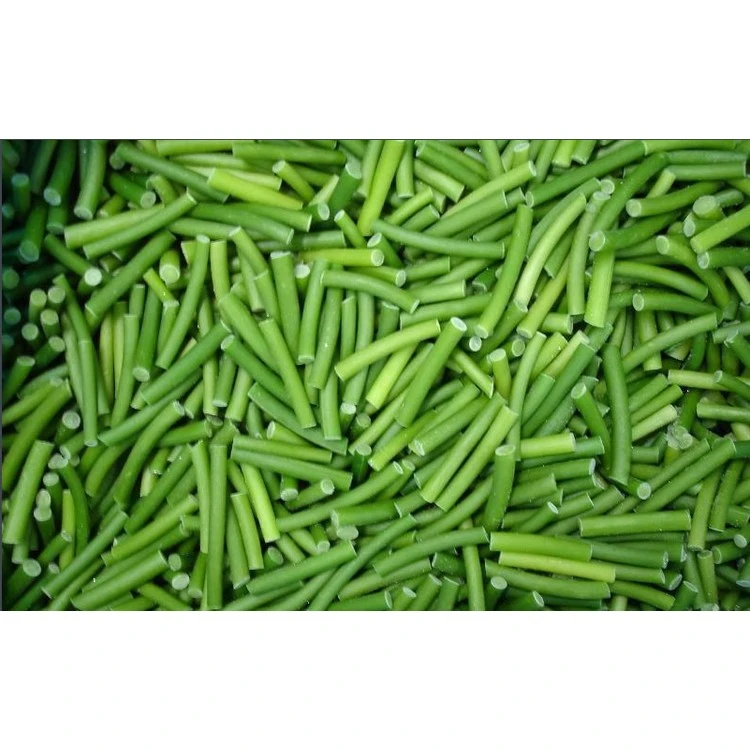
A cut-stalk sample makes the visible length distribution easier to examine.
Packing belongs in this discussion because it controls how the ingredient reaches the pan. A bag that matches one cooking charge can reduce partial-pack handling. A larger bulk pack may suit a continuous line if the pieces remain practical to meter. Confirm the net weight, liner, opening method and storage instructions with the actual order. The label should communicate the preparation status accurately to the people who will use the product.
At GreenLand-food, we can use your proposed dish and cooked reference to discuss the frozen garlic scape specification. Send the recipe context, cut preference, packing, quantity and destination, together with the documents your purchasing team needs. MOQ, lead time and any special preparation requirement should be confirmed for that request. A clear cooked-use reference makes those conversations more useful than a general request for the best grade.
Keep the approved recipe and sample record available for repeat orders. If the form, treatment, pack or cooking equipment changes, repeat the relevant part of the evaluation. That small discipline preserves the result that made the ingredient worth buying: a scape piece with the right bite, an appropriate garlic aroma and predictable behavior in the finished food.
Source frozen garlic scapes with GreenLand-food
GreenLand-food is a professional frozen garlic scapes supplier and manufacturer in China, providing factory-direct wholesale supply for foodservice, importers and food manufacturers.
Send your product form, specification, packing, quantity, application, destination, private-label needs and requested documents. Include your prepared-product reference so we can discuss the cut and order requirements.