


Haskap Syrup and Beverage Bases: Straining, Acidity and Color
Oct 19, 2026
Leave a message

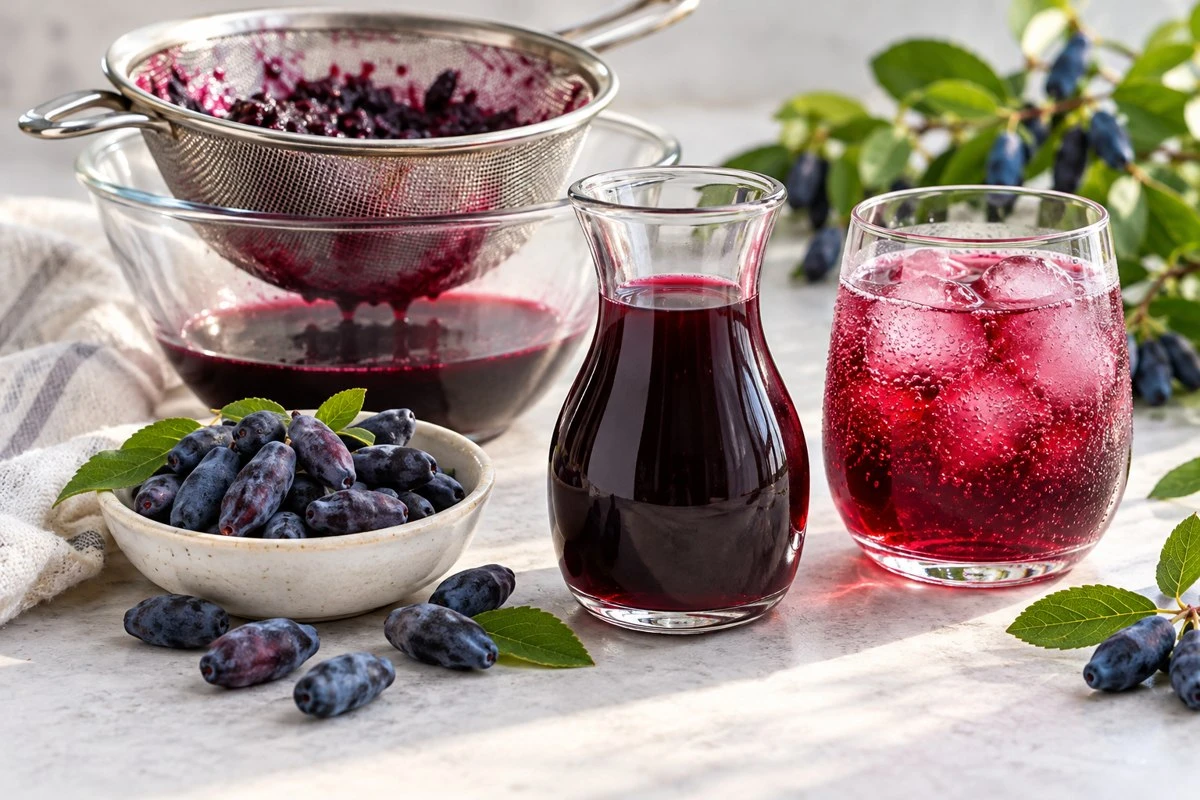
Choose the base around the drink you will sell
A clear sparkling drink, a cloudy fruit beverage and a spoonable dessert syrup ask different things of the same berry. The sparkling drink may need very little suspended skin or seed material, because particles become conspicuous against a bright bottle. A cloudy drink can carry some fruit solids if they remain acceptable throughout use. A dessert syrup can have more body, but still needs to pour through the chosen closure without plugging or leaving a watery first portion. Write that serving description before choosing a sieve or asking for a juice yield.
The word base can also hide a purchasing misunderstanding. Whole frozen berries, crushed fruit, puree, extracted juice and sweetened syrup have different ingredient declarations and processing histories. Buying whole fruit transfers extraction and solids management to the beverage maker. Buying juice transfers those operations upstream, while the buyer still needs to know how the juice was produced and whether it received a validated treatment. A supplier's use of the term concentrate should be clarified through the actual composition and concentration process. A sweetened syrup is not automatically a concentrated fruit juice.
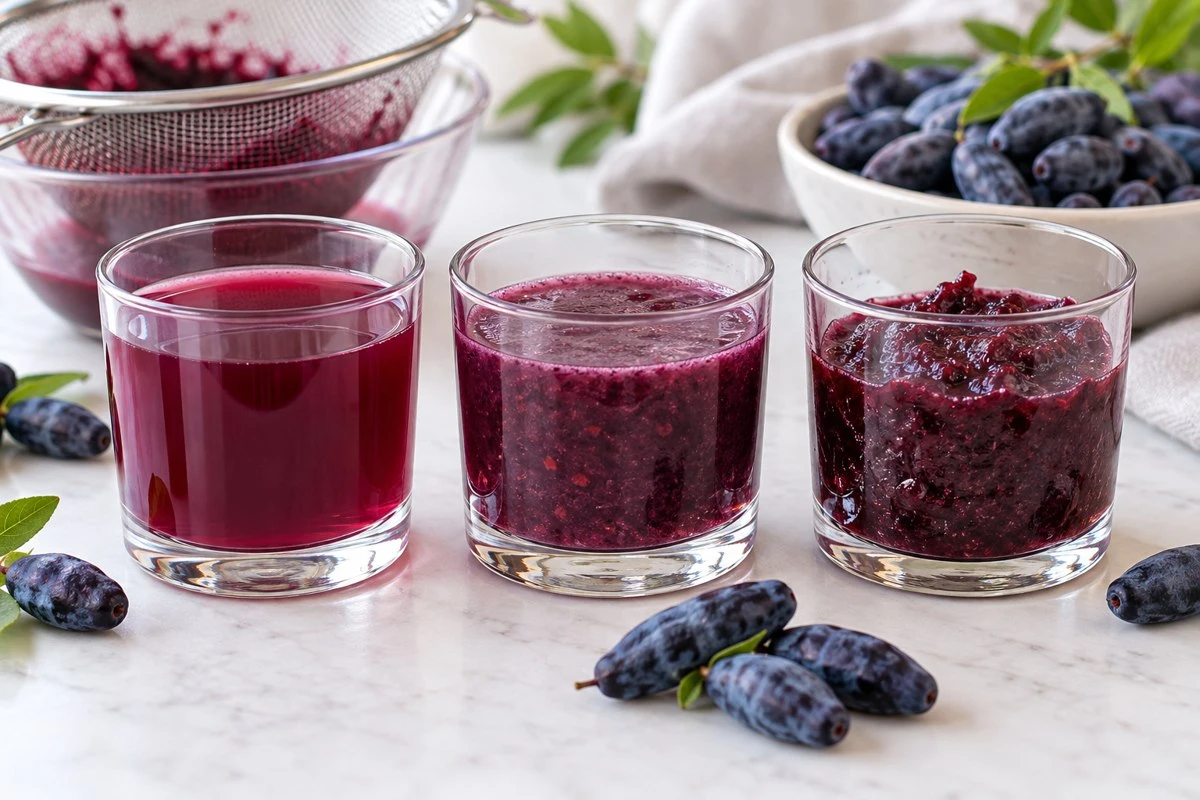
Illustrative haskap beverage base textures.
For an initial trial, prepare a short product brief that describes the beverage category, serving format and intended dilution. Include the water or other juice used, whether carbonation is present, whether the drink will contain protein or suspended ingredients, and the planned pack. These details affect how the berry is perceived. An intensely colored base may deliver a bright drink at a modest addition, while its flavor may be masked by citrus or another strong ingredient. Color and flavor should therefore have separate acceptance notes.
The University of Saskatchewan's exploratory juice-blending work illustrates that distinction: the appearance and taste of blends did not change in parallel. It is useful evidence for asking separate questions, rather than a formula for every beverage. The fruit material, blending juices and informal tasting conditions belonged to that investigation. A commercial development team should repeat the comparison with its own approved ingredients and assess the drink in its intended serving condition.
A practical first screen can compare a smooth juice route with a more pulpy route while keeping the finished fruit addition constant on a declared basis. Record both the amount of incoming fruit used and the amount of usable base recovered. This lets purchasing discuss ingredient cost per acceptable serving alongside the equipment and labor needed. A slightly lower extraction recovery can still suit a product if it produces the required clarity with less rework. That decision needs measured trial records, not a generic yield percentage.
Consider the intended dispensing system at this early stage. A base poured from a small bottle can tolerate a different flow behavior from one metered through a narrow pump. Ask the development team to test a representative closure or dispenser with the cooled base. Record whether the first and last portions have comparable solids and flavor.
Confirm the berry lot before planning extraction
Commercial haskap is associated with Lonicera caerulea. Common names and blue, elongated fruit photographs are insufficient to release an ingredient for food production. Ask for the botanical identity, supplier source records and the relationship between those records and the offered lot. Cultivar information can help interpret variation when it is available, but it should not be invented from shape or a marketing name. An unidentified berry lot stays on hold while its identity and accepted market description are resolved.
GreenLand's current frozen haskap sourcing page uses the commercial name provisionally and requires identity confirmation from source records. Its actual product photograph shows dark elongated frozen berries in a lined carton. That image helps a buyer discuss received form and packing; it does not establish species, cultivar, formal grade or juice performance. We ask purchasing teams to resolve that record gap before approving a beverage formula or ingredient wording against the offered material.

Original supplied-product photograph. The visible form does not establish species or lot acceptance.
Once identity is documented, connect the development sample to a specific production or sourcing lot. Record the sample code, packing date when available, frozen storage history and the amount provided. A hand-selected attractive sample can misrepresent a lot that contains a wider distribution of split skins or small pieces. Agree how the sample is drawn and whether it represents a single lot or a blend. A blend sample needs enough information to reproduce the intended commercial composition when the next order arrives.
Inspect the frozen fruit before thawing. Note loose fruit, clumps, surface frost, crushed material, stems and any evidence of a leaking liner. These observations can explain later extraction differences, but they do not prove a particular handling failure by themselves. After opening, protect the sample from avoidable warming while portions are allocated. If one portion is fully thawed before another has left frozen storage, the extraction comparison may mostly reflect sample handling rather than the proposed processing route.
Also establish the safety and treatment status separately from appearance. Frozen fruit is not automatically suitable for a drink that receives no further effective treatment. The buyer's food safety team must define the required controls for the intended product and destination. A pleasing flavor, a low measured pH or a dark color cannot substitute for that assessment. Development tasting should use material and preparation approved for the tasting route. This keeps the sensory work aligned with the process that will actually be commercialized.
A sample request should also say whether the buyer needs untreated fruit for its own validated process or an ingredient with a specified treatment history. Those routes require different evidence. Confirm the status in writing and link it to the sample code; a general statement about frozen supply does not establish what happened to this particular material.
Strain with a defined solids target
Straining should deliver a defined drinking texture. Terms such as smooth and clear become more useful when the buyer describes what may remain in the final beverage: visible seed fragments, fine suspended pulp, settling material or a ring at the bottle surface. A product designed to be shaken before serving can accept a different appearance from one sold as a clear drink. Write the observation method and standing period into the trial notes, so the sample is assessed in a consistent state.
The Saskatchewan juice-preparation investigation found that finely blended skin and seed particles could make sieving difficult. Its practical lesson is to compare the degree of disruption before filtration. A blender can create a larger fine-particle load than gentle crushing. That does not make either approach universally preferable. It means the extraction route and the straining route must be evaluated together, especially when the production line has limited filter area or cannot tolerate frequent cleaning interruptions.
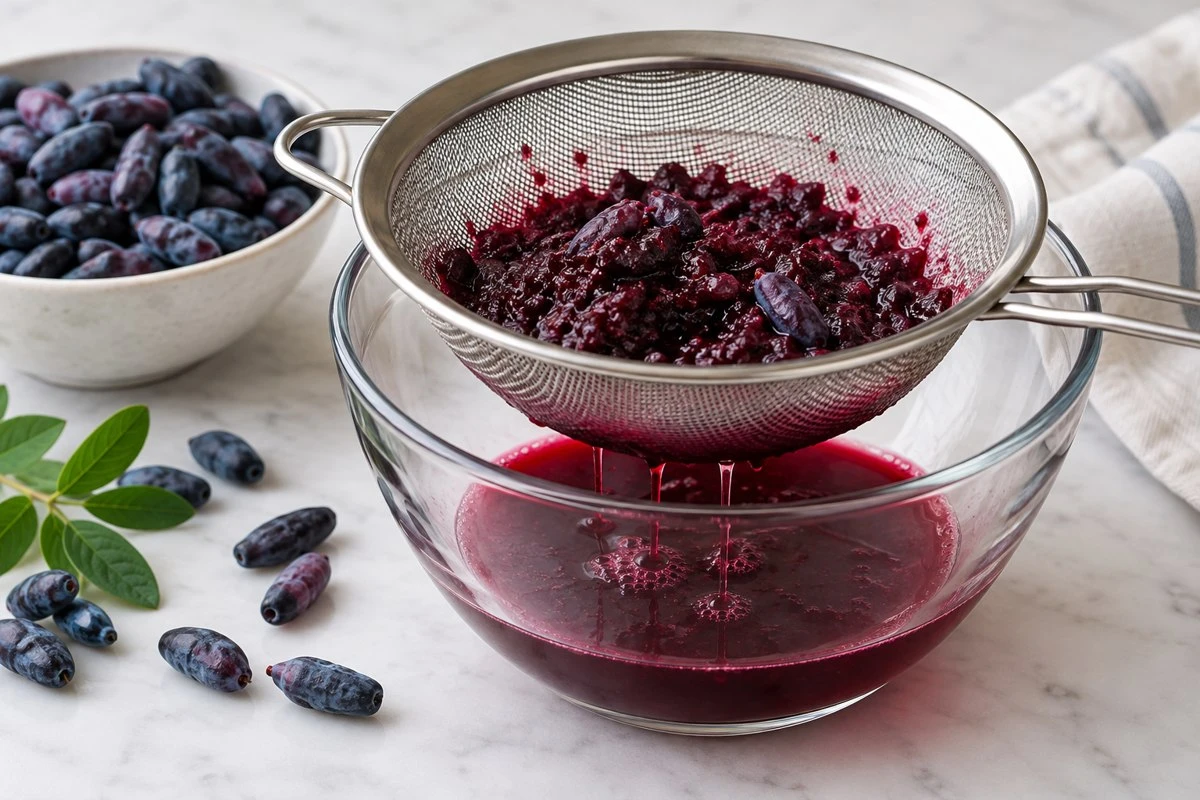
Illustrative haskap juice straining.
Record the sieve or filter specification, product temperature, input mass, collection time and any pressure or pressing applied. Gravity draining and forceful pressing are different methods. Pressing may release more liquid while also changing the amount of fine material entering it. If an operator squeezes a cloth for one sample and leaves another to drain, their recovered weights are not directly comparable. Keep the contact surfaces food suitable and use an approved handling procedure throughout the trial.
Collect the separated liquid and retained solids in identifiable containers. Weigh them on the same declared basis and account for material left on equipment. A simple mass balance can reveal whether an apparent increase in recovery came from added water, more pressing or inconsistent transfer losses. If water is intentionally added, record it separately from fruit-derived liquid. Use actual measured recovery to compare routes; no universal haskap extraction yield should be assumed from a photograph, recipe or another company's equipment.
Evaluate the strained base after the same rest and mixing procedure used for the beverage. Fine particles may look acceptable immediately after agitation and become a sediment layer later. A trial should also examine whether the base transfers cleanly through the intended pump, valve or dosing opening. Bench sieving can identify a promising route, but scale-up still needs a production-representative check. The agreed product texture should remain the endpoint, with filter choice and operating conditions documented as the means of reaching it.
Keep filtration observations separate from appearance preference. Record a blocked screen, slow drainage or difficult cleaning as an operating observation, and record haze or visible particles as a product observation. The two can be related, but a clear cup obtained after an impractically long bench filtration may be a poor candidate for routine production.
Measure acidity and sweetness in the same sample
A useful base specification distinguishes pH, titratable acidity and soluble solids. They describe different properties. pH concerns the acidity condition of the sample and can affect color and process decisions. Titratable acidity describes the acid measured by an agreed titration method and expression. A refractometer reports soluble solids as degrees Brix under its measurement conditions; that reading should not be presented as a complete analysis of sugars in a complex fruit base. Sensory tartness still needs tasting within the approved product-development process.
Measure a representative, consistently prepared sample. Mix the batch as specified before taking an aliquot, and decide whether the measurement uses the whole base or a clarified portion. Record temperature, dilution and instrument preparation. A thick puree, a clear juice and a sweetened syrup may require different preparation to obtain reliable readings. If the supplier and buyer use different methods, apparent disagreement can result even when they received the same material. Exchange the method along with the number.
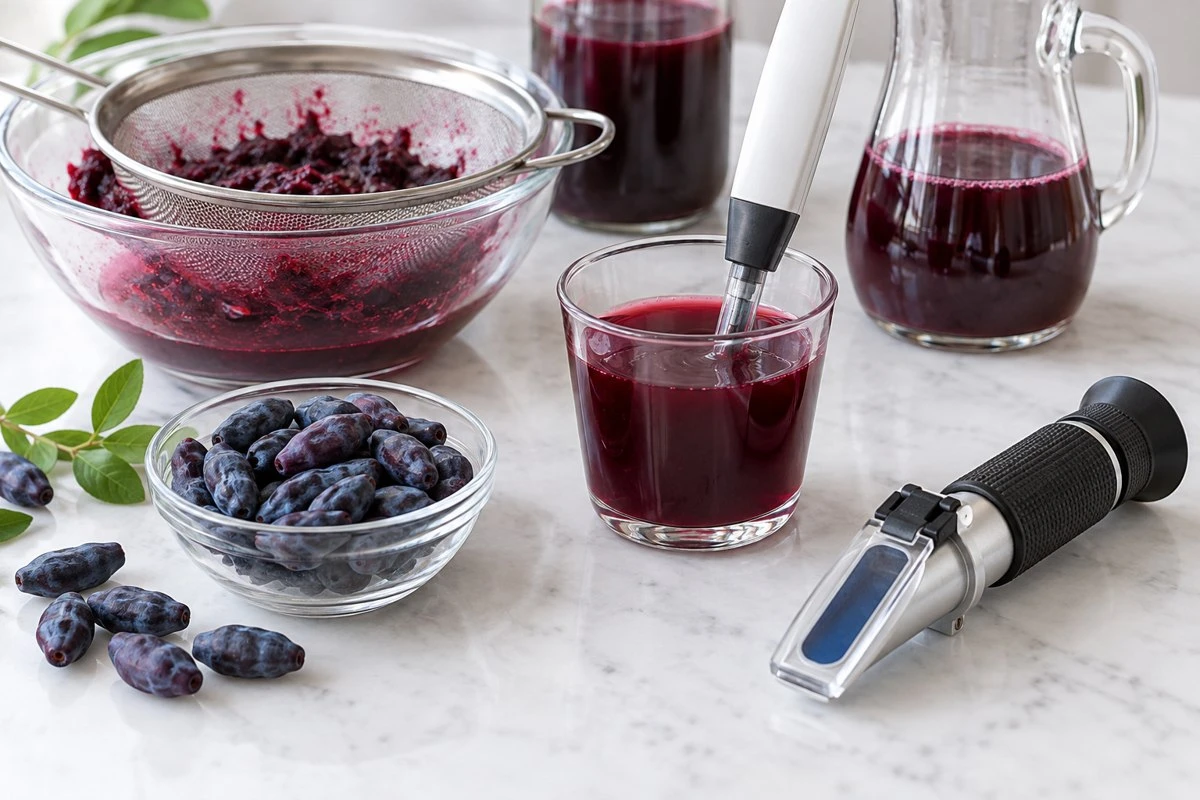
Illustrative haskap acidity bench sample.
For titratable acidity, name the acid equivalent and units used. An isolated acidity value without that information is difficult to compare. For pH, use appropriate calibration and sample handling according to the instrument procedure. Colored fruit liquids can make visual endpoints inconvenient in some methods; the laboratory should select an appropriate validated approach. These are method choices for qualified staff, not instructions to infer acidity by eye from the redness of the drink or to adjust preservation on the basis of a kitchen test.
The Haskap Producers juice specification demonstrates how a supplier can separate identity, processing status, pH, soluble solids, packaging and frozen handling. Its stated values belong to that supplier's product. They are not GreenLand specifications or automatic acceptance limits for another lot. A buyer should use the same categories to request information, then set its own acceptable window through the intended beverage and a suitable safety review.
Sweetness adjustment should be assessed at the serving dilution. Adding sugar to the base can change its viscosity and how the drink carries flavor, while changing the dilution changes both fruit intensity and acid perception. Work on one controlled adjustment at a time and preserve the original reference. Record the ingredient mass added and final batch mass, rather than relying on a spoonful added during tasting. This creates a formulation record that another operator can reproduce and purchasing can translate into an ingredient requirement.
If the recipe blends several fruit inputs, take measurements after all components have been added and mixed as specified. Values from the haskap ingredient alone cannot describe the complete drink. Preserve the incoming ingredient measurements as supporting information, then connect the final formulation readings to the sensory samples and the same batch record.
Judge color at the serving dilution
Dark haskap liquid can appear almost black in a deep container while looking ruby red in a thin layer or diluted drink. Container diameter, fill depth, background and lighting all affect that visual judgment. A jar of concentrate therefore gives limited information about the drink on a cafe counter or supermarket shelf. Compare the finished beverage in its intended vessel, with a consistent fill level and a reference prepared from the same formulation.
First hold the serving dilution constant. Use the same base water, other juices, sweeteners and carbonation condition when comparing lots or processing routes. Water composition and the final formulation can influence pH, and pH can change anthocyanin color. A color change after dilution does not by itself demonstrate pigment destruction. Conversely, a dark sample can conceal meaningful analytical changes. If a pigment-content claim matters, commission the relevant laboratory analysis with a declared method and reporting basis.
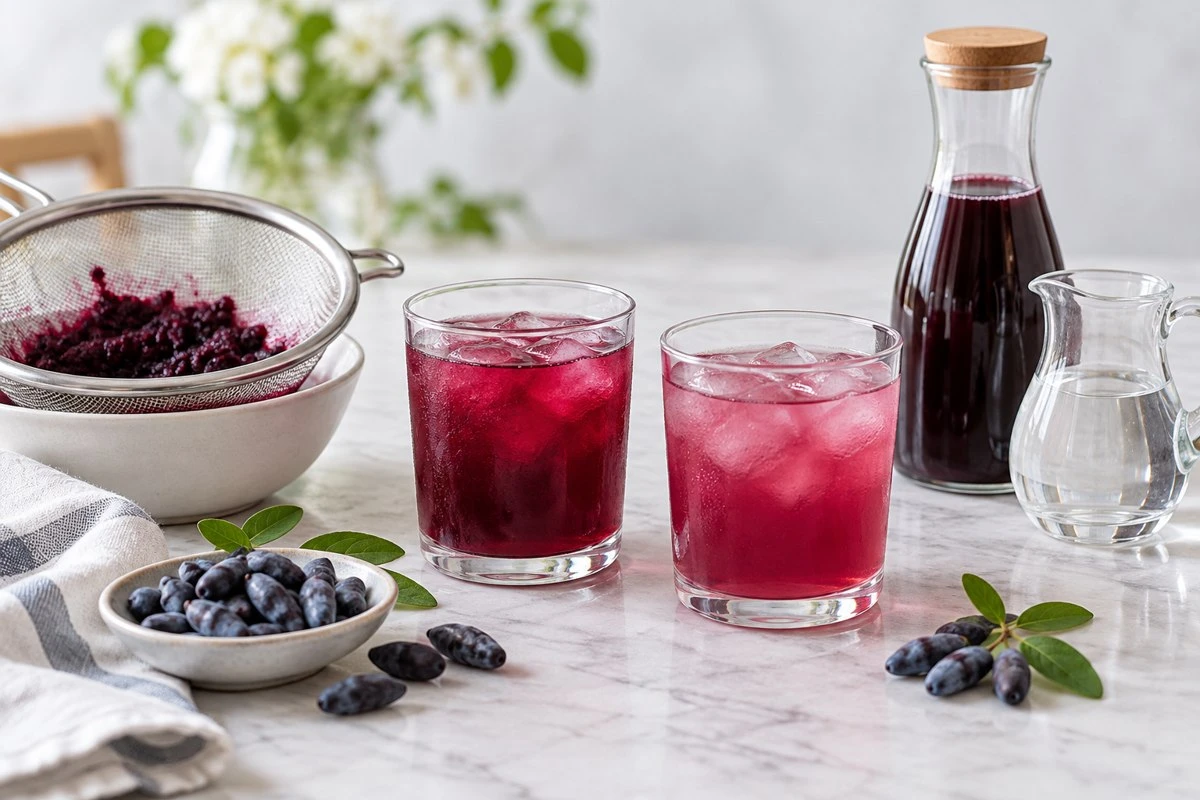
Illustrative haskap serving dilution.
A proposed visual trial can use identical clear glasses on a white background with samples prepared in a defined order. Code the samples to reduce expectations about which should look better. Observe hue, intensity, haze and settling separately. Photograph them under fixed lighting as a supporting record, but keep the actual sample observations primary. Automatic phone exposure and white balance can make two images misleading, especially when the purple liquid occupies different portions of the frame.
Color should also be assessed with the other beverage components present. Citrus, tea, dairy ingredients, plant proteins and cloudy juices can alter the appearance that the consumer sees. A smooth, translucent berry base may look very different after it enters an opaque drink. If the commercial formula includes ice, dilution during service may deserve its own evaluation. These are separate use conditions, so identify them clearly rather than mixing them into a single judgment of whether the incoming fruit has good color.
Purchasing can then ask for a base that produces the approved appearance under the agreed preparation. A retained reference and written method are more transferable than instructions such as make it darker. If a color instrument is used, document its sample vessel, measurement geometry and calibration procedure. Set tolerances only after the development team has connected those readings with acceptable finished drinks. A useful tolerance reflects actual variation and consumer presentation; it should not be copied from unrelated fruit products.
Include the real package in the later trial. Tinted glass, a colored label behind a clear panel and different bottle diameters can change the perceived color substantially. Review the product under the lighting expected in use. An approval made only in a narrow laboratory cup may not represent the commercial bottle on a shelf.
Follow flavor through heating and storage
Heating can change a berry base through several routes at once. Water may evaporate, suspended material may change, flavor may become more cooked and pigments may respond to the process conditions. The temperature selected for food safety is only one part of the product's exposure. Heating-up time, holding, transfer and cooling can all matter to quality. Record the whole route used in a trial, including the batch size and vessel, so that a promising result can be assessed during scale-up.
Separate the safety process from the quality comparison. The required treatment must be established for the actual product, package and distribution system by appropriate technical staff. Reducing heat simply because a sample looks brighter can undermine that process. Equally, a successful color trial cannot validate commercial sterility, refrigeration life or an ambient storage claim. The role of the berry trial is to find a formulation and operating route that achieve the required quality within a properly established safety system.
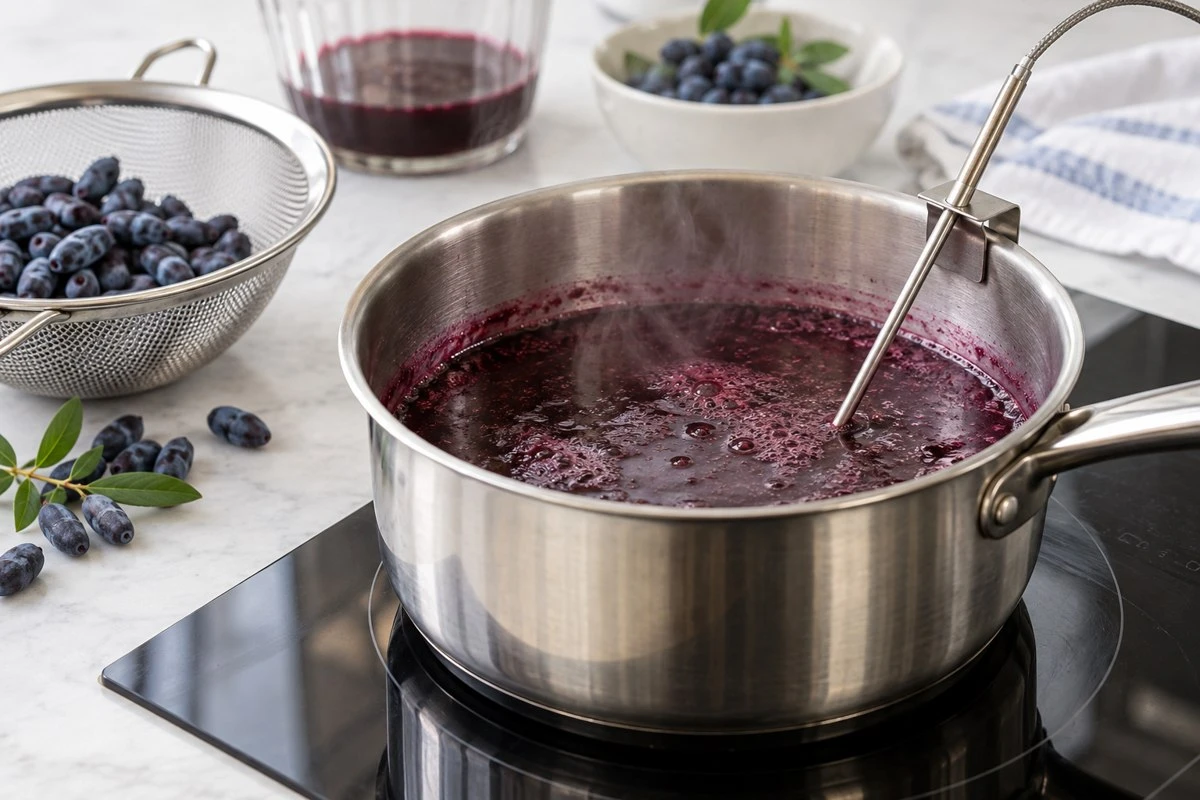
Illustrative haskap small saucepan heating.
Compare samples at a common temperature after heating. A hot syrup flows differently from a cool syrup, and tasting very warm samples can change the impression of sweetness and aroma. Keep a reference portion with a documented preparation history, and record any water loss or final mass change. If the heated sample is more concentrated, an increase in visible darkness may partly reflect concentration. Reconstituting samples to a common declared basis can help answer a specific question, provided that adjustment is recorded.
Storage evaluation should use the actual intended package and conditions, with justified checkpoints selected by the development and food safety teams. Monitor appearance, flavor, separation and container performance alongside the necessary microbiological and other controls. A home recipe's stated refrigerator life does not validate a commercial beverage. High sugar and acidity are relevant properties, but neither supports an unsupported shelf-life claim on its own. Retain the formulation, treatment and packaging records for every stored sample.
For a syrup dispensed repeatedly in foodservice, also consider the use pattern. An unopened bottle and an opened bottle used over time are different situations. Dosing consistency, cap cleanliness, repeated exposure and the specified handling instructions deserve evaluation. The purchasing specification should state whether it applies to the unopened base, the diluted drink or both. This prevents a stable concentrate from being mistaken for evidence that every drink prepared from it will maintain the same quality or safety after service preparation.
Turn the winning trial into a purchasing specification
The approved base should be described through its ingredient identity, process status and performance in the agreed drink. Start with the verified species and accepted market name, then identify whole fruit, puree, juice or sweetened preparation. Define whether the product includes added water, sugar or other ingredients. Record the production lot or approved blend used in development. If the commercial offer changes form or source, review whether the earlier trial still represents it before accepting the substitution.
Add a clear description of solids and drinking texture, supported by the agreed preparation and observation method. Specify the required analytical reports only where they support a decision, and name the methods and units needed. The quality file can include soluble solids, pH, titratable acidity, color evaluation and application observations without pretending that any one measurement predicts everything. When a tolerance remains under development, mark it as awaiting agreement rather than supplying a precise-looking number without evidence.
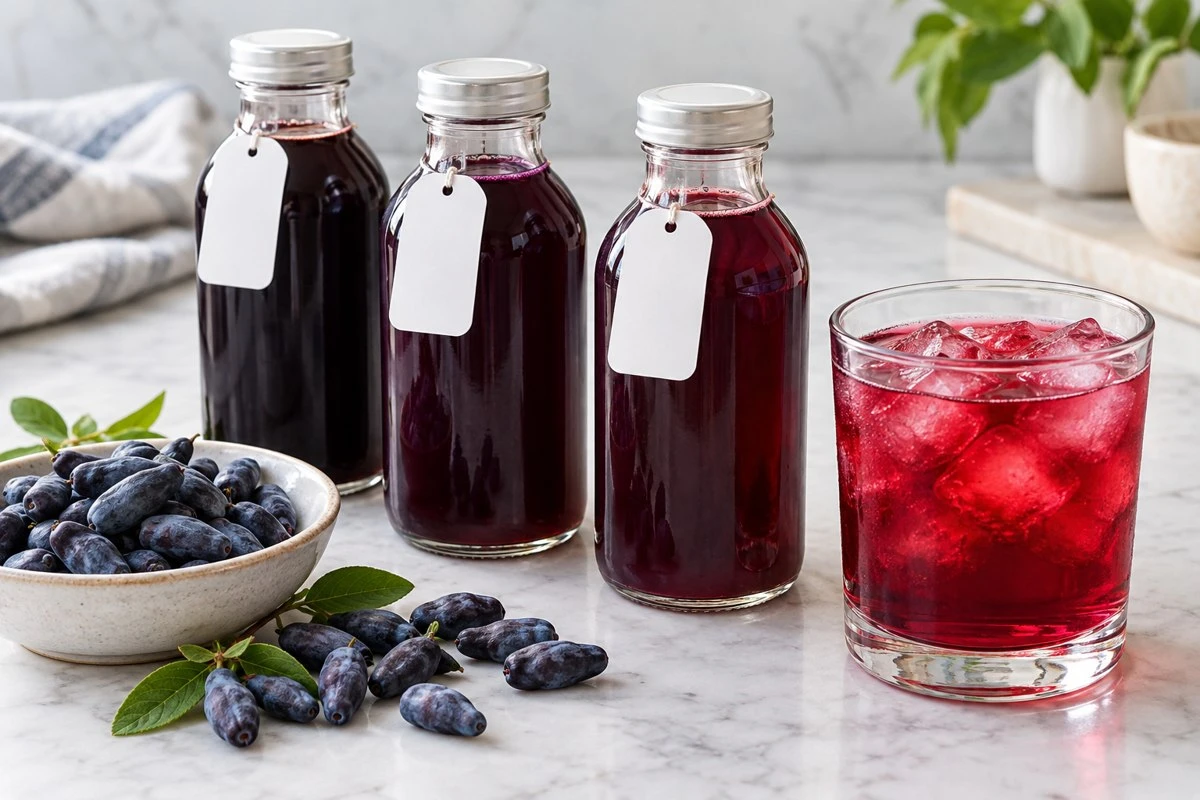
Illustrative haskap beverage pilot bottles.
Packing should suit the extraction or dosing operation. A large frozen block can require a different thaw and transfer plan from smaller packs or loose frozen berries. Confirm liner construction, closure, net quantity, pallet arrangement and the buyer's receiving equipment. Ask how the sample pack relates to the proposed commercial pack, especially when juice release and leakage are important. Packaging approval should include the intended handling route so that a successful small jar trial does not overlook bulk transfer difficulties.
We can use the buyer's application brief to organize the information needed for a frozen-fruit inquiry, including identity records, proposed packing, volume, destination and requested documents. Haskap identity must still be confirmed for the offered lot before a firm ingredient description is approved. Any requested private-label wording should follow that confirmation and the destination review. A quotation and a laboratory or process claim are different records; the commercial discussion should keep each statement tied to its supporting evidence.
Finally, agree what happens when a future sample differs from the retained reference. Identify who repeats the test, which preparation is used, what evidence accompanies a complaint and how a replacement lot is assessed. Keep enough retained material, within its approved storage plan, to investigate disagreements. A reproducible trial record makes that conversation practical: the buyer can show the drink, the supplier can identify the fruit lot, and both can trace the result back to the same formulation and method.
Continue reading about berry preparation
Compare clarity, filtration and pourability decisions for another tart frozen berry.
See how a berry syrup is checked in coffee, dairy and plant-based drinks.
Discuss frozen haskap berries with GreenLand-food
GreenLand-food is a frozen fruit supplier and manufacturer in China, offering factory-direct wholesale supply. For frozen haskap berries, the offered lot's identity and accepted market name require confirmation before specification approval.
Send your required product form, specification, packing, quantity, application, destination, private-label needs and requested documents so we can define the sample and sourcing discussion.