


Frozen Kidney Beans in Chili: Cooking Status, Sauce Balance and Reheating
Oct 19, 2026
Leave a message

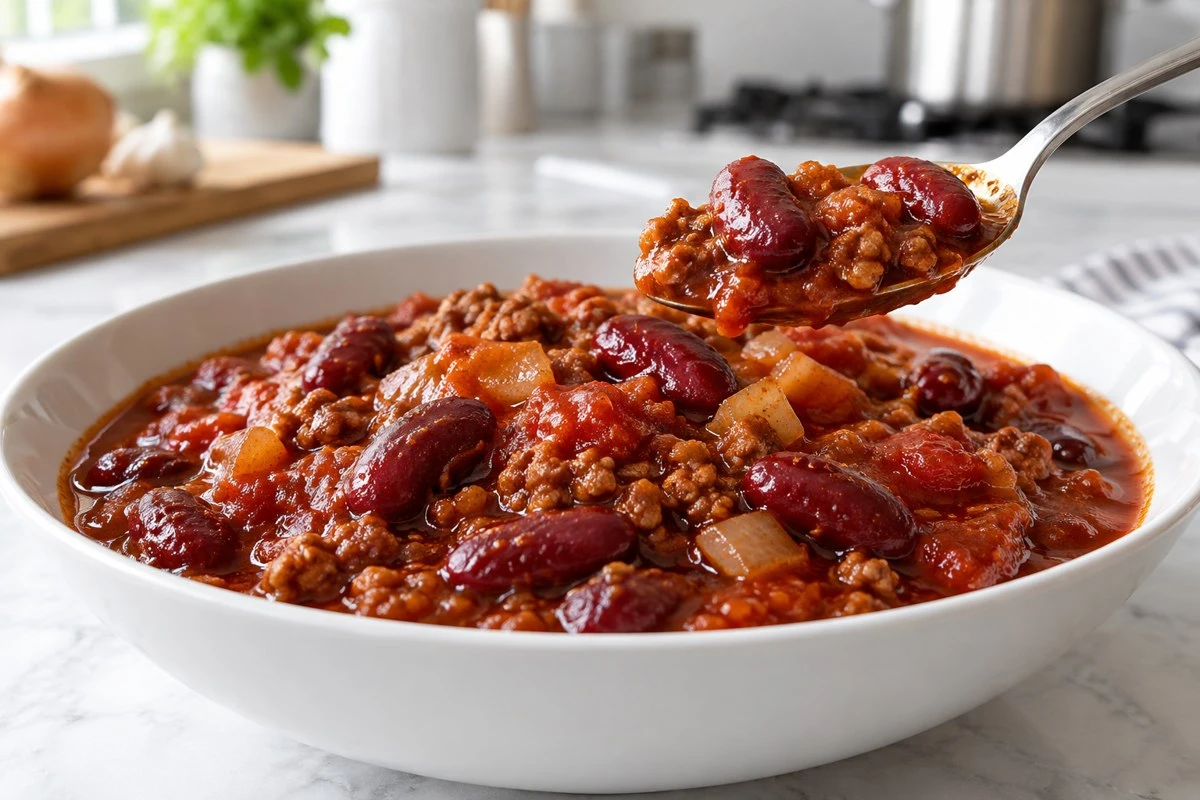
For an approved cooked ingredient, the practical work is to keep the beans recognizable while developing a sauce that remains balanced through filling, cooling, storage and reheating. The best addition point depends on the actual bean, the sauce and the equipment. A short kitchen trial should therefore reproduce the finished meal's route, including its last reheating step. We use that result to discuss bean size, skin integrity, packing and the documents needed for the order.
This guide concerns red kidney beans in chili made for foodservice or prepared meals. Any quantities below are proposed trial examples. They are not a fixed formulation, a validated safety process or results from a GreenLand production lot.
Confirm the cooking status before the beans enter chili
There are three different questions behind "Are these beans cooked?" The first is whether the ingredient has received an adequate process for the hazards associated with raw kidney beans. The second is whether its texture is suitable for the recipe. The third is whether it is intended for consumption without another heat treatment. A bean can be sufficiently cooked for lectin control while its specification still requires further heating before consumption. Purchasing and kitchen teams need the same answer to each question.
Raw and inadequately cooked red kidney beans can contain harmful levels of the lectin phytohaemagglutinin. Health Canada's kidney-bean guidance identifies this risk and distinguishes properly canned kidney beans from dry beans that need preparation. Freezing, a deep red colour, intact skins and a tender-looking photograph do not document lectin control. Ordinary frozen-vegetable blanching is also an insufficient description of the process: the buyer needs its actual purpose, validation and operating conditions.
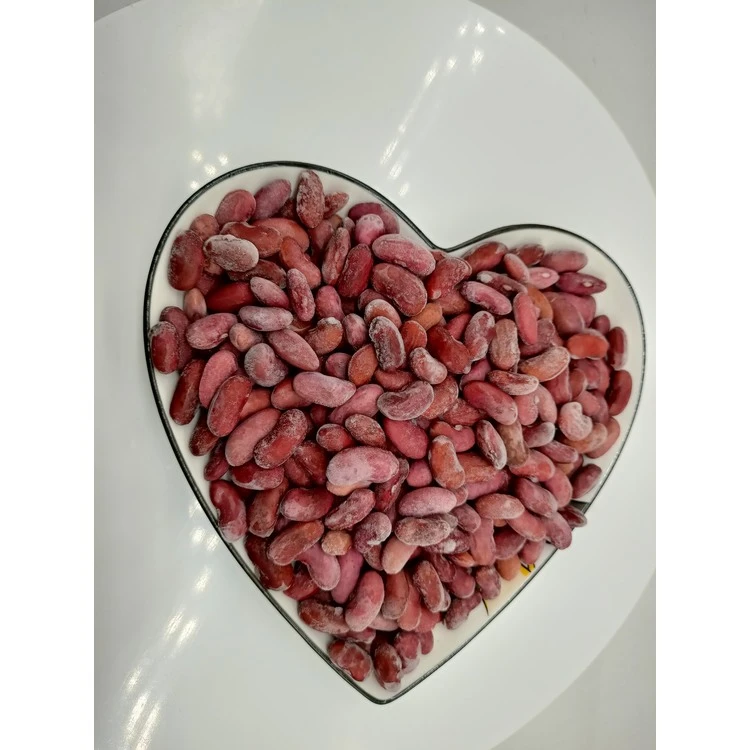
Red kidney beans shown on the GreenLand product page. Appearance does not establish cooking status.
Ask for a current specification that identifies the bean, the supplied cooking state, the intended use and the preparation instruction. Then ask what evidence supports that declaration for the material being supplied. The relevant evidence may include an approved process description, validation summary, actual cooking records and a defined release review. A generic microbiological certificate cannot answer a lectin question unless the relevant hazard and method are explicitly within its scope. A photograph can support a discussion about bean size and splits, but it cannot close this evidence gap.
The sauce needs separate attention. Tomato-based chili is acidic, and the bean's softening behaviour can differ from that in plain cooking water. Iowa State Extension advises adding acidic ingredients after beans are fully cooked in its bean preparation guidance. For a commercial chili, the useful decision is to establish the bean's required cooking treatment before considering its addition to the sauce. Do not use a longer tomato simmer as an improvised correction for an undocumented raw ingredient.
If the supplier documents a cooked ingredient, follow the corresponding use instruction and review how your own line completes the meal process. If the status is raw, partly treated or unclear, the responsible technical team must resolve the necessary full-cooking process before a tasting trial. Staff should not taste questionable beans to judge whether they are safe. Hold an ambiguous delivery apart from approved cooked stock so that a similar-looking carton cannot enter a recipe by mistake.
GreenLand's red kidney bean product specification discussion starts with this explicit cooking-state requirement. For a chili order, we ask how the ingredient enters your process and what preparation follows. We confirm the supplied form and available evidence for the exact order before treating it as a convenient addition to the sauce.
Build the sauce around usable bean mass and released water
A chili formula should identify what its bean weight represents. "Ten kilograms of beans" may mean frozen contents straight from a bag, cooked beans after a defined drain, or canned contents including liquid. These inputs do not necessarily deliver the same quantity of bean solids or recipe water. When replacing an existing ingredient, retain the approved measurement basis or explicitly recalculate it. Otherwise the first trial can become an accidental test of a different bean-to-sauce ratio.
Begin by measuring the ingredient as it will actually be used. For a cooked frozen product added directly, record the frozen input weight, any loose ice or clumps observed, and the resulting sauce condition. If the approved method includes thawing or draining, define those conditions and measure the retained beans and removed liquid separately. Do not add a drainage stage merely because a comparison needs a number; changing handling can also change safety responsibilities, labour and the amount of liquid carried into the recipe.
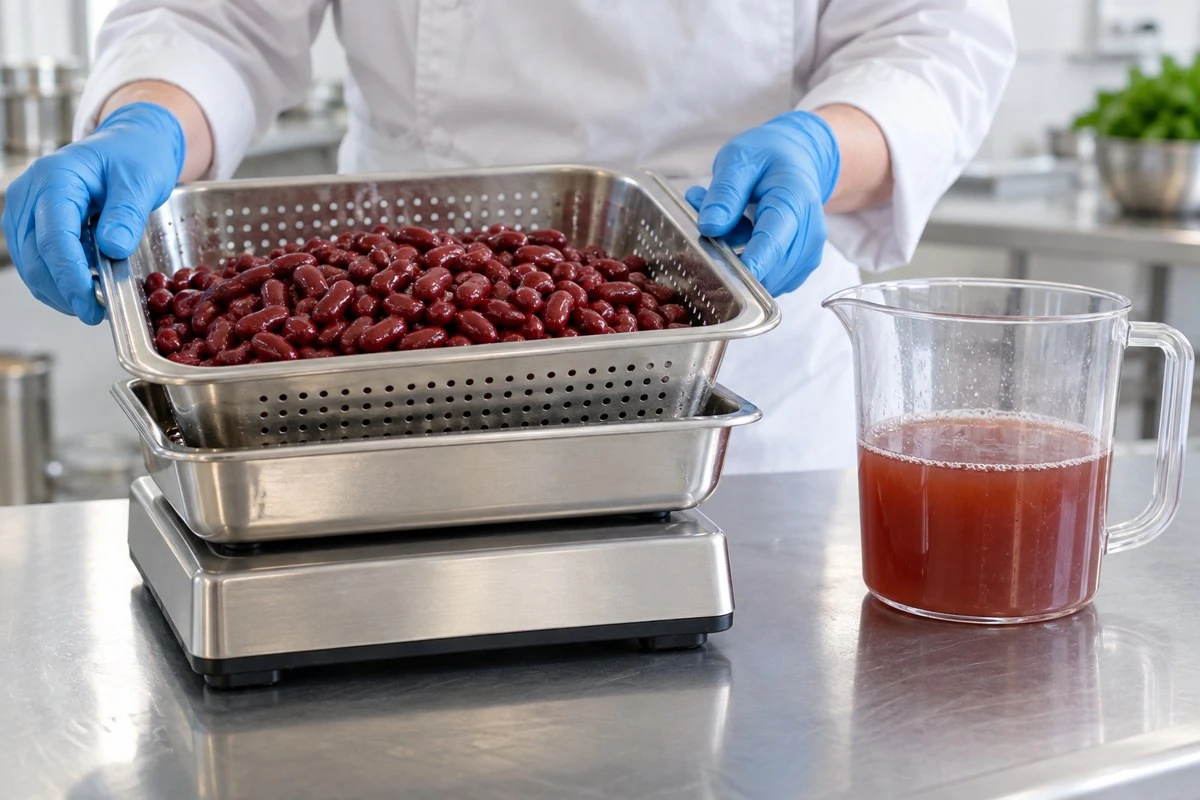
Weigh the retained beans and account for drained liquid separately in the trial.
For an illustrative trial, suppose the existing formula uses 12 kilograms of drained cooked beans. A candidate material yields 0.94 kilograms of retained beans per kilogram under your specified preparation method. Matching the original bean mass would require approximately 12.77 kilograms of that candidate input. This calculation only translates the measured yield basis. The retained material's moisture, texture and seasoning may still differ, so it does not prove an equivalent finished chili. Record the trial method alongside the number so another shift can repeat it.
Water also arrives with tomatoes, onions, peppers, stock and other components. Measure the final batch mass and record any added water during cooking instead of diagnosing a thin sauce from the bean alone. If the sauce loses water through evaporation while the beans are heating, the same ingredient can appear suitable in an open test pan and overly thin in a covered production kettle. Vessel geometry, lid use, agitation and batch size belong in the trial notes because they influence the result the buyer is approving.
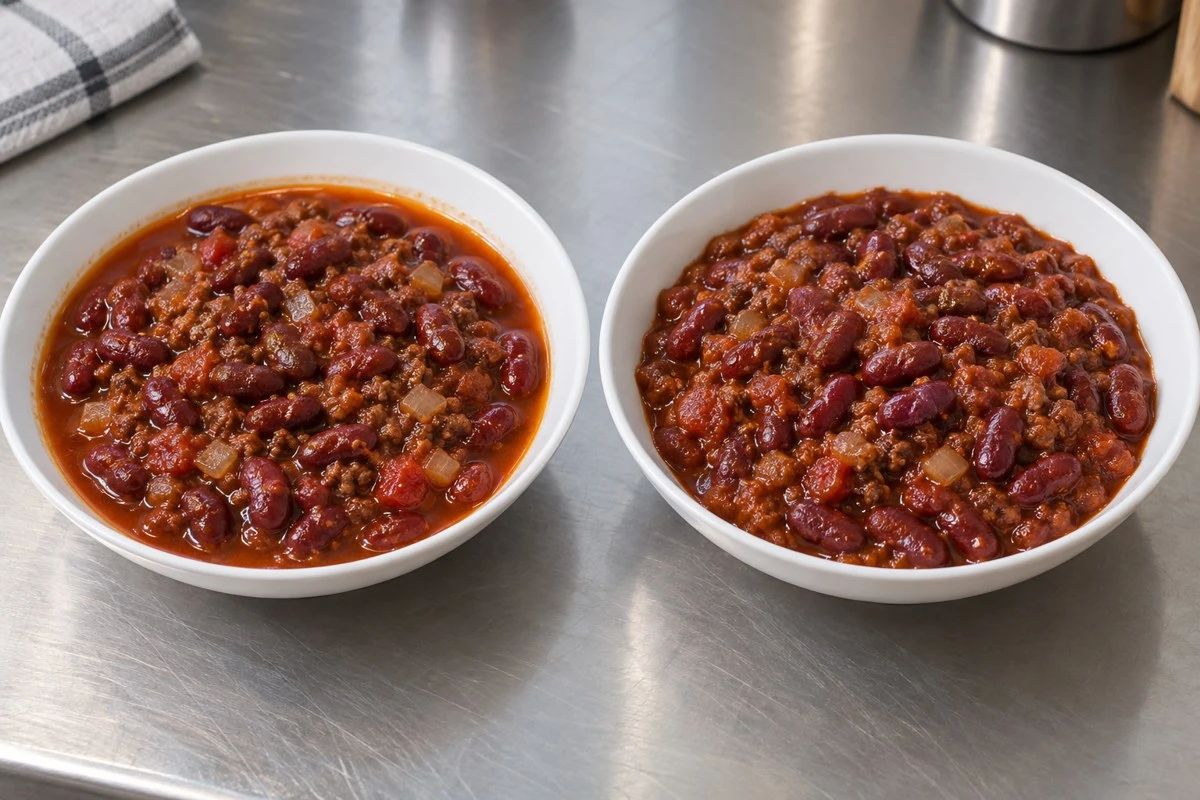
Illustrative comparison of a chili with visible free liquid and a more cohesive sauce.
Look at the chili after it has stood for the intended service interval. A visible ring of thin liquid, dense beans beneath a watery surface, or a paste-like sauce each suggests a different formulation or handling issue. Stirring immediately before every observation can conceal separation that customers will see later. Use the same sampling position, serving temperature and rest interval for each candidate. Photographs are useful when the light, bowl and portion size are consistent; a more flattering photograph is not a better ingredient result.
Season after the water balance is understood. Adding salt to a dilute early sample and then concentrating the sauce can leave the finished meal too salty. Likewise, extra starch may hide a water difference during filling but produce a heavy texture after cooling. Keep formulation changes recorded individually. Adjust one practical variable at a time, then evaluate the complete meal again so the approved recipe explains how much bean, sauce and seasoning each portion should contain.
Choose an addition point that protects the beans
Once the cooking-state requirement is satisfied, addition timing becomes a question of heat transfer, flavour development and physical handling. Beans that enter with the first onion and tomato ingredients experience every later stir, pump and hold. Beans added close to filling receive less exposure, but they may lower the batch temperature and need adequate time to reach the process endpoint. The useful addition point balances those effects within the line's validated safety conditions.
Do not select timing from a fixed number of minutes in an online recipe. A small saucepan, a large jacketed kettle and a continuous meal line heat different quantities in different ways. A frozen ingredient can cool the sauce appreciably, particularly when it is added as one compact mass. Record the ingredient temperature, quantity added, batch temperature recovery and actual preparation conditions. These observations explain why an addition point worked and help identify what must be checked when production volume changes.
Physical handling matters as much as elapsed time. A broad, gentle folding action may preserve skins better than repeated vigorous stirring, but any change to agitation must retain the heat distribution required by the process. If the line uses pumps, narrow passages or a depositor, take samples after those stages. A bean that leaves the kettle intact can split during transfer. The complaint may then appear to be excessive cooking even though the main damage occurs at the filling equipment.
Compare addition points using the same bean lot and sauce wherever possible. One trial might introduce approved cooked beans before the final sauce reduction; another might add them after the sauce reaches its target concentration. Keep the finished safety endpoint, total formula, filling condition and later storage route consistent. Assess the result at filling and after reheating. A late addition that looks excellent on the bench may produce uneven portions if the beans have not dispersed through the sauce before the depositor starts.
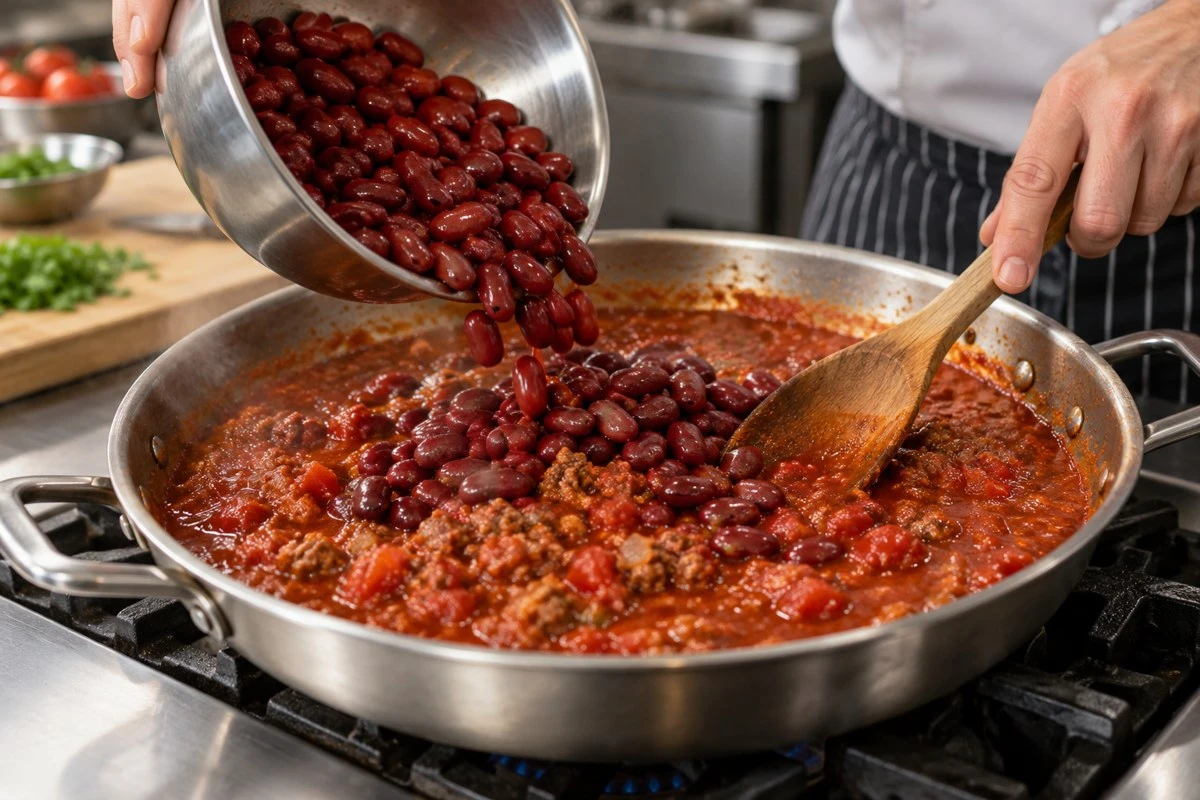
Adding cooked beans to a developed sauce allows their remaining heating and handling to be assessed.
Bean size affects this comparison. A broad size distribution can leave smaller beans softer while the larger pieces require more heating. Specify the size range that matters for the intended portion rather than asking only for "large beans" or "premium grade." Also distinguish a split skin around an otherwise whole bean from a bean broken into fragments. Those conditions have different visual and thickening effects in chili, and a combined defect number may obscure the cause of a rejected sample.
If the recipe includes meat, approve its cooking process and the finished meal endpoint separately from the ingredient's bean-cooking history. Adding documented cooked beans does not establish that raw meat has been adequately cooked. Equally, the fact that the meat reaches its required endpoint does not validate an improvised process for raw kidney beans. The production instruction should clearly assign each treatment and state when the beans may be added to the approved sauce.
The resulting timing instruction should be usable at the kettle. Name the ingredient state, the addition stage, the batch conditions and the required subsequent process. Include what operators should do if beans arrive unusually clumped or the kettle fails to recover its expected conditions. Holding the affected batch for review is more dependable than asking an operator to compensate with an undocumented extra simmer.
Check the complete cooling and reheating route
A chili that tastes good immediately after cooking still has to survive its distribution route. A restaurant may cool it for the next service; a manufacturer may fill trays, chill or freeze them, transport them and rely on the customer to reheat. Each route changes the beans' cumulative exposure to heat and handling. Approve the product at the point it will be eaten, while maintaining the food-safety controls required at every earlier stage.
For household leftovers, USDA FSIS recommends prompt refrigeration, rapid cooling in smaller portions and reheating to 165°F, approximately 74°C. This is useful consumer guidance. A commercial operation must use its applicable rules and validated cooling, reheating and holding plan for the actual product and equipment. A temperature quoted for leftovers must not be presented as the initial lectin-control treatment for raw kidney beans.
Cooling deserves its own measurement. A deep vessel of thick chili can behave differently from a shallow tray, even when both enter the same chilled room. Identify the approved fill depth, portion size, container and loading arrangement. Measure the locations defined by the site plan and retain the records. A cold room reading describes the air around the food; it does not show how quickly the warmest part of the chili cooled. Avoid creating a routine in which large hot batches wait at room temperature until they "look cool enough."
Reheating performance depends on the package and appliance. In a microwave, a thick central region can remain cooler while edges bubble. In an oven, tray depth and cover design affect how the meal heats and retains moisture. Test the pack in the form the customer receives, including the label's starting state and standing or stirring instructions where applicable. Instructions should be developed and checked for that product; they cannot be copied from a different tray simply because both meals contain beans.
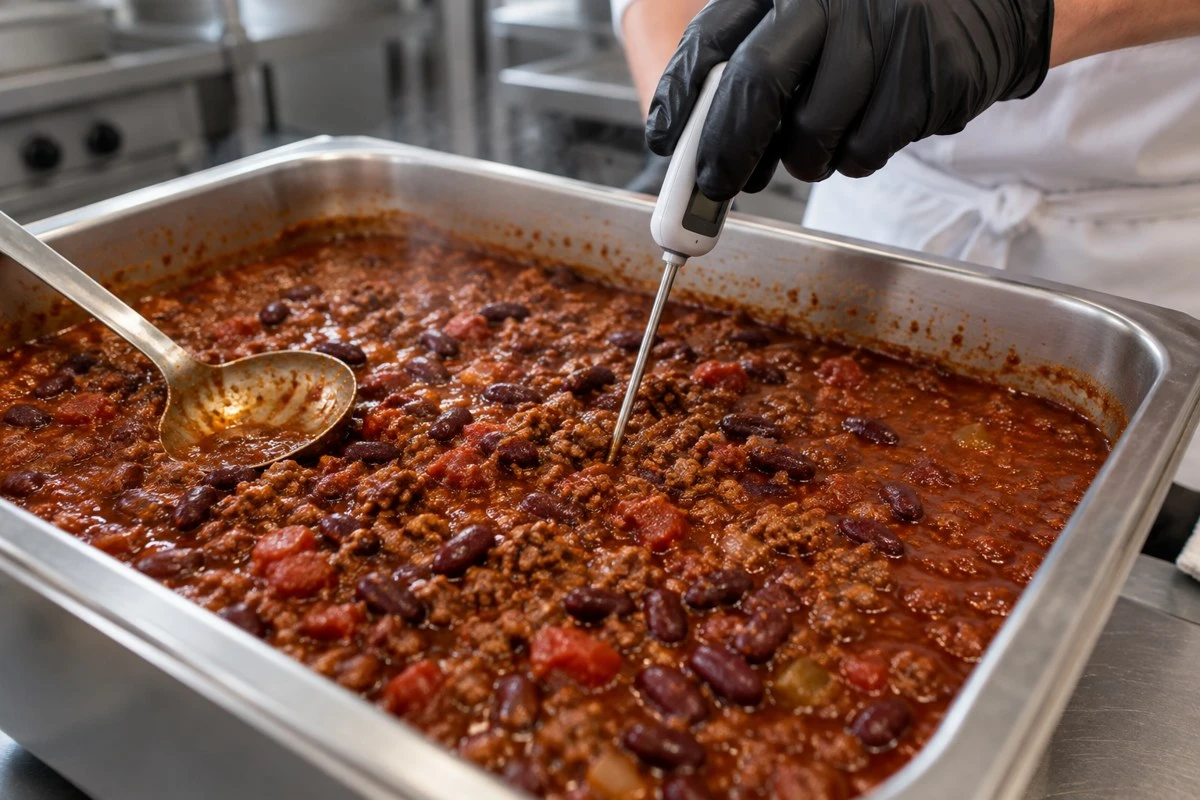
A probe check in the thick central portion forms part of a defined reheating assessment.
Watch the sauce as well as the temperature. Water can redistribute during storage, and a sauce that was fluid at filling can seem tighter when reheated. Record whether the customer is expected to add water. If no addition is part of the approved instruction, the development trial should not quietly add a splash to improve the sample. That intervention would hide a difference between the development kitchen and the customer experience. The label, test method and approved sensory result should describe the same meal.
Repeated handling also makes it harder to interpret texture. Sampling one tray several times, returning it to storage and reheating it again introduces a history different from a single-use meal. Prepare separate retained portions for the planned observations and track each one's route. Where service practice includes hot holding, assess the approved holding interval without extending it simply to obtain a softer bean. The operational target is a defined finished result throughout the intended service period.
When a reheated sample fails, locate the stage where the difference first appeared. Compare kettle exit, filled pack and reheated portion. If the beans were already fragmented before cooling, changing the microwave instruction may offer little improvement. If they remain intact until the final step, review the final process and package before changing the supplier's bean specification.
Run a chili trial that includes holding and final service
An approval sample should answer a purchasing decision. Define what would make the candidate acceptable before staff begin tasting: recognizable kidney beans in the intended portion, suitable bite after the final heat treatment, consistent sauce cling and an acceptable level of fragments. Use the existing approved meal as a reference when one exists. Descriptions such as "good texture" are difficult to defend later unless the team records what good means for this chili.
Use a short ordered protocol that your technical and development teams can expand for their own site:
- Confirm the candidate's cooking declaration, use instruction and release status before preparing a tasting sample. Identify the lot and retain its specification version.
- Prepare the reference and candidate using the defined bean-weight basis, sauce formula, vessel and addition point. Record any adjustment instead of silently correcting the candidate.
- Sample at the agreed stages, including filling and the intended holding or storage interval. Photograph equal portions and note visible separation or broken skins.
- Reheat unopened retained portions using the proposed customer instruction or foodservice method. Complete the required safety checks before sensory assessment.
- Record the acceptance decision, the recipe version and any conditions for a larger production trial. Keep rejected and approved versions distinct.
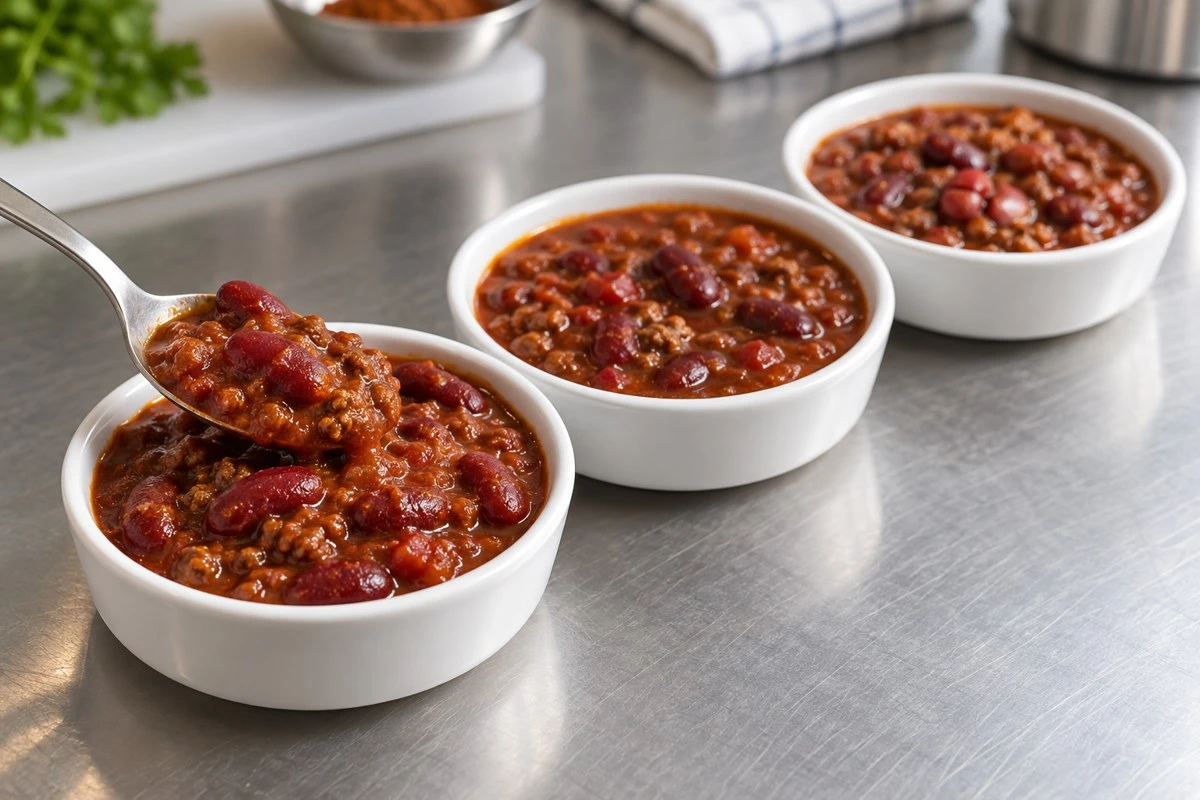
Equal portions make the finished chili easier to compare under the same serving conditions.
For piece integrity, choose a method that matches the meal. One option is to recover beans gently from a defined portion and classify whole beans, beans with split skins and fragments. Another is to assess visible beans directly in a standard plated serving. Neither approach is automatically superior. Recovery can damage soft beans or wash away sauce, while direct scoring may make small fragments harder to see. State the method and use it consistently so the result is interpretable.
Keep the denominator clear. A count of split beans among a set number of beans differs from the mass of fragments as a percentage of recovered material. Do not compare those two percentages as if they measured the same defect. For a purchase specification, define the sampling location, sample quantity, preparation method, classification and acceptance limit. The numerical limit should follow your agreed product requirements; this article does not supply a universal split-rate standard.
Use blind sample codes if the team is comparing candidates. Tasters should evaluate the bean and sauce before seeing supplier names or prices. Ask focused questions about the finished meal: does the skin remain perceptible but easy to eat, does the centre have the desired texture, and does a spoonful carry the intended proportion of beans and sauce? A strong flavour preference can otherwise hide a structural defect that matters after longer storage or during filling.
A successful small trial still needs confirmation at the relevant scale. Increasing the batch size can change temperature recovery, agitation, evaporation and the number of transfers. Record the settings that require review during scale-up and compare the production result with the retained approved reference. Treat the first production run as evidence to examine, rather than assuming that a visually similar frozen sample guarantees the same chili in every vessel and pack.
Turn the approved chili result into a purchase specification
The most useful specification connects a received carton to the chili your team approved. It identifies red kidney beans, the supplied cooking state, the applicable use instruction and the physical attributes that influence the meal. Include the bean size range, agreed skin and breakage definitions, free-flowing condition where relevant, pack configuration and the preparation used for acceptance. Separate visual criteria from process and safety requirements so staff do not mistake a good appearance score for complete release.
The package should match the way the kitchen or factory doses the ingredient. A large inner bag may suit a full kettle but create handling problems for a small service batch. Smaller packs can simplify dosing but may increase packaging work. Discuss the actual batch quantity, bag-opening practice, partial-pack handling and frozen storage capacity. Confirm available pack sizes and minimum quantities with the supplier; a preferred pack format is a quotation input until the order is agreed.
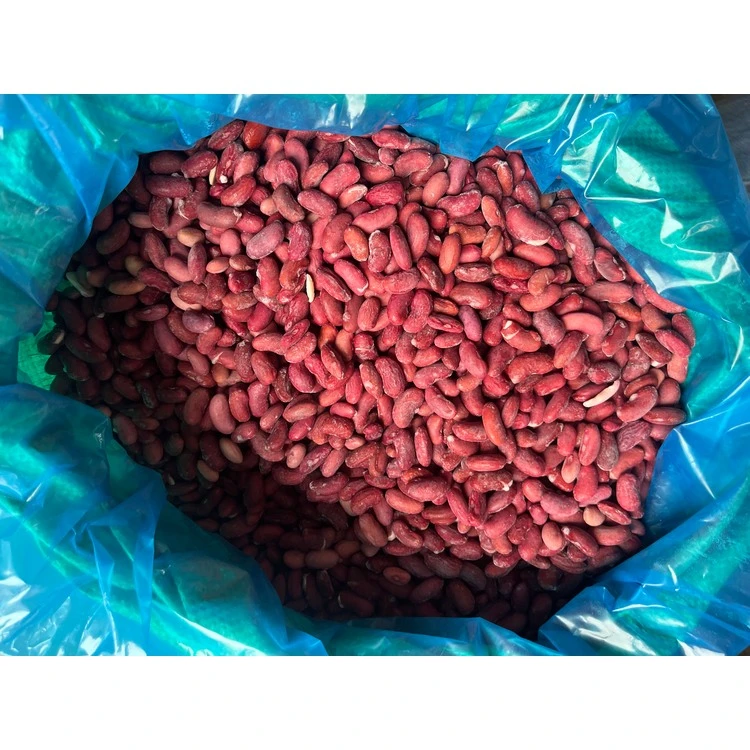
Red kidney beans in a lined carton. The order specification defines the pack and cooking declaration.
Request a document set with a defined purpose. The specification establishes what was ordered. Process evidence supports the cooking declaration. Lot mapping connects the production and packing records to the cases. Any certificate of analysis should identify the tested material, sample, method, date and relevant result. Commercial papers support shipment identification. A document bearing the supplier's name is useful only if its scope answers the question for the supplied ingredient and destination.
Discuss changes before repeat orders begin. A different bean source, size range, cooking process, freezing route or packing arrangement can affect the approved meal. Agree which changes require notification, a document review or another application trial. Keep the approved sample and formula version accessible to both purchasing and development teams. A buyer who approves a different sauce in a later season may also need to reassess the bean, even if the ingredient specification itself has stayed the same.
At receipt, compare the actual label, lot codes, pack integrity and frozen condition with the order. Record clumping or unusual frost without assuming the cause from appearance alone. Review temperature and handling evidence through the site's acceptance process. If a discrepancy concerns cooking state or identity, keep the material on hold until the technical question is resolved. Reclassifying it as a lower appearance grade does not address a missing safety declaration.
For a GreenLand inquiry, describe the finished chili and its route to the customer. Tell us whether the meal is served immediately, hot-held, chilled or frozen for later reheating, and how the beans enter production. Include your target bean proportion, texture reference, case format, estimated order quantity and destination. We can then discuss the available red kidney bean form, sample preparation and order documents against a concrete use, with any additional production or certification requirements confirmed separately.
The approved result should remain practical for the receiving operator, the cook and the buyer. Each should be able to identify the same ingredient, follow the same preparation basis and understand why it was accepted. That connection makes a repeat chili order easier to evaluate when the product, recipe or distribution conditions change.
Source Frozen Red Kidney Beans with GreenLand-food
GreenLand-food is a professional frozen red kidney beans supplier and manufacturer in China, providing factory-direct wholesale supply for importers, food manufacturers, foodservice distributors and private-label programs.
Send your required cooking state, product form, specification, packing, quantity, application, destination, private-label needs and requested documents. We confirm the available ingredient and order evidence against your intended preparation.