


Goji Berries and Wolfberries: Names, Taste and Food Forms
Oct 19, 2026
Leave a message

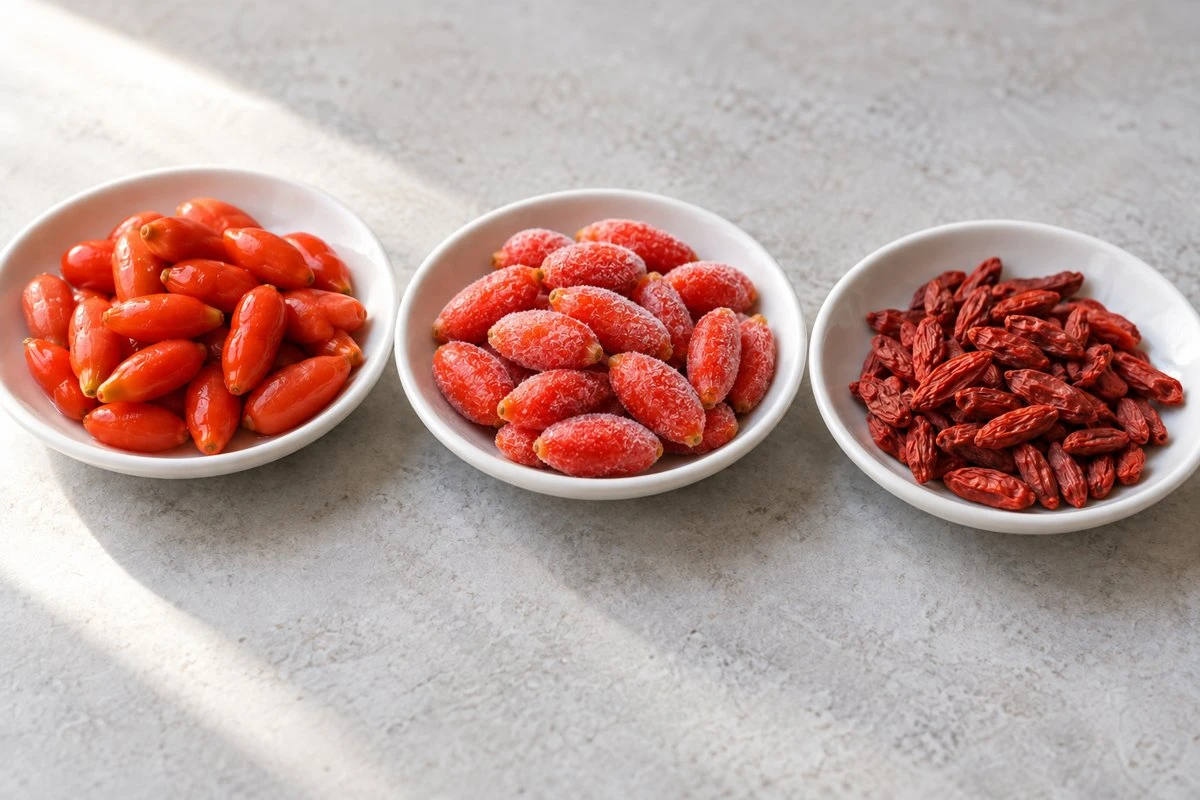
For a food buyer, the useful starting point is a complete description: red goji fruit, the confirmed botanical identity, the supplied form and the intended food use. Taste then becomes a sample question. A dried berry in a cereal bar, a thawed berry in a cooked fruit preparation and a fresh berry tasted on its own have different texture and flavor contexts. Comparing them without naming the form creates expectations that a supplier cannot reliably meet.
This guide focuses on red goji as a food ingredient. It connects the names to what a purchasing or development team can see, taste and specify, while keeping medical claims and concentrated extracts outside the comparison.
What goji and wolfberry names identify
Goji and wolfberry are common names rather than complete botanical declarations. Lycium barbarum and Lycium chinense both appear in discussions of red goji fruit. The University of Florida species overview treats them separately and describes differences in morphology and typical sweetness. A trade name alone therefore cannot establish that two offered samples are biologically identical. Ask the supplier to state the botanical name on the specification when species matters to the formulation, ingredient declaration or destination requirements.
The distinction is practical even when the product will be cooked. A development team may approve a sample with a particular balance of skin, seed and flesh, then receive another lot carrying the same common name but a different sensory profile. Species is only one possible reason: cultivar, maturity, growing conditions and processing can also contribute. Recording identity narrows the investigation without pretending that a botanical name predicts every quality result.
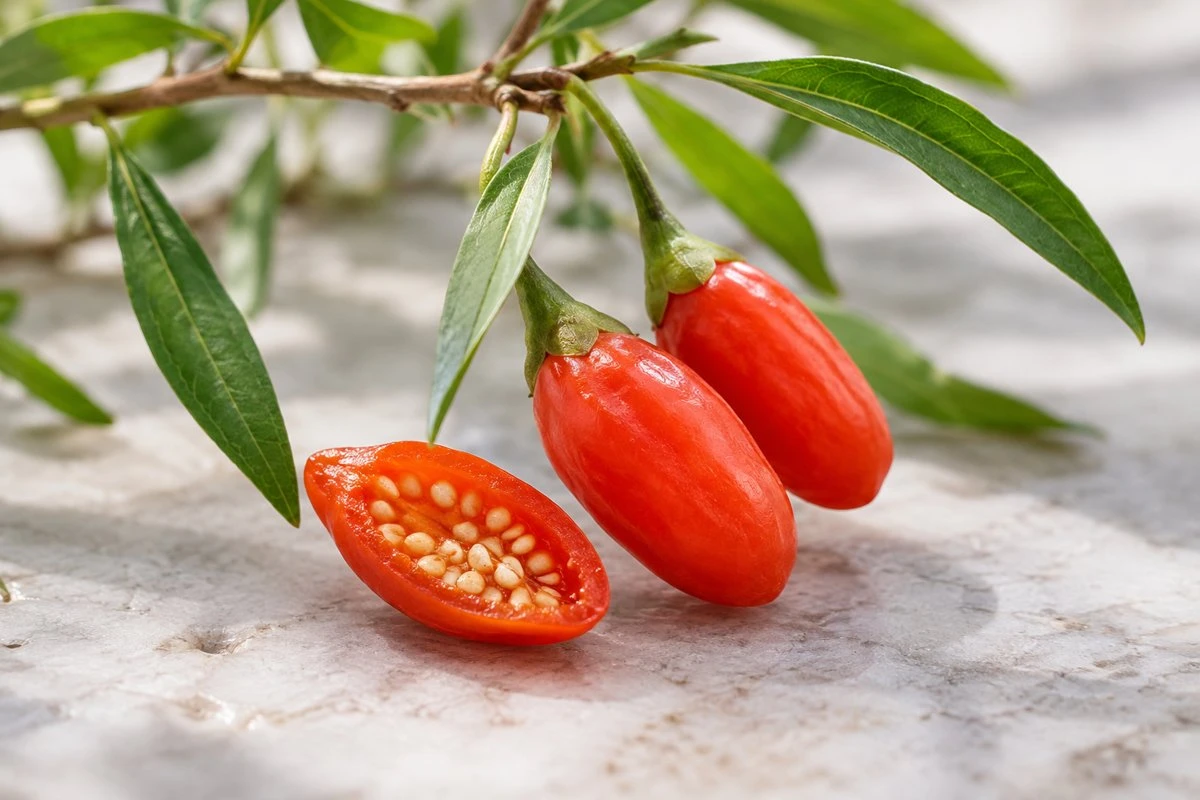
The botanical identity belongs in the specification; appearance alone cannot authenticate a species.
Terms such as Ningxia goji describe an origin association or a commercial description that needs its own evidence. They do not automatically establish a grade, a specific cultivar, an organic status or a nutritional advantage. A buyer who requires an origin should state the place and the supporting records expected. A buyer who mainly needs consistent cooking performance should define that result directly, alongside whatever origin requirements actually apply to the order.
Black goji requires a separate identity discussion. The name commonly refers to a different Lycium species, L. ruthenicum, and should not be treated as a darker grade of the red fruit pictured here. Similarly, products sold as goji leaf tea, goji extract or goji powder may contain different plant parts or processing fractions. The name on the front of a pack is a starting point; the ingredient description determines what the food business is buying.
One workable purchase description begins with the edible fruit, then adds the verified species, whole or processed form, frozen or dried condition, ingredients and intended use. Where a supplier has not yet confirmed a field, keep it as an open question. Substituting a confident guess can make the sample approval appear more complete than the evidence supports. A photograph helps communicate the expected appearance, but it cannot authenticate species or provenance by itself.
For consumer-facing wording, familiar names can remain useful. A pack may explain that goji berries are also called wolfberries, while its technical file carries the more precise identity. This keeps the language approachable and gives the purchasing, quality and artwork teams one consistent ingredient reference.
How fresh goji tastes and feels
Fresh red goji is a small, juicy fruit with thin skin and many small seeds. Its taste may include sweetness, tartness and a mild vegetal or herbal note. The balance varies, and a comparison with cranberry, tomato or raisin is only an analogy. A person expecting the sharp acidity of cranberry or the concentrated sweetness of dried fruit may find fresh goji unexpectedly mild. That reaction does not, by itself, identify a defect.
Start a sensory discussion with the actual sample condition. Was the fruit freshly harvested, held chilled, frozen and thawed, or rehydrated from dry? Was it tasted cold, at a controlled tasting temperature, in a sweet base or in a savory dish? These differences can explain more than a string of flavor adjectives. The development record should identify the preparation so that a second evaluator can repeat it.
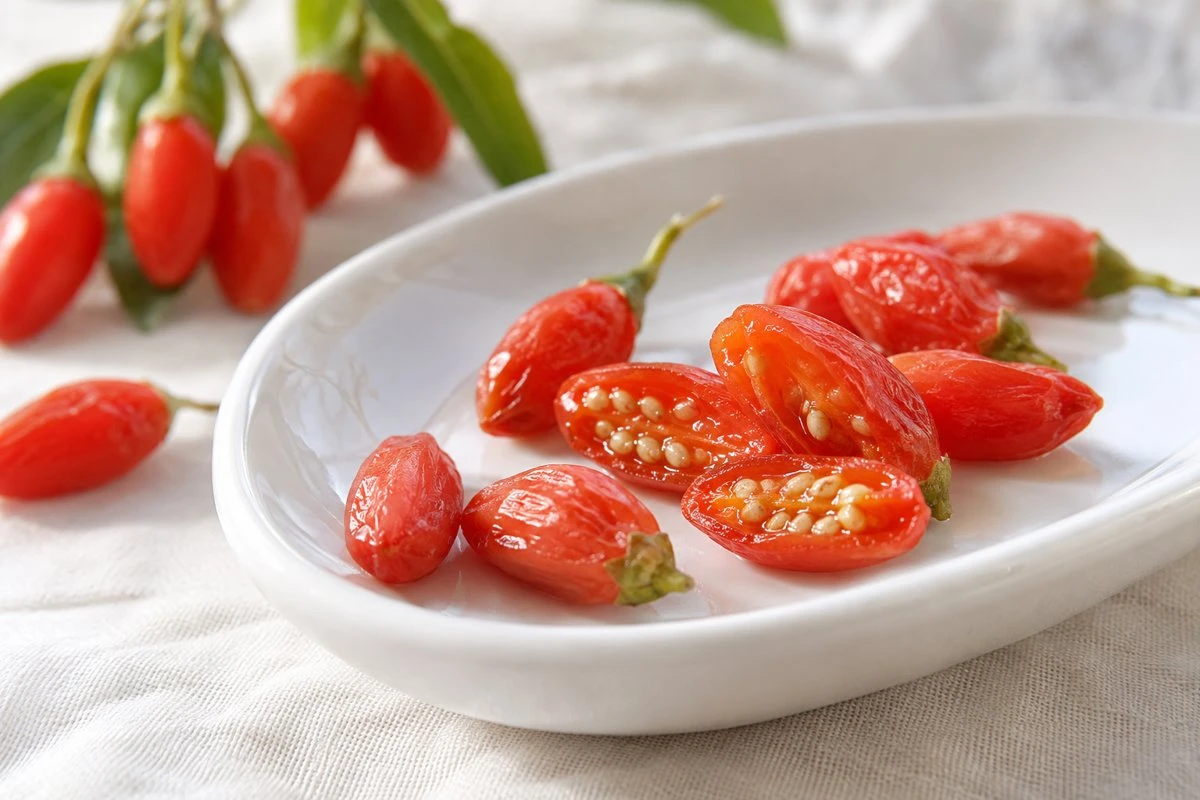
Thin skin, moist flesh and small seeds shape the experience of fresh red goji.
Texture contributes strongly to the impression of flavor. Skin gives an initial resistance, flesh supplies moisture and seeds remain as small particles. A soft berry can feel more pulpy than a firm one even when the flavor is acceptable. In a whole-fruit application, the team may care about how long the berry remains recognizable after stirring. In a screened drink, the important question may be how much skin and seed remains after the chosen refining step.
Fresh goji also needs gentle handling. Utah State University Extension describes hand harvesting and the tendency of bruised fruit to darken. For a food-use sample, inspect crushed berries, splits, leaking juice and abnormal odors before deciding how to assess it. Do not use a tasting exercise to evaluate fruit that is moldy or otherwise unsuitable. Sensory work follows the product's food-safety and intended-use conditions.
An application team can make the description more useful by separating three observations: the first taste, the texture while chewing, and the finish after swallowing. For example, "mild sweetness, soft skin and a lingering vegetal note" conveys a different result from "sharp initial acidity with a clean finish." These are examples of descriptive language, not results from a GreenLand trial. The team should record its own observations for the lot supplied.
Color helps set expectations but deserves careful interpretation. Normal orange-red variation should be discussed against an agreed sample rather than a screen image with unknown lighting. A warmer photograph can make berries look sweeter or riper without changing the fruit. If color is critical, compare samples under consistent light and keep the acceptance reference with the specification. Taste and appearance can then be reviewed together without using one as proof of the other.
Why dried goji gives a different impression
Drying removes water and changes the fruit's structure. The berry becomes smaller and wrinkled, while the remaining solids occupy a larger share of its weight. That is why an equal gram portion of dried fruit is not a direct sensory equivalent of fresh fruit. The dried form can deliver a more concentrated impression and a chewy texture, although the exact result depends on the material and drying route.
Chewiness is especially important in cereal, snack and bakery applications. A berry that is pleasant in a moist cake may feel too hard in a dry mix. A softer dried berry may integrate well into a bar but behave differently during storage beside crisp cereal. A product developer should consider the surrounding food, the time between mixing and consumption, and the package's protection from moisture. The approved ingredient needs to suit that whole system.
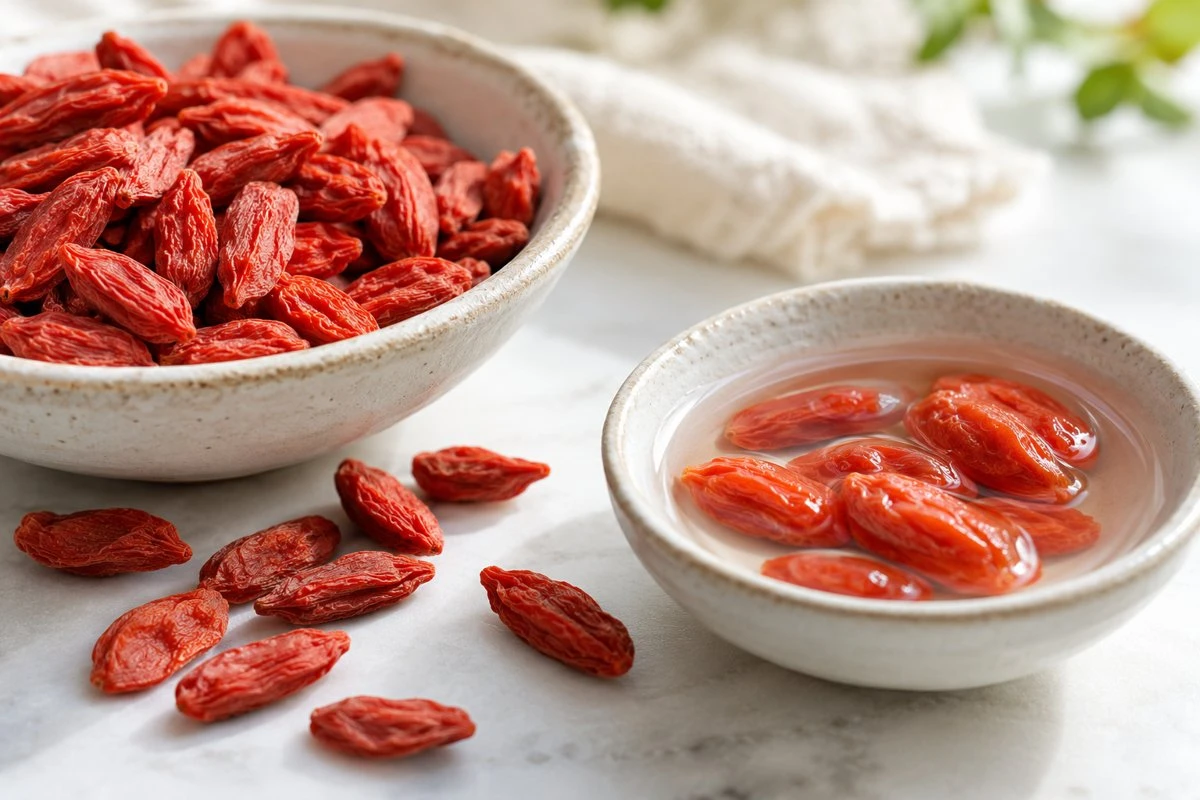
A dried berry and a rehydrated berry have different preparation histories.
Dried goji can be soaked or cooked to soften it. Rehydration introduces water into a structure already changed by drying; it does not recreate an untouched fresh berry. Some constituents can move into the soaking liquid, and skins may remain more apparent than expected. For a consistent recipe, specify the initial dry weight, the liquid amount, the soaking conditions and whether the liquid stays in the finished food. "A handful soaked until soft" is difficult to repeat at production scale.
Different drying methods can produce different color, texture and rehydration behavior. A primary study comparing drying treatments measured those responses under specified experimental conditions. The useful purchasing lesson is to ask about the supplied preparation and evaluate the sample. Its experimental temperatures and treatment concentrations should not be copied into a general factory instruction or used to claim that every dried berry behaves identically.
Freeze-dried goji belongs within the dried-food discussion, although its process and texture can differ from conventional dried fruit. The word "freeze" does not mean the finished ingredient is the same as a bag of frozen whole berries. Confirm the actual form, moisture specification, packing and storage instructions. A light crisp ingredient intended for a dry snack faces a different development problem from moist frozen fruit intended for cooking.
Ingredient declarations also matter. Check whether the supplied dried product contains only fruit or includes other declared ingredients. Added sugar, a carrier in a powder or a preservative can change both formulation and labeling. Do not infer composition from a bright color or a naturally sweet taste. The specification, declared formula and agreed testing provide the basis for decisions that appearance cannot resolve.
What freezing changes in whole berries
Frozen whole goji is a water-containing fruit held in a frozen state. It is distinct from dried goji stored in a freezer and from freeze-dried goji. When whole fresh fruit freezes, ice formation can affect tissue structure. After thawing, the berries may be softer and release liquid. A buyer should expect to assess that behavior in the intended application rather than assuming that thawed berries will have the same bite as fresh ones.
That change can be acceptable or useful when the fruit will be cooked, pulped or incorporated into a preparation. It can be less suitable where intact, firm berries must remain visible through several handling steps. The question is the finished-food requirement. An attractive frozen sample does not answer how the berries will look after thawing, stirring, heating and chilled storage. Those later steps need a representative application trial.
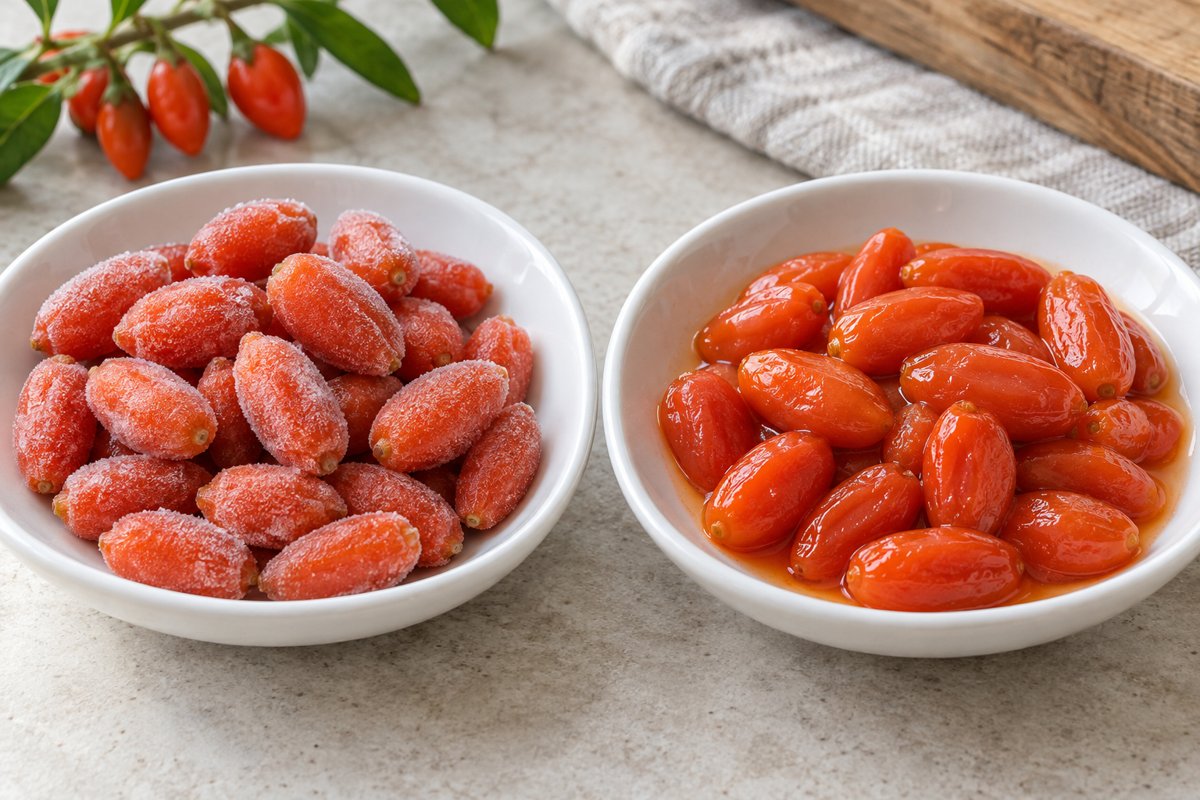
Thawed whole berries can release liquid and soften while retaining their full fruit form.
The liquid released during thawing belongs in the formulation discussion. It may contribute water, color, flavor and soluble material. Draining it before making a sauce changes what enters the recipe; retaining it in a bakery inclusion can affect the surrounding crumb. Record whether the recipe uses the complete pack or only drained fruit, and define the drainage method if that is part of normal use. Comparing one supplier drained and another undrained creates a misleading result.
Free-flowing condition also has a purpose. Separate frozen berries can be portioned more easily than a fused mass, but a carton photograph cannot establish a numerical clump allowance. Inspect the actual packed sample and agree what counts as a cluster, broken berry or loose surface ice. If a whole carton will enter a controlled pulping process, different appearance criteria may be reasonable from those for a metered whole-fruit blend.
Freezing preserves food; it does not by itself establish ready-to-eat status. FDA's berry safety guidance explains that freezing generally does not inactivate viruses introduced through the supply chain. A goji order should therefore state the intended use and any further processing requirement. A smoothie photograph or a general food-use suggestion is not evidence that a particular frozen lot can be served without an appropriate control step.
For procurement, treat frozen condition, post-thaw quality and food-safety suitability as related but separate questions. Temperature records help describe handling history; a thaw assessment describes quality under the chosen method; supplier documentation and the receiving business's food-safety plan govern use. Keeping those questions clear makes a rejection or approval easier to explain and avoids asking a single visual test to answer everything.
Choose a form for the food you want to make
The form should follow the food's desired texture and the process that creates it. A dry cereal mix commonly needs an ingredient that can remain compatible with a low-moisture environment. A cooked fruit preparation can accommodate a moist fruit and may benefit from using the released juice. A smooth beverage requires a decision about skin, seeds and suspended pulp. Naming the finished application first makes the comparison more productive.
| Form | Visible condition | Development question | Preparation basis to record |
|---|---|---|---|
| Fresh whole fruit | Moist, plump berries with delicate skin | Does its fresh texture survive the intended handling? | Edible fruit weight and holding conditions |
| Frozen whole fruit | Water-containing berries held frozen | How do thawing, liquid release and cooking affect the result? | Frozen weight, thaw method and liquid retained |
| Conventionally dried fruit | Smaller, wrinkled berries | Is the chew suitable during the finished food's storage? | Dry weight, ingredient declaration and any soaking |
| Freeze-dried fruit | Dried fruit with a potentially lighter structure | Does its texture remain suitable after moisture exposure? | Supplied moisture, packing and incorporation method |
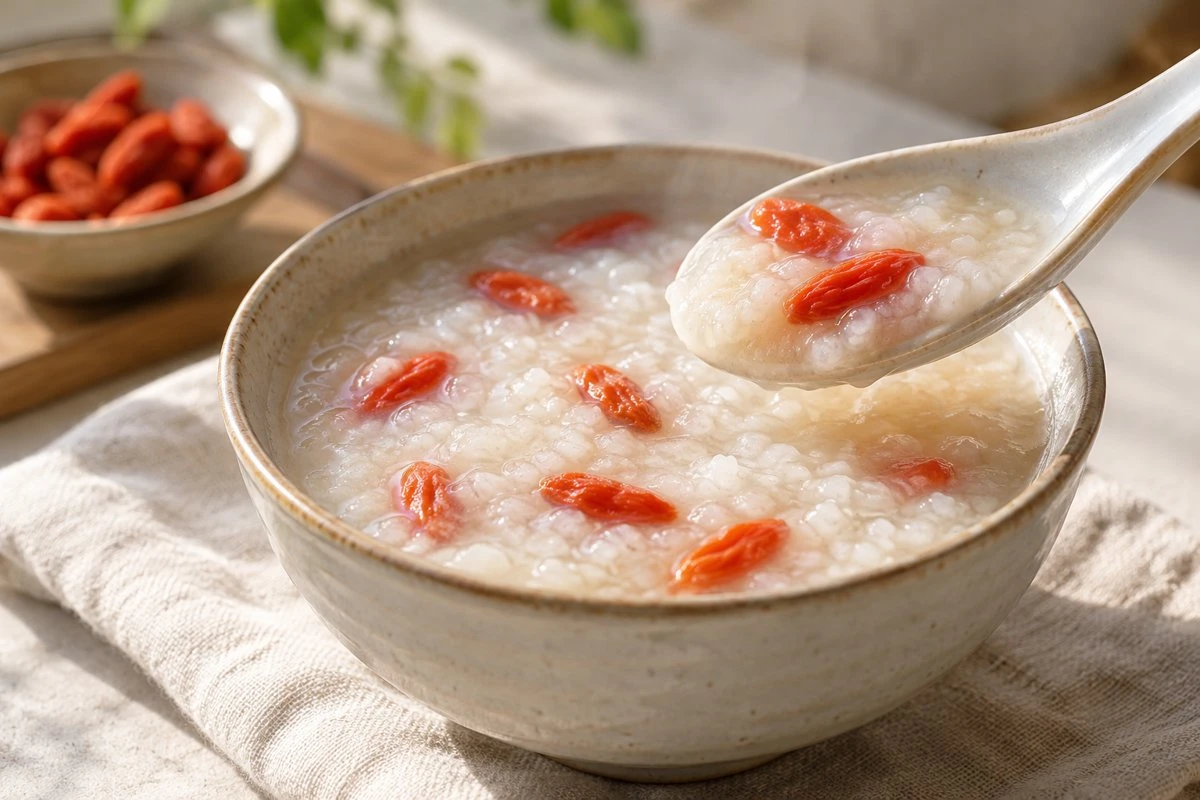
A cooked porridge can use softened berries as visible inclusions.
For a beverage, decide whether recognizable fruit pieces are desirable. A blender can reduce the berry but may leave a perceptible seed or skin fraction. Screening can change both texture and usable yield. The guide to puree screens and particle size explains why a nominal screen opening does not fully describe the finished material. The goji trial should assess the actual drink after its intended mixing and holding conditions.
For a cooked porridge or filling, softened whole berries may be appropriate. Addition timing and agitation influence how many remain recognizable. An early addition may distribute fruit flavor through the base while a later addition may retain more visible pieces. These are development choices to test under the food's validated process, not fixed instructions that guarantee a safety outcome or an identical texture in every recipe.
For bakery work, distinguish an inclusion from a filling. An inclusion needs to coexist with dough or batter; a filling has its own water and solids balance. Dried fruit may draw moisture from its surroundings, while thawed whole fruit may introduce free liquid. A one-for-one weight substitution can therefore change the result even when the new ingredient looks like the same fruit. Begin with a small controlled comparison and record the actual finished weight and texture.
Commercial availability is another part of the decision. A form shown in an educational comparison is not a promise that every supplier stocks it. At GreenLand-food, the frozen goji supply discussion provides a starting point for whole frozen fruit. Any alternate preparation, packing or intended-use program needs its own confirmation and sample approval.
Describe a goji sample in useful terms
A useful sample note enables another person to understand what was evaluated. Record the lot, species declaration if available, form, ingredients, package, arrival condition and preparation. Then describe appearance, aroma, taste and texture in terms relevant to the food being developed. A short accurate note is more valuable than a page of attractive adjectives that cannot be checked again.
Use the same preparation for comparable candidates. If one sample is tasted partly frozen and another fully thawed, temperature and texture can influence the judgment. If one dried sample is soaked longer, its softness and dilution can differ. Establish a simple preparation instruction before the comparison and retain it with the results. Where the product requires cooking, evaluate it only through a suitable preparation that respects that requirement.
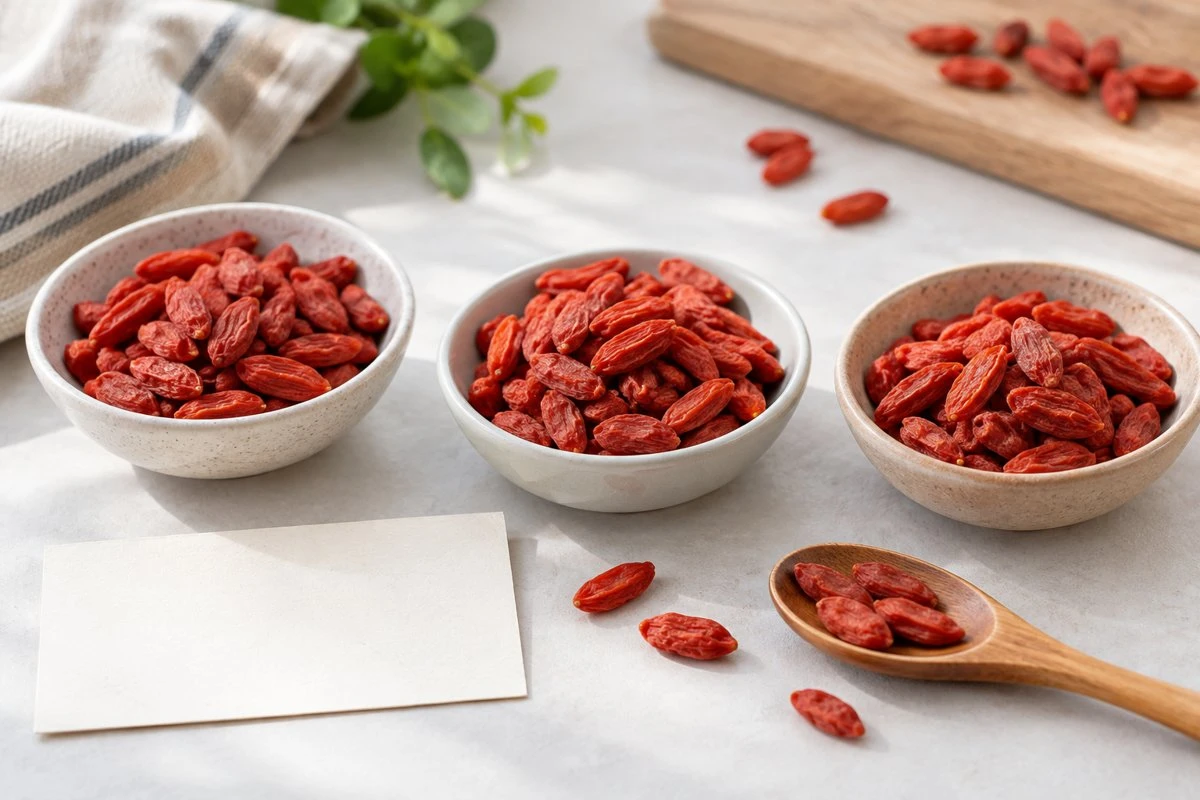
Compare samples under the same preparation and tasting conditions.
Separate ordinary variation from a defect. Some differences in size and shade can be acceptable within a natural fruit lot. Attached stems, foreign material, severe crushing or abnormal odor raise different questions and should be recorded separately. Define any numerical allowance with a sampling basis: a count of affected berries and a weight of damaged material are different measurements. The specification should say which one is used and how mixed findings are classified.
Taste language should be linked to a decision. "Too strong" is difficult to act on; "the vegetal finish remains noticeable at the proposed dose in this milk base" gives the development team something to test. It can compare a different dose, a different preparation or another approved form while keeping the base recipe stable. These proposed comparisons are ways to investigate a result, not promises that a particular adjustment will solve every formulation issue.
Retain the sample context when discussing price. A lower quoted cost per kilogram may come with more breakage, a different water content or a form that requires extra preparation. Conversely, an expensive whole-fruit grade may bring little benefit to a process that intentionally breaks and screens the berries. The economically useful comparison is the ingredient delivered to the actual process and the acceptable food recovered from it.
Finally, distinguish a development observation from a contractual limit. A team may prefer one sample during a small kitchen trial without yet knowing the allowable range in routine supply. Repeat the critical observation, identify the method and discuss a practical acceptance range. That work turns a promising taste impression into an order that both parties can interpret when the next lot arrives.
Turn the name into a clear ingredient order
A goji inquiry becomes easier to quote when it describes the food use alongside the product. State whether the berries will remain whole, be cooked into a filling, be blended into a drink or be screened into a preparation. Explain the desired visible result and any handling constraints. The supplier can then discuss a form and sample suited to that use instead of responding to a broad request for "premium wolfberries."
For frozen whole fruit, include the required packed condition, acceptable broken-fruit and stem levels, inner pack size and the quantity normally opened at one time. These fields affect receiving, portioning and production. A large liner may suit a complete batch charge but be awkward for frequent small doses. A smaller pack may improve handling while changing packing cost. The right decision depends on the operation's actual demand and storage capacity.

Whole berries in a bulk liner show the supplied physical form; the specification establishes the agreed order details.
Ask for the documents that resolve the order's real questions. Botanical identity, ingredient declaration, intended-use statement, lot traceability and agreed analytical reports may all be relevant. The destination and finished application determine the necessary scope. A generic certificate or old report should not be used to fill a gap in current product information. Match the report, specification version and label to the material being offered.
We help purchasing teams turn those questions into a specification discussion before an order is finalized. The approved sample should remain linked to its preparation method and intended use, so that a later comparison tests the same thing. Where the buyer's trial involves a sauce, drink or other processed food, keep the recipe and endpoint with the sample record. A reference berry alone cannot describe every property of the finished application.
Before confirming artwork, make sure the familiar product name and the technical declaration agree. "Goji berries" may be clear on the front panel, while the ingredient file identifies the fruit and supplied form more precisely. Any origin statement, nutritional claim or special-status declaration needs its own support. The natural appeal of the name should not create an implication that the product record cannot substantiate.
The final decision is a match between identity, preparation and use. A buyer who wants the chew of dried fruit should not expect the same result from thawed whole berries, and a processor who needs moist fruit pulp should assess that material directly. Once the form is explicit, names become easier to explain, taste becomes easier to compare and the purchase specification becomes much more useful.
Related reading
Choose a controlled thawing method with handling and intended-use limits.
Define the finished particle result instead of relying only on a screen opening.
Distinguish a refractometer reading from a measured individual-sugar profile.
Source frozen goji berries with GreenLand-food
GreenLand-food is a professional frozen goji berries supplier and manufacturer in China, providing factory-direct wholesale supply for importers, food manufacturers, foodservice distributors, and private-label programs.
Send the intended application, product form, botanical identity requirement, packing, quantity, destination and requested documents. We will review the frozen goji brief; availability and order specifications require confirmation.