


Comparing Frozen Guava Lots by Usable Pulp Yield
Oct 19, 2026
Leave a message

For a beverage processor, that specification may allow fine suspended pulp while controlling seed fragments and green peel. A yogurt preparation may need a smoother mouthfeel and a different consistency. We start the supply discussion with the actual frozen form and the buyer's application, then ask for a representative trial through the intended route. The aim is a repeatable comparison that connects ingredient price to acceptable output.
Define the pulp the next operation can use
Usable pulp is the stream accepted by the next operation at a named point in the process. It might be screened guava puree entering a blending tank, or a further finished base ready for a fruit preparation. Those boundaries produce different recovery figures. Write down the boundary before testing either lot, and name the material counted as output. This prevents a rough mash weight from being compared with a more heavily finished puree weight.
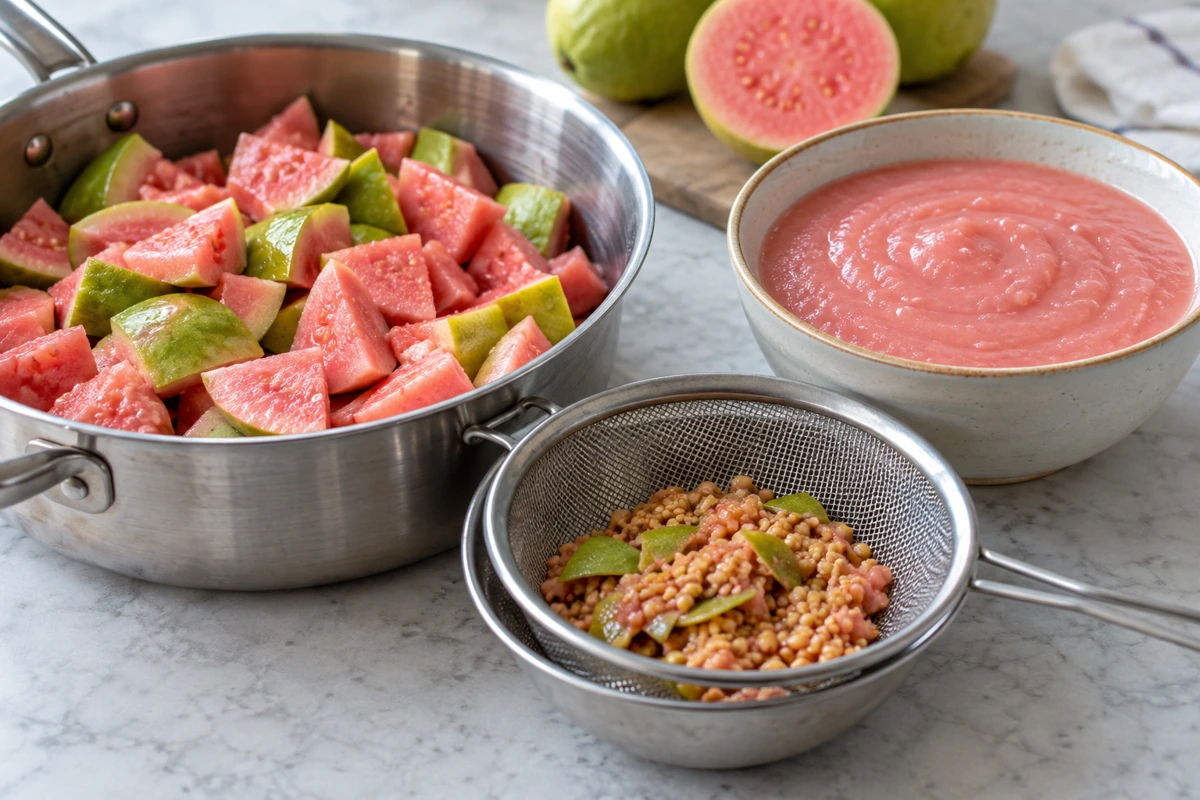
The starting form matters just as much. Our frozen guava product page shows skin-on pink-flesh pieces containing central seed material. A peeled or seed-reduced alternative needs a separate sample and agreement. A trial starting from prepared seed-free flesh answers a different purchasing question from a trial starting from the received skin-on pieces. Both can be useful, provided the preparation loss and purchase basis remain explicit.

Skin-on pink guava pieces with central seed material, shown on the GreenLand-food product page.
Define the sensory and physical endpoint in terms the receiver can reproduce. Describe acceptable seed fragments, green peel specks, coarse particles, colour, aroma and consistency. A reference sample helps align the team's language, but its photograph cannot establish smooth mouthfeel or flavour. Agree which observations require tasting through the approved food-safety procedure, which require measurement, and which can be judged visually. This makes an attractive sample less likely to pass an unsuitable grade.
Guava brings more than one separation problem. The FAO guava processing chapter distinguishes the hard seeds from stone cells that can contribute a grainy texture. A statement that seeds were removed therefore leaves a mouthfeel question open. Record the condition of the accepted pulp after the chosen finisher and any later polishing step. Increasing recovered mass has little purchasing value if another operation must remove the additional material.
Keep the specification practical for the intended product. A cloudy guava drink may retain fruit body that would be unacceptable in a clear beverage. A thick preparation may tolerate a different particle distribution from a drinking yogurt. If one lot is being evaluated for two uses, retain two acceptance results. Averaging their recoveries would hide the fact that the same retained fraction can carry different value in the two applications.
Use a mass basis consistently when the pulp is traded or formulated by weight. A vessel volume reading depends on entrained air, temperature and how the pulp settles, and should not be substituted silently for kilograms. If the recipe uses volume dosing, qualify the relationship under its own conditions. Keep the yield record in the chosen mass units so material received, material removed and material accepted can be reconciled directly.
Sample the lot before weighing its value
A carefully controlled trial can still mislead when the sample comes from an unusually favourable part of a lot. Frozen pieces vary in rind share, central seed material, size and damage. Take sample units across the lot according to an agreed sampling plan, retaining the identity of each unit until its received condition has been recorded. The number and distribution of units should reflect the lot and the importance of the decision rather than an arbitrary universal bag count.
Inspect the sample while frozen before combining or thawing it. Record piece form, clumps, loose ice, visible peel, exposed seed centres, damaged packs and any departure from the approved reference. These observations explain the material entering the trial. They also create a receiving record that can be compared with the commercial shipment. A note saying good quality gives the next team little help if its own sample behaves differently.

Skin-on pink guava pieces with central seed material, shown on the GreenLand-food product page.
Keep the sample's history with the result. Identify the lot, packed date or available crop reference, pack size, transport condition and storage before testing. Record when the pack was opened and whether it had already been partially used. A sample that has repeatedly warmed during demonstrations may no longer represent the frozen ingredient offered for routine processing. Decide its trial scope before collecting numbers, and obtain replacement material when the departure prevents a fair comparison.
Separate a composite result from the variation between sample units. A blended composite can estimate average recovery under a defined method, while individual observations reveal whether some packs contain much more seed core or peel. If variation affects the buyer's feed consistency, preserve enough unit-level information to see it. The purchasing team can then discuss both the average output and the range the process must accommodate.
Use sample quantities that suit the question. Small bench portions may establish whether a finishing route produces the desired mouthfeel. They rarely establish sustained feed behaviour, screen cleaning frequency or production throughput. The buyer's process team should set the scale needed for those conclusions. A staged programme can answer the formulation question first, then qualify operating behaviour with material representative of the proposed supply. Keep those approvals identifiable so a useful bench result carries its supported meaning.
Arrange paired trials so ordinary operating drift does not consistently favour one lot. Record the run order, equipment condition and cleaning between materials; repeat the comparison when its importance justifies it. If one sample runs on a different day or with another operator, retain that detail. The team can then judge whether the observed difference is large enough and reproducible enough to support a purchasing preference.
Keep thaw liquid and added water visible
Choose one starting-weight convention and apply it to both lots. Received net fruit weight excludes the outer carton and liner; it should also state how loose ice or an agreed glaze is treated if present. Weigh using suitable checked equipment and retain the tare records. If an initial sorting step removes damaged pieces, count that removal separately. Beginning the yield calculation only after sorting would conceal an ingredient loss that purchasing still pays for.
The thaw route changes which fractions are available for recovery. A processor may use a controlled thaw followed by pulping, or feed fruit through equipment designed for a partly frozen input. Use the route intended for production and record the relevant condition at the start of finishing. A convenient laboratory thaw can help development, but it needs a clearly limited interpretation when production will use another route.
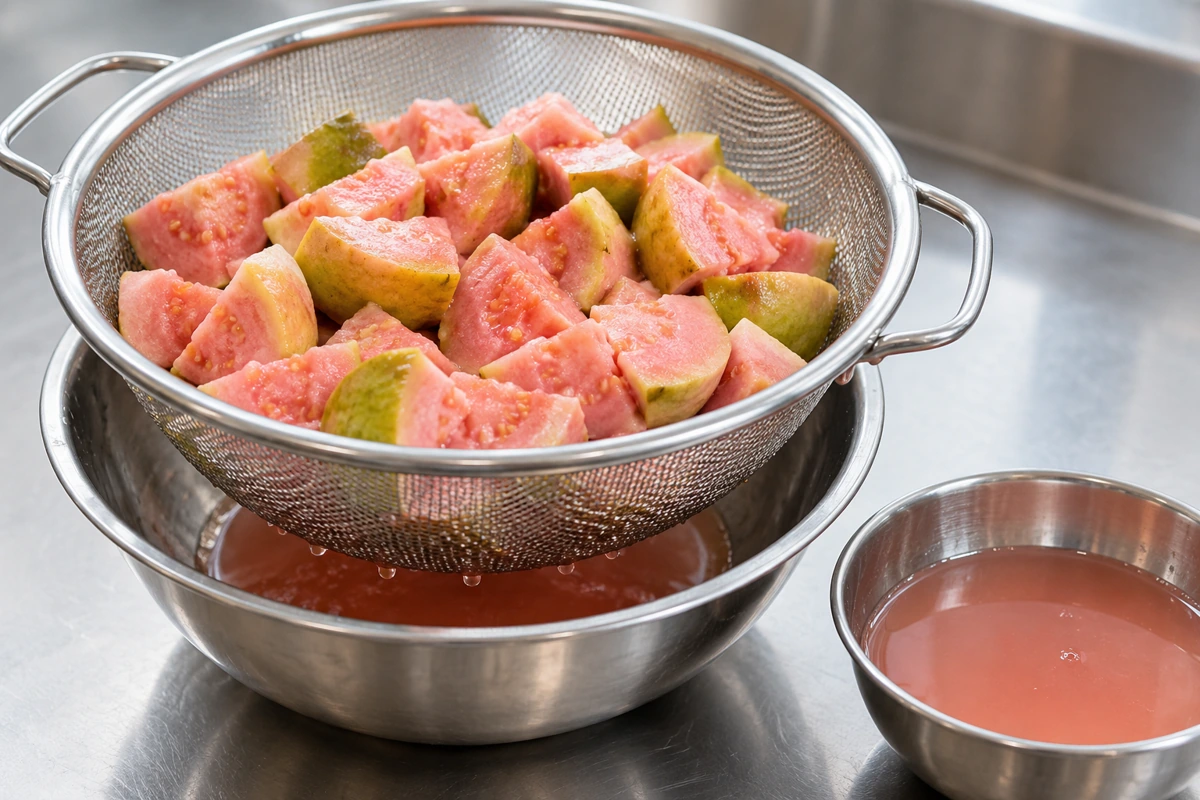
Collect released liquid separately when the trial method needs to account for it. Illustrative handling scene.
Collect the liquid released during thawing and decide its destination. If it enters the pulp, retain it with that stream. If the method drains it away, weigh the drained fraction and describe the drainage conditions. Differences in drip collection can change apparent pulp yield without a change in seed removal. The same drain time, support geometry and handling sequence make the comparison easier to interpret; they should come from the buyer's trial method.
Any added water belongs in its own record. Some extraction routes use water to assist movement or recovery, as historical guava processing examples in the Kerala Agricultural University handout illustrate. Once water is added, gross collected puree mass no longer describes fruit recovery by itself. Record the addition, the final stream composition and the chosen calculation. A high output-to-fruit ratio can be entirely consistent with dilution.
Do the same for rinse water, sugar solutions or other additions used during a later preparation. Report fruit recovery at the agreed earlier boundary, then finished-preparation yield separately. A dairy buyer may need both numbers: acceptable fruit base per purchased kilogram and finished yogurt cups per recipe batch. Keeping them distinct allows the team to improve a recipe without losing track of what the guava lot contributed.
Handle the sample under the facility's food-safety controls throughout this work. The FDA storage guidance explains that freezing does not kill most bacteria. A yield trial is therefore no permission to leave thawed fruit warm for convenience or taste an unqualified raw ingredient. The site's qualified procedure governs handling and any sensory preparation; the mass record follows that procedure.
Measure screened pulp and retained material
Treat finishing as a controlled operation with an identified screen and operating method. Record the screen opening and type, its condition, the feed preparation and the relevant equipment settings. A mesh label alone does not describe the full separation. Contact time, feed loading and mechanical action may change how much flesh accompanies the retained seeds and peel. The buyer's equipment team should define a practical method that can be repeated without forcing material through for a better number.
Weigh the accepted pulp and the retained fraction separately. Inspect what the retentate contains: intact seeds, broken seed material, green peel, coarse tissue and recoverable flesh can have different implications. A heavy reject fraction may reflect the incoming form, an unsuitable finishing method or both. Photographs help document the visible composition, while a controlled follow-up trial can investigate the cause. The first comparison should retain its original result rather than being overwritten by the best later setting.
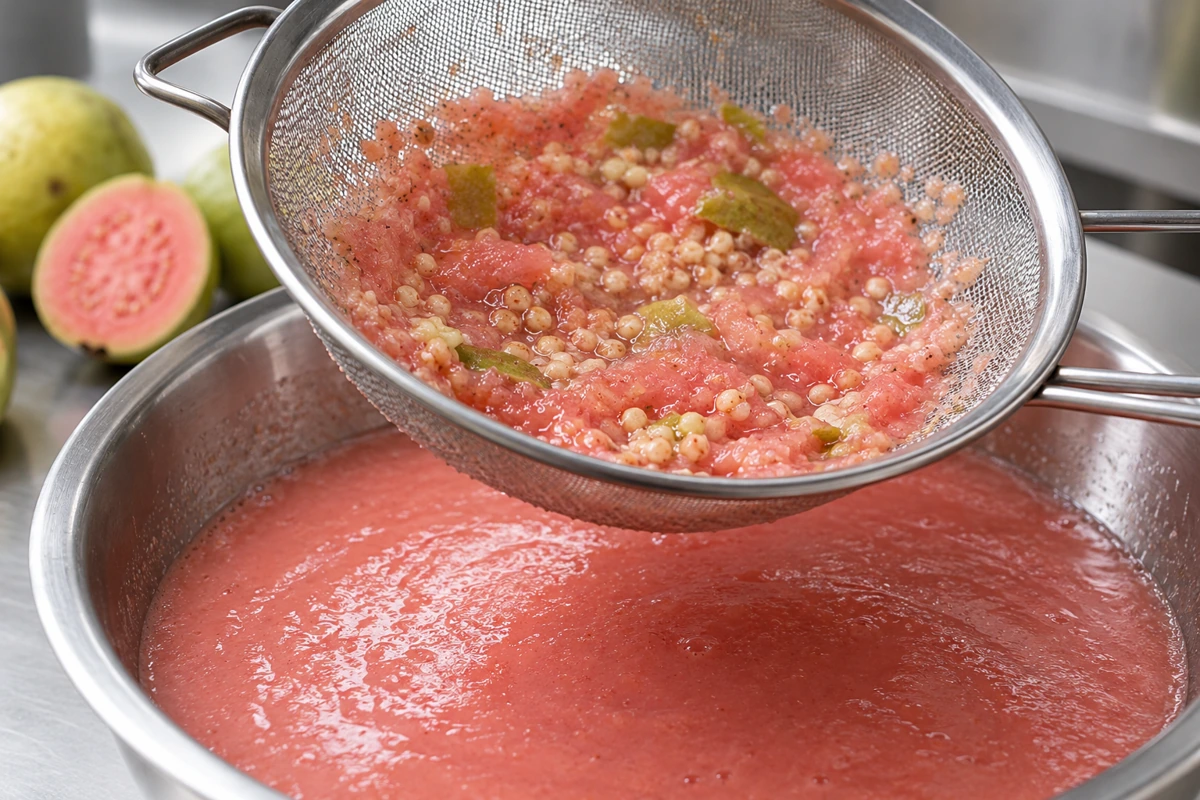
The retained fraction can contain seeds, peel and useful flesh; its weight needs a defined method. Illustrative separation.
Close the mass balance closely enough to understand the losses. Account for material left in the feed vessel, on screens and in transfer containers. For an illustrative water-free trial, 100 kilograms of received fruit might become 65 kilograms of accepted pulp, 28 kilograms of retained material, 3 kilograms of separately collected liquid and 4 kilograms of handling loss. These are invented teaching quantities, not GreenLand lot data. Their useful feature is that every fraction remains visible.
If the actual balance does not reconcile within the method's agreed tolerance, investigate before ranking the lots. Check tare entries, spillage, sample withdrawals, residues and additions. Avoid assigning every unexplained difference to evaporation or fruit quality. A repeat weighing or a simpler trial boundary may resolve the problem. Report unresolved uncertainty alongside the recovery so the purchasing decision reflects the precision the method supports.
Record time and operational interruptions separately from mass. A lot that gives acceptable pulp may require more screen cleaning or slower feeding. Our article on juice recovery and processing capacity explains why those two questions need separate records. The same distinction is useful for guava: the recovered fraction supports an ingredient-yield comparison, while sustained acceptable output rate supports production planning. Both belong in an industrial approval when capacity affects the order.
Preserve the identity of analytical samples removed during the trial. A small cup taken for laboratory work is part of the input balance even if it never returns to the process. Include it in the accounting and name the stream it represents. This is particularly useful in small bench trials, where a few sample withdrawals can represent a meaningful share of the original fruit weight.
Check whether recovered pulp meets the application
Assess the recovered pulp at the agreed stage and temperature. Guava consistency can change with sample preparation, temperature and subsequent treatment, so a photograph of a spoonful cannot replace a defined flow or viscosity method. Retain the method name, instrument or practical procedure, sample condition and units. Where the buyer uses an approved reference, compare it under the same conditions. A difference then has a clear interpretation for mixing, pumping or dosing.
Measure soluble solids where they help the application and retain their basis. A refractometer reading on a prepared sample can assist comparison, but it is not a direct measure of all recoverable fruit solids. Suspended particles, temperature compensation and dilution history need appropriate handling under the laboratory method. If water was added to one stream, a mass-yield comparison accompanied by that stream's lower soluble solids should prompt a review of how equivalent output is being defined.
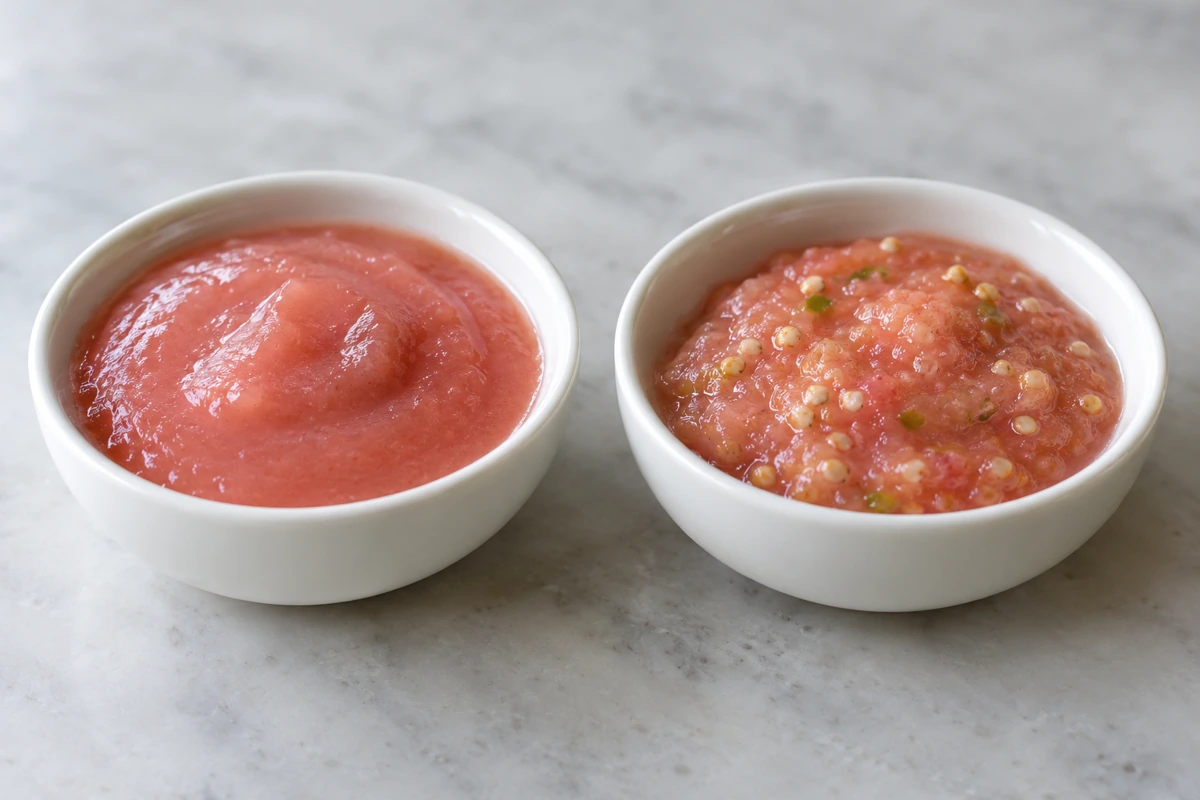
A finer pulp and a pulp containing visible coarse material call for different acceptance judgments. Illustrative comparison.
Use pH and titratable acidity for their distinct purposes. The trial should say which was measured, how the sample was prepared and how any acid result is expressed. Neither value alone describes the sensory balance of the finished drink or fruit preparation. Compare the pulp at its intended dose in the real application, keeping the other ingredients constant. That trial can reveal whether apparently similar recoveries support the same flavour contribution.
Inspect the particles that remain after finishing. A smooth-looking surface can still conceal gritty mouthfeel, and a few visible peel specks may matter more in a pale dairy base than in a dark blended drink. Define the permitted condition with an appropriate sensory or particle assessment. Do this after the final relevant process, because later shear, heating or mixing can expose a defect that a freshly screened sample did not show clearly.
Keep quality acceptance ahead of the commercial ranking. If one recovered stream misses the agreed endpoint, either record its accepted quantity after the necessary additional processing or classify the pairing as unapproved for that use. Assigning its full gross weight the same value as acceptable pulp would distort the comparison. The trial remains useful even when a lot fails: it identifies the specification, preparation or application that needs another decision.
Compare cost per accepted kilogram
Calculate usable pulp yield as accepted pulp mass divided by the stated received fruit mass, multiplied by 100. This simple expression works when both masses describe the agreed undiluted boundary. If the process includes additions, the report needs the agreed correction or a separate solids-based assessment rather than quietly applying the same formula to gross finished weight. Finance and production should be able to trace each value back to a weighed stream.
The ingredient component of cost per accepted kilogram is the received guava cost per kilogram divided by the usable-yield fraction. In a purely illustrative comparison, a lot priced at 2.00 currency units per kilogram with 60 percent acceptable recovery costs about 3.33 units per accepted kilogram. A second lot at 2.20 with 70 percent recovery costs about 3.14. These hypothetical figures show the calculation; they are neither quotations nor expected guava yields.
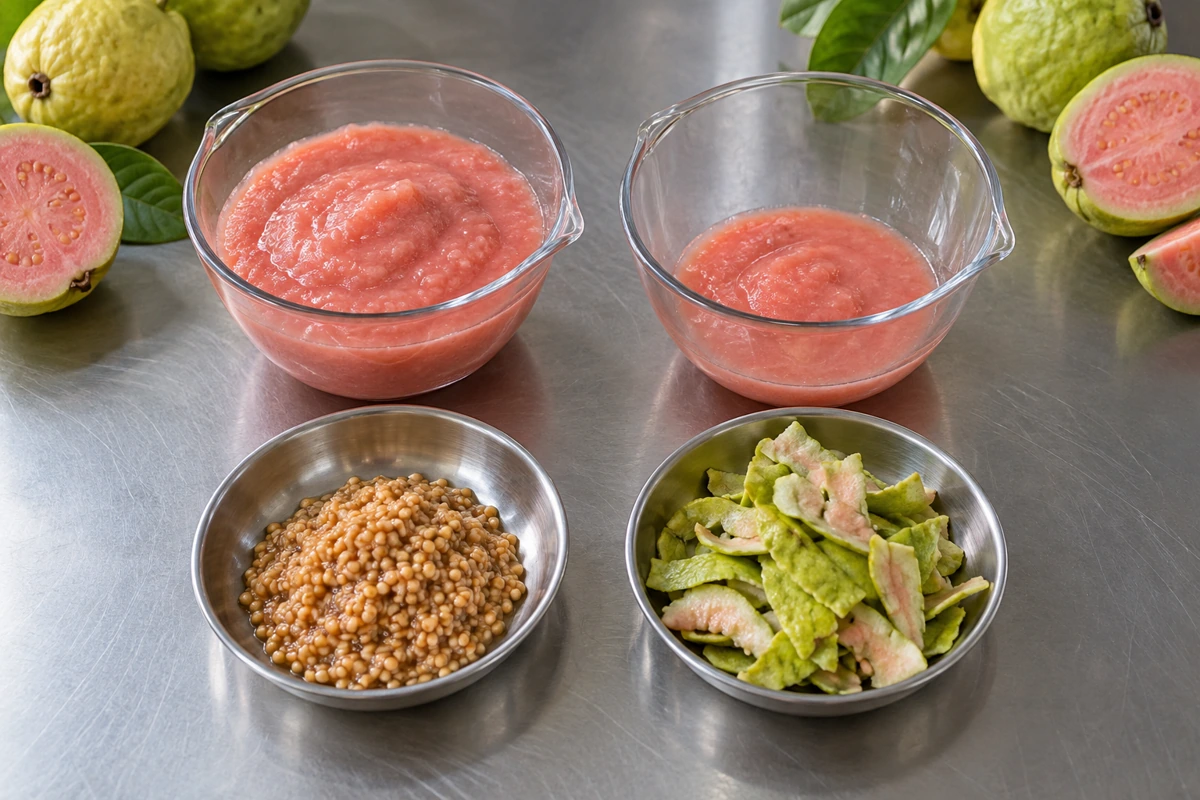
Different recovered amounts and retained fractions need a common input and quality basis. Illustrative quantities.
That ranking assumes the two accepted pulps deliver the same required result. If one needs a larger recipe dose for the desired aroma, or more concentration to reach the target body, include that difference in the finished-product costing. The most useful purchasing basis may be cost per approved beverage batch or fruit-preparation batch. Work through that calculation with the formulation team so a lower pulp price does not hide a higher application cost.
Add the process costs that actually differ between routes: labour, energy, consumables, screen cleaning, disposal and the time needed to produce acceptable material. Use observed or properly estimated values and label their status. A bench trial may identify a possible cleaning burden without establishing its production cost. Keep the uncertainty visible until a relevant scale trial supports the number. This avoids replacing an uncertain yield assumption with an equally uncertain operating-cost assumption.
Give a retained fraction a commercial value only when an approved use exists. Seeds and peel may interest another process, but a theoretical outlet is not a sale or a disposal saving. Record any qualified reuse or by-product route separately, including its handling and safety requirements. The core comparison should remain understandable without speculative revenue. Purchasing can then assess an established outlet as an additional supported contribution.
Use a common delivery-cost boundary for the fruit prices. An ex-works quotation and a price including freight to the receiving store do not represent the same input cost. Align the relevant packing and delivery terms before dividing by recovery. If transport or packing changes between options, show the change explicitly. The resulting calculation can then support the actual purchasing choice instead of comparing unlike commercial offers.
| Hypothetical lot | Received price / kg | Accepted pulp yield | Fruit cost / accepted kg |
|---|---|---|---|
| A | 2.00 currency units | 60% | 3.33 currency units |
| B | 2.20 currency units | 70% | 3.14 currency units |
Turn the trial into a repeatable lot agreement
Turn the accepted comparison into a written material-and-method agreement. Identify the guava form, relevant maturity and appearance range, packing, lot sampling approach, preparation route, finishing method and pulp acceptance criteria. Attach the approved report and reference sample details. The report should also state its limits, such as a bench scale that has not qualified throughput. This gives the next shipment a usable receiving basis without implying that every aspect of the customer's process is guaranteed.
Decide which observations belong in routine receiving and which trigger a fuller application trial. A regular check might confirm pack condition, piece identity, defect allowance and an agreed small-scale recovery assessment. A change in preparation, source, cultivar basis or buyer process may justify further review. Set those triggers around the variables that affected the original decision. Repeating every development measurement without a reason can consume time while leaving the meaningful change unnoticed.
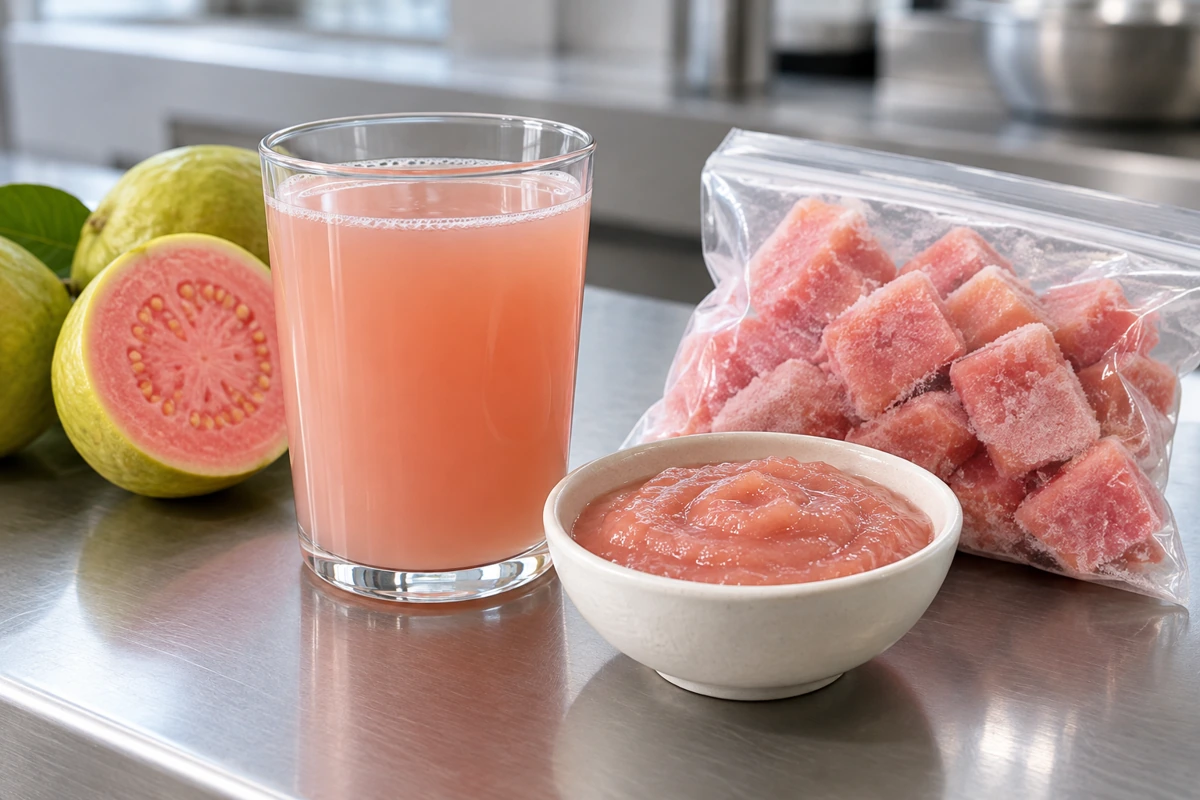
A beverage and a thick fruit preparation use different pulp endpoints. Illustrative applications.
Keep results for successive lots in the same units and at the same boundary. A trend of accepted pulp yield becomes useful only when changes in method are identifiable. If a screen or thaw procedure changes, mark the change rather than joining the new result silently to the old series. Preserve the original reports so a receiving concern can be compared with the conditions under which the material was approved.
Agree how a disputed result will be reviewed. Retained samples, lot codes, received-condition photographs, weighing records and preparation notes allow both teams to assess the difference. A single photograph of a full reject tray cannot establish that the shipment missed the contract; its input quantity and method are essential. Likewise, an earlier favourable sample does not resolve a later documented failure. The review should return to the same written endpoint and sampling basis.
We can help the purchasing team connect the requested frozen guava form, representative sample and order documents. The RFQ should explain the intended pulp or finished product, the relevant acceptance method, pack, quantity, destination and timing. Share the trial boundary and the attributes that drove the choice. This makes the next supply discussion specific enough to address usable output and lot consistency, while the buyer retains clear responsibility for approving its own preparation and process.
Keep the accepted method easy for the receiving team to perform. Provide the actual worksheet fields, the current reference version and the person responsible for interpreting departures. A technically sophisticated development report can lose value if routine receiving uses a different shortcut. Review the first commercial receipt against the approved route, then adjust the practical instruction through the agreed change process when the evidence shows a need.
Continue reading about fruit processing
Distinguish recovered juice quantity from the sustained processing rate that also meets its quality requirement.
Follow a different fruit through clear and pulpy syrup routes, including retained material and final pourability.
Compare prepared mango puree and frozen pieces through screen loss, beverage dose and usable cost.
Source frozen guava with GreenLand-food
GreenLand-food is a professional frozen guava supplier and manufacturer in China, providing factory-direct wholesale supply for importers, food manufacturers, foodservice distributors, and private-label programs.
Send the product form, specification, packing, quantity, application, destination, private-label needs, and requested documents.