


Guava Fruit Preparation for Yogurt: Seed Screening, Acidity and Visible Pieces
Oct 19, 2026
Leave a message

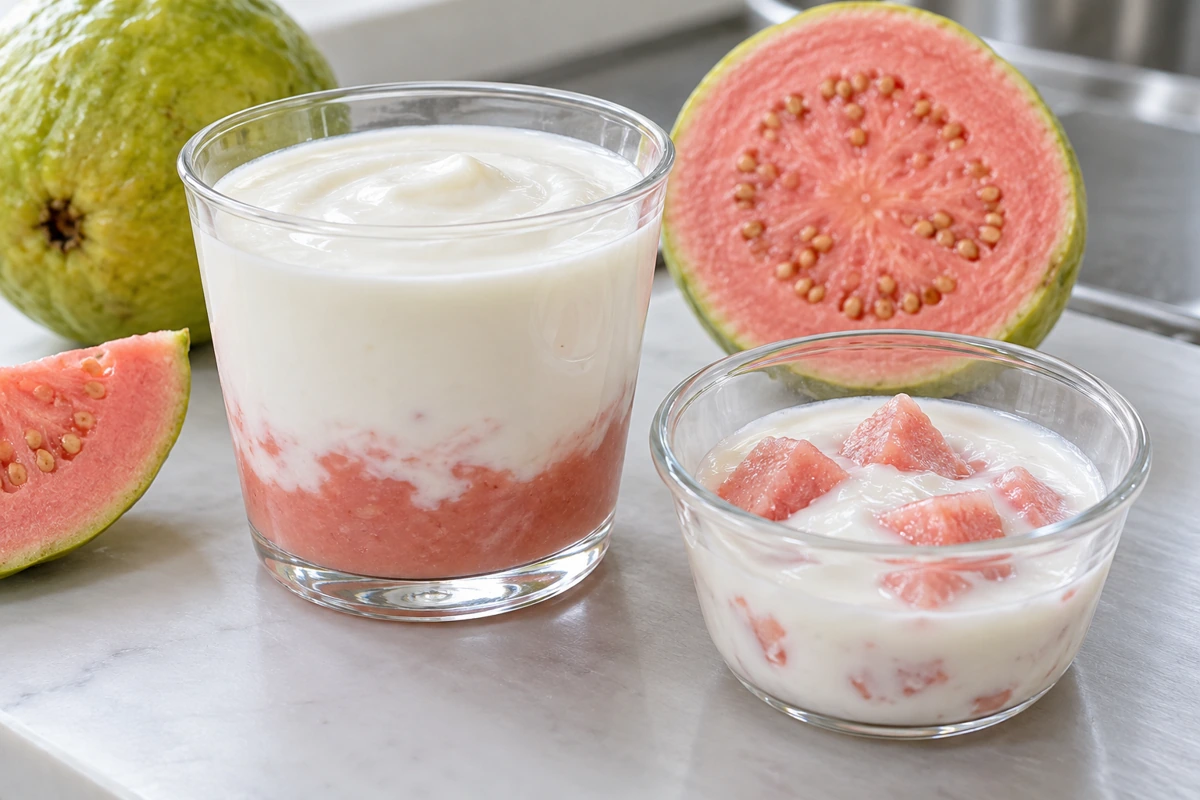
The useful approval follows the whole route, including fruit preparation, the validated safety treatment, mixing, filling, chilled storage and serving. We supply the frozen ingredient against an agreed form and specification; the dairy manufacturer qualifies the preparation and finished yogurt. A representative sample should therefore answer both the fruit question and the question of how that fruit behaves in the chosen dairy base.
Choose a smooth base or a visible fruit preparation
A smooth guava yogurt starts with an agreed particle endpoint. Define how much fine fruit body is wanted, whether green peel specks are acceptable and how the team will assess coarse material. A spoonable yogurt exposes mouthfeel differently from a drinkable yogurt. The intended product should determine the screening and finishing target. A generic description such as guava puree leaves the receiver to discover those differences after the ingredient has already entered the recipe.
A layered yogurt needs a second set of observations. The fruit preparation should remain in the intended position through filling, transport and serving, while giving the desired spoonful of fruit and dairy. Record its flow at the relevant temperature and its behaviour in the actual cup. A preparation that holds neatly in a development dish may spread or mix differently when dosed through the commercial filling arrangement.

Skin-on pink guava pieces with central seed material, shown on the GreenLand-food product page.
Visible inclusions add a mechanical requirement. Define the piece size and appearance that should remain after the fruit preparation and dairy blending route. Decide how much dispersed pulp is acceptable around those pieces. If the concept depends on recognisable fruit, approve that feature in the finished yogurt and at the end of its planned life. A raw or frozen chunk photograph cannot settle the condition a consumer will encounter later.
The current GreenLand-food guava reference shows skin-on pink-flesh pieces with central seed material. These are an ingredient for further preparation, with form and acceptance agreed by order. A project needing seed-reduced pieces or another cut should identify that requirement and obtain a separate sample. Do not treat the standard image as evidence that a ready-to-use dairy inclusion or seed-free preparation has already been approved.
Keep fruit content and preparation content distinct. A sweetened, thickened fruit preparation contains more than guava, so its addition percentage does not directly state the amount of fruit in the finished yogurt. Record the ingredient composition and dosing basis. This helps the formulation, purchasing and labelling teams discuss the same product, and it prevents a higher preparation dose from being mistaken automatically for a higher guava contribution.
Choose the trial material around the intended production route. If the dairy plant will buy frozen guava pieces and make its own preparation, start the sample work from those pieces. If another manufacturer will supply a finished preparation, qualify that separate ingredient and its documentation. The relevant process boundary determines which supplier is responsible for fruit identity, screening, treatment, composition and handling instructions.
| Yogurt style | Fruit-preparation priority | Trial endpoint |
|---|---|---|
| Smooth stirred | Required particle and seed condition | Mouthfeel in the blended yogurt |
| Layered | Flow and separation of the fruit layer | Position and spoonful after storage |
| Visible inclusions | Piece size, seed reduction and survival | Fruit appearance and bite at service |
Screen seeds and check the remaining mouthfeel
Guava seeds need an explicit removal target because their hard texture can interrupt an otherwise smooth yogurt. Inspect the proposed frozen form, including how much central seed-bearing material it contains. Then trial the intended pulping and separation route. Identify the screen and operating method, retain the accepted pulp and examine the removed fraction. The result should describe what the process actually achieved rather than rely on the nominal opening of a sieve alone.
Hard seeds and the fruit's stone cells are different. The FAO guava processing chapter identifies stone cells as a source of graininess distinct from seeds. That matters in yogurt because a visually seed-free puree can still feel coarse. Use an appropriate assessment of the final fruit preparation and qualified yogurt blend, keeping the sample's process history with the result. A photograph cannot prove the absence of small gritty particles.
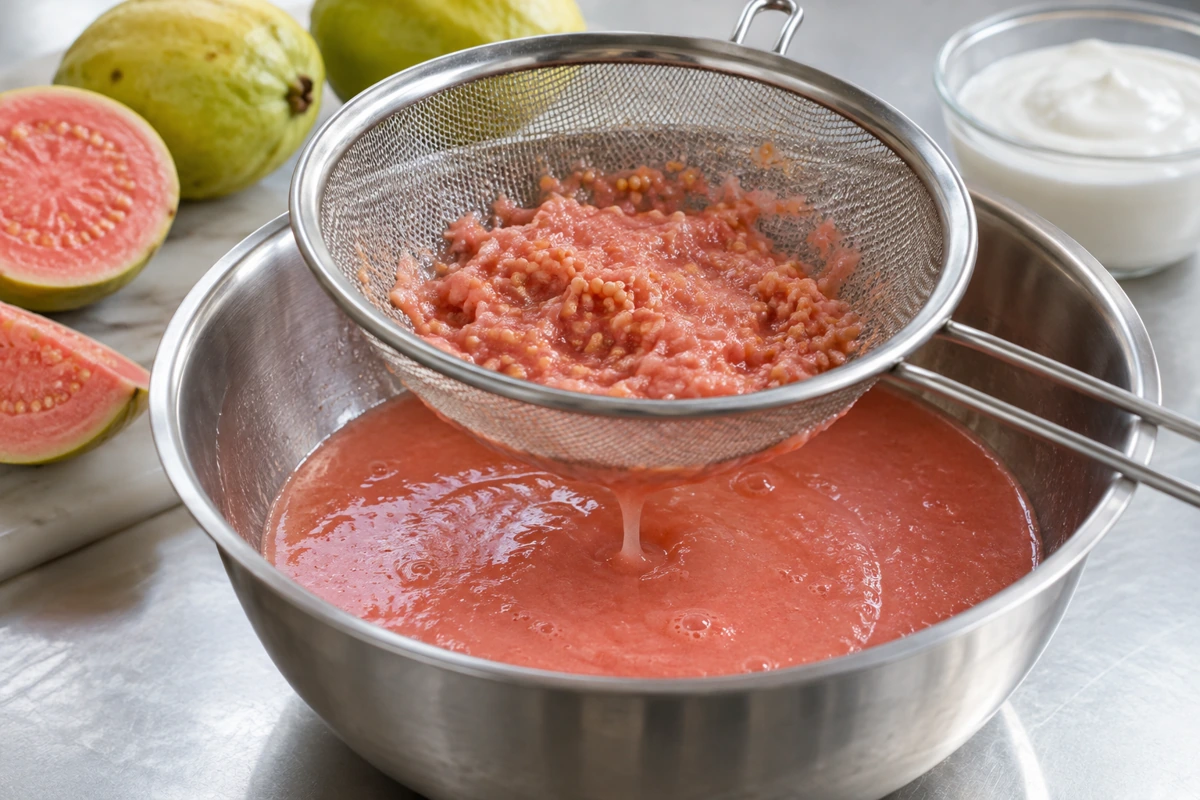
Screen the fruit preparation before judging its mouthfeel in the dairy base. Illustrative preparation.
Avoid aggressive blending merely to make the visible seeds disappear. Breaking hard material into smaller fragments can change its appearance without delivering the required mouthfeel. The equipment and method should be selected by the manufacturer's process team, with suitable controls for the intended food. Observe intact seeds, fragments, coarse tissue and peel separately in development. Those observations help identify which fraction remains unacceptable and which part of the process needs adjustment.
The finishing choice also affects usable fruit yield. Weigh the input fruit, any added water, the accepted pulp and the retained material at a defined boundary. A finer endpoint may leave more useful flesh with the reject fraction, while a coarser endpoint may require further finishing. Compare cost at the accepted yogurt-preparation condition. A higher gross recovery has limited value if it produces a grainy texture the dairy product cannot accept.
Review the screening result after the preparation's later treatment. Heating, cooling and mixing can alter how the pulp and particles are perceived. For a smooth style, assess the yogurt using its actual serving temperature and an agreed sensory procedure. For a drinking style, include the normal drinking experience as well as a spoon test. Keep any instrumental particle or texture method consistent so later lots can be compared with the accepted reference.
Use careful wording in the ingredient specification. Seed-reduced, screened and seed-free have different implications and need support from a defined method and tolerance. Do not use a stronger claim than the agreed evidence supports. Where the buyer needs a strict absence requirement, its technical team must define verification and process capability appropriately. An informal look at one portion cannot demonstrate that condition throughout a commercial lot.
Measure guava acidity against the actual yogurt
Measure the guava preparation before assuming the direction of its effect on yogurt. Record pH, and titratable acidity when relevant, using an identified method and sample basis. Do the same for the dairy base. pH describes a different property from the amount of acid measured by titration, so retain both names and units. Neither should be replaced by a general description such as tangy fruit when the formulation depends on acid balance.
The finished blend reflects both ingredients and their buffering behaviour. Its pH cannot be calculated by taking a simple weight average of the two pH values. Make the intended blend, allow the equilibration required by the laboratory procedure and measure it directly. Record the fruit-preparation dose and any added acid or sweetener. A comparison becomes difficult to interpret if the developer adjusts the recipe differently while trying to rank the fruit samples.
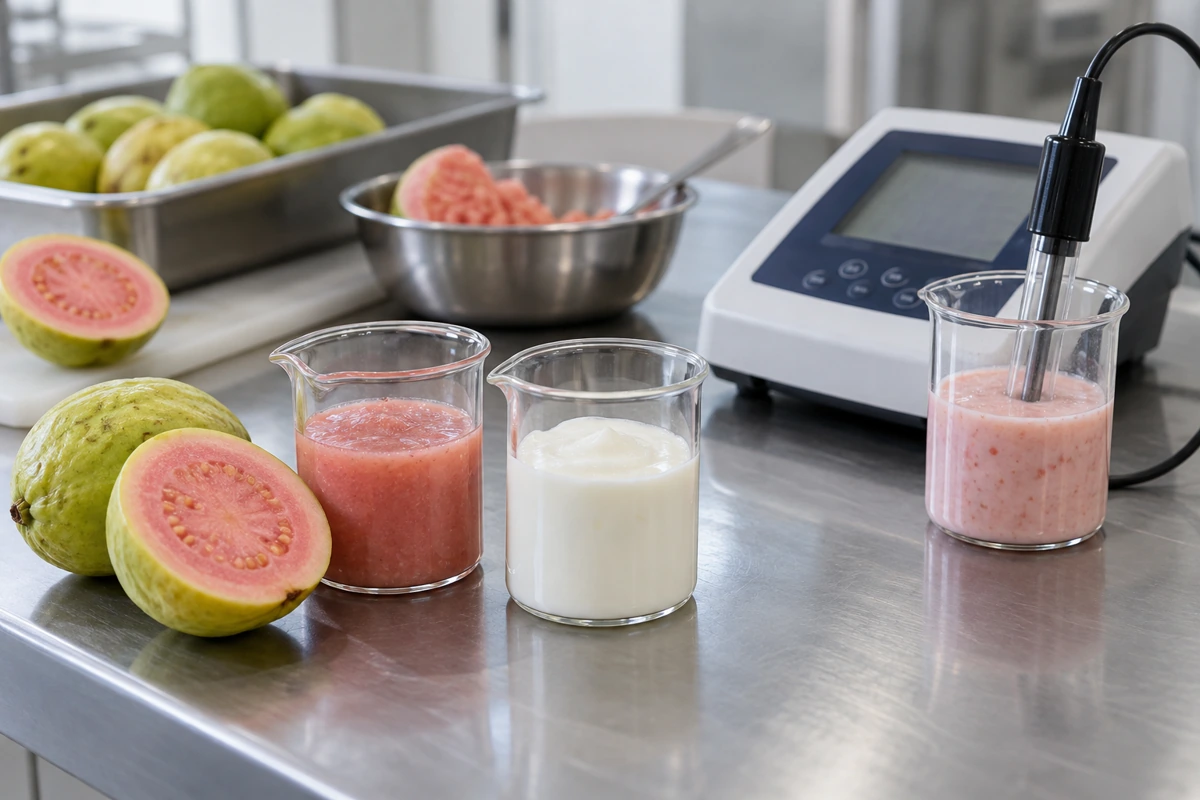
Measure the fruit preparation, dairy base and actual blend through a defined laboratory method. Illustrative setup; no result shown.
Primary guava-yogurt experiments illustrate why the answer is recipe-specific. A pink-guava and stevia strained-yogurt study reported a higher pH with guava addition than in its guava-free stevia formulation. Another fruit-pulp yogurt study reported no change in pH and total acidity under its conditions. These observations support measuring the actual blend; neither establishes a universal dose or commercial shelf life.
Taste the prepared blend through the approved sensory route. Perceived tartness depends on more than pH: sweetness, fruit aroma and the dairy base all shape the experience. Use matched serving conditions and enough reference information to interpret the result. A neat guava preparation may seem intense, yet its desired character can change substantially at the chosen addition rate. Approve the yogurt flavour the project intends to sell.
Choose the addition point deliberately. Set, stirred and layered products place the fruit in different relationships with fermentation, mixing and filling. Where fruit enters before fermentation, assess its effect on the actual fermentation route and cultures. Where it enters afterwards, qualify mixing and the hygiene of that addition. The dairy manufacturer's validated process determines the sequence; a guava flavour trial should retain that sequence rather than treating addition timing as interchangeable.
Follow acidity during the intended chilled storage study as well as on the day of mixing. Keep the same sampling and measurement methods at planned observation points. A changing pH or tartness may accompany other quality changes, but it does not identify their cause on its own. Review the result with texture, microbiological assessment and the product's full process history before assigning an explanation or changing the ingredient specification.
Follow dilution, body and whey separation together
Adding a fruit preparation changes the composition of the dairy product. At a given dose, it can change milk-solids concentration, sugar, water and the amount of fruit tissue in the finished cup. Start with a complete formula expressed on a clear weight basis. This allows the team to see whether a texture difference arose alongside a change in dairy solids, fruit concentration or another recipe component. Keep the whole calculation available during development.
Natural guava pulp can contribute body, but its presence does not guarantee a stable yogurt gel. The result depends on the fruit preparation, dairy composition and process. Compare any proposed stabiliser system in the actual formula rather than assuming the fruit's pectin can replace it. The fruit supplier should not infer a commercial texture claim from a description of guava as pectin-rich. The finished food needs evidence appropriate to its own composition.
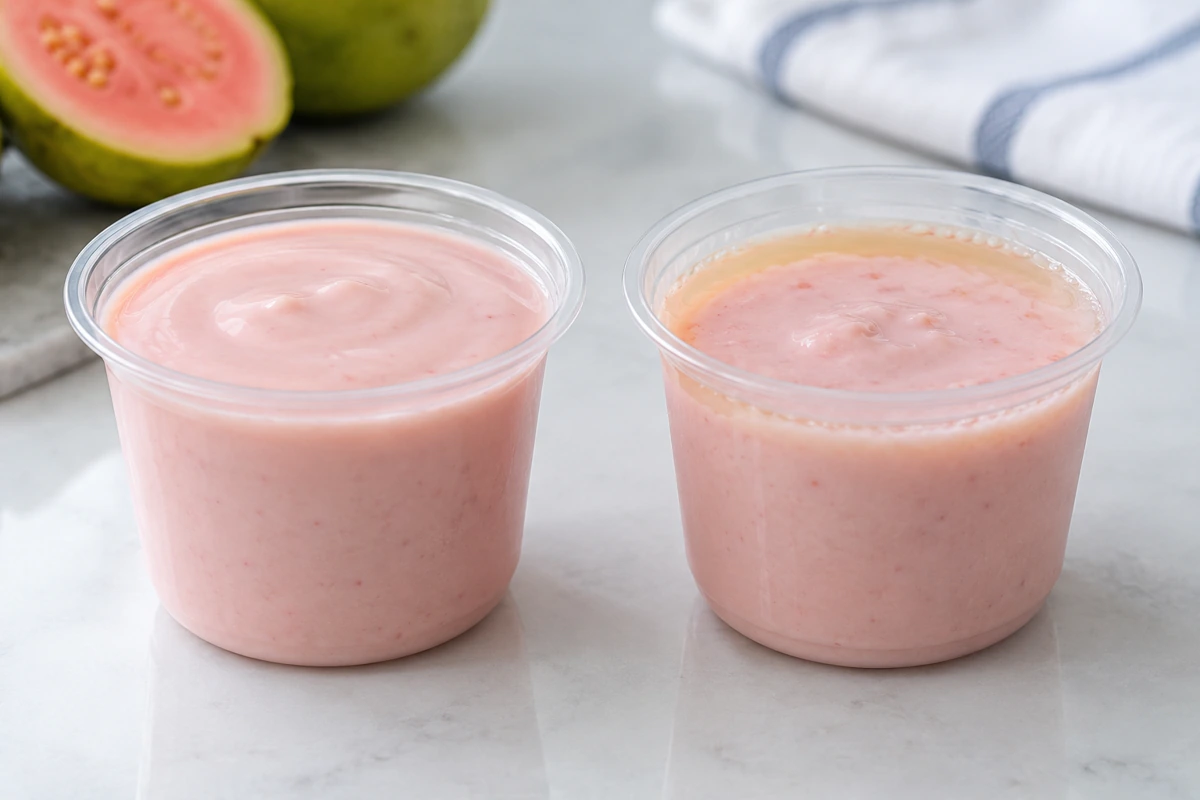
Observe body and whey separation separately during the product study. Illustrative comparison of visible states.
Measure body and whey separation using agreed procedures. A viscosity or flow result needs its temperature, sample handling and units. A separation result needs a defined observation or test rather than an undated photograph of liquid on a cup. Keep the procedures suitable for the product style: drinkable yogurt and a dense layered yogurt do not share every useful texture criterion. Judge each result against the sensory and filling requirements that motivated it.
Shear can change the relationship between fruit and dairy. A small bowl mixed gently by hand may preserve pieces and a dairy structure that do not survive the commercial route. Reproduce the relevant mixing, transfer and filling steps at a scale that supports the intended conclusion. Inspect the fruit and surrounding yogurt together afterwards. The final result may require a change in cut, preparation consistency or handling rather than an assumption that more thickener will resolve everything.
Use controlled comparisons when investigating a defect. If guava dose, dairy solids and mixing all change together, the trial cannot isolate the reason for thinner body or more visible whey. Begin with a defined reference and change the variable relevant to the question, while retaining the others as consistently as practical. Record the limitations of the comparison. A useful development result tells the next trial what to investigate and which change it actually supports.
Assess the whole cup through the planned distribution and serving conditions. Fruit-layer movement, colour dispersion, whey, mouthfeel and flavour may not change at the same rate. The acceptance record should preserve those observations separately so one favourable feature does not conceal another failure. The completed study defines the supported commercial result; the appearance of a newly filled cup is an early development observation within that study.
Qualify the guava pieces that remain visible
Start visible-piece work by defining what counts as an acceptable inclusion. Describe size distribution, seed condition, peel acceptance, colour and the amount of broken or dispersed material. A smooth fruit base with a few hand-selected decorative pieces is a different product from a preparation designed to contain pieces throughout every pack. The sample and trial should represent the commercial form, including its normal variation.
Inspect actual guava anatomy before choosing the cut. A skin-on piece may include a green outer edge, softer pink flesh and central seed-bearing tissue in different proportions. Removing a central region changes both the shape and the usable fraction. If the concept needs a uniform pink inclusion, confirm the preparation capable of supplying it and its agreed tolerance. A photograph of pink flesh cannot establish that all supplied cuts meet that condition.

Skin-on pink guava pieces with central seed material, shown on the GreenLand-food product page.
Ripeness needs to suit both handling and the eating experience. A firmer piece can resist mechanical breakdown yet remain unpleasantly hard after the intended route. A softer piece can provide flavour while dispersing into the yogurt. Evaluate the selected range in the actual preparation, including the relevant treatment and mixing. Retain the result at serving temperature so approval reflects the bite and appearance the customer will experience.
Record piece condition at more than one relevant point. Before preparation, note the incoming frozen cut. After preparation, assess the retained fruit. After yogurt mixing and filling, assess the commercial appearance. These observations help locate where a problem arose. If the pieces already dispersed during fruit treatment, a later filling adjustment addresses a different issue from selecting a more suitable cut or maturity range.
Use an agreed way to quantify the visible result when piece retention drives value. That may involve recovering and classifying pieces from a defined portion under the customer's method, alongside photographs and sensory observations. Define the method carefully enough that different operators can compare results. Avoid inventing a universal intact-piece percentage: the useful limit depends on the product concept, portion size and the variability the process can accommodate.
Consider the surrounding preparation as well. Green specks, pink colour migration and released liquid can affect a pale yogurt even when the pieces look acceptable alone. A layered product may welcome a clear fruit boundary, while a stirred product may require uniform colour. Approve those outcomes in their intended style. The same guava form can be suitable for one concept and need a different preparation for another.
Validate the fruit preparation before dairy blending
Frozen guava needs a defined intended use and handling instruction before it enters a dairy process. The FDA freezer guidance explains that freezing stops bacterial growth under frozen conditions but does not kill most bacteria. A frozen ingredient therefore needs the hazard controls appropriate to its eventual use. The supplier's frozen state and a pleasant fruit aroma do not demonstrate readiness for addition to a food that receives no further validated treatment.
The manufacturer should identify who controls the fruit preparation's safety step. If the dairy plant prepares the fruit, its food-safety team qualifies that route. If it purchases a treated preparation, the supplier documentation and receiving specification need to describe the agreed product and intended use. Responsibilities should cover the process, storage, transport and hygienic addition to yogurt. General statements about freezing or fruit acidity leave those responsibilities unresolved.
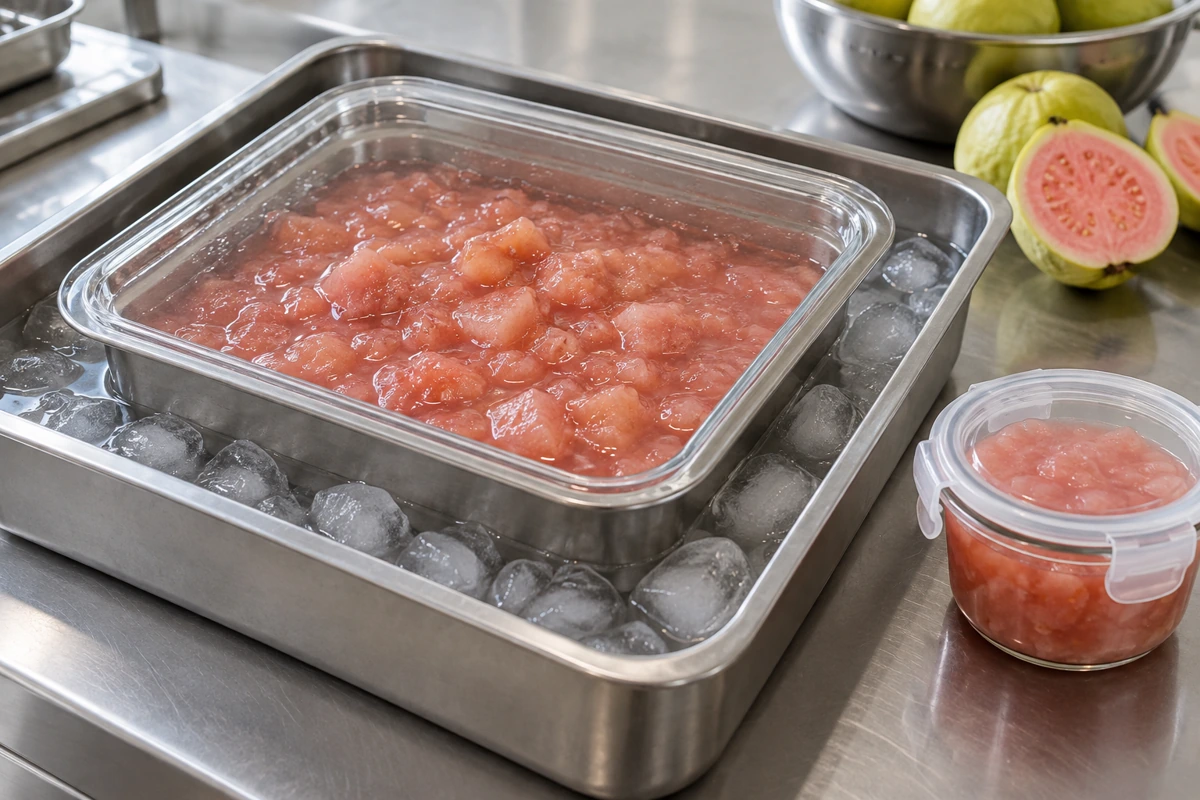
A covered fruit preparation in a cooling bath illustrates one controlled handling stage. Process conditions require validation.
A thermal process, where selected, needs validation for the actual preparation. Composition, viscosity, piece size, equipment, pack and the intended hazards affect the assessment. This article gives no generic heating schedule. The manufacturer's qualified technical team establishes the required conditions and verification. A process approved for a smooth pulp should be reviewed before it is assumed to cover a different preparation containing larger fruit pieces.
Control the route after the treatment as carefully as the treatment itself. Cooling, storage, transfer and filling can create opportunities for contamination or excessive time at unsuitable temperatures. Identify the product and lot through those steps, and follow the facility's qualified procedures. A safe fruit preparation can lose its intended status if its later handling falls outside the validated route. The trial should reproduce that route when it supports product approval.
Specify the relevant microbiological evidence by product and use. State the sample basis, methods, criteria and lot represented, following the destination's requirements and the manufacturer's hazard assessment. An end-product test is one part of verification and does not replace a controlled process. The order discussion should distinguish evidence for the frozen guava ingredient, the treated fruit preparation and the finished dairy food, because they represent different stages.
Keep sensory testing within the same safety framework. Development staff should know which sample has been prepared for tasting and which remains an unqualified processing ingredient. Retain that status with sample identifiers and handling instructions. It is possible to inspect an input's appearance or weigh its yield without authorising consumption. Clear sample control lets the team gather useful technical evidence while preserving the intended route to a qualified tasting sample.
Approve the combined product and repeat-order limits
Approve the combined product through a trial that names the guava form, fruit-preparation composition, dairy base, addition rate and process. Define the observations required at filling, during storage and at serving. Include the safety and shelf-life study appropriate to the commercial product. This connects the ingredient selection to the outcome it is meant to support, and gives each subsequent change a reference against which it can be assessed.
Use a representative frozen lot and retain its preparation history. Record seed removal, usable fruit recovery, relevant chemistry, finished-preparation condition and the amount dosed into yogurt. If several candidate forms are compared, keep their records separate. A favourable yogurt made from one specially trimmed sample should not approve a commercial skin-on input without evidence that the intended preparation can deliver the same required result.
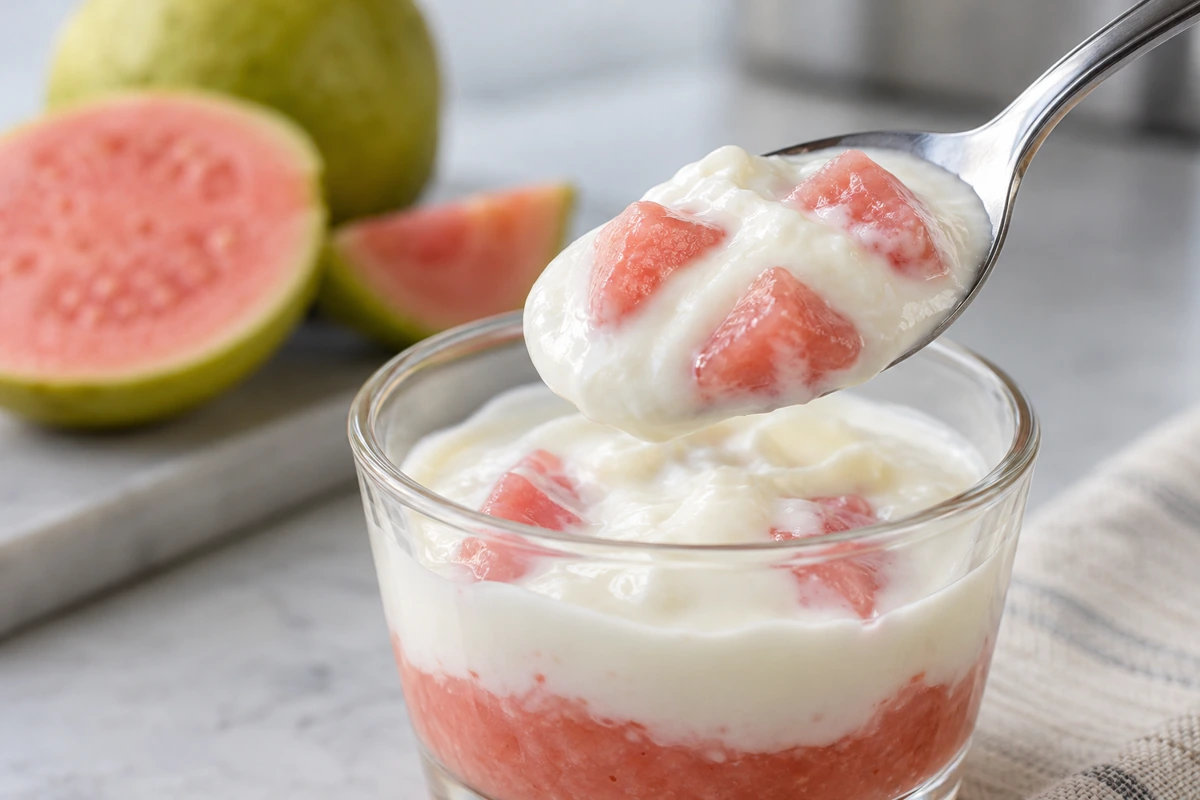
Assess visible pieces in the yogurt at its intended serving state. Illustrative spoonful.
Agree the attributes that the guava supplier can confirm at shipment. These may include product identity, cut, seed-bearing condition, maturity and defect range, packing, net weight and lot-linked documents. The dairy manufacturer retains the acceptance method for its fruit preparation and finished yogurt. We help the purchasing team connect those needs through a sample and written specification, keeping the responsibilities close to the stage each party actually controls.
Record the changes that require another review. A new cut or seed-reduction method can affect yield and piece survival; a different yogurt base can affect texture and acid balance; a changed treatment or filling route can affect the validation scope. Define the review around the relevant risk and evidence. A carefully documented approval can accommodate normal variation while still making a material change visible before routine production.
The RFQ should describe the yogurt style, required fruit form, particle or seed target, intended preparation route, packing, quantity and destination. Add private-label requirements and the documents needed for the selected supply and use. Share which trial observations determine acceptance. That information lets us discuss frozen guava around the actual dairy application and arrange an appropriate representative sample for the next technical decision.
Continue reading about fruit processing
Assess how the yogurt protein base can change strawberry aroma release at a fixed fruit dose.
Examine starter function and dairy-base controls when a fruit-yogurt texture problem persists.
Review fruit distribution and released liquid in a frozen yogurt format with its own serving-texture requirements.
Source frozen guava with GreenLand-food
GreenLand-food is a professional frozen guava supplier and manufacturer in China, providing factory-direct wholesale supply for importers, food manufacturers, foodservice distributors, and private-label programs.
Send the product form, specification, packing, quantity, application, destination, private-label needs, and requested documents.