


Apricot Yogurt: Starter Function Can Matter More Than Another Fruit-Percentage Adjustment
Oct 09, 2026
Leave a message

Research This Article & Topic with AI
Verify key claims, compare reliable sources, and explore GreenLand-food's practical frozen food knowledge.
Article details and research questions are prepared in the links. Sign-in or sending may be required.
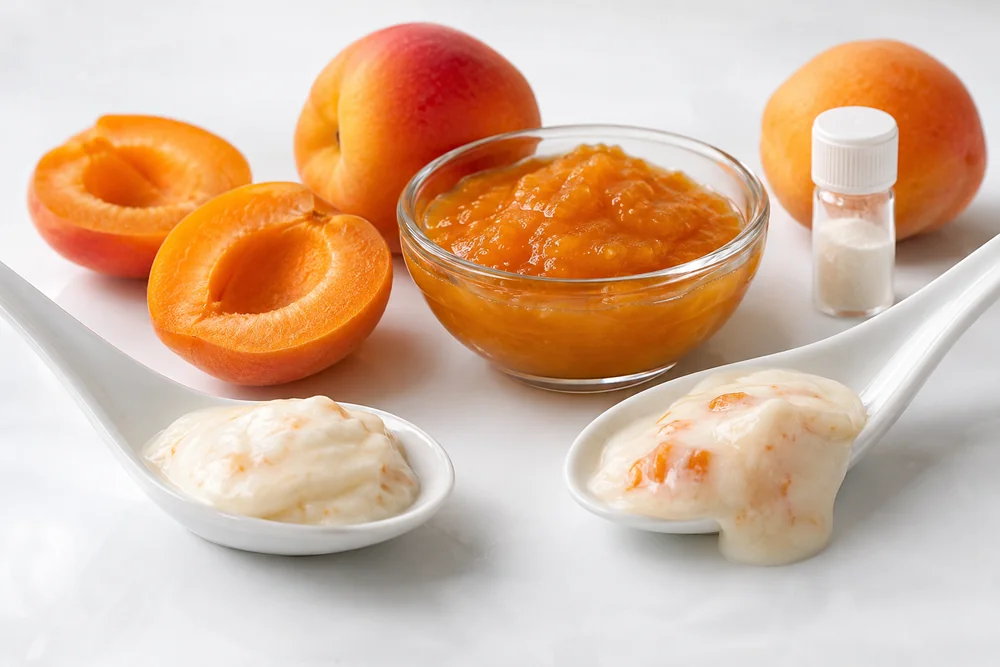
This matters for buyers sourcing fruit while a dairy team develops the product. A frozen apricot specification can describe the ingredient, yet it cannot by itself explain a gel that separates serum, feels too thin, or gives an unwanted mouthfeel. The customer may be comparing smooth pulp with pieces, different milk solids, or cultures with different technological functions. A useful discussion makes those differences visible and links each trial result to its complete formula. It also distinguishes the supplied fruit from the starter selected by the dairy manufacturer, so each party can answer the questions that belong to its own material and process.
Describe the starter as well as the fruit
Begin with a clear description of the starter. EPS refers to exopolysaccharides produced by particular microorganisms; for this application, the relevant question concerns their technological contribution during milk fermentation. Ask the culture supplier to identify the product and its intended function in the selected base. Retain the exact commercial identity and lot information rather than relying on a general EPS label. Different cultures and combinations can behave differently, and a culture chosen for one yogurt concept may need fresh evaluation in another formulation.
The texture target should come before the adjustment. A set yogurt that holds a spoon impression, a stirred yogurt that flows smoothly and a drinking yogurt that pours readily have different requirements. Describe the relevant resistance, smoothness, serum separation and mouthfeel in language that the development team can evaluate. A thicker sample may still be unsuitable if it feels excessively stringy or if its fruit character is lost. A single viscosity value is therefore useful only when its relationship to the intended product has been established.
Keep the apricot form explicit. Smooth pulp, a screened preparation and frozen pieces introduce different visible structures into a dairy product. Record the supplied ingredient, the preparation made from it and whether the fruit is incorporated before or after fermentation in the customer's process. Those descriptions let the team distinguish a gel-texture problem from a fruit-particle perception. They also protect purchasing from approving pieces on the basis of a pulp trial whose preparation and finished eating experience have never been compared with the offered product.
Record the dairy base beside the culture: milk composition, added proteins or powders, sweeteners and other formulation inputs. Retain the approved treatment and handling history so the team can see which inputs changed between cups.
Consider a yogurt developer asking GreenLand whether changing the apricot level will solve a texture problem that may involve the selected starter. This is an illustrative scenario. We would first clarify the fruit actually being supplied and how the customer prepares it, then request the two trial formulas, culture information and result methods. The follow-up should include the intended yogurt style, the reports being compared and the basis for each observation. That discussion can identify the next useful development question without presenting a hypothetical case as customer history.

The apricot preparation and culture identity are separate inputs to the same application.
Separate the fruit purchasing decision from culture purchasing. GreenLand can review the frozen apricot request and the lot information relevant to the application. The dairy manufacturer and its culture supplier establish which starter is appropriate for the independently approved process. A positive fruit trial does not mean that GreenLand supplies the tested culture, nor does a culture label settle the fruit specification. Connecting both inputs in one application record allows the customer to coordinate them while retaining a clear description of what each supplier is actually offering.
Once the input descriptions are complete, ask whether another fruit-percentage trial would resolve the observed defect. If the customer cannot identify its starter, dairy solids or fruit preparation, another percentage may produce a different cup without explaining why. A more useful first step may be to repeat a defined reference formula with the actual ingredient and agreed measurement method. The customer can then choose a focused adjustment. This keeps development work directed at an identifiable problem and gives purchasing a clearer basis for subsequent sample requests.
Read the original complete-formula comparison
The original apricot-yogurt study compared the authors' EPS-producing and non-EPS culture groups, with and without apricot pulp. Whey protein and stevia were part of the dairy formula. The EPS group received preferred taste, texture and overall-acceptability responses within that experiment. Its preparation used market-purchased fruit made into treated pulp. These results support investigating starter function alongside fruit, while remaining specific to the tested culture groups and complete formulations.
The study's formula context is relevant to interpretation. A pulp addition was evaluated inside an already defined dairy system, with other ingredients and handling conditions attached. A buyer should therefore read the treatment descriptions before assigning the finished texture to apricot. The practical lesson is to preserve the complete comparison in the trial record. It gives development colleagues a way to ask which contributor deserves further work, rather than compressing the evidence into a claim that a certain fruit percentage will produce the preferred yogurt in any base.
Whey ingredients belong in the formula discussion because they are part of the material the customer ferments and evaluates. Record their identity and addition basis, and keep them attached to each sample. If a customer changes a dairy protein input while adjusting apricot, the trial becomes a comparison of those combined changes. That may be a valid concept-selection exercise, but it does not answer a fruit-only question. Retaining the base revision helps purchasing understand why an otherwise unchanged fruit sample gave a different finished product.
Sweetener context also matters to the eating assessment. A formula containing stevia should be described accordingly, rather than treated as equivalent to a different sweetness system. The customer should retain its own approved sweetener specification and evaluate the complete taste profile. The original article contains inconsistencies between its abstract and methods about a sweetener quantity, so it is particularly unsuitable as a recipe to transfer. The useful evidence concerns its bounded comparison; the customer's formula quantities and process controls require independent development and confirmation.

A culture-by-fruit comparison needs evaluation in the actual cultured base.
Read the texture and acceptance endpoints as different observations. Instrumental viscosity describes behavior under a specified measurement, while a panel can comment on smoothness, mouth thickness, fruit perception and overall liking. A formulation may appear favorable on one endpoint and less suitable on another. Retain both kinds of evidence, with sample age and handling state clearly recorded. This allows the team to understand whether the culture choice addresses the actual product complaint or merely changes a number that has little relationship to the desired eating experience.
The primary study of EPS distribution and yogurt sensory texture found different microstructures and responses to stirring among tested cultures. Its work was not an apricot formula trial, but it shows why an EPS label leaves important technological questions open. A dairy developer should assess the particular culture in the particular base and handling route. That approach is more informative than selecting a culture category solely from its name or assuming all EPS-producing cultures deliver the same preferred texture.
For a buying decision, summarize the research in one bounded statement and spend the application work on the customer's product. Identify the cultured base, the actual apricot preparation and the finished evaluation that the team needs. If a source leaves a method unclear or describes a culture inconsistently, flag the limitation in the technical record and seek clarification where consequential. The result should never become an exact strain or formula guarantee based on incomplete interpretation. A cautious source reading can still provide a useful direction for a well-defined customer trial.
Do not assign a complete-formula result to fruit alone
A complete-formula result should remain attached to the complete formula. If fruit, culture and base all change between samples, the observed difference belongs to that comparison. The team may use it to choose a development concept, but it needs suitable further evidence to isolate the effect of apricot. This distinction prevents a purchasing specification from becoming responsible for a defect whose source has not been established. It also helps the dairy team decide whether the next experiment should vary fruit, starter or another formulation component.
An interaction claim requires more than two inputs being present in the same cup. In statistical terms, it concerns whether the effect associated with one variable depends on the level or identity of another, under an appropriate design and analysis. Describe a joint formulation response when that is what the evidence supports. Do not attach the word synergy or a significant interaction to a starter–fruit combination merely because it scored well. A qualified technical team can assess whether the available design and reported statistics justify a more specific statement.
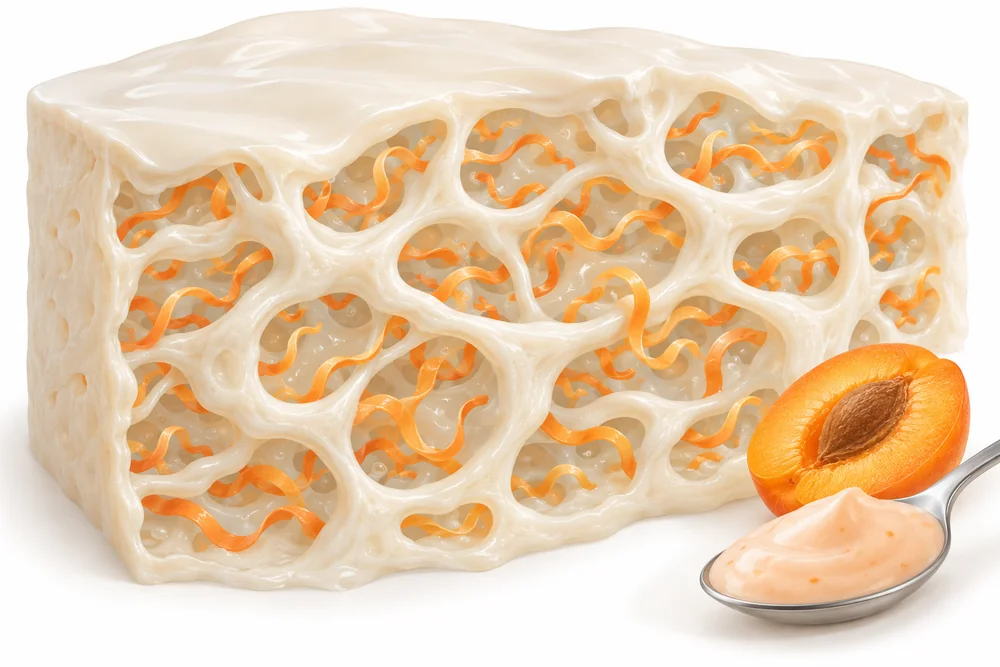
The conceptual protein and EPS network illustrates a question for the complete yogurt base.
A customer comparing starter options could propose a design that keeps the apricot preparation and dairy base controlled while investigating the defined culture change. Another question might require evaluating fruit presence or level across selected cultures. The appropriate design depends on the purpose and practical constraints, and the customer's technical team should determine it. Purchasing can support the experiment by supplying representative fruit from an identified lot and recording any replacement. It should avoid adding an unnoticed material change that weakens the comparison the team intended to make.
Name the defect precisely before interpreting a trial. "Thin" might refer to the way yogurt leaves a spoon, to its resistance during stirring, or to its mouthfeel. "Watery" might describe visible serum on the surface or an overall perception during eating. These are related concerns but not interchangeable results. Ask for the observation and method that produced the description. If the issue is visible separation after handling, a viscosity reading on a freshly mixed sample may leave the central question unanswered even when it looks favorable.
Measurement method can change the meaning of a separation result. The original study of EPS starters, milk solids and syneresis reported different comparisons depending on how whey separation was measured. It does not supply a universal target for apricot yogurt. It does give a reason to retain the method, base and sample condition beside the result. When two laboratories use different approaches, request a matched comparison before treating their numbers as a direct ranking of ingredients or cultures.
Changes during storage should be interpreted against the same formula and evaluation basis. A customer may be satisfied with the initial cup yet observe a different texture or taste later in its intended distribution period. Retain the sample state and relevant storage history when comparing those observations. The customer's independent validation determines which interval and criteria apply to the finished product. A culture count, viscosity value or sensory score from a research storage exercise cannot independently approve the commercial shelf life of another formula or package.
This reasoning makes the fruit specification more useful. Purchasing can request apricot attributes that the application trial showed to matter, such as the offered form, preparation suitability and agreed sensory reference, while avoiding a broad promise that fruit alone will control gel texture. When the customer changes the dairy base or starter, the existing fruit data remains informative but its application approval may need review. The written record should explain that relationship so a future purchasing decision follows the evidence rather than repeating an unsupported explanation of the original defect.
Qualify the actual input and fermentation system

Confirm the offered apricot form and specification against the customer's application.
Qualify the actual frozen apricot input against the preparation the yogurt manufacturer intends to use. The GreenLand frozen apricot supply page is the starting point for discussing available forms; the confirmed offer settles the form and lot specification for the order. Frozen pieces, halves and a prepared pulp should each be described accurately. If the customer's development route converts the supplied fruit into pulp, retain that preparation step and its output identity in the application record rather than treating the purchased and tested forms as identical.
Confirm the attributes relevant to that route. A smooth preparation may need attention to pitting condition, skin or particle perception, preparation yield and the agreed fruit-flavor reference. A yogurt with visible pieces has additional questions about piece size, integrity, distribution and eating texture. The customer's intended application determines which attributes deserve an acceptance criterion. Avoid imposing a generic numerical fruit specification without evidence that it fits the product. Ask for the requirement and its measurement basis, then align sample selection and commercial confirmation around it.
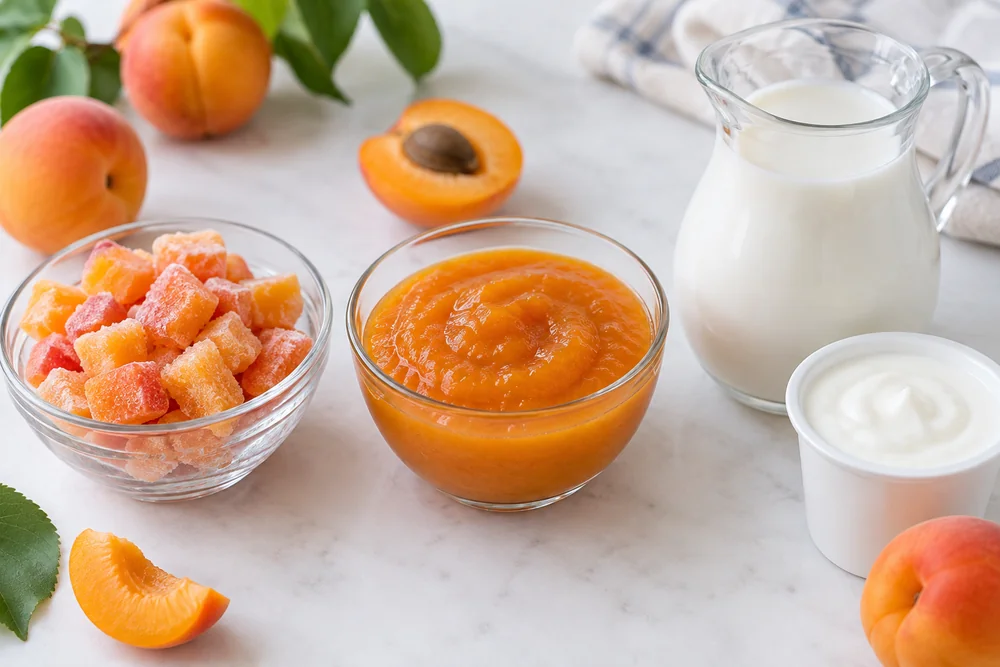
Purchased frozen fruit and the pulp prepared from it have different identities.
Record how thawed liquid is handled when frozen fruit is prepared for the trial. Retaining it, discarding it or blending it back changes what enters the dairy formula. The customer should use its approved preparation and document the result so the mass basis remains interpretable. A stated apricot percentage may mean purchased frozen fruit, drained fruit or prepared pulp. Those are different quantities. Identifying the denominator and preparation basis allows the team to compare formulas coherently and estimate usable ingredient consumption from its own trial data.
Evaluate the intended dairy system with the selected starter. A supplier's attractive apricot sample cannot resolve how that fruit behaves in a base that the customer has not fixed. The trial should retain the culture identity, formula revision and customer-approved treatment. Assess the resulting yogurt at the relevant sample state with the agreed texture and acceptance methods. If the customer switches from set to stirred style, record the change and reconsider the handling comparison. A fruit approval for one product concept may provide background, while leaving the new texture question open.
Use a representative sample and retain a connection to the proposed order. Ask how the sample was selected, which lot it represents and whether its packing and frozen condition reflect the commercial request. A development sample may answer an early formulation question without establishing consistency across future deliveries. The customer's sample and acceptance plan should determine how much further confirmation is needed. Purchasing can then request appropriate lot information and agreed documents, instead of treating a successful bench cup as automatic approval of an unspecified supply program.
Culture identity requires its own verification. Confirm the actual starter with its supplier, including its intended dairy use and documented technological function. The apricot study's culture descriptions contain a conflicting sentence, so the article's group labels should not be used to certify a commercial starter by inference. A customer should retain its own confirmed culture information and technical support. That separation keeps the evidence honest: the research motivates a culture–fruit question, while the customer qualifies the actual starter and GreenLand clarifies the fruit being offered.
If a texture complaint remains after a defined repeat, request evidence that helps discriminate among explanations. Photographs of the undisturbed cup, observations during spooning or stirring, matched measurements and the complete preparation history can be more useful than another general adjective. The next investigation should follow the unresolved question. Our professional response would focus on the fruit form and confirmed sample details, while the customer and its dairy partners examine the selected base and fermentation system. This gives each contributor a concrete task without pretending that one supplier can diagnose every formulation issue from a fruit photograph.
Approve the supported culture–fruit combination

Confirm the offered apricot form and specification against the customer's application.
An application approval should name the culture–fruit combination that met the target. Retain the selected starter, base revision, apricot preparation, supplied lot and relevant finished-product observations. Distinguish an internal development choice from wider customer acceptance, and state the evaluation basis accordingly. A record that simply says "EPS yogurt preferred" loses the information that allows the result to be repeated. A record connecting the inputs and finished response gives purchasing a usable reason for the ingredient request and shows which changes could affect its validity.

Visible serum separation joins texture and flavor in the finished-product assessment.
Agree texture acceptance in the customer's actual product terms. A spoonable yogurt may need a defined impression of body and smoothness, while visible fruit pieces must contribute the desired bite and distribution. A drinking product may need an acceptable pouring experience after its intended handling. The criteria should connect instrumental measurements to those experiences, with appropriate tolerances established by the customer. A formulation need not maximize viscosity to be commercially suitable. It needs to meet the intended texture together with taste and overall acceptance.
Keep the fruit flavor requirement visible in a texture decision. A culture or base adjustment that resolves a gel issue may also change the customer's perception of apricot. Evaluate the complete product again rather than assuming the original flavor approval survives every formulation revision. The team could retain coded reference samples and clear sensory descriptions within its approved development practice. Purchasing then understands whether an ingredient requirement supports fruit intensity, recognizable pieces, color, preparation yield or another demonstrated need, instead of using an undifferentiated "premium fruit" label.
Define how approval will be maintained across changes. A new apricot form, a different preparation, a substituted dairy powder or an altered starter may require further application work. The customer's technical and quality teams should decide the appropriate level of verification. Suppliers can help by communicating proposed changes before the customer repeats production assumptions. The approval should be reviewed when a material or process change affects the question originally tested, while routine lot verification follows the agreed specification and acceptance plan.
The commercial discussion should connect ingredient cost to the accepted yogurt output. Ask about the usable fruit preparation, processing losses, packing suitability, preparation labor and the need for separate fruit stages. The customer's own trial can supply these inputs. A reduced fruit percentage may save purchased mass yet leave the target flavor unresolved; a more expensive form may reduce preparation work without delivering a preferred texture. Compare options against the same finished requirements so cost decisions follow usable application evidence rather than the raw-material price alone.
Starter counts do not establish a probiotic or health advantage for the finished yogurt. A technological culture function, viable-count result and substantiated consumer-health claim answer different questions. Likewise, a fruit trial cannot establish microbiological safety or commercial shelf life. Retain those requirements in the customer's independent qualification and market review. GreenLand's fruit offer should describe the confirmed ingredient and supply arrangement without implying that we supply the research culture or guarantee the customer's fermented product claims.
To move from the illustrative texture discussion to a useful RFQ, send the intended yogurt style, the actual fruit preparation, selected base and culture information, plus the two reports or trial conditions being compared. Include the required fruit form, specification, packing, quantity, destination, private-label needs and requested documents. We can review the apricot request against confirmed supply information and identify which ingredient facts remain open. The customer's final record should preserve a supported combination whose texture, fruit character and acceptance were evaluated together under its intended process.
Discuss frozen apricot for your application
GreenLand-food is a professional supplier and manufacturer in China offering factory-direct wholesale frozen apricot supply. Tell us the required form, specification, packing, quantity, yogurt application and destination, with private-label needs and requested documents. Include the actual preparation and comparison reports when texture is under development, so the fruit request can be reviewed against the confirmed ingredient and order information.