


Developing Hami Melon Sorbet: Fruit Solids, Sweetness and Texture
Oct 19, 2026
Leave a message

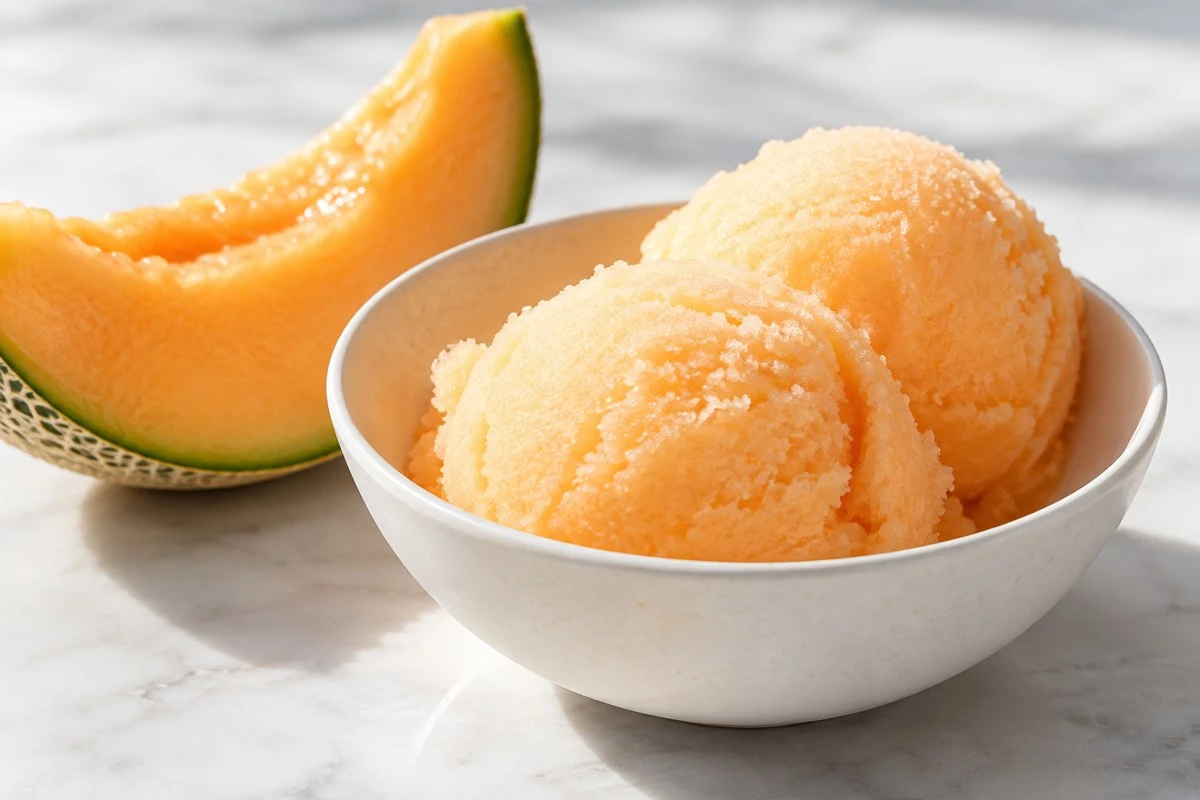
For development, start with the actual melon lot and a clearly defined sorbet brief. Measure the prepared fruit using an agreed method, account for every ingredient by mass and compare trial batches through hardening and service. A soft sample straight from the freezer bowl can become much harder after storage, while a sample that scoops beautifully when warm may lose shape too quickly in the display cabinet.
We help buyers specify the incoming frozen Hami melon for that work. The calculations and trials below are proposed development tools, not a validated commercial formula, completed GreenLand test or guarantee of shelf life. The finished-dessert manufacturer remains responsible for the process, formulation, safety assessment and market-specific declaration of its product.
Define the sorbet at its serving temperature
Define the dessert as it will be sold. A sorbet served immediately from a batch freezer, a tub held in a display cabinet and a retail pack taken from a domestic freezer face different conditions. The same formulation may feel soft in one and very firm in another. The product brief should therefore identify the intended storage and serving route before a developer chooses a sugar level or judges a scoop photograph.
Describe the desired texture in observable terms. Scoop resistance, the way the portion holds its shape, the sensation of ice crystals and the rate of melting all contribute to quality. A dense, smooth spoonful can differ from a lighter aerated one even when both look attractive. Agree the serving temperature and observation method so that sensory judgments compare the same physical state rather than a colder sample with a warmer one.
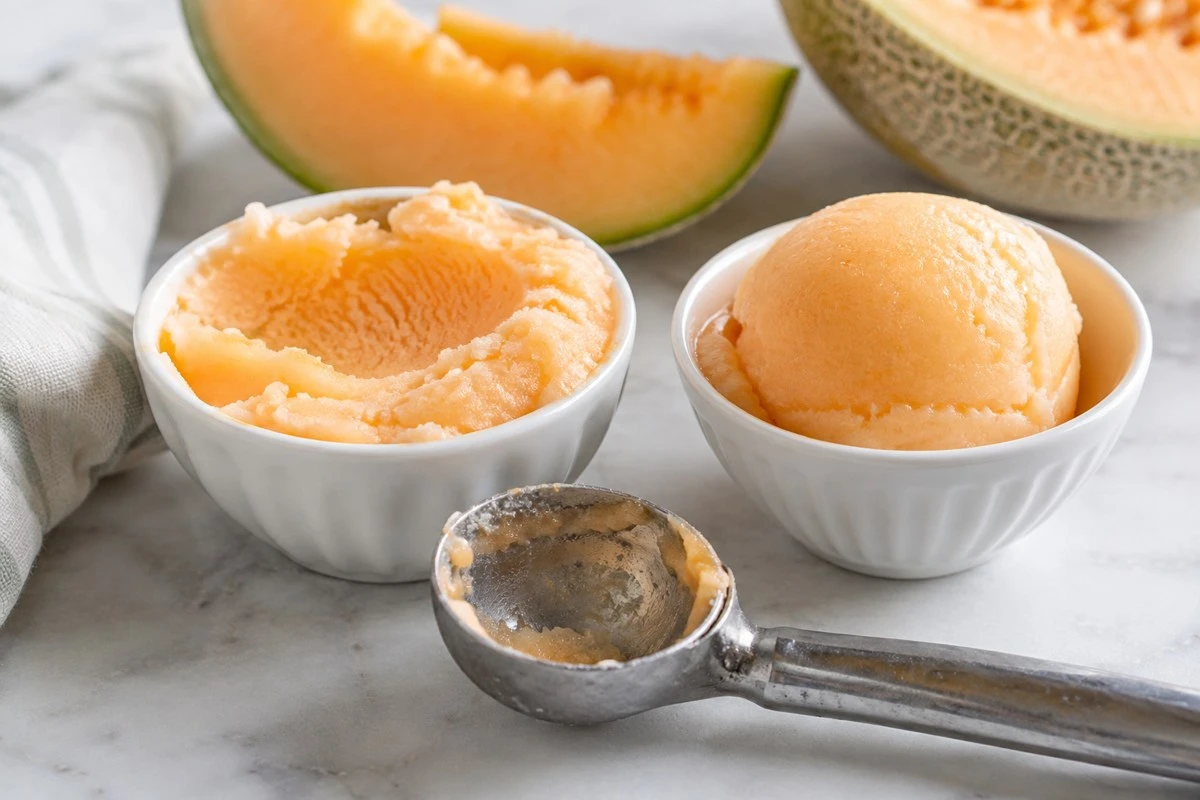
Scrape resistance and scoop shape need a matched temperature before comparison. Illustrative states.
Product identity also belongs in the brief. Some recipes described as melon sorbet contain milk, cream or other ingredients that change the intended declaration. Decide whether the commercial product is meant to be dairy-free, what ingredients are permitted and which claims are supported by the complete supply and production system. The title of a recipe found online is not evidence that its ingredients meet the intended label or allergen requirements.
Melon intensity should be considered alongside sweetness. Hami melon can provide an attractive orange colour and a fragrant fruit profile, but those qualities vary with the supplied fruit and preparation. A high fruit percentage does not automatically produce the strongest flavour if the lot is weak or the remaining ingredients dominate it. Taste the prepared pulp and the finished frozen dessert, recording the contribution that the recipe is designed to retain.
An approved reference helps a team make consistent decisions. Keep a description of the preferred scoop, melt and flavour at the specified endpoint, supported by photographs and appropriate measurements. The reference should remain connected to its formula, fruit lot and processing conditions. If the serving route changes later, reassess the reference instead of assuming that a product designed for one temperature and handling pattern will perform equally well in another.
Prepare and assess the Hami melon pulp
Begin with the fruit form that will actually reach the factory. Frozen wedges, dice and a prepared puree create different preparation tasks. Wedges may need trimming and size reduction; dice can simplify dosing; a puree has already undergone some structural breakdown. Compare their usable output, flavour and handling in the intended process. The most convenient form is the one that fits the line and product brief with an acceptable total cost.
The current GreenLand-food Hami melon offering presents wedges, with dice separately reviewed. The photographed wedges retain rind, so a peeled-pulp specification must state the required preparation explicitly. Seed-cavity cleaning and unwanted fibrous material also need attention. A smooth sorbet can still feel unpleasant if tough fragments remain after blending, even when the bulk puree appears uniform from a distance.

Frozen orange Hami melon wedges with visible rind. Photograph shown on the GreenLand-food product page; preparation follows the approved SKU.
Define how frozen fruit becomes the pulp used in the formula. If it is thawed, record the controlled handling route and whether the released liquid is retained. Draining changes the recovered mass and composition. If the fruit is processed while partly frozen, ensure that sampling and measurement account for that condition. A refractometer reading from the first liquid to melt may not represent the entire fruit portion entering the batch.
Homogenise a representative sample before analytical comparison. Soluble solids should be measured with a method appropriate to the material and instrument, including calibration and temperature control. If pulp must be clarified or filtered for the reading, record that preparation. Keep sensory observations separate: two samples with similar readings can differ in melon aroma, acidity, colour or coarse material. The formula needs the actual fruit's performance as well as a number.
Assess recovery after trimming and refining. Seeds, rind, fibrous cavity tissue and retained coarse material reduce the portion available for a smooth base. Some lost material may contain useful flesh or juice, making the separation method economically relevant. Weigh and describe the fractions using a defined boundary. A supplier quotation expressed per received kilogram cannot be compared fairly with a puree price until the buyer knows what accepted fruit fraction its process recovers.
Food-safety suitability must be established for the selected input and process. Freezing and blending do not provide a universal kill step. Heating a syrup separately also does not automatically validate treatment of the melon later mixed into it. The manufacturer should use a qualified process and the required ingredient controls for the intended dessert, then evaluate flavour and texture after that real route. A raw tasting sample cannot silently qualify a treated commercial product.
Separate fruit content, soluble solids and total solids
Fruit percentage, soluble solids and total solids describe different things. Fruit percentage states how much of the formula is contributed by a defined fruit ingredient. Soluble solids describe the dissolved fraction estimated or measured by the chosen method. Total solids include the material remaining after water is removed by an appropriate analytical method, including components that may not dissolve. A developer needs the right quantity for each calculation instead of treating all three as interchangeable.
A refractometer's Brix scale is based on sucrose solutions. In fruit, its reading is commonly used as an estimate of soluble solids because other dissolved substances also affect the measurement. It does not measure sweetness perception directly, identify the proportions of different sugars or quantify every insoluble particle in a puree. Record it as a method-specific fruit measurement and use suitable compositional information when a more detailed formulation calculation is required.
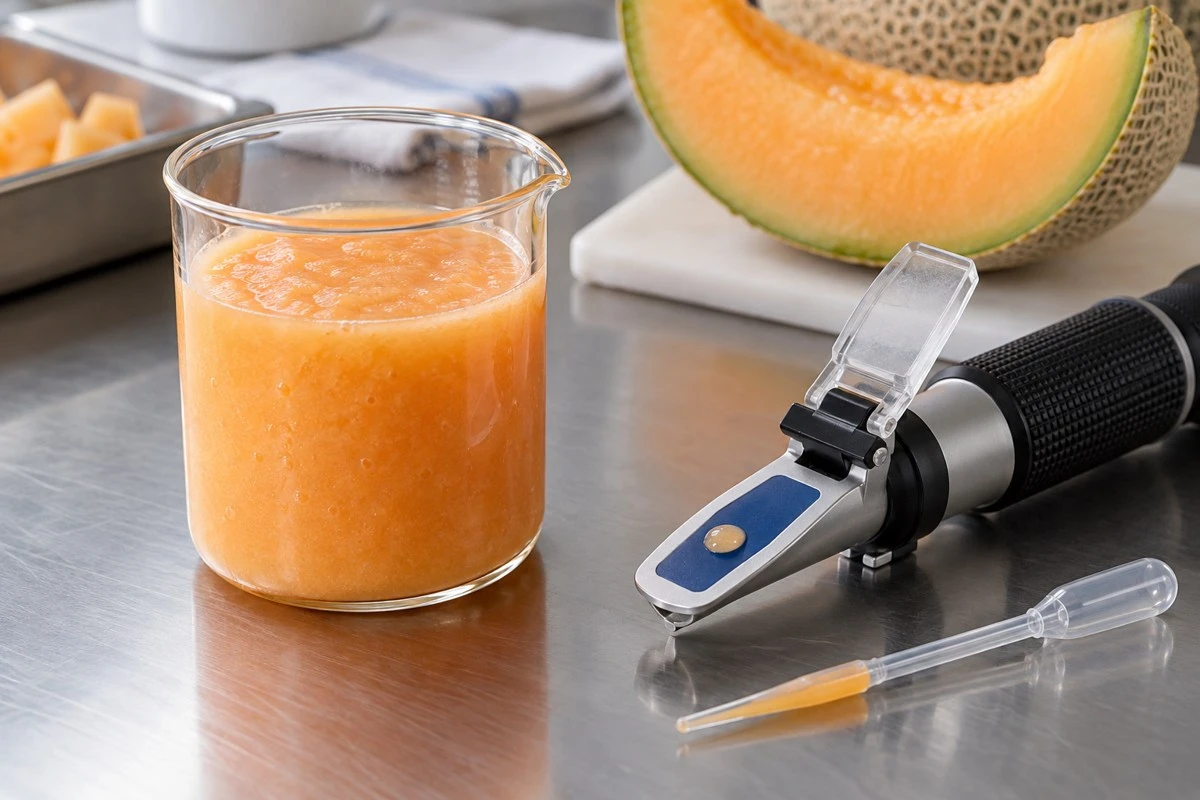
A prepared pulp sample and refractometer illustrate measurement preparation; no result is shown.
A hypothetical mass balance shows the practical value. If 600g of prepared melon is approximated as containing 12% soluble solids, it contributes about 72g of that fraction. Adding 180g of sucrose and 220g of water gives a 1,000g mixture with approximately 252g, or 25.2%, of these accounted soluble solids. This is an illustration of calculation, not a recommended sorbet formula. Other dissolved ingredients and the limitations of the fruit measurement still need consideration.
Now suppose a second melon lot gives an approximate soluble-solids value of 16% under the same method. The same 600g fruit dose contributes about 96g, a difference of 24g in the 1,000g batch. Keeping every other ingredient unchanged alters the composition. A developer may investigate a sugar or water adjustment, but the correct change also depends on flavour, acidity and sugar types. Equalising one calculated total cannot by itself guarantee equal sweetness or freezing behaviour.
Syrups require their own accounting. A 100g dose of an 80% solids syrup contributes approximately 80g solids and 20g water; a different syrup concentration changes both contributions. The syrup's sugar composition matters separately from its solids percentage. Use the actual supplier specification and lot information where needed. Replacing a dry sugar with an equal weight of syrup without adjusting the water balance can change the sorbet more than the recipe writer intended.
Keep insoluble pulp in view. Refining that removes fibrous material can alter body and yield even when the soluble-solids reading changes little. Conversely, adding a low-sweetness bulking ingredient may change total solids and mouthfeel without behaving like the same mass of sucrose. A useful formulation sheet names each ingredient, its mass and relevant composition. It then leaves room for the actual measured result, because a calculated balance is a starting model that must be checked in the product.
Balance sweetness with freezing behaviour
Sugars influence sweetness and the freezing behaviour of the water phase. As water freezes, dissolved material becomes concentrated in the remaining liquid. The University of Guelph's frozen-dessert teaching material explains the relationship between ice formation and the concentrated unfrozen phase. The practical implication is that a sorbet can contain ice and liquid together at service, with the balance changing as temperature and formulation change.
Different sugars do not have identical effects at the same mass. Sucrose, dextrose and the mixtures present in syrups differ in molecular composition and perceived sweetness. Their effects on freezing-point depression and the finished texture therefore need to be considered alongside their flavour. A recipe can become softer without becoming proportionally sweeter, or sweeter without acquiring the desired body. The product must be tasted and physically assessed rather than balanced through sweetness alone.
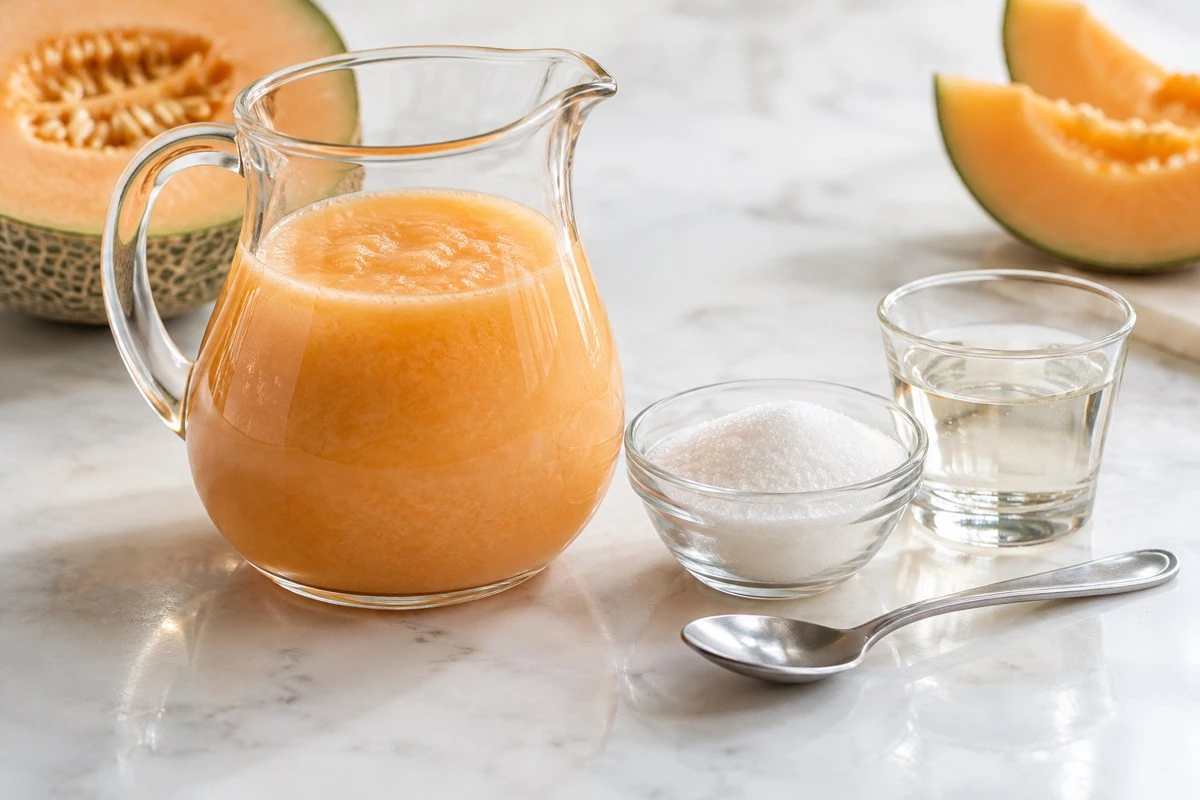
Pulp, dry sugar and syrup contribute different amounts of water and solids. Illustrative ingredients.
Use ingredient names precisely. Glucose syrup is a mixture whose properties depend on its composition, while a dextrose powder is a different input. Invert sugar, honey and fruit concentrates bring their own sugar mixtures, water and flavour. A commercial formula should identify the specified ingredient, relevant solids and supplier information. Substituting one for another by a generic description such as syrup can change both the calculation and the sensory result.
Reduced-sugar development needs a full reformulation. Removing sucrose changes more than the sweetness of the base: it changes the amount and composition of dissolved material and may change the frozen texture. An intense sweetener can restore perceived sweetness while contributing very little bulk. Other ingredients may help rebuild body or control ice, but their legal suitability, declaration, processing needs and sensory effects must be assessed in the intended market and recipe.
Acid additions should also be purposeful. A small adjustment can alter the balance of the melon flavour, but excessive acidity can move the dessert toward a citrus profile. Use weighed trials and measure the relevant attributes of the complete base. A pleasant acid-sugar balance is a sensory result; it does not prove a safe process. Where pH or another parameter is part of the safety design, it needs the method, limits and validation appropriate to that process.
Avoid a universal target taken from another fruit or a chocolate dessert formula. The Callebaut technical compendium separates sweetening power, solids and freezing considerations, but its chocolate-focused formulations do not establish Hami melon acceptance limits. Use such material to understand the variables, then qualify a range that works with the actual melon, permitted ingredients, equipment and service temperature.
Build texture through refining, freezing and hardening
The preparation route determines which particles and structures remain in the base. Blending can create a relatively uniform pulp, while a screen removes material according to its aperture and the way the pulp passes through it. A finer finish may improve mouthfeel but reduce recovery. Evaluate the retained fraction and the final base together, then choose the method that gives the intended sorbet rather than pursuing the smallest possible particle size as an isolated goal.
Stabilisers can help manage water mobility and texture where the formulation permits them. Their performance depends on identity, concentration, dispersion, hydration conditions and interactions with the other ingredients. A powder that works in one base may form lumps or give an unwanted gummy sensation in another. Follow the ingredient supplier's technical instructions and qualify the complete process. A larger dose is not automatically a better response to visible ice or poor scoopability.
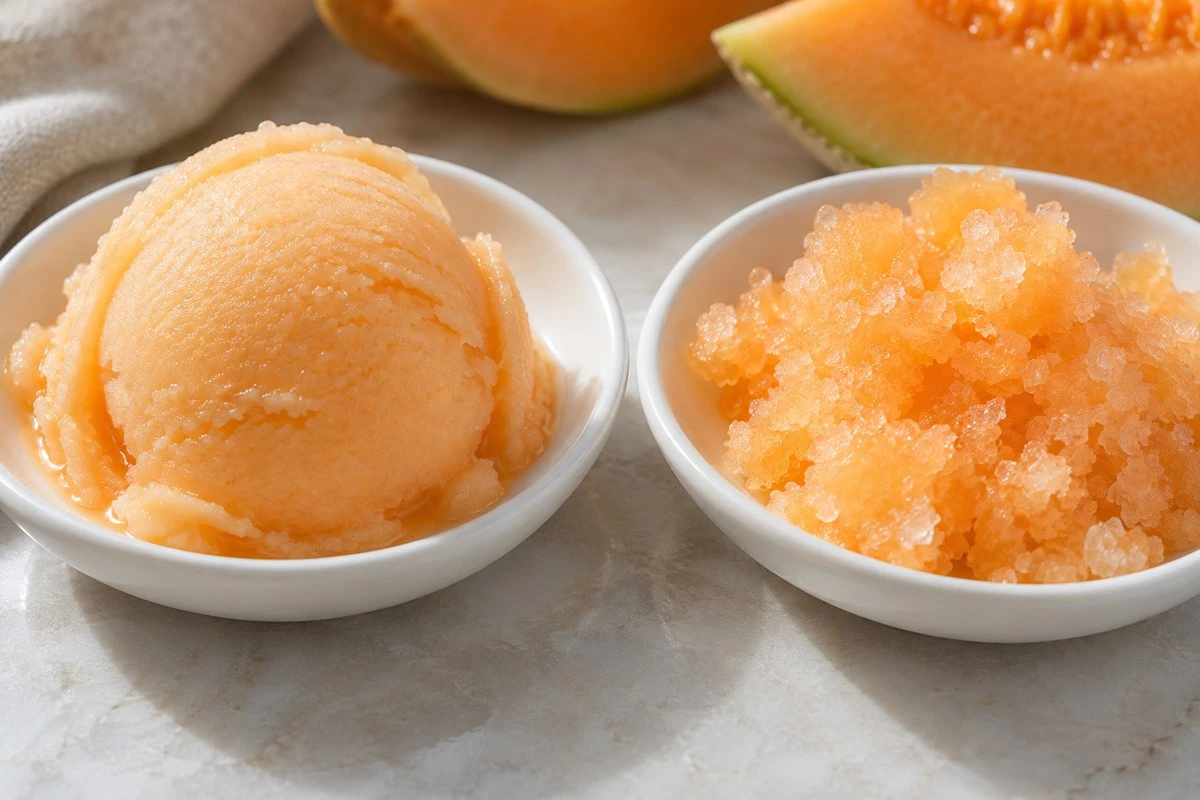
Smooth sorbet and a coarse icy mixture show different eating textures. Illustrative comparison.
The order of mixing matters when it affects dissolution or hydration. Undissolved sugar, poorly dispersed stabiliser and uneven pulp can create defects that a freezer will not repair. Inspect the base before freezing and record the preparation route used for the approved trial. If heat is involved, distinguish its functional purpose from a validated food-safety treatment. A convenient syrup-making step should not be described as pasteurising the whole sorbet unless that process has actually been established.
Freezing develops ice while the equipment mixes and removes heat. The size and distribution of crystals influence the eating texture, but they are affected by more than the ingredient list. Batch size, machine conditions, base temperature and the endpoint of freezing all matter. Use the actual equipment or a justified pilot route, then repeat the comparison consistently. A recipe copied from a domestic machine cannot establish the output of a commercial freezer without testing.
Hardening is a separate stage from the initial freezing operation. The product changes as more water freezes and its temperature moves toward the storage condition. Container depth, load and the hardening environment can influence that transition. Record the packed format and the relevant process conditions, then assess the sorbet after it reaches the state expected in distribution. A smooth freshly drawn sample is only one point in the product's life.
Air incorporation also changes the portion. A lighter product may have a different volume, melting behaviour and flavour impression from a denser one at the same mass. Where overrun matters, define how it is measured and keep the result with the batch record. A cup volume cannot be treated as a fixed ingredient mass when the air content changes. This affects both texture assessment and the commercial comparison of portion yield.
Follow texture through storage and service
Judge the sorbet after the storage route it is intended to experience. Texture can change during holding, particularly when temperature fluctuates and ice crystals grow or redistribute. Record product and storage conditions using the methods appropriate to the trial. A cabinet display reading provides useful context, but it does not establish the condition of every tub or the temperature at which a sensory panel tasted the product.
Use a planned series of observations with the actual pack and serving method. Assess scoop resistance, crystal sensation, shape retention, melting and flavour at defined stages. The trial period should be chosen by the manufacturer according to the intended product and study design. A short texture trial cannot establish commercial shelf life. Safety, packaging, sensory quality and the distribution route may require separate evidence before a duration is assigned.
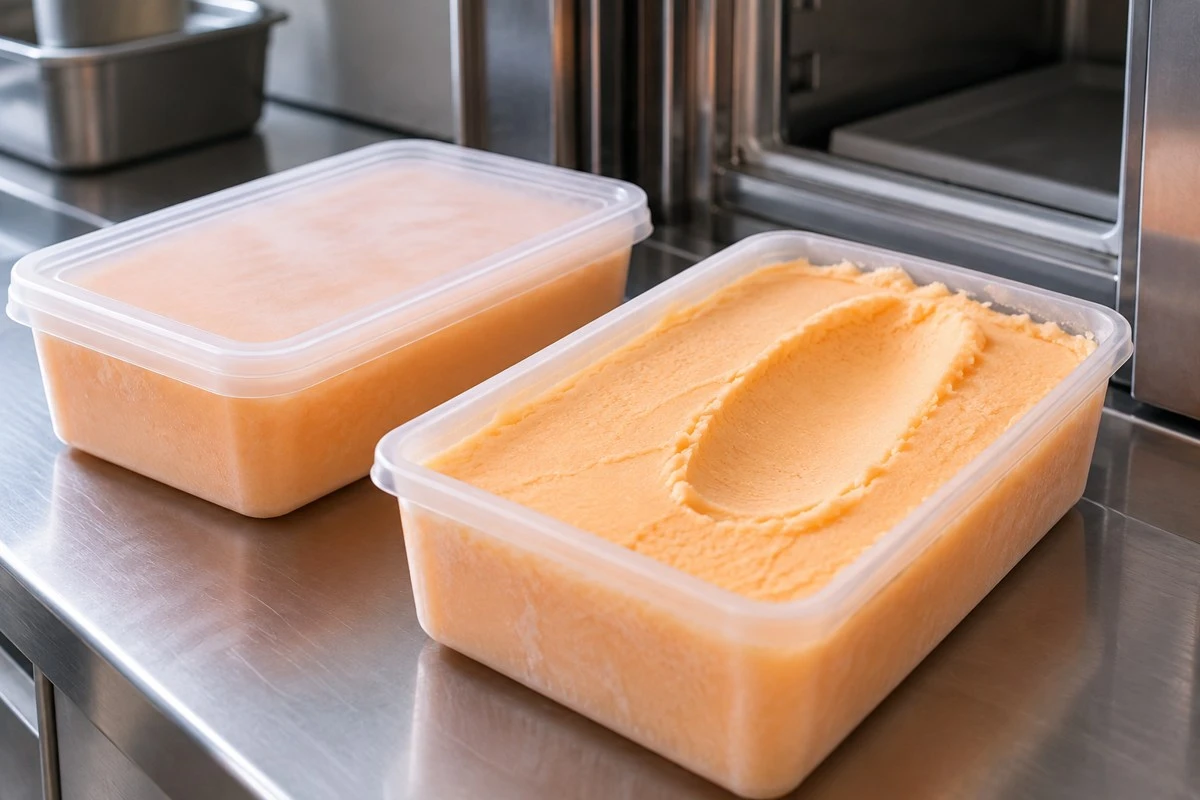
Pack depth, covering and storage conditions belong in the product trial. Illustrative frozen-dessert packing.
When a sample is too hard, first check its temperature and formulation record. A colder sample may require a different judgment from one at the intended serving condition. If comparable samples remain different, investigate the fruit contribution, sugar composition, water balance and process. Adding more sugar without that review can create excessive sweetness or a product that becomes too soft during service. The defect should guide a specific investigation.
When the sorbet feels coarse or icy, separate crystal sensation from coarse fruit particles. A fibrous fragment can remain perceptible even in a finely frozen base, while a smooth puree can develop an icy texture after unsuitable handling. Examine the base, the freshly frozen product and the stored sample to locate when the defect appears. This sequence helps the team decide whether to revise preparation, formulation, freezing or storage rather than changing all of them at once.
Keep melt assessment realistic. Compare portions of the same mass and shape under matched conditions and record the endpoint being observed. A photograph taken at an unspecified time can exaggerate or conceal a difference. The desired melting behaviour depends on the service brief: a plated dessert may need a stable scoop for presentation, while another application prioritises rapid flavour release. A single universal melt time would ignore those differences.
Packaging and handling need their own checks. A covered tub limits exposure, but the container, seal and repeated opening pattern still affect the product. Evaluate how the sorbet is portioned, returned to storage and protected during normal service under the site's approved procedure. A development sample that stays untouched in an ideal freezer may not represent a working display tub. Use the commercial route to decide which quality risks deserve tighter controls.
Connect the approved sorbet to the fruit order
Translate the approved dessert back into an incoming-fruit requirement. Identify the Hami melon form, preparation, maturity reference, colour, unwanted-material limits and packing. If soluble solids, acidity or another analytical attribute drives formulation adjustments, specify the sampling and test method. Keep the acceptable range tied to the developer's actual trials. A nominal fruit value taken from a generic reference cannot replace evidence about the material being purchased.
The sampling plan should represent the lot and the intended preparation. Include more than one unit or location where appropriate and record variation that matters to the recipe. A small sample taken from unusually ripe pieces can misrepresent the fruit that will enter production. We discuss the required sample form and order conditions with the purchasing team so that the developer can evaluate a useful reference rather than an attractive but unrepresentative selection.

Frozen orange Hami melon dice in a blue-lined carton. Photograph shown on the GreenLand-food product page; preparation follows the approved SKU.
Compare ingredient cost at the accepted output boundary. A frozen wedge price needs to be interpreted with any trimming and refining losses, while a prepared pulp price may include those operations already. The fruit fraction in the finished sorbet, the accepted batch yield and the portion basis all affect cost. Keep those calculations separate from assumptions about air content or serving volume, and state which costs are included when quotations are compared.
Order documents should follow the actual SKU and destination. Confirm quantity, packing, timing, ingredient declaration, private-label needs and requested analytical or traceability records. Any report should identify its represented lot and method. The wider frozen fruit supply range can support other dessert programs, but each fruit and preparation needs its own formulation assessment. A successful mango or berry sorbet does not automatically qualify a melon substitution.
An adjustment rule should state its permitted scope. A developer might establish a bounded change in added sugar for a measured fruit range, but that rule still belongs to the tested formulation and process. It should identify which other ingredients remain fixed, how final batch mass is maintained and which finished-product checks follow the adjustment. A change outside the studied range needs further assessment. Keep the person responsible for that decision clear in the production record, so a routine intake measurement does not become an unrestricted instruction to rewrite the recipe. This is especially useful when procurement changes fruit lots more frequently than the development team repeats a full sensory trial.
Keep the final formula, fruit record, process and service assessment together for repeat production. If the crop, cut, pulp preparation or sugar ingredient changes, decide whether the approved adjustment rules cover it or a new trial is needed. That record gives both teams a practical basis for continuity: incoming Hami melon that supports the intended flavour and a sorbet whose sweetness and texture remain appropriate at the point of service.
Source frozen Hami melon with GreenLand-food
GreenLand-food is a professional frozen Hami melon supplier and manufacturer in China, providing factory-direct wholesale supply for importers, food manufacturers, foodservice distributors, and private-label programs.
Send the product form, specification, packing, quantity, application, destination, private-label needs, and requested documents.