


Using Frozen Hami Melon in Smoothies and Blended Drinks
Oct 19, 2026
Leave a message

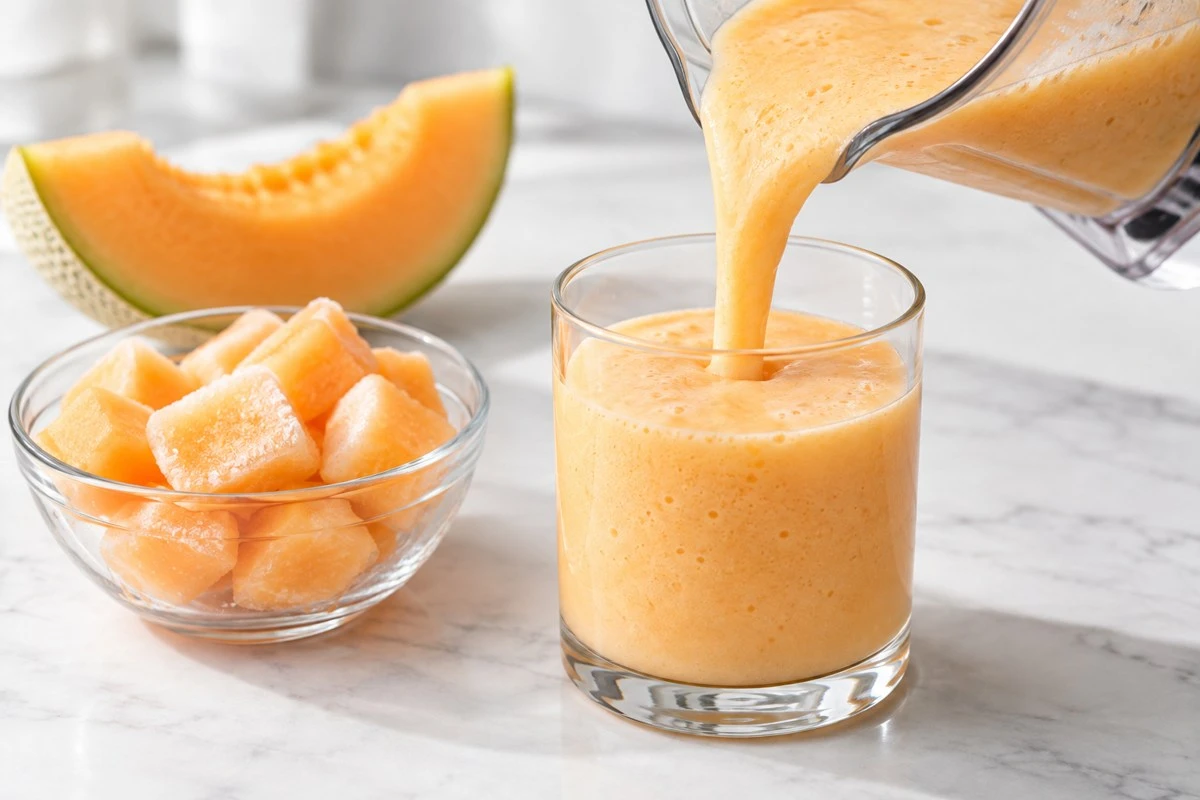
A useful development trial starts with weighed ingredients, a defined fruit condition and the equipment that will make the drink. Adding more ice whenever a sample seems thin can change flavour and yield as well as texture. Adding more banana or yogurt can improve body while moving the finished product away from the intended Hami melon profile. Both decisions deserve to be tested against a clear brief.
We help purchasing teams connect the frozen fruit specification to that brief. The examples here describe proposed trials for beverage development and foodservice qualification. They are not validated recipes, completed GreenLand performance results or a statement that every frozen Hami melon SKU is suitable for direct consumption without further treatment.
Choose the drink texture before fixing the fruit dose
A drink intended for a narrow straw needs a different texture from a spoonable smoothie bowl. A lightly blended fruit drink can tolerate a fluid body, whereas a thick smoothie may depend on suspended pulp, frozen material or a substantial base ingredient. Define the consumer's expected experience before adjusting the recipe. Otherwise a development team can spend several trials improving thickness without agreeing whether thickness is the quality it actually wants.
Describe the endpoint in terms that can be observed during service. Specify the intended cup, serving temperature, portion size and whether the drink should pour freely, hold a mound briefly or support toppings. These descriptions can later be paired with an appropriate flow or viscosity measurement. A numerical result becomes useful only when its method and temperature are connected to the drink that the customer receives.
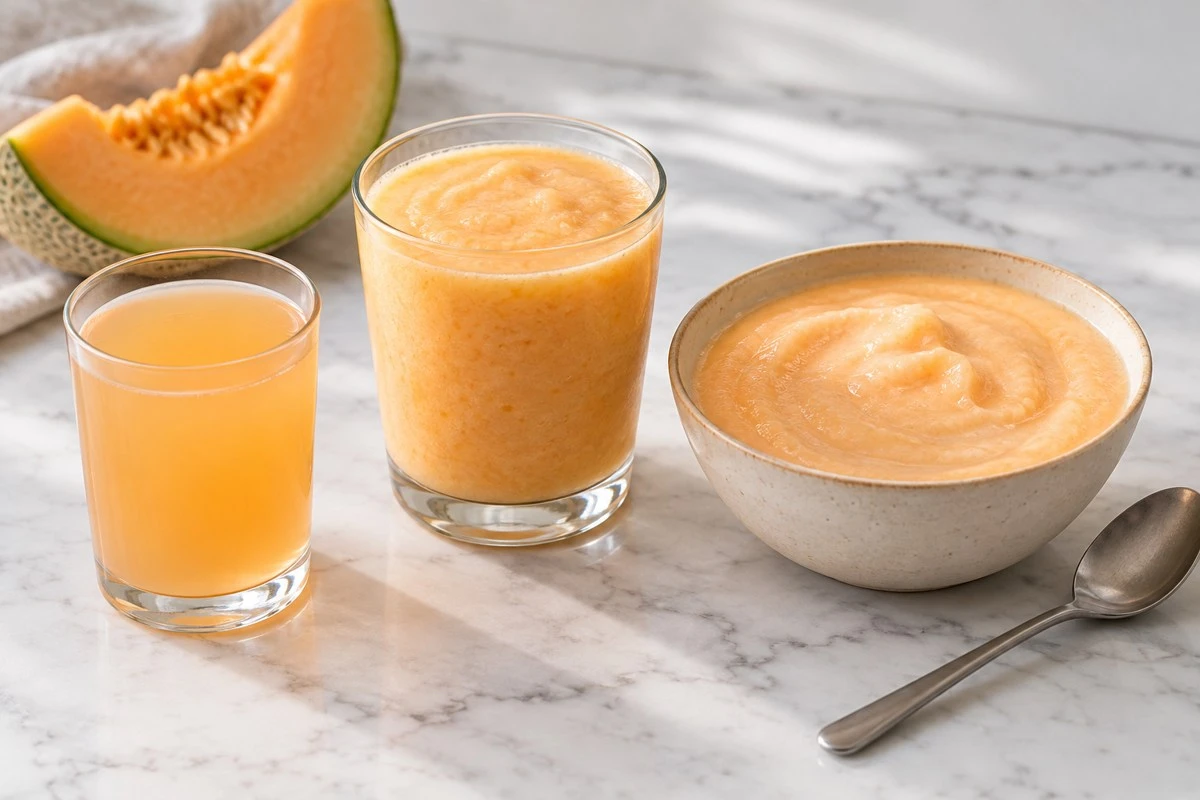
A fluid drink, a thick smoothie and a spoonable bowl have different texture targets. Illustrative comparison.
Hami melon flavour should have a defined role too. In a melon-led drink, a taster should be able to recognise the fruit through the base. In a mixed-fruit drink, Hami melon may provide a lighter aromatic contribution while another fruit supplies stronger acidity or body. The purchasing specification should reflect the role. A high fruit percentage is not automatically a strong melon flavour when the rest of the formula dominates the aroma.
The difference between a drink and a frozen dessert also affects timing. A fresh blended beverage can change quickly as the frozen fruit warms and air bubbles move. A sample judged only at the blender outlet may look much thicker than the same portion at the point of consumption. Decide which moment governs approval and include the realistic interval between preparation, collection and drinking. A delivery menu can require a different assessment from immediate counter service.
Keep the first trial simple enough to interpret. A base with many flavourings and several fruits makes it difficult to identify why a melon lot performs differently. Start with a small number of controlled ingredients, establish the fruit's contribution and then develop the intended finished formula. This sequence is a way to make decisions clearer; it does not require a single standard smoothie recipe for every customer or every market.
Specify the Hami melon that enters the blender
The fruit entering the blender needs an agreed identity and preparation. Confirm the selected Hami melon form, flesh colour, maturity reference, rind condition and seed-cavity cleaning. Rind or fibrous cavity material can produce an unwanted mouthfeel even when the blender makes the rest of the fruit look smooth. Checking the visible raw input before blending helps separate a preparation defect from a limitation of the equipment or recipe.
Our current frozen Hami melon supply page presents wedges and separately reviewed dice. The wedge photograph includes rind on the pictured fruit. A smoothie program that requires peeled, cleaned pieces should approve that preparation explicitly. The image cannot establish that a pictured form is ready to enter a drink unchanged, and a general product name cannot replace the final ingredient declaration or handling instructions.

Frozen orange Hami melon wedges with visible rind. Photograph shown on the GreenLand-food product page; preparation follows the approved SKU.
Piece dimensions influence portioning and the work required in the jar. Large wedges may need preparation before use. Smaller dice can be easier to dose, but their size distribution, clumps and broken fragments still matter. Agree a sample that represents the ordered pack. A few loose pieces selected for a photograph may behave differently from a full foodservice bag that has been handled through the actual storage and service route.
Assess flavour in a defined preparation as well as in the fruit itself. A very cold piece is difficult to compare sensorially with a fully thawed one, and a sweet-smelling sample does not establish the sweetness of the finished drink. If soluble solids or acidity are important, specify a sampling and measurement method for the represented lot. Do not turn a general internet description of Hami melon sweetness into a guaranteed value for every shipment.
The ingredient's safety status must fit the application. A smoothie normally receives no meaningful kill step during blending. FDA's frozen-food storage guidance explains why freezing cannot be treated as a universal pathogen-elimination process. Confirm whether the selected SKU is approved for the intended use and follow its instructions and the site's food-safety plan. If further treatment is required, qualify the treated ingredient in the drink rather than silently using a raw frozen sample.
Account for fruit water, thaw liquid and added ice
Frozen melon contributes water in the fruit itself. Freezing changes that water's physical state but does not remove it. In the blender, some of the frozen portion may remain as fine ice, while some melts as it absorbs heat from the other ingredients and the equipment. The resulting cold, thick appearance can be temporary. The drink's final dilution depends on the full formulation, including fruit, ice, liquid base and any thaw juice retained.
Use mass to make the first comparisons easier. A cup of loosely packed cubes does not necessarily weigh the same as a cup of small dice or partly thawed pieces. Weigh each component and the finished batch, and record any residue left in the jar. This lets the team distinguish a texture adjustment from an unrecorded change in fruit dose or portion yield. Volume still matters at service, but it is a less stable starting point for ingredient accounting.
Consider a hypothetical 1,000g development batch containing 600g of frozen melon, 300g of liquid base and 100g of ice. Replacing 100g of the fruit with another 100g of ice keeps the batch mass unchanged while reducing the fruit fraction from 60% to 50%. The drink may initially seem equally cold, yet its flavour and solids contribution have changed. These figures illustrate accounting only; they are not an approved formula or a recommended serving composition.
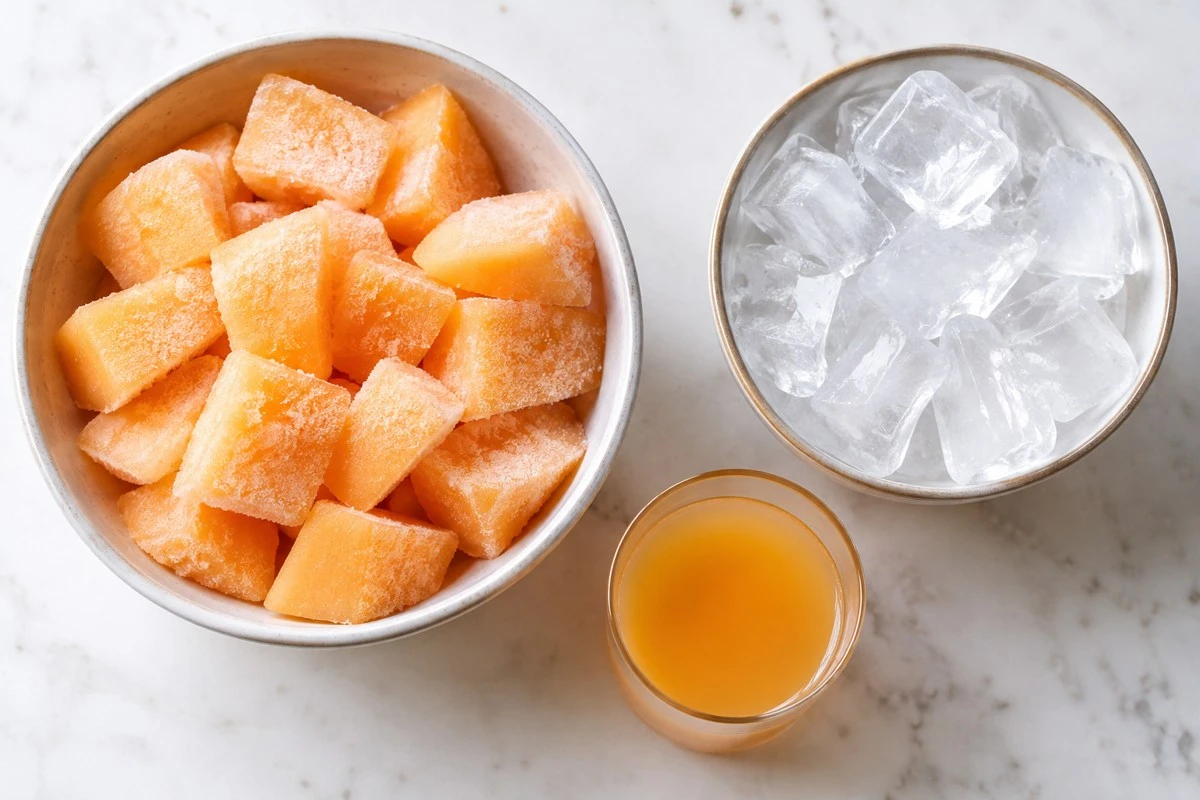
Frozen fruit, plain ice and released fruit liquid make different contributions to the blend. Illustrative ingredients.
Thaw liquid needs a deliberate rule. If part of the fruit is tempered before blending, decide whether all released liquid enters the batch. Retaining it keeps more of the original fruit stream together. Draining it changes yield and composition, and the remaining pieces should not be treated as compositionally identical to the original input. A recipe written only as a weight of melon can become inconsistent if different operators make different decisions at this point.
Avoid correcting every thin sample with extra frozen fruit before checking the other variables. A warmer base, longer blending time or lower starting fruit temperature can change the physical endpoint without a change in fruit quality. Match these conditions when comparing lots. Once the cause is understood, the formulation can be adjusted intentionally, with the effect on flavour, portion cost and service behaviour recorded alongside the immediate texture improvement.
Weighing the finished output also reveals small process losses that can become significant across a busy service. Record the batch mass before blending, the mass delivered into portions and the material left in the jar. If an operator adds water to rinse the jar into the final cup, that water becomes part of the formula and changes the last portion. A defined dispensing method helps maintain the intended fruit dose from the first cup to the last, particularly when a thick drink clings to the container.
Keep the melon recognisable in the finished blend
The finished drink should be tasted at the intended serving temperature and again through the realistic service interval. Cold and warming samples can present differently, so a tasting note without temperature context may be difficult to reproduce. Use a consistent tasting order and comparable portions when evaluating alternative fruit lots. A strong first sip should not distract from a watery finish or an ingredient flavour that becomes dominant as the drink warms.
Sweetness is only one part of the melon impression. Aroma, acidity, the base ingredient and the amount of pulp all contribute. A sweeter fruit lot may require a different added-sugar decision, but simply reducing sugar can also change the finished drink's solids. If the recipe uses syrup, the syrup brings water as well as sugar. Record its concentration or product specification instead of assuming that an equal spoonful from another supplier is equivalent.
Lime or another acidic ingredient can sharpen a melon drink, but it can also overpower a delicate profile. Assess the addition in small, weighed trials with the actual base. Acidity that tastes balanced in a water-based drink may behave differently in a dairy or plant-protein system. A flavour correction should therefore be checked for appearance and stability as well as taste. The finished formulation needs its own pH and safety assessment where relevant.
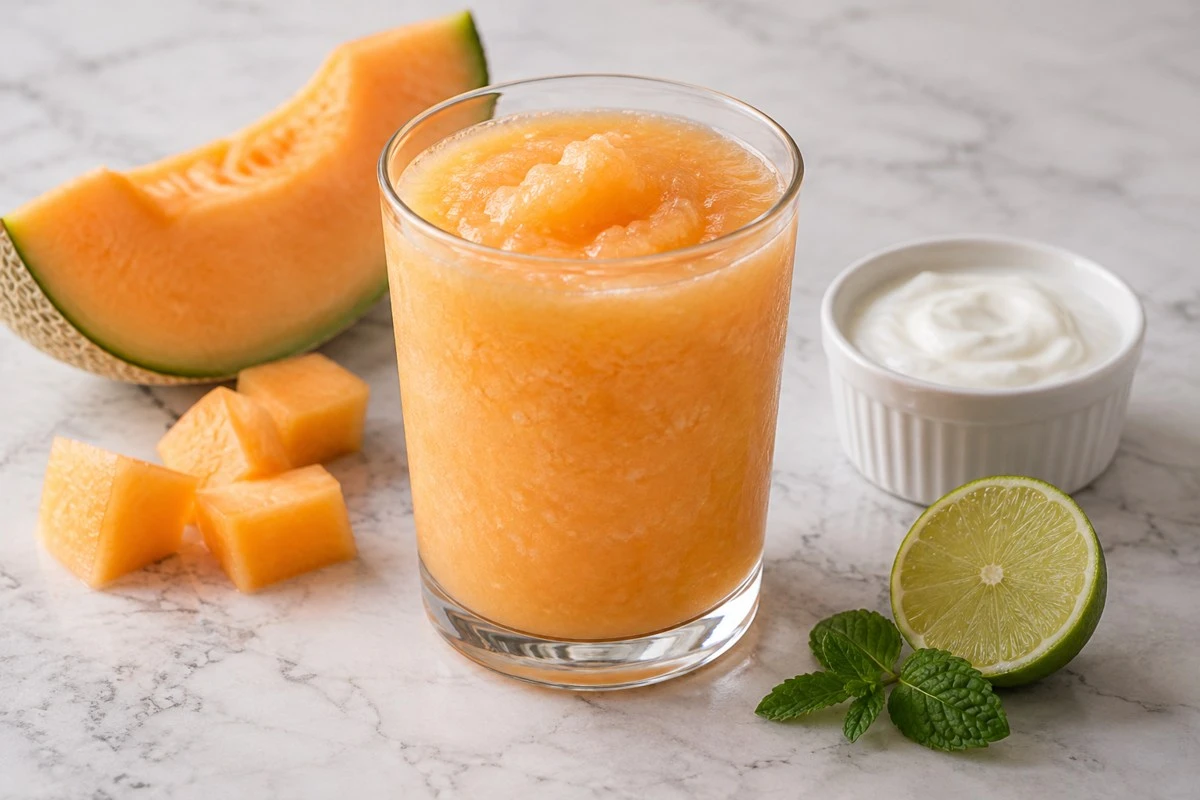
Yogurt and lime change the base as well as the melon flavour balance. Illustrative development ingredients.
Yogurt, banana and other fruit can create a fuller body. They also bring their own flavours, colours, sugars and, in some cases, allergens or labelling implications. A melon smoothie that relies heavily on banana may meet a texture target while tasting mostly of banana. This can be acceptable when it matches the brief and declaration. For a melon-led product, compare the addition against a simpler reference so the team can judge how much Hami character remains.
Plant-based liquids vary widely in composition. A coconut drink, an oat beverage and a concentrated coconut milk should not be substituted by name alone. Their water, fat, protein and added ingredients can change flow, flavour release and separation. Review the supplier specification for the chosen base and test the combined product. The same caution applies to dairy milk and yogurt: the fruit lot cannot explain every difference created by a change elsewhere in the recipe.
For commercial development, describe flavour acceptance with a reference and a manageable set of terms. Melon intensity, sweetness balance, unwanted green or stale notes, aftertaste and consistency through service may be more informative than a single overall score. Use an appropriate panel and a repeatable preparation. These records help the purchasing team recognise a meaningful change without claiming that one numerical fruit measurement captures the entire flavour experience.
Colour needs a matched comparison as well. The same orange melon can look paler in a white dairy base or different under warm counter lighting. Photograph trial drinks in the intended container under consistent illumination and inspect them at normal viewing distance. A colour adjustment should not be used to conceal weak fruit flavour. Where colour variation is acceptable, describe the range with the approved reference so the receiving team does not reject a suitable lot solely because its shade differs slightly from a promotional photograph.
Control piece size, loading and the blending endpoint
Follow the equipment manufacturer's instructions for the intended machine and ingredients. Frozen pieces create a different load from thawed puree, and a jar that works well at one batch size may struggle at another. Confirm the allowable load, safe lid use and appropriate operating program. A recipe should not require an operator to push utensils into a running blender or improvise around stalled blades. Equipment suitability is part of qualifying the application.
Loading order and available liquid can affect circulation. If fruit remains above the moving mixture, simply extending the run may heat the material below while leaving chunks near the top. Observe the actual movement through a safe, closed system and follow the manufacturer's guidance for correcting poor circulation. Record the order and starting condition that produced the accepted result, so later trials compare fruit rather than different operating habits.
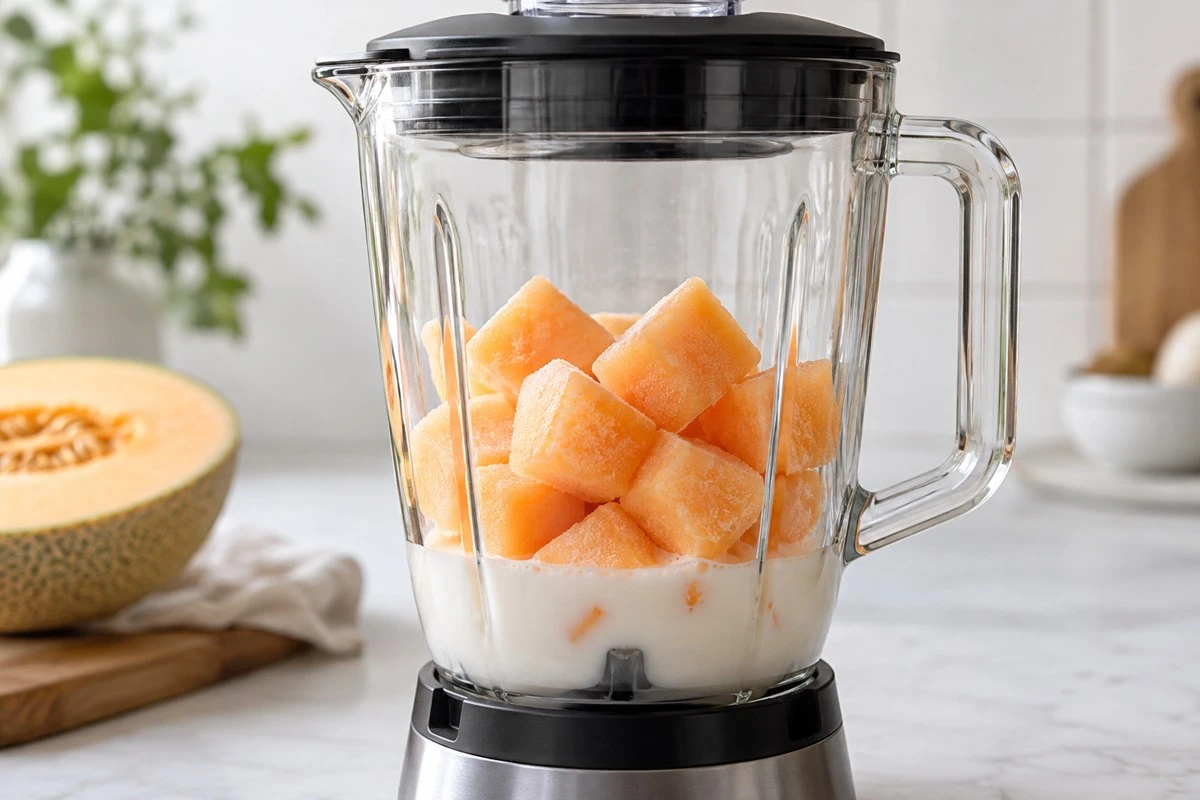
Piece size, liquid and available circulation space belong in the equipment trial. Illustrative setup.
Define the endpoint by the drink's condition rather than time alone. A fixed run time is convenient, but changes in piece size, batch mass or starting temperature can produce a different result within that interval. Inspect for unwanted hard particles, excessive foam, uneven texture and the required flow. Where temperature or a measured particle condition governs the product, record it. The operating program should support those endpoints within the equipment's safe limits.
Longer blending can change several attributes at once. It can break down remaining pieces, incorporate or redistribute air and add heat through mechanical work. A smoother-looking sample may therefore have a different temperature or foam volume. When comparing lots, keep these effects visible rather than attributing every change to ripeness. If the process needs a different setting for a new cut, qualify that setting and decide whether it is acceptable operationally.
A small trial should eventually be repeated at the actual service or production scale. Jar geometry, blade design, load and handling sequence can change the result. The first commercial run should follow an approved plan with appropriate observation and release responsibilities. Do not multiply a home recipe's ingredients and assume that its blending behaviour will scale proportionally. The fruit can be consistent while the process changes enough to alter the drink.
Cleaning and cross-contact controls belong to the site's routine operation. A dairy smoothie and a dairy-free drink can use similar fruit yet require different handling controls and declarations. Keep those requirements with the finished-product process. The frozen fruit specification can support the program, but it does not validate shared equipment cleaning or the allergen status of a drink assembled from several ingredients.
Assess the drink through its actual service window
Watch what happens after the jar is emptied. The drink may lose its initial mound, develop a liquid layer, change foam height or leave coarse pulp at the bottom of the cup. Some movement can be normal for a particular style; acceptance depends on what is promised to the customer. Describe the acceptable appearance and drinking experience at the point of service instead of requiring indefinite uniformity without a practical reason.
Use the actual cup, lid and service conditions in the quality trial. A clear cup makes separation visible, while a narrow straw may reveal particles that were less noticeable from a spoon. A smoothie bowl must support its toppings for the intended interval. Record these conditions before judging competing lots. Otherwise the test can favour the sample served immediately or in a more flattering container rather than the ingredient that best suits the operation.
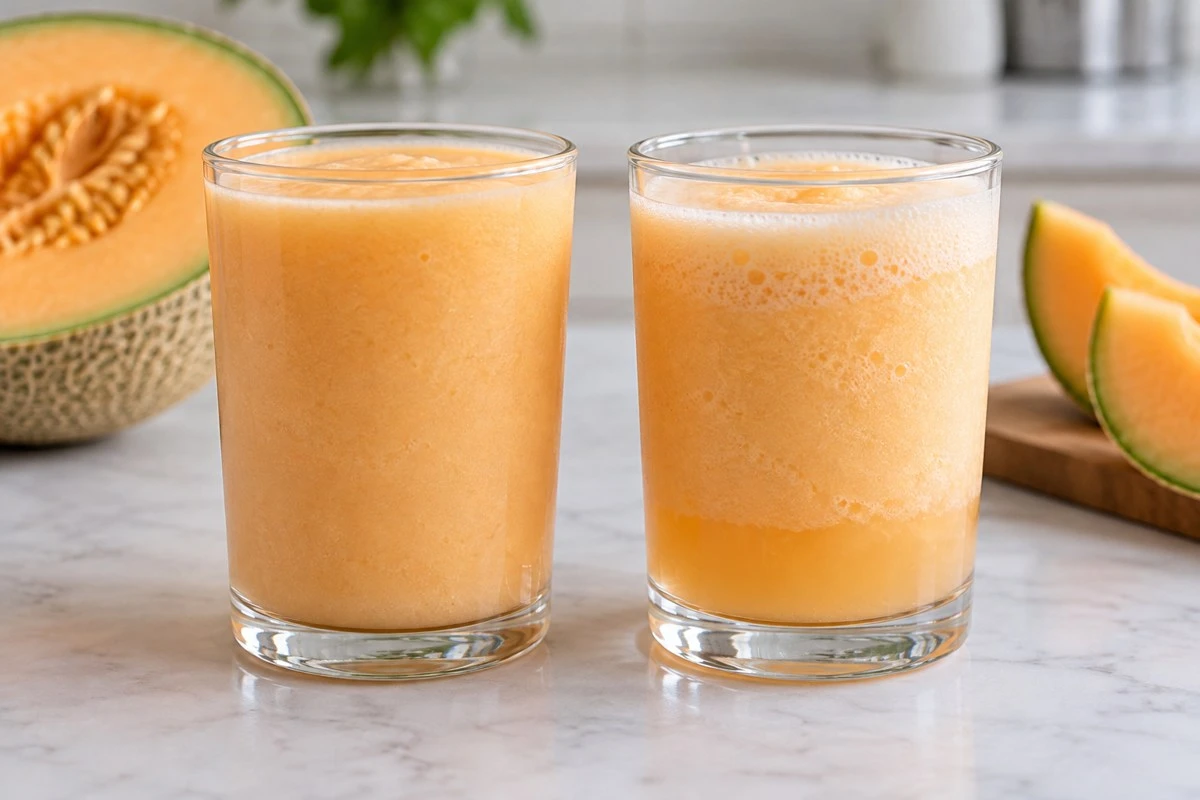
Uniform body and a separated liquid layer are distinct observations during service. Illustrative states; no time result implied.
Set observation points around the real workflow, within the site's approved time and temperature controls. For example, a team can compare the drink at filling and after its normal collection interval, recording temperature, appearance and mouthfeel at both points. The chosen intervals are quality-study conditions, not a claim of safe shelf life. Extended chilled storage, bottled distribution or delivery beyond normal service requires an appropriately designed safety and shelf-life assessment.
Separation does not have a single cause. Fruit particle size, the liquid base, acidity, air and the physical state of the ice can all contribute. If a drink becomes thin, first compare the formulation and preparation records. If a watery layer appears, distinguish that observation from foam collapse or pulp settling. Naming the defect precisely helps identify a useful adjustment and prevents unnecessary changes to the frozen fruit specification.
Stabilisers or other ingredients may be considered by a qualified developer where the product brief permits them. They need a defined identity, legal suitability, dosage and processing method, followed by testing in the complete drink. Adding a powder to conceal every handling variation can create a different mouthfeel without solving the original cause. Approve the result through flavour, drinking texture, declaration and the intended service conditions together.
Waste and portion consistency are part of the same evaluation. Record how many acceptable portions the batch actually yields and what remains in the equipment or cup. A very thick drink that is difficult to pour may increase residue or slow service. A thin drink may be easy to dispense but fail the menu description. The accepted formulation should work for both the consumer and the operator who prepares it repeatedly.
For a multi-site foodservice program, repeat the accepted preparation on the equipment and pack sizes used by the participating outlets. A central development kitchen may have a more powerful machine or colder ingredients than a service counter. Record any permitted adjustment and keep the resulting portion specification consistent. Training should explain the endpoint the operator is trying to achieve, including what to do when a pack is unusually clumped or the drink fails to circulate. This connects ingredient approval to everyday execution without turning each cup into a separate experiment.
Approve the fruit with a reproducible drink trial
The most useful order sample is one that can be connected to a reproducible drink. Keep the fruit lot, pack condition, ingredient weights, base identity, equipment, operating program and serving endpoint together. A recipe photograph can accompany the record, but the image alone cannot explain how to reproduce the result. Save the observations that made the sample acceptable, including any limitations that matter at normal service volume.

Frozen orange Hami melon dice in a blue-lined carton. Photograph shown on the GreenLand-food product page; preparation follows the approved SKU.
Agree which incoming fruit attributes will be checked at receipt. Product identity, preparation, rind and seed-cavity condition, piece distribution, packing and frozen condition are practical starting points. Where the formula depends on soluble solids, acidity or another analytical result, name the method and represented lot. The approval should distinguish a supplied measurement from a value assumed by a recipe calculator or copied from a general description of the fruit.
Use realistic commercial comparisons. A lower price per received kilogram may be less attractive if the form requires extra trimming or produces fewer acceptable portions. A hypothetical 10kg pack that yields 9kg of usable prepared fruit has a different cost basis from a fully usable 10kg pack at the same price. Include the relevant preparation, residue and portion yield in the comparison, while keeping labour and other costs separate enough to understand.
For a mixed-fruit program, the GreenLand-food frozen fruit range provides a starting point for discussing additional ingredients. Each fruit retains its own specification and application trial. A change in one component can alter the whole drink, even when the Hami melon remains unchanged. Review the finished recipe and label whenever the ingredient combination or supplied preparation changes.
We confirm the requested form, packing, quantity, destination, timing, private-label needs and documents around the selected order. The buyer's team qualifies the complete beverage and its handling route. For repeat supply, preserve the accepted trial method and review meaningful crop, cut or packing changes against it. That gives both teams a concrete reference: a Hami melon ingredient that makes the agreed drink under the conditions in which it will actually be served.
Source frozen Hami melon with GreenLand-food
GreenLand-food is a professional frozen Hami melon supplier and manufacturer in China, providing factory-direct wholesale supply for importers, food manufacturers, foodservice distributors, and private-label programs.
Send the product form, specification, packing, quantity, application, destination, private-label needs, and requested documents.