


Using Haskap Berries in Yogurt and Ice Cream
Oct 19, 2026
Leave a message

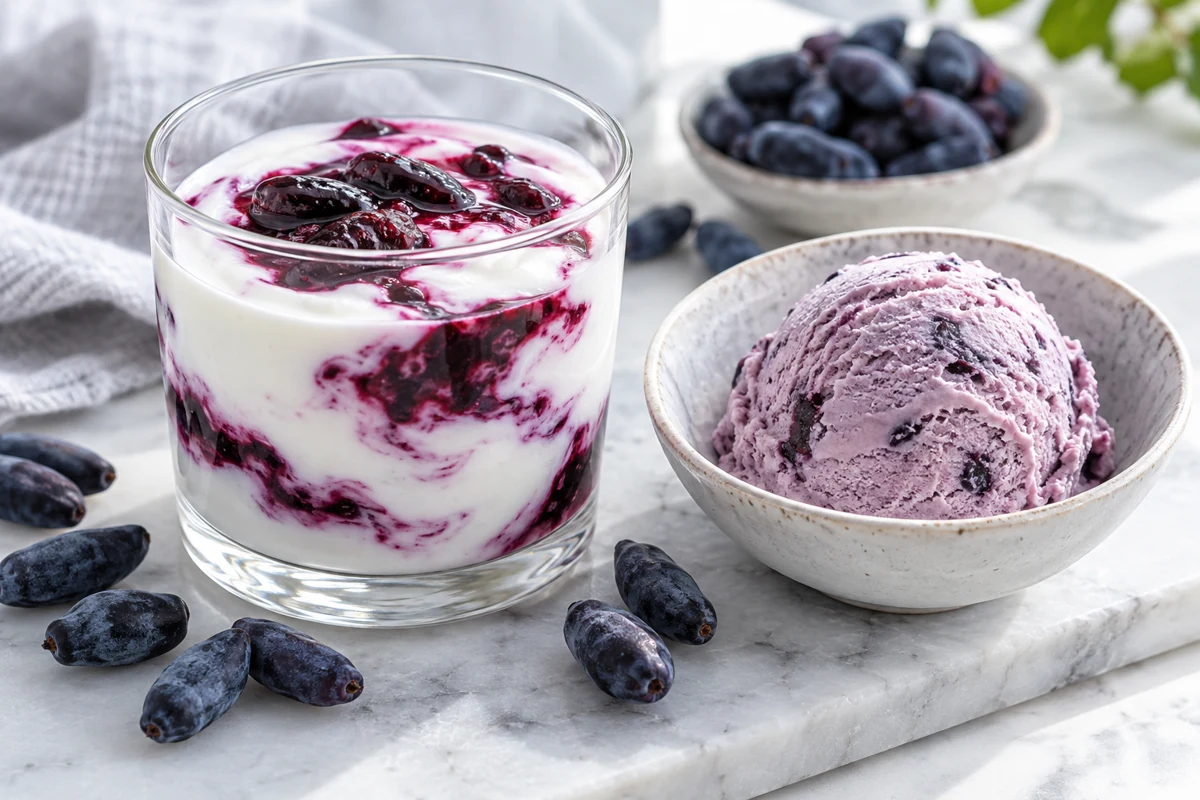
Start development with the finished food and its storage conditions. A fruit layer in chilled yogurt, a stirred yogurt and an ice cream ripple respond differently to fruit water, sugar and acidity. A spoonful that tastes balanced beside plain yogurt may become too sharp when fully mixed into a small portion, or too hard after freezing in ice cream. We recommend approving the ingredient through the actual dairy application, with a documented recipe and handling route, before converting an attractive sample into a repeat order.
Choose a fruit format for the dairy product
Whole frozen haskap offers a recognizable fruit form at the receiving stage, but it does not remain unchanged through thawing, mixing and freezing again. The thin skin and soft interior can break down, releasing deeply colored liquid. That behavior may be welcome in a puree and less useful in a yogurt cup intended to show a clean white layer. Decide whether the customer should see fruit pieces, a continuous colored dairy base or a separate ribbon of concentrated fruit.
A puree can simplify uniform mixing, but the word alone does not describe its composition or processing status. It may contain different amounts of skin and seed material, and it may be raw or processed. A fruit preparation may also include sugar, thickeners or other ingredients. Request the actual specification and ingredient declaration. The dairy formula needs to account for everything contributed by the fruit component rather than treating each kilogram of preparation as a kilogram of unsweetened whole berries.
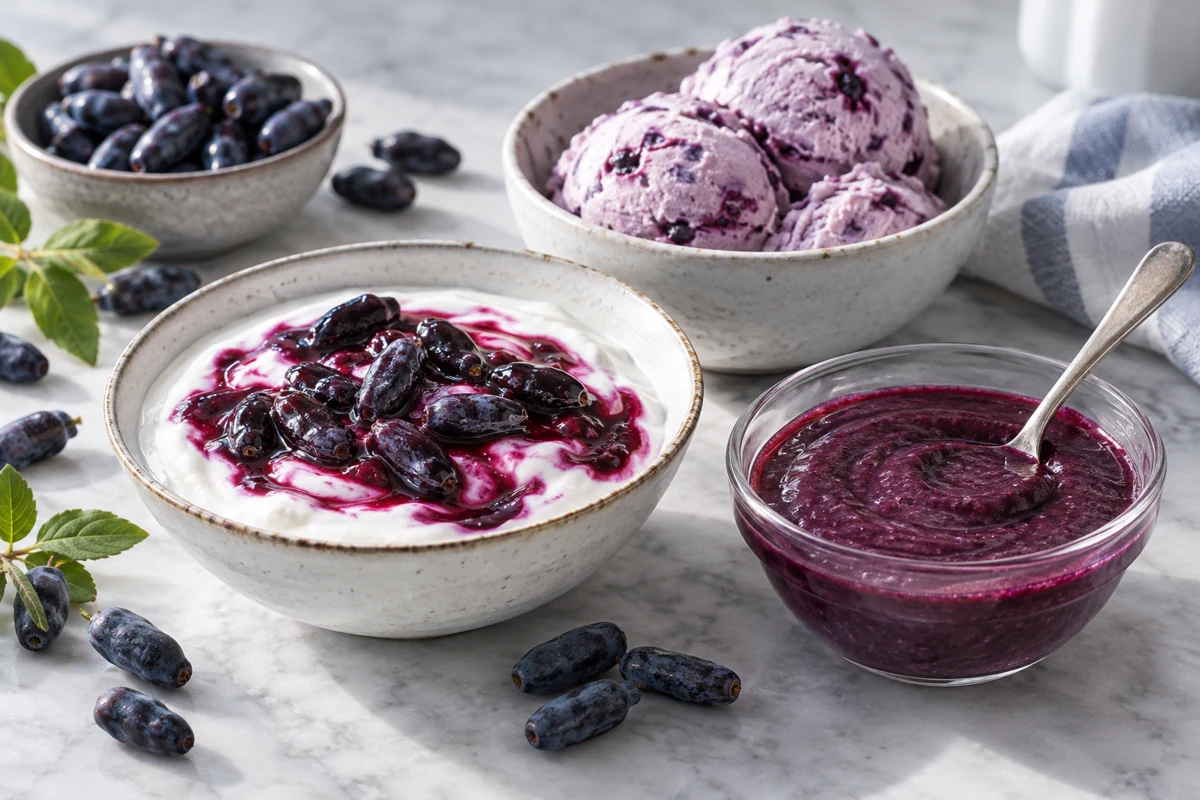
Whole fruit, smooth preparation and a finished frozen dessert illustrate format choices. Illustrative image.
Piece size matters for both eating and production. A large berry portion may create a strong burst of acidity in yogurt and a firm cold inclusion in ice cream. Smaller pieces can distribute more evenly but expose more surface and may release color more quickly. A smooth preparation removes the expectation of a whole berry, while a coarse compote deliberately retains some texture. These are useful alternatives to compare within a product concept, rather than grades that can be ranked by appearance alone.
The University of Guelph's ice cream reference distinguishes raw frozen fruit from processed forms and describes different ways fruit pieces and juice can enter production. That distinction is more useful than assuming a single addition method. The dairy processor should establish whether the fruit joins the mix before an appropriate treatment, enters through a fruit feeder, or is added as a ripple later. Each route has its own handling, composition and microbiological requirements, which must be assessed for the actual product.
Write the proposed format into the development brief. Include the desired particle character, the degree of color mixing and the point of addition. For a layered yogurt, describe the intended boundary between white dairy and dark fruit. For an evenly colored ice cream, describe the target texture and whether visible pieces are wanted. This gives purchasing and production teams a common target and helps the supplier identify what needs confirmation in the offered ingredient, without implying that every listed frozen fruit is already a prepared dairy inclusion.
| Route | Useful target | Decision to record |
|---|---|---|
| Stirred yogurt | Dispersed color and flavor | Acidity and liquid separation |
| Layered yogurt | Visible fruit boundary | Migration during chilled storage |
| Ice cream ripple | Distinct frozen ribbon | Sugar-water balance and scoop behavior |
Set the microbiological route before adding fruit
Fruit added to a dairy food after its main heat treatment needs particular attention. The finished yogurt or ice cream may be eaten without another step that can control contamination introduced by the fruit. Freezing generally does not inactivate viruses on berries, as the FDA explains in its berry safety guidance. A frozen appearance, acidic taste or clean-looking bag therefore cannot establish suitability for this route. The supplier and dairy processor need to resolve the intended use before the ingredient is approved.
Ask whether the offered fruit is raw frozen material for further processing or an ingredient specifically prepared and controlled for the proposed no-further-heat application. The answer should be supported by the relevant process and product documentation. A general certificate, an attractive sample or a broad statement about food-grade quality is not enough on its own. The responsible quality team needs to assess the scope of the evidence against the ingredient, the particular process and the destination requirements.
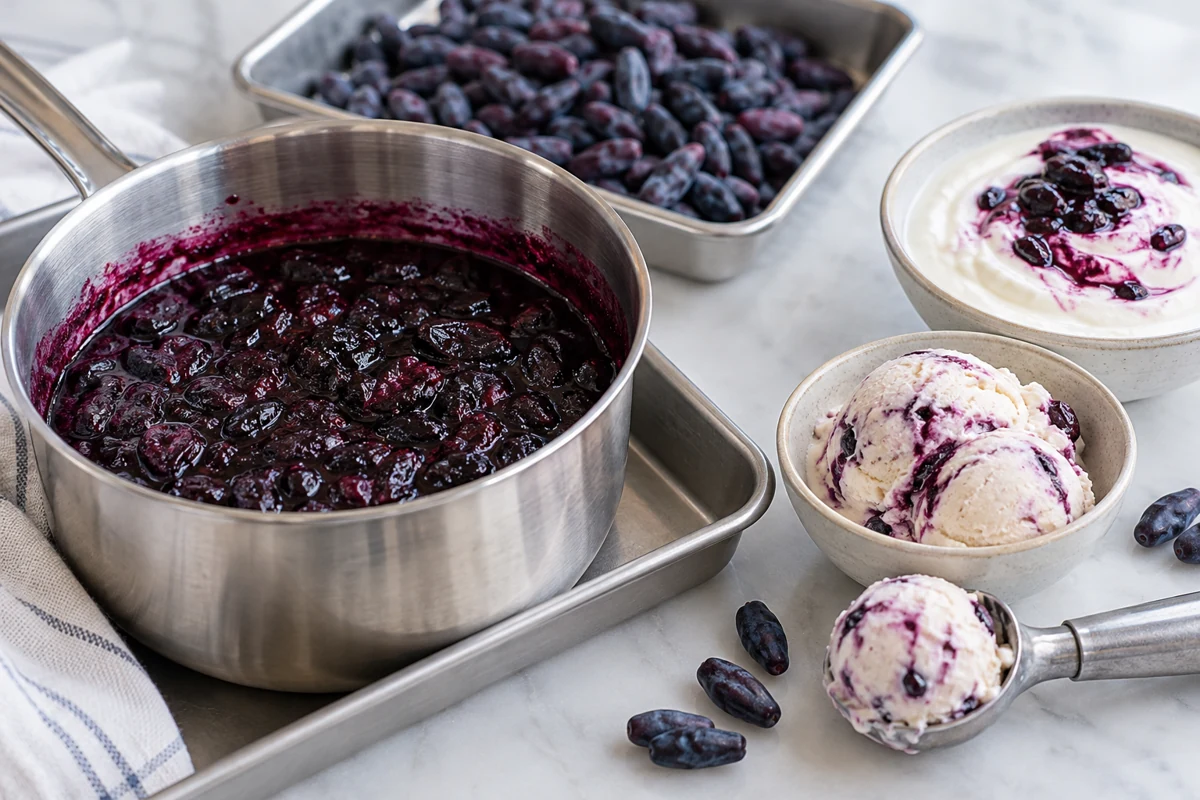
Cooked fruit preparation is a possible process stage; the image establishes no microbiological result. Illustrative image.
If the dairy producer cooks or otherwise treats the fruit in-house, that process requires an appropriate validated basis for the actual formulation and equipment. A domestic recipe that simmers berries for flavor is not automatically a commercial microbial control. The size of the batch, temperature distribution, holding conditions and later handling all matter. Keep the quality objective of softening the fruit separate from the safety objective of delivering the required control. A process may achieve one without having demonstrated the other.
After a suitable treatment, prevent recontamination during cooling, transfer, storage and dosing. The path between the fruit preparation and the dairy filler deserves the same attention as the earlier treatment. Clean equipment, appropriate separation of raw and processed material, controlled holding and clear lot identity support that path. The details belong in the site's food-safety system. This guide does not imply that a particular supplier or facility has installed a given process, performed a challenge study or achieved a specified test result.
Development samples should follow a suitable route as well. Do not taste a cold dairy trial made with an ingredient whose intended use remains unresolved. Once the responsible team has approved the material and method, sensory work can focus on flavor and texture. Record the fruit lot, preparation batch and dairy batch together so a later concern can be traced through the combined product. This makes the approval meaningful beyond a single bowl of yogurt and supports investigation if an issue appears after production or distribution.
Match acidity and sweetness to the dairy base
Haskap's tartness meets an already complex base in cultured dairy products. Plain yogurt has its own acidity, aroma and texture, while ice cream presents sweetness, fat and coldness differently. Taste the finished combination at its intended serving temperature. A fruit preparation judged alone can seem balanced yet overwhelm a mild yogurt or disappear in a rich frozen dessert. The useful sensory target describes the whole spoonful, including the proportion of fruit and dairy the customer is likely to receive.
Keep fruit dose and sweetness as separate development variables. Increasing fruit to obtain a stronger color also adds water, acidity and fruit solids. Adding sugar to soften perceived tartness changes the composition again. If both are changed at once, the trial gives little information about which factor produced the result. Establish a baseline, alter one main factor and record the complete formula. A series of small, controlled comparisons is more informative than repeatedly adjusting a large batch until it tastes pleasant.
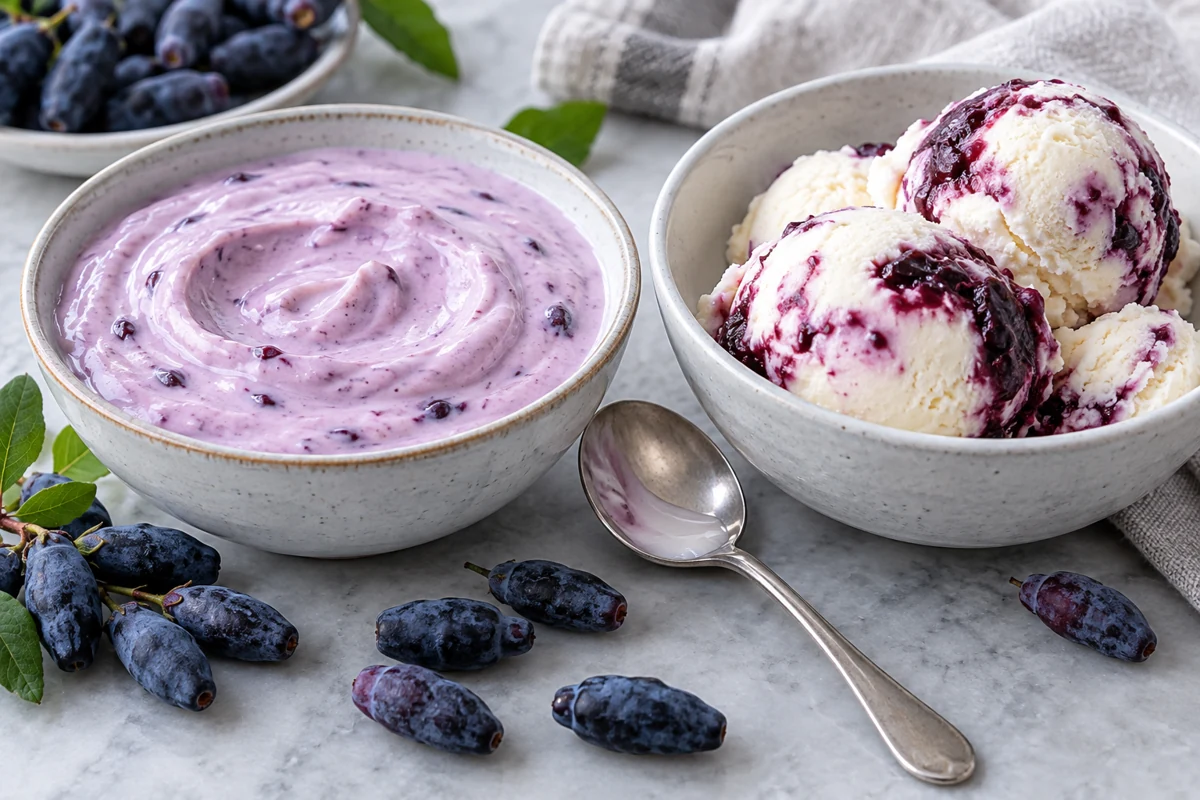
Compare tartness and sweetness in the actual dairy base at serving temperature. Illustrative image.
The dairy structure can also respond to the fruit addition. The degree of acidity, the point of mixing and the mechanical treatment may influence consistency and visible separation. A smooth chilled yogurt is not simply an empty carrier for a fruit flavor. Compare the actual dairy base, including its protein and stabilizer system where applicable, under the intended mixing conditions. A successful trial in thick strained yogurt should not be assumed to predict the behavior of a thinner drinking yogurt or another supplier's base.
Measure pH or other analytical attributes when they form part of the specification, using a defined method on the appropriate sample. Sensory tartness and measured pH answer different questions. Sugar can reduce the perception of sourness without removing the acid, and a strong purple color can make a sample seem more intensely flavored. Keep sensory notes and analytical results separate so each can be interpreted correctly. No single species-wide pH value should substitute for the actual fruit preparation and finished dairy food.
For ice cream, taste after the planned freezing and serving sequence. The mixture before freezing is useful for development but is not the final eating condition. A concentrated fruit ribbon and the surrounding dairy may deliver sweetness at different moments in a spoonful. Assess their balance together. If the product includes a topping or cone, include that serving where relevant. The aim is a repeatable flavor experience, not merely a fruit component that tastes strong when sampled on its own during production.
Control juice and serum in stirred and layered yogurt
Thawed haskap can carry a visible liquid phase, and the recipe needs to say what happens to it. Retaining all thaw juice preserves the original fruit mass balance but introduces that liquid into the dairy system. Draining changes the fruit-to-liquid ratio and can reduce usable yield. Either route can be evaluated, provided it is deliberate and recorded. A changing drainage practice can make two yogurt batches differ even when they use the same fruit dose written on the production sheet.
For a stirred yogurt, examine how the fruit disperses and how much mixing is needed to achieve the desired appearance. More mixing may break fruit pieces and alter the dairy structure. A uniformly violet yogurt and a white yogurt with visible fruit streaks need different mixing endpoints. Specify the intended appearance and evaluate representative portions from the beginning and end of a trial run. A single sample taken from the top of a bowl may not show whether the fruit is distributed evenly throughout the batch.
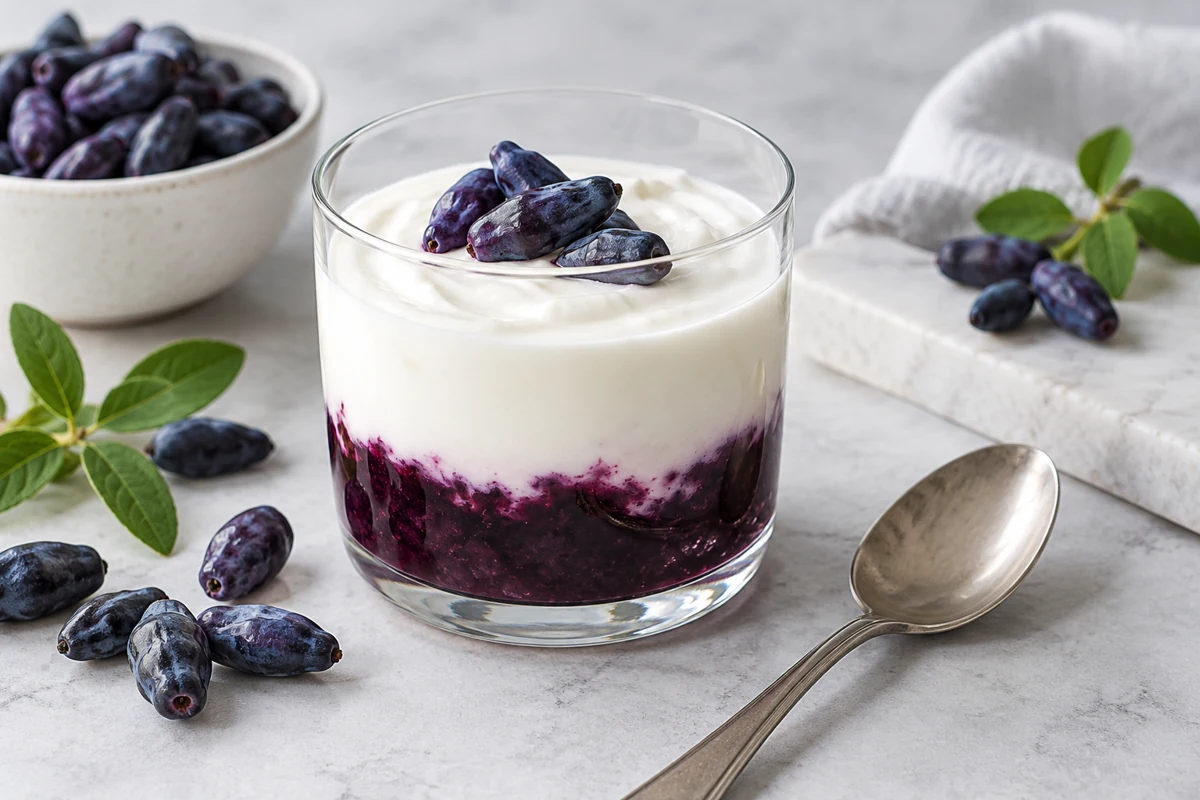
A visible fruit layer helps focus evaluation on the boundary and any liquid separation. Illustrative image.
Layered yogurt adds another set of decisions. The fruit preparation must deposit consistently, remain where intended and give a useful ratio of fruit to dairy in a normal spoonful. A beautiful boundary immediately after filling may change during storage as liquid and color move between phases. Evaluate the filled cup after the expected hold, using the actual container where possible. The side view is informative, but it should be accompanied by a spoon test that reflects how the customer will eat it.
Visible liquid separation needs interpretation. It can relate to the dairy base, fruit water, formulation, mechanical handling or storage conditions. Do not assume every purple liquid ring is simply berry juice or every clear pool is a fruit defect. Compare a control made from the dairy base alone with the fruit-containing trial when that helps identify the source. Keep conditions comparable and record the result. This is a proposed development approach, not evidence that any particular commercial yogurt has been tested.
Thickeners and stabilizers should be selected within the complete formulation, with attention to the desired label and process. Adding more of one ingredient may reduce visible separation while producing an unpleasant gel or sticky fruit phase. Evaluate the whole spoonful and the behavior over the intended shelf life. If the product concept changes from stirred to layered yogurt, revisit the fruit preparation rather than merely changing the filling sequence. The desired viscosity, piece structure and color movement can differ enough to require a distinct approval standard.
Balance fruit water and sugar in ice cream
Fruit contributes water and solids to ice cream, so it changes more than flavor. A large addition of unsweetened puree can dilute the original mix and alter the proportion of fat, milk solids and sugars. A heavily sweetened fruit preparation contributes a different balance. The developer should calculate the complete formula and test it under the intended freezing conditions. Subtracting an arbitrary amount of cream to make room for fruit can disturb several structural relationships at the same time.
Sugar also influences frozen texture. A preparation designed as a chilled sauce may become too hard, too icy or too soft when used in a frozen dessert. Different sugars and solids systems do not have identical effects, so equal sweetness does not guarantee equal behavior in the freezer. The formulation team should use appropriate ingredient information and trials to establish the mix. A generic recipe ratio cannot predict the texture of every haskap ice cream made with a different fruit preparation or dairy base.
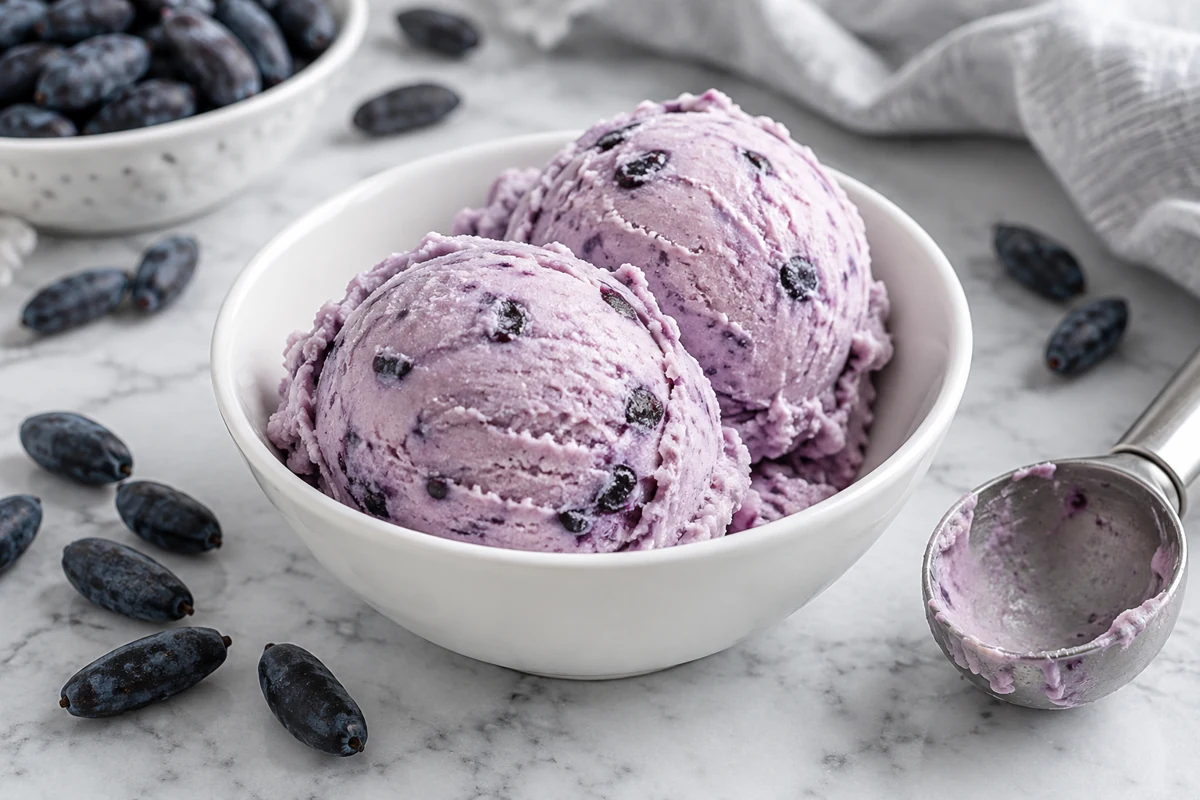
Scoop texture is judged after hardening and storage in the actual formula. Illustrative image.
Whole or large fruit pieces need their own assessment at serving temperature. A soft thawed berry can become a firm cold inclusion after the finished dessert is frozen. The desired eating quality may call for smaller pieces or a preparation designed for frozen use. Do not assume that the fact a fruit is pleasant in chilled yogurt makes it suitable as the same inclusion in ice cream. Compare the bite, distribution and temperature behavior in the final frozen product.
Keep freezing, hardening and storage conditions consistent while comparing recipes. Otherwise, changes in ice crystal development or serving temperature may obscure the effect of the fruit. Record the time and conditions of each assessment, and use portions handled in the same way. A sample scooped soon after churning can seem softer and smoother than the product after normal hardening and distribution. The approval should describe the stage that matters to the customer and the range of conditions the product is expected to encounter.
An application trial should also examine melting behavior and the relationship between the fruit phase and dairy phase as the dessert warms during eating. A well-colored scoop can release a watery fruit puddle or leave a dense ribbon behind. Those observations may guide formulation or processing changes, but they need to be made under consistent conditions. Keep the sensory target concrete: smooth dairy, manageable fruit bite, balanced tartness and a coherent melt. Avoid turning an illustrative photograph into a claim that a supplied ingredient has achieved those outcomes in testing.
Build a ripple that survives freezing and serving
A ripple is intended to remain distinct within the dairy rather than disappear into it. Its viscosity at addition, its sugar and solids composition, the mixing action and the later freezing conditions all affect that distinction. A dark fruit sauce that looks attractive poured over a scoop may spread too widely when folded into a tub. Treat a topping and an internal ripple as separate applications until the formulation has shown that it can perform both roles.
Begin with the intended ribbon size and fruit-to-dairy ratio. A fine swirl gives a different eating pattern from broad bands of concentrated fruit. Decide whether every spoonful should contain fruit or whether the contrast between plain dairy and tart ripple is part of the concept. The dosing method needs to reproduce that pattern without overmixing. In a small trial, record the sequence and amount of folding. In production, assess the actual dosing equipment and the distribution through representative containers.
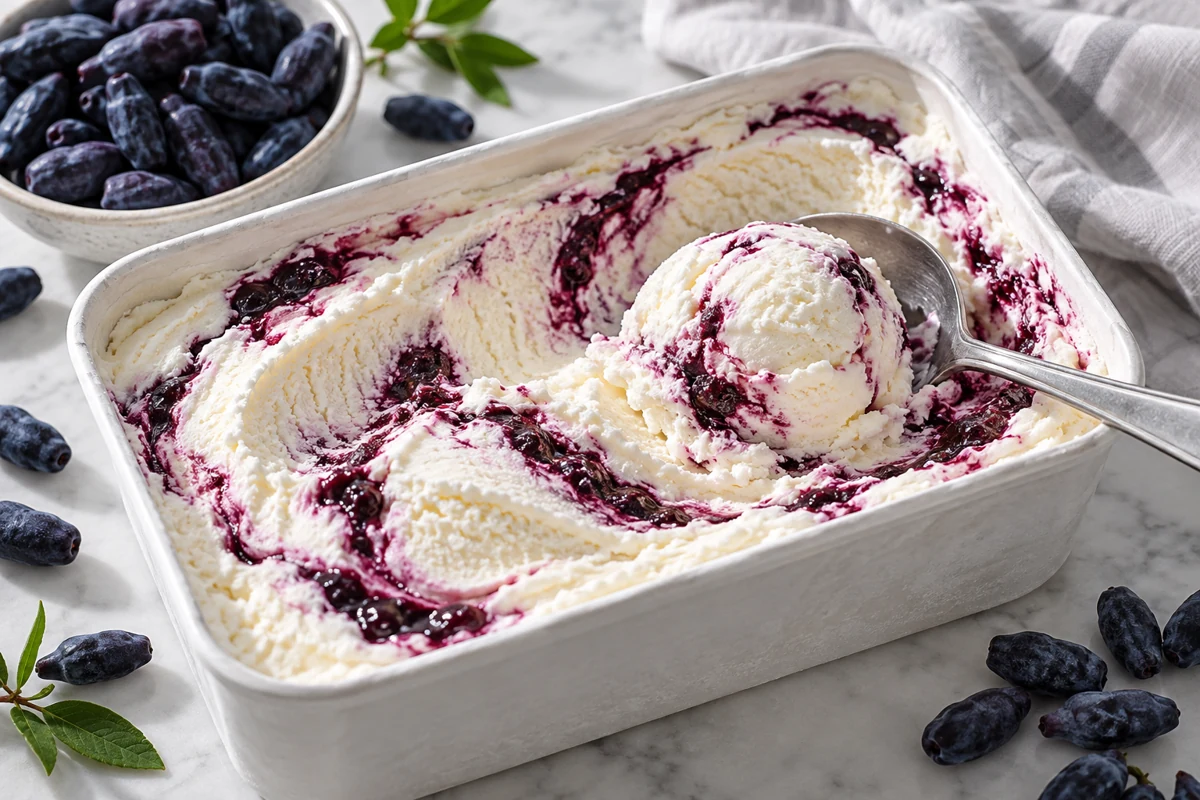
A distinct fruit ribbon needs a different balance from fruit blended through the base. Illustrative image.
The ripple should be evaluated at its actual addition temperature and at the later serving temperature. A preparation can flow neatly while chilled yet become excessively firm when frozen, or remain so soft that it bleeds through the surrounding ice cream. Neither behavior can be judged from room-temperature thickness alone. The formulation needs to account for the relevant sugars, water and other solids, while the process needs to deliver the intended distribution. Changing one without recording the other makes troubleshooting difficult.
Look at the cut or scooped product after hardening and again after the relevant storage interval. Check whether the ribbon remains recognizable, whether its edges diffuse, and whether liquid or color migrates in an unwanted way. Use consistent photographs and serving conditions as practical records. If the specification requires measured color or texture, agree on the method separately. A bright purple line in a promotional image cannot establish the stability of an actual ripple across the finished product's shelf life.
The microbiological route remains important because ripples are often added after the main dairy treatment. The fruit preparation and the equipment used to introduce it must be suitable for that stage. A change to the ripple formula or supplier should therefore receive both formulation and food-safety review. The same applies when a kitchen-made sauce is proposed for commercial filling. The development team can preserve the desired tart contrast while ensuring that the ingredient's processing history and handling controls fit the point where it enters the ready-to-eat product.
A repeatable application review
- Confirm the intended addition point and microbiological route.
- Record fruit solids, sugar, acidity and use level in the formula.
- Prepare the yogurt or ice cream under its established process.
- Evaluate the packed product after realistic chilled or frozen storage.
Approve the haskap ingredient in the finished dairy food
Confirm identity before performance. The supplier's market name and a photograph of bulk dark berries do not independently authenticate the edible species, cultivar or treatment. Request the records needed for the ingredient and destination market, and make sure the finished label follows the verified identity. This is particularly relevant when a less familiar fruit is introduced to an established dairy range. A promising purple color should not allow an unresolved identity question to pass into a commercial approval.
The incoming specification should describe the form, ingredients, particle character, relevant analytical attributes and microbiological intended use. Whole frozen fruit for further processing and a prepared inclusion for addition after dairy treatment need different evidence. State the buyer's route clearly so the supplier can respond to the actual requirement. Where a release report or certificate is requested, check its scope, date, product and lot relationship. A document with a familiar title is useful only when it answers the question being asked.

Existing GreenLand product-page photograph: visible bulk berry form only. Confirm botanical identity, lot specification and suitability for the intended process separately.
Approve the sample in the intended dairy base, using a recorded dose and process. For yogurt, evaluate distribution, tartness, texture and separation after the relevant chilled hold. For ice cream, include the freezing, hardening and serving sequence and examine any fruit pieces or ripple. These are trial criteria proposed for the buyer's project, not claimed GreenLand-food test results. Keep a clear distinction between a sample that suggests a promising formulation and one that has completed the customer's required validation program.
Packing should support clean, controlled handling and predictable dosing. Discuss pack size, closure, lot identification, storage instructions and the period permitted after opening or thawing under the approved process. A large bulk pack may suit a continuous production run but create unnecessary handling for a small dairy kitchen. Confirm available formats, quantities, lead times and shipment requirements for the actual order. Private-label projects also need agreement on ingredient naming, destination language and the documents required before production and dispatch.
Send GreenLand-food the dairy product type, target fruit form, addition stage, expected volume and destination together with the specifications your quality and development teams use. Explain whether the fruit receives a further validated treatment or must arrive suitable for a no-further-heat route. Those details let the supply discussion focus on the evidence and application that matter. A repeatable haskap dairy product begins with an identified ingredient, an appropriate process and a finished-food trial that reflects what the customer will actually receive and eat.
Related reading
What to Do With Frozen Blueberries
Review blueberry baking and dairy routes as a comparison framework, without assuming identical haskap performance.
How to Ensure Frozen Fruit Quality: From Field to Your Warehouse
Connect the application trial to incoming lot records, packaging and a defined acceptance method.
Source frozen haskap berries with GreenLand-food
GreenLand-food is a professional frozen haskap berries supplier and manufacturer in China, providing factory-direct wholesale supply for importers, food manufacturers, foodservice distributors, and private-label programs.
Send the intended preparation, fruit form, packing, quantity and destination. Confirm the botanical identity, agreed specification, microbiological route and documents for the actual SKU before approval.