


Prepared Burdock Side Dishes: Strip Breakage and Portion Weight After Reheating
Oct 19, 2026
Leave a message

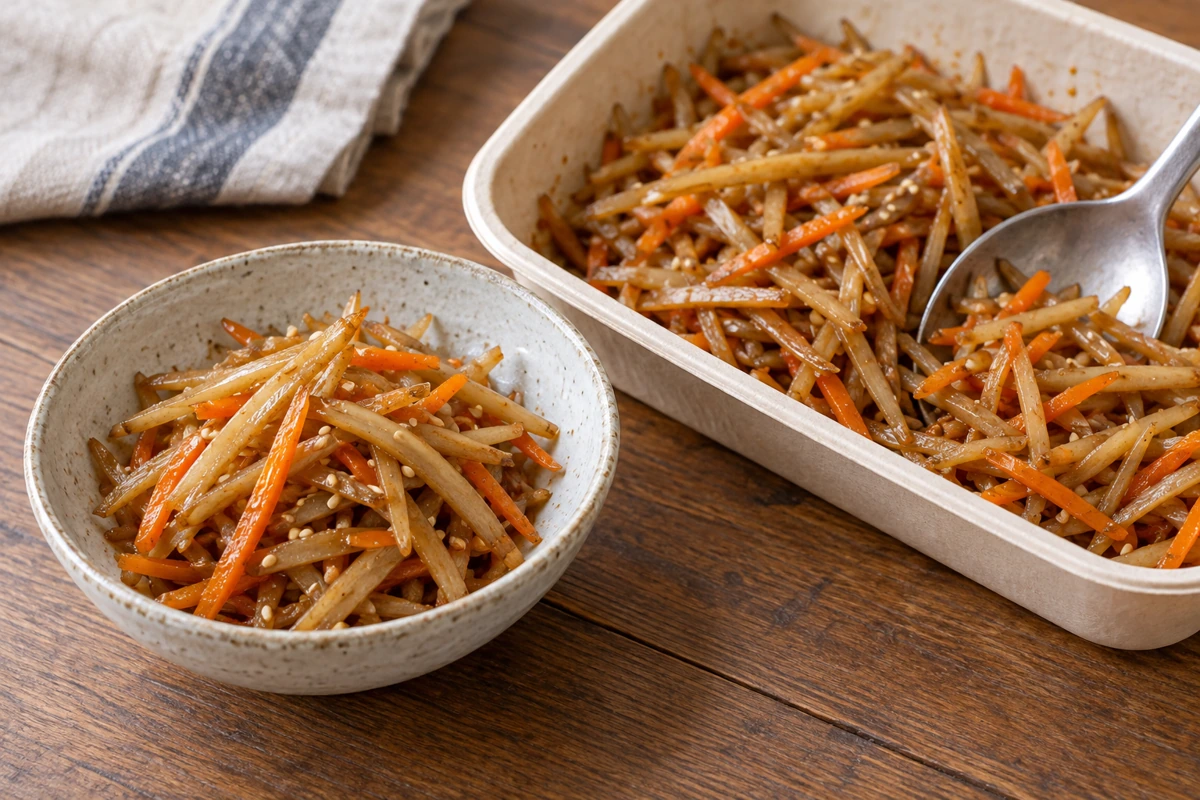
For kinpira-style burdock, two results deserve separate records: whether recognizable strips survive normal handling, and whether the served portion has a consistent mass and composition. A heavier portion may contain more sauce rather than more burdock. A smaller-looking portion may hold the same mass in shorter, more compact pieces. Measuring both structure and portion basis gives a buyer a better explanation of performance than a single cooked-yield percentage.
Define the side dish at the point of service
Start by describing what the customer is expected to receive. A warm bowl of glossy burdock and carrot differs from a chilled accompaniment, a microwave tray or a component reheated within a mixed meal. The serving temperature, container and utensil influence what the diner sees and feels. They also determine the stage at which portion mass and strip condition should be assessed. A result measured at the kettle cannot automatically stand in for the final serving.
Clarify whether the purchased product is plain frozen burdock or a finished seasoned side dish. With a plain ingredient, the kitchen controls the recipe and first cooking stage. With a prepared dish, the formulation and previous processing may already determine much of the behavior during reheating. The specification and label should identify that status. Calling both products frozen burdock can hide the difference between cooking an ingredient and reheating an assembled food.
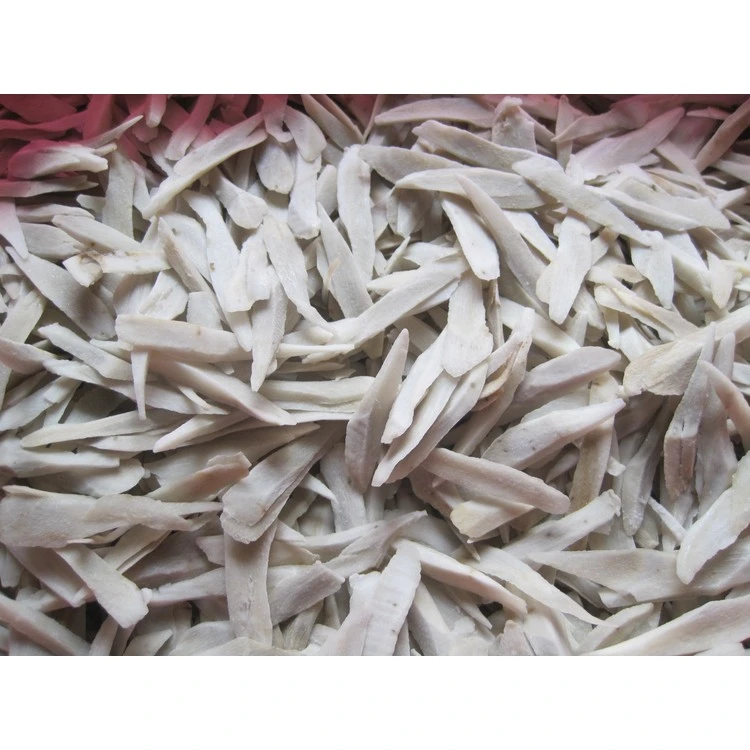
The product reference shows irregular oblique burdock strips; agree the cut distribution needed for the dish.
Kinpira recipes commonly combine burdock with carrot and a savory seasoning. The original Japanese Kitchen recipe is one example of a dish developed for ordinary meals and bento use. Such recipes establish culinary context, but their serving counts do not provide a commercial portion standard. A manufacturer or caterer needs its own defined formulation, fill basis and handling method to assess repeatability.
Decide what counts as an acceptable strip in the finished product. Length can be important to the visual identity of a side dish, but the pieces must still be comfortable to eat. A long strand that tangles around a serving utensil may complicate portioning. A high proportion of fragments may make the food look compact and lose the intended character. The target should reflect the dish's actual presentation rather than an assumption that maximum length is always desirable.
Keep the serving description connected to the pack description. If a label refers to a portion of the complete dish, the mass includes the components defined by that product. If an internal development measure refers to drained vegetable solids, it is a different basis. Both can be useful, but they should not share an ambiguous label such as yield. Clear names allow purchasing, production and foodservice staff to compare the same result.
The service setting determines which variation matters most. A restaurant plating a small accompaniment may judge the visible strip arrangement closely, while a factory filling identical meal compartments may be more concerned with reliable transfer and mass. Explain that context in the trial brief. It helps the team choose useful observations and prevents an attractive hand-plated sample from becoming an unrealistic standard for routine mechanical filling.
Trace where burdock strips become shorter
Strip breakage is best investigated as a sequence. Begin with the supplied frozen cut, then observe the product after first cooking, mixing, filling, reheating and normal serving. A large change between two stages identifies where to look more closely. Without those observations, a final bowl containing short pieces can trigger a complaint against the ingredient even when most of the additional damage occurred during transfer or portioning.
The incoming form matters. Burdock strips may be irregular oblique cuts rather than identical rectangular matchsticks. Record the approved form before defining a fragment. A tapered piece that is normal for the product should not suddenly become a defect because a later reviewer imagines a different cut. Use a reference that shows representative acceptable pieces and explains how short or broken material under the agreed definition is distinguished.
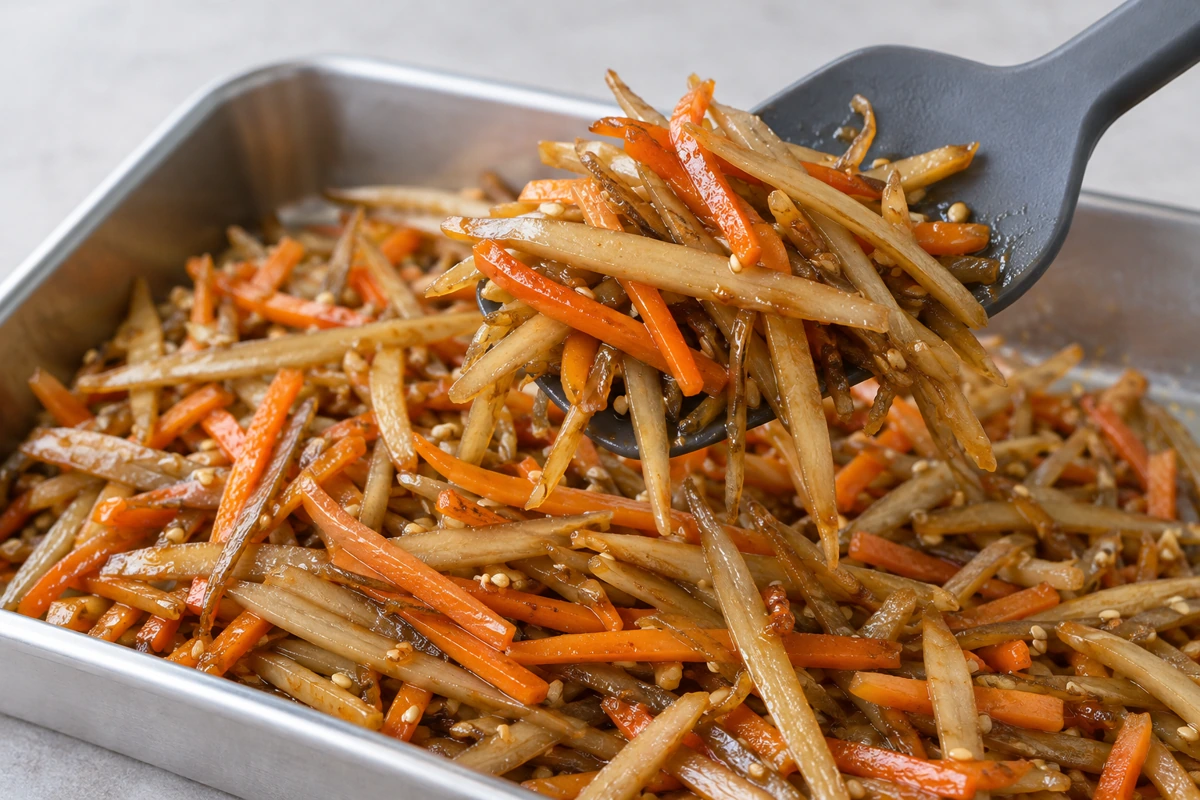
Observe the strip condition during lifting and serving as well as before cooking.
Mechanical handling becomes more consequential once the food softens. Repeated stirring, scraping against a vessel, pressing into a scoop or pushing through a narrow transfer point can alter the pieces. A gentle small-pan trial may not represent the forces applied during a larger batch. Observe the actual utensil and movement used at each stage. The aim is to understand the process, not to create an unrealistically delicate handling method that ordinary service cannot reproduce.
Compare like with like when counting or weighing fragments. If the frozen sample is assessed by piece count and the reheated dish is assessed by mass, the two percentages do not directly describe an increase. A sauce-coated fragment may also be harder to separate consistently than a plain strip. Agree a suitable method and retain it through the comparison, or clearly explain why the stage-specific observations use different bases.
A practical development trial may use photographs of spread samples before and after the relevant handling step, alongside a simple defined fragment measure. The photographs show changes in appearance while the measure estimates their extent. Neither alone proves the precise cause. If a change appears after transfer, repeat that step under controlled conditions and compare the result. This narrows the investigation while preserving the possibility that cooking softness and mechanical force interact.
Do not try to reconstruct breakage solely from the average final length. If long pieces split into several fragments, the number of pieces changes as well as the length distribution. A count-based result can therefore move in a way that differs from the mass of short material. Select the measure that answers the practical question, retain its definition and explain the limitation when comparing different stages.
Compare reheating methods using the same dish
Reheating methods expose the prepared food to different combinations of moisture retention, evaporation and movement. A covered container may retain more liquid than an open shallow pan. A pan requires turning or stirring that can alter strip condition. A microwave process can vary with portion depth and placement. These differences make a method comparison worthwhile, but each trial must follow the product's instructions and the operation's applicable safety controls.
Use the same prepared batch as the starting point where the trial design permits it. Divide it consistently into the intended containers and record fill mass, depth and initial condition. If one method receives a shallow portion and another receives a deep mass, the result reflects both method and geometry. That can be a valid comparison of real service options, but it should be described accurately rather than presented as an isolated equipment effect.
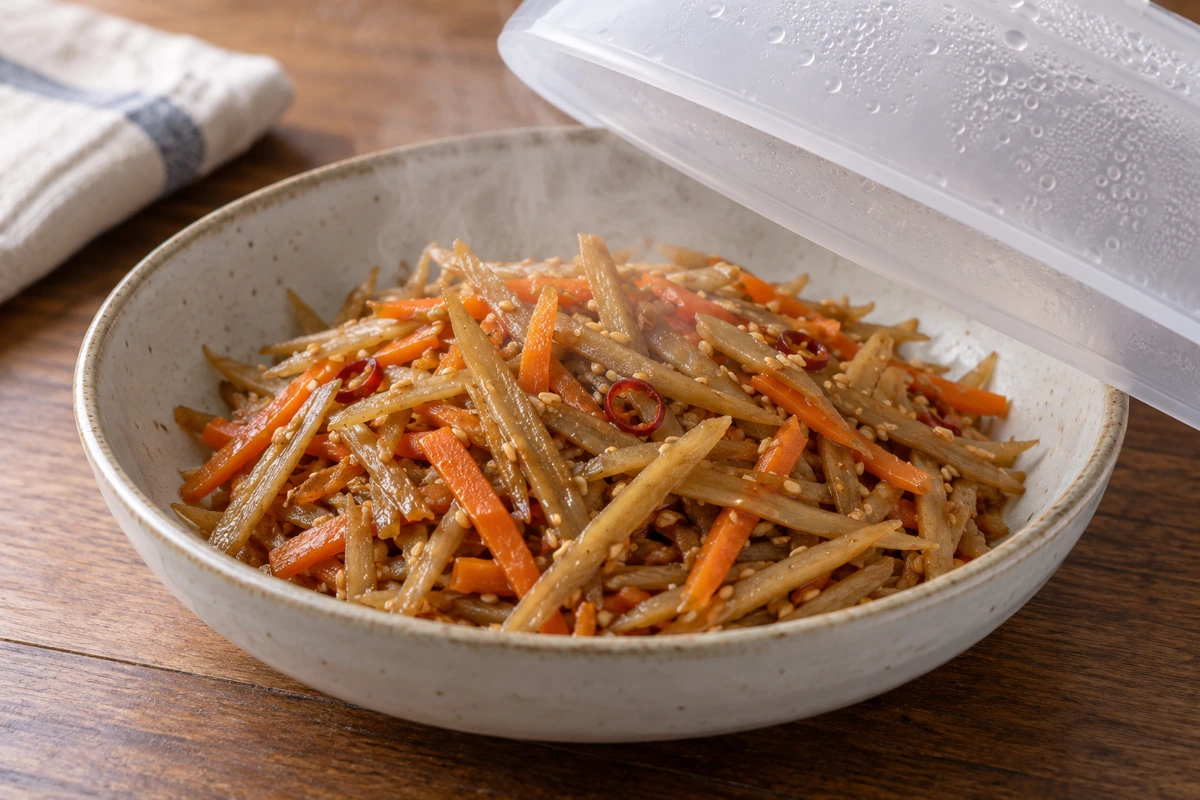
A covered reheating dish can retain visible condensation around the prepared food.
For each method, record what actually happens to the food. Note free liquid, coating, visible strip condition and whether the finished portion has the desired bite. Keep the required reheating endpoint separate from a sensory judgment that the food seems warm or tender. A method can satisfy its cooking instruction and still produce a poor texture; a pleasant-tasting sample does not by itself prove that all required reheating conditions were met.
Evaluate the food after the normal transfer to its serving vessel. Some liquid may remain in the reheating container, and some strips may cling to the utensil. A method that looks efficient when the whole heated container is weighed can provide less usable food at the plate. Include the ordinary rest, mixing and transfer steps in the protocol so that the measurement reflects service rather than an idealized recovery of every gram.
If the dish will be eaten over an interval, assess the relevant end of that interval as well. A portion can appear evenly coated immediately after heating and later release liquid around the strips. Another can dry at the exposed surface while the center stays moist. Record the observed change under the actual intended conditions. Do not infer a general storage or holding limit from a single texture trial; those use conditions require their own appropriate basis.
A reheating comparison should include the effort needed to make each option work. One route may require more stirring, a different container or a smaller batch to reach an acceptable result. Record those practical requirements alongside the food observations. A method that succeeds only with exceptional attention may be unsuitable for the intended service operation even if its best trial photograph looks excellent.
Measure portion weight on a stated basis
Several masses can be relevant to one prepared side dish. There is the purchased ingredient mass, the total recipe input, the mass after initial cooking, the packed mass, the mass after reheating and the mass transferred to the serving dish. Each answers a different operational question. A cost calculation should identify which one it uses and avoid calling them all product weight. The same discipline is needed when comparing two ingredient suppliers.
For a serving measurement, tare the actual bowl or container and weigh the food under a defined transfer method. State whether the portion includes all accompanying sauce or whether it is taken with a draining utensil. A slotted spoon can leave liquid behind, while an ordinary spoon may carry it into the serving. Even with the same nominal scoop, the food can settle or compress differently as strip length and moisture change.
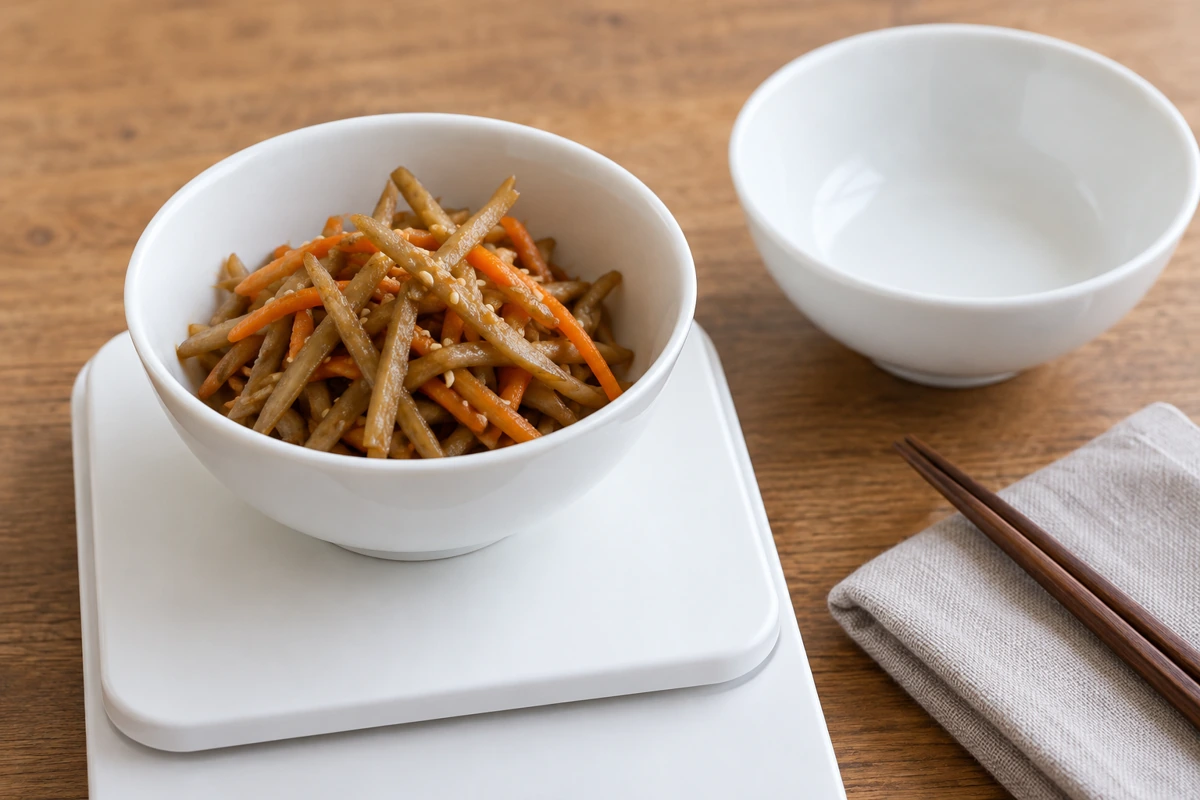
The serving bowl and scale illustrate a portion-mass check; the weighing basis must be defined separately.
Consider a hypothetical trial. A kitchen places 1,000 grams of prepared burdock side dish into a reheating container. After the defined heating and transfer, 930 grams are available for serving. On that stated basis, usable transferred yield is 93 percent. If the agreed serving is 60 grams of the complete dish, the recovered mass provides 15 full portions with 30 grams remaining. These figures illustrate a calculation; they are not a product guarantee, tolerance or measured GreenLand result.
That example still leaves a composition question. If the transferred dish contains a different proportion of sauce from the development reference, the same 60-gram serving may deliver a different amount of vegetable. Where vegetable content matters to the product brief, record it using a suitable agreed method. A drained-solids measure can help answer that question, provided its draining procedure is defined. It should not be confused with the gross serving mass declared for the finished dish.
Replicate ordinary portions across the batch. Take servings from the beginning, middle and end using the normal mixing practice, and record both mass and appearance. If long strips collect around the utensil or sauce accumulates near the bottom, the pattern may become visible. The average alone can conceal that variation. A consistent serving operation needs acceptable portions throughout the batch, not merely a satisfactory total mass divided by a nominal number of bowls.
For cost comparison, keep total recipe recovery and ingredient-specific recovery separate. Carrot, sauce and added water contribute to the finished mass, so the complete dish cannot reveal the retained burdock mass without an additional defined assessment. Use the gross serving calculation for meal cost and an appropriate component measure when the question concerns vegetable content. Clear labels prevent one useful number from being used to answer the wrong question.
Follow sauce and moisture through reheating
Sauce changes the interpretation of nearly every yield result. It adds mass, coats the strips and can collect as free liquid. During reheating, water may evaporate, remain trapped in a covered container or move into the surrounding liquid. The final appearance depends on the recipe as well as the heating method. A visible pool is therefore an observation to investigate, not automatic proof of excessive water in the frozen vegetable.
Keep the formulation stable while comparing ingredients. Measure the burdock, carrot, seasoning and added liquid on the same basis for each trial. If one sample is drained before cooking and another is used with all its released liquid, the recipe has changed even when the nominal burdock weight is identical. Record that choice. Otherwise a difference attributed to the supplier may actually arise from the way the kitchen prepared the sample.
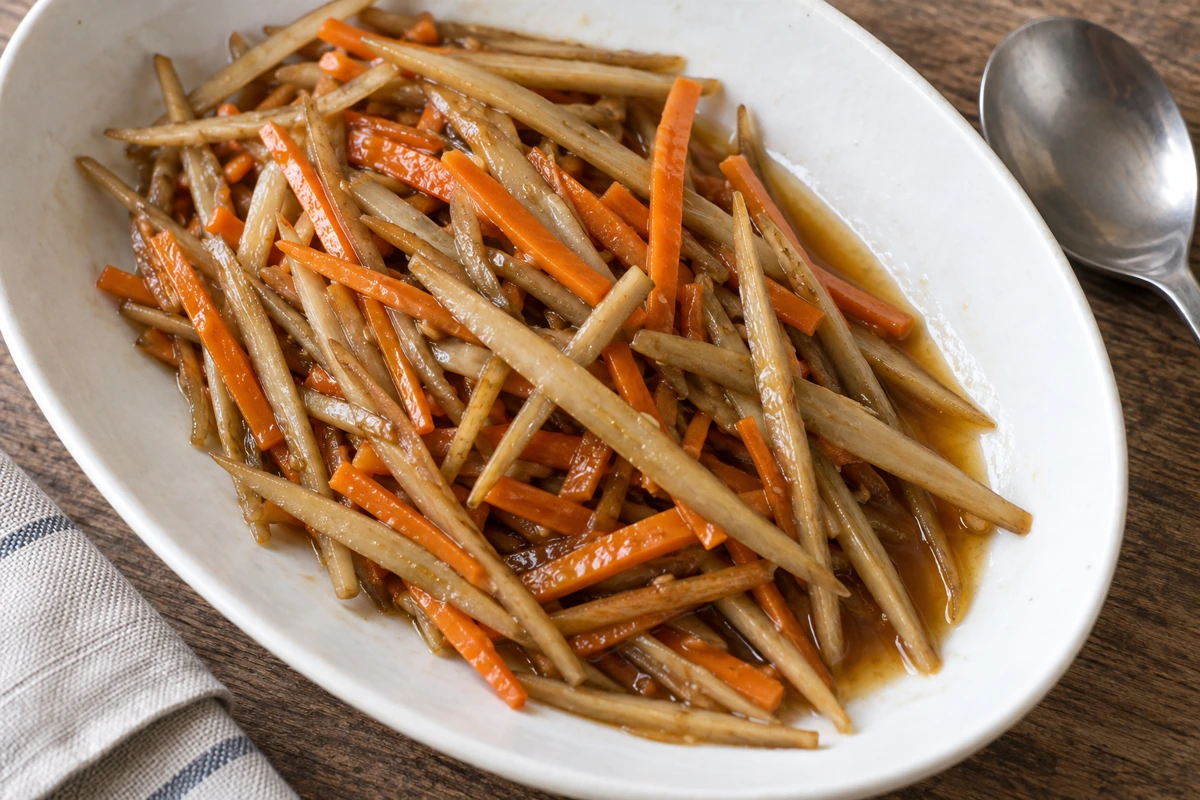
Free sauce collects beside the strips, showing why total dish mass and vegetable content are different measures.
Observe sauce distribution after the normal standing and serving steps. A coating can appear satisfactory in a warm pan yet separate on the plate. Conversely, a sauce that looks slightly loose before reheating may reach the desired condition after an open-pan finish. Assess the stage that matters to the customer and retain earlier observations to explain how it was reached. This is more informative than choosing the most attractive moment in the process for the approval photograph.
Strip structure and sauce retention can interact. Smaller pieces may pack more closely together, changing how a scoop carries liquid. Longer strips can bridge across a utensil and allow sauce to drain away. These are hypotheses that can be checked in the actual dish, not universal numerical rules. A useful trial records the observed portion behavior and then changes one relevant factor to see whether the pattern persists.
Flavor should be assessed alongside mass. Evaporation can concentrate seasoning while reducing weight; retained liquid can increase mass while making the coating taste weaker. A purchasing decision based only on the highest recovered mass may therefore reward the wrong result. Compare usable portions that meet the same flavor, texture and appearance requirements. The appropriate commercial question is what it costs to deliver the agreed side dish, including the practical handling needed to make it consistent.
The transfer utensil should be included in the trial description. A broad spoon, slotted spoon and tongs can carry different proportions of strips and liquid, particularly as the pan empties. If the serving tool changes, repeat the relevant portion check. The product may be consistent while the transfer method creates a new variation that would otherwise be mistaken for an ingredient problem.
Set a small repeatable acceptance trial
A proposed trial should be simple enough that the supplier and buyer can understand what it measures. Identify the ingredient lot, recipe, preparation state, cooking method, container, reheating route and serving procedure. Choose observation points that answer the actual concern. If the complaint is breakage during service, measuring only frozen cut length will be insufficient. If the concern is portion cost, a photograph of the final bowl will not establish the usable mass.
Use a retained reference where appropriate and prepare it under the same relevant conditions. The reference should have a known identity and handling history. An old cooked sample stored under different conditions may be a poor comparator for a new frozen ingredient. If a physical reference is unsuitable, a clearly documented previous method and result can still guide the trial, but its limitations should be recognized when making a final decision.
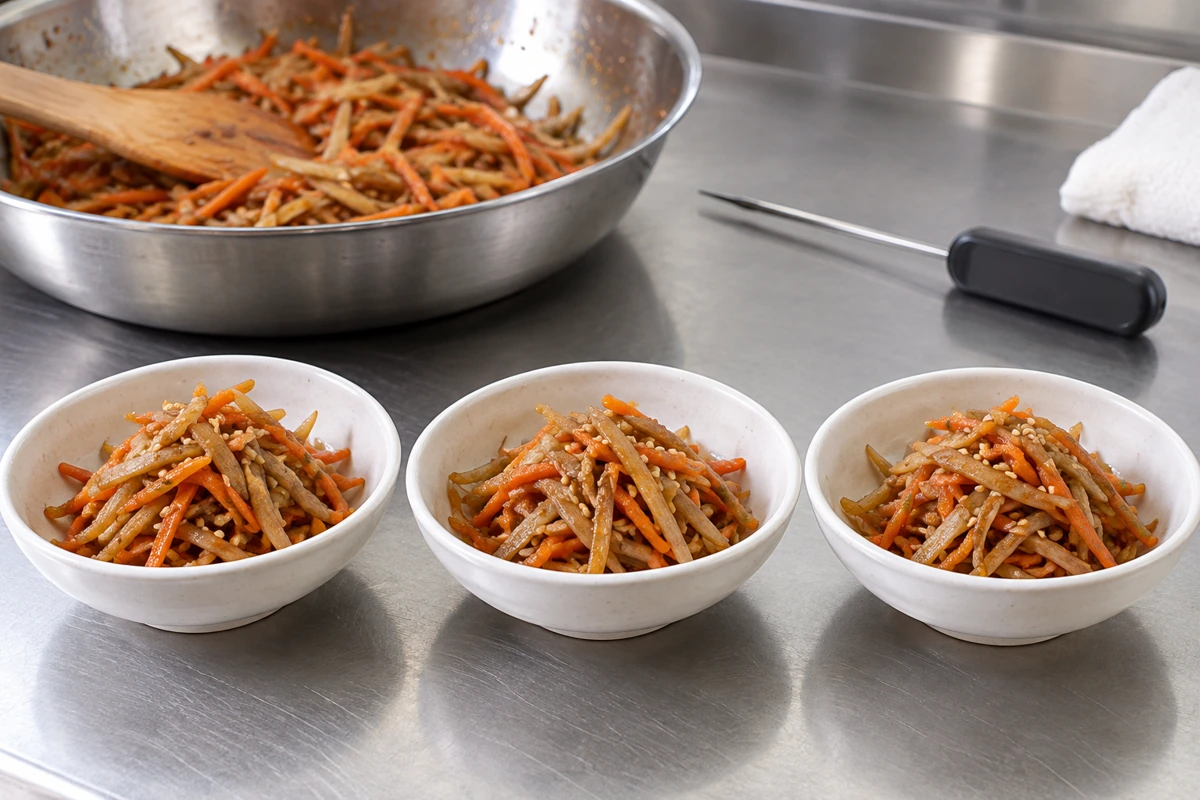
Several ordinary portions help reveal variation that a single attractive serving can miss.
Record observations before assigning pass or fail. Describe the strip appearance, tenderness, free sauce, transferred mass and variation between ordinary portions. Then compare those results with the agreed requirements. This order reduces the temptation to explain every observation in favor of an expected conclusion. It also gives the supplier specific information to respond to if a sample needs adjustment or a lot requires further investigation.
A paired trial can help distinguish ingredient and process effects. Prepare two comparable portions from the same batch and vary the handling step under investigation while holding the rest reasonably steady. For example, compare the normal stirring practice with a gentler but operationally realistic movement, or compare two approved serving utensils. If several variables change at once, the trial can still identify a better overall method, but it cannot isolate a single cause.
Acceptance limits belong to the product agreement. There is no universal allowable breakage percentage or reheated yield that fits every burdock side dish. The requirement depends on its presentation, customer expectation and manufacturing route. Establish the method, review representative samples and agree the limits with the relevant parties. Keep the evidence of that decision with the specification so that later receiving staff can understand why a particular result is acceptable or requires action.
Keep photographs of normal portions as well as deliberately spread inspection samples. A spread sample makes short pieces easier to see, while the normal bowl shows whether that distribution affects the customer experience. Neither should replace the other. Linking the two views can help a buyer avoid imposing a stricter cut limit that changes cost but produces no meaningful improvement in the served food.
Buy the ingredient around the finished portion
A frozen burdock quotation becomes more useful when it includes the final application. Explain whether the strips will become a kinpira side dish, a refrigerated accompaniment or a frozen meal component, and describe the later reheating route. State what the served portion should look and feel like. This gives the supplier context for cut length, cross-section, core condition and the tolerance for short pieces, rather than asking for an undefined premium grade.
The GreenLand-food burdock supply page presents plain root strips as the reference form. A prepared seasoned side dish is a separate product requirement and should be confirmed explicitly if it is what you intend to buy. Ingredient declaration, processing status and packing must match that request. A photograph of a finished kinpira application illustrates a use of burdock; it does not establish that the pictured prepared meal is the supplied SKU.
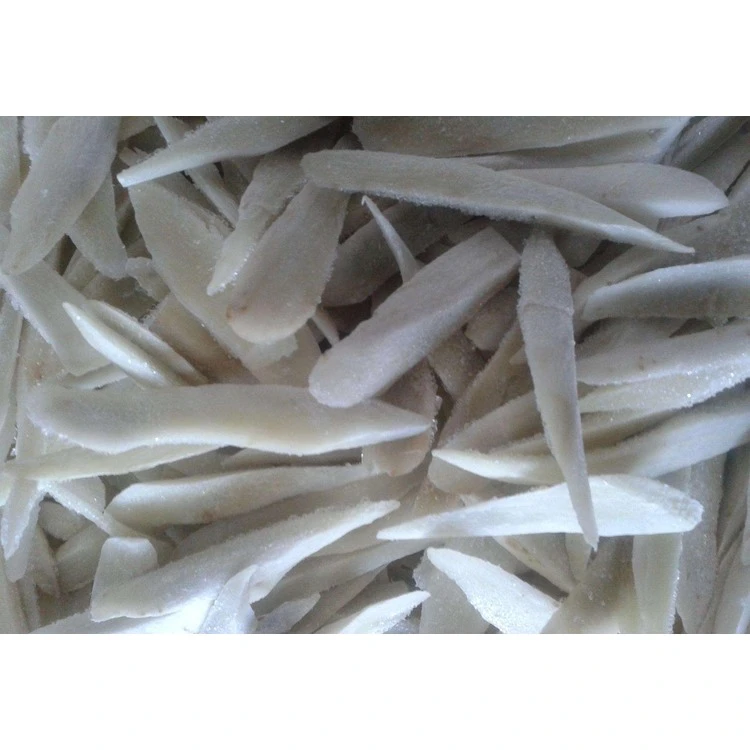
The closer product view shows tapered cut surfaces; appearance alone does not establish treatment or cooked bite.
For a plain ingredient order, provide the cut and quality requirements that emerged from the finished-dish trial. Include any concern about persistent fiber, color after reheating or excessive short pieces after the agreed handling. Ask for a sample that represents the offered form and retain its identification. If the supplier proposes a different cut, evaluate it through the same relevant final steps before treating it as a substitute.
Packing and batch use should be discussed together. A bag that fits one cooking batch can reduce repeated weighing, while a different service operation may need flexible portion access. Confirm quantity, inner-pack and carton requirements, destination, labeling needs and requested documents for the order. These details affect the practical comparison of offers alongside ingredient price. They should be tied to actual availability rather than inferred from an application photograph or an old sample.
The most useful final record is a short specification connected to a repeatable serving trial. It explains what enters the kitchen, what happens to it and what reaches the customer. When strip condition or portion mass changes, the team can return to those observation points and investigate the difference. That makes the buying decision more accountable and gives both the kitchen and supplier a clear target for the next batch.
The first production run after approval is a useful point to confirm that the method transfers beyond the development kitchen. Compare the ordinary serving result with the agreed reference and record any operational change needed. If equipment, container or portion size differs from the trial, make that difference visible. The ingredient approval remains useful only when its assumptions match the process that will actually use it.
Discuss frozen burdock with GreenLand-food
GreenLand-food is a professional frozen burdock supplier and manufacturer in China, with factory-direct wholesale supply discussed against your agreed product specification.
Send the product form, cut specification, packing, quantity, application, destination, private-label needs and requested documents. Include the cooking or reheating route and the texture you need in the finished dish so we can review the sample requirement.