


What Are Garlic Scapes? The Stalk, Flavor and Frozen Form
Oct 19, 2026
Leave a message

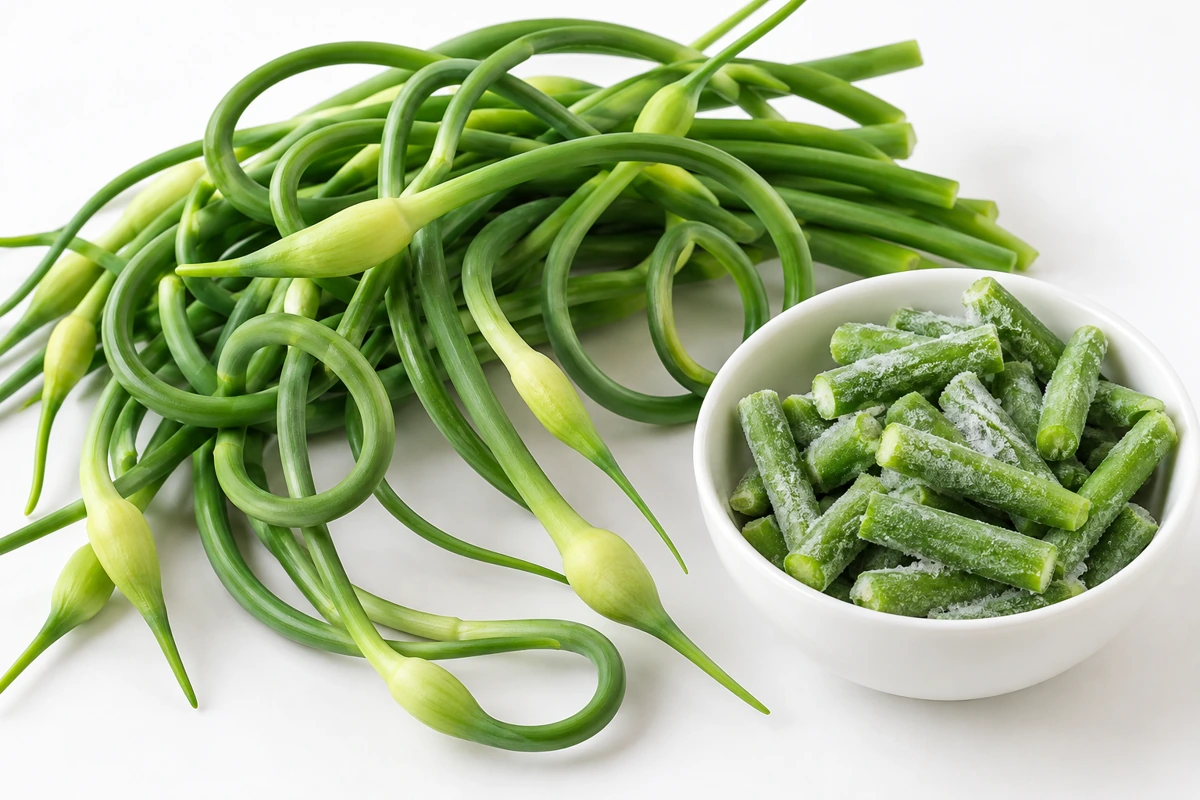
Frozen garlic scapes are typically supplied as prepared stalk sections, so the bag may look quite different from the long curls sold fresh. The name identifies the plant part; it does not establish trimming, blanching, cooking or ready-to-eat status. For a buyer, understanding that distinction is the first step toward choosing a useful cut. The next questions concern tenderness, cut length, flavor after preparation and the way the ingredient will be used in the finished food.
The edible stalk that grows above the garlic bulb
A scape grows above the ground from the garlic plant. It is the stalk associated with flowering, separate from the leaves and from the bulb that contains cloves below. In a whole fresh example, its curved round stem and tapered unopened end make that structure relatively easy to recognize. Once cut into short segments, those identifying features become less obvious. A technical specification therefore needs a clear ingredient name rather than relying on a photograph of green pieces.
The Iowa State University Extension explanation describes the young scape stage and its culinary use. The useful botanical point is that tender stalks are harvested before later development makes them less suitable to eat. Its local growing calendar is not a universal supply calendar. Commercial availability depends on the producing region, variety, season and inventory, all of which require confirmation for an actual order.
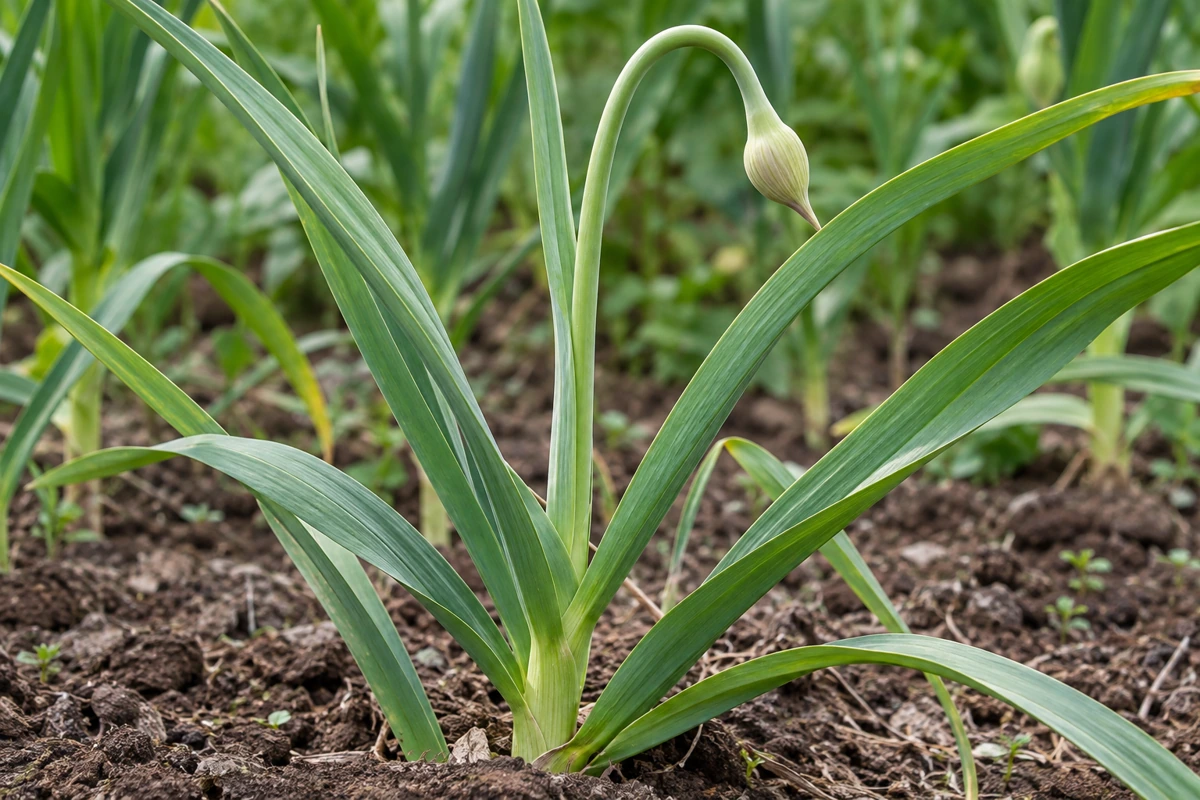
The round curling flower stalk emerges separately from the garlic plant's flat leaves.
Hardneck garlic is the familiar source of culinary scapes. However, crop descriptions should avoid unnecessary absolutes. University of Minnesota Extension notes that the tendency to produce a flowering stalk can vary with type and growing conditions. For food purchasing, the essential requirement is the correct edible garlic stalk and agreed preparation. A detailed cultivar claim should be included only when it is known and relevant to the order.
The bud end is another feature that needs a clear description. Fresh culinary scapes may include it, while a frozen cut specification may exclude it or permit an agreed amount. Bud maturity can change appearance and eating texture, so a mixed bag of stalk sections and developed tips may behave differently from an all-stalk cut. Ask what part of the harvested scape is included rather than assuming that every supplier uses the same trimming convention.
This plant-part identity also protects the recipe from accidental substitution. Garlic cloves provide concentrated aromatic material with a different texture and physical form. Leaves, young whole garlic and garlic-chive stems introduce other characteristics. They may each be useful ingredients, but they should enter the development process under their own names. A purchasing team that writes garlic scapes clearly can preserve the intended vegetable structure as the request moves between languages, suppliers and production staff.
For a new buyer, the raw-material photograph should show enough of the stalk to explain its identity. A close view of anonymous green segments is useful for cut assessment but weak for botanical orientation. Pairing the whole-stalk reference with the actual offered cut provides a clearer introduction, provided the captions distinguish a fresh reference from a frozen product and do not imply that both show the same processing state.
Recognize scapes among other green alliums
Garlic scapes are often confused with other green members of the onion family because several have a mild allium aroma and a similar color. Whole examples are easier to distinguish than chopped ingredients. A scape has a round stalk and a characteristic terminal bud; a spring onion has a leaf-and-base structure; garlic chives have their own leaf and flowering-stem forms. A simple visual comparison can orient a new buyer, but commercial identity still needs documentation.
Green garlic generally refers to garlic harvested young, before the mature bulb develops fully. It can include tender leaves and an immature base. That is a different harvested form from a scape taken from a growing garlic plant. Recipes may use both for gentle garlic flavor, yet their water content, shape and eating texture can differ. A frozen ingredient substitution should therefore be tested as a product change rather than treated as a translation choice.
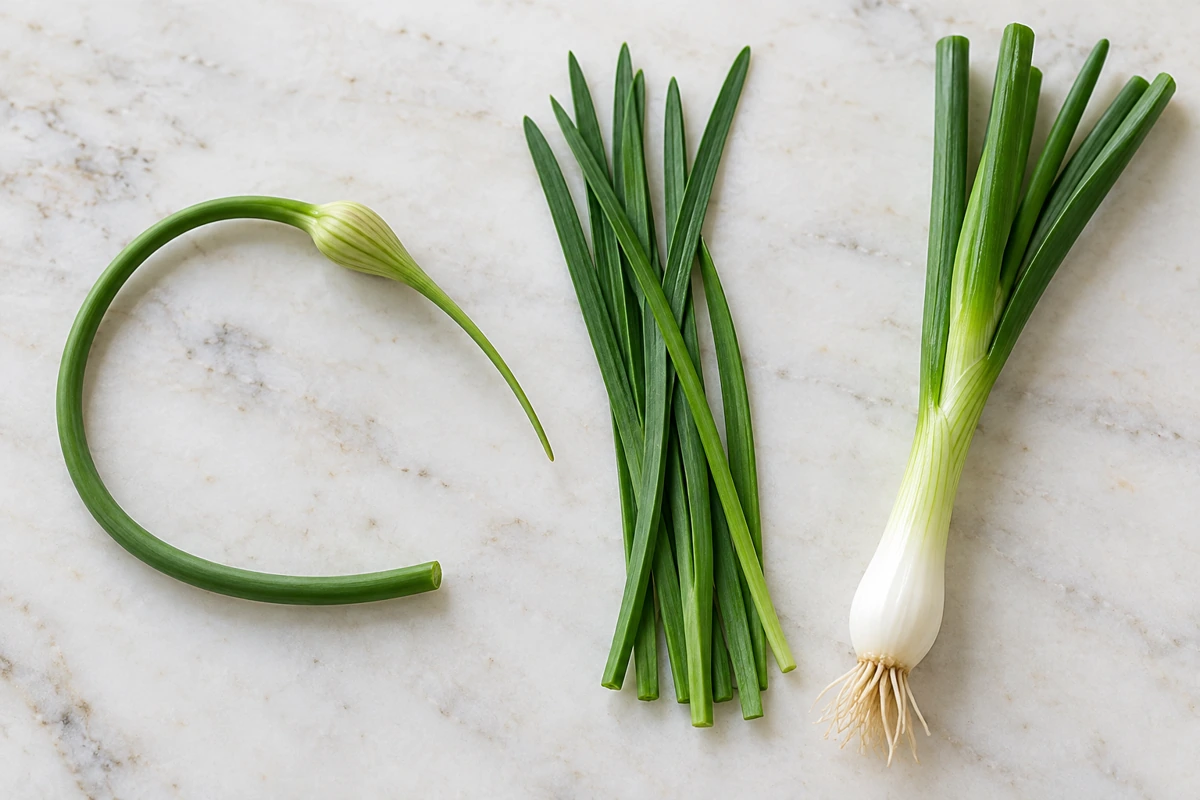
Whole scapes, flat garlic-chive leaves and spring onion have different visible structures.
Garlic chives create another naming risk, particularly when a purchasing request uses a broad term such as garlic shoots. A buyer should specify the intended plant part and include the accepted common or botanical identity where available. A reference photograph of the whole raw material can help explain the request to a supplier, while a second photograph of the offered cut shows what will arrive. The two images serve complementary purposes and should be labeled according to what they actually show.
Short frozen sections may no longer retain a bud or a visible curl. The receiving team should compare them with the approved sample and specification, including the cut form and ingredient declaration. Color alone is insufficient: several vegetables can appear as green cylinders in a bag. If identity is uncertain, resolve it through the supplier and relevant records rather than trying to prove species from a small low-resolution image.
The distinction also matters to product naming in the final food. A menu can describe garlic scapes as tender garlic stalks to help unfamiliar customers, while a technical sheet can retain the precise ingredient identity. If the recipe changes to leaves, cloves or another allium, update the relevant documents rather than keeping the old name because the flavor seems close. Accurate naming allows the customer, kitchen and purchasing team to discuss the same ingredient throughout development and supply.
A purchasing translation can preserve uncertainty instead of hiding it. If a supplier uses a local name that might refer to several allium parts, retain that term in the clarification record and request the exact product identity. Resolve the ambiguity before adding an English label to the specification. A confident translation based only on visual similarity can create a mistake that later documents repeat.
How the flavor changes with preparation
Young scapes provide a garlic aroma with a green vegetable character and usually less pungency than mature cloves. The intensity still varies with the material and the way it is cut and cooked. A small amount minced into a mixture plays a different role from a spoonful of larger sections served as a vegetable. A buyer should decide whether the recipe needs a recognizable stalk bite, aromatic distribution or both before evaluating a sample.
The Illinois Extension guide to garlic scapes describes their mild garlic character and firm raw texture. It also discusses different preparation and freezing routes. That practical range is a reason to ask how the offered frozen product was prepared. A sample that has already received heat may not behave like raw fresh scapes, even when both are suitable ingredients for their intended uses.
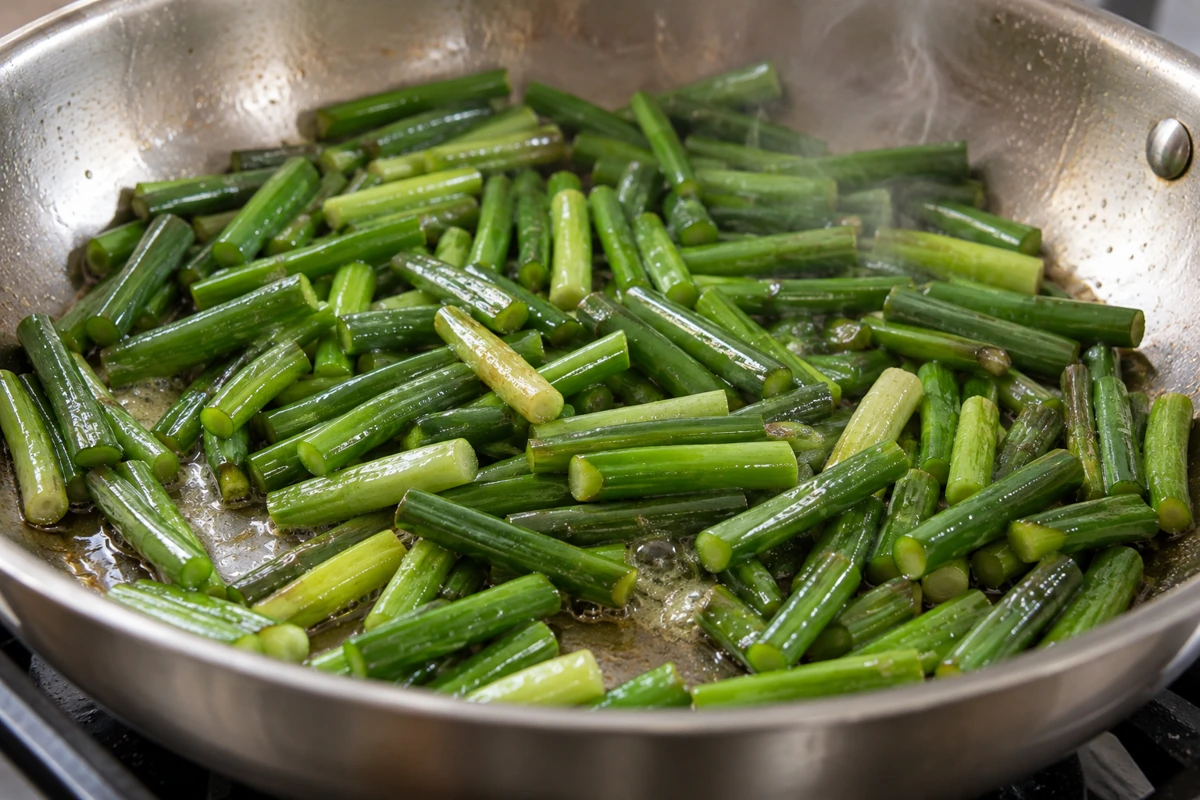
Cut stalk sections remain recognizable as they cook in a shallow pan.
For a cooked-use evaluation, prepare the scapes according to the actual product instructions and taste a plain portion before adding strong seasonings. Notice aroma, any harshness and the amount of chewing needed to break the stalk. Then assess the complete recipe. Soy sauce, chili, egg, oil or stock can alter the balance enough that a sample judged mild on its own becomes effective in the dish, or one judged appealing alone becomes too dominant at the planned inclusion rate.
Cut size changes how the flavor reaches the diner. Larger segments provide distinct bites in which the garlic character is encountered separately from other ingredients. Smaller pieces distribute more widely through a filling or sauce. A manufacturer changing from short segments to a finely processed form should therefore review both flavor and physical texture. Matching the ingredient mass does not guarantee the same sensory impression when its distribution changes.
Avoid treating scapes as a fixed clove replacement ratio. A household recipe may offer a convenient substitution, but a commercial formulation needs its own sensory assessment with the actual ingredient and process. Record the inclusion level and the stage at which the scapes are added. If the dish receives a second heating step, taste it afterward as well. The relevant flavor is the one present when the customer eats the food, not only the aroma released during the first trial.
For a recipe that uses scapes in small amounts, assess how evenly they distribute through ordinary portions. A strong garlic note in one bite and almost none in the next may reflect particle size or mixing rather than the overall inclusion level. Increasing the total amount could intensify the strongest bites without fixing that distribution. A cut or mixing adjustment may be the more useful development question.
Why maturity and trimming affect tenderness
The appeal of a young scape depends partly on harvesting and trimming the stalk while it is suitable to eat. As the structure develops, some tissue can become coarse. Wisconsin Horticulture's garlic reference distinguishes young edible scapes from later woody material. For a frozen ingredient buyer, this makes tenderness a raw-material and preparation question as well as a cooking question. Extra cooking cannot be assumed to correct every fibrous piece.
Inspect the lower ends and any included bud sections as distinct parts of the sample. They can differ from the central stalk in shape and eating texture. The specification should say how the basal end is trimmed and whether the bud is present. A bag of short sections may make the original location of each piece difficult to recognize, which increases the value of an agreed preparation method and representative cooked tasting.
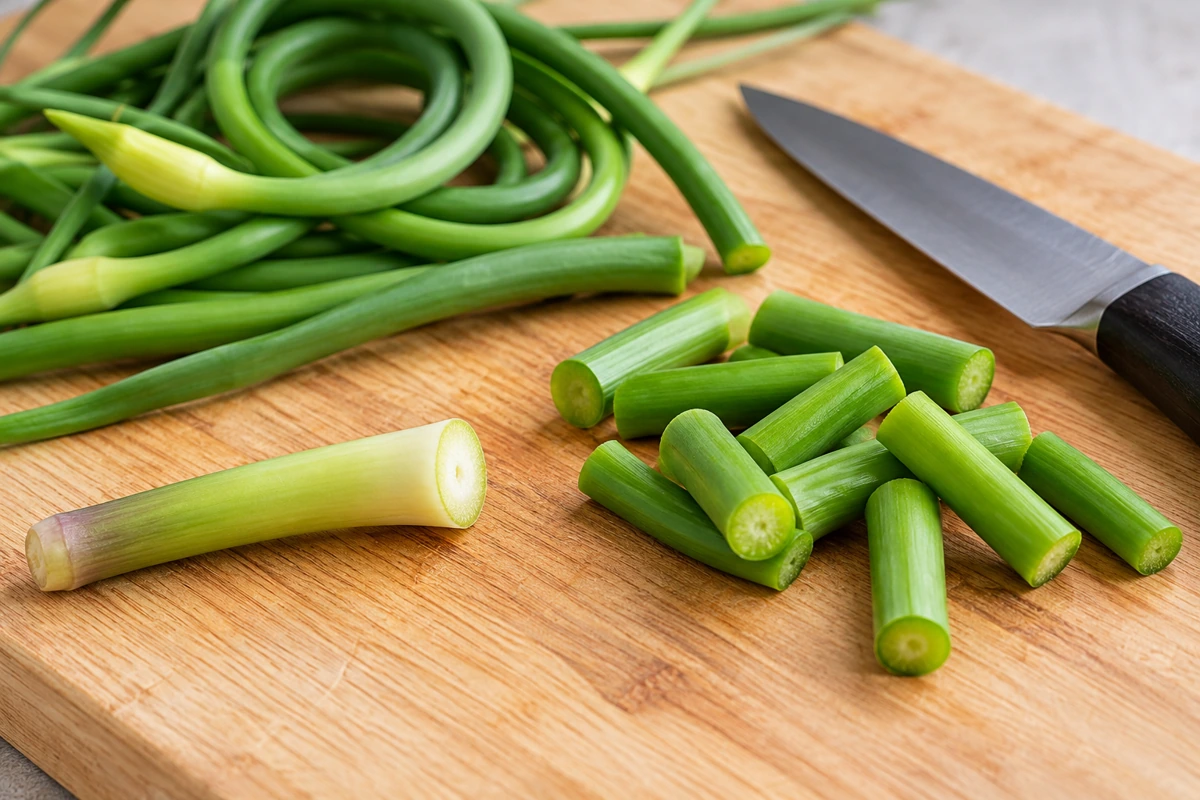
The cut surface and separated end help explain a stalk-trimming discussion.
Use the intended cooking route to assess tenderness. Frozen hardness mainly reflects temperature, while a raw bite may exaggerate the firmness the dish will ultimately have. After cooking, select pieces across the visible diameter range and any noticeably different forms. Record whether the resistance is even through the piece or whether a persistent strand remains. That distinction helps separate a general undercooking issue from a localized fibrous-tissue concern.
The desired bite depends on the application. A stir-fry can benefit from a distinct stalk texture, provided the pieces are comfortable to chew. A finely textured filling or sauce may expose coarse fibers more clearly because the surrounding ingredients are soft. Before seeking a tighter raw-material specification, test the actual product in that matrix. The problem may relate to maturity, cut, degree of size reduction or the chosen recipe, and the remedy should address the observed result.
Agree acceptance language that receiving staff can apply. Terms such as young, tender and premium communicate a preference but do not define a reproducible test. A practical specification can connect the cooked sample, the relevant eating defect and an agreed sampling basis. If a numerical limit is required, establish it through the order agreement and suitable evidence. There is no reason to invent a universal fibrous-end allowance for every garlic-scape dish.
The trimming requirement should be realistic for the offered product. Ask whether the specified finish is achieved before cutting and how the supplier describes included tips or ends. Once the stalk is divided, some original-position cues disappear. An approved cooked sample can therefore complement the visual specification, especially when the concern is a resistant tissue that does not look obviously different in the frozen bag.
What arrives in a bag of frozen garlic scapes
A frozen pack generally presents a prepared ingredient rather than the long whole curls used to explain the plant. The offered form may consist of short stalk sections with a specified length range and trimming finish. The GreenLand-food garlic-scape product page identifies cut stalks as the reference form. Whole-stalk photographs can help establish the raw-material appearance, but they should not be mistaken for proof that the ordered frozen format is whole.
Ask for the ingredient statement and process status. Washing, trimming, any blanching and freezing are separate pieces of information. A frozen designation does not establish that the stalks are fully cooked or suitable for use without further heat. If the intended recipe receives no later cooking, that route needs explicit review with the supplier. The product's use instruction should match what the kitchen plans to do with it.
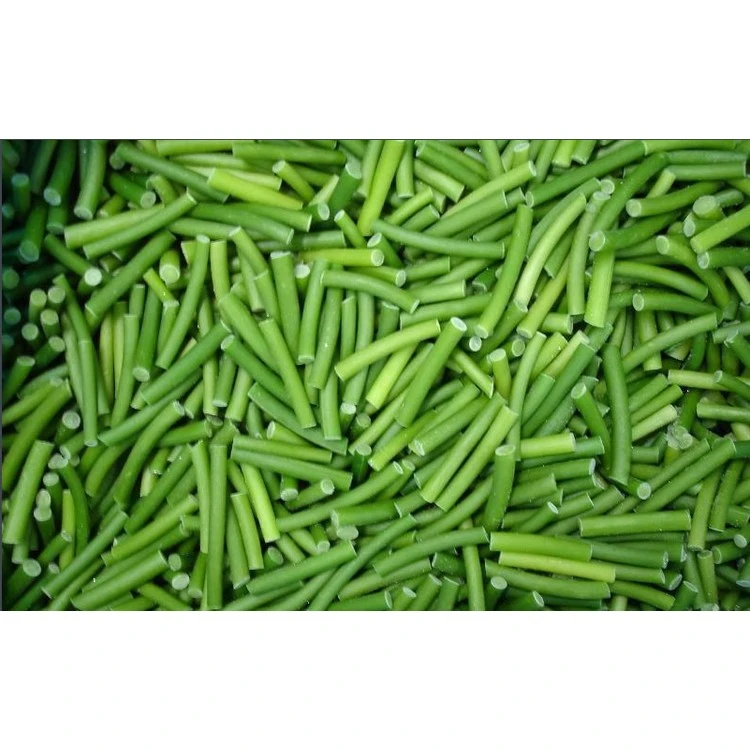
Cut stalk sections show the offered reference form; preparation status must be confirmed for the order.
Cut consistency affects how the ingredient feeds and cooks. Long and short pieces may distribute differently through a mix, and a broad diameter range can create uneven tenderness under a fixed method. A development sample should be examined as a distribution of pieces, not only as a handful selected for the approval photograph. Record the range that matters to the recipe and ask how the offered specification describes it.
Frozen condition and packaging also need attention. Observe the pack seal, lot identification and the way the pieces separate under the agreed handling conditions. Clumping or visible frost should be described and reviewed against the product specification and temperature history where relevant. A single photograph cannot identify the exact cause of an abnormal condition. Preserve the evidence and the lot identity so that an investigation can use more than an impression of the food's surface.
The pack size should suit the operation. A kitchen using small amounts for several recipes may value convenient portion access, while a manufacturer may plan to use a complete inner bag in each batch. Discuss that handling need with the required net mass, carton format and labeling. The appropriate package is the one that fits the actual use and confirmed availability. A generic bulk-pack description does not establish a universal size, order minimum or delivery promise.
An incoming sample should retain its packaging and identification long enough to connect observations with the offered product. Small development portions are easy to separate from their labels when several candidates are tested together. Use a simple sample code linked to the supplier record, then keep the cooking notes with that code. This prevents a favorable result from being assigned to the wrong cut or processing route.
Where the cut stalk works as a food ingredient
Garlic scapes can be useful where a recipe benefits from both a green vegetable piece and garlic flavor. In a cooked vegetable mix, the segments remain visible among other cuts. In a savory egg or meat filling, smaller sections can distribute aromatic character while retaining some bite. The amount and cut should be chosen through the finished recipe, because a prominent stalk piece has a different purpose from a finely minced aromatic ingredient.
For stir-fry development, consider the other vegetables and their cooking needs. A tender leafy ingredient and a thicker scape segment may not reach their preferred texture at the same point. The method can accommodate that difference through cut choice, order of addition or another appropriate adjustment. Evaluate the complete serving so that the scapes contribute a pleasant contrast rather than becoming the unexpectedly chewy part of an otherwise soft dish.
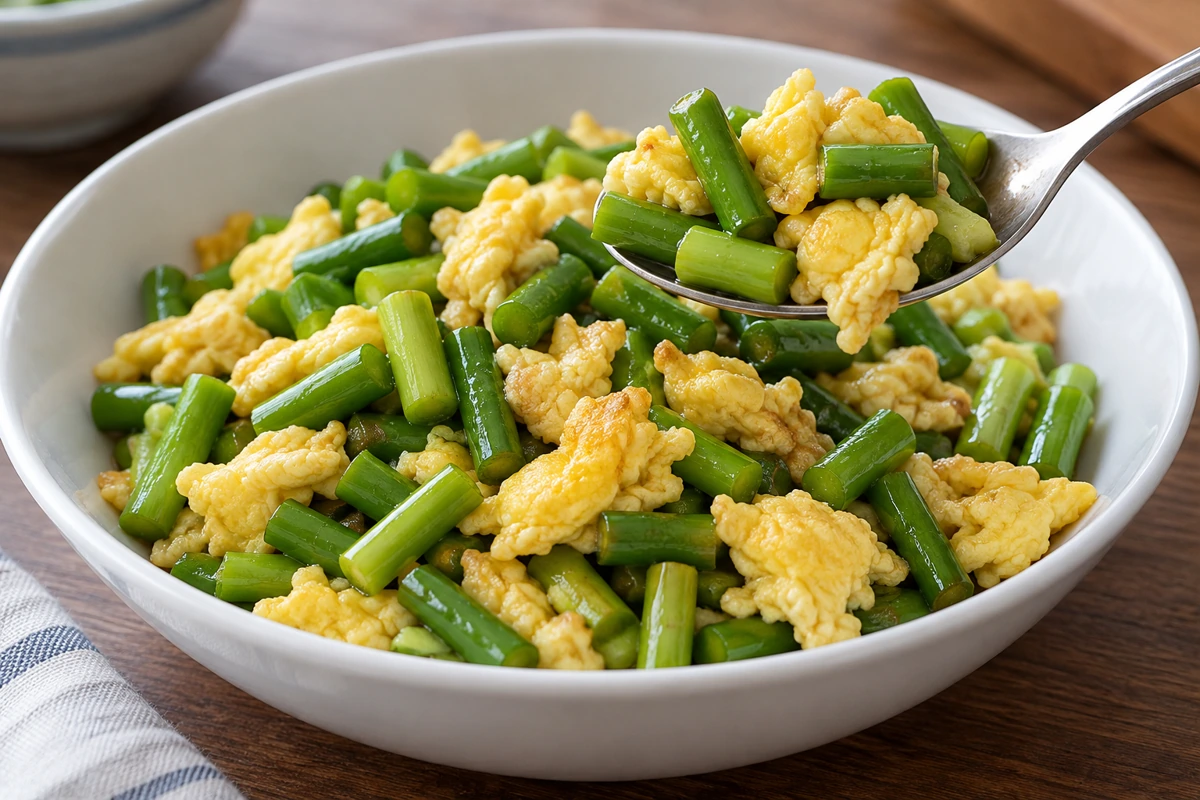
Short green stalk sections distribute through a savory egg mixture.
Soup and broth applications need another assessment. The segment should fit comfortably on the spoon and remain pleasant after the planned cooking and service interval. Its garlic character should work with the broth rather than dominate it. If the soup is reheated later, repeat the tasting after that step. A successful immediate tasting gives incomplete evidence for a prepared meal whose actual eating condition occurs after storage and reheating.
Scapes are also used in pesto-style mixtures and other finely processed preparations, but a frozen vegetable component should not automatically be treated as suitable for an uncooked finished food. Confirm the intended use and necessary process controls before choosing that route. From a quality perspective, assess whether the chosen cut and tissue become sufficiently fine under the actual equipment. A visually green mixture can still contain coarse fibers that are noticeable on the palate.
A cross-functional trial can be small and practical. Have the development cook assess flavor and texture, the production team observe feeding and mixing, and purchasing record the offered form and pack. Use the same identified sample and retain the observations together. This prevents approval from depending only on a chef's specially prepared portion or only on an attractive product photograph. The goal is an ingredient that performs under the ordinary conditions of the intended food.
When the ingredient is new to a menu, test the description as well as the recipe. Customers may interpret garlic stalks as a strongly pungent seasoning or assume that green pieces are spring onion. A concise accurate description can set a better expectation about the vegetable bite and garlic flavor. The technical ingredient name should remain precise even when the menu adds a more familiar explanation.
Describe the frozen form clearly before ordering
A clear inquiry begins with garlic scapes as the ingredient and cut stalk sections as the required form, if that is what the recipe uses. Add a reference photograph or dimensional description that communicates the intended length and diameter range. Explain whether bud tips are included and what trimming finish is expected. These details reduce the risk that a supplier interprets garlic shoots as a different plant part or offers a form that the kitchen has not evaluated.
Include the recipe and later handling. A stir-fry component, a soup ingredient and a finely processed filling create different demands on cut and tenderness. State whether the product will receive further cooking and what the final eating condition will be. The supplier can then respond with the actual process status and use instructions for the offered item. A sales description should not leave the buyer to infer those details from the word frozen.
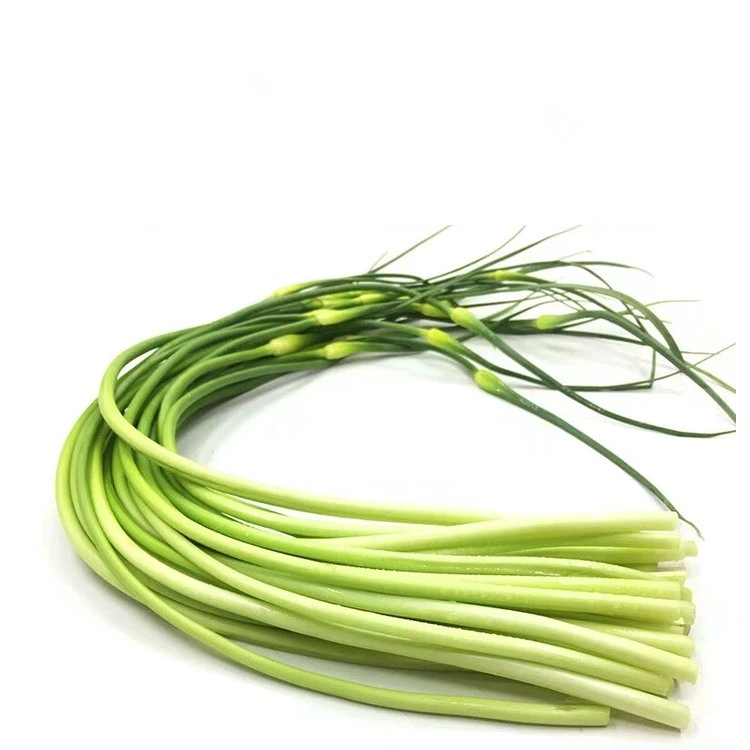
Fresh whole garlic stalks provide a raw-material reference for the cut form discussed with the supplier.
The sample review should cover the attributes that make the ingredient useful. Record cooked bite, any persistent coarse tissue, flavor intensity, green appearance after preparation and the distribution of piece sizes. Set numerical limits only where they support a real decision and can be measured consistently. The approved sample, written method and order specification should describe the same product so that a later lot can be compared fairly.
For commercial planning, provide quantity, inner-pack and carton needs, destination, desired delivery window, private-label requirements and requested documents. Confirm the applicable crop or production timing and available inventory for that order. The seasonal origin of scapes does not by itself establish year-round stock or a particular lead time. Those are commercial facts that need current confirmation alongside the physical product specification.
At GreenLand-food, the most useful starting point is a precise description of the food you want to make. Tell us whether the scapes should remain recognizable in the dish or be distributed as smaller aromatic pieces, and identify the texture that would prevent approval. That makes the sample discussion concrete. Once the plant part, cut, preparation and final use are aligned, a bag of frozen green stalks becomes an ingredient the kitchen can evaluate and order with a clear purpose.
A later crop or processing change should trigger the checks that matter to the approved food. It need not require repeating every development exercise, but the team should compare the attributes most likely to affect flavor, tenderness and cut behavior. Keep the reason for approval visible in the specification. That makes a future review focused and prevents the original sample from becoming a vague memory of something that tasted good.
Discuss frozen garlic scapes with GreenLand-food
GreenLand-food is a professional frozen garlic scapes supplier and manufacturer in China, with factory-direct wholesale supply discussed against your agreed product specification.
Send the product form, cut specification, packing, quantity, application, destination, private-label needs and requested documents. Include the cooking or reheating route and the texture you need in the finished dish so we can review the sample requirement.