


How to Make Spinach and Artichoke Dip: Fresh, Frozen and Make-Ahead
Oct 15, 2026
Leave a message


That method gives a starting point, but the water in the spinach and artichokes controls the result. A thick mixture can be adjusted before baking; a wet one rarely becomes creamy simply because more cheese is sprinkled on top. Fresh and frozen spinach both work when their cooked, drained yield is considered. Freezing the finished dairy dip is possible as a quality trial, but it may separate after thawing. The sections below explain how to choose the spinach form, make a basic spinach dip, add artichokes, plan service and test a repeatable foodservice batch.
Choose the spinach, artichokes and dairy base
For a small oven dish serving several people, a practical starting set is roughly 300 g of cooked, well-drained spinach, one can or jar of artichoke hearts after draining, a block of softened cream cheese, a modest spoonful of sour cream or plain yogurt, garlic, and enough grated melting cheese to bind the vegetables and finish the surface. These are starting proportions, not a universal formula. The drained spinach and artichoke weights matter more than the mass printed on two unopened packs. If either vegetable carries a lot of free liquid, the same dairy base can move from spreadable to soupy.
Choose artichoke hearts for the flavor and texture the menu expects. Canned or jarred hearts packed in water or brine should be drained and roughly chopped. Taste before adding extra salt, because brine and cheese may already season the dip. Oil-marinated hearts can bring a different flavor and additional oil; if using them, adjust the base instead of assuming the recipe will behave like one made with water-packed hearts. Large artichoke quarters should be cut so a spoonful can pick up both vegetable and sauce without pulling apart an entire heart.

The dairy base needs to coat the vegetables after baking. Softened cream cheese forms a stable thick foundation, sour cream or yogurt adds acidity, and grated cheese contributes flavor and a browned top. Too much thin dairy makes a watery dip when vegetables release moisture. Too much grated cheese can produce a firm, oily mass after a long bake or reheat. Mix the base thoroughly before the spinach enters so there are no isolated cream-cheese lumps. If a retail or foodservice formula uses different cheeses, record their moisture and fat behavior in the actual bake and hold test.
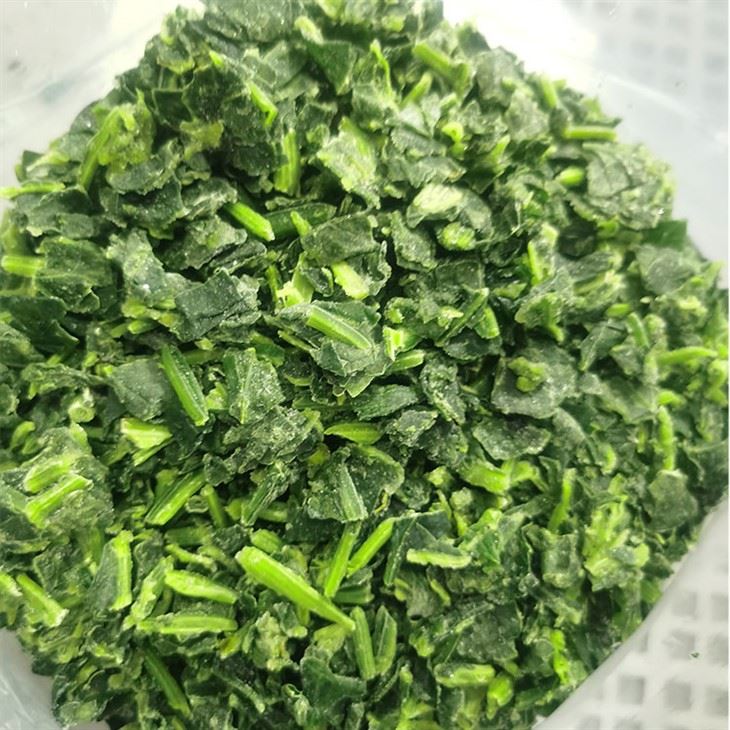
The spinach form affects both preparation time and appearance. Fresh leaves must be cooked down before measuring a drained quantity; frozen chopped spinach begins closer to the final dip texture but often needs thawing and pressing. A GreenLand frozen spinach cube can simplify a fixed batch, while loose chopped pieces suit variable production. Neither form is automatically the right one for every dip. Ask whether the finished serving should show recognizable leaves, small green flecks, or a more uniform color, then trial the appropriate cut in the complete dairy mixture.
Prepare fresh or frozen spinach for dip
Fresh spinach should be washed under running water when needed, then drained before cooking. The FDA produce guidance recommends running-water washing and says produce wash or soap is not recommended. Wilt the leaves in a broad pan or blanch them briefly, then let them cool enough to handle safely. Press out liquid and chop to the texture expected in the dip. A long leaf can wrap around a spoon, while a very fine puree can make the finished dip feel uniform. Choose intentionally rather than let a food processor decide the texture by default.
Frozen chopped spinach should be handled according to the exact package and intended cooked use. A common route is to thaw it under controlled refrigeration, heat if the product instructions require it, then drain in a sieve or clean towel before mixing with the dairy. Some recipes bake from frozen successfully, but that route needs a dish and time that can bring the center fully hot while the edge remains creamy. A dense block may retain a cold core longer than loose pieces. For repeatable results, weigh the frozen input, then weigh the spinach after the chosen draining step. Record how hard it was pressed, because "squeeze dry" means different things to different cooks.
Artichokes require their own drainage. If the hearts come from a jar, let the packing liquid run off and gently press the pieces if they remain wet. Do not put them into the same colander as the spinach and assume one combined drained weight tells you which ingredient created the water problem. Keeping the two streams separate during a trial makes correction possible. A batch can be wet because of spinach, artichokes, too much thin dairy, or a bake that never reaches the intended texture. The cure depends on the cause.
For professional kitchens, a sample should be prepared as staff will actually prepare it during service. A carefully pressed laboratory portion gives little information if the production team will only drain frozen spinach for a minute before mixing. Test the practical time, equipment and labor available. Our frozen spinach equivalence article helps with starting weights, but the dip should be formulated from cooked, drained yield and finished texture, not an assumed bag-to-bag exchange.
Mix a basic spinach dip before adding artichokes
A basic spinach dip can be made without artichokes and provides a useful baseline for judging the dairy and spinach. Soften the cream cheese, blend it with sour cream or another chosen cultured dairy ingredient, then add garlic, a restrained amount of salt and the drained spinach. Fold until the green is distributed evenly. Taste a small safe sample of the base before it is heated further, if the ingredients and kitchen practice permit. The goal is a mixture that holds a shallow mound on a spoon but still spreads in the baking dish. It should not pour like soup or break into dry clumps.
For a hot version, spread the basic dip at a consistent depth in an oven-safe dish and bake until the center is heated through and the surface looks ready for service. The exact minutes depend on dish width, fill depth, starting temperature and oven behavior. A broad shallow dish heats differently from a narrow, deep ceramic pot. Use the oven time in a recipe as a planning estimate, then check the center rather than judging only by browned cheese at the rim. If this is a chilled or unbaked dip product, follow its own recipe and food safety requirements rather than applying a hot-dip timer.

The basic version also reveals whether the spinach cut suits the customer. Long leaves can make an awkward stringy scoop; very fine chopped spinach can feel dense if there is little dairy between particles. A cut that distributes evenly allows each bite to contain both vegetable and sauce. If testing a frozen product, cook or thaw a measured sample, drain it consistently and compare that yield with the mixed base. A modest amount of chopped spinach may color the dip strongly while contributing little visible leaf. Decide whether the menu promises a vegetable-forward dip or a mainly creamy one with green flecks.
After this baseline passes, add artichokes and observe what changes. They bring larger, softer pieces and additional seasoning or liquid from their pack. The same base may need a slightly different dairy quantity or dish depth. This sequence helps when a dip goes wrong: first establish that spinach and sauce work together, then make a controlled artichoke adjustment. It is a development method, not a claim that every home cook must run two full batches. A small test bowl is enough to reveal a large moisture difference before a whole tray goes into the oven.
Bake spinach and artichoke dip to a stable finish
Fold the drained artichoke pieces into the spinach-dairy base without crushing them into paste. Spread the mixture evenly in a shallow oven-safe dish, then add a modest layer of cheese on top if a browned finish is wanted. Bake in a preheated oven until the center is hot and the edge bubbles, checking the actual depth of the dish. A thin tray may finish well before a deep crock. The Food Network frozen-ingredient version shows that direct-from-frozen baking can be designed into a recipe, but its ingredient amounts and oven route should not be assumed to fit another product or dish.
Let the finished dip stand briefly before service. The top can be hot while the center is still setting, and a short rest helps the sauce thicken enough to cling to bread or vegetables. Stir only if the texture calls for it; a baked top is part of the dish's appeal. If the center is still loose, more browning alone may not solve the problem. Check whether the spinach and artichokes were drained, whether the dairy base was too thin, and whether the dish was filled too deeply for the chosen bake. Record the correction for the next tray.

A sturdy dipper gives a better eating test than a spoon alone. Bread, pita or crisp vegetables place different pressure on the sauce. A good dip should cling without falling into a puddle and should carry recognizable vegetable pieces. Our article on what goes with spinach dip covers serving companions in more depth. For a foodservice program, try the dip with the item that will actually be sold beside it. A beautiful pan that tears the intended chip or slides off a vegetable stick is not yet an accepted recipe.
If a menu includes a broiler finish, watch it closely after the dip has already heated through. A dark surface develops quickly, while the moisture beneath may be unchanged. A batch designed for a buffet also needs a holding test: bubbling from the oven does not predict texture after extended warm service. Measure the portion, hold it under the actual service conditions, and observe whether oil, whey or vegetable water separates. The recipe is finished only when the last customer portion still has the intended body and temperature under the operator's food safety plan.
Assemble and refrigerate dip ahead of service
The most predictable make-ahead route for many dairy dips is to assemble the mixture, cover it and refrigerate it promptly before baking. This preserves a fresh oven finish for service while letting the kitchen complete the mixing work earlier. Keep the dish shallow enough to cool and later heat evenly. Mark the preparation date and protect it from cross-contamination in the refrigerator. A container placed beside raw meat or uncovered produce creates avoidable handling problems before the dip even reaches the oven.
When the dish goes from refrigerator to oven, account for its cold starting temperature. A chilled center takes longer to heat than a freshly mixed room-temperature sample. Some ceramic or glass dishes also have thermal-shock limits; follow the dish maker's directions rather than moving a cold vessel straight into high heat if that is not supported. A metal or suitable oven-safe foodservice tray may offer a different route. Check the center of the actual loaded dish and avoid relying only on the browned edge.

FoodSafety.gov leftovers guidance advises prompt refrigeration of perishable cooked foods, generally within two hours, and 165°F (74°C) for reheated leftovers. A professional operation should use its validated cooling, storage and reheating procedure for the assembled or cooked dip. The exact safe life of a prepared product depends on formulation, handling, packaging and local rules; a generic recipe's "make ahead" phrase is not a shelf-life validation. If the dip contains meat, seafood or other higher-risk ingredients, consider the complete formulation, not just spinach and dairy.
For service planning, separate three clocks: the time to prepare ingredients, the refrigerated hold before baking, and the hot hold after baking. A tray mixed the previous evening may bake well, yet lose its body if held hot for a long buffet. A portioned retail dip may face a chill-and-reheat cycle unlike a restaurant tray. Run the real sequence with the chosen spinach form and packaging. The resulting texture, temperature record and sensory sample tell the team whether its make-ahead promise is practical.
Freeze and reheat dip with a texture trial
Freezing an assembled or cooked spinach-artichoke dip is possible, but dairy texture can change. Ice formation and thawing may separate liquid from cream cheese, sour cream or cheese. Spinach and artichokes can release additional water at the same time. The dip may still be acceptable after gentle stirring and reheating, but that outcome belongs to a tested formulation, not a blanket claim for every recipe. Our focused spinach dip freezing guide covers the storage and thawing question; this article keeps it tied to the fresh/frozen ingredient choice and the complete dip method.
For a small trial, make two identical portions from one mixed batch. Bake or serve one fresh according to the recipe, then freeze the other in an appropriate sealed container. Thaw the test portion under refrigeration and reheat it by the proposed service method, following applicable safety procedures. Compare the center and edge, free liquid, oil separation, spoonability and flavor. If the reheated portion needs a large amount of extra cheese or starch to look acceptable, the formulation has changed; record that as a revision rather than treating the frozen result as equal to the fresh control.

The order of freezing and baking can matter. An unbaked assembled dip may return differently from a fully baked leftover, because the dairy and starch structure have experienced heat at different points. Some cooks prefer to freeze before a final top layer of cheese and add that finish later. Others achieve acceptable results with cooked portions and a gentle reheat. There is no universal winner across cream cheese brands, sour cream levels, artichoke pack styles and spinach drainage. Keep the comparison within one defined recipe so the team knows which change actually improved the result.
For leftovers, use the official reheating target of 165°F (74°C) and cool promptly before storage. Reheating slowly enough to protect quality must still reach the required safe endpoint. A dip that has sat too long at room temperature should not be "rescued" by reheating. In a foodservice setting, record how many times a portion is handled and held; avoid repeatedly chilling and reheating the same tray. If a frozen finished dip is a retail product, its shelf life, packaging, label instructions and quality after distribution require the manufacturer's own validation.
Measure drained yield for a foodservice dip
A buyer choosing frozen spinach for dip should define success in the finished tray. Start with a controlled trial: weigh the frozen input, thaw or cook it by the intended route, drain it consistently and weigh it again. Then mix a fixed dairy base and a fixed artichoke quantity. Bake in the same dish depth and oven profile. Measure final yield, portion count and any free liquid after rest and holding. This is more informative than judging the frozen bag alone, because two forms can have similar gross weight but different amounts of usable, drained spinach.
The frozen form needs to fit kitchen labor and recipe scale. Countable cubes can support a fixed daily batch if the kitchen has time to thaw or heat them evenly. Loose IQF chopped spinach helps a variable batch that needs precise weighing. Larger blocks can be efficient for a central kitchen with a standard kettle or thaw process. Cut size and stem level affect the visual dip as well as drainage; a buyer may want small particles for a smooth spread or larger leaves for a vegetable-forward serving. Request samples that reflect the intended pack and cut.

During evaluation, compare at least two prepared trays rather than a spoonful of raw frozen product. Look for water release, oil separation, cheese coverage, vegetable distribution and texture after the actual service or reheat interval. Use a standard dipper to test scoopability. Record whether a correction came from spinach drainage, artichoke drainage, dairy ratio, pan depth or oven performance. Our related 10 kg creamed-spinach trial offers a way to think about drained yield and dairy stability at a larger scale, although dip needs its own artichoke and service checks.
GreenLand-food supplies frozen spinach as a professional supplier and manufacturer in China for wholesale foodservice and manufacturing programs. Send us the desired spinach form, cut, stem tolerance, pack, quantity, destination and requested documents together with the planned dip application. We can discuss samples against those requirements. A purchase specification should also cover pack integrity, storage, defects and any market-specific testing. The supplier can help define a consistent ingredient; the buyer's completed dip trial determines whether that ingredient gives the intended creamy, stable finished product.
The receiving team should keep the accepted sample and its trial record together. If a later lot appears wetter, compare the thaw and pressing method before concluding that the ingredient changed. If the same method produces a consistent gap, use the lot identification and specification to discuss it with the supplier. A reliable dip program also revisits the artichoke source and dairy brands when they change, since those components can shift moisture and flavor independently of spinach. Treating each input as a measured part of the formula gives kitchen staff a route to correct a problem without guessing at the oven.
Source frozen spinach for a consistent dip trial
GreenLand-food is a professional frozen spinach supplier and manufacturer in China, providing factory-direct wholesale supply for importers, food manufacturers, foodservice distributors and private-label programs.
Tell us your dip formula, target drained spinach yield, cut, stem tolerance, pack size, volume and destination. We can discuss sample packs for a refrigerated and reheated texture trial.