


How Long to Bake Spinach Artichoke Dip
Sep 08, 2026
Leave a message
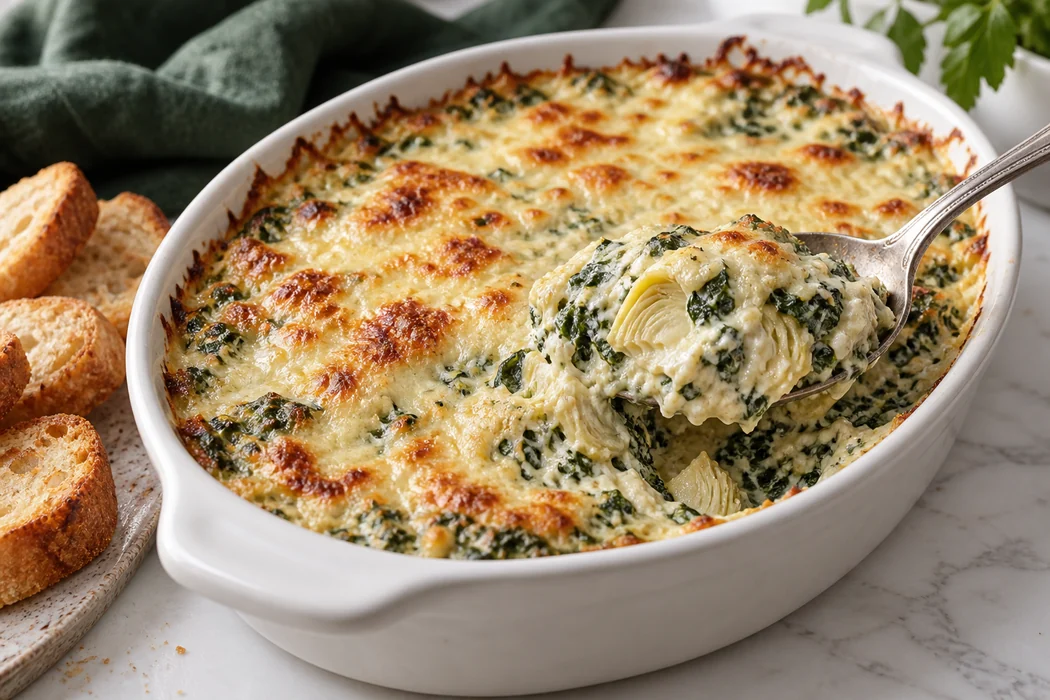
That range applies to familiar homemade baked versions. A shop-bought frozen dip, a chilled party tray and a skillet assembled over heat can require different instructions. The useful question is how closely your dish matches the recipe whose timer you are following.
A golden cheese topping tells you about the surface. To decide when to serve, also consider heat at the center and the consistency beneath the crust. The FoodSafety.gov temperature chart provides the 165°F endpoint used in this guide.
How long to bake it at 350°F or 375°F
If you are following an established recipe, keep its oven setting and check at the beginning of its stated range. The examples below show why both "20 minutes" and "35 minutes" can be reasonable answers. Each time belongs to a complete formula and preparation method.
The temperatures are conventional oven settings, with Celsius values rounded to familiar oven markings. These published recipes were not tested side by side under identical conditions. Their differences cannot establish that one pan material, ingredient choice or oven temperature alone caused a longer bake.
| Published recipe | Oven setting | Baking stage | Conditions to retain |
|---|---|---|---|
| Tastes Better From Scratch | 350°F / 175°C | About 20 minutes | Mixed base; dish around 8 × 8 inches or a little smaller. |
| Natasha's Kitchen | 375°F / 190°C | 20 minutes | Base prepared in a heated 10-inch skillet; optional broiling follows. |
| Toni's Recipes | 375°F / 190°C | 20–25 minutes | Cooked fresh spinach, drained; 8 × 8-inch dish. |
| Chef Billy Parisi | 375°F / 190°C | 30–35 minutes | Different, larger recipe; 8 × 12 or 9 × 13-inch dish with a breadcrumb topping. |
Look especially at what happens before the dish enters the oven. A base stirred in a hot skillet has already received heat, while a mixture made from cold dairy ingredients starts at a different point. When a recipe lists preparation, cooking and total time, the oven stage is only one part of that schedule.
For an evening meal or a service window, allow time to preheat the oven, finish mixing and check doneness. A 20-minute bake does not mean the dish can be made from unopened ingredients and served in 20 minutes. Read the whole method before deciding when to start.
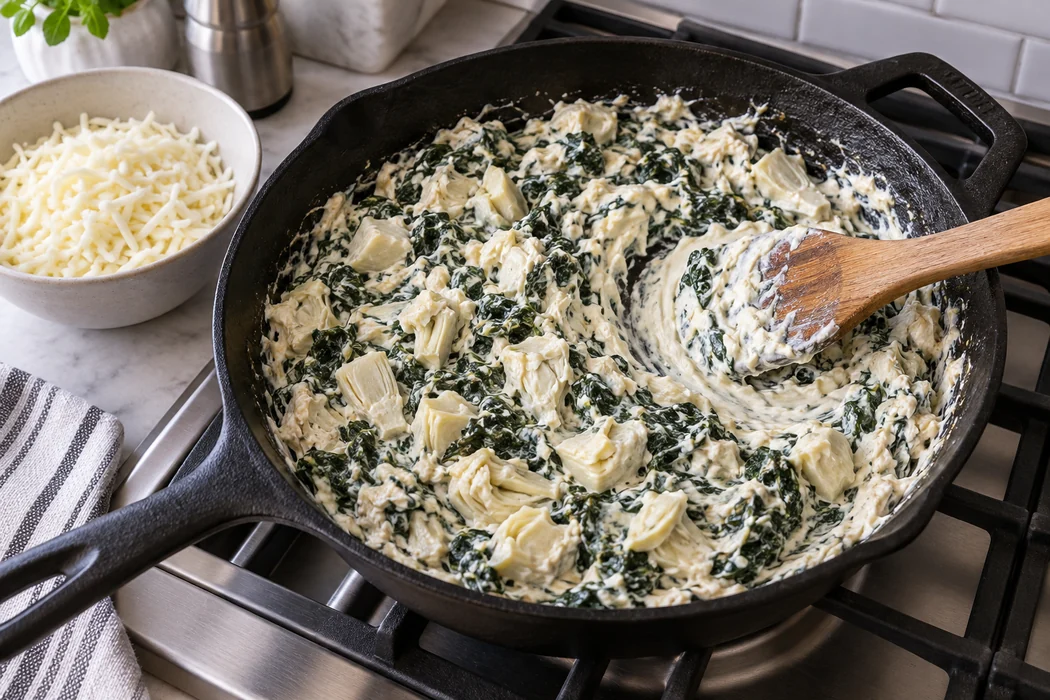
A skillet base is mixed before its oven stage. Published baking times depend on the preparation that comes first.
If your recipe specifies 350°F, keep that setting for the first attempt. Turning the oven up to 375°F to meet a deadline changes how quickly the exposed topping cooks; it does not give a dependable new finish time for the middle. Make any change deliberately, and observe the dip rather than subtracting a fixed number of minutes.
Broiling, when a recipe includes it, is a separate finishing step. Count that time separately and use it only with a broiler-safe dish. The topping can change quickly under direct heat, so stay beside the oven. A browned finish cannot compensate for a center that still needs heating.
Why the dish and starting temperature change the time
The amount of dip matters through the shape it makes in the dish. A broad baking dish spreads the mixture into a thinner layer. A narrow casserole can hold the same quantity much more deeply, increasing the distance between the surface and the middle. A pan's advertised capacity tells you what it can hold; it does not tell you the depth of the food you have put in it.
Use the dish dimensions in the recipe when possible, and spread the mixture evenly. A mound in the center leaves a thicker area that needs its own check. If you change the pan, make a note of the actual fill depth. That observation is more useful for the next bake than describing the container simply as "medium-sized".
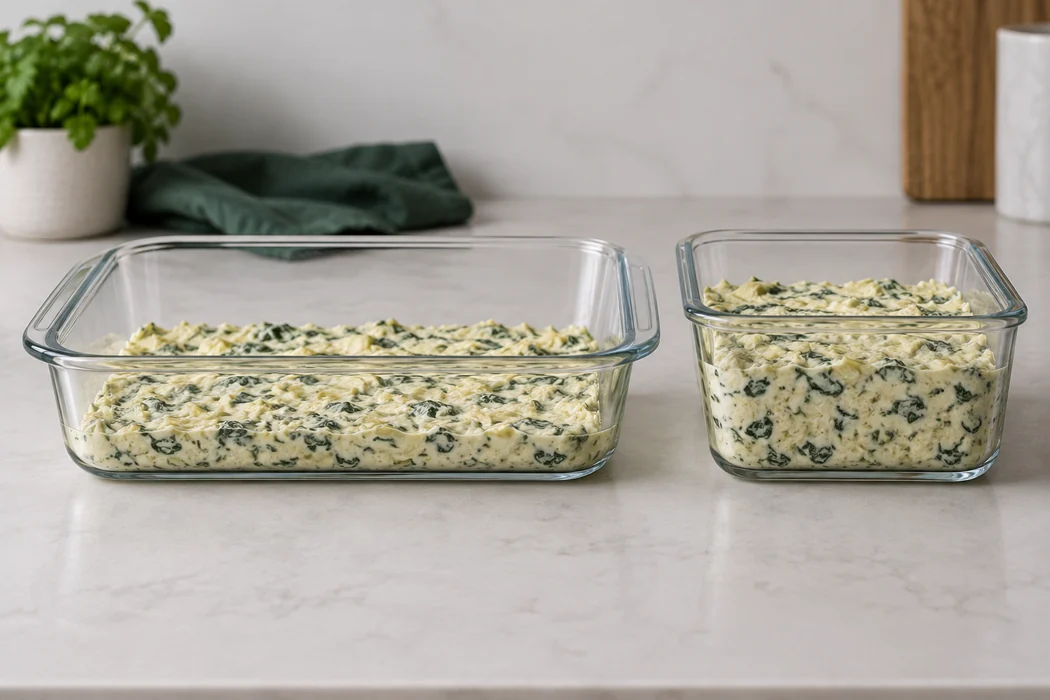
A wider dish spreads the mixture into a shallower layer. This comparison illustrates fill depth; it does not assign a cooking time to either dish.
A chilled dish needs its own check
A dip assembled immediately before baking may contain softened cream cheese, freshly cooked spinach or a warmed base. One stored overnight in the refrigerator has a different starting temperature. Follow any chilled-baking directions provided by your recipe, and allow space in your schedule for further heating if the center has not reached the required temperature.
There is no reliable "add ten minutes" rule for every refrigerated dip. The extra time depends on how cold the mixture is, how deeply it fills the dish and how the oven behaves under load. Check at the recipe's normal checkpoint and continue as needed. Do not leave the whole dip sitting on the counter for hours to shorten the bake.
Use bakeware according to its manufacturer's instructions, including any restrictions on moving it between cold storage and a hot oven. Glass, ceramic and metal dishes have different handling requirements. If a recipe is written for a skillet, choosing a deep ceramic casserole changes more than the appearance at the table.
Convection and a busy oven
A fan setting can alter surface browning, and oven controls differ in whether they adjust temperatures automatically. Follow the oven manual and the recipe's convection directions when available. Without those instructions, a first batch needs closer observation rather than a promised universal conversion.
A crowded oven also makes a familiar timer less dependable. Leave room around dishes as directed by the appliance manufacturer. If several trays share the oven, check each one rather than assuming that an attractive tray near the door represents the rest. For repeated production, record the oven mode, shelf positions and number of loaded pans together.
Prepare the spinach before it reaches the baking dish
For a creamy baked dip, prepare the spinach in the form the recipe expects. A frozen block added directly to a cream-cheese mixture creates a cold concentrated pocket and releases liquid as it thaws. When the method calls for thawed, squeezed spinach, complete that preparation before mixing; the baking stage should begin with the ingredients distributed through the base.
For preparation details, see Can Spinach Dip Be Frozen? Storage, Thawing and Texture.
Thaw the spinach using the pack's instructions or under refrigeration, then drain and press it as the recipe requires. Work in manageable portions so the middle of a large block does not remain frozen while the outside appears ready. Use clean utensils and a clean strainer, and keep prepared ingredients refrigerated if assembly is delayed.
Frozen spinach is often blanched before freezing. That processing step does not automatically make it ready to eat. Our bagged frozen spinach is supplied for further cooking or processing. Follow its preparation instructions and cook the assembled dish thoroughly.

Loose frozen spinach has visible leaf and stem pieces. Prepare and drain the specified amount before incorporating it into a creamy dip.
Keep the weight basis clear
Check whether the recipe's spinach quantity refers to the frozen pack, the thawed ingredient or the amount after squeezing. Those measurements are not interchangeable. A 10-ounce package of frozen spinach will weigh less after liquid is removed. Adding extra packs until the squeezed spinach again weighs 10 ounces changes the vegetable-to-dairy ratio unless the recipe specifically asks for that drained weight.
For a kitchen that makes the same dip repeatedly, weigh the starting spinach and the drained spinach during a trial. Record the thawing and pressing method alongside the weights. This is a practical way to find out whether two deliveries behave similarly; a change in drained yield should be investigated before staff compensate by changing the oven time.
Drain the artichokes and disperse both vegetables
Drain canned artichoke hearts and chop them to the size required by the recipe. Keep the liquid from the can out of the mixing bowl. If using a marinated product, account for its oil, salt and acidity when following a recipe designed for hearts packed in water. Large pieces and unevenly mixed clumps can make individual spoonfuls quite different.
Fresh spinach also needs the preparation specified by the chosen recipe, often cooking down before draining. Avoid swapping a bag of raw leaves into a formula developed around thawed frozen spinach without checking the quantity and method. For broader application guidance, our article on what to do with frozen spinach explains where controlling added water matters. Here, the goal is an evenly mixed dip that enters the oven with its intended consistency.
Bake evenly and check the center
Use this sequence alongside the ingredient quantities and specific method of your recipe. It helps turn a broad time estimate into a decision about the dish in front of you. For a commercially prepared dip, its package directions take priority over these general handling steps.
- Preheat and prepare the dish. Set the oven to the recipe's specified temperature. Choose suitable bakeware, prepare it as directed and use the recommended rack position. Have a food thermometer ready before the timer finishes.
- Fill to an even depth. Combine the prepared spinach and artichokes throughout the dairy base. Spread the mixture level, including the corners. Add the topping in the recipe's quantity so the surface remains easy to finish without burying the filling under extra cheese.
- Bake to the first checkpoint. Use the lower end of the recipe's range as the time to inspect. Notice whether the edges are bubbling and how far the topping has browned. Close the oven promptly if further baking is needed.
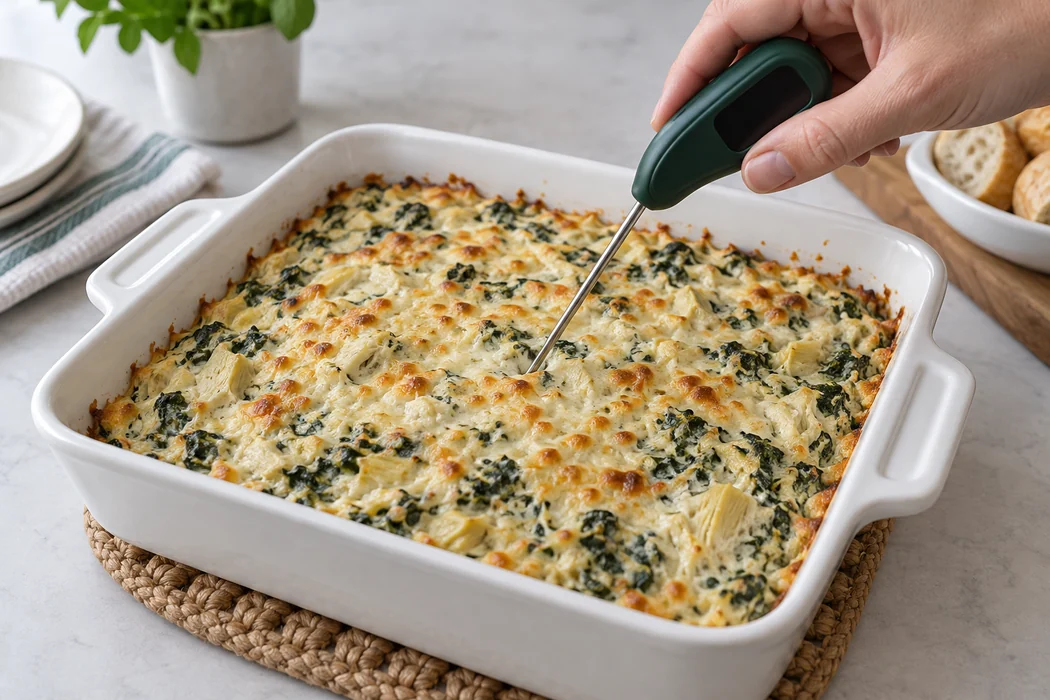
Place the sensing part of the probe within the central filling, away from the hot dish. Check the thermometer reading before deciding to serve.
- Measure the middle. Use a clean food thermometer according to its probe-depth instructions. Position the sensing area in the center of the filling, clear of the pan's base and sides. Check more than one central spot in a larger dish. Continue heating if the lowest reading remains below 165°F (74°C).
- Finish the surface and serve. Once the filling has reached the required temperature, finish any optional browning under close supervision. Let vigorous bubbling settle briefly before scooping. Keep the dish on a heatproof surface and provide a serving spoon suited to its depth.
The government temperature chart includes both meatless casseroles and leftovers at 165°F (74°C). Use a reading from the food itself. A measurement against a hot ceramic wall or metal base can misrepresent the filling you intend to serve.
A thin probe is useful in a shallow dip, but the correct insertion depth depends on the instrument. Check its instructions rather than assuming only the very tip senses temperature. Clean it between uses and avoid dragging topping or food residue across the handle. If a reading seems inconsistent, reposition the probe and check again.
Several cues still help with quality: melted cheese, gently bubbling filling and a creamy scoop. They tell you what to inspect next. Once the center is ready, continuing to bake solely for more dramatic bubbling can dry the edges. Give an optional browned topping its own short finishing stage instead of extending the entire bake without a reason.
When the top, center and texture disagree
When the dip looks wrong, first identify what you can actually observe. A dark topping, cool center and loose filling are different problems. Extra oven time can be appropriate for an underheated center, while a moisture or formulation problem needs a different adjustment on the next batch. Changing the timer without identifying the problem makes the result harder to repeat.
The top is brown while the center is underheated
Measure the center before judging the dish by its crust. If it needs further heating, protect the surface with a suitable oven-safe cover or a loose foil tent and continue baking. Keep the foil clear of heating elements and follow the bakeware instructions. A cover helps manage the exposed surface while the filling continues to heat.
Before the next batch, compare the fill depth and starting temperature with the recipe. A thicker layer or an overnight chill may explain why the center lagged. If the topping repeatedly gets too dark, also review shelf position, oven mode and the amount of cheese. Move one variable at a time so the adjustment teaches you something useful.
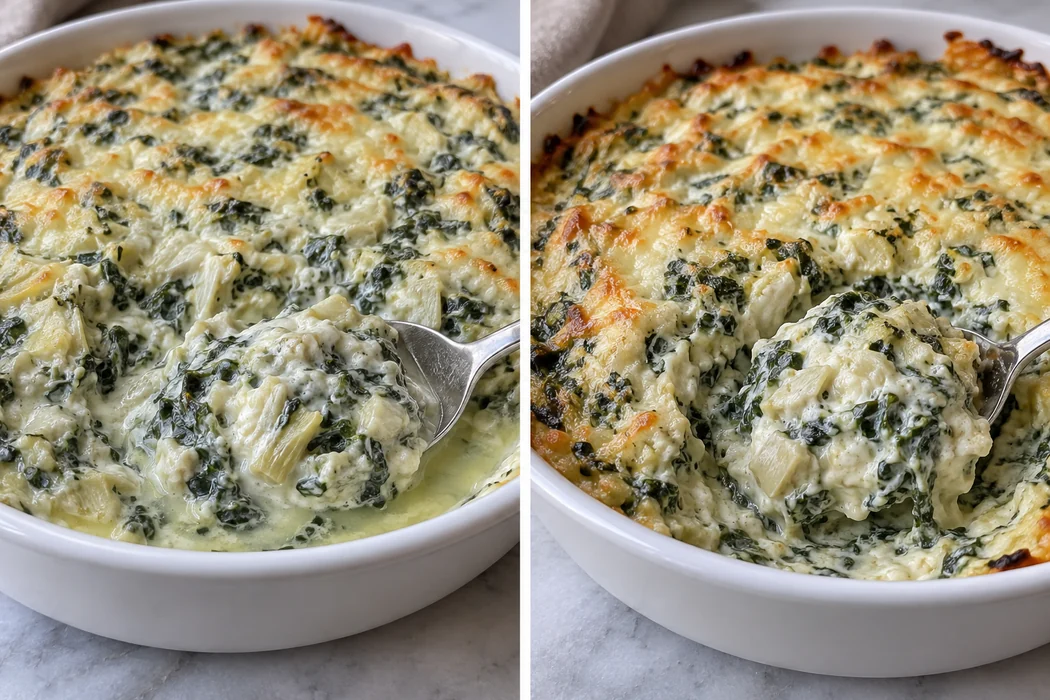
Pooled liquid is visible around the dip on the left; the filling on the right holds together more closely. Appearance alone cannot establish the cause or the temperature.
The dip is watery or separates
Thin liquid collecting around a scoop is a reason to review how the vegetables were prepared. Look for undrained artichokes, spinach that still held free liquid, or an ingredient substitution that changed the amount of water in the base. The Toni's Recipes method specifically drains the cooked spinach before assembly; that preparation belongs ahead of the oven stage.
A hot dip can look softer while it is bubbling and become easier to scoop after a brief settling period. Persistent watery pooling deserves attention to the formulation. Baking until that liquid evaporates may overcook the exposed cheese and edges, so avoid treating a longer bake as a guaranteed correction.
Glossy oil droplets or a grainy dairy base can suggest a different issue from vegetable water. Review the dairy ingredients, substitutions and heating history. Some recipes tolerate yogurt or lower-fat cheese differently, and an extended bake can make an already fragile texture less pleasant. Follow a formula developed for the dairy products you plan to use.
If the dip has become too thick or dry, inspect the edges and the proportion of topping to filling. Reduce unnecessary time after the center reaches its endpoint on the next attempt, and follow any covering instructions during reheating. Adding unmeasured cream or cheese just before service changes the batch again. Record deliberate recipe adjustments so the next cook starts from the same formula.
Baking ahead, reheating and serving
For a dip you intend to bake close to serving, assemble it within the make-ahead window of your chosen recipe, cover it and refrigerate it promptly. Keep a clear distinction between an assembled unbaked mixture and a fully baked leftover. The first needs its initial bake; the second has already been through heating and now needs careful reheating without excessive surface drying.
Work backwards from service using the full sequence: oven preheating, the recipe's baking window, a center check and any brief finishing step. A chilled dish needs contingency time. Avoid scheduling a first attempt so tightly that there is no room to return an underheated center to the oven. For a planned event, trial the same recipe and dish beforehand.
Reheat the filling while protecting the topping
Use the recipe's reheating directions where available. A shallow portion is easier to monitor than a large deep container, and covering an already browned surface can help limit further drying. Check the center and remove the cover only when a final uncovered finish is useful.
There is no single dependable reheating time for a spoonful, an individual ramekin and a full refrigerated casserole. Match the portion and container to the instructions, and check the food rather than borrowing the bake time of a fresh mixture.
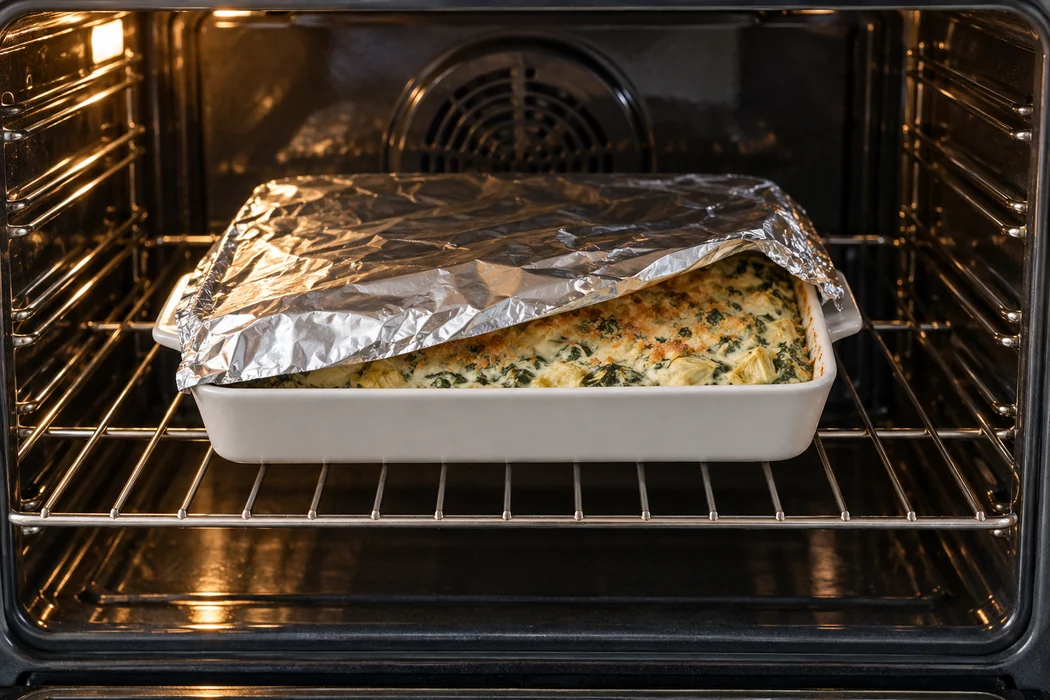
A loose foil cover shields the topping during oven reheating. Leave space above the food and keep the cover clear of oven elements.
For a homemade dip that has been frozen, use its recipe's thawing and baking directions. For a commercial frozen dip, follow the pack's specified oven mode, container, covering, cooking and standing instructions. Product formulation and pack depth vary too much to transfer the 20–35-minute homemade range to every frozen tray.
Plan storage and service together
Keep refrigerated dip at 40°F (4°C) or below. Refrigerate perishable leftovers within two hours, or within one hour when exposed to temperatures above 90°F (32°C). Divide leftovers into shallow containers for prompt cooling. These handling points follow FoodSafety.gov's food-safety steps.
Use suitable hot-holding equipment if the dip will remain on a buffet, and check the food temperature during service. A heavy dish can feel warm after its contents have cooled. Foodservice operators should follow their local requirements and food-safety plan for holding, cooling and reheating.
Consider serving smaller batches in succession so the whole quantity does not sit on the table at once. Keep the next portion appropriately refrigerated or hot-held according to the service plan. Give each fresh portion a clean serving utensil and a clear time record. Baking time, holding time and time outside temperature control are separate parts of the same service schedule.
Keep larger batches consistent
When a restaurant, caterer or prepared-food producer scales up spinach artichoke dip, consistent ingredient preparation helps make the baking schedule repeatable. Doubling every ingredient does not automatically double the oven time. The resulting layer depth, oven load and starting temperature still need checking in the equipment that will be used for service.
For a first larger batch, retain the successful fill depth by using suitable additional pans where practical. Weigh the filling into each pan and spread it evenly. Then verify the heating outcome for the actual load; two pans in an oven still require their own checks. Record the portion weight and dish dimensions so another member of the kitchen can reproduce the setup.
Choose a spinach form that fits the preparation process. Loose chopped spinach is straightforward to weigh in small increments. Compact frozen spinach portions and blocks need a defined preparation method before they disperse into a creamy base. The apparent size of a frozen portion does not establish its drained weight.

Compact frozen spinach pieces retain their formed shape in the liner. Confirm portion specification and preparation before using them in a dip batch.
Judge a spinach sample in the finished dip
At GreenLand-food, we supply frozen spinach in loose chopped, cut and portioned forms. For a dip application, we help your purchasing team confirm the cut, packing and handling requirements against the intended recipe. A photo can show the product form; the application trial establishes whether the prepared spinach distributes and eats as expected in your dairy base.
During that trial, note coarse stems, leaf distribution, the time needed to break up prepared portions and the amount of liquid removed. Evaluate the dip after its full bake and at the intended serving consistency. Using the same dairy ingredients, mixing procedure and pan loading makes it easier to identify differences associated with the spinach.
For a closer explanation, see What Goes with Spinach Dip?.
A simple kitchen record should bring together the spinach lot, starting and drained weights, recipe version, filling weight per dish, initial condition, oven setting, load and center-temperature result. These observations help trace an inconsistent batch. They also support a useful conversation with an ingredient supplier when a delivery behaves differently from the approved sample.
If the drained yield or cut changes, review the ingredient against the agreed specification before staff quietly add cheese or extend the bake. Those workarounds alter food cost and texture while concealing the original difference. A documented adjustment can be tested; an undocumented one leaves the next shift guessing.
For a supply discussion, tell us whether the product will be used in restaurant pans, portioned ready meals or a larger cooked filling. Include the desired chop, drained-yield expectations, pack size and preparation method. We will review the applicable spinach specification and sample arrangements with you. Any commercial cooking instructions still need validation in the finished formulation and intended equipment.
Source frozen spinach for your next dip program
GreenLand-food is a professional frozen spinach supplier and manufacturer in China, offering factory-direct wholesale supply for foodservice distributors, importers and food manufacturers.
Send your spinach form and cut, moisture or drained-yield requirement, packing, order quantity, dip application and destination. Include private-label needs and requested specifications or test documents so we can review the supply proposal with your purchasing team.