


How to Prepare and Cook Green Onions: Cooking Methods and Storage
Oct 14, 2026
Leave a message


The whites usually benefit from more cooking than the tender greens when a recipe needs both a mellow base and a fresh finish.
Keep fresh bunches refrigerated and use frozen prepared cuts according to their intended-use instructions. A thawed scallion piece will behave differently from a crisp fresh ring, especially in a raw garnish. This guide explains how cut, heat, moisture and storage work together, from a single pan to a foodservice batch. For frozen buying, we connect those kitchen decisions to the supplied cut and green-to-white balance.
Wash and trim sound green onions
Begin by checking the bunch. Sound stalks should have the structure and condition needed for the intended dish. Remove damaged outer material and discard produce that is rotten or extensively slimy. A little dried leaf tip and a decaying stalk are different findings. Trimming should recover suitable edible material, without trying to make spoiled produce acceptable by cutting it into smaller pieces.
Rinse before cutting, paying attention to the pale base and overlapping leaf junctions where grit can collect. Gently separate loose outer layers where necessary to reach trapped material. The FDA's produce guidance recommends running water and explains that washing can reduce bacteria without eliminating them. Soap, detergent and household cleaning products do not belong on the ingredient.
Use clean hands, tools and a preparation surface appropriate to the kitchen's procedure. Keep ready-to-eat produce separate from raw meat, poultry and their utensils. A scallion garnish may have no later cooking step, so the handling route deserves particular care. The familiar onion aroma does not provide protection against contamination or compensate for a dirty chopping board.

Rinsing scallion bases and leaf junctions.
Trim the small root tuft cleanly from the base. Remove unsuitable outer leaves and tips while retaining sound edible white and green portions. Cutting away all the green by habit wastes usable material when the dish could benefit from it. Conversely, keeping every damaged leaf to maximize yield can compromise the finished food. The useful measure is sound prepared yield, not the smallest possible trim pile.
Drain and dry the scallions when excess surface water would affect the recipe. A wet garnish can cling together, and water carried into a pan changes the initial cooking conditions. Use a clean towel or another appropriate kitchen drying method. The goal is to manage surface moisture without crushing the leaves or leaving washed produce exposed unnecessarily during preparation.
Separate whites and greens if they will enter the dish at different stages. This takes little extra work before slicing and makes the cooking sequence easier to control. A single mixed pile suits recipes that incorporate the whole ingredient together. The preparation decision should follow the recipe rather than allowing the order in which staff happen to cut the bunch to determine the final result.
For a larger kitchen, record purchased and prepared weights during a representative trial. Bunches can differ in root length, leaf condition and the amount of pale base. The usable quantity per case therefore deserves checking when comparing suppliers or changing ingredient form. A frozen prepared cut removes some trimming tasks, but its yield and application performance still need an independent trial.
Keep the prepared ingredient within the operation's time and temperature controls. Label containers clearly when cutting in advance, and avoid mixing a fresh batch into an older one without maintaining identification. A neat pile of cut greens is still a perishable food component. Good preparation includes how the ingredient reaches service, rather than ending when the knife leaves the board.
Cut rings, diagonal pieces or long sections
Choose the cut before starting. Thin crosswise rings scatter easily through a garnish or a finely distributed filling. Diagonal slices provide a longer visible shape from the same tubular leaf. Short lengths can remain distinct during cooking, while whole trimmed stalks may suit grilling. These forms change appearance and eating texture even when the ingredient weight is unchanged.
Use a sharp knife and a stable board. Align a manageable bundle, hold it securely with fingers kept clear of the blade and make controlled slices. Overfilling the hand with slippery stalks makes an even cut harder. A blade that crushes the leaves instead of slicing cleanly can produce ragged edges and wet fragments that are less attractive in a fresh topping.

Clean slices through tubular scallion leaves.
For fine rings, slice across the stalk at the width the dish needs. Keep the cut reasonably consistent, especially where a garnish must distribute evenly among servings. A mixture of very fine shreds and large rounds can create an uneven appearance and flavor. The pale base is denser than the hollow leaf, so judge the cut in both portions rather than looking only at the easy-to-see green rings.
For diagonal pieces, change the blade angle while maintaining a controlled slicing motion. The longer surface makes the cut more visible in noodles or a stir-fry. Broad diagonal leaves do not require the same cooking as a thick piece of pale base, so keep that difference in mind when deciding whether the cut should be separated into two bowls.
Long sections can be useful when scallion is intended as a recognizable cooked component. Consider the final bite: a long fibrous piece may be awkward in a small dumpling or a spoonful of soup. A section that works on a plate beside grilled food may be unsuitable inside a finely portioned filling. Cut length should follow how the food is eaten, rather than a preference for one attractive preparation photograph.
For bulk frozen cuts, define the important dimension and tolerance. A ring's cut length is different from the diameter of its hollow tube. A caliper image can show one measurement, while a representative inspection establishes the distribution across the sample. State how broken pieces, fines and oversize sections are assessed if those categories affect the recipe or portioning equipment.
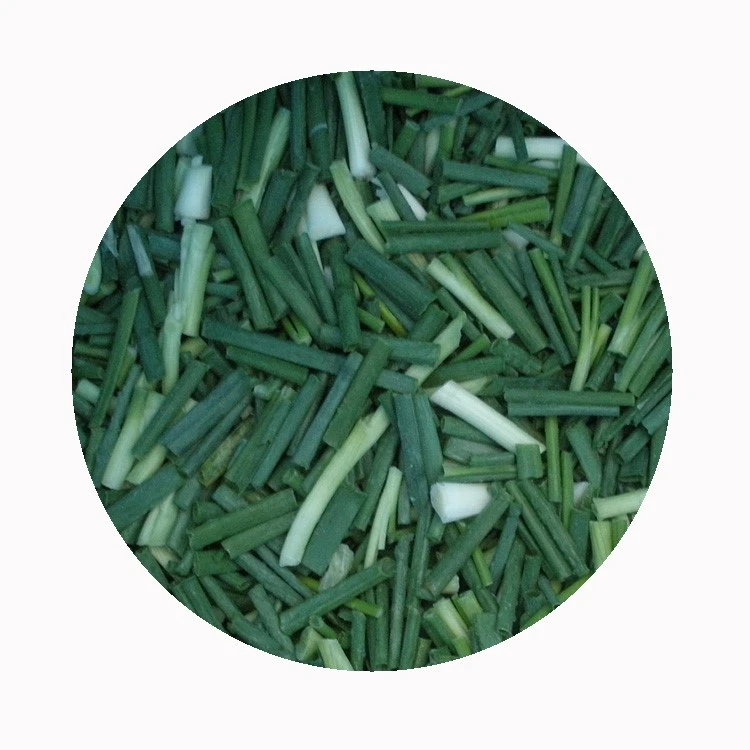
Longer frozen spring onion segments with green and white pieces.
The real product photographs show distinct frozen cut views. They help connect a kitchen description such as small rings or longer segments to an actual supplied appearance. They do not guarantee every lot matches a particular individual piece. Agree the cut and acceptance basis for the order, then judge samples in the dish where the ingredient will be used.
Prepare enough cut material for a realistic trial before fixing the final specification. A handful on a board cannot reveal whether long sections tangle in a dispenser or fine pieces disappear after reheating. Run the normal handling sequence and assess the finished serving. That turns an appealing cut into a practical ingredient choice that the next shift can repeat.
Cook white bases and green tops for the result you need
The pale base generally contributes a stronger onion character and has more substantial tissue than the tender green leaf. Putting it into a pan earlier allows it to soften and become part of an aromatic base. Add the greens later when the aim is to retain more visible color and a fresher note. This staged approach is useful for many dishes, while recipes that cook both parts together can also work well.
In a small sauté, warm the pan and cooking fat appropriately, then add the cut whites in a manageable layer. Stir and observe how they soften. The required time depends on piece size, pan temperature and load, so a fixed universal timer would be misleading. Judge the center of a representative pale piece and the flavor required by the dish, while following the complete recipe's safety process.
Reserve tender green rings for a brief final toss if their appearance matters. They wilt more quickly than substantial white pieces, and prolonged heating changes the character of a fresh garnish. University of Minnesota Extension describes raw topping, brief stir-fry addition and whole grilling as normal uses. The appropriate method follows the intended result rather than a rule that scallions must always be served raw.
Watch moisture and pan load. Freshly washed wet stalks and frozen cuts introduce different amounts and states of water. A heavy addition can cool the pan and encourage steaming before evaporation restores the desired conditions. If the recipe needs a concentrated aromatic base, test the quantity and equipment rather than increasing heat until the smallest pieces scorch.

Scallion whites in the pan with greens reserved.
For grilling, use a form that can be handled safely on the equipment. Whole stalks or suitably sized sections give a different result from fine rings. The pale portion needs enough cooking to reach the intended tenderness without burning the leaves. Adjust placement and movement according to the grill and stalk thickness. A photograph of charred edges cannot establish that every part has reached a useful eating texture.
For soup, decide whether scallion is part of the simmered base, a final addition or both. Pale pieces added earlier can contribute flavor through the liquid. Green rings added near serving remain more distinct. If the soup will be chilled, transported and reheated, include those stages in the trial; a garnish added at the central kitchen may be fully cooked by the time the customer eats it.
Taste after the normal holding period. A dish that looks ideal immediately after cooking can change in a covered container. Assess the aroma, color, remaining bite and any released liquid at service. Adjust the cut, amount or point of addition based on that complete result. This is particularly useful when replacing fresh scallions with frozen cuts in a standardized recipe.
Document a successful method simply enough for another cook to repeat it. Record the ingredient form, approximate cut, amount, pan or batch size and stage of addition. Where timing is useful, establish it in the actual operation as part of that method. The record should describe the conditions that produced the result, rather than turning one demonstration time into a promise for every kitchen.
Use green onions in soups, rice, eggs and fillings
In fried rice, the pale portion can help build an aromatic base, while green rings added toward the end remain visible among the grains. Manage the rice and other ingredients according to the recipe's food-safety requirements; scallions do not change those obligations. The photograph shows a final green addition to cooked rice, illustrating the role of the leaves rather than prescribing a complete rice preparation process.
An omelet or cooked egg dish offers a different distribution problem. Very large pale pieces can remain sharp or firm in a short cook, while finely cut material spreads more evenly. Decide whether to soften the whites first or use a cut that suits the egg's cooking sequence. A small trial reveals whether the ingredient gives a balanced onion character without dominating each bite.
Soups can accept a range of cuts, depending on whether the scallion should disappear into the base or remain recognizable. A fine ring suits a spoonful more easily than an unexpectedly long leaf strip. Match the cut to the serving utensil and the other ingredients. The same consideration matters in noodle kits, where a garnish and a cooked aromatic component may be packed or added separately.

Scallion greens added to cooked fried rice.
For dumplings, spring rolls or savory batters, assess the scallion after the full cooking process. The green-to-white balance, cut length and released moisture can affect the filling's appearance and texture. A raw filling sample cannot establish the result after steaming, frying or reheating. Use the actual wrapper or batter and the normal portion size when approving a substitution.
Fresh raw rings can finish a salad, noodle bowl or soup when the recipe needs crispness and a fresh aroma. Prepare them hygienically and add them at a stage that preserves the intended quality. Frozen thawed pieces should not be expected to provide the same snap. If the dish is sold with a fresh garnish promise, choose an ingredient and workflow that can reliably deliver that feature.
For sauces and dressings, particle size determines whether the allium remains visible. A finely minced pale portion disperses differently from broad green rings. Taste after the mixture has stood for its normal period, because the initial impression immediately after mixing may not match service. The useful quantity is the one that fits the complete sauce, not an assumed one-for-one replacement for another onion type.
Cross-application purchasing can simplify inventory only when the shared cut works in each recipe. A central kitchen may prefer one frozen cut for several cooked fillings, while retaining fresh bunches for garnishes. Test each important use rather than assuming that approval in a soup covers a short-cooked pancake. The limiting application often determines how much variation the ingredient can tolerate.
GreenLand-food can discuss frozen spring onion cuts for these cooked applications. Explain what the finished dish should look and taste like, along with the preparation sequence. We can then help confirm a suitable form for sampling and discuss the packing that fits the kitchen's normal batch.
Store fresh bunches and freeze portions for cooking
Fresh green onions require refrigerated storage, unlike cured dry bulb onions kept under suitable dry-storage conditions. Keep the bunch protected from drying while avoiding a pool of water around the leaves. A loosely wrapped, slightly damp paper towel in a suitable bag is one practical approach. Inspect the condition regularly and remove the amount needed for preparation using clean handling.
Purdue Extension gives about a week as a useful refrigerator reference for green onions stored with a damp paper towel in a bag. Actual condition depends on the ingredient at purchase and subsequent handling. This is a quality planning reference, not a guarantee that every bunch remains suitable until a particular day. Reject spoilage whenever it appears.
Keep the refrigerator at 40°F or below, approximately 4°C, following FDA advice for perishable produce. Prepared chopped material needs its own container identification and use plan. A fresh bunch's expected quality period should not automatically be assigned again after chopping. Cut only the quantity the operation can hold and use appropriately.

Fresh scallions held in a bag with a paper towel.
For longer keeping in a home kitchen, freezing chopped sound scallions can be useful when they will later enter cooked food. Wash, trim and dry them, spread the cut pieces on a suitable tray and freeze until firm, then transfer to a labeled freezer container. Oregon State University's Food Hero guide describes this approach and suggests using the home-frozen portions within four months for quality.
That home-freezer reference does not establish the labeled shelf life of a commercial IQF ingredient. Commercial storage periods apply to the validated product, pack and stated conditions. Follow the supplied label and confirm the relevant documentation for a purchase. A household tray-freezing method and an industrial frozen specification serve different settings even though both produce scallion pieces that can be used in cooking.
Expect a texture change after freezing. Tender green tissue can soften and release moisture after thawing, which makes cooked applications a more natural destination than a crisp raw garnish. Portion the frozen ingredient according to the recipe and supplier instructions. Avoid repeatedly warming an entire container simply to remove a small quantity; a practical pack size and good portioning method help preserve the remaining stock's condition.
Cooked foods containing scallions need the controls appropriate to the finished dish. Cool and refrigerate leftovers promptly, using suitable shallow containers and the operation's procedure. USDA guidance calls for refrigeration within two hours, or one hour when the surroundings exceed 90°F. The scallion's original fresh or frozen storage period no longer describes that cooked meal.
Our green-onion freezing article develops the preservation question further. For everyday planning, keep the states separate: uncut fresh bunch, chopped fresh ingredient, unopened frozen cut and cooked finished food. Clear labels and a realistic use plan prevent one storage instruction from being carried across those changes without justification.
Choose and use a frozen cut in a working kitchen
Begin with the application and the cooking route. A frozen cut selected for a long-simmered sauce may be unsuitable for a dish that needs distinct green pieces after a brief heat. State the desired appearance, flavor and texture at consumption. That gives the supplier a useful basis for proposing a sample and helps the kitchen assess the product consistently.
Confirm the white-to-green balance as well as cut size. A mixture with a large pale fraction can taste and look different from a green-heavy cut at the same weight. Decide how that balance will be described and checked. If a reference photograph is used, agree the sample condition and lighting so color and proportions can be compared meaningfully during later approval.

Fine-cut frozen green onion rings in a bulk product view.
Read the preparation and intended-use information. A product described as washed, chopped or IQF may still require cooking or further processing. For a chilled finished food without a later heat step, resolve suitability with the appropriate technical team before use. The kitchen should never infer ready-to-eat status solely from the fact that fresh scallions are sometimes eaten raw.
Trial the ingredient at the normal batch load. Record the frozen amount, point of addition and any change in liquid handling. Assess the largest pale pieces, visible greens, aroma and portioning after the usual holding or reheating. If the first trial needs adjustment, change a defined variable and repeat it. This creates a usable recipe record instead of relying on an informal impression of one pan.
Receiving checks should connect the product with its approved description. Examine pack integrity, lot identification, cut appearance and frozen condition, and review the agreed temperature evidence. Clumping or loose ice can prompt investigation, but appearance alone cannot reconstruct the shipment history. Keep any affected lot identifiable while the responsible team assesses the records and physical condition.
Pack size should suit the rate of use. A full-batch bag can reduce repeated handling in a large kitchen, while smaller packs may fit a restaurant drawing occasional portions. Confirm available formats, order quantity, lead time and destination needs before making a launch commitment. Private-label artwork and custom cuts may require additional planning, which should be discussed alongside sample approval.
We help purchasing teams connect these kitchen observations to a clear frozen spring-onion order. A brief description of the dish, approximate quantity and delivery destination is enough to begin. The later discussion can settle cut range, green-to-white preference, packing and relevant documents. The finished specification should make the successful preparation easy to repeat with the next delivery.
Source Frozen Spring Onion with GreenLand-food
GreenLand-food is a professional frozen spring onion supplier and manufacturer in China, providing factory-direct wholesale supply for food manufacturers, importers, foodservice distributors and private-label programs.
Tell us what you are making and where you need delivery. We can help confirm the product form, specification, packing, quantity, application, destination, private-label needs and requested documents as we discuss your supply.