


Are Shallots and Green Onions the Same?
Sep 07, 2026
Leave a message
The direct answer
Usually no: dry shallots and green onions differ in structure and use. Confirm regional naming with the physical product. A substitution may work in flexible cooked recipes, but it can change flavor, color and texture. For frozen green onion, specify the parts, ratio and cut length.
For preparation details, see Can Onions Be Frozen?.
Keep these distinctions in mind
Usually no: check what the local name refers to
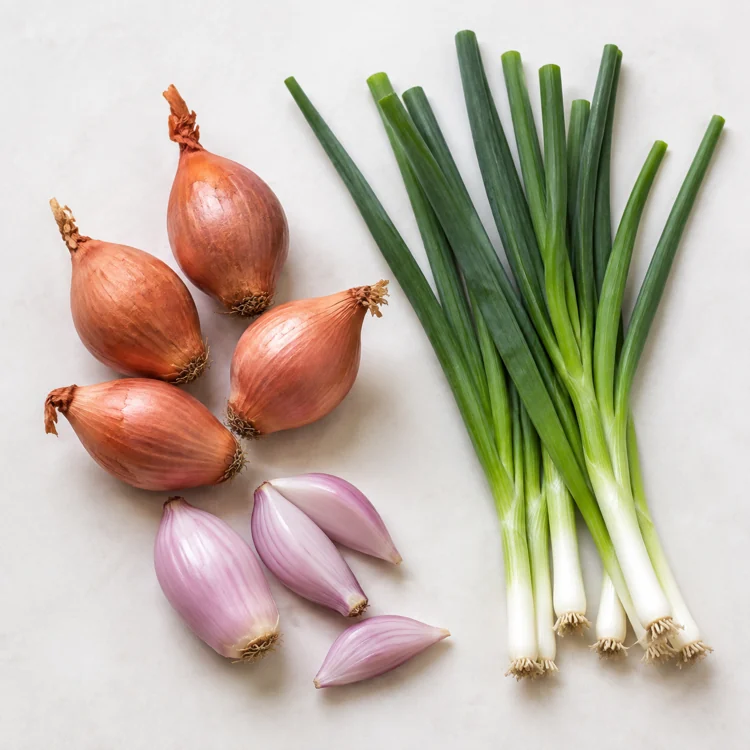
Shallots and green onions usually mean different ingredients. A shallot is commonly a small dry bulb with papery skin and layered flesh, while a green onion has a tender white base and long green leaves. Shallots are often used for a fine aromatic base; green onions can contribute both onion flavor and a fresh green appearance. Regional naming varies, so a photograph and a product description are useful when ordering internationally.
In some markets, the word shallot is used for a green onion or spring onion. That means a simple yes-or-no answer can be misleading when two people are using different local names. Ask what the ingredient looks like, which parts are supplied and how it will be cut before assuming that the names identify the same product.
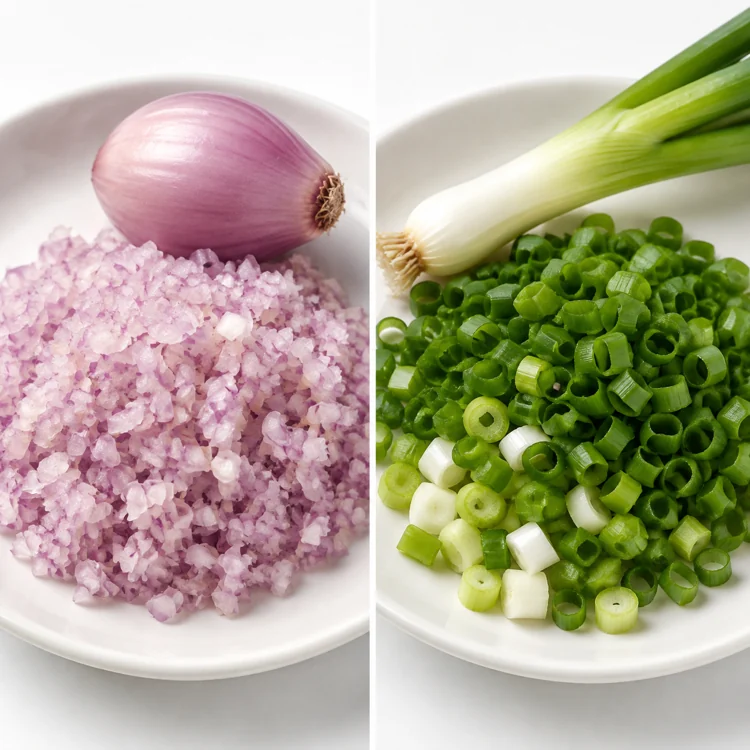
For cooking, the distinction appears in flavor, color and texture. A finely minced dry shallot can soften into a sauce without adding green pieces. A sliced green onion adds visible rings and a different balance between the stronger white base and the leafy green portion. An equal-weight substitution may need adjustment.
For frozen procurement, we define the ingredient by its actual form. The white-to-green balance, cut length and intended cooking route matter more than a loose trade name. That approach prevents an inquiry for a delicate shallot sauce from being answered with a bag of chopped green stems.

Compare the bulb, leaves and edible parts
Dry shallots have a bulb structure with fleshy layers protected by papery outer skin. Many familiar shallot types form clusters of bulbs. After peeling, the flesh may be pale or have a pink-purple tone, depending on the type. The edible bulb provides the main ingredient in common shallot preparations.
Green onions are harvested for the tender base and green leaves. They may come from bunching onion types or young bulb onions, depending on the product and region. The supplied ingredient therefore needs a more precise description than "small onion" if the plant type or bulb development matters.
Purdue's onion growing guidance discusses the different onion forms used in gardens and kitchens. For commercial communication, the structural distinction is useful: a dry bulb and a leafy green onion create different cuts and different yields.
For a closer explanation, see Is an Onion a Vegetable?.
| Feature | Dry shallot | Green onion |
|---|---|---|
| Common sold appearance | Small dry bulb with papery skin | White base with long green leaves |
| Main edible parts | Peeled bulb layers | Tender white and green portions |
| Typical preparation | Mince, fine dice, slices or whole peeled bulbs | Rings, short cuts or longer sections |
| Visual contribution | Pale or pinkish bulb pieces | Green pieces plus lighter base pieces |
| Important specification point | Bulb identity, peel loss and cut | Parts included, ratio and cut length |
The outer dry skin of a shallot is normally removed. For green onions, roots and unsuitable outer material are trimmed, but the white and green portions may both be useful. Specify those parts instead of allowing trimming decisions to determine the formula by accident.
Shallots, scallions, spring onions and eschalots
Scallion and green onion are often used interchangeably, while spring onion can refer to similar leafy onions or to a more developed young bulb in some markets. Shallot usually refers to the dry bulb described here, but regional usage can differ. Eschalot is another name encountered for dry shallots in some English-speaking markets.
These naming differences are manageable when the physical product is described clearly. A supplier and buyer may use different familiar words yet agree perfectly once they see the same photograph and specification. Problems arise when both assume their local term is universal.
For an international order, include the common name used on the label, the intended ingredient identity and a representative image. State whether the product contains dry bulb flesh, green leaves, white bases or a defined mixture. If species identification is relevant to the contract, include it in the technical description.
The Canadian allium crop profile is an authoritative reference for the broader crop group. It also illustrates why an allium category covers several products rather than one interchangeable ingredient.
Use the agreed name consistently across the quotation, purchase order, specification and carton. An internal recipe can retain its familiar terminology, but the purchasing documents should resolve ambiguity. A mismatch discovered at receipt is much harder to fix than one clarified before sampling.
Flavor and cooking behavior
Shallots commonly provide a delicate onion-like flavor with sweetness and aromatic complexity when cooked appropriately. They can be finely minced into sauces and dressings or cooked as small bulb pieces. The intensity varies with the type, freshness and preparation, so "mild" should not be treated as an absolute guarantee.
Green onions offer a different balance. The white base usually contributes a more concentrated onion character, while the green leaves bring a leafy flavor and visible color. Using mostly green tops gives a different result from using a large share of white base, even when the total weight is the same.
Heat changes both ingredients. Shallot pieces can soften into a sauce or brown in a controlled preparation. Green onion leaves can wilt quickly and lose their fresh appearance under prolonged cooking. A recipe that depends on bright green rings often adds them at a different stage from the aromatic base.
Cut size also changes the experience. Fine shallot mince distributes through a dressing differently from broad green-onion rings. A substitution that preserves total weight but changes the particle size may alter both the flavor release and the texture of each bite.
Taste under the intended conditions. A comparison of raw ingredients does not necessarily predict the cooked result. For a prepared meal, include the later holding and reheating stages. The question is whether the replacement works when the customer eats the dish, rather than whether both ingredients smell pleasantly onion-like on the cutting board.

When a substitution works in a recipe
A substitution can work when onion flavor is one component of a flexible dish and a modest change in appearance or texture is acceptable. Soups, cooked fillings and some stir-fries may allow that flexibility. The quantity and cooking stage still need adjustment based on the ingredient's actual strength and form.
If replacing shallot with green onion, begin by deciding whether the white base, green portion or both should be used. The white portion may fit an aromatic base more closely, while the greens add a visible change. Do not automatically use an entire bunch in the same weight as peeled shallot without considering the result.
If replacing green onion with shallot, decide what to do about the missing green color and leafy texture. In a cooked sauce, that may not matter. In a garnish or a dish named for scallions, it can change the identity of the food. A small amount of shallot can also distribute flavor differently from a larger volume of leafy rings.
| Situation | Substitution potential | What to adjust |
|---|---|---|
| Flexible cooked filling | Often workable after testing | Cut size, amount and moisture |
| Soup or sauce base | May work | Flavor intensity and cooking stage |
| Stir-fry with visible allium pieces | Depends on the dish | White-green balance and final appearance |
| Fine pale dressing | More sensitive | Particle size, pungency and green color |
| Fresh green garnish | Often a poor direct match | Missing leafy form and color |
Use a small trial before changing the full recipe. Record the final quantity and parts used so the successful result can be repeated by another cook or production shift.
When the substitution changes the dish too much
Some dishes rely on the distinctive ingredient rather than on a general onion flavor. A shallot-forward sauce, a preparation of whole shallots or a garnish of crisp green-onion rings has a specific appearance and texture. Replacing the ingredient can produce a different dish, even if the result is enjoyable.
Whole-bulb preparations are especially difficult to replace with chopped green onion. The layered bulb structure and its behavior during roasting or braising are part of the eating experience. Green stems cannot reproduce that form simply by increasing their quantity.
The reverse is also true for a leafy garnish. Dry shallot pieces do not provide long green sections or the same visual freshness. Adding another green ingredient to compensate creates a further recipe change that should be assessed and declared appropriately where relevant.
For commercial products, check the product name, ingredient declaration and any customer-facing description. A formula change may require updated artwork or specifications even when it seems minor in the kitchen. Do not keep a shallot claim if the ingredient has been removed or replaced in a way that makes the description inaccurate.
If the reason for substitution is temporary availability, consider whether an approved alternative is preferable to a permanent recipe change. A documented alternate formula can help the business manage supply without allowing informal substitutions to spread across sites or batches without control.

Fresh and frozen allium formats
Fresh shallots require peeling and cutting, while fresh green onions require trimming and preparation of the intended white and green parts. Their usable yields differ, so a purchase comparison should account for discarded skin, roots and unsuitable leaves rather than comparing gross weights alone.
Frozen green or spring onion is commonly supplied as prepared cuts for cooking applications. It can reduce trimming labor and make a defined portion easier to use. Freezing changes the texture, however, so it should not automatically be expected to reproduce the crispness of a fresh raw garnish.
Follow the supplied cooking and storage instructions. A frozen cut may be blanched or otherwise prepared, but that does not automatically establish ready-to-eat status. If the application is a cold finished food, confirm an appropriate process rather than assuming thawing is sufficient.
Our article on freezing green onions discusses preservation and later use. For procurement, test the exact frozen format in the intended dish. A fresh ingredient comparison is helpful background, but it does not settle how a frozen cut will behave after heating.
Do not assume that a supplier offering frozen spring onion also supplies frozen shallot in every cut. The ingredient, process and availability need separate confirmation. We keep the product description tied to the verified supply range and review any additional requirement on its own merits.
Define green and white proportions for a frozen order
The green-to-white balance is a recipe variable. A pack with mostly green leaves contributes a different color and flavor from one containing a substantial white-base portion. Without a defined ratio or agreed reference, two visually different lots can both be described loosely as chopped spring onion.
State which parts are included and how their proportion will be assessed. The appropriate tolerance depends on the product and application. A pale filling may be sensitive to green pieces, while a soup topping may actively require them. The specification should reflect that intended result.
Cut length also matters. Short rings distribute through a filling differently from longer sections used in a stir-fry. Very fine material can disappear during cooking, while long pieces may tangle or portion unevenly. Agree the dimension range and the treatment of fines or oversized pieces.
| Specification field | Question to settle | Effect in the dish |
|---|---|---|
| Ingredient identity | What plant and sold form are intended? | Prevents a shallot-versus-green-onion mismatch |
| Parts included | White base, green leaves or both? | Changes flavor and color |
| Proportion | What balance and tolerance are required? | Supports batch consistency |
| Cut length | How large should the pieces be? | Affects distribution and visible texture |
| Processing status | What preparation has already occurred? | Determines the required cooking route |
| Defect limits | How are damaged pieces and foreign matter assessed? | Makes acceptance repeatable |
We review these details for frozen spring onion supply. A photograph of the target dish and a description of the desired cut can make the sample request more useful than a short inquiry using an ambiguous common name.

A substitution test for sauces, fillings and garnishes
Begin with the current recipe as the reference. Record the edible prepared weight of shallot or green onion, the cut and the stage at which it is added. Then define the proposed replacement clearly enough that another person can reproduce it.
- Confirm the identity and prepared form of both ingredients.
- Choose the parts and cut to be used in the replacement.
- Test a small batch with controlled ingredient weights.
- Assess flavor, color, texture and released moisture.
- Repeat the normal holding or reheating stage.
- Review cost, labeling and supply implications before approval.
For sauces, note whether the pieces disappear, remain visible or interfere with the intended smoothness. For fillings, check distribution, water release and the texture after final cooking. For garnishes, assess the appearance at service, where a frozen cut may not match a fresh reference.
Use an equal edible-weight comparison as a starting experiment, not an instruction that the final formula must remain one-for-one. Adjust the quantity based on the result, then document the approved formula. The purpose is a repeatable dish, not mathematical symmetry between unlike ingredients.
Include labor and waste in the trial. Fresh shallot peeling and green-onion trimming consume time and remove material. Frozen prepared cuts change those tasks but may alter the recipe's moisture balance. A useful commercial test captures both the kitchen result and the work needed to achieve it.
Receiving, frozen storage and handling
At receipt, match the product to the approved identity, cut and part balance. Check the inner pack as well as the carton. A generic allium label or an unmarked clear bag can create confusion once stock is separated from its original case.
Inspect package integrity, lot codes and quantities, and review the temperature evidence agreed for the shipment. Store frozen product under its labeled conditions, commonly at or below -18°C. Maintain the lot connection when packs are opened or transferred for production.
Remove only the amount needed for the instructed preparation. Repeated partial thawing to loosen a large bag can change handling and quality. If portioning is consistently difficult, review the pack size, separation characteristics and storage practice rather than making warming part of the normal routine.
Do not judge a potential temperature problem solely from frost or clumping. Those observations can prompt investigation, but they do not reveal the complete transport history. Keep an affected lot identifiable while the responsible team reviews the product condition and records.
For a chilled or cooked component made from the frozen ingredient, use the appropriate cooling and storage procedure for the finished food. The original frozen shelf life no longer describes the same product state. Clear container labels and batch records help prevent a prepared filling or sauce from being managed as unopened frozen stock.

Ask for a precise product description and sample
A useful inquiry identifies the ingredient physically as well as by its market name. State whether the requirement is a dry shallot bulb product or a green/spring onion cut, which parts are included and what the final dish should look and taste like. Include a reference photograph where naming could be ambiguous.
For frozen spring onion, add the desired cut length, green-white balance, packing, quantity and destination. Tell us whether it enters a sauce, filling, soup or another cooked application, and whether the finished food will be reheated. Those details guide sample selection and the quality questions to resolve.
Request the product specification, ingredient information, relevant quality documents and the shipment papers needed for the destination. If a certification is required, check that its facility and product scope match the proposed supply. Do not rely only on a certificate name printed in a brochure.
Confirm minimum order quantity, pack availability, lead time and private-label requirements for the actual program. A custom ratio or cut may need a different production plan from an established bulk format. Agree those details before a successful kitchen trial becomes a fixed launch commitment.
The final purchase description should leave no room for the original naming confusion. Shallots and green onions may share family relationships and some culinary uses, but the bulb, leaves and supplied cut determine what reaches the pan. We use that concrete description to help the buyer approve the right product and receive it consistently.

Source frozen spring onion with GreenLand-food
GreenLand-food is a professional frozen spring onion supplier and manufacturer in China, providing factory-direct wholesale supply for importers, food manufacturers, foodservice distributors and private-label programs.
Identify the white and green parts, the required balance and cut length, and the cooked application used for sample approval.
Send your product form, specification, packing, quantity, application and destination, together with private-label needs and requested documents. We will review the requirement and confirm the available sample, packing and commercial options for your order.