


Can You Freeze Green Onions?
May 13, 2026
Leave a message

Yes, you can freeze green onions. For home use, wash them, dry them thoroughly, cut them to the size you normally cook with, and pack them in a well-sealed freezer bag or container. Blanching is usually unnecessary. Frozen green onions lose the crisp bite of fresh onions, but they remain useful in soups, fried rice, sauces, dumpling fillings, egg dishes, noodles, and other cooked foods.
Freeze green onions when their next use will be cooked, blended, or mixed into a formula. Keep fresh onions for raw garnish, salads, or any application that depends on a firm, crisp texture. Oregon State University Extension specifically includes green onions among the onions that may be frozen diced and unblanched. The practical priorities are surface drying, airtight packing, odor control, and stable freezer temperature.
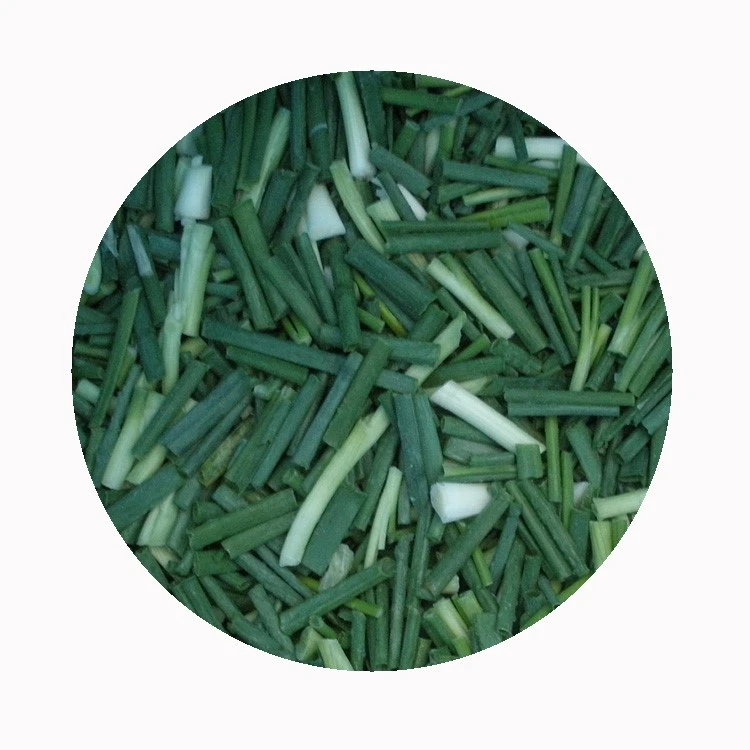
Frozen green onion segments retain recognizable green and white portions, but the texture becomes softer after thawing.
Green onion, scallion, or spring onion: specify the raw material
Green onion, scallion, and spring onion are often used as overlapping market names. The exact meaning can vary by country, crop, and buyer. Some buyers expect slender onions with almost no bulb; others use spring onion for a slightly more developed white base. In commercial purchasing, the name alone is not enough.
A useful specification identifies the botanical or agreed raw-material description, acceptable white-to-green ratio, leaf condition, trim point, cut form, cut tolerance, and intended application. Photos or an approved reference sample can prevent a shipment from being technically "green onion" but visually wrong for the finished product.
At GreenLand Food, we discuss these points before confirming an IQF order. A noodle topping may need small, visually consistent rings with a strong green appearance. A dumpling filling may accept a mixed white-and-green dice. A soup or hot-pot kit may need longer segments that remain visible after cooking. The correct format follows the application rather than a generic product name.
Do green onions need blanching before freezing?
Usually, no. Unlike many vegetables, chopped onions are commonly frozen without blanching. The Oregon State University Extension freezing guide lists green onions among onions that can be frozen diced and unblanched. Penn State Extension gives similar guidance for chopped onions.
Skipping blanching is helpful because heat can soften the thin leaves quickly and may wash out some fresh onion character. However, "no blanching" does not mean "no preparation." Soil, damaged leaves, roots, standing wash water, weak packaging, and a warm freezer can all reduce the quality of the result.
For a small home batch, blanching adds little value when the onions will be used within a reasonable period. For commercial IQF production, the process is controlled through raw-material selection, washing, trimming, cutting, rapid freezing, inspection, packing, and frozen storage. The commercial decision is documented in the agreed process and specification rather than copied from a household method.
How to freeze green onions at home
1. Select sound green onions
Use onions that are still green, clean-smelling, and firm enough to handle. Remove slimy leaves, badly yellowed tops, damaged tissue, and dried roots. Freezing preserves the condition you start with; it does not restore poor raw material.
2. Wash and trim
Rinse away visible soil, especially where the green leaves meet the white base. Trim the root end and any damaged leaf tips. If grit is trapped between layers, split the lower section and rinse it carefully.
3. Dry the surface thoroughly
Drain the onions, pat them dry, and allow remaining surface moisture to evaporate. Excess water becomes surface ice, encourages pieces to freeze together, and adds unwanted liquid when the onions enter a pan or formula. Drying is one of the simplest ways to improve the result.
4. Cut for the next use
Small rings work well for eggs, fried rice, noodles, and seasoning. A medium chop is practical for soups, sauces, and fillings. Longer pieces may suit stir-fries or soup kits. Cutting before freezing avoids handling a soft, partly thawed bunch later.
5. Loose-freeze if portion control matters
Spread the dried pieces in one layer on a lined tray and freeze until firm, then transfer them to final packaging. This is a household approximation of loose freezing, not the same as an industrial IQF process. It helps prevent a solid block and makes it easier to remove only the amount needed.
6. Pack, remove excess air, and label
Use a freezer-grade bag or rigid container, press out unnecessary air, seal securely, and label the pack with the product and date. Onion aroma can move into nearby foods, so an additional outer bag is sensible. Utah State University Extension also recommends double bagging onions to reduce odor transfer. Keep the freezer at 0°F (−18°C) or below.
| Freezing format | Best use | Main advantage | Watch for |
|---|---|---|---|
| Fine rings | Eggs, noodles, fried rice, seasoning blends | Fast distribution through the dish | Small pieces release moisture quickly |
| Medium chop or dice | Fillings, soups, sauces, ready meals | Versatile and easy to portion | Define the expected cut range |
| Longer segments | Soup kits, stir-fries, hot-pot packs | More visible in the finished dish | Less convenient for fine mixtures |
| Green and white parts packed separately | Recipes with different addition times or visual targets | Better formula control | More preparation and inventory handling |
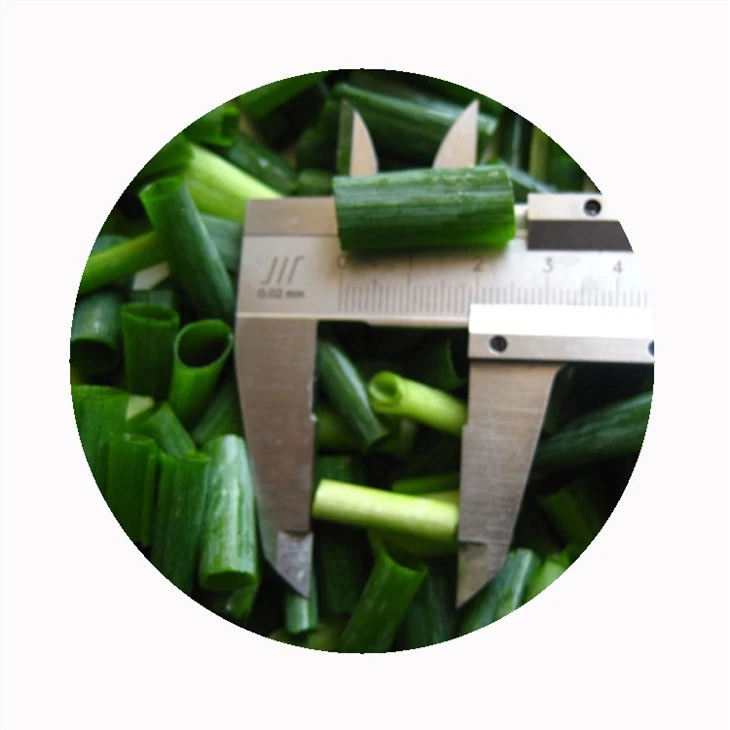
For commercial orders, a named cut such as "segment" should be backed by a measurable size range and tolerance.
Should you freeze green onions whole or chopped?
Chopped is usually the more practical choice. Whole green onions take more space, freeze into awkward shapes, and still need cutting before use. They also become flexible and soft as they thaw, which makes neat slicing more difficult. Whole freezing can work if the onions are destined for stock, broth, or a blended sauce, but it offers little benefit for most kitchens.
Separating the dark-green tops from the white and pale-green bases can be worthwhile. The white section usually has a denser bite and stronger onion impact, while the thin green portion softens faster and provides more visible color. Separate packs let a cook add the white portion earlier and the green portion later. A food manufacturer can use the same principle when it controls appearance and flavor through a defined white-to-green ratio.
Do not assume smaller is always better. Fine rings disperse efficiently but expose more cut surface. Longer pieces are visually prominent but may not distribute evenly in a filling. Start with the way the ingredient must perform in the final product, then choose the cut.
What happens to texture, color, aroma, and moisture?
Freezing forms ice crystals inside plant tissue. After thawing, the cells hold water less effectively, so green onions become softer and may release liquid. This is the central quality boundary: frozen green onions can still contribute onion flavor, green color, and visible pieces, but they cannot reproduce the snap of a freshly cut garnish.
Color should remain recognizably green and white when the raw material and frozen storage are well controlled. Some dulling can occur during long storage, temperature fluctuation, or prolonged exposure to air. Aroma can also weaken or spread to other frozen foods when packaging is poor. A tight seal protects both the onions and neighboring products.
Released water matters differently by application. A soup can absorb it with little difficulty. A dumpling or spring-roll filling may become too wet if the onion is thawed and added without checking drainage. Fried rice and stir-fry lines may need the ingredient added frozen into a hot process to encourage rapid evaporation. A sauce may tolerate the water but require adjustment of other liquid ingredients.

A mixed green-and-white cut can provide both visible color and onion character; buyers should agree the ratio and tolerance.
Do you need to thaw frozen green onions?
In most cooked applications, no. Add the required portion directly from frozen to soup, noodles, eggs, fried rice, sauce, or a hot pan. Direct use reduces handling and avoids leaving a soft pile of onion sitting in released liquid.
Thawing is useful when a formula is sensitive to added water or when a buyer is running a controlled assessment. Thaw a measured sample under refrigerated conditions, record the drained weight, observe color and aroma, and test it in the actual recipe. Do not use room-temperature thawing as a shortcut. Once thawed, treat the ingredient as perishable and follow the food-safety controls appropriate to the operation.
| Application | Use frozen or thawed? | Practical check |
|---|---|---|
| Soup, broth, ramen, hot-pot kit | Usually direct from frozen | Confirm piece visibility and addition time |
| Fried rice or stir-fry | Usually direct from frozen | Use adequate heat and avoid overloading the pan |
| Dumpling or spring-roll filling | Depends on the mixing process | Measure liquid release and finished filling texture |
| Sauce or seasoning base | Either, according to formula | Check aroma strength and water balance |
| Cold garnish or salad | Fresh is normally better | Frozen product will not recover fresh crispness |
For a broader application overview, see our guide to frozen spring onion applications and production benefits. This article keeps the focus on freezing behavior and specification decisions.
Home tray freezing versus commercial IQF green onion
A tray-frozen home batch and commercial IQF green onion solve related but different problems. Both aim to preserve the ingredient in frozen storage, but an industrial buyer needs repeatable cut, controlled foreign matter, documented packing, batch traceability, and dependable supply. Calling a loosely frozen home batch "IQF" would overstate the process.
| Point | Home tray freezing | Commercial IQF supply |
|---|---|---|
| Primary goal | Preserve a small surplus | Supply a repeatable ingredient at production scale |
| Freezing | Domestic freezer, slower heat removal | Rapid individual quick freezing under a controlled process |
| Cut control | Visual, hand-cut portions | Agreed range, tolerance, and inspection method |
| Quality records | Date label | Specification, batch records, tests or COA as agreed |
| Packing | Small freezer bag or container | Bulk, foodservice, retail, or private-label formats |
| Receiving decision | Personal inspection | Defined temperature, pack integrity, sensory, cut, and document checks |

Fine rings distribute quickly in noodles, egg products, seasoning blends, and prepared foods, but the cut tolerance still needs agreement.
What should a commercial frozen green onion specification include?
A usable specification converts a product name into measurable acceptance points. Our current IQF frozen green onion product page shows reference cuts such as 3–5 mm, 5–10 mm, 10–20 mm, and 2–4 cm. These are starting points, not a promise that every size is interchangeable or available under every order condition.
Before quotation and sample approval, the buyer and supplier should align the following:
- Raw material: agreed green onion, scallion, or spring onion description; maturity and visual reference where needed.
- Cut: rings, chopped, diced, or segments; target size; tolerance; and treatment of broken pieces.
- Appearance: natural green and white color, white-to-green ratio, acceptable yellow-leaf level, root residue, and visible defects.
- Sensory condition: characteristic aroma and flavor, with no unacceptable off-odor.
- Physical control: foreign-matter requirements, clumping expectation, surface ice, and metal-detection control.
- Microbiological and residue requirements: limits and test methods appropriate to the market and intended use.
- Packing: net weight, inner bag, carton, label language, coding, pallet pattern, and private-label artwork where applicable.
- Cold chain and shelf life: storage temperature, transport requirements, and order-specific declared life.
- Documents: product specification, COA or test reports as agreed, packing details, traceability information, and destination-specific export documents.
Our current reference page states a 24-month shelf life when stored at or below −18°C. Final shelf life, label wording, and required documents must be confirmed for the specific pack, market, and contract. MOQ and lead time also depend on cut, packing format, production plan, season, and whether the order is a single item or part of a mixed frozen-vegetable program.
How we prepare and control IQF frozen green onion
We begin with selected raw material and remove roots, soil, badly yellowed or damaged leaves, and visible foreign material. The onions are washed, trimmed, cut, quick-frozen, inspected, metal detected, packed, and held under frozen conditions. The exact process and control plan follow the confirmed product specification.
The controls that matter to a buyer are not limited to whether the pieces look green in a sales photo. Cut-size distribution affects dosing and appearance. A high broken rate can change how a topping looks. Excess white portion may shift both color and flavor. Yellow leaves, root residue, foreign matter, excess frost, weak seals, or temperature abuse can make an otherwise useful ingredient unsuitable for a production line.
We therefore recommend agreeing the inspection method before shipment. A written tolerance, reference sample, or approved pre-shipment sample gives both sides a common standard. For repeat programs, batch consistency is often more valuable than chasing an unrealistically perfect single sample.

A measurement image is useful evidence only when the contract also defines the target range, tolerance, and sampling method.
Run a defined application trial before approving a cut
A visual sample review is not enough for moisture-sensitive products. Test the candidate in the actual formulation and process. A simple trial can compare two cuts without turning the result into guesswork:
- Record the frozen product condition, including free-flow, clumping, surface ice, color, aroma, and visible defects.
- Weigh a fixed sample and test one portion directly from frozen using the normal production step.
- Thaw a second fixed portion under refrigeration, record drained liquid, and note the texture after thawing.
- Run the ingredient at the intended inclusion rate in the finished formula, not only as a standalone sample.
- Evaluate appearance, onion impact, liquid balance, piece integrity, distribution, and finished-product yield.
- Repeat under the actual cook, freeze, reheat, or holding conditions that the commercial product will face.
This type of trial shows whether a 3–5 mm ring, a 10–20 mm chop, or a longer segment is actually fit for purpose. It can also reveal whether the formula needs a lower inclusion rate, a different addition point, or an adjustment to other liquids.
Packing, cold chain, and receiving checks
Reference packing options for IQF frozen green onion can include a 10 kg bulk carton, 1 kg × 10 bags per carton, 2.5 kg or 5 kg foodservice bags, and 500 g or 1 kg retail bags. Final availability depends on the order, packaging material, label, and production plan. Private-label packing should be confirmed early because artwork approval, barcodes, language, carton marks, and packaging procurement affect lead time.
Frozen storage and transport should maintain the agreed cold chain, commonly at −18°C or below. At receiving, check more than the display temperature on a vehicle. Review product or pulp temperature according to the agreed method, carton and bag integrity, seals, code and label accuracy, signs of thaw-refreeze abuse, excessive clumping, ice accumulation, and the documents required by the purchase order.
| Receiving point | What to verify | Why it matters |
|---|---|---|
| Temperature | Agreed product-temperature method and limit | Supports cold-chain assessment |
| Pack condition | Clean cartons, intact bags, sound seals, correct net weight | Protects product and odor containment |
| Frozen condition | Free-flow, clumping, frost, ice, color | Can reveal handling or storage problems |
| Identity and coding | Product, cut, lot, date, label, carton marks | Supports traceability and correct line use |
| Documents | PO, specification, COA or agreed reports, shipping documents | Confirms contractual and market requirements |
Common freezing and sourcing mistakes
- Freezing wet onions: surface water creates extra ice and encourages pieces to stick together.
- Expecting fresh garnish texture: freezing softens the tissue; use frozen onion where cooking or mixing hides that change.
- Packing in a weak or partly open bag: the onions can dry out and their aroma can affect other foods.
- Thawing the entire pack repeatedly: portion the product so the rest remains frozen and protected.
- Buying by product name alone: "green onion" does not define cut, ratio, tolerance, defects, packing, or microbiological requirements.
- Approving only a photograph: the ingredient should be tested in the real formula and production conditions.
- Leaving cold-chain acceptance vague: agree the temperature method and receiving actions before the shipment arrives.
Frequently asked questions
Can you freeze green onions without blanching?
Yes. Green onions are commonly frozen chopped and unblanched. Wash them, dry the surface well, cut them, and use freezer-grade airtight packaging.
Can you freeze whole green onions?
You can, but chopped onions are easier to pack, portion, and use. Whole frozen onions become soft after thawing and are difficult to slice neatly.
How long do frozen green onions last?
Quality depends on the starting material, packaging, freezer stability, and intended use. For a home batch, use the oldest pack first and discard it if it shows unacceptable odor, damage, or uncertain handling. Our current commercial IQF product page gives a reference shelf life of 24 months at −18°C or below, subject to the confirmed product and contract.
Do frozen green onions become mushy?
They become softer and release more water than fresh green onions. "Mushy" depends on the cut and handling, but they will not regain a crisp raw-garnish texture.
Can frozen green onions be used directly from the freezer?
Yes. Direct-from-frozen use is normally best for soups, noodles, fried rice, egg dishes, sauces, and other hot preparations.
Can frozen green onions be used as a raw garnish?
They can add color and flavor, but they will be soft rather than crisp. Fresh onion is the better choice when garnish texture is important.
Should the green and white parts be frozen separately?
It is optional. Separate packs are helpful when the parts enter a recipe at different times or when color and onion strength need closer control.
Why do frozen green onions smell through the freezer?
The package may not provide a strong enough odor barrier or may not be fully sealed. Use freezer-grade packaging, remove unnecessary air, seal carefully, and consider a second outer bag.
What IQF green onion cut is best for food manufacturing?
There is no universal best cut. Fine rings suit toppings and seasoning; medium pieces work well in fillings and ready meals; longer segments remain more visible in soups and kits. Confirm the choice through a defined application trial.
What should buyers request before placing an order?
Request the specification, available cut and packing options, sample or visual reference, quality tolerances, test and document plan, storage conditions, shelf life, MOQ, lead time, loading plan, and destination-market requirements.
We supply frozen spring onion in rings, chopped pieces, dice, and segments for food manufacturing, foodservice, and retail programs. Tell us the application, target cut, green-to-white preference, annual or trial volume, pack format, destination, and required documents. We can then discuss a relevant specification and sample rather than send a generic quotation.
Explore our frozen spring onion range, review the broader frozen vegetable portfolio, or download the GreenLand Food frozen food catalog.
Send Your Green Onion Requirement