


Mallow Leaves, Molokhia and Malva: Why Botanical Identity Comes First
Oct 19, 2026
Leave a message

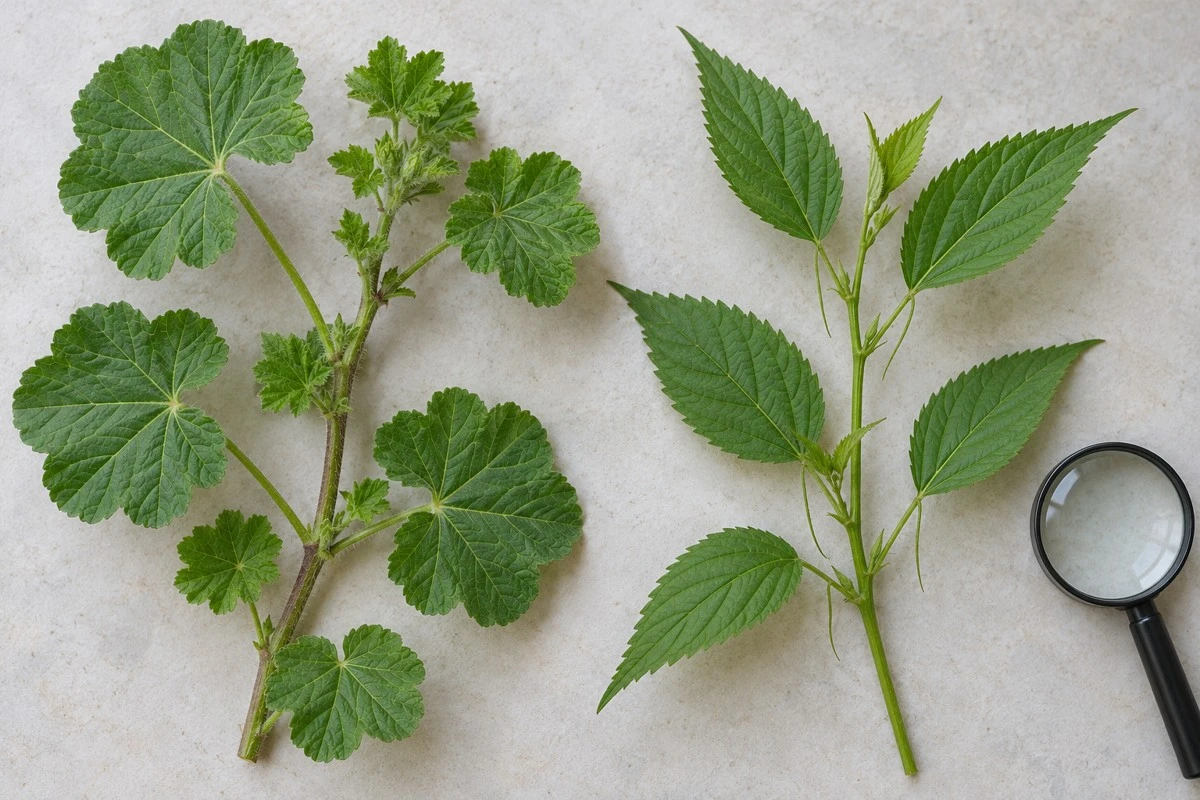
The distinction matters in ordinary production. A whole-leaf vegetable portion and a finely chopped molokhia soup may require different leaf structure, stem tolerance and cooking behavior. If the raw material is named ambiguously, a satisfactory sample cannot be translated reliably into a repeat order, ingredient declaration or destination review. Identity needs to remain attached to the product as it moves from source material to frozen pack and finished dish.
GreenLand-food's frozen mallow leaves page requires the botanical identity to be confirmed for the actual order. The broad product name does not independently establish that every offered SKU is Corchorus olitorius or a particular Malva species. This guide explains how to resolve that question and then assess the form and application. It is a commercial ingredient guide; it does not identify wild plants for collection or establish the edibility of an unknown specimen.
Resolve the name before discussing the recipe
A common name is useful for communication within a familiar market, but it can travel poorly between languages and regions. Mallow may describe a plant in the genus Malva, a jute mallow in Corchorus, or another plant carrying mallow in its vernacular name. The fact that two sellers use the same English word does not prove they are offering the same botanical material. Ask for the complete scientific name rather than relying on translation alone.
Molokhia also names a food tradition and a prepared dish. In many contexts the ingredient is Corchorus olitorius, commonly called jute mallow or Jew's mallow. Regional names and cooking practices can vary, and other Corchorus species have documented vegetable uses. A menu name can therefore indicate the intended culinary direction without defining every ingredient specification. The supplier should identify the material actually offered, and the buyer should confirm that it matches the intended food.
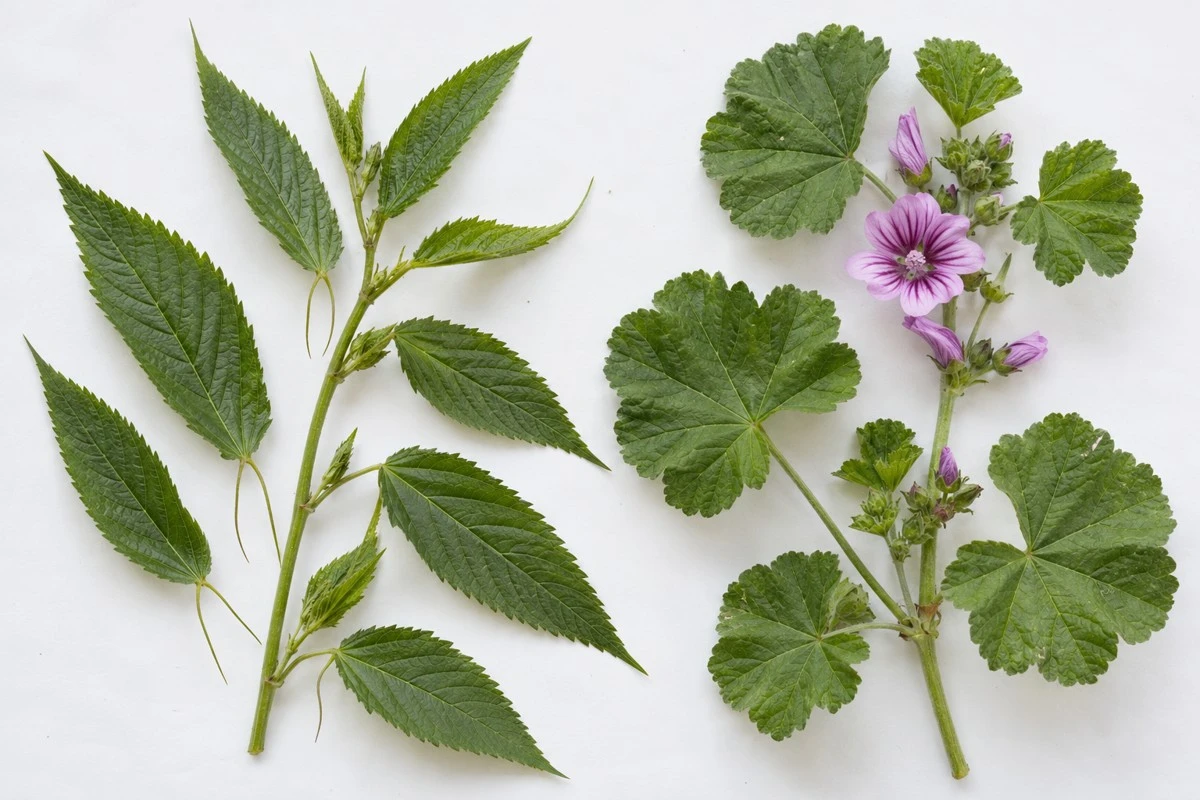
Illustrative reference specimens show different leaf structures; they do not identify the supplied frozen SKU.
Malva is a genus name. Writing Malva spp. means species within that genus without specifying which one; it does not identify a single species. If a purchase requires a particular edible species, the specification needs that species-level declaration supported by appropriate source records. A genus-level description may be adequate for a preliminary enquiry but should not silently become the final identity on an approved food order.
Ask for the local source name as supporting context as well as the scientific name. It can help the supplier trace a crop or resolve a translation, particularly where the same English term has been applied broadly. Keep the local name subordinate to the agreed identity instead of replacing it. When documents use a historical synonym, resolve that synonym against a reliable botanical reference and record the accepted name used for the order.
Clarify the plant part at the same time. Leaves, leafy shoots, coarse stems, seeds and extracts are different materials. Evidence about an edible leaf does not automatically support another part or a concentrated preparation. A quotation for leaves should state how much petiole or tender stem is included and how coarse material is handled. Those details affect both the physical inspection and the prepared dish.
Begin the discussion with a simple sentence that includes the scientific name, part and form. For example, an enquiry may request identified Corchorus olitorius leaves for a chopped cooked soup ingredient, subject to supplier confirmation. That is a proposed requirement, not a declaration about a photographed product. The distinction lets both teams resolve availability and evidence before recipe development creates expectations around an uncertain material.
Distinguish Corchorus from Malva
Corchorus and Malva are different genera. Modern broad treatments place them within Malvaceae, but family membership is a wider relationship than ingredient identity. Many plants share a family while differing in structure and use. The shared word mallow can make the relationship sound closer than the purchase decision allows. Treat the scientific name as a specific declaration, not as a decorative Latin addition to a common name.
Corchorus olitorius is described in botanical sources with generally ovate to narrower, pointed leaves, toothed margins and characteristic elongated appendages associated with the basal teeth. Its leaves are arranged alternately on the stem. These features can support a botanical assessment when suitable intact material is available. They should be read in context with the complete specimen and the range of variation described by a competent reference.
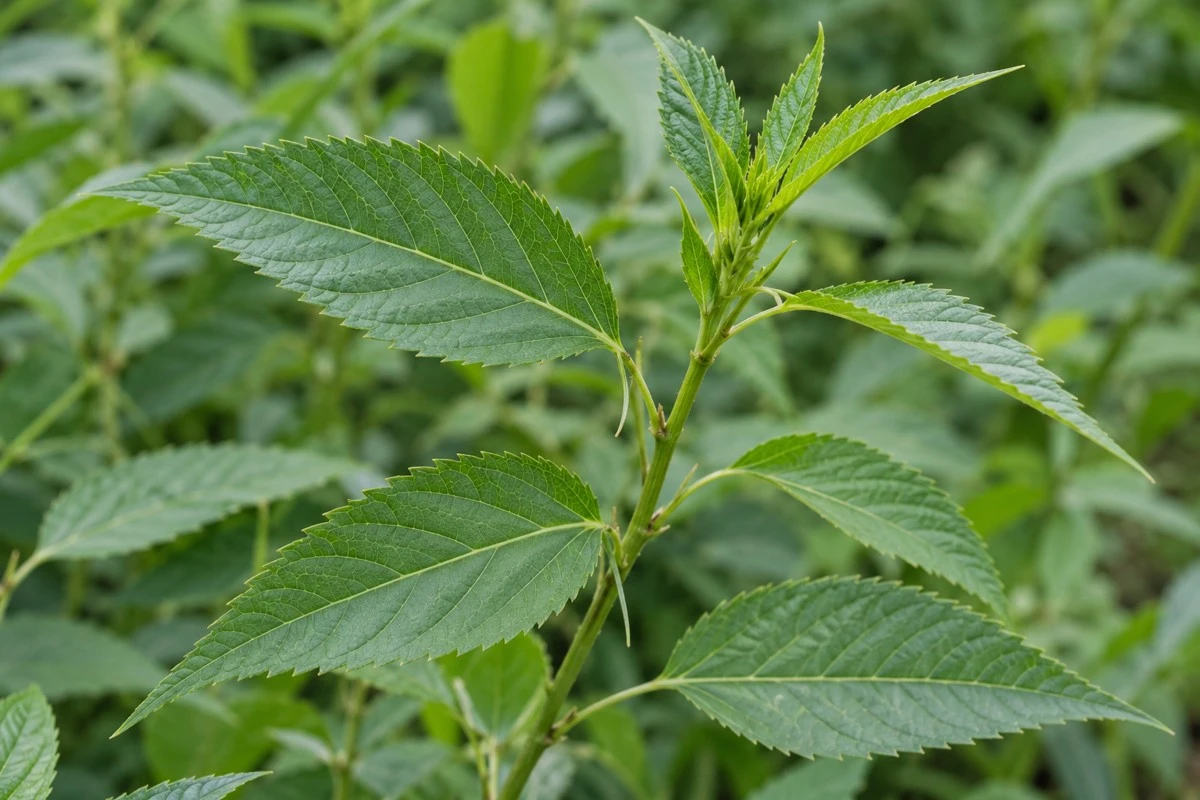
Illustrative Corchorus-type leaf structure, including serrated margins and elongated basal appendages; confirm identity from source evidence.
Malva includes species with rounded or kidney-shaped leaves, often with palmate lobing. The genus contains variation, so a broad leaf-shape description is not a universal identification rule. Horticultural photographs can illustrate a typical appearance while leaving species-level questions unresolved. A single torn leaf on a frozen product tray rarely supplies all the characters that a botanical specialist would use.
Older literature may place Corchorus in Tiliaceae. That historical family placement can appear in otherwise useful research and does not automatically mean the author studied a different species. Compare the scientific name, authorship and reference context before treating a classification difference as an ingredient discrepancy. For the current order, use a consistent accepted identity and preserve the source documents that explain any synonym or historical terminology.
Capsicum introduces a separate possible confusion in mixed ingredient discussions. Chili peppers belong to Capsicum in the family Solanaceae; they are not mallow leaves. A molokhia dish seasoned with chili does not make the leafy ingredient a pepper or explain its thickening through capsaicin. Keeping the leaf and seasoning identities separate helps with ingredient declarations and with diagnosing whether a customer is describing pungency, vegetable flavor or texture.
Botanical references provide the framework for this distinction. The Taiwan plant database describes Corchorus olitorius morphology, the Royal Horticultural Society describes Malva at genus level, and Kew provides family context. None of those references verifies the contents of a particular shipment. The commercial task is to connect an identified crop and approved sample to the packed lot, using evidence appropriate to the actual source and processing chain.
Use whole leaves as a first inspection
An intact reference sample is more informative than a bag of finely chopped leaf when identity is being established. Ask for clear views of the upper and lower surfaces, the leaf base and margin, the petiole and the leaf's attachment to the shoot where available. A scale reference helps interpret size, but size alone is rarely decisive. The photograph should preserve the features being discussed rather than crop them away for a more attractive composition.
Use the reference to inspect consistency within the offered material. Look for different leaf shapes, unusual stems, unrelated weeds and other plant material that may be mixed with the intended crop. A visually uniform sample supports a preliminary assessment, while an unexplained mixture needs investigation. It still does not establish the absence of every contaminant or verify the source records. Photographs have a useful but limited evidential role.
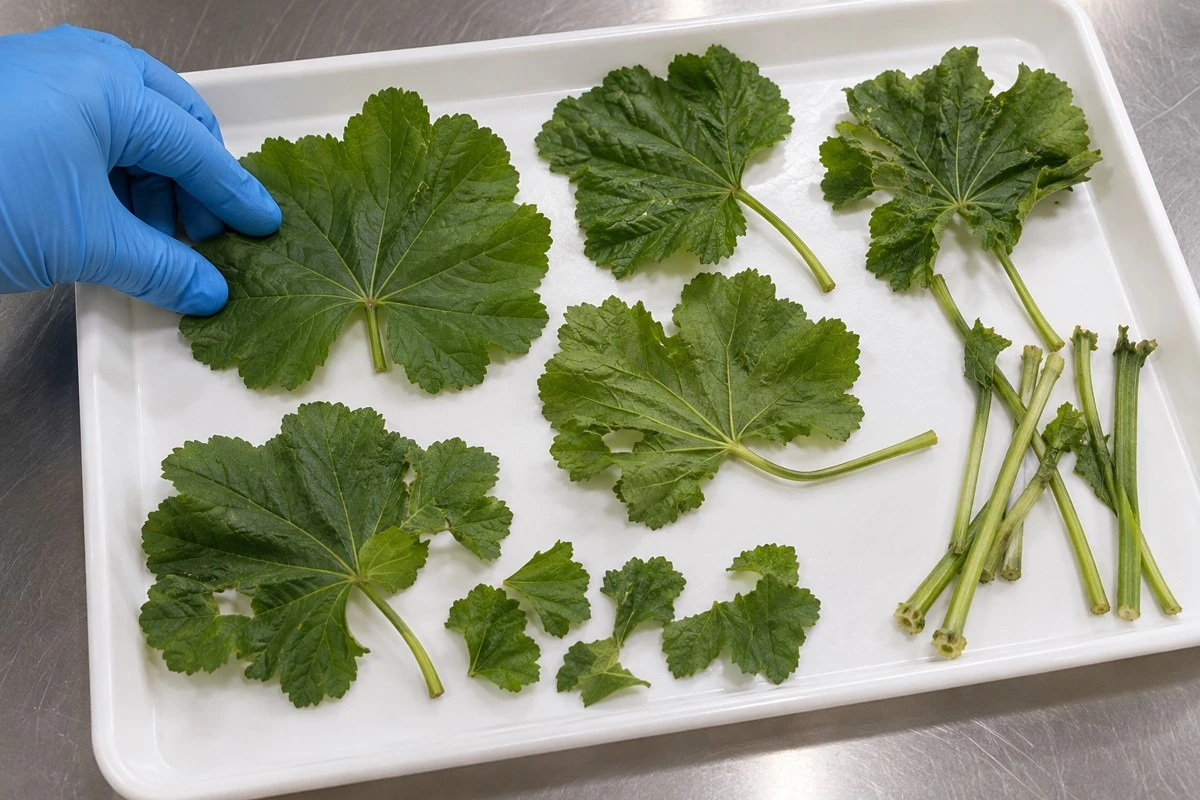
Illustrative leaf inspection shows margins, veins and separated stems; it does not authenticate the supplied SKU.
Freezing, thawing and blanching can alter appearance. Leaves may curl, darken, tear or fold together, and fine surface features may become less visible. A photograph of a frozen mass can therefore be unsuitable for botanical comparison even when it accurately represents the supplied product. Where identity depends on features lost during processing, establish it upstream and retain the link to the processed lot.
GreenLand's frozen mallow leaves product page shows product material and describes the need to confirm botanical identity. Those photographs can help discuss visible leaf and stem condition. They should not be relabeled as a specific Malva species or as Corchorus olitorius solely because the article discusses those plants. A scientific name in an image caption requires a supported identification of the depicted specimen.
When visual evidence and documents conflict, pause the identity approval and ask the responsible supplier or qualified specialist to resolve the discrepancy. Depending on the question, that may require better source specimens, botanical examination or another suitable identification approach. The appropriate method depends on the material and its processing. A generic promise of DNA testing is not a substitute for a defined question, a suitable method and interpretable reference material.
Keep the inspection record specific. Describe the observed leaf shape, stem proportion, foreign material and sample condition, then distinguish those observations from the declared identity. This allows a later reviewer to see what was actually examined. It also avoids turning a purchasing team's visual screening into an unsupported certification that the whole shipment has been botanically authenticated.
Keep botanical identity attached to the frozen form
Once the species and plant part are resolved, define the physical form. Whole leaves, coarse chopped leaf, fine chopped material and portion blocks have different handling and culinary uses. A whole-leaf sample can show structure that is no longer recognizable in a fine frozen chop. The identity record must travel with the product through that change rather than being replaced by a generic frozen greens description.
Distinguish cutting from freezing format. A chopped ingredient can be supplied in a compact block or another agreed portion format; a whole leaf does not automatically imply a particular freezing process or free-flowing condition. Our frozen vegetable product-form guide explains these separate choices. For mallow-type leaves, add the botanical declaration and edible-part definition before using the form terminology in an order.

Published mallow product photograph showing leaves and stems; the specific botanical identity requires the order records.
Stem content deserves an explicit agreement. Tender petioles or young shoot material may be acceptable for one preparation, while coarse stems can be objectionable in a finely chopped soup or soft vegetable portion. Describe how the material is assessed after the required cooking procedure. A narrow cut can make a tough stem less conspicuous without making it tender, so particle size alone is not a complete quality criterion.
Ask for the actual preparation status: trimming, washing, any blanching or other treatment, and the cooking instructions for use. Frozen and blanched are not complete descriptions of readiness to eat. The processing history relevant to the offered SKU needs to be supported by its records and instructions. Do not infer a ready-to-eat claim from a green color, a soft leaf or a photograph of a finished dish.
Water release and portion behavior also need a defined trial. A buyer using the complete frozen portion in soup may retain liquid that another buyer drains before preparing a leafy side. Those processes deliver different ingredient contributions. Record whether the comparison uses the full bag contents, a drained fraction or a weighed cooked portion. Otherwise a difference in preparation can be mistaken for a difference in species or supplier quality.
For a repeatable purchase, keep the botanical name, approved form, treatment status, stem tolerance and sample method in the same specification. Separate documents can be used, but they should identify the same item and revision. If the supplier offers a new cut or changes the source crop, review the relevant evidence before extending the original approval. The same broad product name does not automatically carry every earlier approval forward.
Test the texture the customer expects
Molokhia is often valued for the body that its chopped leaves give to a cooked preparation. Mucilage can contribute a viscous or coating texture, but the appearance and mouthfeel depend on the ingredient and recipe. Botanical identity is the starting point; it does not define one universal soup thickness. The amount of leaf, particle size, liquid ratio and cooking and holding conditions all belong in the application assessment.
Ask the customer to describe the intended dish. A finely dispersed green soup, a preparation with recognizable leaf pieces and a simply cooked leafy side have different acceptance criteria. Terms such as smooth, thick or tender need a reference that both teams can interpret. An approved cooked sample and a short description of its visible and sensory characteristics are more useful than an unexplained preference for premium leaves.
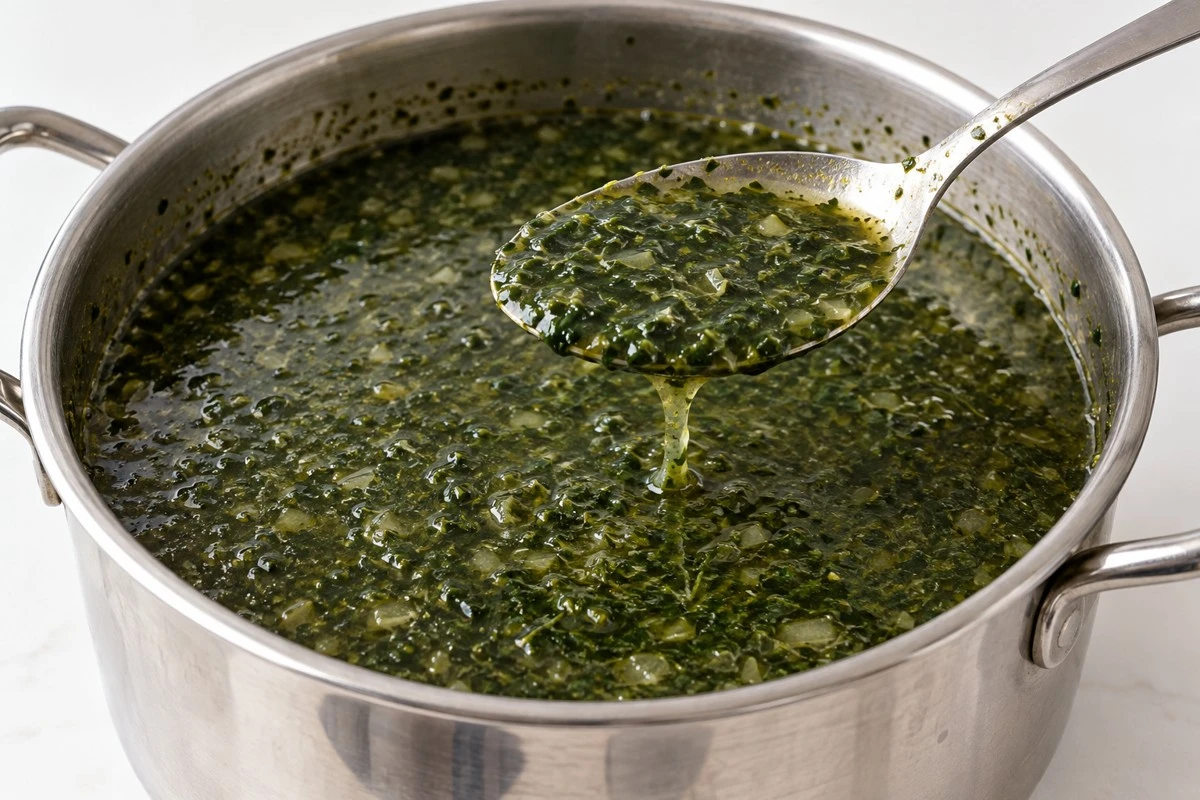
A cooked molokhia-style soup illustrates leaf dispersion and broth body; cooked appearance alone cannot establish species.
Use a controlled preparation to compare candidate samples. Weigh the supplied ingredient and liquid, follow the relevant cooking instructions and keep the mixing and holding conditions consistent. Assess the food at the point it will be served or packed. A sample evaluated immediately after cooking may behave differently after the normal service delay or reheating cycle. Record those stages if they affect the customer's acceptance.
Separate several observations rather than giving the sample one overall texture score. Note leaf particle distribution, stem tenderness, visible foreign material, liquid separation and the body of the surrounding broth. If the dish feels too coarse, the cause may be stems or cut distribution. If it is too thin, the liquid ratio or ingredient concentration may be involved. Those findings lead to different changes and should not all be attributed to an assumed species difference.
Do not use viscosity as an identity test. Different plants and ingredients can thicken water, and a formulated product may contain additional components. A thickened green preparation is therefore not proof of Corchorus olitorius. Review the complete ingredient declaration and the declared source identity. Likewise, a less viscous sample does not by itself prove substitution; preparation, form and composition must be investigated before making that conclusion.
The distinction between mucilage and seasoning heat is explained in GreenLand's okra flavor and texture article. Okra is a different ingredient, but the sensory distinction is useful: chili heat, acidity and a coating mouthfeel answer different questions. For mallow or molokhia development, record which sensation the customer means so an adjustment to seasoning is not confused with a change to the leafy raw material.
Carry the identity through labels and lot records
An identity decision is useful only if the packed product remains connected to it. The specification, sample approval, production record, carton mark and shipment documents should refer to the same agreed ingredient. Use the appropriate commercial name for the destination together with the botanical declaration where needed for technical review. The importer should confirm the applicable naming and documentation requirements for the actual market and product.
Avoid translating the scientific name into a broad common name and then reconstructing a different species from that translation later. Preserve the original scientific declaration through the document chain. When a local name or synonym is included, identify its relationship to the accepted name clearly. This reduces the chance that a packing or sales team uses a familiar label that no longer matches the source material approved by quality staff.
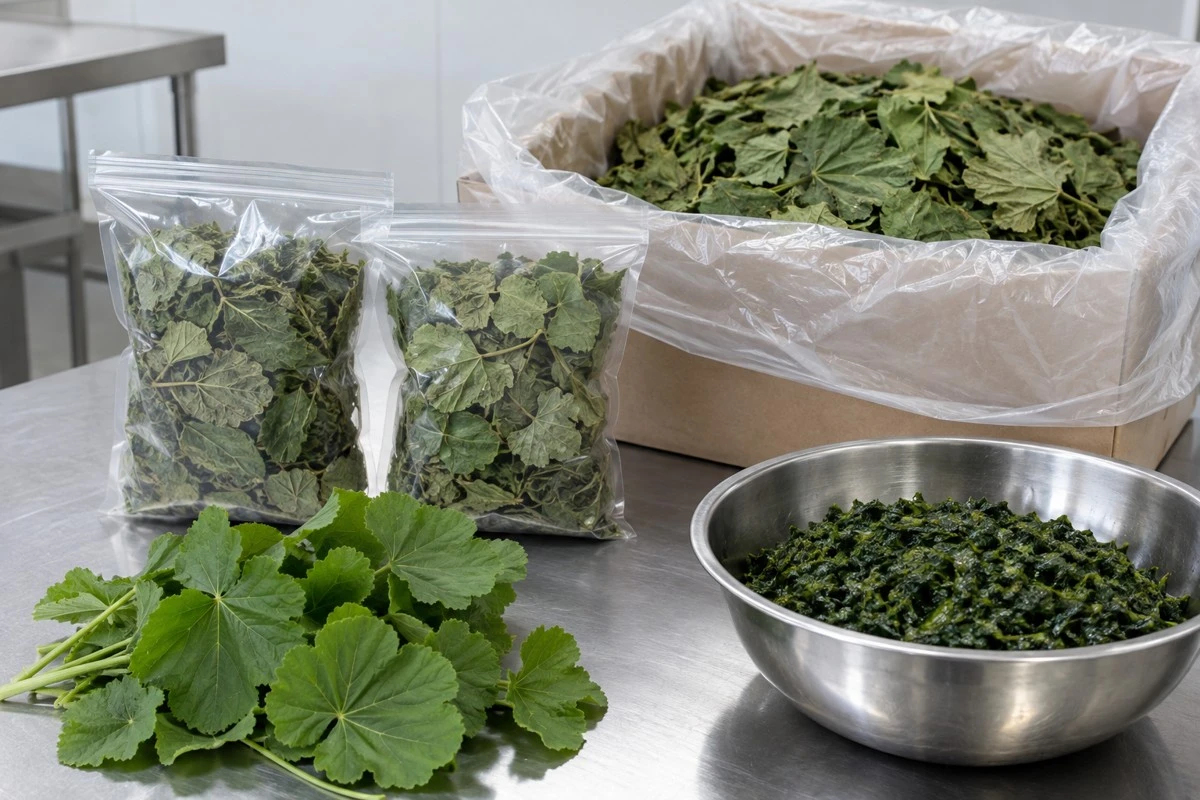
Illustrative sample and packaging comparison; botanical declarations and lot records must establish identity.
The product description should also preserve the edible part and formulation. Plain leaves, leaves with tender stems, a seasoned mixture and a prepared soup are different items. A photograph of the proposed dish can explain the application without implying that every seasoning or processing step is included in the supplied frozen ingredient. Keep the order scope clear so the receiving team knows what should be present in the bag.
Destination review may involve the specific species, plant part, processing and intended use. Do not generalize approval from a related plant or another country's common-name listing. A broad family relationship or history of culinary use can inform the discussion, but it does not replace the applicable market assessment. Confirm any required ingredient, residue, microbiological or other documentation with the responsible technical and importing teams for the actual transaction.
Lot records should make a discrepancy traceable. If a received pack differs from the approved reference, preserve the carton code, pack photographs and relevant samples under the agreed procedure. Compare the declaration and physical material before blending it into production. Once several lots have been mixed, investigating a source identity or foreign-plant problem becomes more difficult and can affect a larger amount of finished food.
Keep claims within the evidence. A species reference does not substantiate a nutrient content for every frozen SKU, and a published laboratory study on an extract does not establish a health benefit for a cooked portion. If nutrition or another specific claim is required, obtain suitable evidence for the product and market. For ordinary procurement, the priority is a correctly named, appropriately prepared ingredient with traceable records and acceptable performance.
Approve the ingredient before placing a repeat order
Bring the evidence together before agreeing the final order. The scientific identity, edible plant part, physical form and processing state should be resolved, and the sample should be assessed using the intended preparation. Remaining uncertainties need named actions. A request for a clearer source declaration is different from a request for a finer chop, and a revised label is different from a new botanical assessment.
The approval should say what it covers. A whole-leaf ingredient approved for a cooked side does not automatically establish suitability for a fine molokhia soup. Similarly, a successful soup trial does not establish that a different species or source can be substituted under the same common name. Record the boundaries that matter to the customer so later commercial changes receive the appropriate review.

Published mallow product photograph showing leaves and stems; the specific botanical identity requires the order records.
For repeat orders, compare the declared source and product against the approved version. A changed botanical name, plant part, treatment or formulation warrants technical review before it is accepted as equivalent. A change in pack size may mainly affect handling, but it can also alter portioning and the practical preparation method. Review the consequences of the actual change rather than assuming every revision is either harmless or a complete new product.
Define receiving observations that staff can apply consistently. These may include pack integrity, frozen condition, lot identity, visible stem material, unexpected leaf types and the result of the agreed cooking sample. Set the sampling and acceptance procedure with the relevant quality team. A visual check supports receipt control, while source and process records support questions that cannot be answered by looking through a frozen bag.
Packing and order planning follow the resolved ingredient. State whether the operation uses full bulk units or smaller portions, the required quantity, destination, shipment window and document needs. We review those details with the proposed frozen mallow leaves specification and confirm the available supply scope. The request should identify the intended species rather than expecting the English product heading to resolve it automatically.
A useful enquiry gives both the scientific name and the dish: the identified leaves required, the approved whole or chopped form, the expected stem condition and the preparation used to judge texture. Include a reference sample or clear specimen evidence where appropriate. That combination lets the supplier discuss a concrete ingredient and lets the buyer repeat the desired result without relying on a common name that different markets may interpret differently.
Retain that approval in a form the next purchasing colleague can use. A sample photograph without its identity declaration can lose meaning when copied into a new enquiry, just as a scientific name without a form description can produce an unsuitable quotation. Keeping the name, specimen reference, specification revision and application result together gives the next order a clear starting point. If any of those elements changes, record the reason and the additional review that supports accepting the revised ingredient.
Source frozen mallow leaves with GreenLand-food
GreenLand-food is a professional frozen mallow leaves supplier and manufacturer in China, providing factory-direct wholesale supply for importers, food manufacturers, foodservice distributors and private-label programs.
Send your product form, specification, packing, quantity, application, destination, private-label needs and requested documents. We help your purchasing team confirm the sample, order details and supply plan for the intended use.