


Reading a Chili Pepper COA: Capsaicinoid Units, Moisture Basis and Test Method
Oct 19, 2026
Leave a message

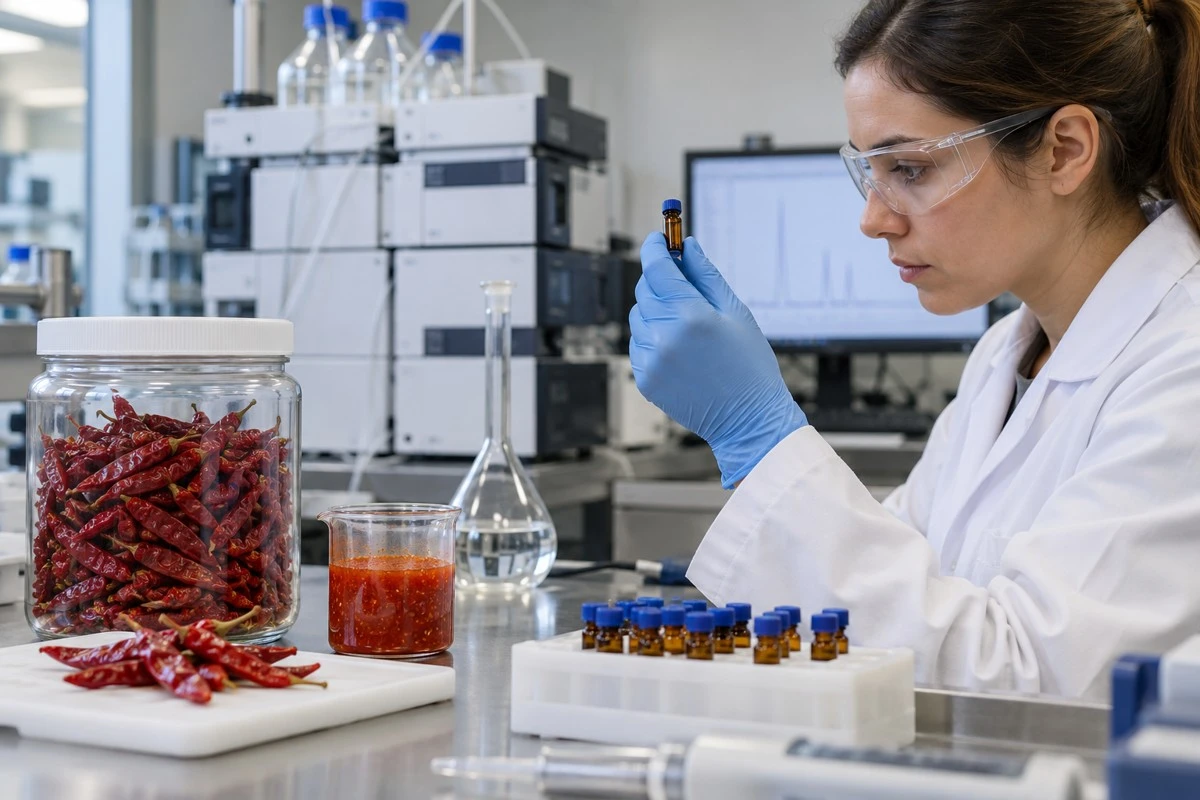
For mass fractions, 1 mg/kg equals 1 microgram per gram and 1 part per million by mass. That equivalence does not make a laboratory extract result in mg/L interchangeable with a pepper result in mg/kg. Scoville Heat Units add another calculation: the reported value depends on the analytical method and its stated conversion. A universal instruction to multiply any chili result by a single number can hide differences in analytes, sample basis and method version.
At GreenLand-food, we want a requested heat range to be clear enough for the proposed product and laboratory to interpret in the same way. A frozen whole chili, a drained chopped sample and a dried powder are different analytical materials. The examples below show how a buyer can read their reports and ask useful questions. They are illustrative calculations and acceptance scenarios, not test results for a GreenLand shipment.
Match the report to the pepper and the lot
Start with the sample description and traceability fields. The report should connect to the product offered, the relevant lot and the material actually submitted to the laboratory. A cultivar name, a photograph or an old specification sheet cannot establish that connection by itself. Check the report number, sample identifier, receipt and test dates, and the party that collected or submitted the sample. Those details define what the result can reasonably describe.
The physical form matters. Whole peppers with stems, stemmed whole peppers, deseeded pieces and a homogenized puree may contain different proportions of tissue. A study that removes seeds and stalks before analysis cannot be assumed to describe the complete contents of a commercial frozen bag. If your ingredient specification includes or excludes particular tissues, the laboratory preparation should correspond to that definition or clearly state the difference.
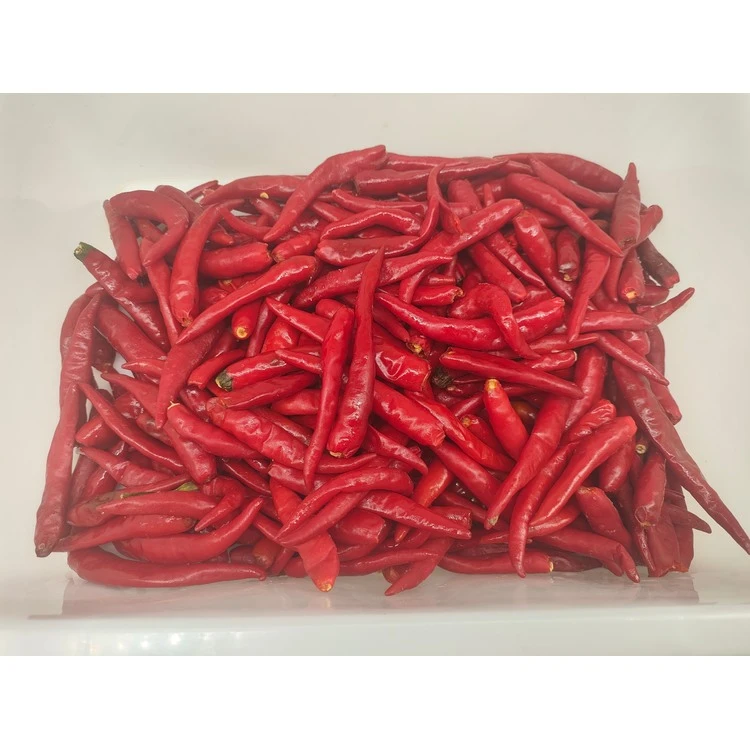
Whole red chili pods in the published product tray; a photograph does not establish cultivar or pungency.
For frozen peppers, ask how the sample was prepared during thawing. Was all liquid retained and homogenized with the solids, or was the pepper drained first? A COA for the complete supplied ingredient should identify any preparation that changes its composition. Testing only a convenient dry-looking portion can bias the relationship between the reported result and the material charged into the recipe. The laboratory should explain its procedure rather than leaving the purchasing team to infer it.
Distinguish a representative lot sample from a selected pod. A highly pungent individual fruit does not establish the average of a shipment, and a composite does not describe the variation among every pod. The sampling plan depends on the decision: a sauce manufacturer blending full batches may need different evidence from a packer selling individual whole peppers. Agree the sampling unit and the intended claim before commissioning the analysis.
When a supplier forwards a laboratory report, compare it with the supplier's COA and the carton coding. A transcription error can change a decimal point, unit or reporting basis. If the documents disagree, obtain a corrected explanation that preserves the original report reference. Quietly replacing the number on an internal spreadsheet leaves the receiving team without a defensible record of what was accepted and why.
Our frozen chili pepper page treats cultivar or market type, preparation and heat profile as order-specific details. Use that product discussion to define the sample submitted for testing. The COA then becomes evidence about a named ingredient. It cannot independently prove that a differently prepared item will perform identically in a customer's sauce.
Read the analytes before the total
Capsaicin is one member of the capsaicinoid group. Dihydrocapsaicin and other related compounds can contribute to a chili's pungency. A report headed capsaicin may give the concentration of that individual compound, while a report headed total capsaicinoids may sum a declared group. The word total needs a definition. It does not automatically mean that every potentially relevant compound was measured and included.
For example, a laboratory might report 600 mg/kg capsaicin and 300 mg/kg dihydrocapsaicin. Their sum is 900 mg/kg for those two analytes. If another method also measures a minor capsaicinoid, its broader total can be higher without indicating a contradiction. Compare the individual results and the stated sum before deciding that two laboratories disagree. The same principle applies when a report includes only a calculated pungency value and omits the underlying concentrations.
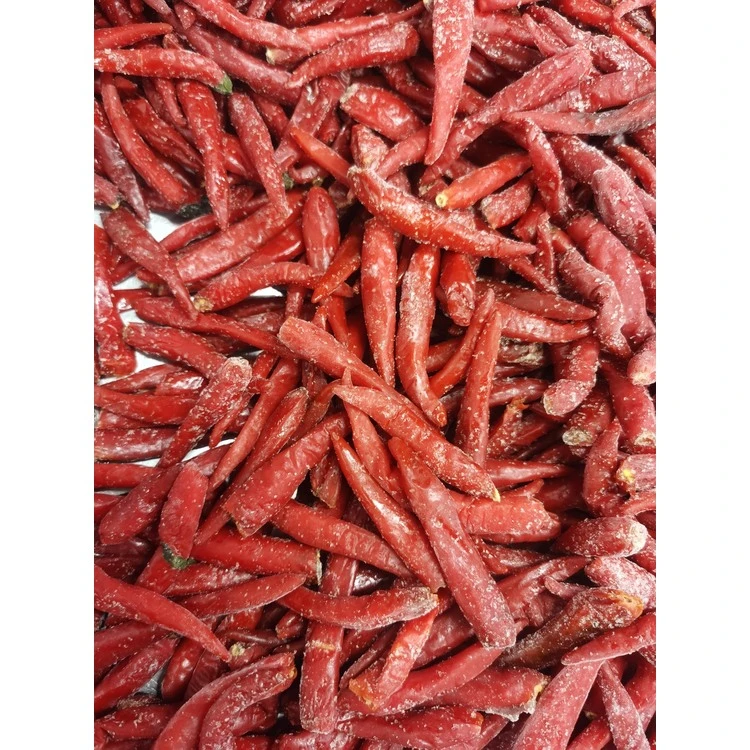
Published frozen red chili sample showing pod and surface condition; heat and acceptance limits require separate evidence.
Ask whether compounds are quantified against their own standards or expressed using a stated equivalent. Chromatographic separation and calibration affect the interpretation of the peaks. An abbreviation beside the result can conceal information that is clear in the method or laboratory notes. Purchasing staff need enough explanation to compare reports, even when they do not need the full instrument procedure or every calibration record.
Primary research illustrates why the method name matters. The University of Cádiz repository describes an HPLC approach covering six named capsaicinoids, while other published methods focus on a smaller set. The useful lesson for procurement is the difference in scope. It would be inappropriate to transfer a numerical result or method performance claim from those experimental materials directly to a frozen commercial lot without checking the applicable preparation and validation.
Keep other chili measurements separate. Extractable color, moisture, microbiological results and pesticide analysis answer different questions. A high color value cannot establish capsaicinoid concentration, and a pungency result cannot establish microbiological acceptability. If several parameters appear on one COA, read each against its own method and specification. A single general pass statement can otherwise obscure which characteristics were actually tested and which were declared from other records.
The agreed total should be stable across repeat orders. If a laboratory changes the analyte panel, retain that information in the comparison record and review whether the acceptance range still applies. A rise caused by newly included compounds is different from a rise in the compounds already controlled. This is particularly relevant when historical data is being used to set a purchasing limit or explain a change in the finished recipe.
Put every result into a comparable mass unit
The basic mass conversions are straightforward when the material and basis match. A result of 1.2 mg/g is 1,200 mg/kg. A result of 0.12% by mass is also 1,200 mg/kg. A result of 1,200 micrograms per gram has the same numerical value in mg/kg. Write the conversion explicitly on the comparison sheet so a difference of one thousand is not mistaken for a dramatic change in pungency.
Parts per million needs its basis stated. In a solid-food mass fraction, 1 ppm by mass equals 1 mg/kg. In a liquid laboratory extract, ppm may be used informally for a concentration such as mg/L. Those expressions are not automatically interchangeable. The extract contains solvent and represents a weighed portion of food after preparation, extraction and possible dilution. A finished-food result requires the relevant calculation back to the original sample.
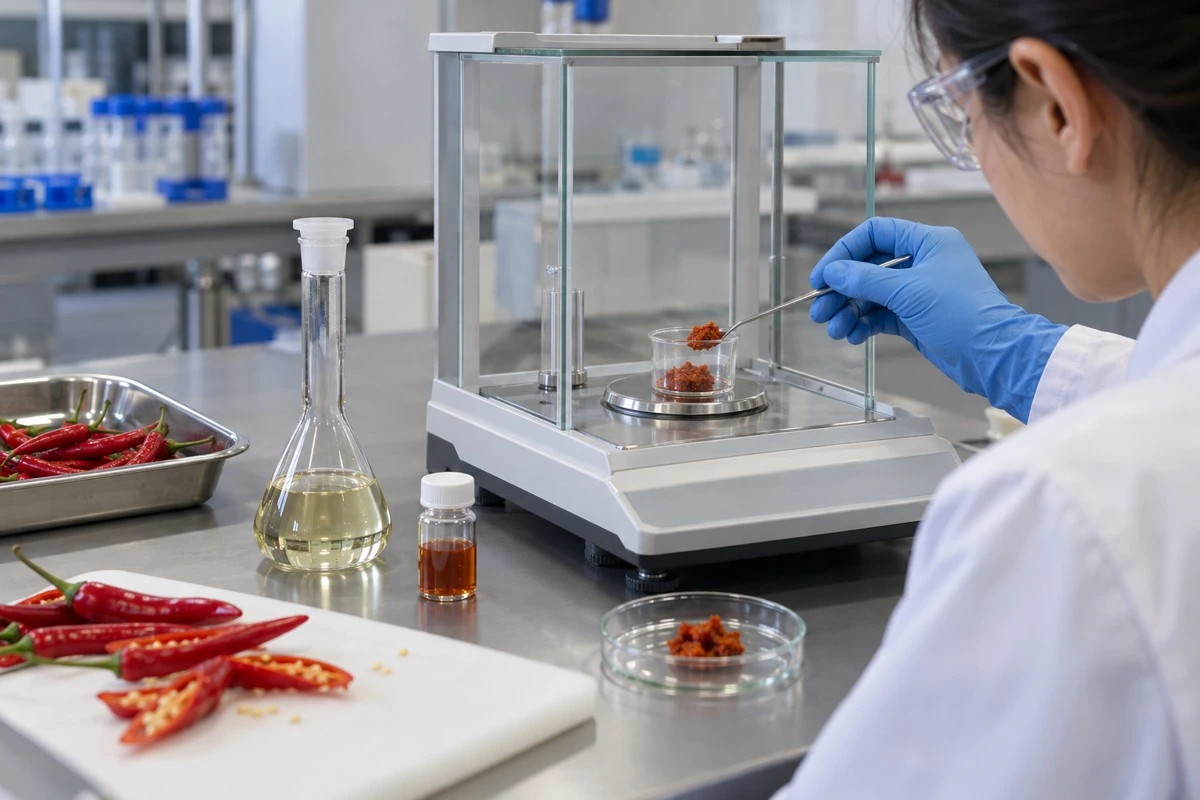
The laboratory traces an extract result back to the weighed food sample.
Consider an illustrative extraction. A laboratory weighs 5.00 g of pepper, prepares an extract with a final volume of 0.100 L and measures 20.0 mg/L of an analyte in that extract. The extract contains 2.00 mg, which corresponds to 400 mg/kg of the weighed pepper if the procedure and recovery assumptions are appropriate. If an additional dilution was made before measurement, its factor must also be included. These numbers explain the dimensional calculation; they are not a laboratory method recommendation.
A laboratory should already have made the required calculation for its final reported sample result. Do not apply the extraction or dilution factor a second time because it appears in the report notes. Ask which column is the concentration in the injected solution and which is the concentration in the food. The distinction is especially useful when a raw instrument printout accompanies a signed final report.
Decimal presentation can create another error. A value written as 0.050% is 500 mg/kg, whereas 0.050 mg/kg is a much smaller concentration. Check the unit attached to each column, including specification and result columns, rather than assuming the same unit applies across a page. When transferring data into purchasing software, preserve the original value and unit alongside any normalized value used for comparison.
Use an appropriate level of precision. Converting 1.2 mg/g to 1,200 mg/kg does not create additional analytical certainty. Extra decimal places generated by a spreadsheet can make a result look more exact than the measurement supports. Keep the laboratory's uncertainty and reporting conventions in view when comparing a result with a contractual limit, and use the agreed decision rule for values near that limit.
Convert moisture basis only with matching data
An as-received result uses the mass of the tested material including its water. A dry-basis result expresses the concentration relative to the dry matter. For the same represented material, the dry-basis concentration is the as-received concentration divided by the dry-matter fraction. If moisture is reported as a percentage of the wet sample, the dry-matter fraction is one minus that percentage divided by one hundred.
For example, a pepper sample containing 90% moisture has a dry-matter fraction of 0.10. A capsaicinoid result of 1,000 mg/kg as received corresponds arithmetically to 10,000 mg/kg dry basis. Conversely, 10,000 mg/kg dry basis multiplied by 0.10 gives 1,000 mg/kg as received. The tenfold difference comes from the denominator. It does not mean drying created ten times as much capsaicinoid in the original sample.

Dry and as-received concentrations use different denominators.
This conversion is valid only when the moisture figure represents the same material on a compatible basis. A moisture value from a different crop, a typical specification or a drained fraction should not be used to convert a result for the complete frozen sample. If the product includes separated liquid, the definition of the tested material becomes decisive. Ask the laboratory to report the paired measurements or explain the basis it used.
Two lots can illustrate the commercial effect. Both may have a dry-basis concentration of 10,000 mg/kg, while one contains 10% dry matter and the other 15%. Their corresponding as-received concentrations are 1,000 and 1,500 mg/kg. Equal wet ingredient weights would then contribute different nominal capsaicinoid amounts before processing. Equal dry-basis values alone would not ensure equal dosing performance in the sauce recipe.
The reverse situation is also possible. Two lots with equal as-received concentration can have different dry-basis values because their moisture differs. Which comparison matters depends on the task. Ingredient dosing normally needs the basis of the material actually charged, while crop or compositional comparisons may use dry matter. State the reason for requesting both rather than treating the larger number as the better product.
A mathematical basis conversion is different from physically drying a sample and measuring it again. Actual preparation can involve losses, incomplete extraction or changes that require method-specific control. Do not use the simple formula to claim that every drying process preserves capsaicinoids quantitatively. Also avoid converting an SHU value before understanding how that value was calculated; obtain the underlying concentration and the laboratory's stated moisture basis first.
Treat Scoville conversion as part of the method
Scoville Heat Units are familiar to commercial teams, but the analytical route to an SHU value needs to be declared. Instrumental methods determine capsaicinoid-related concentrations and calculate a pungency expression according to their procedure. The calculation can depend on which compounds are included, their response factors and the sample basis. A report stating only HPLC and SHU leaves several of those details unanswered.
Published examples use different conventions. An accepted method passage in Mexico's official response to comments on PROY-NOM-189 specifies a conversion involving the major capsaicinoids on a dry-weight basis and a stated factor. Other research applies compound-specific heat coefficients. These examples explain why the calculation belongs with the method. They should not be combined into a universal conversion table for every frozen pepper, extract or finished sauce report.

Method and edition belong beside the reported analytical result.
There is also a current version issue. ASTA's public page for Method 21.3 (2026) says the update incorporates corrected capsaicin response factors and describes a five-year phase-in, with official implementation in 2031. During that transition, a reference to ASTA 21.3 without an edition is incomplete for historical comparison. Ask the laboratory which version it used and how the reported value relates to earlier results.
The public announcement does not supply every detail needed to recalculate a report. Obtain the applicable method and laboratory explanation where a conversion or contract adjustment is required. Do not assume that the 2026 update means every current report has already changed, or that all previous results can be corrected with one percentage. The laboratory's implementation and the actual calculation determine what comparison is defensible.
For a purchase specification, identify the method and version, analyte scope, reporting basis and agreed unit. If SHU is the commercial shorthand, retain the supporting concentration data when available. When changing laboratories or method editions, test appropriate retained or reference material through the agreed comparison plan. This helps distinguish a method effect from a real change in the ingredient and avoids silently moving the acceptance range.
Perceived heat in the final food remains an application question. Ingredient concentration, dilution, other components and serving conditions influence the eating experience. An analytical SHU value is useful evidence, but it cannot guarantee an identical sensation in every sauce or meal. Use the COA to control a defined ingredient and use a controlled recipe trial to determine whether that ingredient meets the customer's expected flavor profile.
Judge sampling and laboratory quality together
A precise instrument result can still describe an unrepresentative sample. Ask how the sample was drawn from the lot, how many increments were combined and how the material was homogenized before the analytical portion was taken. Whole chili pods are heterogeneous, and a small piece selected from one part of one fruit may differ from a representative composite. The sampling record should match the commercial decision being made.
Laboratory quality information includes method suitability for the matrix, calibration, quality-control samples, repeatability and relevant proficiency testing. A laboratory's accreditation can be useful, but check the scope rather than assuming every test it offers is covered identically. The buyer needs confirmation that the method is appropriate for the supplied frozen pepper or sauce and that any modification is understood. A general accreditation logo is not the full answer.
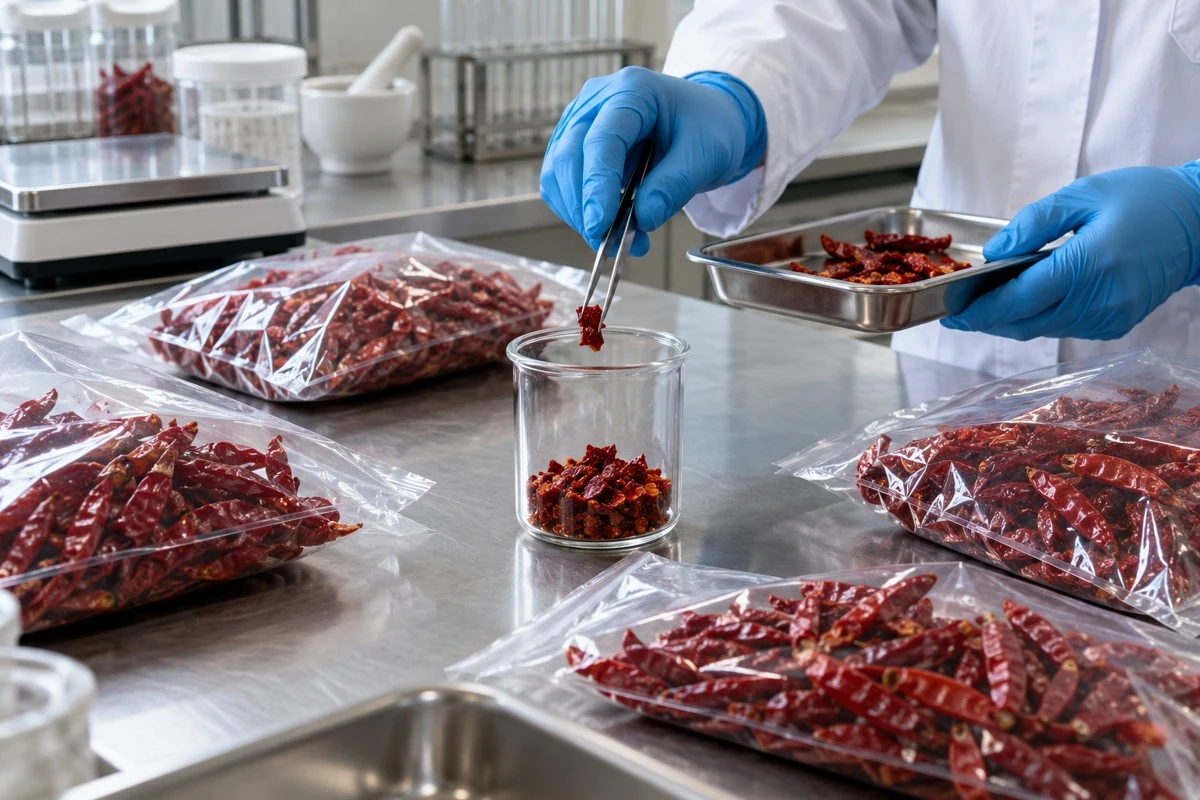
Illustrative sampling of pepper material from several packs; the actual plan must represent the supplied lot and form.
Read detection and quantification limits carefully. A result reported below a limit is a qualified result, not a demonstrated zero. The distinction matters when the specification includes a low maximum or a claimed absence. If the laboratory's reporting limit is above the contractual threshold, the report may be unable to establish compliance. Agree a suitable method before shipment rather than discovering this mismatch at receipt.
For a result near an acceptance limit, use the agreed rule for uncertainty, rounding and repeat testing. Suppose a buyer's lower limit is 1,000 mg/kg and the report gives a value close to that boundary. Repeated testing without a defined decision rule can produce a favorable number by chance while leaving the underlying uncertainty unresolved. Decide in advance who samples, which laboratory is used and how a disputed result will be assessed.
Retain enough material under suitable conditions for any agreed investigation. A retained sample should remain identifiable and representative of the tested lot; its handling and storage affect the usefulness of a later result. Record when it was collected and how it was sealed. A replacement sample taken after a dispute may answer a different question, especially if the lot is heterogeneous or has been partly consumed.
Use discrepancies diagnostically. If two laboratories differ, compare sample identity, tissue selection, thawing and draining, moisture basis, analyte list, extraction, method edition and reporting calculation before concluding that one is wrong. Many apparent disagreements become interpretable when those conditions are aligned. An unresolved difference should remain visible in the order review rather than being hidden by averaging incompatible results.
Use the COA to agree acceptance and recipe trials
Translate the desired heat into a written ingredient requirement. A useful request identifies the chili type and form, the target analytical range on a declared basis, the method and edition, and the sampling and acceptance procedure. Add the destination and any other required quality parameters separately. This allows the supplier and laboratory to confirm what can be tested and reported for the actual product.
For recipe development, use the as-charged ingredient mass and a compatible concentration to estimate the nominal capsaicinoid contribution. In a simple illustration, 2 kg of pepper at 1,000 mg/kg contributes 2,000 mg before any processing loss or separation. Distributing that amount through 20 kg of a homogeneous final mixture would give 100 mg/kg if it were fully retained. Straining, transfer losses and other processing effects require their own evidence; the arithmetic alone does not validate the finished sauce.
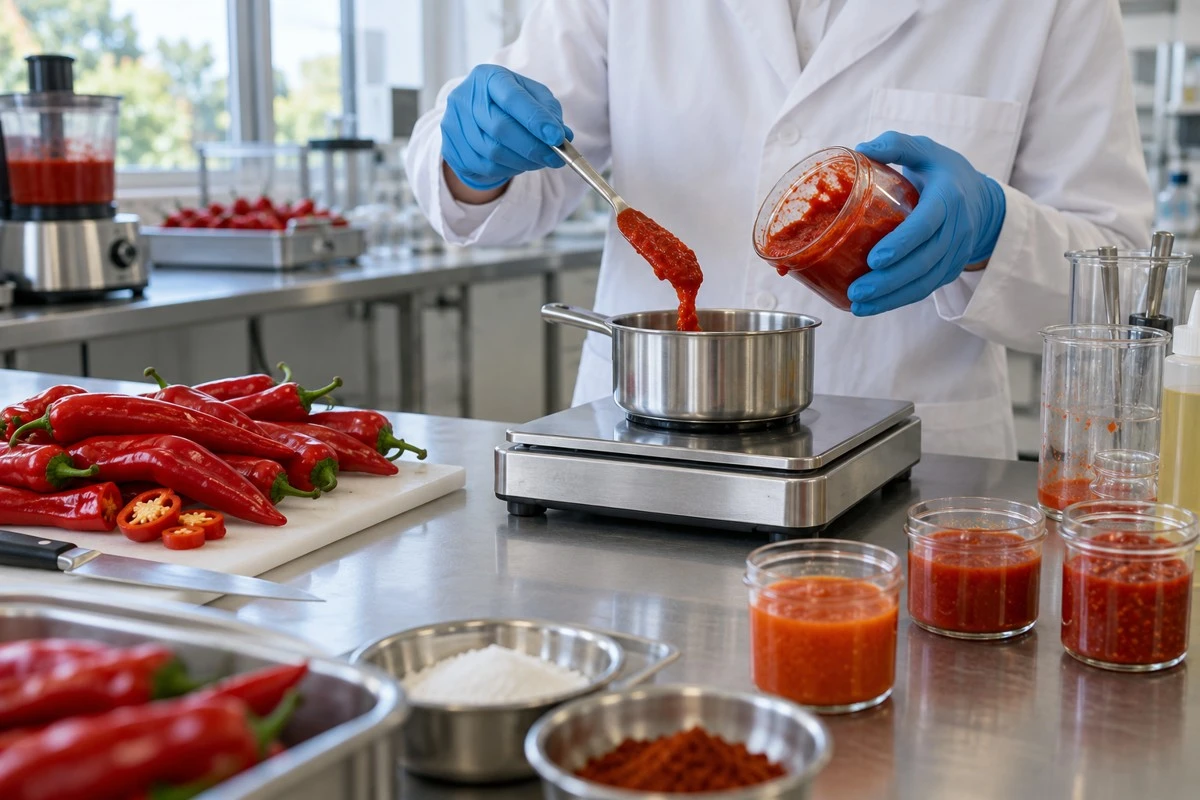
A controlled recipe trial connects the report with the intended use.
Confirm the result in the intended application when heat consistency is important. Keep the recipe, batch size, preparation and serving conditions consistent during comparison. Record the sensory finding separately from the analytical result. If a lot meets the ingredient specification but behaves differently in the sauce, review the complete process and formulation before changing the raw-material limit. The pepper acidity guide explains another frequent confusion between analytical properties and perceived flavor.
Keep the approved specification and report format available to receiving staff. They should be able to identify the correct lot, unit, basis and acceptance range without interpreting an unfamiliar laboratory document from scratch. When a report changes format, verify that the fields still mean the same thing. A renamed total or an omitted dry-basis note can be more consequential than a small change in the displayed number.
We review requested capsaicinoid evidence with the proposed chili specification rather than promising that every available product carries an identical testing package. Send the application, form, quantity, packing, destination and the analytical information your team needs. The most useful COA is one that can be traced from the sampled ingredient through an agreed method to a purchasing decision and then checked against the actual prepared food.
For a repeat order, retain the original report alongside the normalized comparison rather than overwriting it with converted numbers. Record who made the conversion and which moisture value or method explanation was used. If a customer later asks why the recipe dose changed, the team can reconstruct the decision. This is especially valuable during a laboratory or method transition, when the same commercial product may acquire a different reported value for reasons that require technical interpretation.
An incomplete report should lead to a specific question. Missing lot identity calls for traceability evidence; missing moisture basis calls for clarification of the denominator; an undefined total calls for the analyte list. Requesting those details is more effective than asking for a generally better COA. It also helps the laboratory provide the exact information needed without repeating tests that already answer the agreed question.
Source frozen chilli peppers with GreenLand-food
GreenLand-food is a professional frozen chilli peppers supplier and manufacturer in China, providing factory-direct wholesale supply for importers, food manufacturers, foodservice distributors and private-label programs.
Send your product form, specification, packing, quantity, application, destination, private-label needs and requested documents. We help your purchasing team confirm the sample, order details and supply plan for the intended use.