


Napa Cabbage in Dumpling Fillings: Water Release and Leaf-Rib Balance
Oct 19, 2026
Leave a message

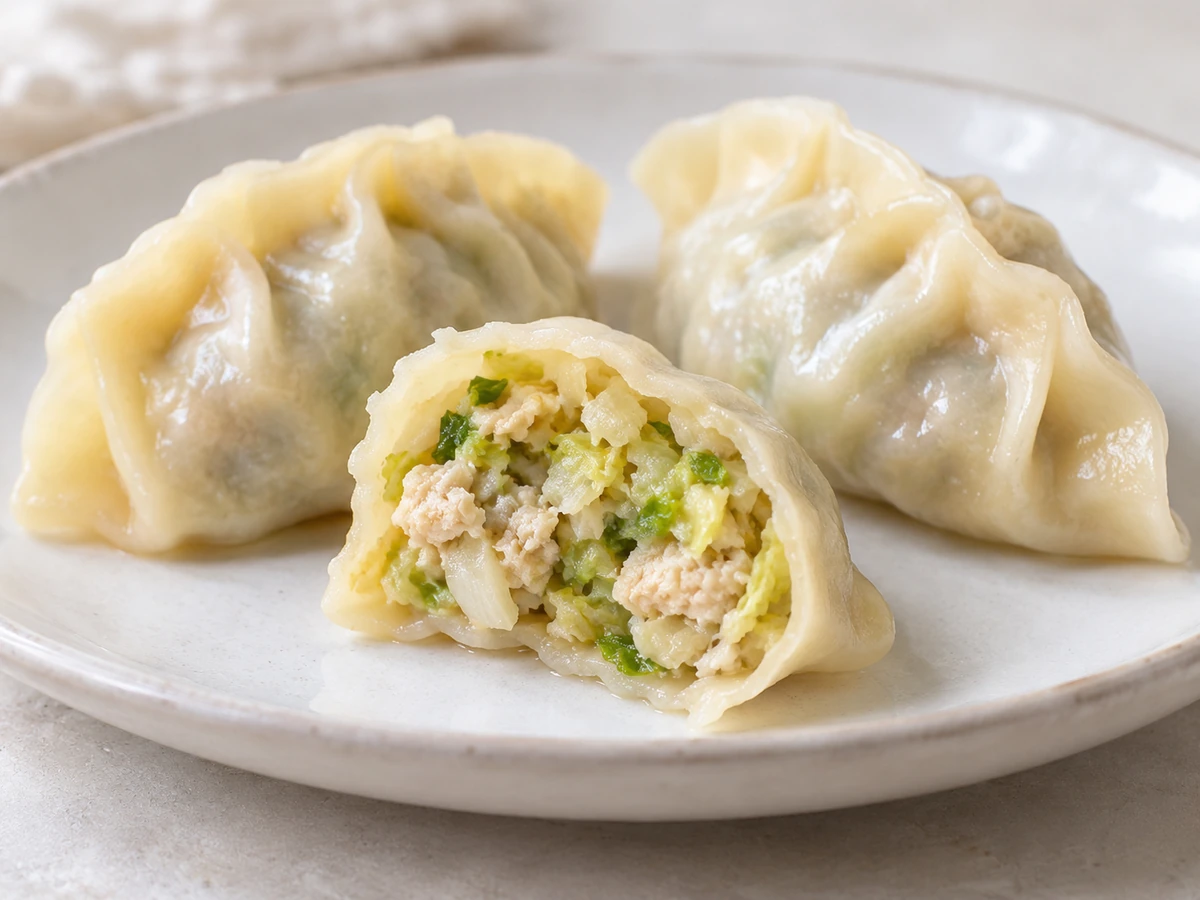
The desired filling also determines the useful leaf and rib balance. More leafy material can disperse softly through the mix; larger or more numerous ribs can create a more distinct bite. Neither a greener appearance nor a lower drain weight is automatically better. The important result is an evenly distributed filling that deposits cleanly, leaves a sound wrapper seam and produces the intended cooked interior.
For a manufacturer or central kitchen, we would treat cabbage preparation and dumpling formulation as connected decisions. Start with the actual frozen sample, its processing status and a defined recipe. Then distinguish unavoidable ingredient variation from changes introduced by the kitchen. The practical methods below are proposed development controls, not claims that a universal napa ratio, moisture limit or industrial pressing method applies to every order.
Decide what the cabbage should contribute to the filling
Begin with the cooked dumpling you want to make. A finely textured gyoza filling, a vegetable-rich boiled dumpling and a larger steamed dumpling may use different particle sizes and cabbage proportions. Wrapper thickness, filling weight and cooking method also change how noticeable the cabbage feels. Approving a bowl of filling before deciding these details leaves the most important test unfinished.
Napa contains a thin crinkled leaf blade and a broad pale rib. The University of Minnesota crop description identifies this heading Chinese cabbage separately from bok choy. That distinction matters when a purchasing request uses a broad name such as Chinese cabbage. A supplier sample should confirm the intended crop and prepared form before its behavior is interpreted as typical napa performance.
The cabbage may contribute moisture, but that contribution needs to be controlled within the whole recipe. A juicy cooked interior can be desirable. Liquid leaking onto the wrapper before sealing is a different problem. A dry, crumbly filling can also be unacceptable even if it is easy to handle. Set the target around the finished dumpling and its forming process, then choose how much liquid and structure the cabbage should contribute.
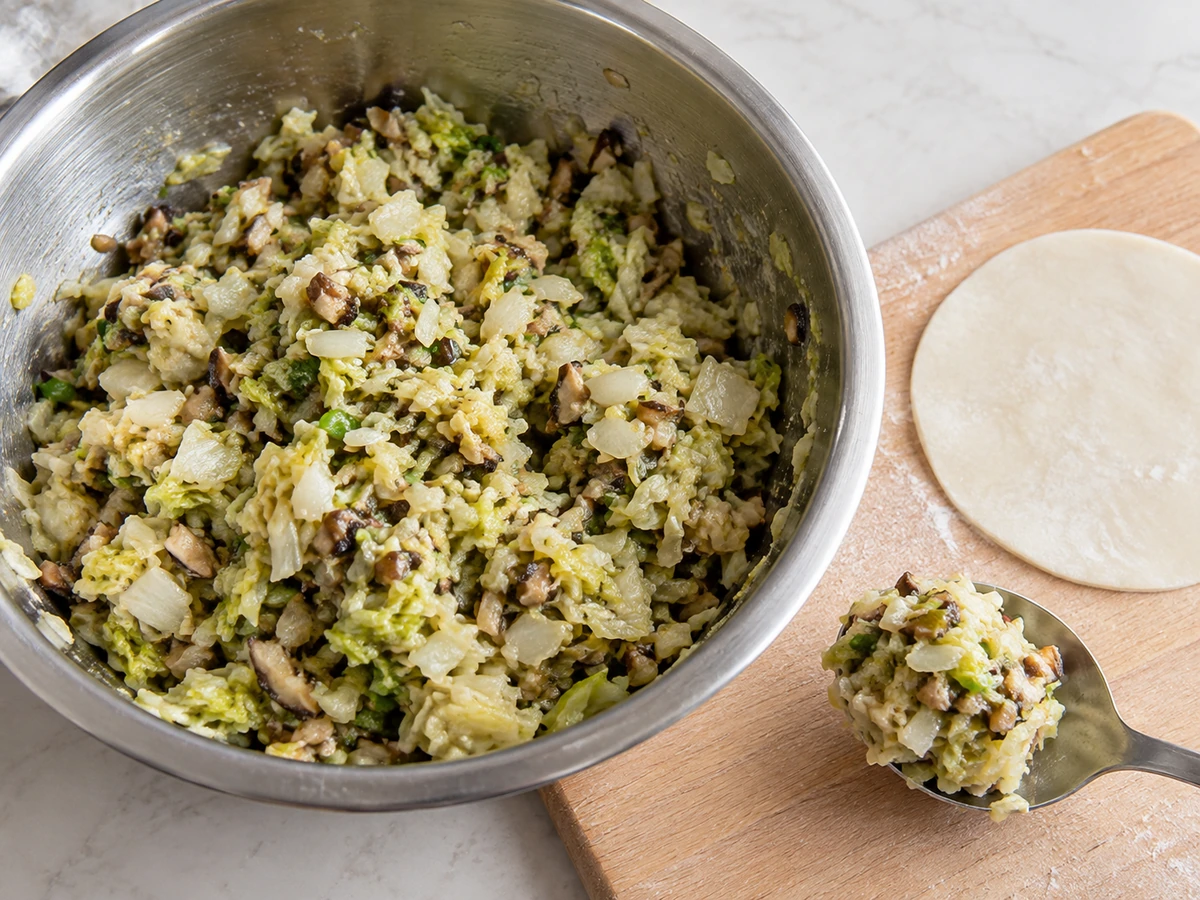
Fine cabbage pieces are distributed through a mushroom filling beside a plain wrapper.
Meat, tofu, mushrooms, noodles and other filling ingredients bring their own water and texture. A cabbage method approved in one formulation may need review in another. For example, a drained cabbage preparation that works with a cohesive meat mixture may behave differently in a vegetable filling with many separate particles. Avoid moving the cabbage percentage across recipes without checking the complete mixture.
Define the weight used in the formula. "One kilogram of cabbage" could mean frozen incoming product, thawed product with liquid, or solids after a specified drainage step. Those are different quantities of prepared ingredient. The formulation sheet should state the basis beside the weight so that a cook cannot substitute one for another while believing the recipe is unchanged.
A first development run should preserve the existing recipe and one agreed cabbage preparation. Record what the filling is expected to do during mixing, holding and depositing. Then observe the cooked result without masking it with extra binder or seasoning. This establishes a useful reference for judging changes in cut, rib balance or moisture handling.
We would use that reference to discuss the available frozen napa form. A finished-food photograph and a short description of the desired bite often communicate more than a broad demand for "fine quality." They also reveal whether the buyer needs a recognizably vegetable-rich filling or a smoother mixture with only small cabbage flecks.
Keep thaw liquid, cabbage juice and added stock separate
Three liquid contributions should remain identifiable during development: liquid released from the frozen ingredient, juice expressed by later preparation, and water or stock deliberately added to the filling. They can all enter the same bowl, but they have different origins and controls. Combining them without measurement makes it difficult to understand why a new cabbage lot changes the mixture.
Thaw drainage depends on the initial frozen condition and the method used to thaw. A sieve over a collection vessel separates liquid from solids by gravity. Pressing or squeezing then removes more liquid and may change the physical structure of the cabbage. If one trial stops after gravity drainage and another includes forceful squeezing, their final masses cannot be interpreted as comparable ingredient yields.
Intentional recipe liquid belongs to the formulation. Some fillings incorporate stock or water into another component before cabbage is added. That amount should be recorded independently. A wetter cabbage preparation may require a formulation review, but quietly reducing stock in one trial can conceal the difference the buyer was trying to measure. Preserve the original comparison before developing an adjusted recipe.
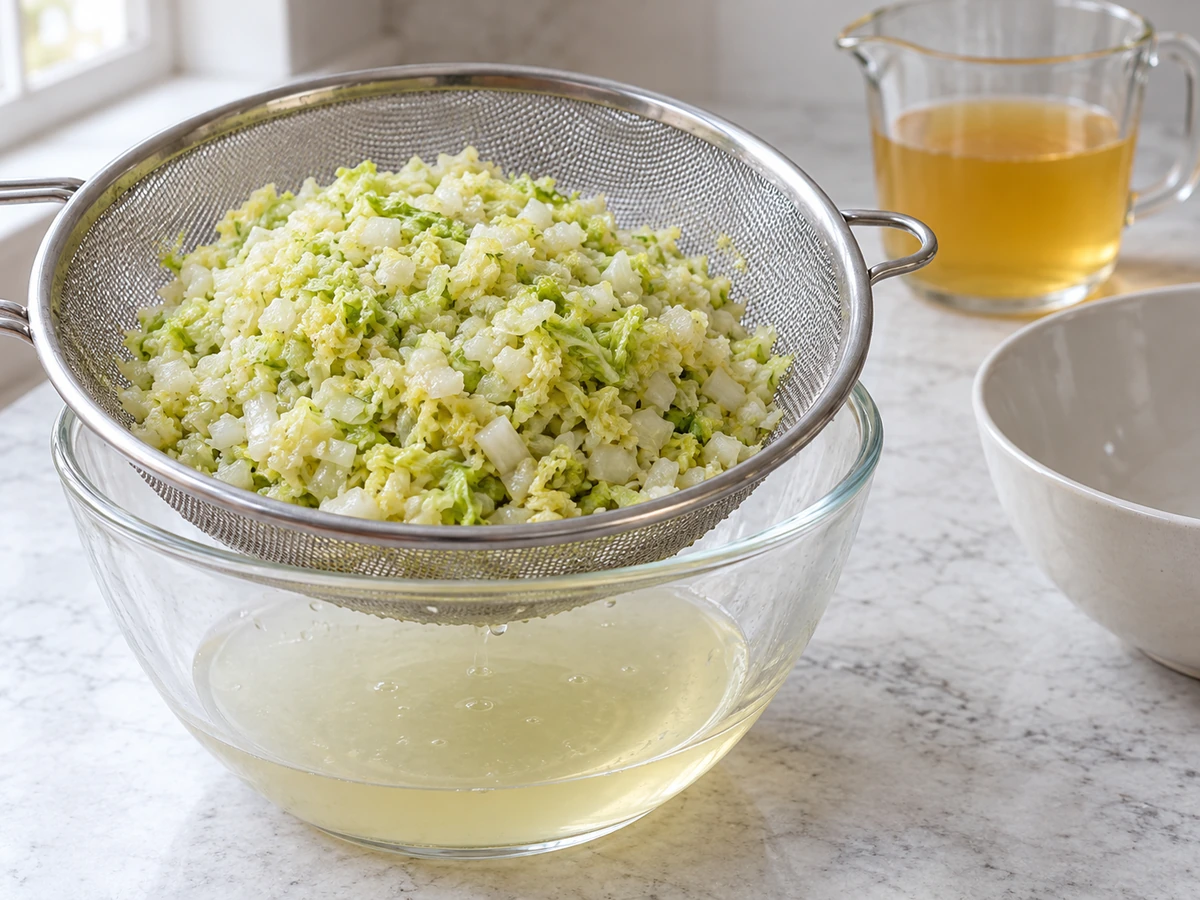
Cabbage solids, collected drainage and golden stock occupy separate vessels.
The traditional salt-and-drain method illustrates why preparation matters. King Arthur Baking's original dumpling recipe salts napa and removes released liquid before combining it with other ingredients. This is useful culinary evidence of the sequence. Its salt quantity and timing belong to that home recipe; they are not a validated industrial instruction for an unfamiliar frozen cabbage product.
For a commercial trial, account for all salt sources if salting is part of the confirmed method. Cabbage treatment, soy sauce, seasoning and other ingredients may each contribute salt. Whether the cabbage is rinsed and how thoroughly it is drained can alter what remains. Do not add a salting step merely because a fresh-cabbage recipe uses one; first confirm the supplied ingredient's treatment and the finished product's requirements.
Liquid observations also need a defined time. A bowl may look cohesive immediately after mixing and develop a pool later. Conversely, a recipe may deliberately incorporate liquid over a mixing stage. Record when observations are made and whether the mixture has been stirred between them. "No visible water" means little if one inspector looks at a freshly mixed bowl and another looks after the normal depositing delay.
Keep the collected liquid and retained cabbage mass in the trial record when they help explain yield. These measurements do not establish food safety or total moisture content. They describe what happened under the selected preparation conditions, which is exactly the information needed to compare samples and price the usable ingredient.
Use leaf and rib balance to control bite and distribution
Leaf and rib balance affects more than the color of the filling. Thin leaf fragments fold into the mixture and can create a soft cabbage presence. Pale rib pieces provide more defined particles. If the ribs are too large for the wrapper and fill weight, they can create coarse spots, interfere with a clean fold or become conspicuous after cooking. If all the cabbage is reduced to very small fragments, the filling can lose the texture that justified using the vegetable.
Cut distribution is therefore as important as a nominal size. Two samples described as finely chopped may differ in their longest pieces, thickest ribs and amount of leaf fines. Examine a representative spread of the prepared sample before mixing. Look for long strands, hard basal material and clusters of attached pieces that might behave differently from the majority.
A photograph can show these features but cannot establish a leaf-to-rib mass ratio. Thin green fragments cover a large visible area for their mass, while thicker white pieces can contribute substantial weight in a small area. If a ratio matters, define the separation method and the sample condition. Mixed pieces with attached blade and rib need an agreed rule so inspectors do not classify them differently.

Pale rib particles and green leaf fragments are visible in the chopped cabbage.
For development, compare plausible preparations while keeping the other major variables fixed. One sample may have more visible fine leaf; another may have a greater proportion of small rib pieces. Cook the formed dumplings and assess whether the difference is useful. There is no need to choose a percentage before the desired result is understood, and there is no universal napa ratio that can replace this trial.
The meat or vegetable base can obscure the cabbage until the dumpling is cut open. Inspect the cooked cross-section as well as tasting it. Check whether rib pieces are distributed through the filling or concentrated in pockets, whether leaf fragments form dark clumps, and whether the wrapper encloses a cohesive interior. These observations connect the incoming cut to what a customer experiences.
If a coarse bite appears, first identify the actual piece causing it. A thick edible rib, a hard basal fragment and an unrelated foreign object require different actions. Crushing every sample more finely may hide the first two while creating excessive fines and does not resolve the third. Separate identity and safety concerns from ordinary texture adjustment.
We would retain representative photographs of the accepted prepared cut and the cooked filling. Together with a short written size and distribution description, these provide a better repeat-order reference than an attractive whole-cabbage image. They also help the supplier understand whether the buyer values small distinct ribs, a softer leaf presence or a particular balance between the two.
Prepare frozen cabbage to a defined drained condition
A defined drained condition begins with the supplier's preparation instruction and the site's controlled handling process. Identify the frozen sample, its starting quantity and the method permitted for thawing or preparation. Keep the cabbage protected and traceable throughout. A room-temperature shortcut should not become an undocumented part of a trial intended for routine manufacturing.
After preparation, use the same drainage arrangement for each comparison. Specify the sieve or perforated vessel, the load depth, the drainage period and whether the material is stirred. If pressure is applied, describe the equipment and operating condition. "Hand squeezed" leaves room for large differences between operators, especially when one person treats the cabbage as delicate pieces and another compresses it firmly.
Weigh the retained material after that defined step. The preparation yield is retained cabbage mass divided by the incoming mass used for the test, expressed on the stated basis. If the incoming product includes material that the method removes separately, such as loose surface ice or rejected pieces, record those categories rather than hiding them in an unexplained loss. This keeps the calculation interpretable.
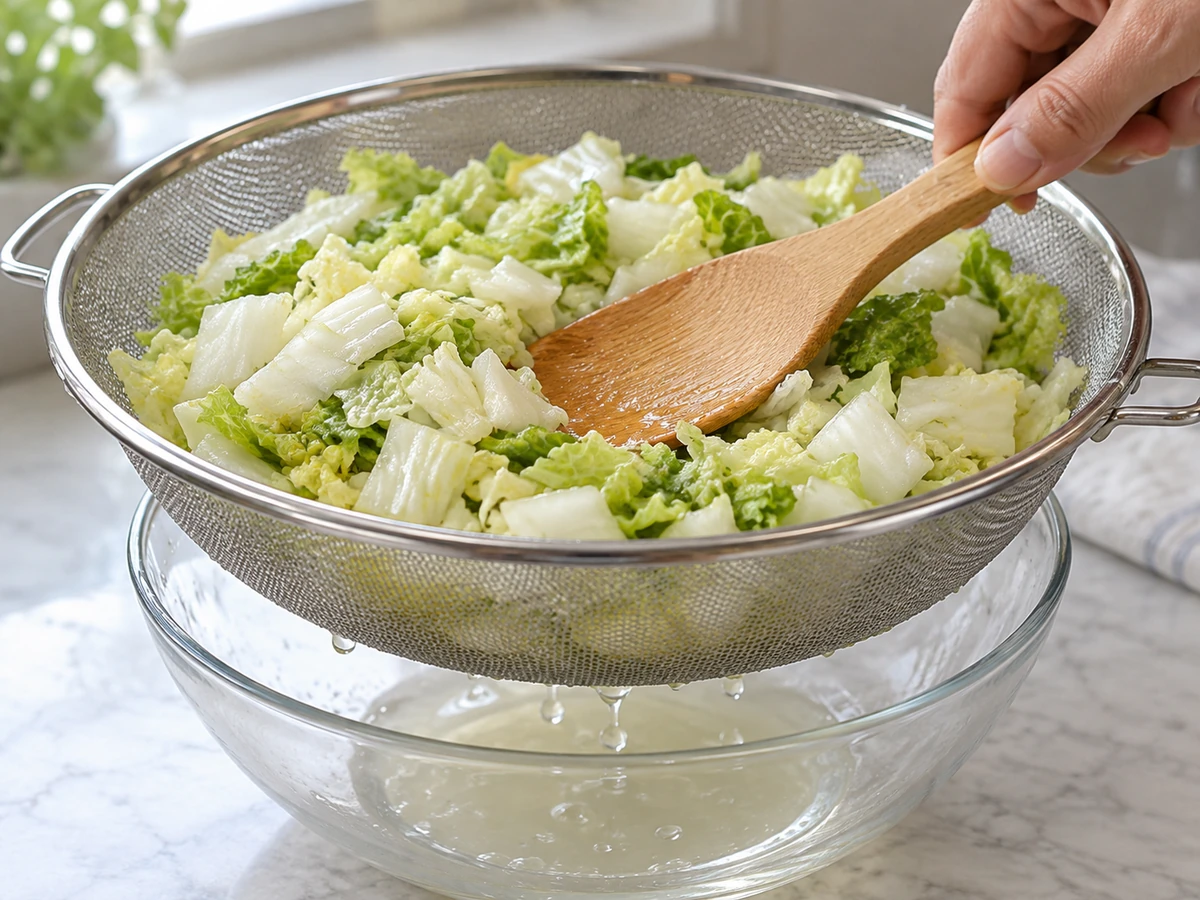
A wooden spoon presses chopped Napa cabbage above a bowl of collected liquid.
Consider a hypothetical development example: two equal incoming samples produce different retained weights after the same gravity drainage. The higher-yielding sample may be more economical, but it may also leave more free liquid during filling hold. A second observation in the actual recipe is needed. The drain result and the dumpling result answer different questions and should appear together in approval.
Texture after drainage deserves its own observation. Excessive pressing can flatten or damage the leaf and reduce the recognizable particles. A method that removes more liquid may improve immediate handling while producing a dry or compact cooked interior. Choose the degree of preparation around the approved filling, not around the lowest possible retained water.
Repeatability should be checked between people or runs before assigning a tight acceptance range. If two operators obtain very different yields from split portions of the same sample, improve the method before blaming raw-material variation. A clear vessel, load and endpoint often matters more than adding another decimal place to the result.
Where the industrial line uses different equipment from the development kitchen, confirm how the bench result translates. A small sieve cannot demonstrate the performance of a large press or dewatering system. The bench method can screen candidates, while the actual line trial establishes the usable prepared ingredient under production conditions. Record the relationship between the bench method and the line trial in the order discussion, and agree the conditions supporting any factory yield commitment.
Control mixing and holding through depositing
The order of mixing should support the actual formulation. Where a meat base is used, the recipe may develop its cohesion before the cabbage is incorporated. A vegetable filling may rely on another structure altogether. Follow the approved recipe and keep the cabbage preparation consistent so that a change in mixing behavior can be interpreted sensibly.
Add the cabbage in a way that distributes its particles through the mixture without unnecessary damage. Very wet clumps can remain unevenly dispersed; overly forceful mixing can break the leaf further. Observe the sides and bottom of the bowl, where liquid or heavy rib pieces may collect. A uniform-looking surface does not guarantee a uniform batch.
Control the interval between mixing and depositing. As ingredients remain in contact, the mixture can change in consistency and release more liquid. A small development batch wrapped immediately may therefore pass while a production batch waiting through normal line interruptions behaves differently. Use the actual expected holding condition and duration, with the site's temperature controls maintained.
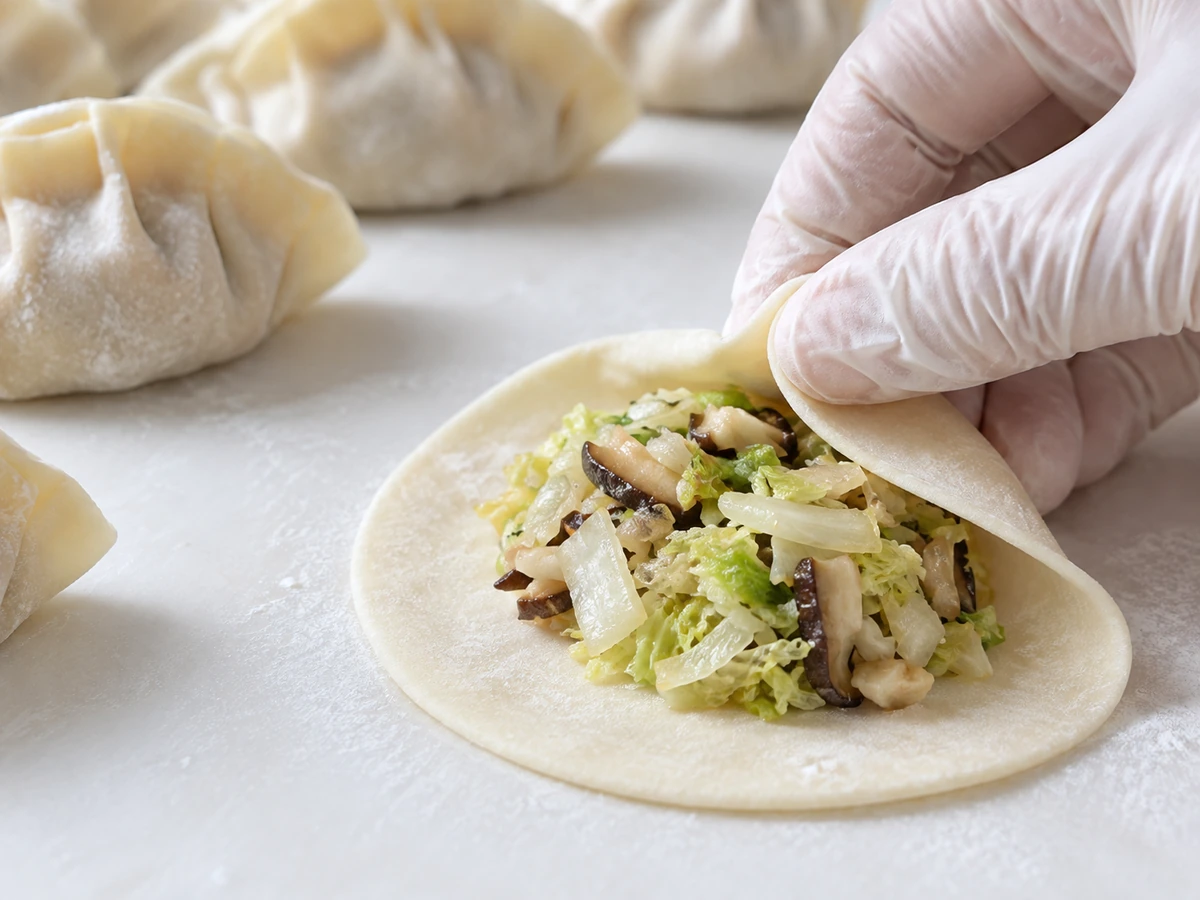
The cabbage filling sits inside a visible clean border as the wrapper is folded.
At the wrapper, examine the deposited portion and the edge intended for sealing. Filling or free liquid on that edge can interfere with closure. Long cabbage strands may cross the seam even if the bulk filling appears manageable. A portion that spreads too far can also expose a mismatch between filling consistency, depositing weight and wrapper size.
Check several positions in the run rather than only the first dumplings. A mixture may settle, the depositor may feed larger rib pieces irregularly, or liquid may accumulate as the bowl empties. Record whether the problem appears at the beginning, middle or end. That pattern helps distinguish a general formula problem from mixing, holding or feeding behavior.
If adjustment is needed, change a defined variable and keep the earlier result. Reducing the cabbage particle length, modifying the permitted drainage step or shortening the normal delay may each address a different cause. Adding binder can be appropriate in a developed formula, but it also changes texture and formulation. It should be an explicit product-development decision, with any ingredient and labeling implications reviewed.
Do not use a texture correction to clear a safety or identity concern. A filling that handles neatly still needs the required controls for its ingredients and intended cooking method. Likewise, a suspected foreign object calls for separation and investigation. The purpose of observing the wrapper and depositor is to establish functional performance within an already controlled process.
The accepted method should leave the operator with practical instructions: which cabbage preparation to use, when to add it, how long the mixture may wait under the defined controls, and what a sound deposited portion and clean seam look like.
Test the formed dumpling through freezing and cooking
Freezing the cabbage ingredient and freezing the assembled dumpling are separate events. A formulation may use previously frozen cabbage, then undergo another freeze as a finished uncooked or cooked dumpling. The wrapper, filling and cabbage each experience that process together. A successful trial with fresh cabbage wrapped and cooked immediately does not establish how the commercial frozen product will behave.
Use the intended dumpling format in the trial. Match wrapper type, thickness, fill weight and closure method. Apply the actual planned freezing and storage route, then prepare the product according to the proposed cooking instruction. The cooking validation must address the whole food and its ingredients; cabbage tenderness alone cannot verify a meat filling's safety.
Inspect the frozen dumpling before cooking for the relevant physical problems: open seams, cracked areas, distorted shape or sticking that damages the wrapper during separation. Keep these observations separate from the cabbage drain result. A wrapper or freezing problem may exist even with a consistent filling, and the investigation should follow the evidence.
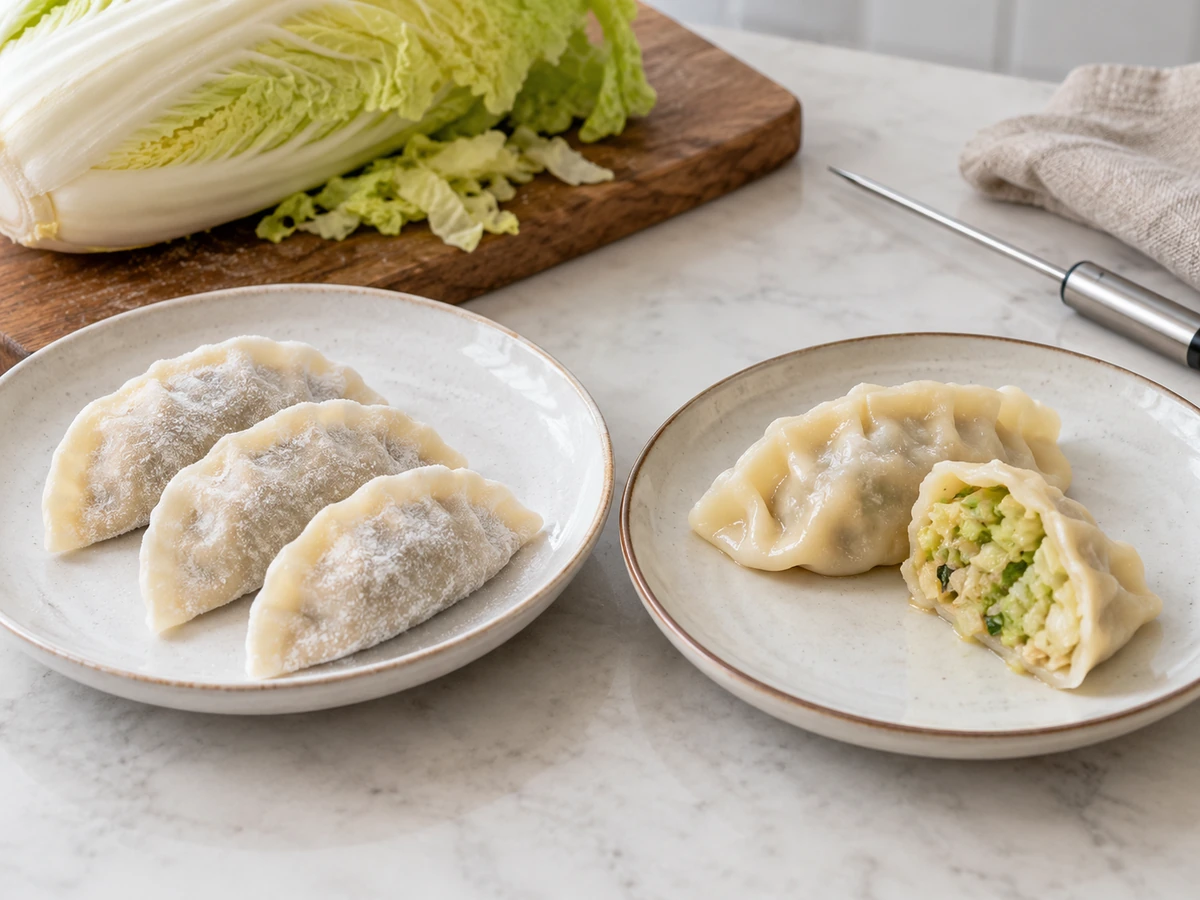
Sealed frozen dumplings sit beside cooked examples with the cabbage filling exposed.
After cooking, examine the seam, wrapper texture and interior. Note whether the filling remains cohesive, whether liquid collects excessively inside or outside, and whether the cabbage contributes the desired bite. Cut representative pieces rather than selecting only the best-looking dumpling. A few coarse rib fragments can be more evident in the cross-section than in a large mixing bowl.
The intended cooking methods may produce different quality results. A boiled dumpling, a steamed dumpling and a pan-fried dumpling expose the wrapper to different moisture and handling conditions. If the retail label offers several methods, each needs evaluation under its own instruction. Success in one method should not be used to approve all of them automatically.
Include the normal service delay when relevant. A dumpling that is pleasant immediately after cooking can change while it waits in a tray or travels in a delivery pack. Cabbage liquid, wrapper moisture and condensation can interact. Test the actual serving or packing arrangement, because an open tasting plate does not represent a closed container.
University of Minnesota freezing guidance explains the general softening associated with freezing plant tissue. The commercial implication is to evaluate the complete product history, rather than promising fresh cabbage texture after every freeze. The trial should establish the quality that the finished dumpling can reliably deliver.
Retain the accepted sample identity and preparation record with the finished-product observations. That connection allows a later complaint about wet filling or coarse pieces to be investigated against the actual ingredient and method, instead of relying on memory of one development session.
Buy on usable filling yield and repeatable particle quality
The commercial comparison should use the cabbage that reaches the approved filling. Incoming price per kilogram is only one part of that calculation. Drainage loss, rejected coarse pieces, preparation labor, holding behavior and forming interruptions can change the cost of a usable batch. Use measured trial results and actual quotations rather than assumed yields from a generic product description.
Agree the mass basis before comparing offers. If one supplier's sample is weighed frozen and another is supplied already prepared, the quoted quantities may represent different amounts of usable cabbage. State what is included in the sample and how each is brought to the same approved preparation condition. Where equivalence is impossible, make the difference visible in the commercial comparison.
Our frozen Chinese cabbage product page is the starting point for confirming the available napa-type cut. We would discuss the filling, wrapper and preparation route, then agree the sample and the important particle characteristics. Any requested treatment, drain yield or special cut needs confirmation for the actual order.

Fine cut cabbage shows a mixture of pale ribs and green leaf fragments.
A useful specification names the crop, processing status, cut distribution, treatment of hard basal material and relevant leaf/rib requirement. It also states the inspection condition and the prepared-yield method if that is commercially significant. An approved photograph can support the description, but the written method allows origin and receiving teams to compare the same property.
Packing should fit the mixing batch and handling process. A bag that is too large for one controlled preparation may create awkward partial-use practices. A very small pack may increase handling and packaging cost without improving control. Confirm inner-pack weight, carton arrangement, quantity, destination and storage requirements with the production team before accepting the quotation.
Request the records needed for the actual product and market, including traceability and any agreed testing scope. A general certificate or attractive production photograph does not establish the identity or result of a particular lot. Keep sample approval, specification version and shipment identity connected so a receiving team can locate the relevant requirements quickly.
If a later lot changes filling behavior, preserve the ingredient and preparation evidence before making several compensating adjustments. Compare the drained state, particle distribution and normal holding result with the accepted reference. The supplier can then investigate a specific difference and propose a correction that can be tested. A clear cabbage-to-dumpling record makes repeat purchasing more dependable because both teams know what the ingredient must do inside the finished food.
Source Frozen Chinese Cabbage with GreenLand-food
GreenLand-food is a professional frozen Chinese cabbage supplier and manufacturer in China, providing factory-direct wholesale supply for importers, food manufacturers, foodservice distributors and private-label programs.
Send your product form, specification, packing, quantity, application and destination. Include private-label needs and requested documents so we can confirm the supply details with your purchasing team.