


How to Peel, Cut and Freeze Dragon Fruit Dice Without Losing Shape
Oct 19, 2026
Leave a message

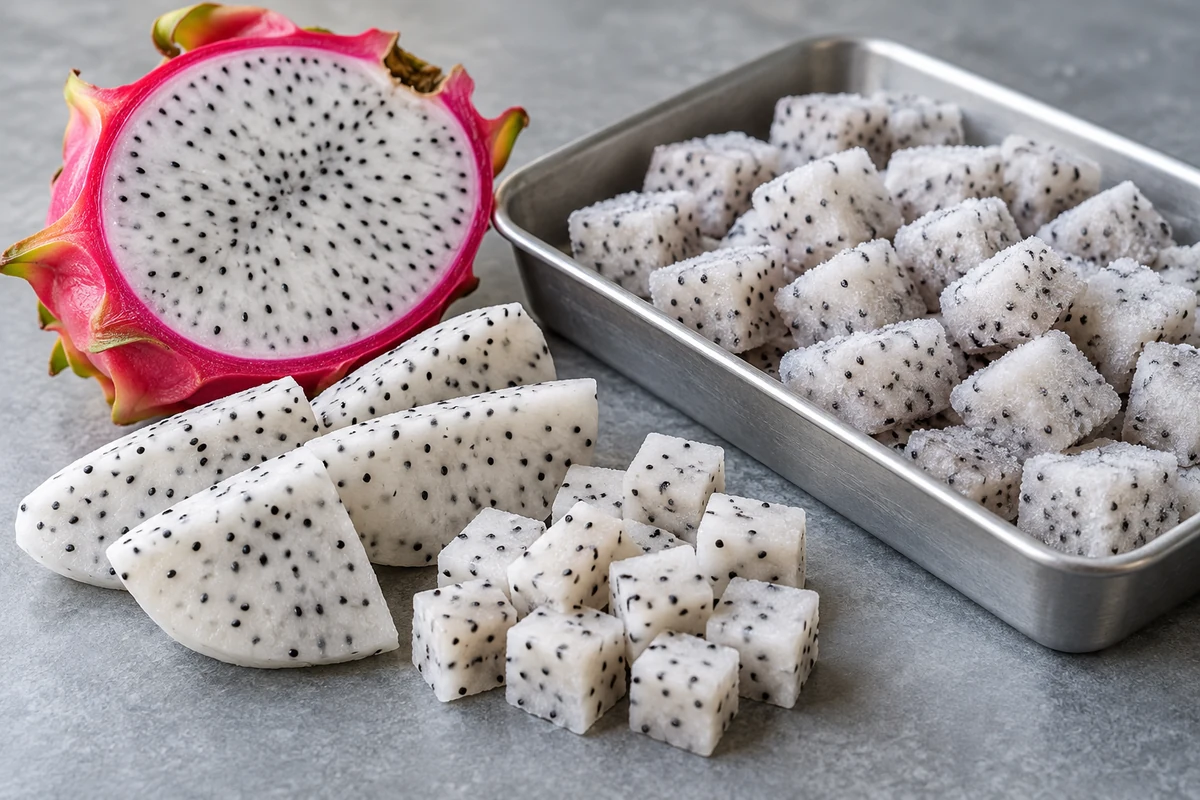
For a kitchen trial, keep the preparation small enough to freeze promptly in a single layer. For a commercial order, connect raw-fruit maturity, cut distribution, freezing conditions and packed-sample handling to one acceptance method. At GreenLand-food, we supply frozen dragon fruit by the agreed flesh color and form, and we help purchasing teams describe the result they need from the pieces. A yogurt inclusion, a fruit-cup portion and a blender feed each place different demands on the same fruit.
A practical preparation sequence
- Select sound fruit of the agreed flesh color, open representative units and confirm that the flesh suits the intended cut.
- Prepare clean hands, tools and a suitable work surface; rinse the whole fruit before peeling under the approved hygiene procedure.
- Halve or quarter the fruit, support the flesh, remove the peel gently and inspect the exposed boundary for remnants.
- Cut slabs, strips and dice with sharp blades; inspect size distribution and breakage without compressing the pieces.
- Use the agreed draining method, then freeze separated pieces promptly under a procedure suited to the actual load and equipment.
- Transfer the frozen fruit into the approved pack with limited impact and compression, and identify it with the represented lot.
- Test a representative packed sample through the actual portioning, controlled thawing or mixing route before approving shape at use.
Choose fruit for the piece you need to serve
Start by describing where the pieces must remain visible. A supplier sample for a smoothie can be useful even when its thawed corners soften, because the fruit will be broken down deliberately. A topping that is spooned onto a pale dessert needs a more demanding appearance review. Specify the handling stage at which a piece must remain recognizable, the intended serving temperature and whether any released liquid will be included, drained or absorbed by the recipe. These decisions give the cutting and freezing work a clear purpose.
Choose sound fruit with flesh that supports a clean cut. Excessively soft material can smear under the blade and lose corners before the freezer receives it. Very firm fruit also needs a flavor assessment; selecting only for cutting resistance can produce an unsatisfactory eating result. The UC Davis dragon fruit fact sheet describes the crop as nonclimacteric. Waiting after harvest cannot be relied on to develop the eating quality of an immature lot. Inspect the interior of representative fruit rather than judging a shipment from its skin alone.

Red-flesh dice need their own measured cut and appearance reference.
Red-flesh dice and white-flesh pieces need separate approval. Red flesh can color adjacent ingredients and the liquid released during thawing. White flesh makes pink peel flecks easier to see, while normal black seeds remain part of the edible fruit. Neither color establishes firmness or a guaranteed cut tolerance. Our frozen dragon fruit product page describes these as separate commercial styles. Confirm the actual style before comparing samples or asking for a quotation.
A cut-size target should reflect how the fruit will be handled. Smaller dice provide more pieces in a portion but expose more cut surface for a given mass. Larger pieces may suit a visible fruit mix but require their own freezing and thawing assessment. Write all three dimensions when a cube is required, and define how naturally curved outer pieces are treated. A photograph can show the general form; it cannot establish that the entire lot meets a measured dimensional distribution.
Record the raw-fruit selection with the cutting trial. Keep fruit identity, receiving condition and the source lot connected to the sample, particularly when several deliveries arrive together. If one trial works and the next fails, this record helps distinguish a change in fruit condition from a change in cutting or freezing. A useful maturity window is established by repeated acceptable results across relevant lots. One attractive handful provides a reference for discussion, but it leaves the incoming variation largely unknown.
Remove the peel without crushing the flesh
Prepare a clean work area before opening the fruit. Keep whole-fruit handling and exposed flesh organized so that dirty containers and outer peel do not pass over finished dice. The FDA's produce preparation advice recommends rinsing produce before peeling and using clean hands and surfaces. A commercial operation needs a documented hygiene and water-control procedure suited to its line. Washing and freezing do not establish that fruit is ready for consumption without a further safety assessment.
For a small preparation trial, halve the fruit lengthwise and examine the flesh before continuing. Cut a half into manageable wedges if that makes the peel easier to release. Support the flesh along its length while lifting the skin away; pulling a large unsupported piece can tear soft tissue. A spoon can also separate flesh from the peel, but the spoon edge may scrape or compress the surface. Compare the methods using the same fruit condition and evaluate the pieces after dicing.
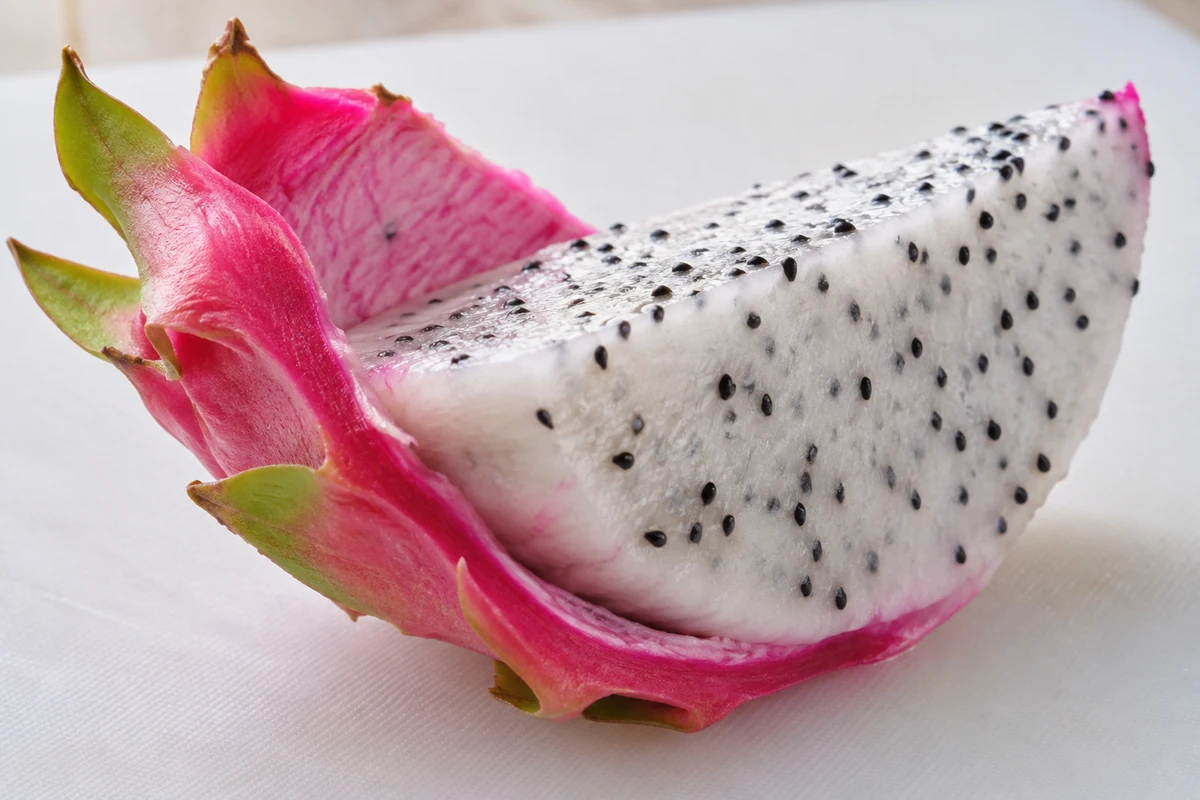
Support the flesh while removing the peel, then inspect the exposed boundary.
The useful result is clean flesh with limited loss of edible material. Removing a very thick layer may eliminate visible peel while reducing yield, and aggressive scraping can create ragged surfaces that later break away. Inspect the pale or magenta boundary where the flesh meets the skin. Trim localized remnants with a controlled cut rather than repeatedly handling the entire portion. Keep the peel and trimming waste away from the clean pieces so that a removed fragment does not return to the batch.
Define what counts as remaining peel before production. Attached skin, a loose peel strip and a naturally dark seed are different observations. A red-flesh surface can conceal a small pink remnant that would be obvious on white flesh, so use adequate light and inspect more than one face. An approved photographic defect reference can make discussion easier, provided it shows the actual product and agreed visibility conditions. The contract still needs the inspection unit and acceptance rule behind the reference.
Watch the condition of the exposed flesh throughout peeling. A growing pool of juice, crushed edges or tissue sticking heavily to tools may indicate that the fruit or method needs adjustment. Those signs alone do not establish the cause. Compare the raw-fruit condition, tool contact and time spent waiting before cutting. Keep the trial controlled enough that a useful change can be identified. Increasing the speed of peeling helps only when the resulting flesh remains clean, sound and suitable for the selected cut.
Cut slabs, strips and dice with clean edges
Use a stable portion of peeled flesh and a sharp, suitable blade. A dull edge pushes and tears before it separates the tissue, making it harder to produce consistent pieces. In a kitchen trial, cut slabs first, then strips, then dice with a deliberate movement that avoids repeated sawing. Keep the supporting surface stable and follow safe knife handling. On a commercial cutter, blade condition, feed presentation and the softness of the incoming fruit need to be reviewed together.
Consistency begins before the final cross-cut. Uneven slab thickness carries through into the dimensions of every strip and cube. Compare pieces from the center and curved outer surface separately if the geometry produces different shapes. Decide whether edge pieces can enter the same grade, need a separate allowance or belong in another sound-fruit preparation. This makes the usable yield visible. Recutting irregular pieces may tighten the distribution, but it also adds handling and can create more small fragments.
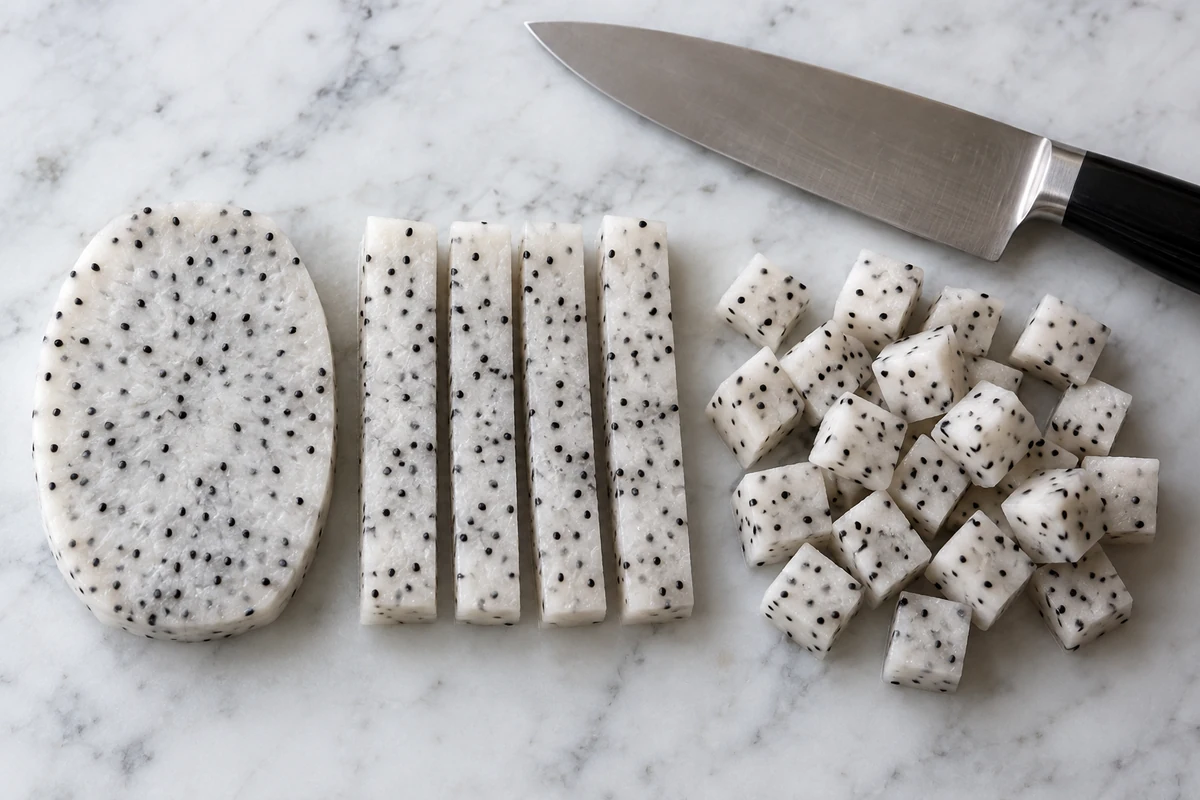
Consistent slab and strip dimensions help produce a repeatable cut.
Measure a sample distribution instead of selecting a few best cubes. State the dimension range, measuring orientation and sample condition, and retain the record of pieces outside the range. A soft piece can change shape when squeezed between caliper jaws, so use a method that does not impose appreciable compression. If measurement is performed while frozen, state that condition explicitly. A buyer checking thawed fruit by another method may obtain a different result even when both teams handle the same product.
Keep cut size and breakage distinct. A complete smaller cube can be undersize without being broken. A nominally correct cube with a missing corner can be broken while several dimensions remain within range. Thin shards and soft smears raise different handling concerns again. Describe these categories using a reference set and an explicit count or mass basis. This prevents a combined rejection percentage from concealing the attribute that actually interferes with portioning, visual presentation or a customer's dosing equipment.
Inspect the first pieces and repeat the review during the run. A clean initial cut does not establish that the blade remains suitable after more fruit has passed through it. Collect observations at meaningful production intervals and after any change in raw-fruit lot, feed or cutter setting. Keep rejected fragments in the trial record rather than quietly removing them before weighing the finished sample. The resulting yield calculation can then reflect the cutting decision a buyer is being asked to purchase.
Control surface moisture and separation before freezing
After cutting, prevent avoidable surface water from moving with the fruit into freezing. Use the approved draining method for the preparation; pressing soft dice to make them drier can damage the very edges being protected. Additional rinsing after cutting is a process decision that needs water and hygiene control, as well as a check on flavor, color loss and handling damage. A damp-looking surface does not justify leaving exposed fruit waiting at room temperature until it appears dry.
In a small freezer trial, arrange pieces in one layer with gaps and use containers or trays suitable for the intended conditions. Avoid loading a deep heap of unfrozen dice and expecting it to behave like individual pieces. The tray method demonstrates separation at a small scale. It does not reproduce a commercial line's air movement, loading or product-temperature history. Record what was actually done so that the result can be interpreted and repeated rather than attributed to an unspecified freezing method.
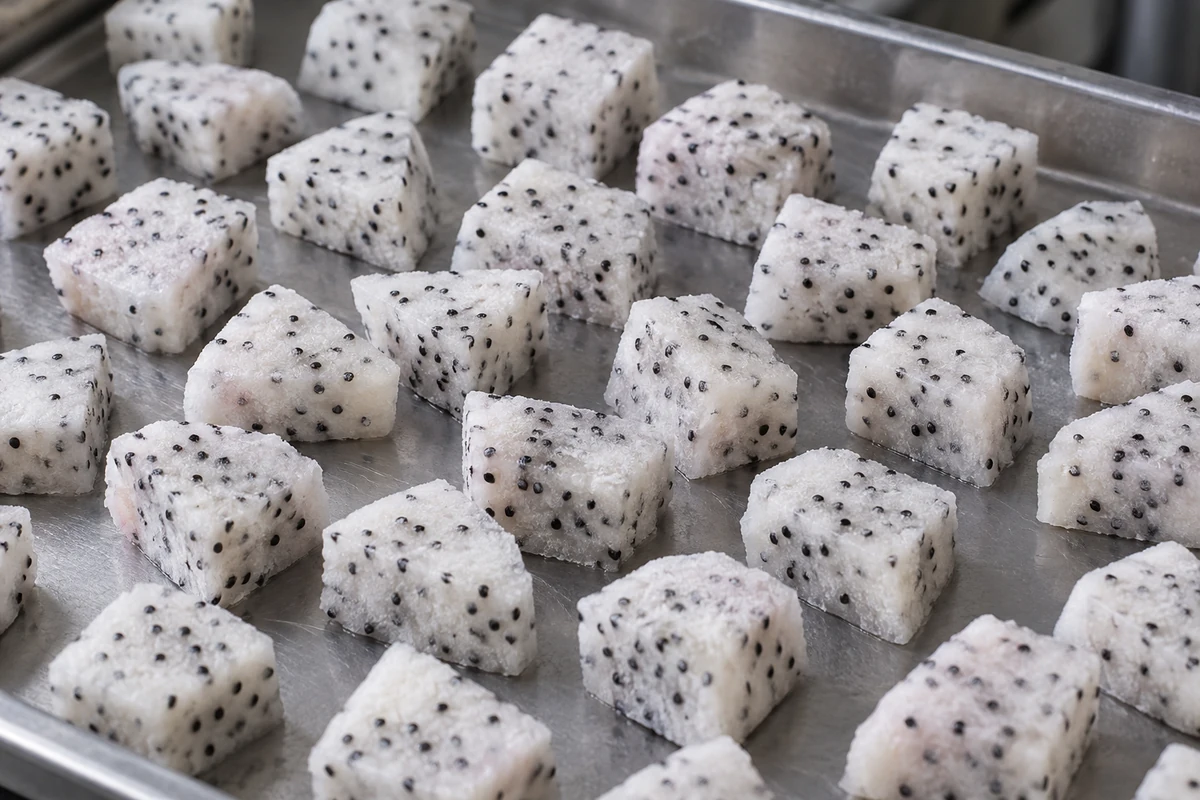
Gaps between pieces make separation visible in a small tray trial.
The FAO introduction to freezing technology explains that food freezing involves both heat removal and ice formation. Fruit composition and the actual process matter, so one air set point or fixed time cannot describe every load. For a commercial trial, measure the relevant product condition under the approved procedure. A firm surface can form before the interior reaches the agreed endpoint. Review the actual fruit load, dimensions and equipment evidence with the responsible processor.
Check whether pieces remain separate after freezing and after the planned transfer. A cube that releases from a tray but bonds to neighboring pieces inside the bag has a different handling result from a consistently loose product. Look for contact bridges, loose ice and clusters, and record them without assuming that each cluster proves thawing. Wet preparation, contact during freezing and later handling may all affect the observation. The lot and temperature records help investigate the cause.
Avoid judging success by an unusually frosty photograph. The useful question is whether the pieces have the required internal frozen condition and can be handled with acceptable damage. Excess frost can obscure edges during visual inspection, while loose ice can affect weighing if its treatment is undefined. Name whether the inspection includes loose ice and how it is separated when required. Keep the approved frozen sample and the controlled application trial connected, because separation alone cannot establish the texture of thawed fruit.
Protect frozen pieces through packing and portioning
Transfer frozen pieces with limited drop height and pressure. Large impacts can chip corners even when the tissue was cut well, and an overfilled package can hold pieces under compression. Review the liner, carton dimensions, fill weight and stacking arrangement with a representative packed sample. A loose handful in a sample pouch may perform differently from a full commercial carton. Packing approval needs the format that the customer will actually receive, including any smaller portions placed inside an outer case.
Check the package closure and protection from moisture exchange. A poorly closed liner exposes the product to changing freezer conditions and can allow frost or leakage concerns to develop. Packaging suitability depends on the material, seal and storage route; a generic claim of freezer compatibility does not establish a complete shelf-life promise. Agree the declared life and conditions for the actual SKU, supported by the responsible supplier's evidence. Keep the date and lot identity readable through normal handling.

White-flesh pieces have a different geometry from the red diced style.
Storage and transport requirements belong in the approved specification. Minus 18 degrees Celsius is a common frozen-food reference, while the actual set point, tolerance and monitoring arrangements need to be agreed for the order. Record receiving temperature using a defined method, together with package condition and any visible clusters. An isolated air reading and a photograph of frost answer limited questions. They should be reviewed with available storage, loading and transport information when a handling problem is suspected.
At the user's freezer or service station, take out the quantity needed for the planned preparation and protect the remainder according to the approved handling procedure. Repeatedly warming the whole pack to obtain a small portion can change the product and make the later portions unlike the first. Test a practical scoop or transfer method that does not require striking the bag or forcing a utensil through fused fruit. Difficult portioning is useful evidence for changing the pack or grade.
Include the downstream portioning loss in the economic review. A tighter cut grade may cost more at purchase but save sorting time in a visible application. A sound processing grade may suit a blender when small fragments are acceptable. Calculate the usable quantity on the agreed basis, including any liquid or material removed before use. This allows the buyer to compare delivered cost per usable portion instead of treating nominal carton weight as the entire performance measure.
Set a realistic shape target after thawing
Frozen and thawed shape need separate descriptions. While frozen, ice helps support the piece. After thawing, softened tissue and released liquid make the fruit more sensitive to squeezing, stirring and repeated transfer. Approve the state that reaches the consumer or production line. A half-frozen cube that looks neat on a tray cannot demonstrate the result of a fully thawed topping held in a display cup. Equally, a fully thawed inspection may be unnecessarily severe for fruit blended directly from frozen.
Use a controlled chilled preparation when thawing is part of the application, following the product instructions and the responsible food-safety procedure. State the sample mass, container, cover, temperature condition and endpoint. Include or exclude the released liquid exactly as the real recipe requires. Fixed minutes alone can be misleading when pack size or cube dimensions change. The endpoint and observed product condition give another team a better chance of reproducing the trial.
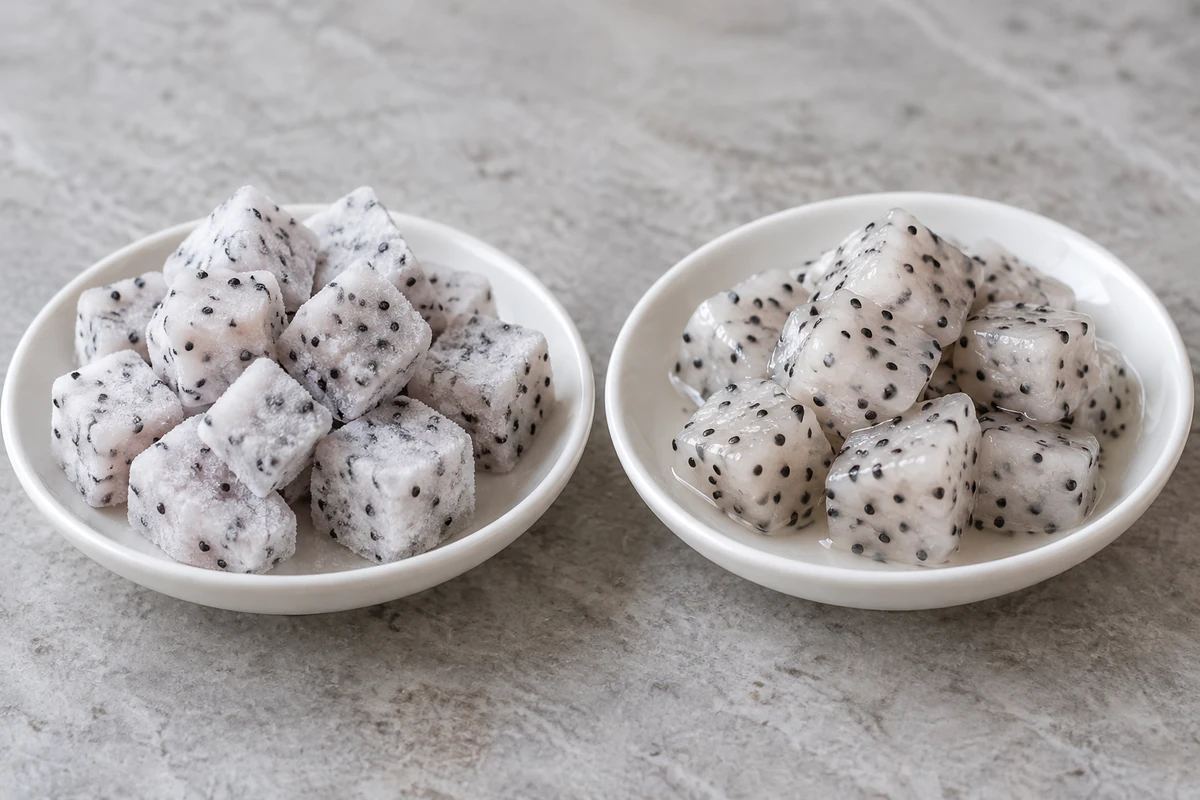
This illustration shows a surface-state difference; it does not establish a particular lot's thaw performance.
Evaluate shape without repeatedly disturbing the same pieces. Photographs at consistent distance and lighting can support a reference, especially when the cut edge is the commercial feature being judged. Record the number or mass of recognizable pieces under a written definition. Collect released liquid separately only if the agreed method calls for it; squeezing or pressing the sample changes the result. A receiving inspection and a finished-product yield calculation may use different denominators, and both need to be named.
For a dairy cup, reproduce the real mixing and filling operations before judging surviving pieces. For a fruit salad or portion cup, include the transfer and service hold. For a blender, check the feed behavior and finished base rather than insisting on intact cubes after blending. These are application choices that can be tested with the same incoming lot. The broader guide to frozen dragon fruit forms and uses explains why the frozen format affects expectations.
Treat any change in eating quality as part of the approval. A piece can remain recognizable yet feel too soft, release excessive liquid into the recipe or show an unwanted color transfer. Conversely, a smaller sound piece may work well in a blended product. Set the pass criteria before choosing the best-looking photograph from a trial. The method should allow a receiver to reproduce the decision using a normal representative sample, with sensory assessment conducted only under the approved safety conditions.
Approve the whole process on a representative sample
A useful commercial approval connects each operation to the final result. Begin with the proposed flesh type, cut and pack, then record the incoming sample condition and the intended application. Keep enough units separate to see variation within the sample rather than combining everything into one visually even bowl. Agree the number of units and their selection with the parties responsible for lot release. A development trial can identify a promising process, while formal shipment acceptance needs its own sampling agreement.
Change one important factor at a time during development. If fruit maturity, blade condition, cut size and freezing load all change together, an improvement cannot be assigned confidently to any one of them. Compare the promising option with the existing reference under the same handling and application. Repeat across relevant raw-fruit deliveries before setting a supply window. These are proposed trial controls; their value comes from the observations they produce, and they do not imply that a particular commercial line has already been validated.
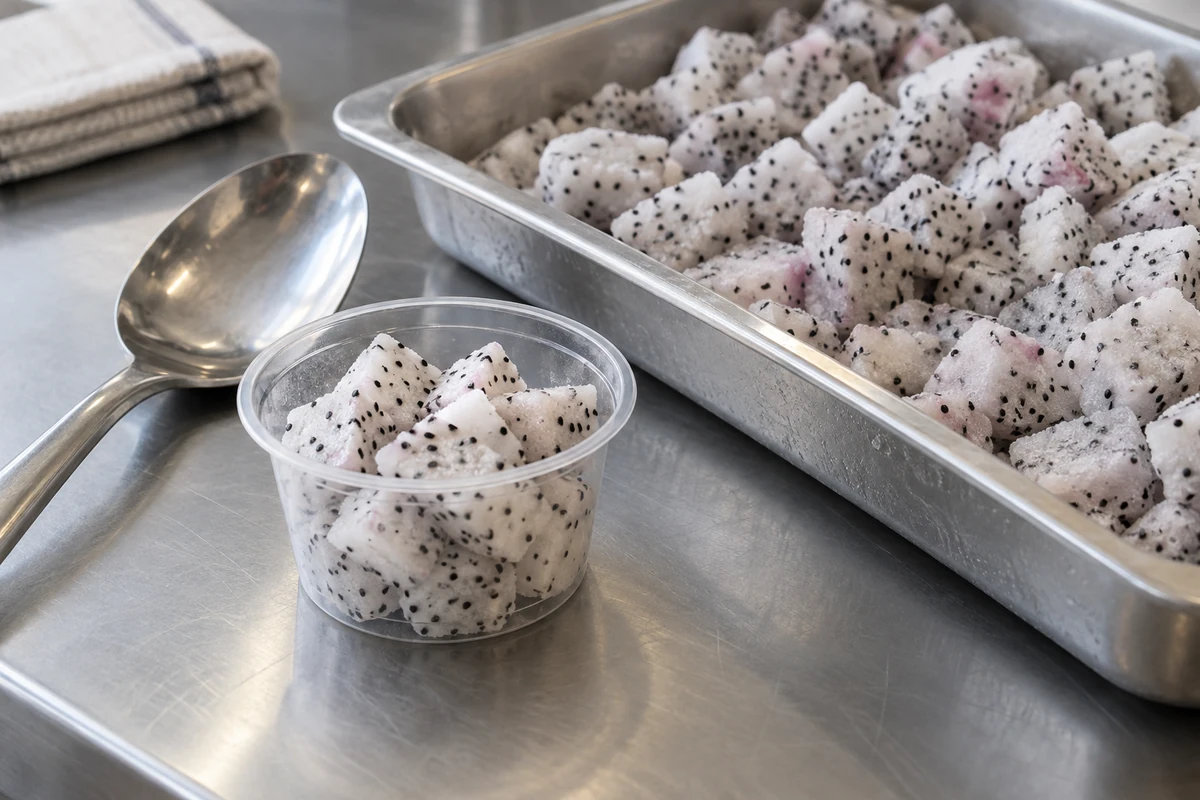
Include the normal transfer and serving operation when assessing useful piece shape.
Write the specification so that another team can inspect it. Name the product identity, ingredient declaration, target cut distribution, treatment of peel remnants and broken pieces, frozen separation and the application result. State which findings use a count, mass or visual reference and what happens when a unit falls outside the limit. Add the required lot reports and intended-use conditions separately. Visual shape approval cannot establish microbiological suitability, destination residue compliance or any other unmeasured safety attribute.
Send the quotation request with the application, destination, quantity and desired pack alongside those technical requirements. Crop timing, available source lots, preparation yield, packing materials and shipment scheduling can influence the commercial offer. Request a realistic lead time and minimum quantity for the selected form instead of assuming that another dragon fruit SKU has the same terms. Private-label requirements also need the approved identity and handling instructions so that the package describes the supplied product accurately.
We help your purchasing team turn the approved frozen sample and trial observations into clear order inputs. The final reference should show the piece at the stage where it matters, and the record should explain how it reached that stage. Keep the retained sample, inspection findings and represented packed lot identifiable together. When a later delivery differs, that connection gives the supplier and receiver a practical basis for reviewing the fruit, process and handling evidence and agreeing the next corrective action.
Source Frozen Dragon Fruit with GreenLand-food
GreenLand-food is a professional frozen dragon fruit supplier and manufacturer in China, providing factory-direct wholesale supply for importers, food manufacturers, foodservice distributors and private-label programs.
Send your product form and flesh color, specification, packing, quantity, application, destination, private-label needs and requested documents. We help confirm the sample and order requirements for the selected supply.