


Frozen Burdock Browning, Peel and Fibrous Core: A Buyer Quality Guide
Oct 19, 2026
Leave a message

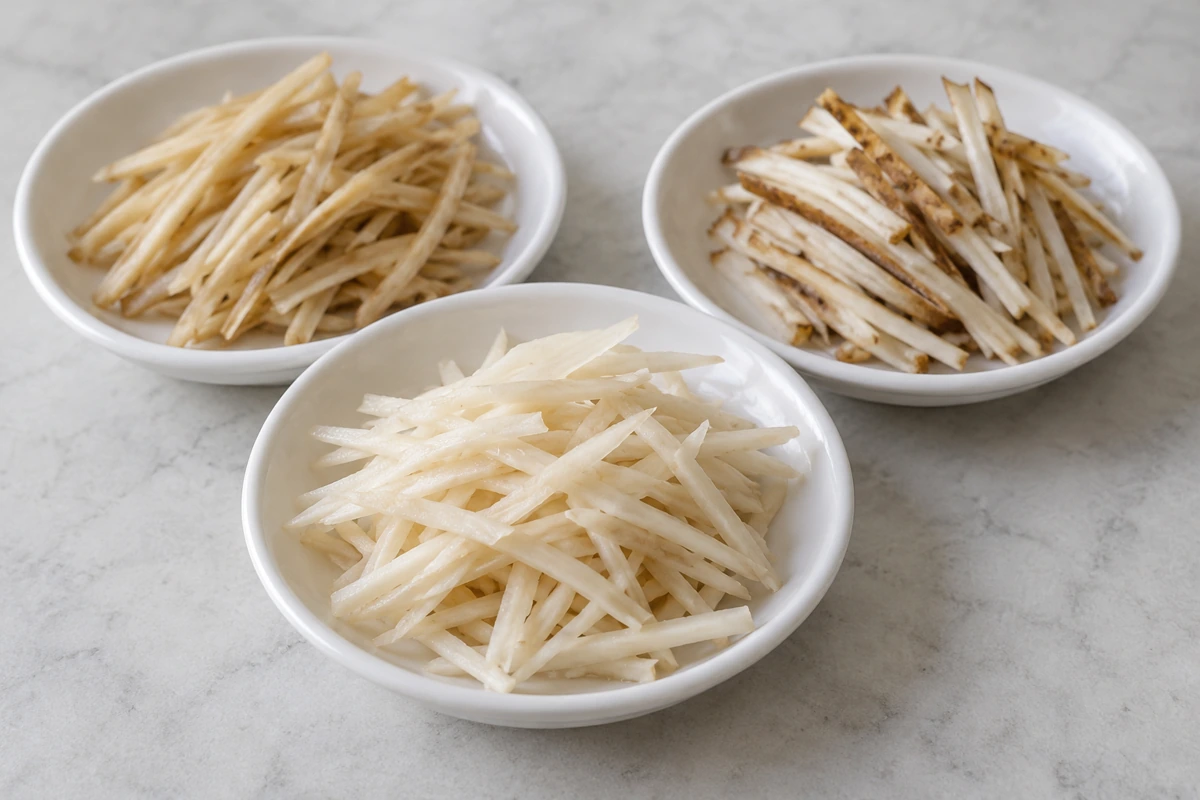
A useful buyer review starts with the frozen product, then follows a representative sample through a defined preparation. Record what is visible before cooking, how the color appears afterward and whether the cooked strip can be bitten through comfortably. Keep the results connected to the lot, the sample method and the intended dish. Photographs help explain an observation, but the strongest acceptance decision combines those images with a reproducible method and the relevant product documents.
Describe the defect before judging the lot
The first task is to state what the inspector actually sees or feels. Slight overall tan coloration is different from isolated very dark patches. A thin attached peel edge is different from loose grit. A strip that offers a firm bite is different from one that leaves a persistent coarse strand. These distinctions are practical because they lead to different follow-up questions, different sample preparation and potentially different corrective actions.
Begin with the order specification and approved reference. A lot should be assessed against what was agreed for its application, including the stage of observation. A customer may have approved the appearance of a cooked strip in a savory dish while receiving staff are comparing the frozen bag with a brightly lit product photograph. That mismatch can produce an avoidable dispute. The receiving instruction should make clear which comparisons are valid and where further preparation is required.
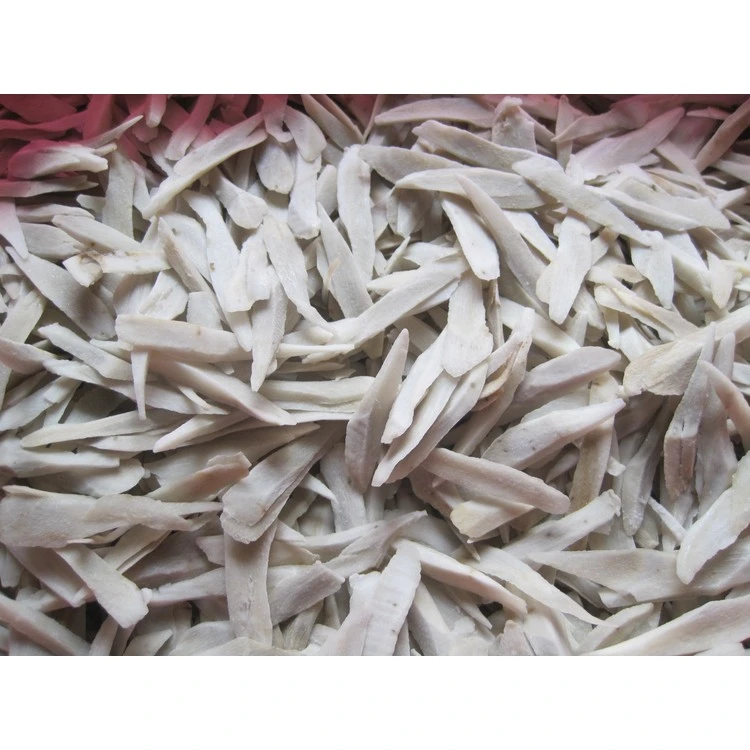
The product reference shows irregular oblique burdock strips; agree the cut distribution needed for the dish.
Record the sample's starting condition before altering it. Identify the lot and pack, photograph the frozen contents under consistent light, and note any obvious clumps or damaged packaging. Follow the agreed method for taking a representative portion. Selecting only the most pale or most dark pieces can be useful for illustrating a defect, but it cannot establish the proportion of that defect in the lot. Keep illustrative selections separate from the sample used for an acceptance calculation.
The GreenLand-food burdock product page identifies color, peel, woody core and cut condition as order-specific questions. Its photographs show the reference product appearance. They do not establish a numerical tolerance or prove the condition of a shipment that has not been sampled. A buyer should use them to begin a discussion, then approve the actual specification and reference needed for the intended recipe.
When an observation may affect safety or identity, keep it distinct from a cosmetic quality judgment. Visible foreign material, unexplained contamination or an ingredient declaration mismatch requires an appropriate review under the receiving procedure. A general statement that burdock naturally browns cannot resolve those issues. Conversely, the existence of normal color variation should be described accurately so that staff do not classify every tan edge as the same kind of problem.
A defect photograph should preserve context. Capture the full representative sample before taking a close view of selected pieces, and identify which image shows prevalence and which shows detail. A close-up can make a tiny number of affected strips appear to characterize the whole bag. A wide view can conceal an important local defect. Used together, the images provide a more balanced basis for the conversation.
Read browning at a defined preparation stage
Cut burdock is prone to discoloration, making the timing of observation especially important. A freshly exposed surface, a frozen strip and a cooked piece in sauce may have different appearances. Define the preparation state, lighting and elapsed interval used for comparison. Without those conditions, two inspectors can produce different descriptions of the same material while both are reporting honestly. A consistent reference makes their observations comparable.
Burdock browning has been studied in relation to processing conditions and enzyme activity. A readable research abstract on fresh-cut burdock reports differences associated with processing temperature and browning-inhibitor treatments. Its scope is fresh-cut material under the study's conditions. It supports asking about process history, but it does not establish the treatment used in a commercial frozen bag, authorize a particular additive or predict that bag's shelf life.
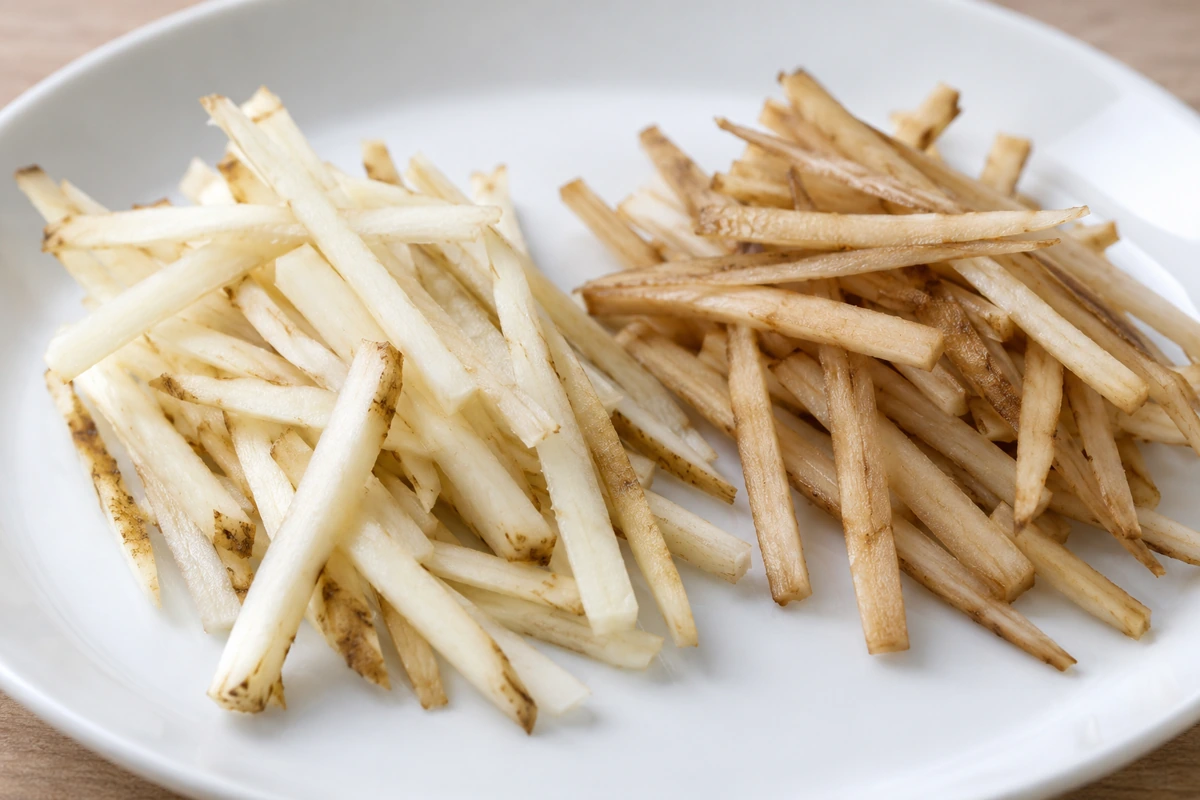
Pale and lightly tan cut surfaces need comparison under consistent lighting and preparation.
Describe the pattern of color as well as its overall intensity. A reasonably uniform cream-to-tan range may be compatible with one product brief. A small number of strongly discolored pieces may require a separate count or mass assessment. Dark lines associated with a skin edge need a different description from broad darkened flesh. If a sauce will later cover the strips, assess the plain prepared ingredient first when necessary so that sauce color does not obscure the observation.
Photography needs a stable method. Use the same plain background, similar lighting and camera distance, and include the reference sample in the same frame where practical. Automatic exposure and white balance can change how pale food appears. A phone image taken beside a warm lamp should not be used to set a tight color boundary against another image taken in daylight. Where instrumental color measurement is required, agree the preparation and measurement method rather than assuming a numerical reading is self-explanatory.
A buyer can then decide whether the color difference matters to the intended food. In a lightly dressed salad-style side dish, the root remains visually exposed. A dark savory glaze may make a modest difference less conspicuous, while a clear soup may reveal individual pieces again. This is an application decision, not a reason to conceal an off-specification ingredient. Agree the acceptable result before ordering and apply that basis consistently when a lot arrives.
Keep color observations separate from any proposed explanation. A change after cooking might lead the team to examine preparation, raw-material condition or the sauce, but the observation itself should remain neutral. Writing darkened flesh after the defined cook preserves what is known. Writing incorrectly blanched product before the process has been reviewed turns a useful record into a conclusion that the available evidence may not support.
Separate peel fragments from dirt and damaged tissue
Burdock's exterior is naturally brown, and culinary preparation may involve scrubbing or thin scraping. The Kikkoman gobo glossary describes this kind of preparation for fresh roots. That background helps explain why a thin tan edge can remain on a cut piece. It does not tell the buyer how much peel is permitted in a particular frozen specification or establish that a visibly brown particle is always peel.
Inspect attached skin separately from loose material. An attached edge follows the contour of the root tissue and can be examined on the strip itself. Loose particles may need to be recovered and identified under the agreed method. If rinsing is part of that method, document the water and collection procedure so that the observation can be repeated. A casual rinse over a sink may remove the evidence before anyone has described it adequately.
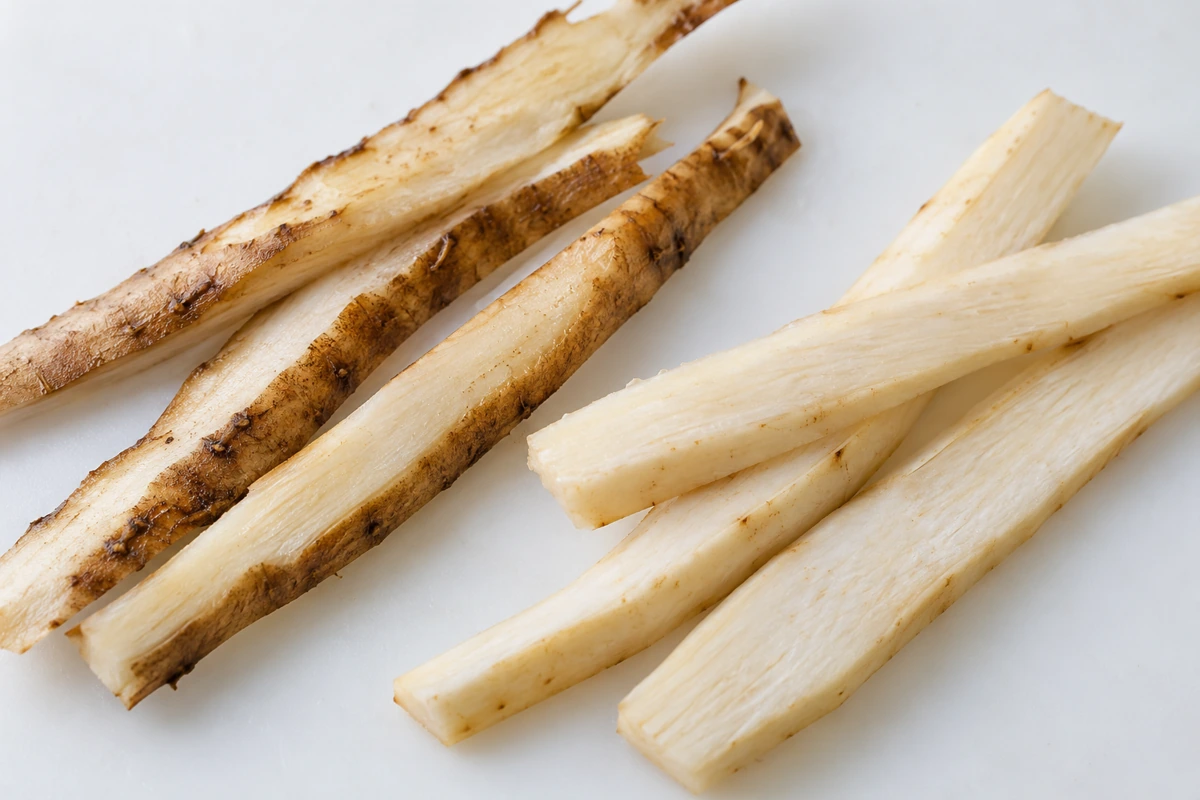
A thin attached brown edge is visually different from the pale root flesh beside it.
The specification should say whether the product is intended to have a scraped finish, a more fully peeled appearance or another agreed preparation. It should also explain how residual peel is assessed. A broad instruction such as clean white strips can be interpreted differently by production, sales and receiving staff. A reference image accompanied by a clear defect description is more useful, especially when the product contains irregular oblique cuts with different exposed surfaces.
Do not use a peeling preference as a substitute for hygiene criteria. An acceptable amount of edible skin does not authorize soil or other foreign material. Similarly, heavy scraping can make a strip look pale without proving that every cleaning or process requirement has been met. The visual inspection and the supplier's relevant process evidence answer different questions, and both should be included where the intended use requires them.
Damaged tissue needs its own category when it matters. A ragged dark area, a crushed surface or a localized lesion should not be forced into the residual-peel count simply because it is brown. The person making the acceptance decision needs to understand the actual observation and its extent. Preserve representative examples with their lot identity, explain the preparation used and seek clarification before assigning a cause that the evidence does not support.
If the buyer wants a very pale appearance, review the resulting ingredient declaration and process needs as part of development. A desired visual finish does not justify assuming an undisclosed treatment or specifying a chemical approach without checking its suitability. The supplier should state the actual route offered for the product, and the buyer should assess that declaration against the intended food and destination requirements.
Assess the core after a controlled cooking test
A fibrous-core concern is primarily an eating-quality question. Frozen strips are hard because of their temperature, so biting or bending them in that state cannot establish whether they will be tender in the finished dish. Prepare a representative portion using the agreed cooking method, then examine pieces across the visible size range. The goal is to find out whether ordinary preparation produces a consistent bite or leaves a persistent resistant strand.
A useful description distinguishes several outcomes. Some pieces may be uniformly firm and need more cooking within the normal method. Others may have soft outer tissue surrounding a coarse central portion. A third group may fragment before it reaches the desired bite. These observations point to different practical problems. Recording all of them as tough burdock loses the information needed to decide whether a method adjustment or a product change is more appropriate.
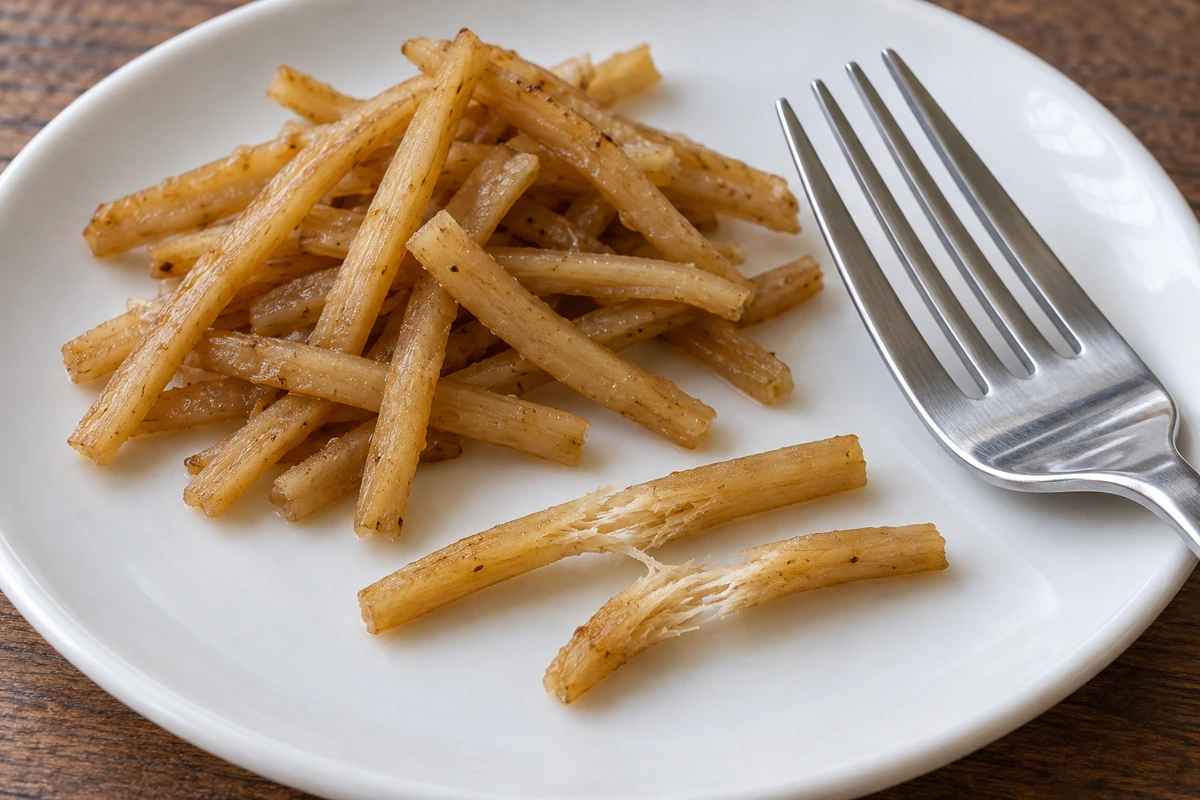
Broken cooked strips expose fine fibers for closer texture assessment.
Control the cooking variables during comparisons. Use the same input basis, vessel, liquid, heating sequence and endpoint for the candidate and reference. If the purpose is to compare how each responds to a fixed method, avoid giving the less tender sample extra time without noting the change. A second trial with an adjusted method can be useful, but it answers a different question. Keep both results so that the tradeoff is visible.
Select tasting pieces deliberately without confusing that selection with prevalence. Examining the thickest or most obviously structured strips is useful for finding a possible defect. Estimating how common it is requires a defined representative sample and a stated denominator. If the method counts affected pieces, specify what counts as a piece. If it uses mass, define how the affected material is separated and weighed after preparation. These choices change the reported result.
Some buyers may need an instrumental texture method, particularly when multiple factories or development teams must compare results. In that case, agree the sample preparation, orientation, measurement location and interpretation before setting a limit. A number from an instrument is only as useful as the method behind it. It should relate to the actual eating defect and the intended food, rather than becoming an isolated technical requirement that neither supplier nor kitchen can connect to performance.
An eating-quality panel does not need to be large to provide useful development information, but its comments should be specific. Let tasters describe the location and persistence of the resistance before discussing preferences. If one person selects only the finest strips and another chooses thick pieces, the disagreement may reflect sample selection. A shared tasting approach makes the discussion about product performance more informative.
Keep strip dimensions and breakage in the record
Cut dimensions influence both appearance and the way a core concern becomes noticeable. A narrow shaving and a thicker oblique strip expose different amounts of tissue to cooking and feel different when bitten. Record the actual cut distribution rather than relying on the nominal word strips. The product photographs may show an irregular form, and that variation should be understood before a buyer assumes that every piece is a precise rectangular julienne.
Length and cross-section deserve separate observations. A long thin piece may be easy to eat but awkward to portion; a short thick piece may be visually unobtrusive yet remain firm. Decide which dimensions matter to the recipe and how they will be measured. If a tolerance is required, specify the sample basis and the treatment of irregular pieces. Avoid importing a limit from a different vegetable simply because its specification uses a convenient format.
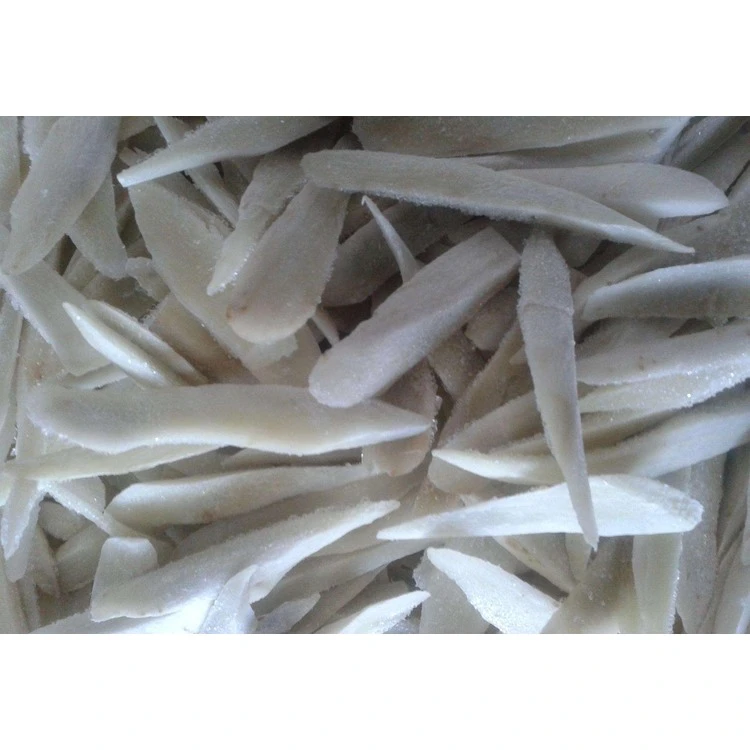
The closer product view shows tapered cut surfaces; appearance alone does not establish treatment or cooked bite.
Breakage should be measured at defined stages. Photograph or assess the incoming frozen sample, then repeat the relevant observation after the agreed cooking and serving method. An increase in short pieces may arise during heating, stirring, transfer or portioning. Keeping the stages visible helps identify where to investigate. It also avoids claiming that the entire final fragment fraction was already present in the bag.
The term broken needs a practical definition. A strip deliberately cut short to fit a soup spoon is different from an unintended fragment below the agreed length. A naturally tapered shaving may not fit a rectangular cut specification, yet it can be appropriate in the correct product. Agree which forms are acceptable before calculating a defect result. A photograph showing representative acceptable and unacceptable pieces can make the written definition easier to apply.
Application remains central. A filling may tolerate smaller pieces while a side dish depends on recognizable strips. A buyer can legitimately approve different limits for those uses, provided the products and records remain distinct. The important point is to judge the lot against its own intended specification. Quietly changing the destination recipe to absorb an unsuitable lot can hide a recurring problem and makes future purchasing decisions less transparent.
Record the relationship between dimensions and the observed defect when it is clear in the sample. If coarse bite occurs mainly in the thicker pieces, that pattern can guide a follow-up trial with a narrower cut range. If it occurs across all sizes, a dimension change may be less helpful. Treat these patterns as investigation leads and verify them with further appropriate samples before changing the specification.
Build a sample decision with traceable evidence
Before sampling, define the decision the sample is meant to support. A development sample can establish whether a form suits a recipe. A receiving sample may be used to compare a lot with an agreed requirement. A retained sample can support an investigation later. These purposes may need different quantities and selection procedures. One attractive bag supplied for a first tasting does not automatically represent the variability of a commercial shipment.
For a proposed acceptance review, record the lot identity, packs selected, sample preparation and observations for each relevant attribute. Keep browning, peel, foreign material, core texture and cut condition in separate fields. This makes it possible to accept or investigate one attribute without losing the evidence for the others. Where the contract defines sampling and acceptance rules, follow them; where it does not, agree the method before a dispute arises.
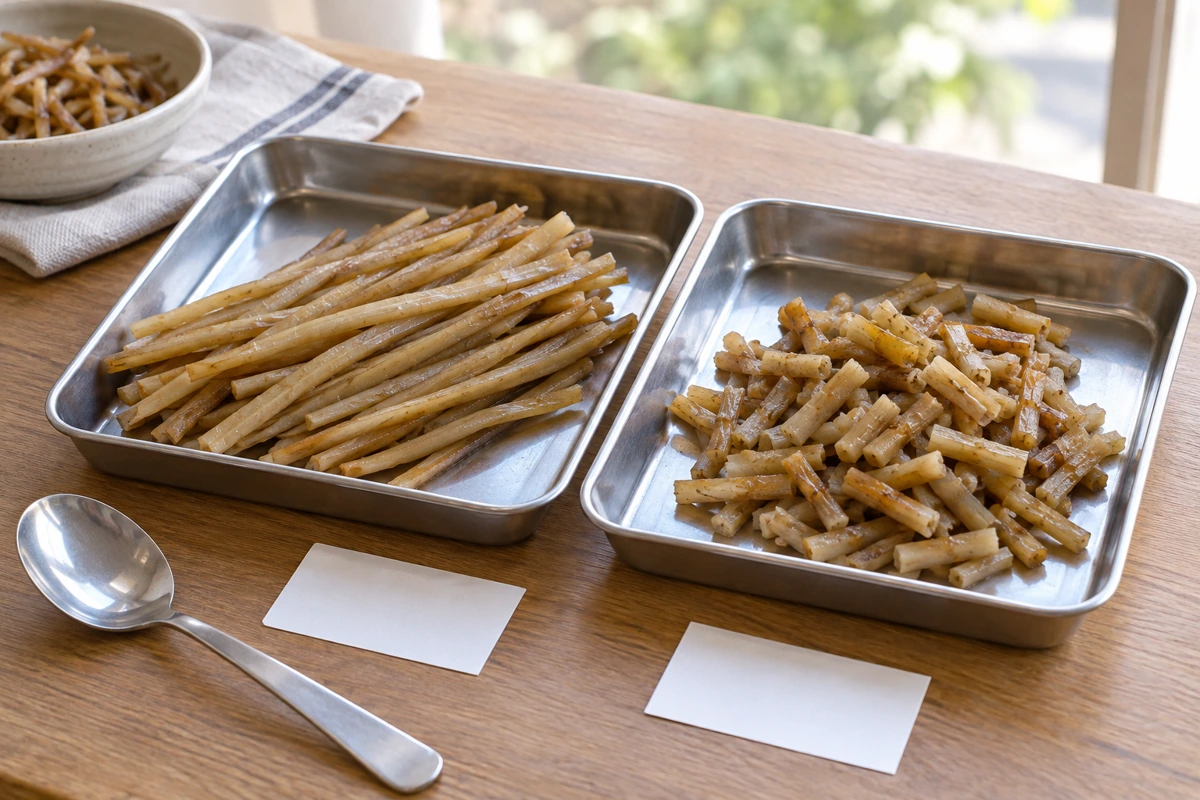
Intact strips and short pieces are separated to make the inspection definition easier to discuss.
The denominator must be explicit whenever a percentage is reported. For example, a hypothetical sample could contain 200 counted strips, of which 12 meet an agreed visual defect definition. That produces a 6 percent result by piece count for that sample and definition. It does not establish a 6 percent defect level by mass, nor does it automatically describe the whole lot. This example illustrates calculation only; it is not a suggested tolerance or a GreenLand test result.
Keep original observations alongside the conclusion. A report that says failed color gives the next reviewer little to work with. A report that identifies the comparison stage, the reference, the distribution of dark pieces and the accompanying photographs is much easier to assess. If a second reviewer prepares a new sample, retain the first result and note any differences in method. Revising the conclusion should not erase the evidence that prompted the review.
The final disposition should name who made the decision and what information remains open. A lot might require further document review, additional sampling or discussion of an application-specific deviation. Avoid assigning a precise cause such as thawing abuse, excessive maturity or an undeclared treatment from appearance alone. Those explanations may be investigated, but they need supporting evidence. A well-kept record makes that investigation possible without turning an initial observation into an unsupported accusation.
A sampling plan should also state what happens when an initial result is uncertain. The parties may agree an additional sample, a retained-sample review or another defined escalation. Decide that route before using it to resolve a particular disagreement. Repeatedly testing until a desired result appears can distort the evidence, while rejecting a lot from an unrepresentative handful can be equally misleading.
Agree corrective action and the next lot specification
A useful corrective-action conversation connects the observed problem with the part of the process that can reasonably be reviewed. If discoloration varies after preparation, discuss the starting material, handling and declared color-management route. If coarse central strands remain after the agreed cook, discuss the accepted raw-material condition, trimming and cut. If fragments increase during service, inspect the cooking and handling method as well as the incoming product. Several causes may contribute to one disappointing dish.
Ask for a response that addresses the actual evidence. A general assurance of better quality next time does not explain what will be different or how it will be checked. A revised sample should identify the change under evaluation and be tested against the same relevant method. If multiple variables change together, the result may improve without showing which change mattered. That can be acceptable for product development, but the remaining uncertainty should be understood.

Comparable portions make differences in cut distribution visible without assigning an unsupported cause.
The next specification should incorporate what was learned without becoming an indiscriminate list of limits. Keep the requirements that protect the intended use: identity, declared preparation, cut distribution, relevant color condition, peel finish, eating defects and packing. Explain the observation method for attributes that have previously caused disagreement. Numerical limits should be agreed from suitable evidence and commercial requirements, not invented to make the document look more technical.
Retain approved reference material appropriately and define how it will be renewed. Physical samples can change with storage, and photographs have limits as texture references. A reference should identify its date, preparation and purpose so that later staff understand what it can establish. Where a reference is replaced, preserve the reason and the relationship to the earlier approval. Otherwise a new photograph can quietly become a different standard without anyone acknowledging the change.
When you discuss frozen burdock with GreenLand-food, send the intended dish and the observations that matter at its final serving stage. Include examples of unacceptable color, peel or bite where available, together with the method used to produce them. This gives the discussion a clear basis and helps keep product appearance, process declarations and eating performance aligned. A purchasing decision becomes more dependable when each requirement can be explained, observed and checked again on the next lot.
After a correction is proposed, define how success will be demonstrated. The new sample should address the same unacceptable observation under the same relevant preparation. If the product or application changes materially, document a new approval rather than presenting it as proof that the original specification has been met. This keeps the improvement useful for future orders and avoids creating two competing versions of the accepted product.
Discuss frozen burdock with GreenLand-food
GreenLand-food is a professional frozen burdock supplier and manufacturer in China, with factory-direct wholesale supply discussed against your agreed product specification.
Send the product form, cut specification, packing, quantity, application, destination, private-label needs and requested documents. Include the cooking or reheating route and the texture you need in the finished dish so we can review the sample requirement.