


Counting Peel Residue and Broken Dice in Frozen Dragon Fruit Lots
Oct 19, 2026
Leave a message

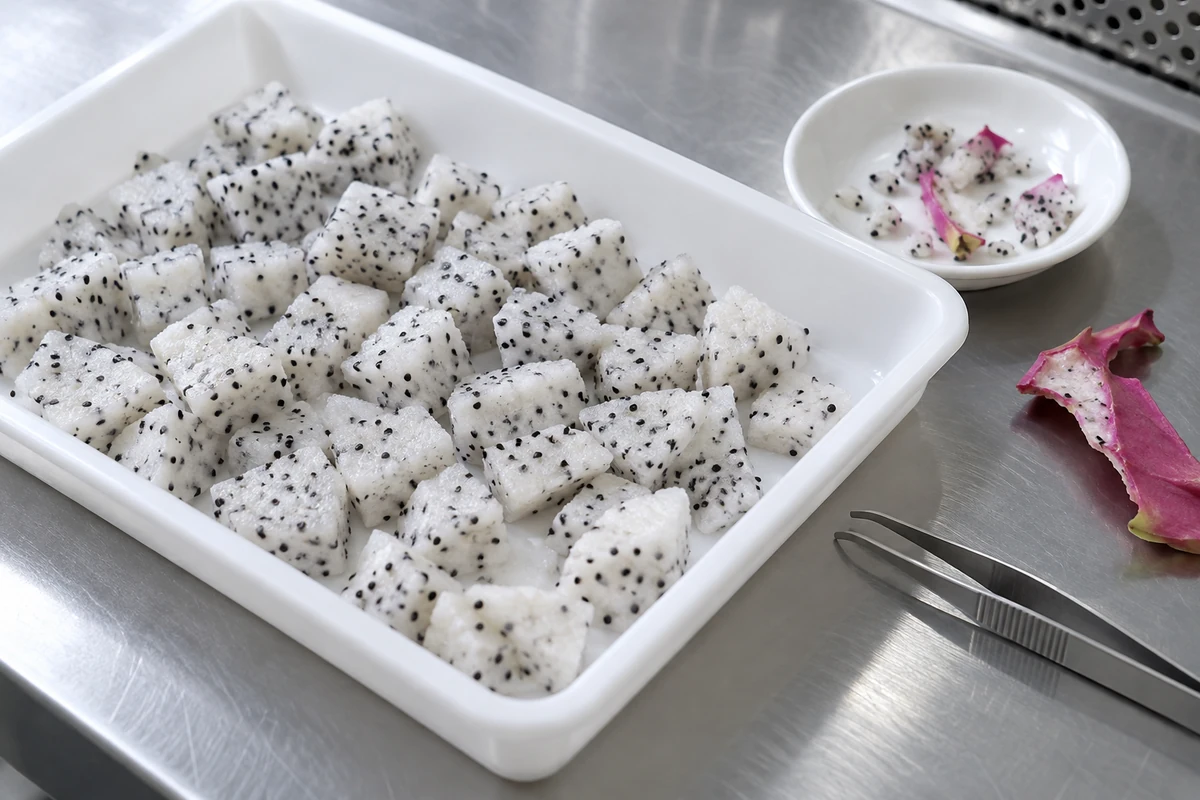
Inspect the fruit under a defined frozen or controlled thawed condition, because ice and tissue softness can alter what an examiner sees and how pieces survive sorting. At GreenLand-food, we help purchasing teams describe these requirements around the selected red-flesh dice or white-flesh pieces. The approach below is a proposed buyer method for developing a repeatable specification. Sample sizes, tolerances and release decisions still need agreement for the actual order; none of the illustrative numbers is a statutory dragon fruit limit or a result from a supplied lot.
Agree what peel residue and broken dice mean
The word peel can refer to attached skin on a fruit piece or loose skin separated from the flesh. Decide whether both belong in the same commercial requirement and how each is reported. A single cube carrying several flecks may be one affected piece under a count method and several fragments under another method. If the agreement says only peel maximum, two honest inspectors can obtain very different numbers. Describe the observation in terms that can be applied to the same physical sample.
Define a broken piece relative to the ordered form. A cube with a minor chipped corner, a piece missing a substantial part of its original volume and a thin loose fragment need not have the same effect on the customer's product. Their categories should reflect the application and the inspection method. A complete undersize cube can also be distinct from a broken cube. Keeping size and breakage separate allows the buyer to understand whether the issue began with cutting distribution or subsequent damage.

A diced style needs written definitions of complete, chipped and broken pieces.
The GreenLand dragon fruit product page separates red-flesh dice from white-flesh pieces. The white product photograph shows irregular pieces, so it should not be judged against a cube reference unless that form is specifically ordered and sampled. The red photograph indicates a diced style but cannot establish a agreed dimensional tolerance. Ask for the proposed specification and measured sample distribution before applying a defect method designed for a more exact cut.
Natural small black seeds are part of dragon fruit flesh. They must not be included automatically in a peel or foreign-material count. Distinguish the product's normal structure from attached colored skin and unrelated material. Suspected foreign material needs its own identification and escalation procedure, especially when a possible hazard is involved. A commercial allowance for cosmetic peel findings cannot authorize hazardous contamination. State the relevant exclusions and responsibilities without making visual grading do the work of a separate safety assessment.
Build a reference set from the actual ordered form. Include clear acceptable pieces, clear defects and borderline examples that commonly lead to disagreement. Photograph multiple faces where a peel remnant or missing corner may be hidden. Put the written definitions beside the reference and identify the sample condition. A generated explanatory photograph can teach the distinction, but the commercial acceptance reference should come from the actual product and be approved by the responsible supplier and buyer teams.
Sample the lot before sorting the pieces
Identify the lot and sample units before opening packs. The lot description should connect the product, flesh type, cut, production or packing reference and represented quantity. Decide whether a sample unit is a complete bag, a stated mass from a carton or another defined unit. Keep this consistent with how the lot will be released. A selected handful may help investigate an obvious problem, but it does not automatically represent the distribution in the full shipment.
Choose units from the lot using an agreed selection approach. Consider the package arrangement and any meaningful production subdivisions rather than drawing everything from the most accessible carton. Retain the origin of each unit while inspecting. Combining all material into one composite can conceal an affected package or a localized production issue. Independent unit results are particularly useful when the concern is uneven peeling or breakage. A lot average and a rule for individual units address different aspects of that variation.
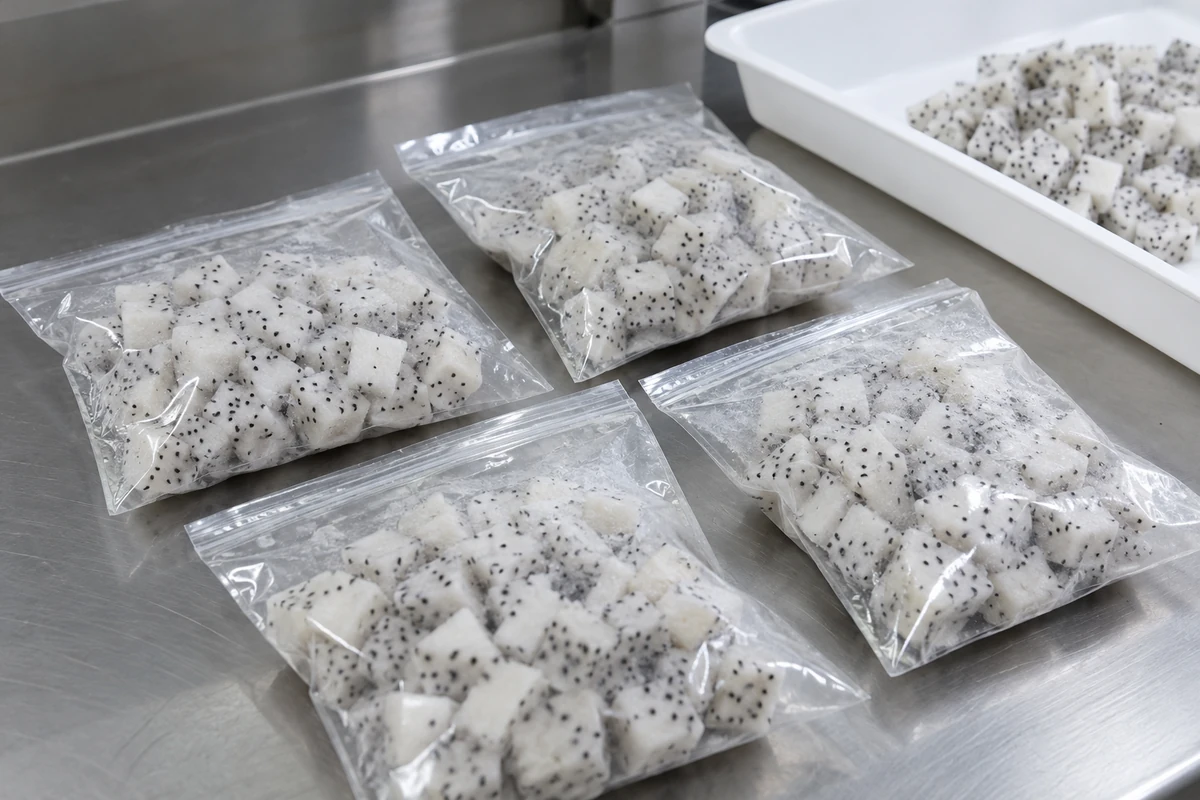
Keep actual sample units identifiable through preparation; add their lot references to the working record.
Keep intentionally selected problem material separate from the representative sample. A receiver may reasonably collect a visibly damaged bag for investigation, but including it without explanation in a random sample changes the interpretation. Record both findings and why each unit was chosen. Take photographs of original packaging and visible damage before sorting removes that context. When a disagreement occurs, the sample selection record can be as valuable as the final percentage.
A development trial can use a modest number of separate units to check whether the method is practical. That number is a trial choice and requires formal review before it becomes a shipment acceptance plan. The plan should identify how many units are examined, how each is prepared, which limits apply and how results determine release, hold or rejection. Do not borrow a sampling number from an unrelated fruit, vegetable or fresh-produce standard and present it as a frozen dragon fruit requirement.
Failure to find a defect in the examined material means none was observed under that method and sample. It cannot establish absence from every package in the lot. More samples can provide more information, while representative selection and reliable examination still matter. Record the examined quantity and visibility conditions with a zero result. A statement such as no peel observed in five named sample units is more interpretable than a claim of zero peel throughout a shipment when the evidence covers only those units.
Label actual sample containers even when an illustrative photograph omits labels for clarity. The working record needs each unit's lot, selection location and handling history. If containers are moved between a freezer, preparation area and inspection bench, preserve that identity through each transfer. Unmarked bags may look orderly in a picture yet become unusable evidence once nobody can connect a finding to the represented product.
Distinguish peel, edible seeds and foreign material
Spread the defined sample on a clean contrasting tray in a layer that permits inspection. Use adequate light and examine surfaces without crushing the pieces. White flesh makes many pink peel remnants conspicuous, while red flesh can reduce the color contrast. Turn pieces with a suitable utensil when the method requires all faces to be examined. State whether magnification is used. A limit based on ordinary visual examination should not quietly change when one team inspects under a different optical condition.
Judge structure as well as color. Dragon fruit seeds are small, dark and embedded through the flesh. Peel remnants may show a different texture or attached outer-skin structure, even when they are close in color to red flesh. A dark fleck whose identity is uncertain should be recorded for investigation rather than assigned confidently from a distant photograph. Keep a separate record of unidentified findings and the method used to resolve them. This prevents the final report from hiding ambiguity behind a precise count.
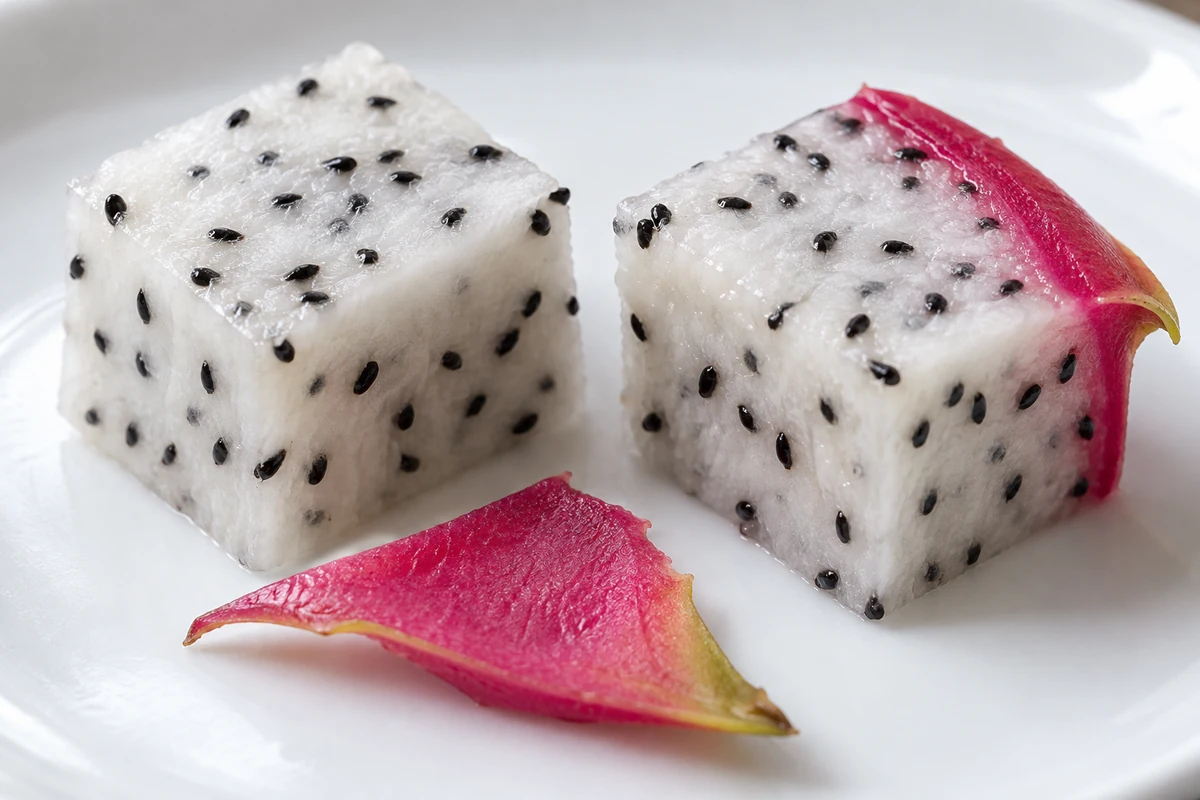
Embedded seeds, attached peel and loose peel are distinct findings; the illustration sets no size tolerance.
For an affected-piece count, mark each piece with qualifying attached peel once, even if several remnants are present, unless the agreed method says otherwise. Record the total examined piece count on the same basis. A separate fragment count can report the number of loose peel pieces in a named sample mass. These are useful complementary measurements when the buyer cares both about how many servings contain a visible remnant and about the amount of loose skin in processing.
Define any visibility or size criterion with a method that operators can reproduce. If a minimum visible area or dimension applies, name the measuring approach, orientation and threshold. Avoid borrowing a numerical peel allowance from a public supplier sheet without its definitions and sampling basis. An apparently strict number may refer to a different cut, count method or fragment size. Order-specific limits need to be achievable, relevant to the use and mutually understood before the shipment is inspected.
Separate material removed during inspection from the remaining sample and keep it identifiable. Photograph a representative remnant with a scale reference when dimensional evidence is required, and retain the original file. Do not reattach loose peel to demonstrate the defect on a cube. The retained sample and observations should preserve what was found. Where a finding might create a safety concern, follow the responsible escalation procedure instead of continuing ordinary cosmetic sorting as if every foreign-looking object had the same significance.
Use a reference that makes broken dice repeatable
Begin with the ordered geometry and an agreed definition of an inspection piece. A fragment is still physical fruit material, but counting each fragment changes the total piece count. A cube that breaks into four fragments creates four observed units from one original unit. This is why the report needs to distinguish a percentage of observed pieces from a recovery of original cubes. The original number of cubes may no longer be known after packing and transport.
Use the reference set to separate complete pieces, minor chips and qualifying breakage. Agree whether the chipped category is reported independently or included in the broken category. If it is included, define the threshold so operators do not judge every tiny corner irregularity differently. A naturally curved piece from the outer flesh may belong to an allowed edge-piece class. It should not automatically be counted as damaged merely because it is not a perfect cube.
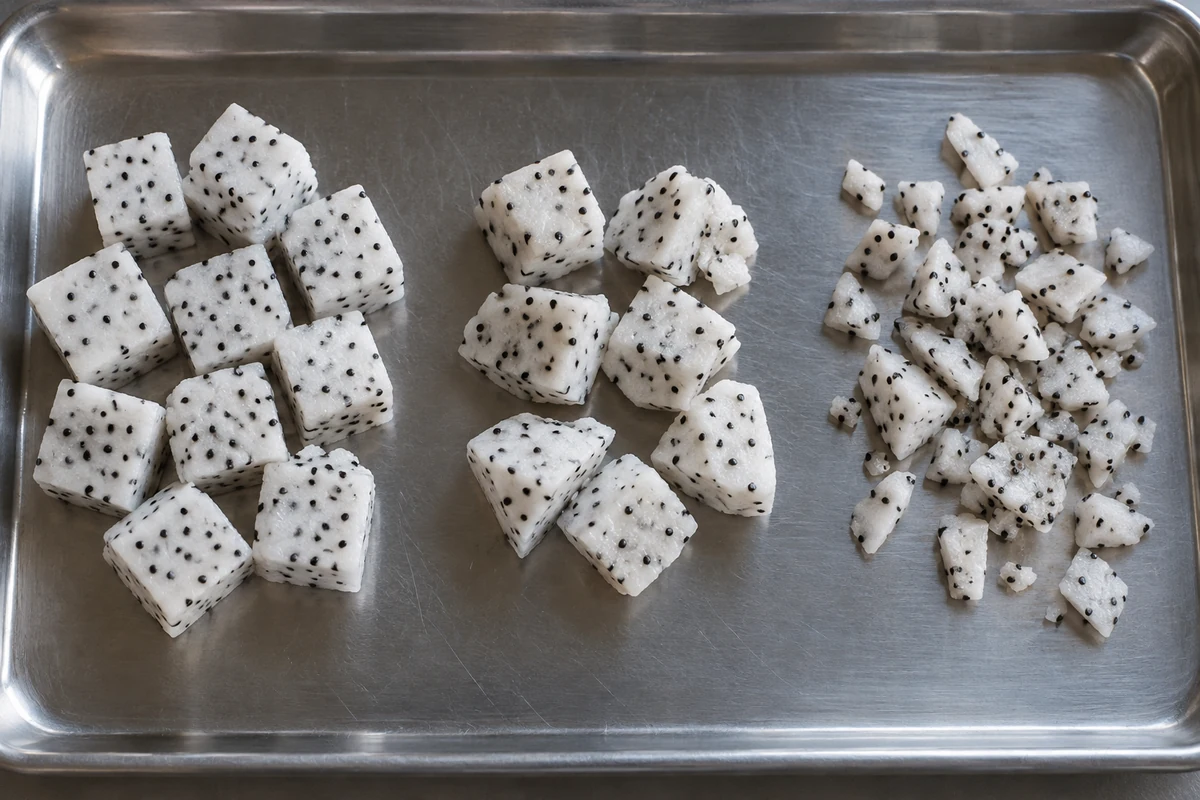
Agree the boundaries between complete, chipped and qualifying broken material.
Thin fragments and crushed tissue may require a mass approach when counting becomes unstable. State how very small material is retained, whether any sieve is used and how the sample remains in the specified condition during sorting. A sieve aperture can separate by geometry as well as breakage, so it is not a universal substitute for the written defect definition. Check how intact but small pieces behave before selecting a screen as part of the method.
Limit damage introduced by the inspection itself. Aggressively separating fused pieces, pressing soft tissue or dropping the sample can create new breakage. Record clumps as found and use the agreed separation procedure. If a cluster cannot be separated without damage, report that condition separately rather than forcing it apart and attributing all resulting fragments to the supplier. The receiver's observation needs to distinguish what was present at opening from what occurred during preparation.
Check operator agreement using the same reference material. Ask trained examiners to classify a defined group independently, then compare the points of disagreement. Revise unclear examples or wording before using the method for a release decision. Repeated disagreement about slightly chipped cubes can overwhelm a tight tolerance even when the weighing balance is accurate. The most useful improvement may therefore be a clearer definition and a repeatable handling procedure rather than a more precise numerical display.
For example, two examiners may agree on clearly shattered pieces but classify several chipped corners differently. If those borderline pieces decide whether the sample passes, photograph and retain them for joint review. Repeat the classification after clarifying the reference, keeping the original results in the record. This checks the decision that matters to the shipment without pretending that repeated counting of the same material creates new independent sample evidence.
Keep count and mass percentages on their own bases
Every percentage needs a named numerator and denominator. For peel-affected pieces, a possible count result is the number of observed pieces carrying qualifying attached peel divided by the total observed pieces examined, multiplied by 100. The report should repeat that basis in words. It should also state how fragments are handled in the total. If another team excludes fragments or counts several peel remnants separately, its percentage represents a different measurement.
For broken fruit by mass, divide the mass of material meeting the broken definition by the defined examined fruit mass and multiply by 100. Identify how loose ice, thaw liquid or other material is treated; these cannot be left to operator preference. Use suitable weighing equipment under the site's procedure and apply the same draining or preparation to all fractions. A very small numerator makes scale resolution and retained material especially relevant to interpreting the result.
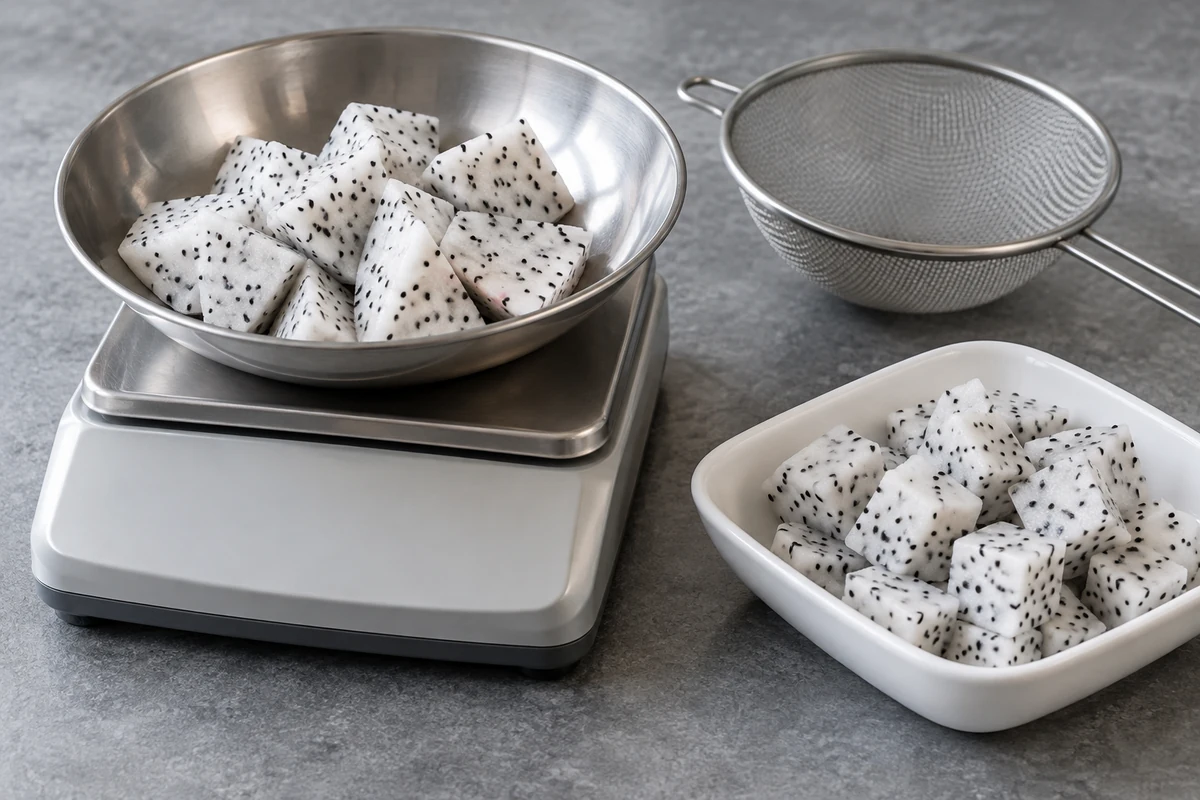
A mass result needs a defined fruit basis, separation procedure and suitable weighing equipment.
Consider a count example with 200 observed pieces and eight pieces carrying qualifying peel. That result is 4 percent of observed pieces affected under the named count method. If those eight pieces are large, they may account for a different fraction of the sample mass. The result does not say that peel itself weighs 4 percent of the fruit. A separate peel-mass measurement would require removal and weighing under another defined method, with appropriate consideration of adhering flesh.
In an independent mass example, a 1,000 gram examined fruit sample contains 18 grams classified as broken. The result is 1.8 percent by mass under that classification. It cannot be compared directly with the preceding 4 percent count example or treated as evidence that one sample is better. A buyer could reasonably require both a count-based peel result and mass-based breakage result because the defects affect different parts of the process. Keep each limit and result on its own stated basis.
Handle overlap explicitly. A broken piece can also carry peel. If reporting each defect separately, the same piece can appear in both category results, but adding those percentages does not necessarily give the percentage of all affected pieces. For an overall affected-piece result, count the union of pieces with either defect once, using the same denominator. Name the rule in the specification so a combined number cannot overstate or understate what the buyer's team actually found.
Control the inspection state and thawing method
Frozen inspection preserves the as-received piece condition and helps describe separation, frost and visible breakage. It can also hide small remnants under ice or make adhered pieces difficult to examine. Record the product state and any preparation used to make the surface visible. A method that removes frost needs to preserve the attribute being assessed and should be agreed before use. Scraping, washing or prolonged warming can change the sample and the apparent defect rate.
Controlled thawed inspection can reveal surface detail or help assess the customer's use. It also softens tissue and can release liquid, making the sample more vulnerable to handling damage. Define the sample mass, container, cover, temperature condition, endpoint and treatment of liquid. Follow the product instructions and responsible safety procedure. A fixed thawing time cannot guarantee the same state for every cube size or package, so record the actual condition as well as elapsed time.

Judge the ordered white irregular-piece form against its own reference.
When both states are needed, decide whether the same material will be followed or separate units will be used. Tracking the same pieces can show what happens during handling but requires a way to preserve identity. Independent units allow separate examinations without disturbing later samples, but their natural variation has to be considered. Do not present independent frozen and thawed counts as if the examiner had tracked the same original cubes through the process.
The FDA's fruit examination manual illustrates the broader need for a defined examination and sample preparation. Its commodity methods are not a dragon fruit commercial peel or breakage tolerance. The practical lesson is to name the method and its applicability. A buyer-developed frozen-dice procedure should be identified as such, including its limits, rather than described as an official standard merely because another fruit method uses a similar operation.
Review product condition with handling evidence when the result is unexpected. Clusters, loose ice, liquid marks and damaged packaging may justify a storage or transport investigation, but no single visual sign establishes the complete temperature history. Match the sample to carton identity and available monitoring records. The GreenLand knowledge center provides additional context for keeping product-specific inspection methods, denominators and release responsibilities connected.
Make the lot decision from the written agreement
Agree the decision rule before inspecting a disputed shipment. The rule should identify whether limits apply to every sample unit, a lot aggregate or another defined assessment. State what happens when one unit fails, how uncertainty or an unidentified finding is handled, and who can authorize release or further investigation. A tolerance without a decision rule leaves the receiver with a number but no consistent basis for deciding the lot's disposition.
Keep results traceable to the original sample units. Report the examined quantity, preparation, observed counts or masses, calculated result and applicable limit together. Preserve images and retained findings where the procedure requires them. A lot average can be included when it serves the plan, while the separate unit results remain available. This helps show whether a problem is distributed through the sample or concentrated in a particular bag or portion of the represented production.
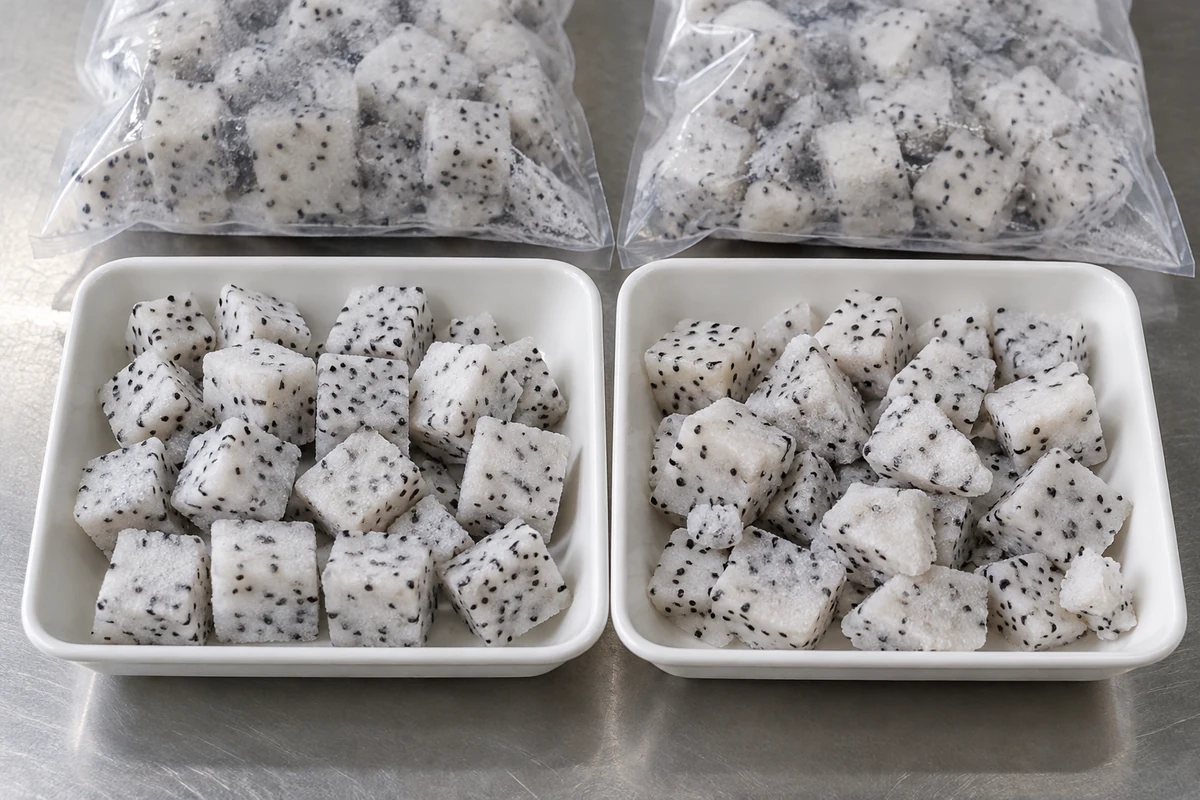
Keep the reference and examined sample connected to the written decision method.
A possible corrective action may involve review of raw-fruit condition, peeling, cutting, sorting, transfer, packing or handling. The evidence should guide the choice. A high peel count and a high broken mass do not establish the same cause. Ask the supplier to connect any proposed action to the relevant records and follow-up observations. A tighter sorting step might reduce visible defects while affecting usable yield and cost; review those consequences before approving a revised commercial grade.
Safety findings follow the responsible hold and escalation process. A visual sample that meets cosmetic requirements cannot establish compliance for untested contaminants or destination requirements. Request relevant reports with named methods and represented lots when required by the order. Keep physical quality, safety and commercial disposition decisions identifiable in the file. Reworking or redirecting a lot requires its own authorized assessment; a numerical breakage allowance does not settle every question about the material's suitability.
We help your purchasing team describe the selected dragon fruit form, pack and receiving method before quotation and sampling. Send the intended application, flesh type, target dimensions and the peel or breakage issue that would interrupt your process. Include the count or mass basis and any reference examples already used by your QA team. The approved method, retained sample and packed-lot identity then give both parties a workable basis for repeat orders and for resolving a later inspection difference.
Retesting also needs a rule. Inspecting fresh units can provide additional information, while repeatedly selecting a new handful until one passes biases the decision. Agree when a repeat examination is allowed, which material it uses and how both the initial and repeat findings affect disposition. Keep the original failure visible. A jointly witnessed examination or a competent independent inspection may help resolve a disagreement when the parties cannot reproduce the same result, provided the method and represented lot remain clear.
Source Frozen Dragon Fruit with GreenLand-food
GreenLand-food is a professional frozen dragon fruit supplier and manufacturer in China, providing factory-direct wholesale supply for importers, food manufacturers, foodservice distributors and private-label programs.
Send your product form and flesh color, specification, packing, quantity, application, destination, private-label needs and requested documents. We help confirm the sample and order requirements for the selected supply.