


Dragon Fruit Dice in Yogurt: Color Bleeding and Piece Integrity
Oct 19, 2026
Leave a message

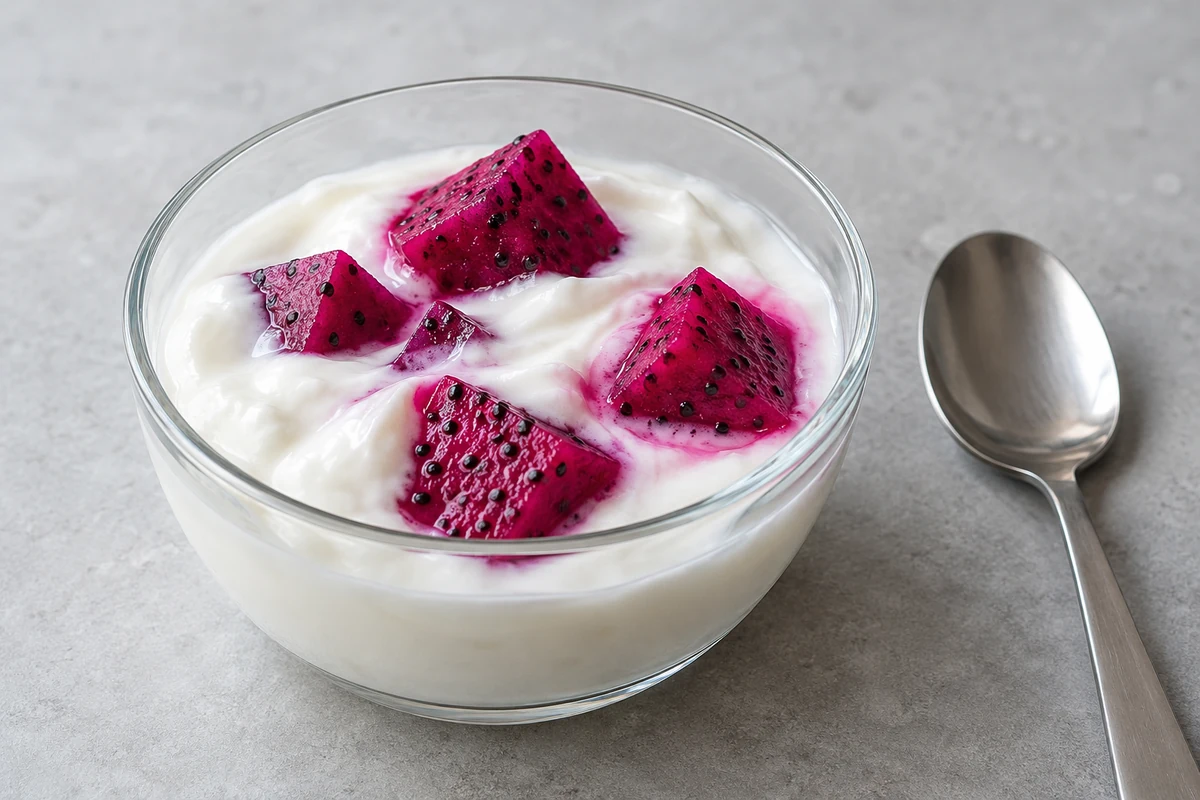
Begin with the yogurt you will sell, including its actual fruit dose, mixing, filling and chilled hold. A frozen sample in a bag cannot show whether a finished cup will keep white areas or recognizable fruit pieces. At GreenLand-food, we help your purchasing team describe the fruit requirement around that application. The method below is a proposed development approach, to be adapted and validated by the responsible dairy and food-safety teams; it does not establish a shelf life or claim that a specific yogurt formula has already passed.
Define the yogurt appearance before choosing the dice
A white yogurt with distinct magenta inclusions has a different appearance target from a uniformly pink stirred yogurt. Decide which effect belongs to the product before comparing fruit samples. In the first style, a widening pink area may be a visual defect even when the flavor remains acceptable. In the second, color distribution may be intentional. A fruit-on-bottom cup creates another set of expectations, because the consumer may see a separated fruit layer before stirring and a different color after mixing.
Describe where and when the appearance will be judged. A cup examined immediately after filling can show neat cubes and clear white regions, while the same cup after a chilled hold may show a broader halo. The service or sale point is usually the commercially relevant stage. Include the packaging and viewing surface in the trial. A fruit piece pressed against a clear wall is highly visible, and that view can differ from what the consumer sees on the first spoonful.

Red flesh is a visible magenta color input for the dairy trial.
Set a piece requirement that can be observed. Decide whether the buyer needs recognizably cubic pieces, visible irregular fruit pieces or only a fruit-derived color and seed pattern. Specify the dose by mass and identify its basis, such as grams of fruit added per finished cup or percentage of the complete formulation. A nominal cut dimension cannot guarantee the same number of visible pieces in every cup. Distribution and handling can change the result even when the total fruit mass is consistent.
The GreenLand frozen dragon fruit product page distinguishes red-flesh dice and white-flesh pieces. The photographs show their general forms, while measured dimensions and defect allowances require sample measurement and agreement. A buyer seeking a premium visible inclusion should approve the actual proposed style and packed sample. A beverage-grade or general processing description may leave the surviving-piece requirement undefined for a dairy application.
Keep the visual target connected to the eating experience. A large cube can look distinctive through the cup wall yet feel too large or too soft on the spoon. A very small cut can distribute well but become difficult to recognize after mixing. Include the normal serving utensil and the expected product temperature in evaluation. A finished-product panel can then describe color, fruit recognition and texture together without allowing an attractive photograph to stand in for the complete result.
Compare red and white flesh in the same dairy base
Compare red and white flesh in the same dairy base when flesh color remains an open choice. Keep the fruit dose, cut distribution and handling as similar as the comparison permits, and record any unavoidable differences between the samples. A red-flesh lot selected for strong color may also have another maturity or texture profile, so a difference cannot automatically be attributed to color alone. The trial should identify the commercial product being compared, including the form and represented lot.
Red-flesh fruit brings a visible pigment input as well as seeds and pieces. The surrounding yogurt may become pink even when many pieces remain intact. If the brand wants a clean white base with isolated cubes, define the acceptable extent of this effect at the intended hold. If a pink base is desired, assess whether the shade is sufficiently consistent between cups and deliveries. Avoid promising a fixed shade from a fruit name or a photograph of frozen dice.

White flesh changes the appearance; texture and liquid release still need checking.
White flesh provides less magenta color transfer and makes the natural black seeds more prominent against the pale tissue. It still needs a liquid-release and texture trial. A white piece can soften, break and contribute water to the recipe without creating an obvious pink warning. Peel remnants or discoloration can also stand out strongly. Approve the white style on its own reference rather than treating it as an interchangeable substitute when a red lot gives an unsuitable color result.
The yogurt base changes what the fruit does in practice. Fat, protein, total solids, acidity, stabilizers and the manufacturing process can affect the finished texture and appearance. A thick strained base and a thinner stirred base should be qualified separately when both are sold. The fruit dose also changes the balance of dairy and fruit in each cup. An acceptable result at one dose is useful development evidence, but it does not establish performance across every recipe carrying the same ingredient.
Keep ingredient and labeling decisions with the finished formulation. Confirm whether the fruit is plain or contains any added ingredient or treatment relevant to the order. If the dairy team proposes a prepared fruit system, additional sugar, a stabilizer or a separate fruit treatment, those changes require their own formulation and process review. They can alter the product's appearance and ingredient declaration. A plain frozen dice approval cannot automatically cover the behavior or labeling of a formulated fruit preparation.
Separate color migration from fruit drip and yogurt whey
Color migration is the movement and distribution of colored material into the surrounding food. A local pink halo around a red piece is one visible expression. A more uniform pink background may result from released juice, dispersed small fruit fragments and mixing. Observe these patterns before deciding what caused them. A color change in the surrounding yogurt does not by itself quantify pigment breakdown, and a lighter-looking region can reflect dilution or the way the sample is photographed.
Fruit drip is the liquid released by the fruit under the defined handling conditions. Yogurt syneresis is separation of liquid from its gel structure. The two liquids may combine in a finished cup, and the fruit's pigment can color liquid from either route. A photograph alone may therefore be insufficient to assign the source. Use a plain-yogurt control and a separately handled fruit reference where they serve the investigation, and record the preparation of each with the same care as the combined sample.
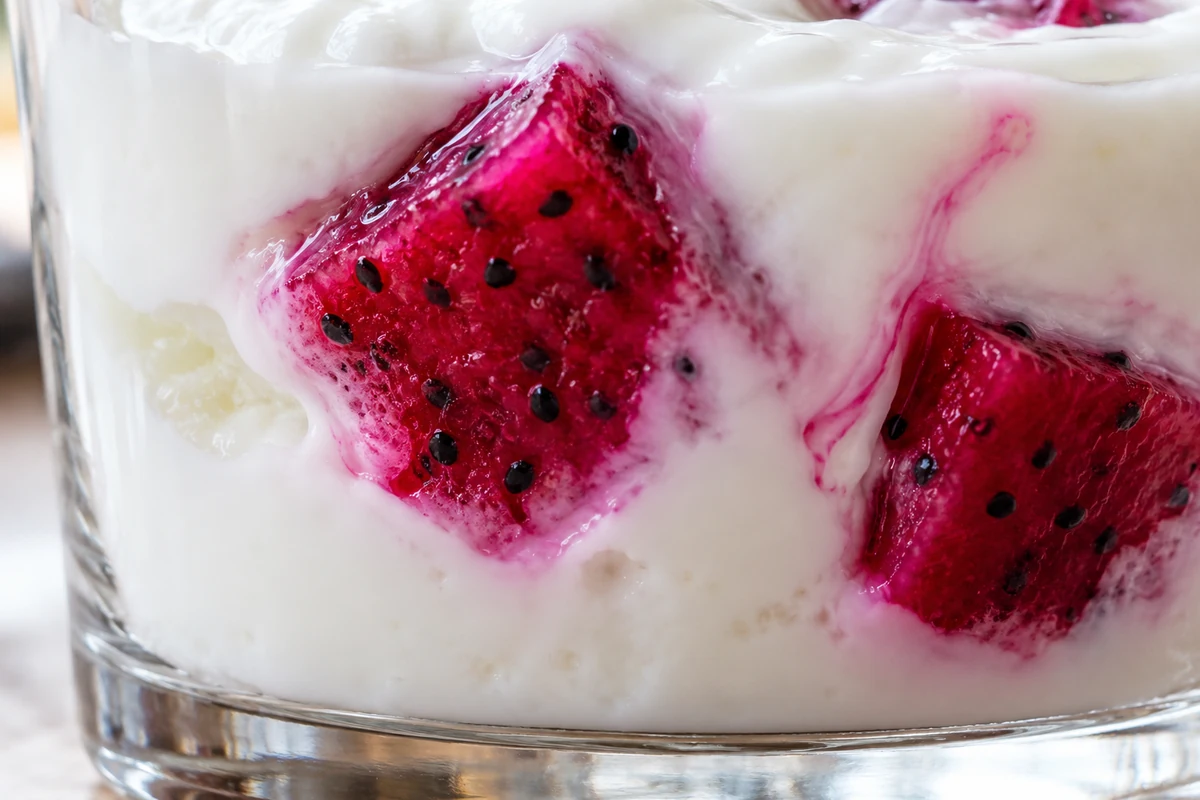
Record color spread and visible liquid separately; the picture cannot identify every liquid's origin.
Published research supports keeping the formulation boundary clear. An institutional record of an original dragon-fruit yogurt study reports increased syneresis in its fruit-enriched formulations. That experiment does not establish the outcome for frozen dice folded into finished yogurt. It is evidence that adding fruit can change the dairy system and that the resulting liquid separation deserves a separate measurement. The study's numerical outcomes should not be copied into an incoming-dice specification.
A Monash research record on pitahaya colourant in yogurt describes a different prepared colorant system and reports a different syneresis result. This is a useful boundary: extracted pigment, fruit pulp and visible dice are different inputs. Their studies cannot be combined into a single promise that dragon fruit will either stabilize or destabilize every yogurt. The buyer's actual formula and process need their own evidence.
When a defect appears, first name the observation precisely. Record localized staining, overall tint, a surface liquid layer, liquid beside individual pieces or a loss of visible fruit structure. Note where it occurs in the cup and when it becomes noticeable. That description gives the dairy technologist and fruit supplier something specific to investigate. It also prevents an incoming-fruit rejection from being based on the broad word bleeding when the actual problem is the yogurt base or the chosen process.
Control the handling that breaks softened pieces
Fruit handling can change both the piece count and the amount of colored material dispersed into yogurt. Softened dice may break when they are forced through a narrow transfer, repeatedly scraped or subjected to vigorous mixing. Review the entire route from opening the bag to the filled cup. A gentle hand-folded development sample can overstate piece retention if production later uses a different mixer, pump or filling system. The production trial should reproduce the relevant mechanical conditions.
Choose the fruit state deliberately. Direct addition from frozen may suit one process, while controlled chilled thawing or a prepared-fruit stage may suit another. Each route changes the temperature and liquid balance and requires review by the responsible process team. State whether any released liquid enters the yogurt. Draining the fruit in a laboratory while adding the full contents of the pack in production creates an unrecognized change in formulation and can make the sample approval misleading.
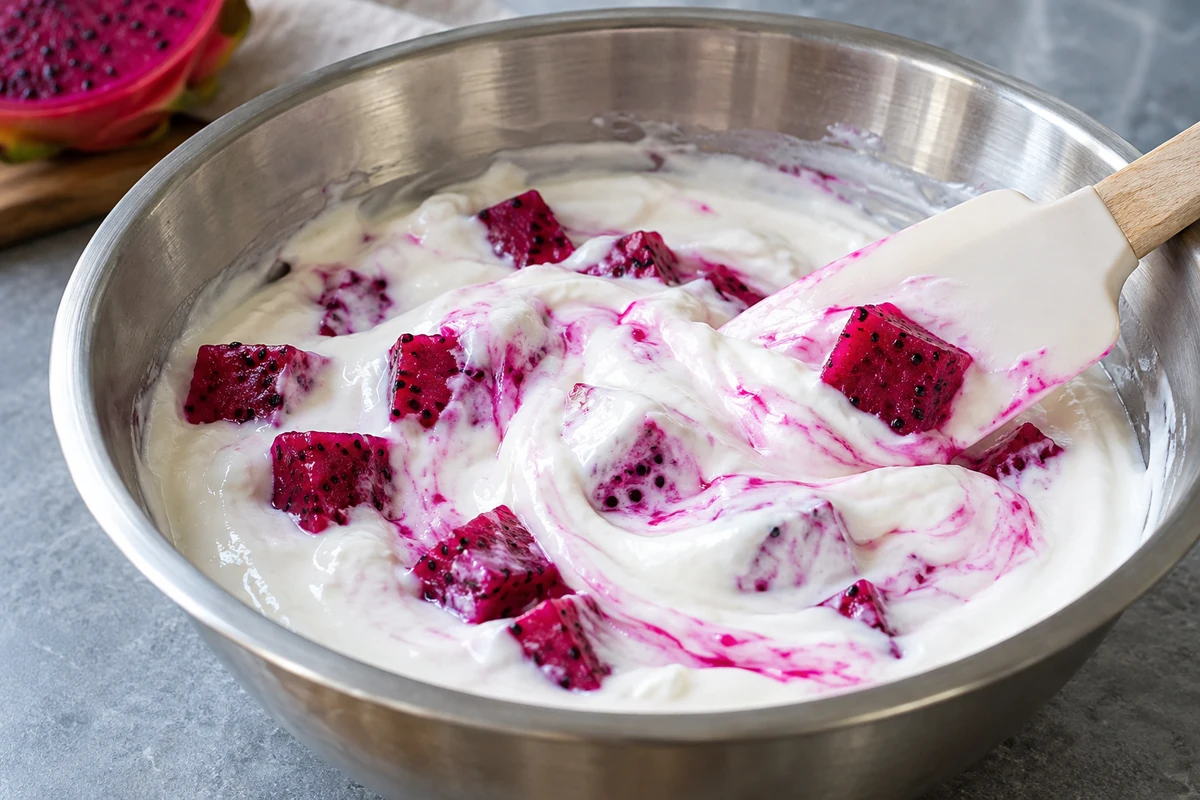
Reproduce the mixing that the fruit will encounter before judging surviving pieces.
For early development, use a repeatable small-batch mixing method. Record the batch mass, vessel, utensil, number and character of strokes, and the fruit-addition point. This does not make a hand method equivalent to a factory mixer. It gives the team a controlled comparison before the larger trial. Keep the same method for the approved reference and candidate, and avoid choosing a gentler treatment only for the fruit whose results are being presented to the buyer.
Observe whether color appears before substantial mixing or mainly after pieces begin to fragment. The distinction can guide the next trial. A strong halo around intact pieces calls for a different investigation from numerous dispersed fragments that tint the whole cup. Repeatedly stirring the same test cup to inspect it will change that sample, so use separate units when later observations are needed. Preserve at least one undisturbed comparison under the agreed chilled conditions.
The product's line also has to distribute fruit consistently. Reducing mixing too far may protect pieces while leaving some cups with too much fruit and others with little. Evaluate dose distribution together with piece retention. Samples from the beginning, middle and end of a representative filling trial can help identify an uneven result, provided the sampling approach is documented. A visually attractive single cup cannot establish how the complete batch is portioned or how the equipment handles the selected cut.
Run a chilled trial that reproduces your actual product
Write the trial question before preparing samples. A useful first question might be whether the proposed red dice retain recognizable pieces and an acceptable pink halo in the chosen yogurt after normal filling and chilled holding. Keep the initial comparison narrow. If the team changes base formulation, fruit dose, flesh type and mixing intensity simultaneously, it becomes difficult to understand which decision improved or worsened the result. A clearly identified reference gives each development round a stable point of comparison.
A proposed initial design can include the plain yogurt, the current fruit reference and one candidate at the intended dose. Add a white-flesh alternative only if that is a real purchasing option. Prepare independent cups for each observation point and enough repeats to see whether the appearance is consistent. The dairy team's validated storage and safety plan governs the temperature and maximum hold. Trial observation intervals are development choices; they do not establish a saleable shelf life.
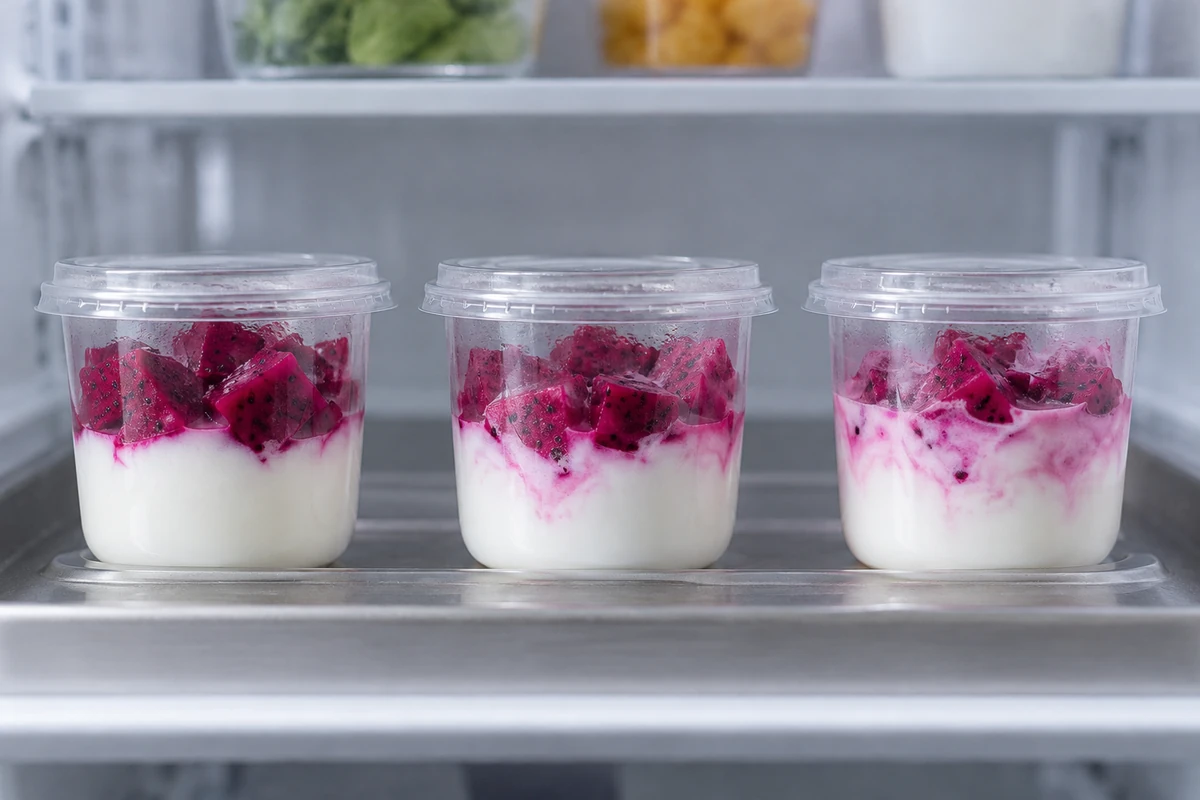
Use independent covered units for observations under the approved chilled study conditions.
Keep cup geometry and filling consistent. Use the same container, fill mass and fruit-addition arrangement as far as the trial permits. If fruit is layered or placed near a clear wall for inspection, state that arrangement. For a mixed yogurt, include a view of the interior on a normal spoon as well as the outside wall. A carefully positioned piece can exaggerate the apparent fruit content when most of the cup contains a different distribution.
Set observation times that cover the actual process and intended commercial decision. The team may need immediate post-fill inspection, an early chilled comparison and later points within an approved study. Record the actual elapsed time and sample condition for every result. Do not extend a room-temperature photography session and then treat the cup as an undisturbed chilled sample. Use an agreed brief inspection procedure or a separate photography unit when repeated viewing would materially alter the hold.
Photograph the samples with the same lighting, exposure, background and camera position. Include enough cup area to show overall distribution and a closer view where the halo or cut edge matters. A neutral reference can help maintain visual consistency, but it does not turn a phone image into an instrumental color measurement. Save observations about piece condition and liquid along with the photograph. The record should allow another reviewer to understand what passed and which part of the result remains uncertain.
A diagnostic second round can compare the same fruit added with its released liquid and with liquid removed by the agreed procedure, provided both routes fit the safety and formulation plan. Restore any intentionally changed formulation mass in a clearly documented way if the team wants an equivalent recipe comparison. Otherwise the test changes both liquid handling and fruit concentration. Describe the design as an investigation, and confirm the practical production route separately before making it part of an order approval.
Measure color spread and recoverable pieces separately
Use separate acceptance descriptions for appearance, liquid separation and fruit structure. A visual color reference might define the acceptable overall tint and localized halo at a named observation point. If the product needs instrumental color control, agree the location, sample preparation and measurement method. A reading taken through a curved transparent cup is not automatically comparable to one obtained from a prepared sample in a laboratory cell. The comparison method has to fit the decision and the available equipment.
Measure liquid with a defined collection procedure when a numerical result is needed. State whether the measurement concerns free liquid in the finished cup, fruit drip before addition or separation under a laboratory test. These procedures examine different properties. A centrifuge result cannot be treated as the liquid a consumer will necessarily see on opening the package. Name the mass basis, container, separation method and endpoint, and keep the plain-base result available when it helps explain the combined product.
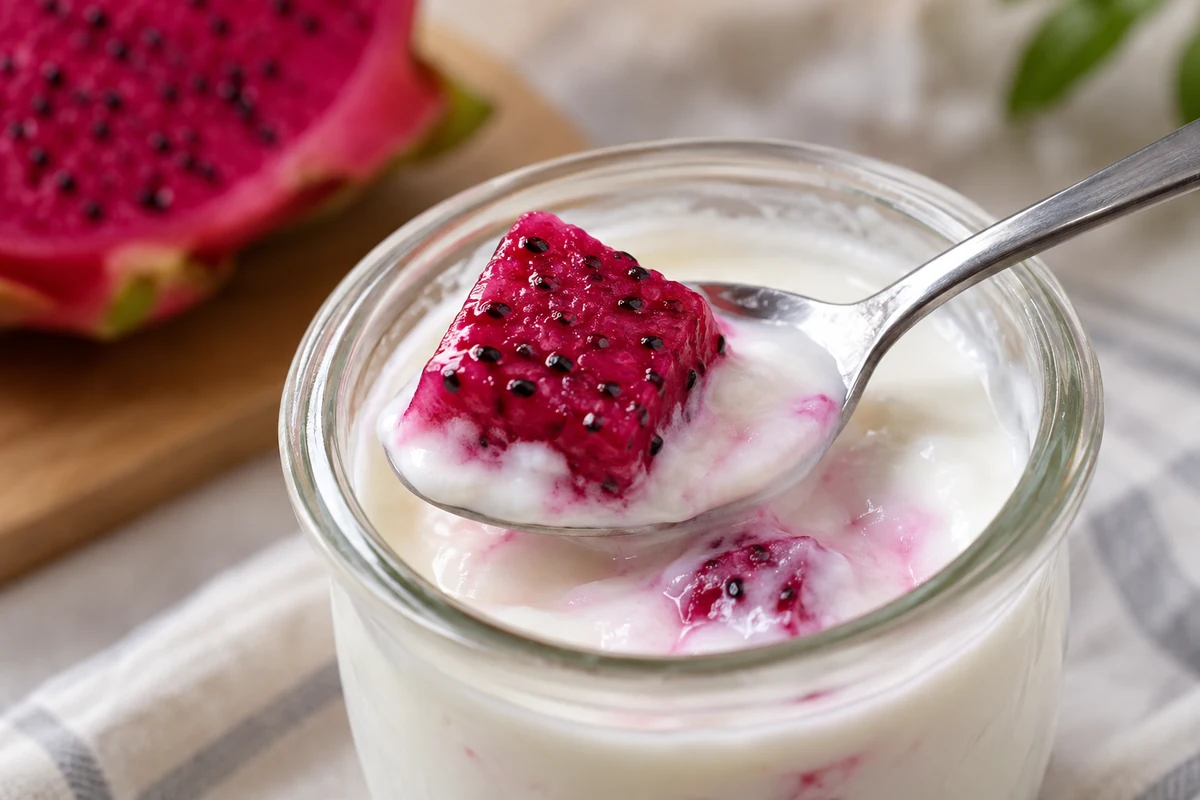
Assess the serving view and piece condition in addition to the outside of the cup.
Define a surviving piece before counting it. The criterion may be a recognizable fruit inclusion above an agreed size or an approved shape reference, depending on the product. Count fragments and intact pieces consistently, and identify the denominator. Counting intact pieces divided by all observed pieces is sensitive to fragmentation, because one original cube can produce several fragments. A mass-based recovery method answers another question. Neither result should be labeled simply percent intact without stating what was measured.
Consider an illustrative calculation. If a proposed recovery method finds 24 grams of qualifying pieces after starting with 30 grams of fruit, the result is 80 percent of the original added fruit mass under that method. It does not show that 80 percent of the original cubes survived as independent units. Yogurt adhering to the fruit, juice loss and the recovery procedure can affect the measurement. A practical method needs defined separation and handling, with enough checks to understand those limitations.
Assess flavor and texture using the approved sensory procedure. Note whether the fruit remains recognizable on the spoon, whether the seeds are acceptable and whether released liquid makes the base feel thinner. A strong magenta color can make a cup look fruit-rich without establishing the desired flavor. Combine these observations with the actual fruit dose and process record. The buyer can then decide whether a different cut, grade, flesh type or prepared-fruit approach deserves the next trial.
Retain the raw observations when a visual score is used. A description such as pink halo visible only beside several pieces gives more information than an unexplained score of three. Train assessors on reference cups or approved photographs under matched viewing conditions. If two assessors disagree, review the boundary examples before averaging their scores. Numerical precision cannot compensate for a category that means something different to each examiner, especially when the final decision concerns a small change in appearance.
Buy dragon fruit against the approved yogurt result
The incoming specification should describe the fruit that produced the approved result. Include flesh color, form, measured size distribution where required, peel-removal standard, broken-piece allowance and the treatment of loose ice or clumps. Link the packed frozen reference to the yogurt trial, including whether the fruit was thawed or drained before use. The specification can name a finished-application check where both parties can reproduce it. It should also identify which party controls each part of the method.
Keep ordinary fruit variation within a defined commercial range. A red lot with a different shade or a softer cut may need review even when the ingredient name remains unchanged. Record whether such changes are acceptable within the agreed reference or require another application trial. The supplier should confirm the represented lot and form for the sample sent. A specially sorted pouch can be useful for development, but its presentation must not be mistaken for the distribution in normal commercial cartons.
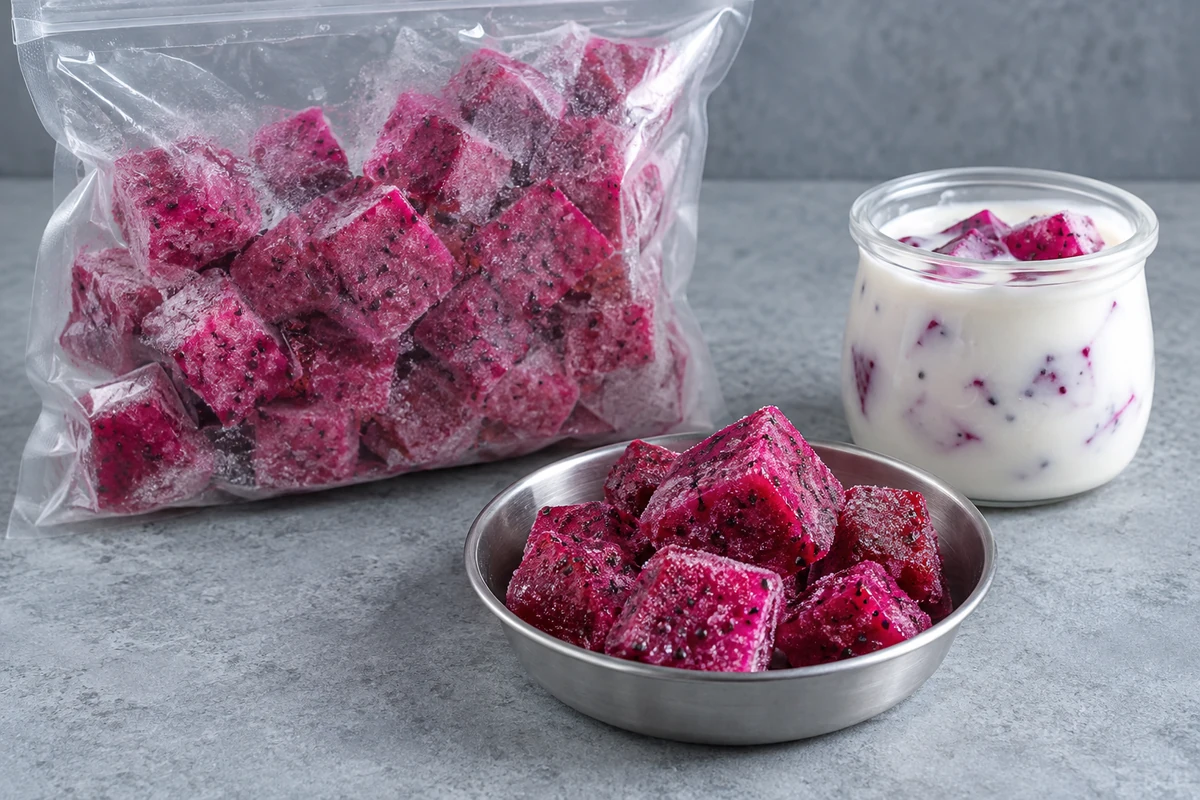
Approve the incoming fruit and the finished yogurt using connected sample records.
Safety requirements remain separate from the visual approval. Confirm whether the fruit is intended for a no-further-heat dairy route and what controls and documents support that use. Neither yogurt acidity nor freezing should be assumed to make an otherwise unsuitable incoming fruit safe. Agree the relevant microbiological and chemical scope with the responsible teams and destination requirements. Reports need the represented lot and method; a successful color trial cannot establish any unmeasured safety attribute.
Quote the selected product with the required pack, volume, destination and application. Smaller bags can simplify portioning but have a different material and handling cost from a bulk liner. Private-label requirements need the approved fruit identity and any relevant storage or preparation wording. Discuss crop availability, source-lot consistency and realistic lead time for the grade being sampled. A purchasing decision is easier to repeat when the commercial offer and the technical reference describe the same fruit.
We prepare the supply discussion around the frozen form and the customer's intended process. Share photographs of the accepted yogurt appearance together with the trial method, fruit dose and the observations your receiving team will use. Keep the supplier sample, filled-cup reference and agreed documents linked to the same approval. When a later lot gives an unexpected tint or more broken pieces, those records help identify a useful comparison and define the next controlled test.
Source Frozen Dragon Fruit with GreenLand-food
GreenLand-food is a professional frozen dragon fruit supplier and manufacturer in China, providing factory-direct wholesale supply for importers, food manufacturers, foodservice distributors and private-label programs.
Send your product form and flesh color, specification, packing, quantity, application, destination, private-label needs and requested documents. We help confirm the sample and order requirements for the selected supply.