


What Is Burdock Root? Food Identity, Taste and Frozen Strips
Oct 19, 2026
Leave a message

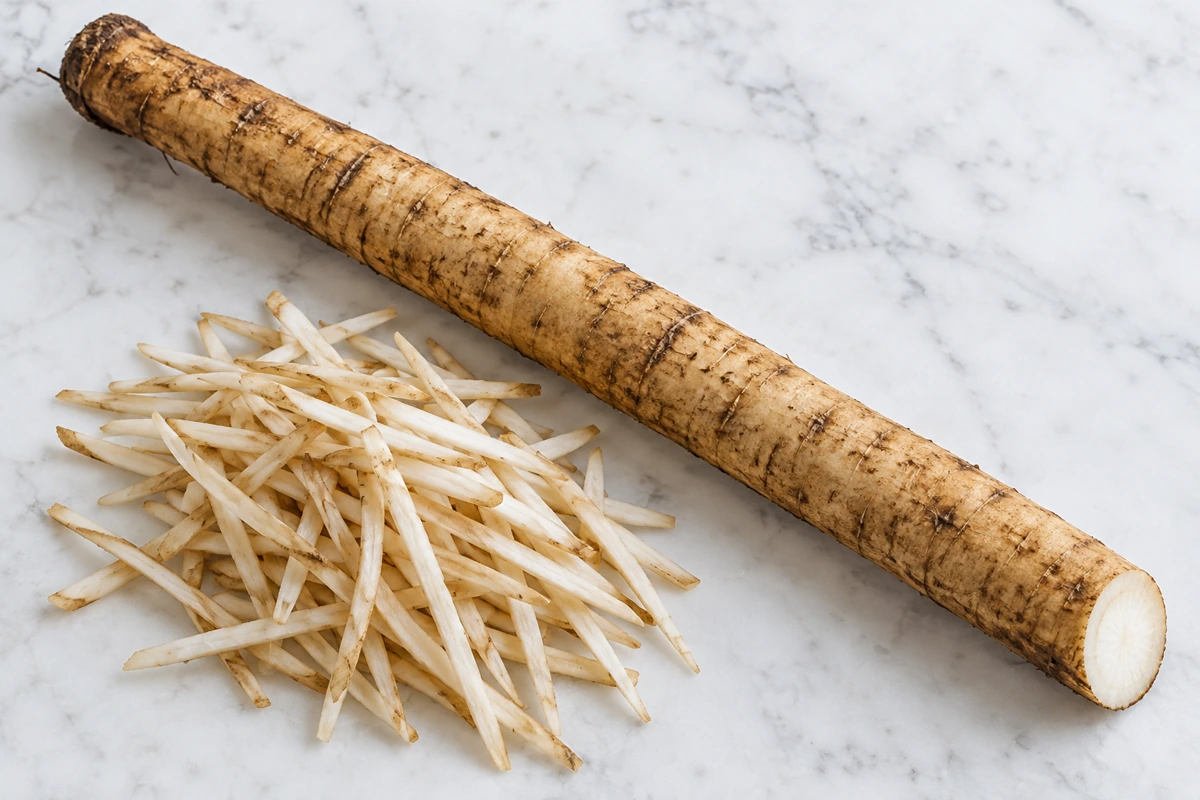
For a buyer encountering burdock for the first time, the important distinction is between the vegetable's identity and the preparation of a particular product. The word frozen describes storage condition. It does not tell you whether the strips were blanched, seasoned, treated to manage browning, or cooked sufficiently for the intended use. Those details belong in the product specification and use instructions. Once they are clear, a small cooking trial can answer the more interesting question: will these strips give the texture, appearance and flavor your dish needs?
Burdock root is the edible gobo used as a vegetable
Food burdock is associated with cultivated Arctium lappa, a plant grown for its elongated root. The root can look unfamiliar beside a carrot or potato: narrow, brown and rather woody on the outside, with much paler flesh when cut. A long root is therefore a useful recognition image, but its appearance alone cannot confirm species, edible quality or the identity of material collected in the wild. Commercial buying should begin with a named food ingredient and traceable source.
Gobo is the Japanese culinary name buyers are likely to see in recipes, restaurant menus and Asian grocery listings. The same ingredient may be described in an English specification as burdock root, burdock julienne or burdock strips. These names can refer to the same vegetable while describing different levels of preparation. A purchasing team should keep the botanical identity, common food name and cut description together so that an ingredient request survives translation between the kitchen, importer and packing operation.
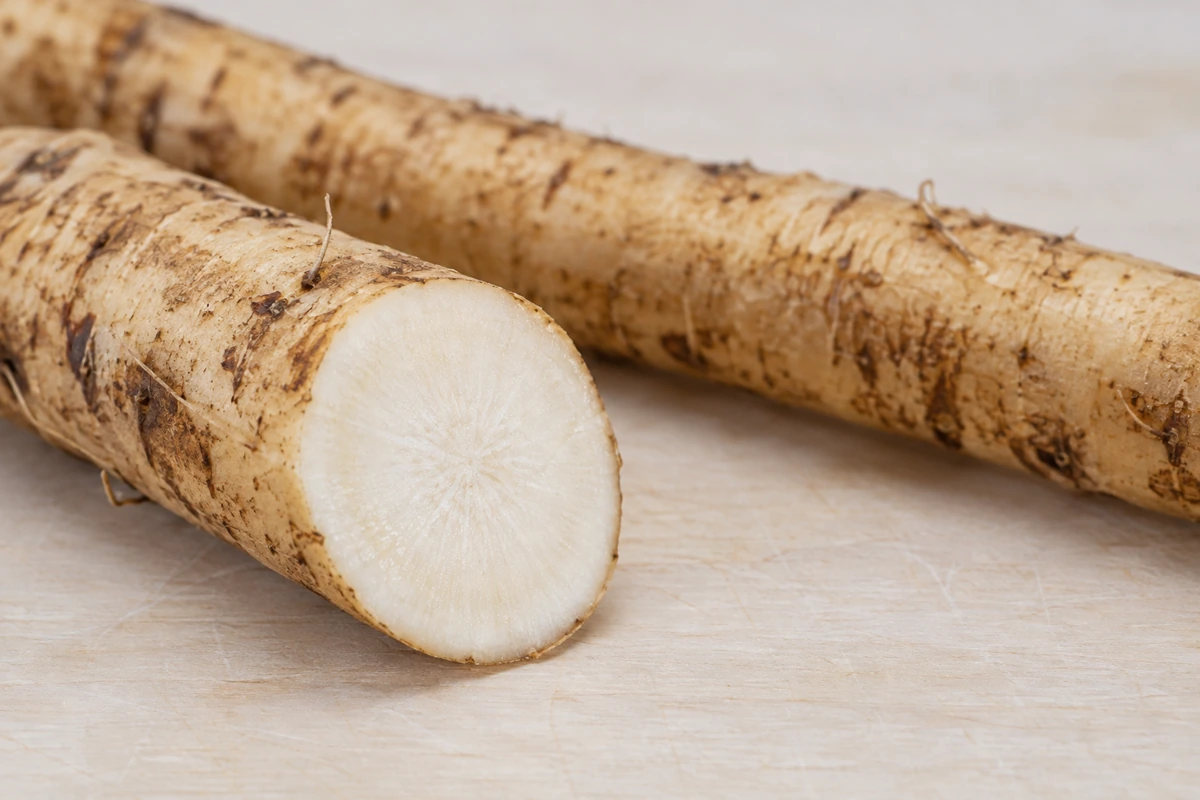
The cut face reveals pale flesh beneath the thin tan exterior.
The Kikkoman ingredient glossary places gobo in familiar food contexts such as stir-fries, simmered dishes, rice and soup. That culinary identity is the useful starting point for a frozen-food order. Burdock also appears in teas and herbal products, but a dried infusion ingredient or extract is a different commercial item. A food manufacturer should not carry health claims, preparation instructions or dose language from those products into a vegetable specification.
An ingredient declaration also needs to identify what was added during preparation. A bag described as burdock strips may contain only the vegetable, or it may have an agreed treatment or seasoning that needs disclosure. A prepared kinpira side dish can include carrot, soy sauce, sugar, sesame and other ingredients. Its label and intended use differ from a plain frozen root component. Asking for the complete ingredient statement resolves this distinction before the sample reaches the development kitchen.
For a restaurant introducing the vegetable, a short menu description can do more work than an unfamiliar Japanese term alone. Describing tender burdock strips in a savory sesame dressing tells the customer something about the eating experience. For an industrial recipe, however, descriptive menu language is insufficient: the technical record still needs identity, preparation status and the form actually supplied. These two documents serve different readers and should agree without trying to perform the same job.
The term root also distinguishes the edible component from other parts of the plant. A supplier record should not describe a mixed botanical material when the recipe requires prepared root flesh. If a translated document uses a broad common name, ask for clarification before sample approval. This is especially useful when a business handles both culinary vegetables and dried botanical products.
What burdock tastes like after cooking
Burdock's characteristic flavor is earthy, with a mild sweetness and sometimes an astringent edge. Those words describe a range of sensations rather than a fixed intensity. The cut, preparation and surrounding recipe all affect what a person notices. A thin strip in a strongly seasoned side dish will contribute differently from a larger piece in a light broth. A buyer who has only tasted one heavily dressed version can easily underestimate how much the plain ingredient contributes.
It helps to evaluate the cooked vegetable before adding a dominant sauce. Prepare a small portion according to the supplier's instructions, then assess it while it is at the temperature appropriate for tasting. Notice the initial aroma, the resistance when biting through a strip, and any lingering fibrous or harsh sensation. This establishes a reference that can be compared with the finished recipe. It also avoids attributing the flavor of sesame oil, soy sauce or stock to burdock itself.
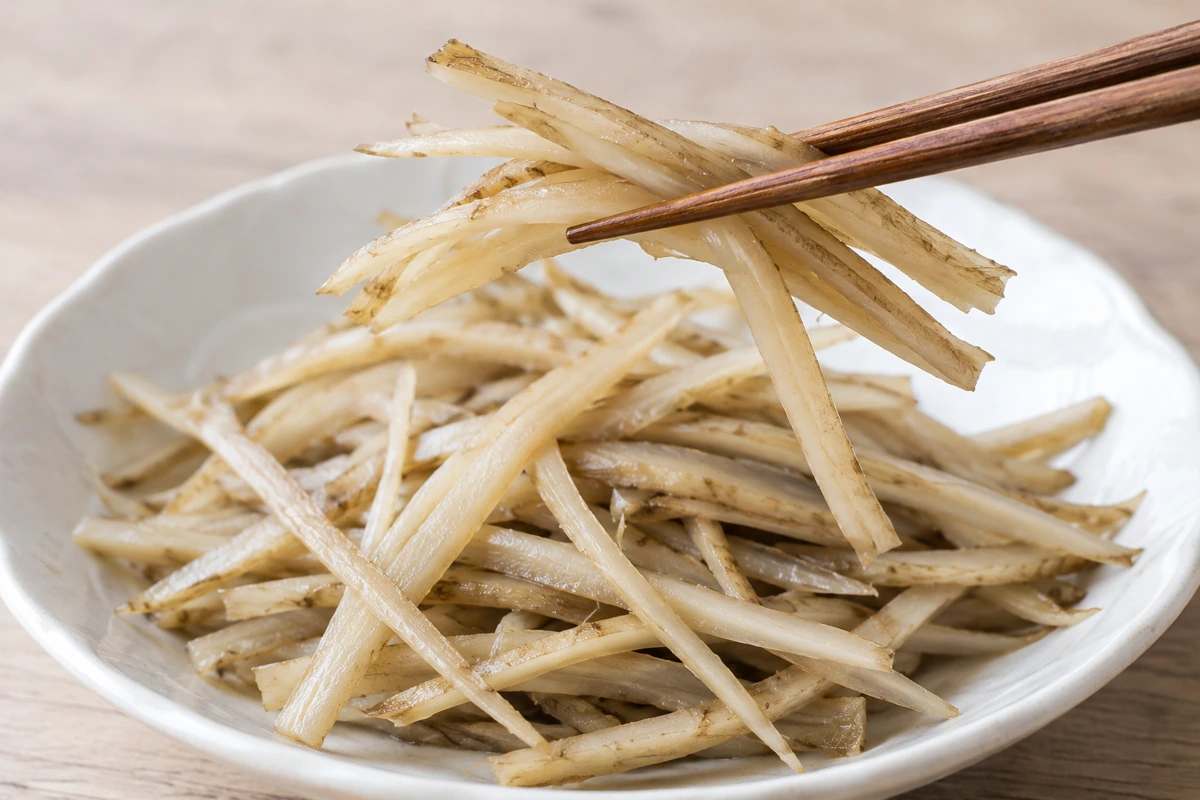
Cooked strips retain a visible shape as they are lifted with chopsticks.
There is a useful difference between a pleasant bite and a persistent string. A satisfactory cooked strip can retain enough structure to feel distinct among softer ingredients. If an unyielding strand remains after the surrounding tissue has softened, further cooking may damage the rest of the dish before it produces the desired mouthfeel. Record that observation separately from an overall statement that the sample is firm. The development team then has a clearer reason to discuss maturity, trimming or cut selection.
Seasoning changes the balance rather than simply concealing the root. A light broth allows more of its earthy character to remain apparent. A reduced savory glaze adds intensity around the strip, while carrot contributes another sweetness and a different color. An oil-rich dressing changes how aroma is perceived and how the pieces feel together. Each application therefore deserves its own tasting, even when all three use the same frozen raw material.
A side-by-side sample review should hold preparation variables steady. Cook comparable quantities with the same equipment, water and endpoint, and taste them in a consistent order. Use descriptive comments such as clean earthy aroma, persistent coarse strand or uneven tenderness instead of a single numerical preference score. If several people taste the samples, allow independent notes before discussion. Agreement about what was observed is more useful than an early group verdict that makes later tasters reluctant to disagree.
For a new menu, test the proposed serving with the food that accompanies it. Plain rice, rich meat and a light soup create different sensory contexts. The same earthy note can be more prominent in a lightly seasoned meal than beside a strongly flavored main course. Keeping that context in the sample discussion helps explain why different customers can prefer different preparations of the same root.
Why the strip shape changes the eating experience
The word strip covers a surprisingly wide range of pieces. Length affects how the vegetable sits in a bowl, lifts with chopsticks and passes through portioning equipment. Width and thickness affect the cross-section a diner must bite through. A long, very thin shaving and a shorter rectangular matchstick can have similar names in a product list while behaving differently in a pan. A sample photograph helps establish the intended appearance, but dimensional language makes the requirement repeatable.
Japanese preparation includes both julienne and fine shavings, often called sasagaki. The latter produces irregular tapered pieces rather than a collection of identical rectangular sticks. This difference matters when a recipe was developed with hand-shaved fresh gobo and purchasing later introduces machine-cut frozen strips. The supplier may have delivered exactly the ordered cut while the finished dish still looks denser or feels firmer than the chef expected. The remedy begins with comparing the actual forms used in development.
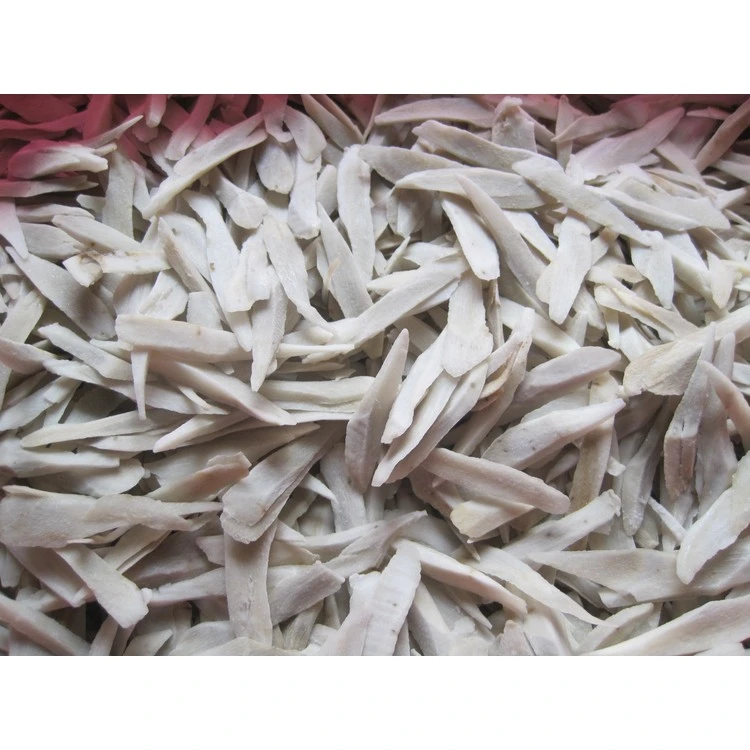
The product reference shows irregular oblique burdock strips; agree the cut distribution needed for the dish.
For kinpira, a consistent narrow cut helps burdock and carrot mingle as a coherent side dish. The burdock does not need to imitate the carrot precisely, but a large difference in thickness can create a cooking compromise. Soup has another constraint: the pieces need to fit comfortably in a spoon with the other ingredients. A long strip that works well on a plate may drape over the edge of a soup spoon or tangle with other strips during filling.
Short fragments should also be described in relation to the application. They may be visually acceptable in a minced filling yet unattractive in a side dish sold for its recognizable strips. A bag with many fragments can distribute differently through a vegetable blend because small pieces settle and travel differently from long ones. The relevant question is how much of the supplied material performs the intended role, using an agreed method for measuring that fraction.
The current GreenLand-food burdock product page presents strips as the reference form. For an inquiry, include both the desired cut and the use that makes it necessary. If a different shape would solve a cooking problem, its availability should be confirmed separately. A photograph of whole roots can explain the ingredient's origin, but it should not become evidence that whole roots are the frozen product being offered.
A drawing or dimensioned photograph can complement the cut description when irregularity matters. Identify where width and thickness are measured and whether the accepted form includes tapered ends. This prevents a nominal dimension from suggesting a degree of uniformity that the actual root cut does not have. The commercial requirement should describe a realistic product that performs in the dish.
What freezing tells you about preparation
A frozen strip is a convenient intermediate ingredient, but it still carries a processing history. Washing, scraping, cutting, any treatment against discoloration, heating, cooling and freezing can each influence the result. The commercial specification needs to say which steps apply to the actual product. Without that information, two bags with similar-looking pale strips may require different kitchen handling and may respond differently to the same recipe.
Blanching is particularly easy to misunderstand. It is a preparation step whose purpose and extent need definition; the name alone does not establish that the product is ready to eat. A kitchen should follow the declared use instruction and its own applicable cooking controls. If the dish will receive little or no further heat, that intended route must be discussed explicitly before approval. A bright color, a clean-looking bag or a soft texture cannot supply missing process evidence.
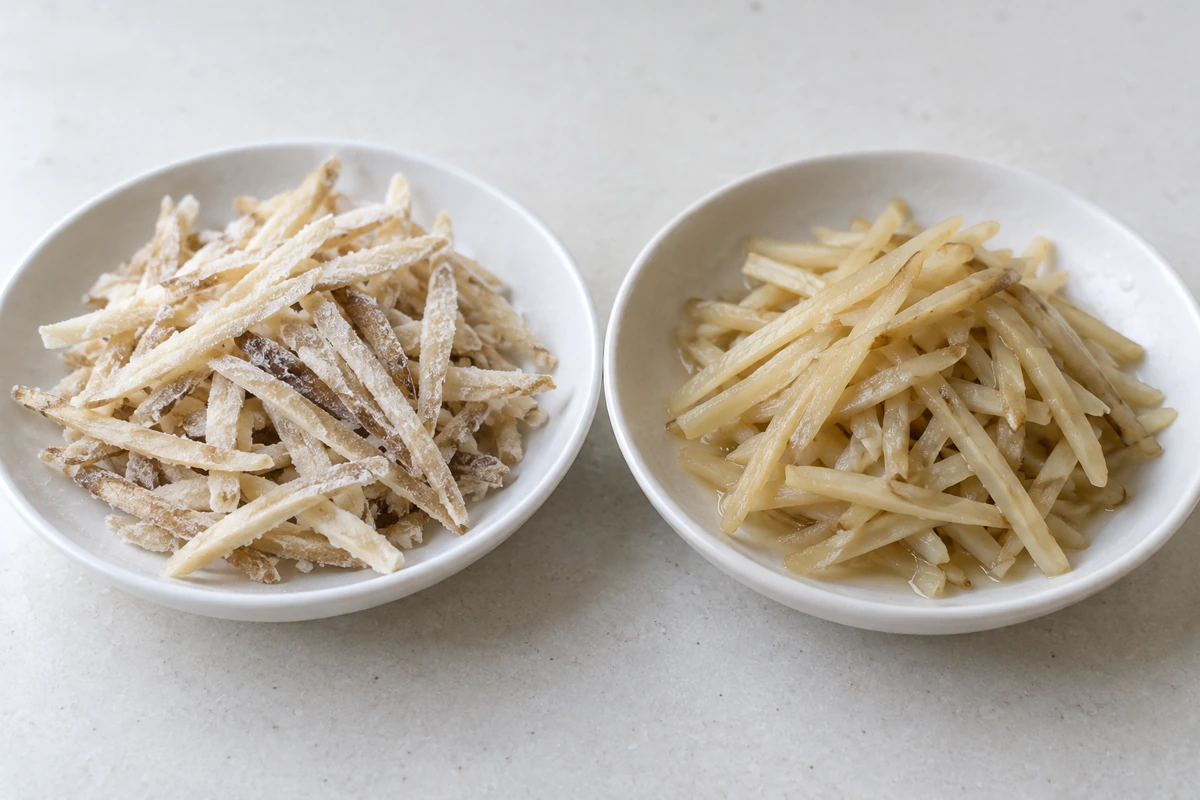
Frosted strips and a cooked portion have different surface appearances; processing status still requires a product declaration.
Free-flowing pieces can help a kitchen take out the required amount, provided the product is designed and packed for that use. Clumps can complicate weighing and feeding, but their meaning depends on the format and history. A small number of pieces joined together is different from a pack that has become a single hard mass. Record what is actually present and compare it with the agreed product condition. Appearance alone rarely identifies precisely where an abnormal condition arose.
Moisture becomes more visible when the strips heat. Some water may appear around the vegetable, and the cooking method determines whether it stays in the dish, evaporates or is drained away. In a soup that liquid joins the broth. In a lightly glazed side dish it may change reduction time and seasoning concentration. A trial should therefore use the intended cooking route and measure the result at the point where the food is served or packed.
Storage and handling instructions belong to the supplied item, including its unopened and opened-pack conditions. Keep the lot identification with the sample, reseal any retained material using the agreed procedure, and avoid repeatedly warming the same bag during development. If the result changes between trials, the team should be able to separate a change in the ingredient from a change in how the sample was handled. A dated sample record provides that continuity without requiring a complicated reporting system.
The packaging record should preserve the distinction between a plain ingredient and a seasoned component after the outer carton is removed. Inner-bag identification and a clear batch sheet help kitchen staff use the correct instructions. This becomes more valuable when several similar pale root cuts share a freezer or when development samples arrive in small unbranded bags.
How kinpira and soup use the same root differently
Kinpira makes the cut shape conspicuous. Burdock and carrot are commonly cooked and coated with a savory, slightly sweet seasoning, producing a side dish in which the separate strips remain visible. The cooking approach involves both heating the vegetable and controlling the liquid around it. A successful small batch therefore needs a pan load that allows the cook to reach the desired bite before the sauce becomes excessively concentrated or begins to catch.
Soup gives the root a different role. It contributes an earthy note and a recognizable piece among broth and softer ingredients. Here the desired texture should be assessed with a spoonful of the complete soup. A strip that seems firm when tasted alone may be useful alongside tofu; the same strip may feel intrusive in a smooth vegetable soup intended to have little chew. The recipe's identity determines whether that contrast is welcome.
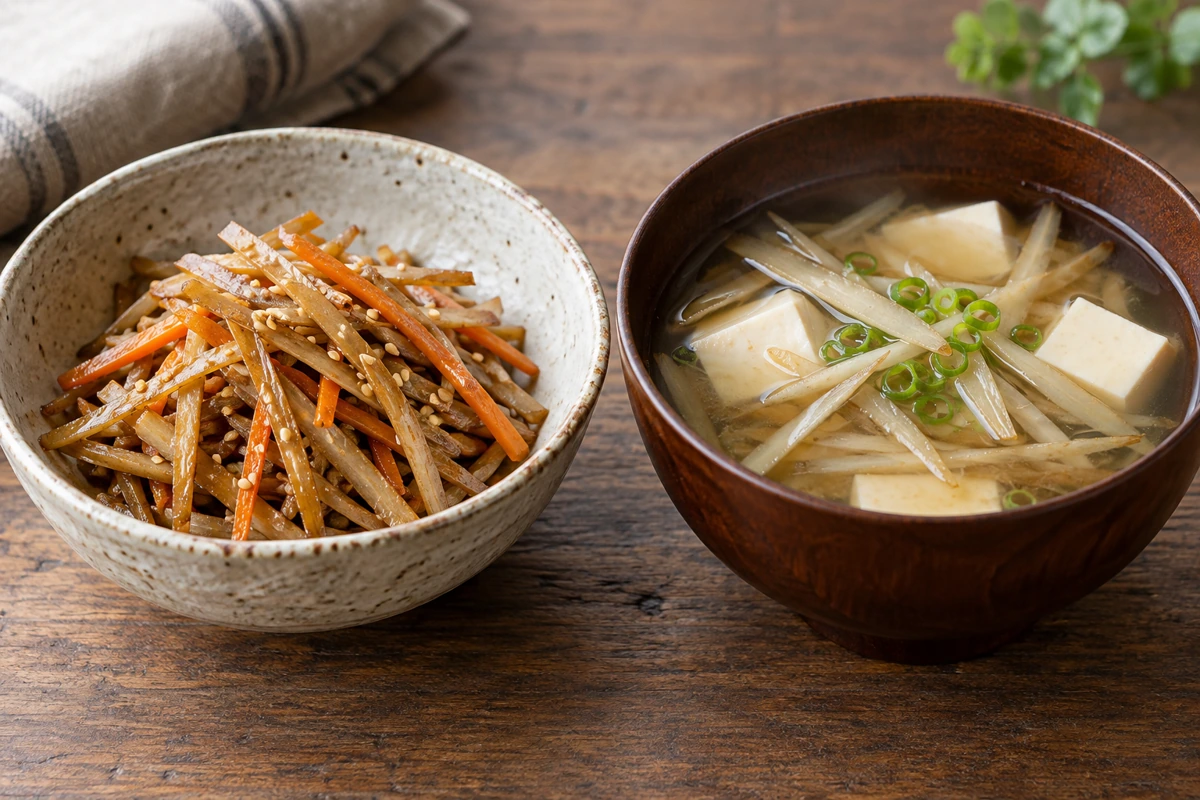
Kinpira coats the strips with a glaze, while soup places them among broth and softer ingredients.
The original Kikkoman kinpira recipe illustrates a sautéing and reduction sequence. Its domestic fresh-root method is helpful culinary context, but a frozen ingredient should be trialed using its own instructions. The buyer needs an endpoint that can be reproduced with the chosen cut, batch size and equipment. Copying a recipe's elapsed time without those conditions does not provide a reliable cooking specification.
Prepared meal production adds another stage. A side dish may be cooked, cooled, packed, stored and reheated before it is eaten. Soup may spend time in a service vessel or be reheated in an individual container. The first tasting should therefore be followed by an assessment after the intended later handling. Pieces that are attractive immediately after cooking can lose definition after additional stirring, holding or reheating, while a satisfactory initial bite may become too soft for the final meal.
The application also affects how much burdock should be visible in each serving. A small accompaniment needs enough recognizable strips to justify its description, whereas a mixed soup may distribute the root more lightly. Evaluate several portions drawn from different points in the batch, rather than selecting the most attractive spoonful. This reveals whether long pieces cluster together or shorter fragments remain in the vessel, and whether ordinary serving produces the experience used to approve the recipe.
An early development decision is whether burdock should be the main visible vegetable or a supporting ingredient. That choice affects inclusion, cut and the intensity of seasoning. It also gives the purchasing team a way to judge the value of a more consistent strip distribution. Paying for a form that the final food does not visibly or functionally need may add cost without improving the serving.
How to read color, peel and bite in a sample
Burdock naturally presents a brown exterior and a pale interior, so color needs a precise frame of reference. A buyer may be looking at unprepared root, frozen cut surfaces, thawed material or cooked strips in sauce. These are different observation conditions. Comparing a frozen sample with a photograph taken after cooking can lead to a disagreement that has little to do with the lot itself. Agree the stage at which color will be assessed and retain a suitable reference.
Cut burdock can darken, and that makes preparation history relevant to appearance. A cream-to-tan range may suit one recipe while another requires a narrower visual result. The requirement should be tied to the finished use and checked on material prepared consistently. An overall statement such as white burdock is too vague to distinguish an acceptable pale tan surface from an isolated dark patch or a sauce stain. Each observation deserves a description that another inspector can recognize.
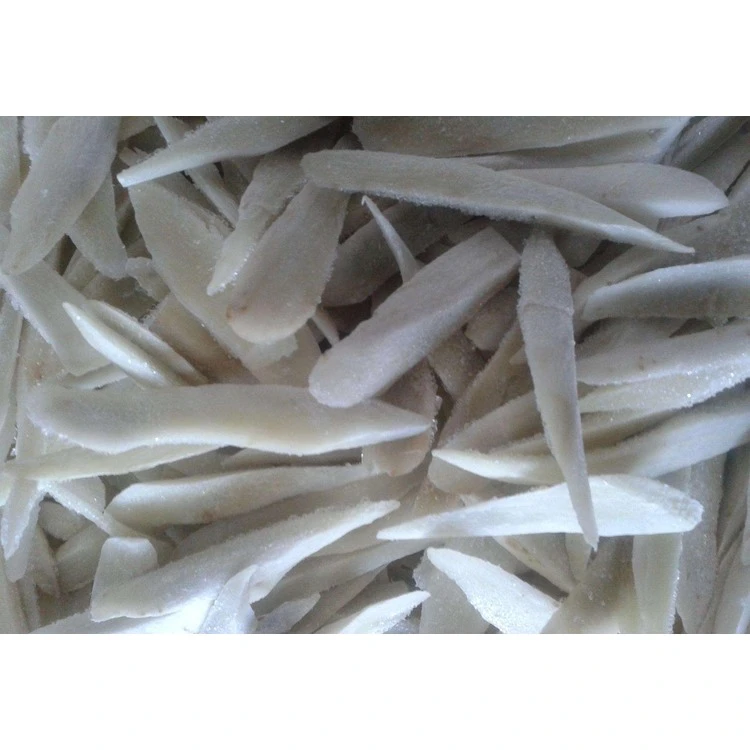
The closer product view shows tapered cut surfaces; appearance alone does not establish treatment or cooked bite.
Residual peel is another separate characteristic. Thin attached brown skin is visually different from loose soil, damaged tissue or foreign material. A kitchen that traditionally scrubs fresh roots may accept some skin in the culinary result, while a buyer using uniformly pale strips may want a different finish. Neither expectation should be assumed. An approved sample and a written description can establish the intended treatment without suggesting that one appearance is universally correct for all foods.
Texture needs cooking evidence. Frozen hardness is expected from temperature and tells little about the eventual bite. For a meaningful sample review, prepare a representative portion and examine the pieces that remain unusually coarse after the normal endpoint. Include the thickest pieces and those that show an obvious central structure rather than tasting only the most attractive strips. Record whether the issue occurs throughout the sample or in a few distinguishable pieces.
Sensory observations guide quality decisions, but they do not establish every aspect of food safety. A normal smell and color cannot replace required process documentation, traceability or analytical review. Keep visual and cooking observations in the same lot file as the relevant documents so that the receiving decision is complete. When there is an unexplained deviation, preserving the sample identity and the evidence is more useful than trying to infer its entire history from a single photograph.
When the team disagrees about a sample, compare the actual observations before debating acceptance. One person may be describing color and another the chewing experience. Preparing a second identified portion under the same method can help determine whether the difference is repeated. Keeping each attribute separate prevents a favorable appearance from outweighing a texture issue that is central to the recipe.
Turning a first sample into a clear purchase request
A useful first inquiry connects a recognizable food idea to an executable order. State that the ingredient is burdock root, describe the strip form, and explain whether it will enter kinpira, soup, a filling or another product. Include the expected later handling, especially when the dish will be reheated. This gives the supplier a reason for the requested cut and gives the development team a clear basis for judging the sample when it arrives.
The sample request should ask for the actual ingredient statement and preparation status, together with the intended cooking and storage instructions. If color management is important, request the relevant process declaration rather than inferring treatment from a pale photograph. If a particular label claim is needed, identify the claim and destination early enough for its evidence to be reviewed. An attractive sample cannot resolve an ingredient declaration or destination requirement that was never discussed.
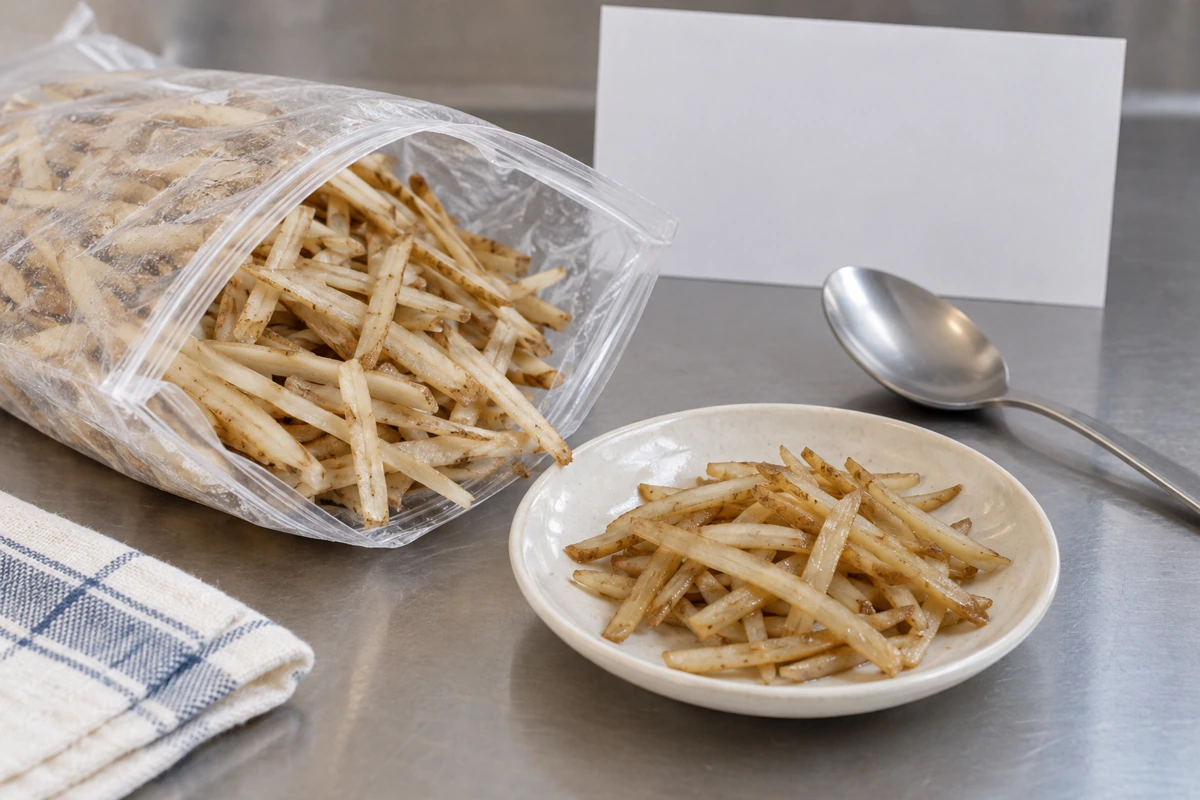
A bag of cut strips and a prepared portion provide two views for a sample discussion.
For the quality specification, translate the trial into observable terms. Describe the preferred cut distribution, the approach to residual peel, the appearance after the agreed preparation and the unacceptable eating defects. If numerical limits are needed, choose them through sample review and agreement rather than borrowing values from another vegetable. The method matters as much as the limit: the team must know how the sample is selected, prepared and assessed before a percentage has a consistent meaning.
Packing should reflect the way the ingredient is used. A kitchen weighing several small batches has different handling needs from a manufacturer emptying full inner bags into a process. Discuss inner-pack mass, carton configuration, lot marking and any private-label requirement with the intended quantity and destination. Confirm the available production window, requested documents and delivery terms for that order. These details allow the quoted product to be compared fairly with the sample that was actually evaluated.
At GreenLand-food, a useful starting point is the dish you want the strips to become. Send a photograph or clear description of the desired prepared result alongside the cut request, and identify the problems that would make a sample unsuitable. A supplier can then respond to a concrete requirement, and your kitchen can judge the next sample against the same purpose. That shared definition is what turns an unfamiliar root into a dependable ingredient in a repeatable recipe.
The first commercial delivery should still be checked against the approved basis. A development sample establishes a target, while a receiving review confirms that the supplied lot matches it within the agreed requirements. Keep the sample reference and the final purchase description accessible to the people who receive and cook the product. Approval should remain usable after the original development discussion ends.
Discuss frozen burdock with GreenLand-food
GreenLand-food is a professional frozen burdock supplier and manufacturer in China, with factory-direct wholesale supply discussed against your agreed product specification.
Send the product form, cut specification, packing, quantity, application, destination, private-label needs and requested documents. Include the cooking or reheating route and the texture you need in the finished dish so we can review the sample requirement.