


Frozen Chinese Chives in Savory Pancakes: Batter Moisture and Aroma
Oct 19, 2026
Leave a message

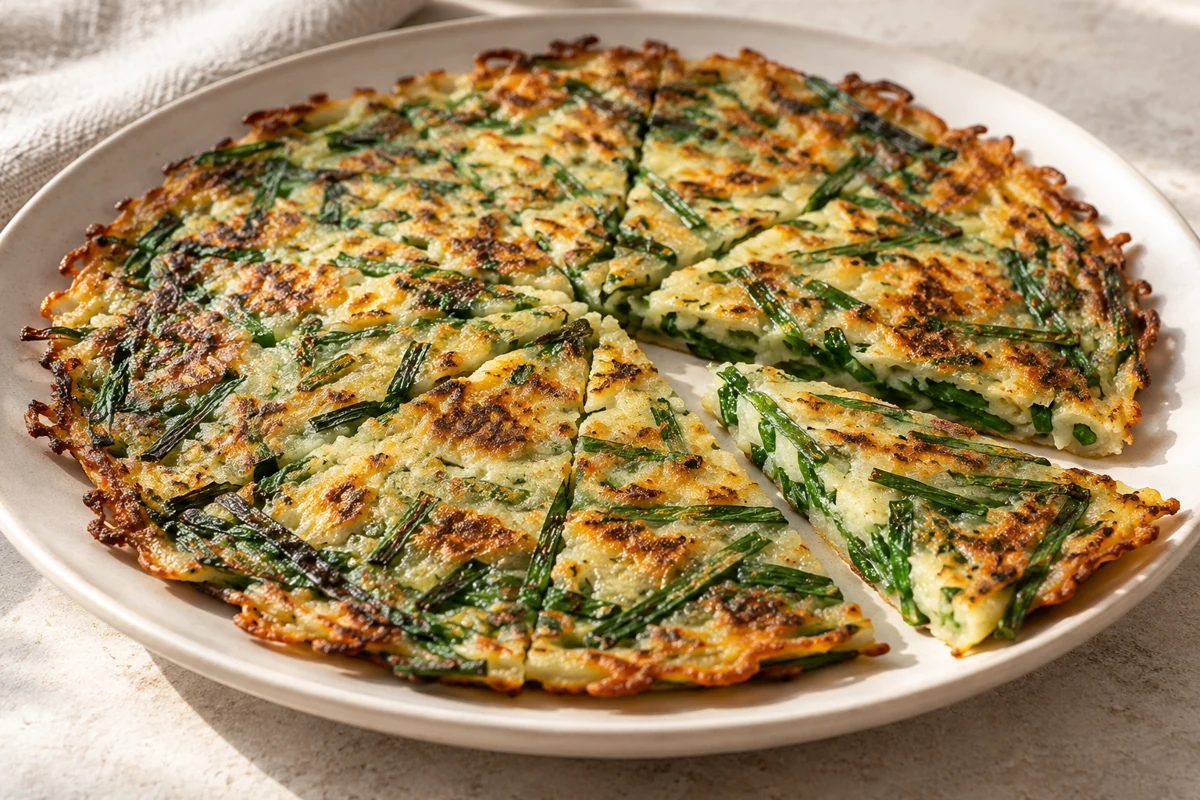
This article concerns pancakes made by spreading a chive-containing batter onto a cooking surface, including products inspired by garlic-chive buchujeon. It does not describe laminated scallion dough or a filled flatbread. Those products organize moisture and leaf pieces differently. A clear product definition prevents a useful tip for one style from becoming an unsuitable instruction for another.
For procurement, the aim is a repeatable relationship between the frozen ingredient and the finished pancake. A visually attractive first sample is only the beginning. The buyer also needs to know whether later portions from the same batter behave consistently, whether the chive character remains appropriate after reheating, and which product details must be held in the supply specification.
Define the pancake style and the texture you will sell
Describe the intended pancake in physical terms. Specify whether it is a thin, leaf-forward side dish, a small snack portion or a more substantial prepared meal component. Record the intended size, portion mass and approximate thickness target used by development. Include how it will be served or reheated. Without that description, two people may agree on a good chive pancake while imagining very different foods.
Separate the surface target from the interior target. A crisp browned edge can coexist with a tender center, but a product designed for a longer service hold may need a different balance from one eaten immediately. Decide what the customer should experience when cutting and chewing a normal bite. Do not use a photograph of a golden surface as the entire acceptance reference; it reveals little about the center or the later eating condition.
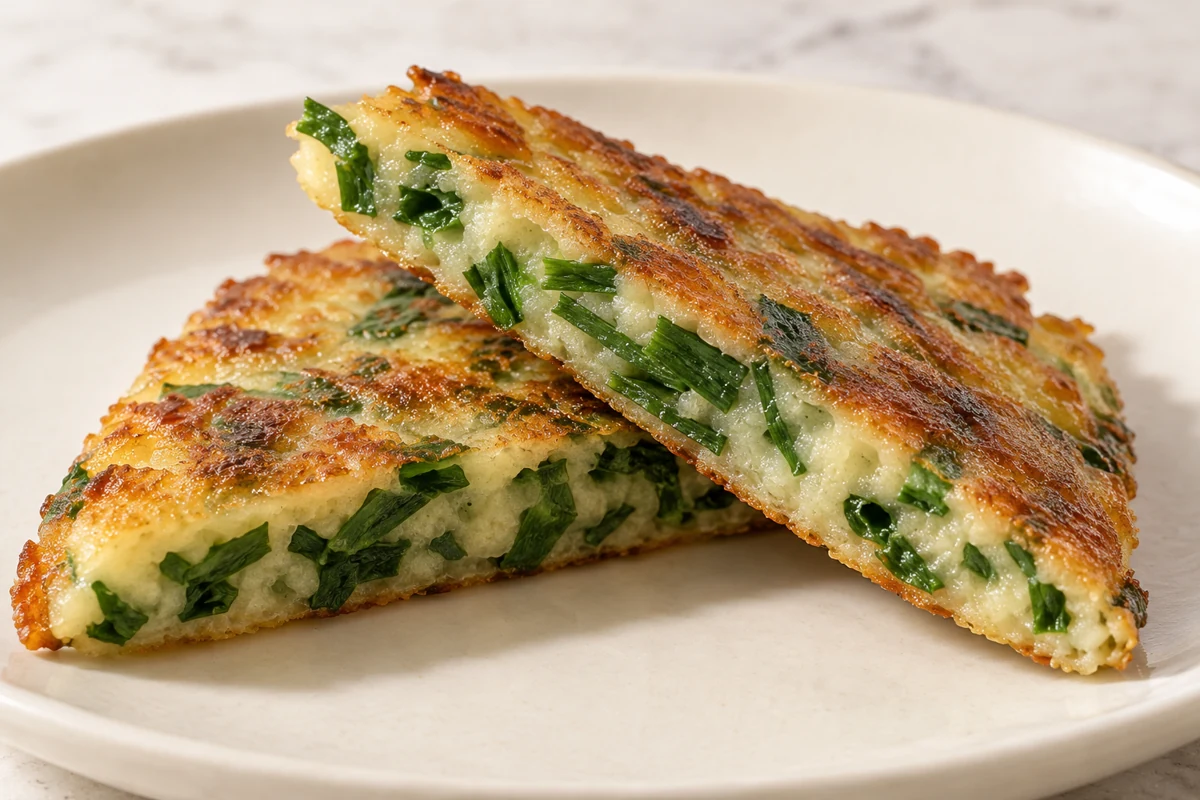
Illustrative cut sections; thickness and crispness are not measured results.
Current recipe examples demonstrate the range. Korean Bapsang's garlic-chive pancake uses a thin batter and discusses different flour or pancake-mix options. The Foodie Takes Flight describes an initially thicker mixture with optional additional water. These are recipe-specific choices. They are useful starting references, but they do not establish one correct consistency for every commercial pancake containing frozen chives.
Identify the batter system you are actually using. A prepared pancake mix can already contain starches, seasoning and other ingredients that differ from plain flour. Egg, seafood, onion or additional vegetables change the formulation again. Keep the ingredient list and batch weights with the trial. If the dry mix changes between samples, a different spread or bite cannot fairly be attributed entirely to the chive lot.
Decide how visible the leaf should be. Some products rely on recognizable green ribbons across the surface; others need a finer, more even distribution. A longer cut can contribute the first appearance but may complicate portioning. A very fine cut may mix readily while giving a different visual identity. The preferred form is a design choice that should be tested against the food, rather than selected solely from an ingredient photograph.
Choose a representative reference pancake and describe why it is acceptable. Keep its recipe and preparation record, not just its appearance. If the product is intended for retail reheating, establish the reference at that point as well as after initial cooking. That gives later trials a meaningful target and helps procurement distinguish a direct ingredient replacement from a reformulation that produces a different style of pancake.
Describe the frozen chive cut for mixing and spreading
Confirm the intended ingredient identity and plant part. Chinese or garlic chives are normally specified as Allium tuberosum, with flat leaves. Ordinary chives, scallion greens and garlic shoots should not enter the trial under an ambiguous shared name. Ask for the current product description and process declaration. A green cut photographed on a product page can help a discussion, but it cannot establish identity or processing history by itself.
Look beyond a single nominal cut length. Examine a representative sample for the distribution of piece sizes, long strands, very small fragments and any firmer base material allowed by the specification. The longest pieces can matter when a ladle or depositor portions the batter, even if most of the material is short. Record the sampling method so a later lot can be assessed on the same basis.
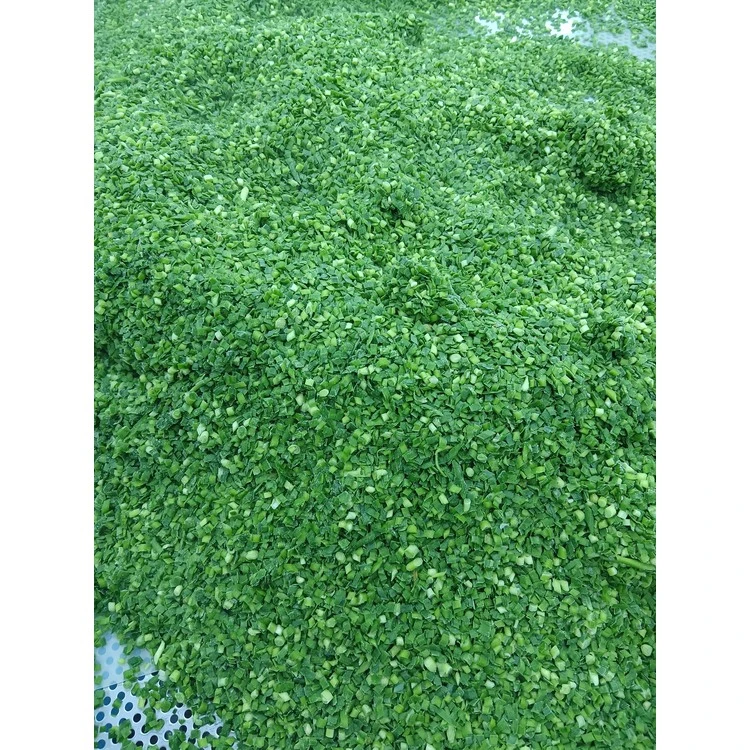
The product-page view shows a very fine cut; request identity and dimensions in the current specification.
Check the cut in the batter, not only on a dry tray. Leaf pieces can overlap or gather together once coated. A cut that appears manageable by itself may bridge across a portioning tool or form a dense patch on the cooking surface. Conversely, a visually irregular loose sample may distribute acceptably in the intended mixture. The ingredient inspection and application observation answer different questions and should both remain in the record.
Fresh-leaf recipes often use relatively long pieces, but those lengths should not become an automatic purchasing rule for a frozen ingredient. The recipe's leaf type, tenderness, batter and hand-spreading method may differ from yours. A smaller snack pancake or a mechanized depositing route may require another approach. Request a cut suited to the proposed use, then confirm it through the actual portioning and cooking trial.
Include the received frozen condition. Ask how the product is intended to be handled and assess whether it can be portioned as required. A fused mass may need a different handling route from a loose cut. Do not infer the entire cold-chain history from clumping alone; use the available records and quality procedure. What matters operationally is whether the material can enter your process in a controlled, repeatable state.
Avoid an unrecorded corrective chop before evaluating the sample. If your normal process includes further cutting, apply that step consistently and retain its details. If it does not, test the supplied product first. Otherwise the trial may approve a prepared version that procurement has not actually specified. Any extra preparation should be visible in the cost, labor and yield comparison as well as in the recipe notes.
Count the water entering with every ingredient
Treat the batter as a complete formulation. The weighed water is only one input. Egg, sauces, other vegetables and the prepared state of the chives also affect the mixture. A change in one of these can alter spread and cooked texture even when the water jug reading stays the same. Record the actual weights and preparation states of the ingredients rather than relying on an informal cup or handful description.
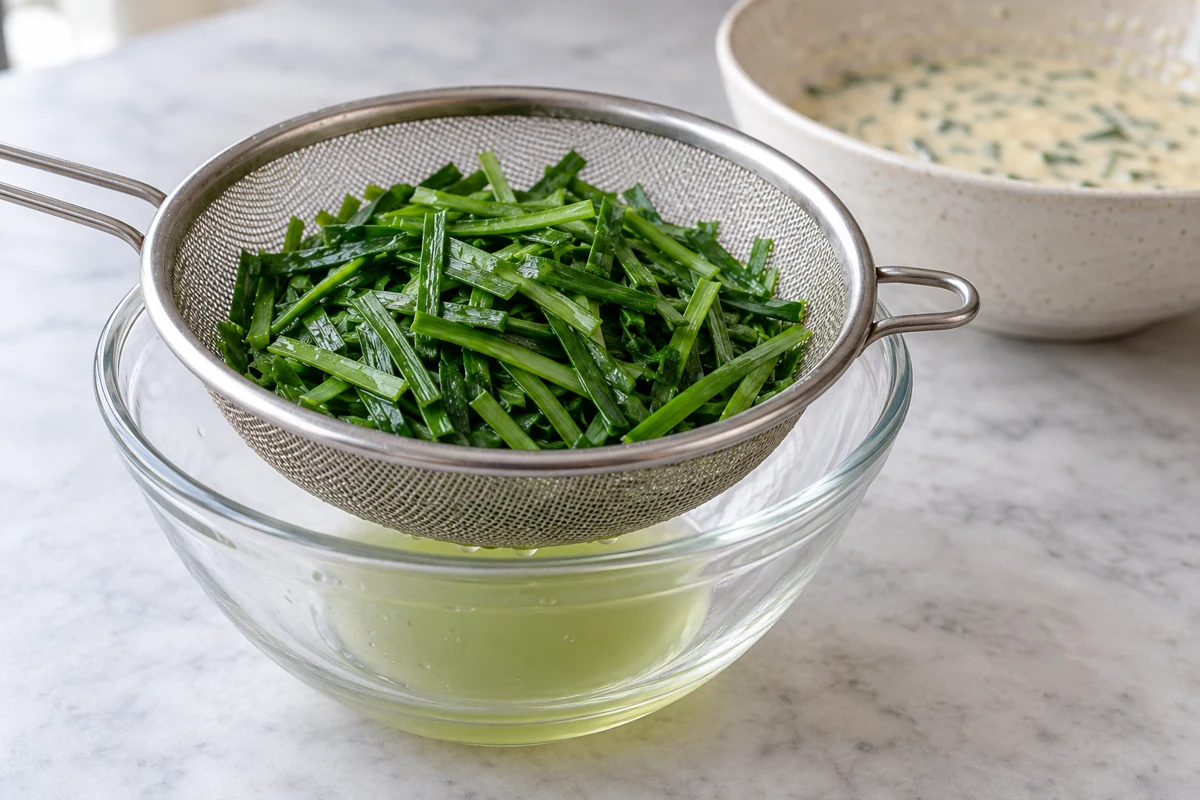
Illustrative preparation setup; collected liquid is not a measured yield or universal drainage instruction.
Decide whether the chive dose refers to received frozen mass or a defined prepared mass. Those bases answer different questions. If the process includes a controlled thawing or drainage step, record the mass before and after it and the handling conditions. Do not compare a drained candidate with an undrained reference while presenting the outcome as a simple lot comparison. The formulation inputs have changed along with the material.
Follow the supplier's instructions and your established safe handling procedure when selecting the preparation route. Some applications may be developed around direct frozen addition; others may use a controlled preparation step. This article does not prescribe one route for every product. The purpose of the trial is to determine which route fits the supplied ingredient and the batter, then make that route repeatable in normal operation.
If you collect liquid during a development check, describe exactly how it was obtained. A result depends on sample size, temperature, elapsed time and whether the leaf was pressed or merely allowed to drain. A casual puddle in a bowl is not a standardized water-release value. Use an agreed method for comparisons, and avoid turning a one-time observation into a universal incoming specification without evidence that it predicts your pancake performance.
Do not subtract a fixed percentage of recipe water based only on the word frozen. Begin with a defined baseline and observe the actual mixture. If adjustment is required, change it deliberately and record the result. A reduction that works with one cut or preparation state may make another batter difficult to spread. The useful output is a controlled formula and handling route, not a rule that ignores the supplied ingredient.
Consider the yield and work associated with any corrective preparation. Draining or squeezing can change the ingredient that reaches the batter and can add labor or variability. Adding dry mix later changes more than consistency, especially when that mix includes salt or seasoning. Keep these changes in the trial record and cost comparison. A successful pancake is commercially useful only when the team can reproduce the method without improvising each batch.
Check batter consistency through the working hold
Assess the mixture at the point when it will actually be portioned. A batter that looks right immediately after mixing may behave differently after its normal controlled hold. The flour system, ingredient temperature and distribution of leaves all deserve attention. Record the planned hold conditions and assess samples at meaningful points within that route. Avoid assigning a universal waiting period from a household recipe to a production operation.
Use a recorded batter trial sequence that includes the working hold.
- Prepare and identify the chive sample by the chosen route.
- Weigh the complete batter formulation.
- Mix and assess the first portions.
- Hold under the established conditions and record any remixing.
- Assess later portions and cook them by the same defined route.
Keep the recorded route with the trial result so it can be repeated or changed deliberately.
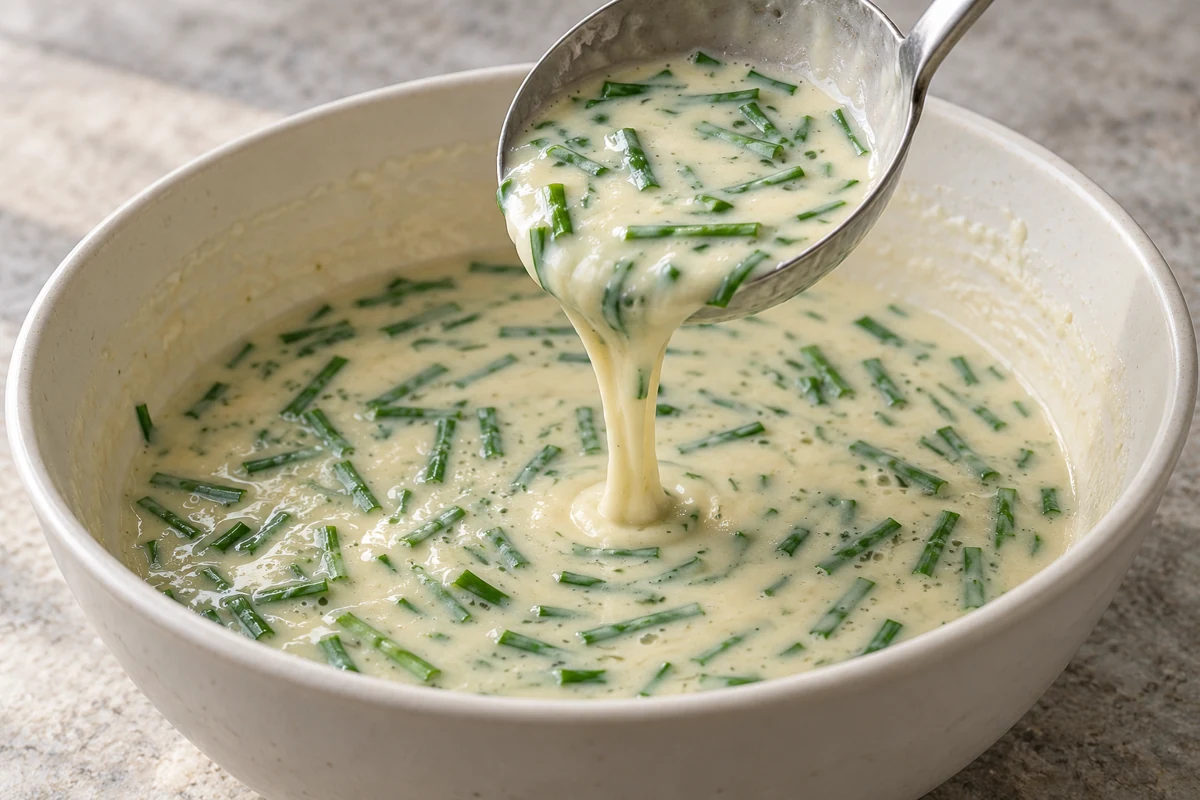
Illustrative batter handling; no viscosity or hold-time result is represented.
Choose a practical way to describe consistency. In a development kitchen, a repeatable spread check using the same portion and surface may be useful. In an established operation, an appropriate instrument or process observation may already be available. Use the method that relates to your portioning system and define its conditions. A description such as coats the spoon is useful conversation, but it needs more detail before it can serve as a repeatable production rule.
Check leaf distribution in early, middle and later portions. A mixture may give an acceptable average chive level while individual pancakes vary. Observe whether the portioning action gathers more leaf in some portions or leaves a liquid-rich remainder. If controlled remixing is needed, define when and how it is done. Do not rely on an operator adding a little extra leaf to a portion that looks sparse.
Keep the physical handling realistic. A small bowl mixed continuously by a developer may behave differently from a larger batch waiting between deposits. Include the practical working volume, tool and portioning rhythm in the next-stage trial. When equipment is involved, test on the intended system or an appropriate representative setup. No general claim about a frozen cut can guarantee that it will feed every depositor without adjustment.
Treat a consistency change as an observation to investigate, not immediate proof of excessive chive water. Compare the ingredient preparation, base mix, temperature, hold and mixing record. A well-designed follow-up changes one relevant factor while keeping the others stable. That approach is slower than correcting the bowl by eye, but it produces a formula and process that procurement and production can use again.
Connect portion thickness and cooking to the finished bite
Control the portion and spread before comparing cooking results. A heavier or thicker pancake can behave differently even when the batter is the same. Record the deposited mass and the practical spreading method, along with the intended size. If one sample is pressed thinner to obtain a better surface, note the change. It may be a useful development adjustment, but it is no longer a like-for-like ingredient comparison.
Observe whether the leaf pieces allow the batter to spread as intended. Dense overlaps can create thicker local areas, while sparse patches may brown differently. Look at the whole pancake and a cut section. The goal is an acceptable distribution through a normal portion, not an artificially perfect arrangement of leaves for a photograph. A realistic product reference should allow normal variation while defining what would be unacceptable.
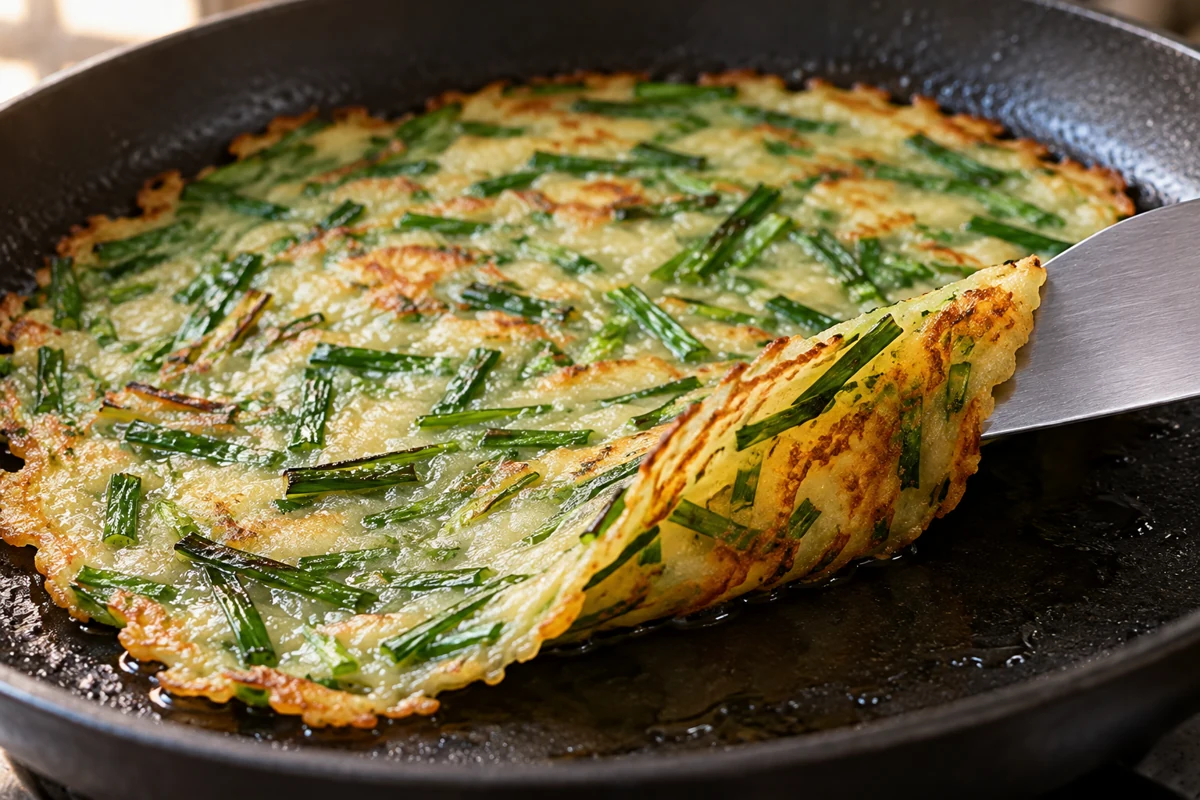
Illustrative browning view; surface color does not establish a safe cooking endpoint.
Keep the cooking setup consistent during the comparison. Surface condition, heat setting, oil application, batch loading and turning method can all change the result. Maangchi's buchujeon recipe illustrates thin spreading and deliberate oil and turning steps in a home skillet. Those details show why cooking technique matters, but its times and pan dimensions are not a validated industrial process for your product.
Judge the interior as well as the browned surface. Cut a representative portion and assess the bite, visible wetness, leaf distribution and structural integrity at the intended evaluation point. A darker exterior does not prove that the center has reached the required safe cooking condition. Use the cooking controls established for the complete formulation, especially where egg, seafood or meat is present. Sensory observations supplement those controls rather than replacing them.
If the edge is crisp but the center misses the target, investigate thickness, formulation and process together. Increasing heat alone may darken the outside without resolving the underlying problem. Adding more dry mix may improve handling while producing a heavier bite. Work from the recorded observation and a defined change, then check the complete pancake again. The best adjustment is the one that fits the intended product and can be repeated.
For scale-up, confirm that the chosen process still works at the normal production load. A single pancake in a carefully watched pan may not represent consecutive portions or a different cooking surface. Include start-up and steady-operation conditions where relevant to your system. Record quality observations alongside the required process controls. This keeps an attractive bench sample from becoming an unsupported promise about commercial throughput or consistency.
Judge chive aroma after the intended serving or reheat route
Set a clear flavor target before comparing lots. The pancake should have the garlic-chive character intended for the product, in balance with its flour system, oil and seasonings. More intense is not always more suitable. A browned surface contributes its own aroma, and added garlic or onion can obscure the leaf's contribution. Keep those ingredients and the cooking route consistent when assessing a change in the chive input.
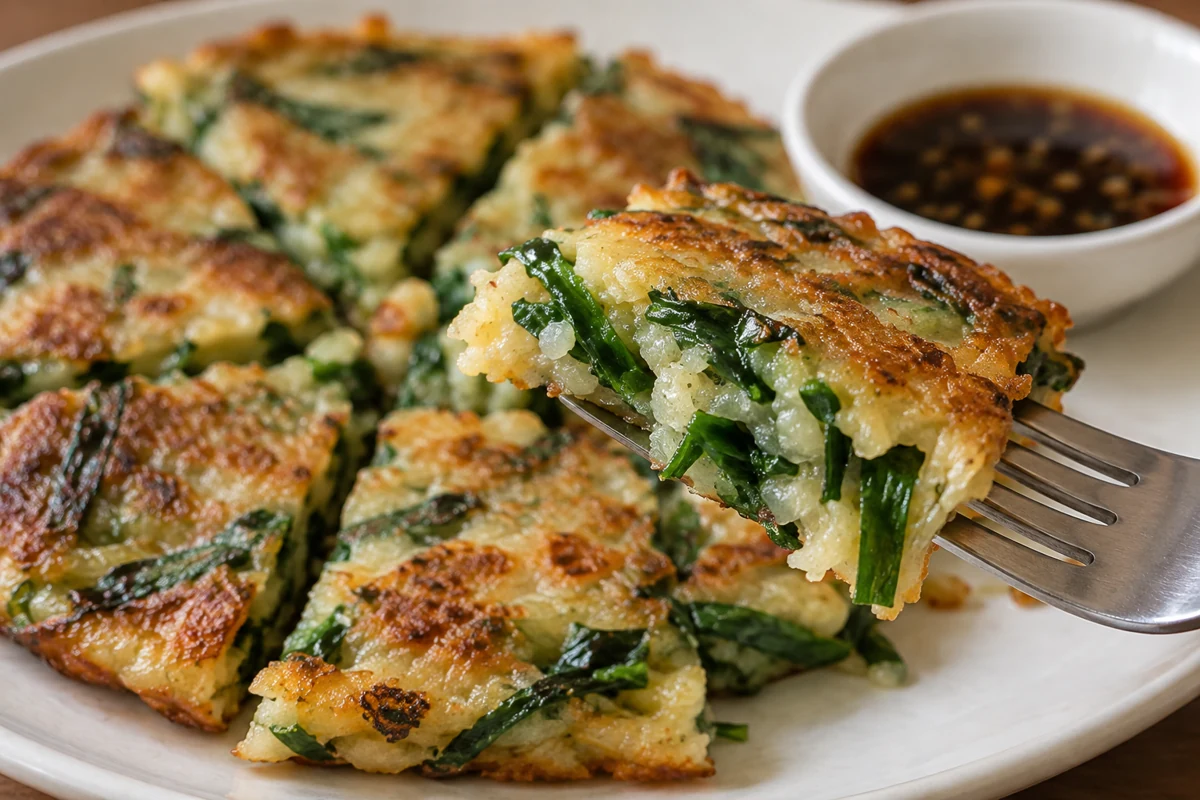
Illustrative serving; aroma and preference require assessment of the actual food.
Evaluate a normal bite containing both surface and interior. Smelling the uncooked batter can help identify an unexpected change, but it does not predict the complete eating experience. The customer encounters cooked leaf, batter and oil together. Record aroma character and strength separately from crispness or preference. That makes the report more useful when a candidate tastes different but still fits the product target.
Check the pancake before and with its intended sauce. A strong dipping sauce can mask a difference that is obvious in the plain product, while the complete serving may still be acceptable. Decide which observations are required for approval and preserve both when they matter. Do not change sauce strength between samples. A preference for one plate may otherwise reflect the accompaniment rather than the frozen ingredient.
Include the actual selling route. A foodservice pancake may wait briefly before service; a retail product may be cooled, frozen and reheated by a customer. Each route needs an appropriate assessment and safe handling process. A pancake eaten immediately from the pan supports an observation at that point only. It cannot establish crispness or aroma retention after an untested storage period or reheating method.
Use the intended consumer instruction during later development. If the product is designed for more than one appliance, assess the routes that will be recommended, with realistic portion and loading conditions. Record the differences rather than choosing only the most flattering preparation for approval. Product instructions should be based on suitable development and validation work, not on the appearance of a single freshly cooked sample.
If the aroma seems weaker after reheating, investigate the complete route before increasing the chive dose. Review the initial formula, storage history, packaging and preparation conditions. A higher dose may change moisture, distribution and bite as well as flavor. Keep a retained reference and compare under the same conditions. Any proposed adjustment should return through the batter and cooking checks so one improved attribute does not conceal a new handling problem.
Write the approved batter trial into the supply specification
Connect the finished-food approval to the exact ingredient evaluated. Keep the supplier product name, lot code, declared process, cut description and pack information with the recipe and trial record. If the sample was prepared differently from normal production, state that limitation. Procurement needs to know whether the approved material represents the proposed commercial order or only an early development option.
Write the ingredient requirements in terms the supplier can discuss and verify. Include identity, plant part, cut distribution and any relevant limits agreed through the trial. Add packing, storage instructions and the documents required for the order and destination. Do not copy a photographed cut length or a competitor's shelf-life claim into the specification. Request current information for the actual product and confirm the agreed details before ordering.
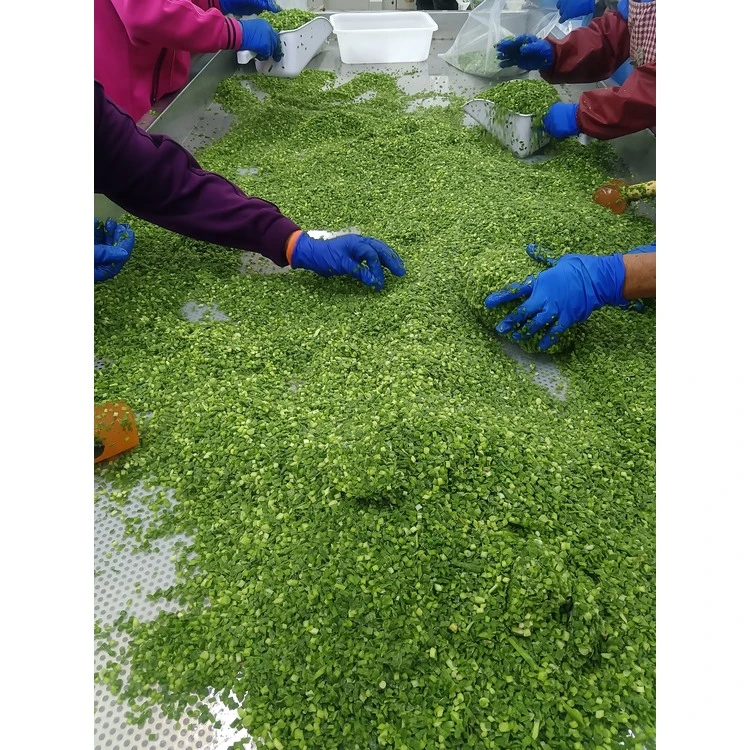
This source photograph shows material being handled on a sorting table; process and acceptance details require the current specification.
Preserve the application conditions that made the sample acceptable. Record the chive dose basis, preparation, batter formula, mixing route, hold, portioning and cooking method. Include the serving or reheating condition at which the result was approved. A supplier cannot interpret a complaint about pancake texture effectively if the buyer's process has changed without a record. Clear application notes help both sides investigate the right question.
Agree what triggers another trial. A change in declared processing, cut, source or pack format may deserve review, depending on its relevance to the product. The same applies when your own dry mix, portion size or cooking system changes. An approved ingredient is part of a defined formulation and process. It should not be expected to deliver identical behavior after every surrounding condition has been altered.
When discussing frozen Chinese chives with GreenLand-food, send the pancake style and the intended handling route with the requested cut, packing, quantity and destination. A representative sample and current product details are the starting point for an application assessment. We can discuss the proposed supply against those requirements; the pancake's acceptance should come from your recorded trial and the controls appropriate to the finished food.
Keep a practical handover record for the people making the next batch. It should show the approved ingredient code, recipe revision, portioning tool and the checks used to recognize an acceptable batter and pancake. Include the response to a result outside that range: stop for assessment, confirm the recorded inputs, and follow the agreed adjustment or rejection procedure. An operator should not have to guess whether extra water or dry mix is permitted. If an adjustment is allowed, record its amount and the resulting batch identity so later complaints can be traced to the food that was actually produced.
The useful outcome is a specification that explains why the ingredient works: it distributes through the batter, contributes manageable water, spreads into the intended portion and gives an acceptable cooked and reheated result. Keep those observations linked to the product and process records. That gives repeat orders a clear basis and makes later variation easier to investigate than a general request for good-quality chives.
Related reading
How to Eat Scallions: Raw, Cooked and Frozen Uses
Compare how another allium changes role across raw, cooked and frozen uses.
Source Frozen Chinese Chives with GreenLand-food
GreenLand-food is a professional frozen Chinese chives supplier and manufacturer in China, providing factory-direct wholesale supply for importers, food manufacturers and foodservice distributors.
Send the product form, specification, packing, quantity, application, destination, private-label needs and requested documents so we can discuss a suitable sample and quotation.