


Whole vs Cut Mallow Leaves in Cooked Foods: Texture and Portion Yield
Oct 19, 2026
Leave a message

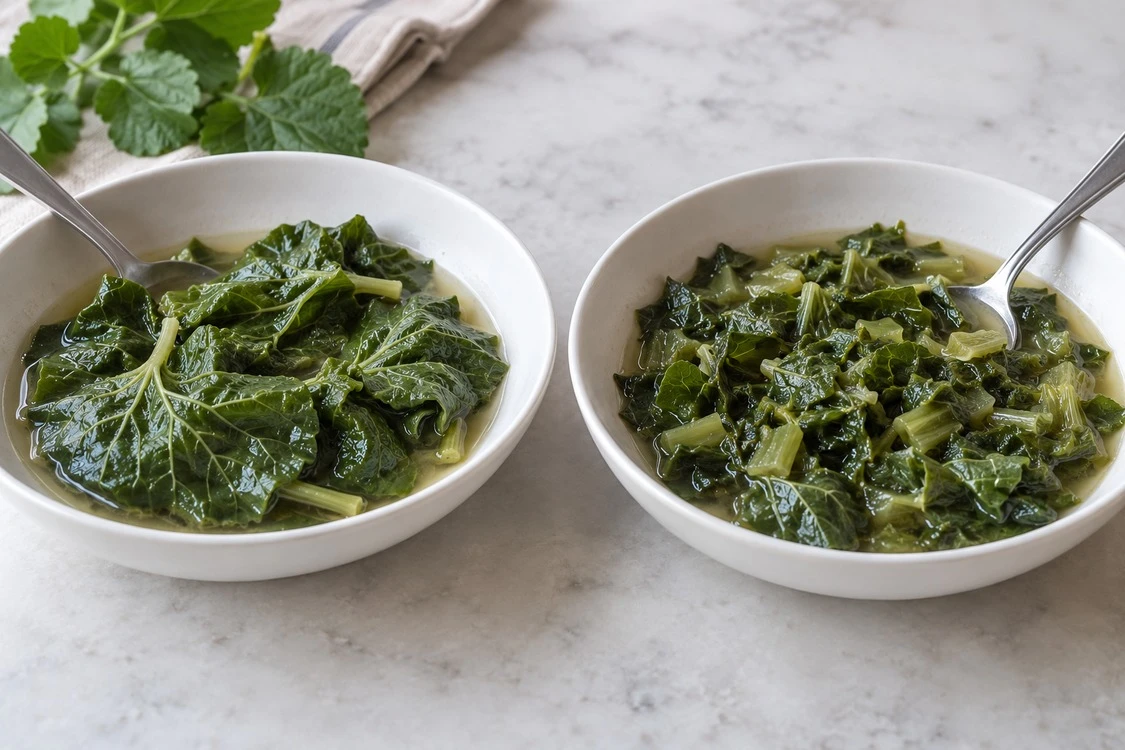
First confirm what "mallow" means on the specification. Malva species and the Corchorus leaves used for molokhia are different ingredients. Their common names overlap in trade and cooking searches, so a recipe for one cannot establish the performance of the other. At GreenLand-food, our starting question for a form comparison is the intended dish and the identity of the offered sample. A clear answer to those two points makes the subsequent texture and portion trial much more useful.
Confirm the leaf before comparing cuts
A purchase described simply as mallow leaves leaves an important question open. A Malva ingredient may be identified as Malva sylvestris, Malva verticillata or another specified edible species. Molokhia commonly refers to Corchorus olitorius and dishes made from its leaves. Kew's Malva sylvestris and Corchorus olitorius records place them in different genera. Sharing a plant family and a tendency to produce a slippery cooked texture does not make their leaves interchangeable.
Ask for the botanical name associated with the actual supply, together with the common name used on the label. Where the botanical information is still being confirmed, retain that uncertainty in the enquiry. A photograph can show a rounded or elongated leaf, but it cannot resolve every identification question, especially after cutting and freezing. A supplier's sample description, ingredient declaration and traceability information should refer to the same material. Do not approve a substitute merely because two catalogues use a similar English translation.
This distinction changes how a cooking example should be read. Whole-leaf Lebanese molokhia and finely chopped Egyptian molokhia demonstrate two established approaches to Corchorus leaves. They help explain why customers may request very different particle structures. They do not prove that a Malva product will give the same viscosity, cooking time or cultural result. If the intended menu specifically promises molokhia, confirm the appropriate ingredient identity before developing the recipe around a generically named frozen green.
Leaf maturity and stem content remain relevant within a confirmed species. A pack containing large mature leaves and substantial petioles can feel quite different from one dominated by tender leaf blades. Cutting reduces the visible length of a stem, but it does not necessarily remove the tougher material from the mouthful. A good comparison therefore describes the proportion and dimensions of stems as well as the leaf cut. Otherwise, an apparent advantage of chopped leaves may simply reflect different raw material selection.

Leaf-and-stem material pictured on our mallow product page. Confirm the botanical name and agreed stem allowance for the ordered product.
Record the supplied treatment too. Fresh, blanched frozen, unblanched frozen, dried and cooked leaves carry different processing histories. A frozen block can contain whole leaves compressed together; a bag of loose material can contain chopped leaves or small clusters. Package shape alone does not establish leaf form. Inspect the material after the preparation permitted by the product instructions, taking care to distinguish deliberate cutting from breakage that occurs during handling.
For a useful first sample request, give the supplier the dish name, desired leaf appearance and proposed cooking route. Ask for whole and cut samples from comparable material where possible. If the samples differ in crop, maturity, treatment or added ingredients, keep those differences visible in the trial record. You can still compare two commercial options for the dish, but the result will describe the complete products; it will not isolate cutting as the cause of every difference.
What whole and cut leaves change in a cooked dish
A whole leaf brings a larger continuous surface into the pan. After heating, that surface can fold around other ingredients, gather around a spoon or remain recognisable against rice. Those features can be desirable in a leafy stew or plated vegetable component. They can also make portioning less even: one spoonful may carry a large folded leaf while the next carries mostly sauce. The importance of that variation depends on how much leaf the customer expects in each serving.
Cutting shortens the leaf pieces and increases the number of separate particles in a given mass. Coarse cuts may still look distinctly leafy, while fine cuts can disperse through the liquid and contribute to a more continuous green texture. The word "cut" therefore needs a practical description. A broad shred, a roughly chopped leaf and a fine mince will not produce the same spoonful. Describe the desired range and the amount of small fragments that the process can accommodate.
Mucilage adds another dimension. It consists of water-interacting plant polysaccharides that can contribute thickness and a slippery mouthfeel. Research on extracted Corchorus mucilage demonstrates concentration-dependent viscosity in the studied extract. A cooked leaf dish includes cell fragments, broth, fat, salts and other ingredients, so those laboratory results do not supply a universal viscosity prediction for a frozen product. They support measuring the actual recipe at a defined condition.
Greater cutting exposes more disrupted tissue, but it is unsafe to turn that observation into a promise that every finer cut will make every mallow dish thicker. Species, maturity, pretreatment, leaf concentration and subsequent stirring also matter. Freezing has already changed the tissue before the buyer starts cooking. A fine-cut sample with more added water may produce a thinner dish than a whole-leaf sample used at a higher leaf concentration. Keep the formulation and material basis clear when interpreting the result.
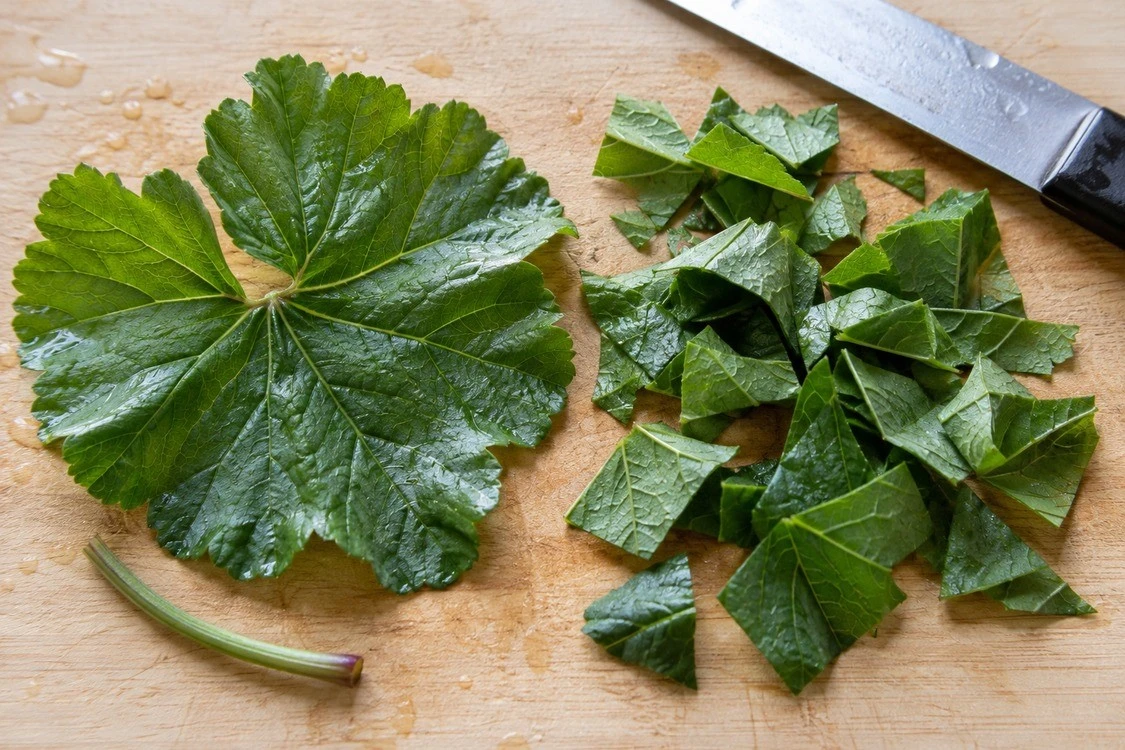
Illustrative Malva scene. Cut boundaries change the size of the leaf pieces entering a dish.
The useful comparison has several separate observations. Look at the size of recognisable leaf pieces, the resistance of any stems, the way liquid coats the spoon and the ease of releasing a portion. A dish can have tender leaves but a broth that feels too slippery for its intended style. Another can have a pleasant sauce but large leaf folds that are awkward to eat. A single score called "texture" hides these different reasons for accepting or rejecting a sample.
Whole and cut forms also respond differently to handling after cooking. A soft whole leaf may tear when lifted repeatedly with tongs. A chopped product may lose some of its smallest particles through a coarse strainer. In a filling, large leaves can bunch together; in a smooth soup, visible shreds may be unwanted. Select the form for the texture that survives the complete preparation and serving route. The appearance of the unopened frozen pack is only an early indication of that result.
Measure recovery at the point you portion
Yield needs a named endpoint. Frozen pack weight, thawed drained weight, cooked drained leaf weight and finished dish weight describe different quantities. A soup containing added broth can weigh more than the frozen leaves used to make it. A drained side can weigh less because liquid has been removed. Both outcomes may be appropriate, but neither tells you the usable leaf recovery until the numerator and denominator are defined. Write those definitions before comparing suppliers or cut forms.
For a simple cooked recovery comparison, record the mass of frozen ingredient entering the test and the mass of cooked material retained after a specified drain. Divide the retained mass by the starting mass and multiply by one hundred if you want a percentage. Keep any removed stems or rejected material as a separate recorded fraction. If the starting pack includes declared added water or sauce, identify that composition so the result is not misrepresented as recovery from pure leaf material.
The drain procedure can change the ranking. A coarse colander may retain whole leaves while allowing small cut particles to escape. A fine sieve retains more particles but may also retain more liquid. Pressing the greens, shaking the sieve or waiting longer changes the final mass again. Choose a method that resembles the intended operation, and use the same sieve, loading, drain interval and handling for both samples. Record the collected liquid when it helps explain a difference.
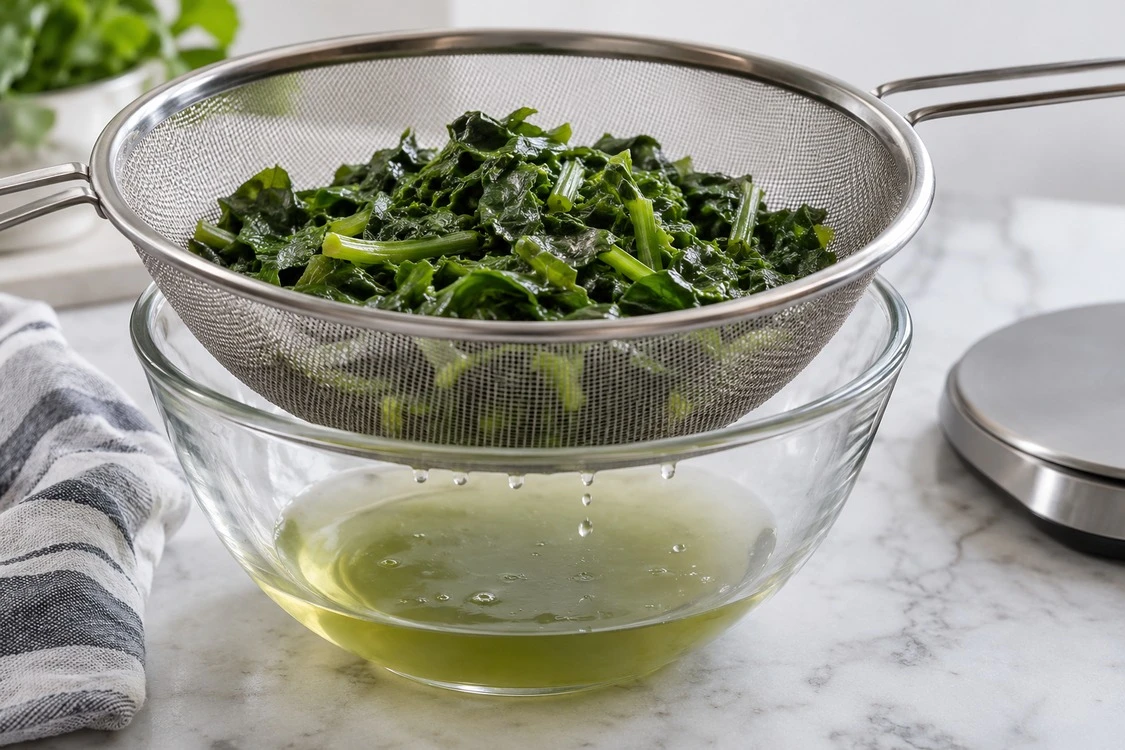
Illustrative Malva scene. Use the same draining conditions when comparing cooked recovery.
Drained recovery is often the wrong primary endpoint for soup. If the liquid stays in the dish, removing it for the main comparison discards part of the intended food. In that case, evaluate finished batch mass together with leaf concentration, serving consistency and portion distribution. A large finished mass achieved by adding extra broth is useful only if the dish still meets its agreed taste and texture. Cost per kilogram of finished soup and cost per acceptable serving answer different purchasing questions.
For a plated side, the retained leaf portion may matter more directly. Define whether the serving includes a spoonful of cooking liquid, a light sauce or almost no free liquid. Weigh several ordinary portions after normal service handling. Record both the average and the spread. A form that delivers the correct average but produces some visibly sparse servings may require a different serving utensil, a revised mixing practice or a narrower leaf-size range.
Use repeated samples drawn from the pack rather than selecting only the best-looking leaves. Large leaf clusters and fine particles can distribute unevenly during transport and dispensing. Samples from different parts of a pack can reveal that variation. Where several commercial lots are available, repeat the same method across them before treating one sample as representative. A proposed trial can establish how to measure the requirement; its acceptance limit should come from the buyer's actual dish and representative results.
Keep trial quantities and losses in a short record that another operator can follow. Note any food left on the kettle wall, retained in the sieve or dropped during transfer. These small losses can become significant when comparing a cohesive whole-leaf mass with freely dispersed cut particles. They also suggest practical changes. A wider scoop or a better draining surface may improve usable recovery more effectively than changing the leaf specification alone.
Run a trial for soup, stew or a plated side
Start with the dish that will actually be sold. For a soup, decide whether the customer should see small green particles evenly suspended, larger pieces of leaf, or a mainly smooth liquid. For a stew, decide how much leafy structure should remain beside beans, meat or rice. For a side, decide whether the greens must hold a neat shape on the plate. These descriptions give the trial a clear question and prevent a visually attractive sample from winning for the wrong application.
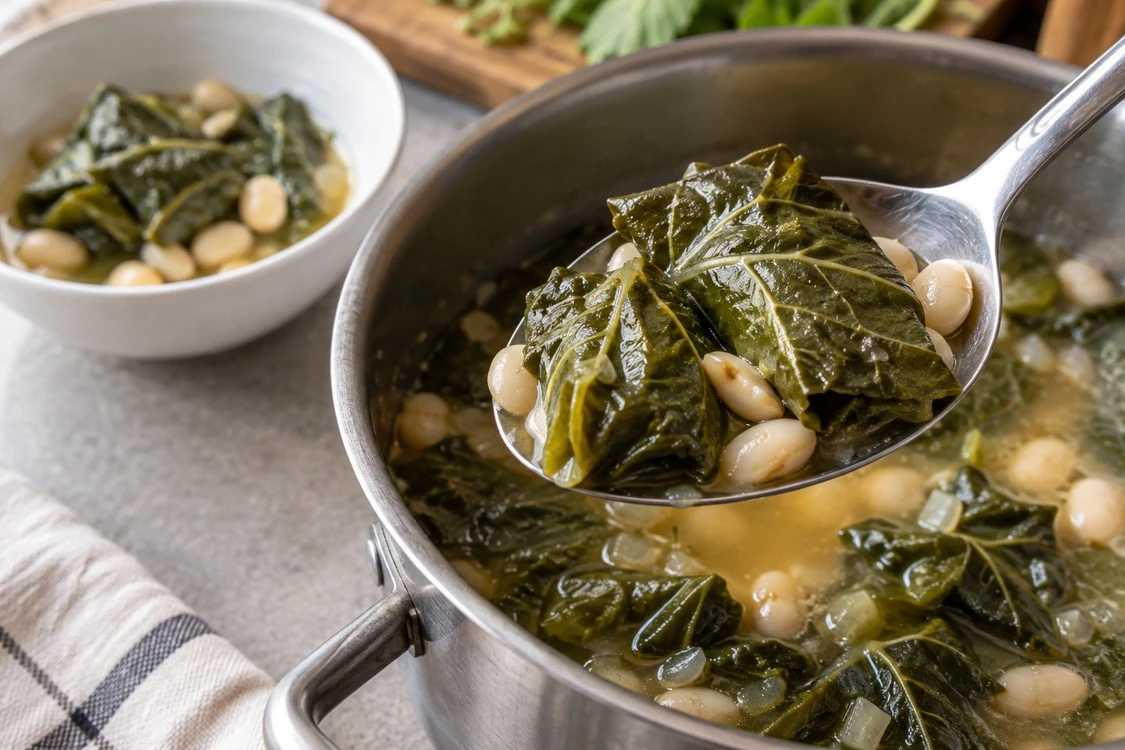
Illustrative Malva scene. A whole leaf fold can occupy much of one spoonful.
Use a common base recipe for the initial comparison. Keep the ingredient mass, broth composition, added fat, seasoning and vessel loading consistent. Follow the product's cooking instructions and the kitchen's validated food-safety procedure. If the two products require different preparation routes, record those routes and compare the finished dishes as commercial options. Do not force an unsuitable common process solely to make the paperwork look controlled.
For whole leaves, observe how the frozen material separates during heating and whether gentle mixing gives an even distribution. If a cluster takes longer to loosen, avoid judging the surrounding tender leaves as representative of its centre. For cut leaves, check whether small particles collect at the bottom or stick to the vessel. These observations affect both texture and dosing. They are especially useful when a small saucepan trial is later repeated in a larger kettle.
Serve several successive portions with the intended utensil. A ladle that works for a fluid minced-leaf soup may lift an inconsistent mixture from a whole-leaf stew. Tongs may remove leaves while leaving most sauce behind. Use the actual bowl or meal compartment, because its shape changes the impression of portion size. Compare the leaf content across the sequence as well as the total weight of each portion. Similar weights can conceal visibly different proportions of leaf and liquid.
An illustrative development trial might compare two forms in the same bean stew, then ask a small panel to describe leaf visibility, stem toughness, spoon flow and ease of eating. Those are proposed observations, not GreenLand production results. Keep the assessment blind where practical so the expectation that one form is "premium" does not determine the score. A second trial in the final seasoned recipe can then show whether the plain-product difference remains meaningful.
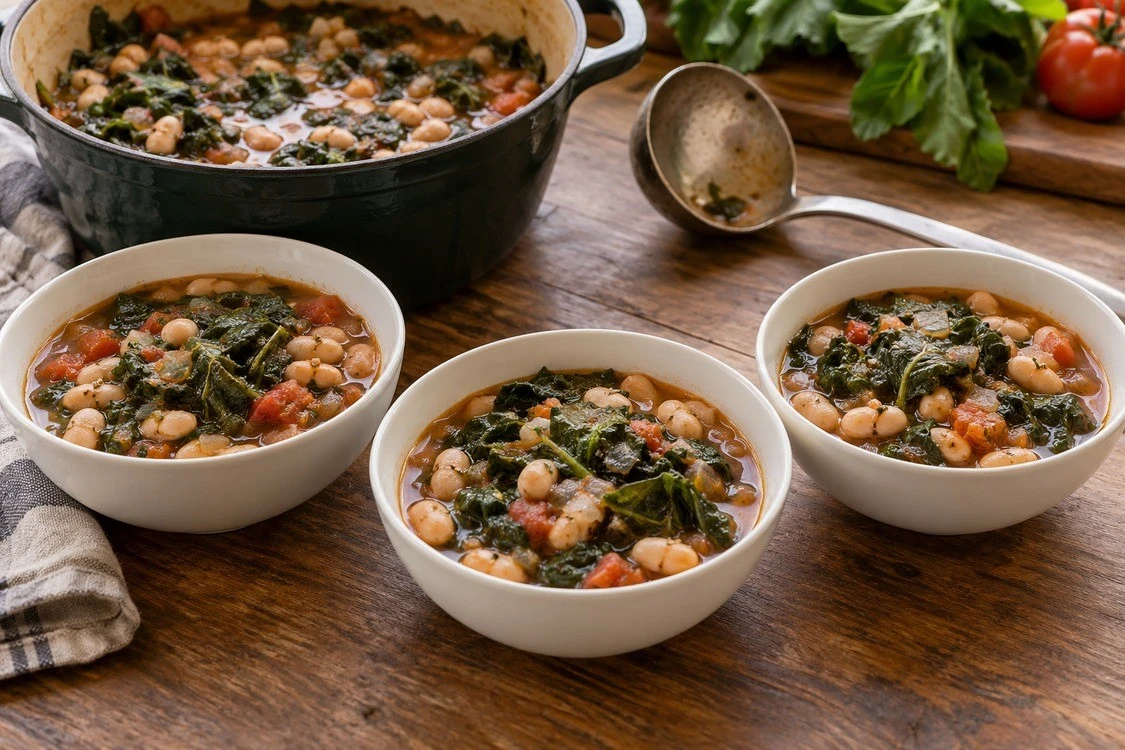
Illustrative Malva scene. Compare successive portions as well as the average batch weight.
When a kitchen wants both leafy appearance and easy portioning, a coarse cut may be a useful candidate. That is a trial hypothesis rather than a universal compromise. The cut still needs to suit the leaf size and the cooking process. If the desired dish relies on intact leaf folds, cutting more finely may solve the dosing problem while losing the characteristic texture. Changing the utensil or mixing interval could preserve the whole-leaf form more successfully.
Consider the work involved as part of the comparison. A whole-leaf pack that needs additional cutting adds handling time and another source of variation. A finely cut pack can reduce preparation but may limit the dishes it can serve. Record the actual preparation steps required by the approved product. Cost evaluation becomes more useful when it includes handling losses, portion consistency and preparation work alongside the quoted frozen weight.
Check the portion after holding and reheating
An immediate tasting can miss the condition in which the customer receives the dish. A restaurant may serve from a covered pot over a defined period. A ready meal may undergo cooking, controlled cooling, storage and reheating. Leaf structure, liquid distribution and spoon flow can change along that route. Repeat the assessment at the planned serving point, using the same product and recipe that passed the initial comparison.
Separate evaporation from other changes. An uncovered pot may become thicker as water escapes even when the leaves themselves have not gained any additional thickening capacity. A covered container may collect condensation that returns to the food. Record the vessel and cover condition, and avoid comparing a freshly cooked open-pan sample with a held covered sample. If the process routinely adds liquid during service, include that addition in the measured formulation and portion cost.
Temperature also affects how a liquid feels and flows. Compare samples at similar serving temperatures rather than tasting one immediately and the other after it has cooled. A spoon test can be a useful descriptive check when the spoon, sample amount and observation time are consistent. It does not produce a universal viscosity value. If an instrument is used, define temperature, sample preparation and measurement conditions so the result can be interpreted alongside the sensory assessment.
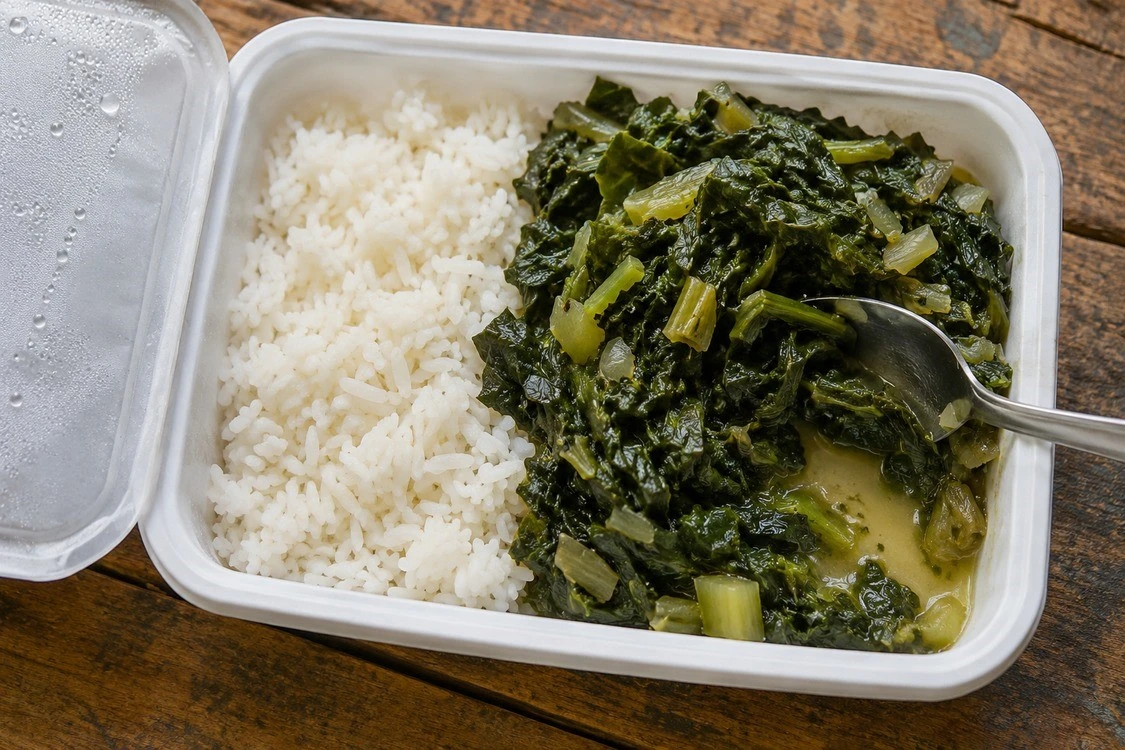
Illustrative Malva scene. Judge leaf distribution and liquid movement in the finished meal.
Watch what happens to larger leaves under normal stirring. Gentle mixing may be enough to keep a whole-leaf stew uniform, while vigorous or repeated agitation may tear soft leaves into progressively smaller pieces. A product purchased as whole leaf can therefore arrive at service as an irregular cut mixture. Record the final form after the expected number of transfers and mixing steps. This helps distinguish insufficient raw-material strength from excessive handling in the application.
For a reheated meal, inspect the liquid around the greens and where it moves in the tray. A sauce that seems acceptable in the kettle may wet an adjacent rice portion after cooling and reheating. Conversely, a tightly packed leaf portion may remain difficult to distribute when the meal is stirred. Assess the complete meal, including its packaging and prescribed heating route. An isolated bowl of greens cannot show every interaction in a compartmented product.
Follow the food business's applicable controls for cooking, cooling, storage and reheating. Freezing and a visually glossy texture do not establish ready-to-eat status or a safe holding period. A sensory comparison should never extend holding beyond the approved procedure simply to create a more dramatic result. Where a process needs validation, that work belongs with the responsible food-safety team and the actual product, load and equipment.
If one form changes more during the route, describe the failure precisely. "Whole leaves tore during transfer" suggests a different response from "fine particles made the sauce too dense after evaporation." The first may call for a stronger leaf specification or gentler handling; the second may call for a recipe or cover adjustment. Clear observations keep a useful product from being rejected for a problem that can be corrected elsewhere in the process.
Write the result into the buying specification
The final specification should connect the leaf identity, supplied form and approved application. State the confirmed botanical name when available, the commercial name, whole or cut form, stem allowance, declared ingredients and treatment. Describe the cut distribution using dimensions or an agreed visual reference that both parties can interpret. For whole leaves, clarify how broken leaves are assessed. A specification should explain the expected material without pretending that every natural leaf has identical geometry.

Leaf-and-stem material pictured on our mallow product page. Confirm the botanical name and agreed stem allowance for the ordered product.
Attach the preparation method used for approval. Include starting condition, sample mass, equipment, added liquid, cooking instructions, drain handling and serving endpoint. If the buying decision depends on a reheated meal, retain that complete route. A later sample should be compared under the same conditions. Otherwise, a change in the customer's kitchen can appear to be a change in the supplied leaf.
Keep acceptance attributes separate. Leaf appearance, stem toughness, free liquid, portion spread and cooked recovery can each have their own agreed description or limit. A single label such as "high yield" cannot communicate them all. Where numerical limits are required, develop them from representative samples and the intended application. Do not copy a recovery percentage from a different species, a supplier advertisement or a trial with another draining method.
Packing influences how the approved form reaches the kitchen. Confirm whether the product is supplied loose, in clusters or as a block, and whether the pack quantity matches normal use. A large block that must be partially thawed to remove one portion can create handling difficulties that were absent in a small sample. Ask how the material should be portioned and stored after opening, following the actual label and the operator's controls.
For an enquiry about frozen mallow leaves, send the desired dish, leaf form, target packing, quantity and destination with any sample photographs. We use those details to frame the specification discussion and identify which points need confirmation. A request for a particular species, cut or treatment remains subject to the offered product and supporting documents; a general category name cannot confirm them by itself.
Retain a concise approval record with the sample identification and the reason for choosing the form. It might say that whole leaves gave the required visible structure with the selected ladle, or that a defined coarse cut produced more consistent portions after reheating. That statement is more useful than declaring one form universally superior. It preserves the connection between the purchased ingredient and the food the customer expects to receive.
Continue reading
Separate drip loss, cooked recovery and piece integrity when evaluating an ingredient in its actual recipe.
Choose a texture test that matches the cooked bite, piece geometry and serving condition you need to approve.
Understand how sorting, preparation, blanching, dewatering and frozen handling fit into the IQF processing chain.
Source Frozen Mallow Leaves with GreenLand-food
GreenLand-food is a professional frozen mallow leaves supplier and manufacturer in China, providing factory-direct wholesale supply for importers, food manufacturers and foodservice distributors.
Tell us your application and destination. We can discuss product form, specification, packing, quantity, private-label needs and requested documents with your purchasing team.