






Freezing Sea Buckthorn
Description
Technical Parameters
Frozen Sea Buckthorn for Juice and Puree Processing
We supply frozen sea buckthorn for juice, puree, beverage base, jam, sauce, extraction and further food processing. Before quotation, we review berry grade, size range, whole-to-broken ratio, Brix, acidity, color, plant-material tolerance, packing and testing requirements.
Processing-grade sea buckthorn can be matched to extraction yield, flavor intensity, color and industrial handling needs without applying a premium visual-grade standard to every order. Food-safety, residue, foreign-material, traceability and cold-chain requirements still follow the approved commercial specification.
Send your application and target parameters so we can review current-lot data, sample availability, industrial packing, export documents and loading plans.

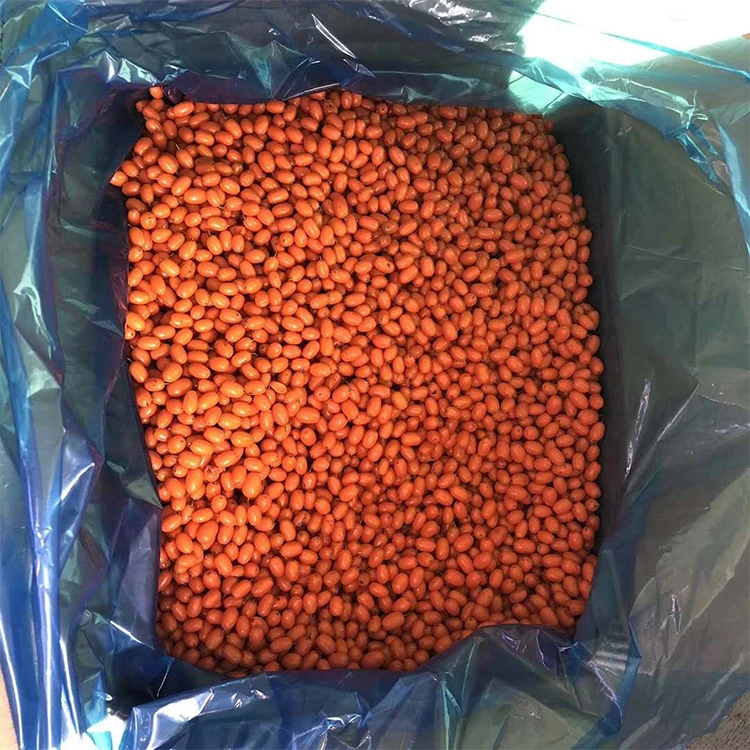
Product appearance supports review of natural orange color, berry condition and suitability for an approved processing-grade specification.
Frozen Sea Buckthorn for Industrial Food Processing
We prepare frozen sea buckthorn as whole berries, a controlled whole-and-broken grade or an application-specific processing grade. The selected grade should reflect the buyer's production method rather than appearance alone.
A processing grade may allow a wider berry-size range or a controlled proportion of broken berries. We still confirm microbiological limits, pesticide-residue requirements, plant material, foreign matter, traceability, frozen condition and packing against the approved order standard.
Frozen Sea Buckthorn Supply at a Glance
These six points establish the first quotation boundary before detailed testing and sample approval.
Juice, puree, beverage base, jam, sauce, extraction and further food processing.
Whole berries, whole-and-broken grade or customized processing grade.
Berry size, whole ratio, Brix, acidity, color and plant-material limits.
Confirmed by actual growing region, production lot and approved specification.
Bulk carton, industrial bag, foodservice pack or confirmed custom packing.
Specification, COA, test reports and traceability records by order.

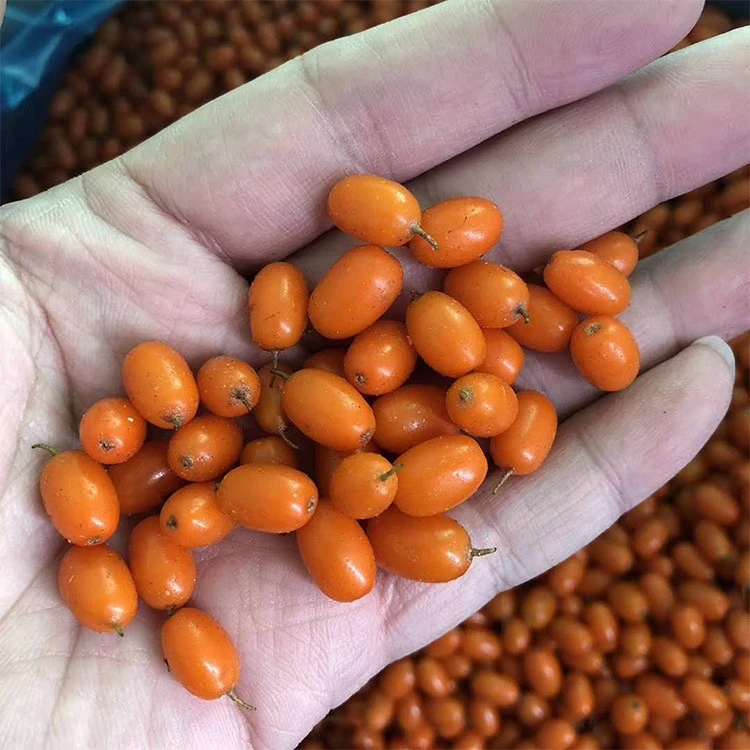
A product close-up supports discussion of berry size, color, whole-fruit condition and the allowed broken-berry ratio.
Frozen Sea Buckthorn Processing Specifications
We use a written specification to separate raw-material facts, processing-grade tolerances and order-specific testing. Unconfirmed values remain subject to current crop, sample, laboratory method and contract approval.
| Product Name | Frozen Sea Buckthorn for Juice and Puree Processing |
|---|---|
| Commercial Name | IQF frozen sea buckthorn berries / industrial frozen sea buckthorn ingredient |
| Ingredient | 100% sea buckthorn berries; added sugar and additives only stated as none when confirmed by specification |
| Botanical Name / Species | Confirmed by raw-material source and production lot; Hippophae rhamnoides only when applicable |
| Raw Material Origin | Confirmed according to the production lot and approved specification |
| Exporter Location | Xiamen, Fujian, China; not presented as the berry growing region |
| Cultivation Status | Cultivated, wild or organic |
| Product Form / Grade | Whole, whole and broken, juice processing, puree processing or application-specific grade |
| Berry Size | Typical discussion may include 5-8 mm or over 8 mm; actual grading and tolerance depend on crop and approved sample |
| Whole / Broken Ratio | Minimum whole-berry ratio, maximum broken-berry ratio and broken-berry definition confirmed by weight |
| Color / Flavor / Odor | Natural yellow-orange to orange; characteristically tart and acidic; free from abnormal or fermented odor |
| Brix / pH / Titratable Acidity | Target, analytical method and acceptance range confirmed by application, current lot and contract |
| Processing Performance | Juice yield, pulp, seed content, sediment and thaw drip tested only when included in the agreed evaluation plan |
| Plant Material | Leaves, pedicels, stems, twigs and wood controlled to approved limits; foreign matter absent according to the agreed standard |
| Berry Defects | Immature, discolored, insect-damaged, moldy or decayed berries controlled by defined tolerance |
| Frozen Condition | Clumps, free ice and surface frost controlled by specification and cold-chain review |
| Processing Method | Receiving, origin verification, cleaning, washing, sorting, grading, IQF freezing, inspection, detection and packing |
| Packaging | 10 kg, 20 kg or 25 kg bulk carton and other formats subject to current capability and order confirmation |
| MOQ / Mixed Container | Confirmed by grade, stock, packing and loading plan; mixed frozen-fruit loading reviewed for qualified orders |
| Supply / Shelf Life | Frozen-stock supply by crop and inventory; 24 months at or below -18 C in unopened original packing |
| Loading Port / Quantity / Lead Time | Confirmed by order schedule, carton size, pallet plan, reefer type and actual shipment arrangement |
| Certificates / Documents | Valid certificate copies, specification, COA, test reports and traceability records by factory, market and order |
Berry size, color, Brix, acidity and processing performance can vary by species, variety, origin, maturity and harvest period. We confirm final commercial values through the approved specification, current-lot sample and batch documentation.
Choose the Right Sea Buckthorn Grade
Select the grade according to the finished product and processing line. Juice and puree producers may not need to pay for a premium whole-berry ratio, but Brix, acidity, plant material and frozen handling still need clear limits.
| Grade | Specification Focus | Recommended Application |
|---|---|---|
| Premium Whole Berry | Higher whole ratio, more uniform size and stronger visual integrity | Retail, visible fruit pieces and display-led applications |
| Standard IQF | Balanced whole condition, controlled broken fruit and free-flowing handling | Foodservice, blends, yogurt preparation and jam |
| Juice Processing | Brix, total acidity, color, odor, yield evaluation and plant-material limits | Juice, concentrate and beverage base |
| Puree Processing | Pulp, seed content, acidity, color, screen selection and thaw drip | Puree, sauce, filling and fruit preparation |
| Extraction Grade | Species, seed/pulp balance and agreed analytical parameters | Powder, extract and further ingredient processing |
| Certified Organic | Valid raw-material, processing and transaction-document scope | Certified organic beverage and food projects |

A berry sample supports whole-to-broken ratio, color and visible-defect review before a processing grade is approved.
Key Quality Risks for Frozen Sea Buckthorn Buyers
Sea buckthorn sourcing risk is not limited to berry appearance. We connect each concern to a measurable control point and a buyer-visible result.
| Buyer Concern | Order Risk | GreenLand-food Control | Buyer Result |
|---|---|---|---|
| Origin / Species | Exporter location is confused with growing region, while species affects Brix, acidity and color. | We separate growing region, species, variety and production lot in order records. | Clear raw-material identity for comparison and repeat orders. |
| Leaves / Twigs / Pedicels | Plant material affects filtration, equipment and finished-product acceptance. | Air cleaning, screening, sorting and finished-product inspection follow agreed tolerances. | Defined plant-material limits instead of vague cleanliness claims. |
| Whole / Broken Ratio | Excess broken fruit can increase clumping, juice leakage and dosing difficulty. | We define broken fruit and confirm minimum whole and maximum broken ratios by weight. | A grade aligned with the actual processing line. |
| Brix / Acidity / Color | Formula adjustments, sweetness-acid balance and finished color vary by lot. | Current-lot testing and COA parameters are agreed by method and acceptance range. | More predictable formulation and raw-material costing. |
| Clumps / Free Ice | Temperature fluctuation reduces dosing efficiency and creates usable-yield disputes. | We review freezing, de-clumping, screening, frozen storage and reefer loading. | Frozen condition tied to an agreed acceptance standard. |
| Mold / Fermented Odor / Residues | Delayed handling or unsuitable raw material can affect safety, flavor and market compliance. | Raw-material inspection, sensory checks and order-specific laboratory testing are documented. | Batch evidence for buyer QA and destination-market review. |
Raw Material Origin, Variety and Harvest Control
Sea buckthorn quality varies by growing region, species, variety, maturity and harvest period. These factors can influence berry size, skin color, soluble solids, acidity, seed proportion, flavor intensity and processing performance.
We state the raw-material growing region separately from our exporter location in Xiamen, Fujian. For a commercial lot, we review available source records for origin, harvest status, receiving date, production date and cultivation or wild-harvest status. Certified-organic wording is used only when the raw material, factory and product are covered by valid documentation.
Growing region by production lot, not inferred from exporter address.
Confirmed where source records support the botanical and commercial identity.
Cultivated, wild harvested and certified organic are identified separately.
Receiving and processing dates support raw-material handling review.
How Frozen Sea Buckthorn Is Processed
We confirm the applicable processing flow with the factory and order. The commercial control sequence normally covers:
Origin, lot, maturity and raw-material condition review.
Branches, leaves, stems and large foreign material removed.
Air cleaning, screening, washing and damaged-fruit sorting.
Size grading, pre-cooling and IQF freezing as applicable.
De-clumping, whole/broken review, foreign matter and detection.
Check weighing, coding, frozen storage and reefer loading.
Rapid freezing supports a stable frozen condition and berry separation during industrial handling. It does not replace raw-material inspection, sorting, foreign-material control, laboratory testing or continuous frozen storage.

X-ray inspection equipment supports foreign-material detection capability; applicability is confirmed by factory, product and order.
Quality Control from Raw Material to Export Shipment
We connect control actions to the specific defects and documents that matter to a juice, puree or ingredient buyer.
Raw Material Control
We review origin, species or variety where documented, lot identity, maturity, color, mold, decay, insect damage, plant material and residue-control records.
Cleaning and Sorting
We verify controls for leaves, twigs, pedicels, stones, soil, immature berries, damaged berries, abnormal fruit and washing-water condition.
Finished Product Inspection
We confirm size, whole/broken ratio, Brix, acidity, color, odor, clumps, free ice, weight, detection, sealing and carton coding by order.
Laboratory and Files
We coordinate COA, microbiology, pesticide residue, heavy metal, Brix, pH, acidity and supporting statements according to the signed specification.
Testing parameters and limits are confirmed according to the destination market, approved customer specification, analytical method and signed contract.
Processing Performance for Juice and Puree Production
We help processing buyers compare total production performance rather than carton price alone. Fixed yield claims are used only when supported by an agreed test.
Brix, titratable acidity, pH and flavor intensity affect recipe adjustment.
Juice yield, pulp, seed content, sediment and thaw drip affect usable output.
Berry size, broken ratio, clumping and plant material affect dosing and filtration.
Color, acidity and pulp behavior influence the final juice or puree standard.

The factory and frozen-fruit supply image supports discussion of processing coordination, export packing and broader ingredient programs.
Applications for Frozen Sea Buckthorn
We match grade and testing to your production process rather than repeating one specification across every application.
Juice-processing grade with Brix, total acidity, color, odor and yield evaluation.
Puree grade with pulp, seed, screen, acidity, color and thaw-drip review.
Standard or processing grade with batch Brix, pH and flavor consistency.
Whole-and-broken or puree grade selected by pulp, color and acidity needs.
Application-specific grade based on species, seed/pulp balance and agreed tests.
Batch analytical values and regulatory files must be defined before claims or guarantees.
Frozen Storage and Cold-Chain Control
We plan storage and shipment at or below -18 C. Repeated temperature fluctuation can increase clumping, surface frost, free ice, broken fruit and juice leakage.
Before loading, we can review reefer condition, container cleanliness, lot and carton quantity, pallet requirement, seal number, loading photos, temperature records and mixed-container planning according to the shipment agreement.

Cold-storage and packing evidence supports frozen-condition review before reefer shipment.
Industrial Packing and Private-Label Options
We review packing by application, quantity, artwork and loading plan. Listed formats are discussion points and remain subject to current production capability.
Industrial Bulk Packing
1 x 10 kg, 1 x 20 kg or 1 x 25 kg PE bag/carton and other bulk options subject to confirmation.
Foodservice Packing
1 kg, 2.5 kg, 5 kg and channel-specific pack structures reviewed by order quantity and bag strength.
Private Label
Retail weight, artwork, barcode, label language, nutrition panel and carton mark confirmed before production.
Please confirm bulk or private-label MOQ, printed-material minimum, artwork approval, packaging lead time, pallet requirement and destination-market label rules during RFQ review.
Certifications and Export Documentation
We provide certificate copies only when they are valid for the relevant factory, product scope, market and order. Depending on the supply arrangement, documentation may cover BRCGS, HACCP, ISO 22000, Kosher, Halal, certified organic status or FDA Food Facility Registration.
Order files may include product specification, COA, microbiological report, pesticide residue report, heavy-metal report, certificate of origin, health certificate, packing list, loading photos and batch traceability records.
Organic status is confirmed by valid certificate scope, raw-material source, production site, product description and transaction documents. Wild-harvested raw material is not automatically described as certified organic.

Certificate evidence supports document-scope review; valid coverage must still be confirmed for the selected factory and order.
Batch Traceability and Inspection Support
We connect each commercial lot with available raw-material origin, receiving date, production date, processing line, quality inspection, laboratory testing, packing record, frozen-storage location and shipment information.
We can coordinate an on-site factory visit, remote factory review or independent third-party inspection according to the order, audit scope and purchase contract.

Pre-shipment inspection evidence supports label, lot, quantity, packing and cold-chain checks before container loading.
Why Food Processors Source Sea Buckthorn through GreenLand-food
We separate whole, standard and processing grades and review size, whole/broken ratio, Brix and acidity.
We coordinate current-lot photos, samples, COA and testing requirements before order approval.
We turn leaves, stems, pedicels, twigs and foreign matter into written tolerances.
We review industrial packing, mixed-container plans, audits, documents and reefer shipment needs.
Compare Related Frozen Sea Buckthorn Supply Options
Choose the product option that matches your buying intent, then send us the final application, grade and packing requirements.
Frequently Asked Questions About Frozen Sea Buckthorn
What is the difference between premium and processing grade?
Premium grade focuses on uniform berry size, whole-fruit integrity and appearance. Processing grade may allow a wider size range or controlled broken fruit while retaining the agreed food-safety, residue and foreign-material requirements.
Where does the raw material come from?
We confirm the growing region by production lot and state it separately from our exporter location in Xiamen, Fujian. Final origin wording follows available source records and the approved specification.
Is the sea buckthorn cultivated or wild harvested?
Cultivation and harvest status depend on the actual source. Cultivated, wild-harvested and certified-organic products are identified separately in the specification and supporting documents.
What berry sizes are available?
Commercial discussion may include 5-8 mm, over 8 mm or custom grading. Availability depends on species, variety, origin, crop and the approved sample.
Can you provide a fixed Brix?
We can discuss a target Brix according to the current crop and intended application. Final acceptance values are confirmed by specification, analytical method and batch testing.
Can you test acidity and pH?
Yes, titratable acidity and pH can be included for juice, puree and beverage orders. The method and acceptable range should be confirmed before production.
How are leaves, stems and twigs controlled?
We review air cleaning, screening, sorting and finished-product inspection. Commercial tolerances for leaves, pedicels, stems, twigs and wood are written into the approved standard.
Can processing grade contain broken berries?
Yes. A controlled broken-berry percentage may suit juice or puree production. The definition and maximum allowance must be confirmed by weight in the specification.
Is processing grade suitable for retail sale?
Processing grade is intended mainly for food manufacturing. For retail programs that require high visual integrity, we recommend a premium whole-berry specification.
Can vitamin C or Omega-7 be guaranteed?
A nutritional or fatty-acid guarantee requires an agreed test method and batch-specific analytical report. Published reference values are not treated as guaranteed commercial values.
Is certified organic sea buckthorn available?
Organic status is used only when the raw material, processing facility and product are covered by valid certification and transaction documents. Wild harvest alone does not establish organic certification.
What is the MOQ?
MOQ depends on grade, packing, current stock and shipment plan. Mixed frozen-fruit containers can be reviewed for qualified orders.
What documents are available?
Available files may include specification, COA, microbiological, pesticide-residue and heavy-metal reports, certificate copies, origin documents and batch traceability records.
Can we arrange a factory audit or third-party inspection?
Yes. We can coordinate an on-site visit, remote review or pre-shipment inspection according to the audit scope, order agreement and purchase contract.
Request a Sea Buckthorn Processing Specification and Quote
Please send your application, grade, berry size, whole-to-broken ratio, Brix or acidity target, packing, quantity, destination port and testing requirements. We will review current crop availability, specification fit, documentation and loading plan before preparing the quotation.
Hot Tags: freezing sea buckthorn, China freezing sea buckthorn manufacturers, suppliers, factory, freezing sea buckthorn, frozen sea buckthorn, frozen buckthorn berries, iqf sea buckthorn
Previous
No Information


