



King Of Oysters
Description
Technical Parameters
Frozen Mushroom Supply for Global B2B Buyers
IQF Frozen King Oyster Mushrooms
We supply IQF frozen king oyster mushrooms for importers, distributors, foodservice operators, central kitchens, ready-meal factories, plant-based food developers, retail brands and industrial processors. The accepted market names include king oyster mushroom, king trumpet mushroom, eryngii mushroom and Pleurotus eryngii.
Our quotation can cover whole mushrooms, cross-cut coins, lengthwise planks, strips, dices, pieces and pulled forms. We state the cut dimensions, defect tolerances, drip-loss method, packing, batch tests and frozen-shipment plan so your purchasing and QA teams compare the same commercial standard.

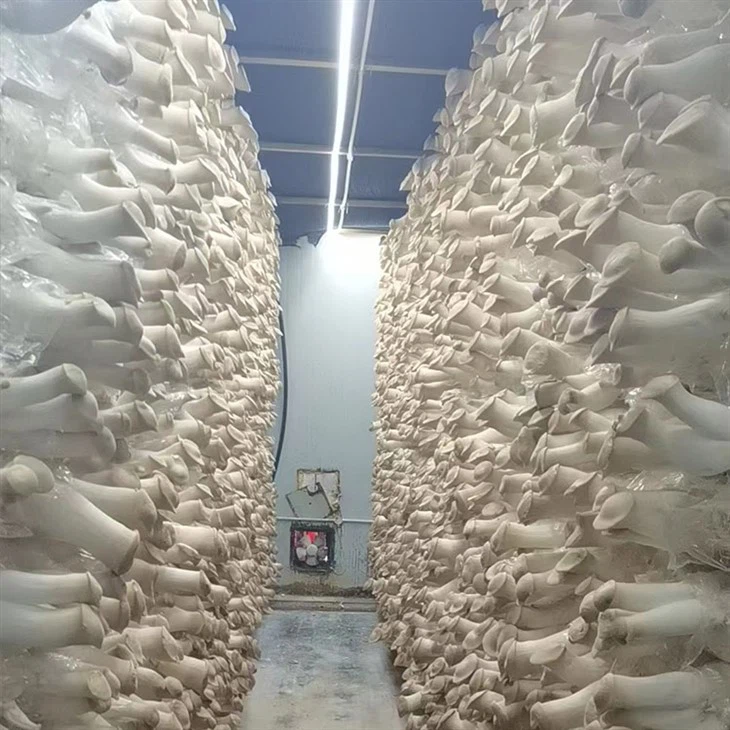
Whole king oyster mushrooms show the thick stem and compact brown cap used to define species identity, trimming and cut direction.
Product Identity and Naming
The correct commercial product name is IQF Frozen King Oyster Mushrooms. King trumpet mushroom and eryngii mushroom are common trade terms for the same cultivated species, Pleurotus eryngii. The phrase "King of Oysters" can appear as an informal nickname, but it is not precise enough for a specification, carton mark, customs file or COA.
We place the scientific name, common name, frozen form and cut style on the signed specification. This separates king oyster mushroom from ordinary oyster mushroom, Pleurotus ostreatus, which has a different cap-to-stem structure and behaves differently in cutting, packing and reheating.
Raw Material Acceptance for Pleurotus eryngii
Finished IQF quality begins with the cultivated mushroom received for processing. We check the lot for the characteristic thick white stem, compact tan-to-brown cap, clean species appearance and adequate firmness. Mushrooms with decay, sour odor, visible mould, insect damage, excessive soil, severe bruising, soft water-soaked tissue or unsuitable maturity are removed before the cutting stage.
Maturity affects both cut integrity and water release. Overmature mushrooms may have softer tissue and wider open caps, while immature or undersized material can create too many small pieces after trimming. The receiving record therefore includes supplier lot, receiving date, quantity, appearance, odor, texture, size distribution, defect findings and disposition. The accepted raw-material lot is linked to the finished production code.
For whole-mushroom orders, we inspect stem length, cap attachment, base trimming and natural curvature. For sliced, diced or strip orders, we focus on usable stem diameter, firmness and cut suitability. A visually attractive whole mushroom does not automatically produce a stable dice, and a large stem does not automatically meet a plank specification if the tissue is soft or internally damaged.
The raw-material acceptance standard also names the processing route. Mushrooms intended for an unblanched IQF program are handled for color and time-to-freezing, while material for a blanched route is matched with the required heat treatment and cooling sequence. This prevents one incoming lot from being diverted to a different route without the correct batch documentation.

Whole king oyster raw material is judged by species profile, firmness, cap condition, trimming needs and suitability for the ordered cut.
Buyer Risks and Our Control Standard
| Buyer Concern | Order Risk | What We Control | Buyer Receives |
|---|---|---|---|
| Species substitution | Ordinary oyster mushroom is supplied under the king oyster name. | Botanical name, whole-mushroom appearance, cap/stem structure and approved product photos. | A species-specific specification and carton description. |
| Uneven cuts | Cooking time, portioning and visual presentation vary. | Cut orientation, thickness, length, width, dice size and size-conformity percentage. | A measurable cut standard instead of "sliced" alone. |
| Broken pieces and fines | Visible yield falls and dosing becomes unstable. | Broken-piece limit, fine-piece limit, packing protection and carton handling. | A stated usable-piece tolerance by grade. |
| Heavy water release | Sauce dilution, lower serving yield and softer bite. | Raw-material maturity, pretreatment route, IQF condition and one fixed drip-loss method. | A comparable drip-loss result recorded by batch. |
| Browning or dark spots | Retail appearance and visible-meal quality decline. | Raw-material acceptance, trimming, color grading, time-to-freezing and discoloration tolerance. | Defined natural ivory-to-cream appearance with a defect limit. |
| Clumping and excess frost | Portion control and line feeding become difficult. | Surface water removal, IQF loading, core temperature, packing and cold-chain handling. | Free-flowing frozen pieces within the agreed clump limit. |
| Incomplete QA file | Import clearance, batch release or customer approval is delayed. | Specification, batch COA, reports, packing data, traceability and shipment-document matching. | A batch-linked document package. |
King Oyster Mushroom Forms and Quotation Sizes
Cut direction changes the eating texture of king oyster mushroom. Cross-cut coins show a round profile, while lengthwise planks expose the fibrous stem and retain a stronger bite. We quote each format with dimensions and tolerances so the same name does not hide a different product.
Whole
Typical quotation band: cap diameter 30–70 mm and total length 80–150 mm. The order states stem trimming, cap integrity, permitted natural curvature and off-size tolerance.
Cross-Cut Coins
Standard thickness 5–7 mm. Wider 5–10 mm bands are available for projects that value stronger bite over tight visual uniformity. Diameter follows the natural stem profile.
Lengthwise Planks
Typical thickness 6–10 mm and length 60–120 mm. This format is used where visible fibrous structure, grilling performance or shape retention matters.
Strips
Common specification 5–10 mm width, 5–10 mm thickness and 40–80 mm length. Short-strip tolerance is stated separately from normal breakage.
Diced
Regular options: 10×10 mm, 15×15 mm and 20×20 mm. The specification includes fines, irregular pieces and size conformity for reliable industrial dosing.
Pieces or Pulled Form
Random pieces, halves and shredded or pulled forms serve fillings and texture-focused products. Length distribution and fine-shred level are written into the order standard.

Digital measurement shows why slice thickness belongs in the signed specification and inspection record.

Piece dimensions are checked against the agreed cut direction, thickness range and off-size tolerance.
Request a quotation for another thickness, length or dice size.
Processing Routes
Our main route uses sound cultivated king oyster mushrooms that are trimmed, washed, cut when required, individually quick frozen, sorted, metal detected, packed and held frozen. The processing route is named in the ingredient statement and COA because an unblanched product, a blanched product and a roasted product do not have the same color, texture, water release or label declaration.
Unblanched IQF
A clean-label route focused on natural color and firm structure. The buyer specification controls browning, drip loss, texture and cooking performance.
Blanched IQF
A separate route for projects that need enzyme control or faster downstream preparation. Blanch time, cooling, dewatering and final texture are stated in the route specification.
Roasted or Grilled Development
A route-specific development option for visible roasted character. The offer states roast level, added oil or seasoning, color, moisture and burned-piece tolerance.
Commercial Processing Flow
We check species, maturity, stem firmness, cap condition, decay, soil and lot identity.
We remove unsuitable bases and visible defects, then wash to reduce soil, grit and surface impurities.
We set blade orientation and dimensions for whole, coin, plank, strip, dice or piece formats.
The route follows the declared unblanched, blanched or value-added specification.
Surface water, belt loading and freezing condition are managed for separated pieces and low clumping.
We grade, inspect, metal detect, weigh, seal, code and move finished cartons into frozen storage.

General packed-carton staging shows the transfer from finished-product release to controlled frozen storage; no product-specific claim is attached to the image.

General IQF tunnel evidence supports the freezing-control module without claiming a dedicated king oyster production line.
Application Matching
We match the mushroom form to the buyer's dosing, heating and presentation requirement. The application does not replace a specification: the RFQ still needs the exact cut, grade, packing and performance limits.
Ready Meals & Central Kitchens
Coins, strips and dices offer measured portions. Low clumping, controlled water release and repeatable heating performance protect line speed and finished sauce balance.
Plant-Based Foods
Lengthwise planks and pulled forms emphasize the fibrous stem. Thickness, length distribution, texture and fine-shred tolerance determine bite and usable yield.
Foodservice & HORECA
Whole mushrooms, coins or planks can be packed in 1 kg, 2.5 kg or 5 kg units for portion control, menu consistency and lower preparation labor.
Sauces, Fillings & Soups
Dices and controlled pieces provide even distribution. Fine-piece level and drip loss matter because excess fragments and water change formulation yield.
Retail & Private Label
Uniform visible cuts, low frost, intact seals, accurate net weight, label language, barcode and carton marks protect shelf presentation and warehouse receiving.
Mixed Mushroom Programs
King oyster coins or dices can add a firm bite to a mushroom blend. The formula states species ratio, cut compatibility, pack weight and label declaration.
Detailed Commercial Specification
The table below is the standard quotation framework. The purchase specification selects one form, size band, processing route, grade and packing plan. Limits are acceptance requirements; they are not represented as batch test results.
| Product Name | IQF Frozen King Oyster Mushrooms |
|---|---|
| Market Terms | Frozen King Trumpet Mushroom; Frozen Eryngii Mushroom; Frozen Pleurotus eryngii |
| Ingredient | Cultivated king oyster mushroom; any pretreatment ingredient is declared separately |
| Botanical Name | Pleurotus eryngii |
| Origin & Supply | China; cultivated production allows year-round frozen supply planning |
| Forms | Whole, cross-cut coin, lengthwise plank, strip, dice, piece, half, pulled or shredded |
| Whole Size | Cap diameter 30–70 mm; total length 80–150 mm |
| Cross-Cut Slice | 5–7 mm standard; 5–10 mm wider commercial band |
| Lengthwise Plank | 6–10 mm thick; 60–120 mm long |
| Strip & Dice | Strips 5–10 × 5–10 × 40–80 mm; dices 10×10, 15×15 or 20×20 mm |
| Grade | Grade A or Premium A+ as the named order grade |
| Appearance | Natural ivory-white to cream stem with light tan to brown cap; clean, properly trimmed and free-flowing |
| Texture | Firm, dense and characteristic of king oyster mushroom after the stated preparation test |
| Flavor & Odor | Clean, mild mushroom aroma; no sour, fermented, musty or other objectionable odor |
| Processing | Selected, trimmed, washed, cut as specified, pretreated by declared route, IQF frozen, graded, metal detected and packed |
| Packing | 1×10 kg, 2×5 kg, 4×2.5 kg, 10×1 kg, 20×500 g, 20 lb, 40 lb or OEM/private label |
| MOQ | 10 MT per specification; mixed-container planning from 3–5 MT per SKU |
| Loading Capacity | 20 ft reefer: approximately 10–12 MT; 40 ft reefer: approximately 18–25 MT, depending on pack and pallet plan |
| Storage Temperature | −18°C or below |
| Shelf Life | 24 months in unopened packaging under stable frozen storage |
| Lead Time | 15–21 days after order and packing details are fixed in the purchase file |
| Loading Ports | Xiamen, Dalian or Qingdao according to production and shipment plan |
| Trade & Payment Terms | FOB, CFR/CNF or CIF; T/T or L/C |
| Documents | Specification, batch COA, microbiological and chemical reports, ingredient/allergen statements, packing and shipment documents, and traceability records |
Grade, Defect and Free-Flow Limits
A grade name is meaningful only when linked to numerical limits. The following limits provide a direct quotation basis. A different application can use tighter values through a separate inquiry.
| Inspection Item | Premium A+ | Grade A | Commercial Meaning |
|---|---|---|---|
| Size conformity | ≥90% by weight | ≥85% by weight | Pieces remain within the stated dimensional band. |
| Broken or ragged pieces | ≤5% by weight | ≤10% by weight | Controls visible yield and dosing accuracy. |
| Serious discoloration / dark spots | ≤2% by weight | ≤5% by weight | Excludes normal light-tan cap color. |
| Excessively soft, fibrous or rubbery pieces | ≤5% by weight | ≤10% by weight | Protects texture consistency after the stated preparation method. |
| Clumps larger than 25 mm | ≤5% by weight | ≤10% by weight | Supports free-flowing handling and portioning. |
| Harmless extraneous material | ≤1 piece per 2.8 kg | ≤1 piece per 2.8 kg | Covers small harmless root or substrate fragments within the defined inspection scope. |
| Foreign material | Absent | Absent | No glass, hard plastic, metal, stones, insects or other unacceptable foreign material. |
Lot Definition, Sampling and Acceptance
A useful inspection starts with a clear lot boundary. We define a lot as product made under the same product name, species, form, size, grade, processing route, packing format and production period, with traceable raw-material and finished-product codes. Different cut sizes or processing routes are not combined into one quality result simply because they share the same shipment.
Cartons are selected across the beginning, middle and end of the lot and, where practical, across pallet positions. Samples are not taken only from the easiest carton at the warehouse door. The inspection record identifies sampled carton numbers or pallet positions, sample weight, test date, frozen condition and the person or laboratory performing the assessment.
| Inspection Stage | Sample Purpose | Recorded Items | Decision |
|---|---|---|---|
| Raw material receiving | Species, maturity and processing suitability | Lot, appearance, odor, firmness, defects, soil and size distribution | Accept, sort, redirect to an appropriate declared route, or reject |
| In-process cutting | Blade setup and dimensional consistency | Thickness, length, width, orientation, fines and breakage | Adjust equipment or segregate nonconforming output |
| Post-IQF grading | Frozen appearance and usability | Free flow, clumps, frost, color, broken pieces and foreign material | Release to packing, regrade or hold |
| Finished-product release | Contractual compliance | Physical, sensory, drip loss, microbiology, chemical tests, net weight and label | Release, hold for review or reject |
The retained sample is sealed, coded and stored frozen under the documented condition. It is linked to the same production lot and packing format as the shipped goods. The retention period is stated in the QA procedure and allows later review of appearance, cut, clumping and other stable attributes when a shipment question arises.
A retest does not erase the first result. The file keeps the original sample result, reason for retest, second sample identity, method, date and final disposition. This creates a transparent decision trail and prevents an unfavorable result from disappearing behind a later generic "pass" statement.
Drip-Loss and Usable-Yield Test
King oyster mushrooms naturally contain water, so net carton weight alone does not describe production yield. We use one repeatable thaw-drip method for quotation samples and batch comparison: weigh a 500 g frozen sample, thaw at 4±2°C for 16 hours in a covered food-grade container, drain for 2 minutes without pressing, then weigh the drained product.
Drip loss (%) = (frozen sample weight − drained sample weight) ÷ frozen sample weight × 100
Premium A+: ≤15% | Grade A: ≤20%
The COA records the method and the actual production-batch result. A cooking or reheating yield can also be listed as a separate application test, but it must use the buyer's defined equipment, time, temperature and drain method so the result remains comparable.
Microbiological Specification
The microbiological program below is a clear commercial release standard for an IQF mushroom order. Analytical methods, laboratory details, sample date and actual values are stated in the batch file.
| Parameter | Specification Limit |
|---|---|
| Aerobic Plate Count | ≤50,000 CFU/g |
| Coliforms | ≤200 CFU/g |
| E. coli | <10 CFU/g |
| Coagulase-positive Staphylococcus aureus | <10 CFU/g |
| Yeast and Mould | ≤200 CFU/g |
| Salmonella | Negative in 25 g |
| Listeria monocytogenes | Negative in 25 g |
Chemical, Residue and Physical-Hazard Limits
Heavy Metals
EU-oriented cultivated Pleurotus eryngii program: cadmium ≤0.15 mg/kg. Our commercial purchase specification uses lead ≤0.30 mg/kg. Results are reported on the applicable wet-weight basis.
Pesticide Residues
The report lists analytes, reporting limits and batch results. EU orders apply the current product/substance MRL; the general default is 0.01 mg/kg where no specific MRL is established.
Sulphite Declaration
For the no-added-sulphite route, the reporting target is SO₂ <10 mg/kg at the stated method limit. Any route using sulphite declares the ingredient and measured level.
Metal Detection
Standard challenge sensitivities: ferrous 2.5 mm, non-ferrous 3.0 mm and stainless steel 3.5 mm. Start, interval, restart, changeover and end checks are recorded.

This general packed-carton inspection visual supports final foreign-material and shipment-release controls; it is not labeled as a king oyster-specific line.
COA Structure: Limits and Batch-Measured Results
We prepare the COA for the corresponding production batch. The document identifies the product, batch number, production date, best-before date, packing, sample date, report date and analytical method. It separates the contractual limit from the measured result.
| COA Field | What Is Reported |
|---|---|
| Batch Identity | Product name, Pleurotus eryngii, form, size, grade, batch code, production and best-before dates. |
| Physical & Sensory | Color, odor, texture, size conformity, broken pieces, discoloration, clumping, foreign material and drip loss. |
| Microbiology | APC, coliforms, E. coli, coagulase-positive S. aureus, yeast/mould, Salmonella and Listeria. |
| Chemical Safety | Lead, cadmium, pesticide-residue panel and SO₂ result when included in the order program. |
| Specification Limit | The maximum, minimum, range, absence criterion or descriptive acceptance requirement from the signed specification. |
| Actual Result | The value measured for the corresponding production batch. It is not copied from the specification limit and is not replaced by a generic claim. |
| Release | Reviewer, release date, laboratory or internal method reference and conclusion against the agreed specification. |
A retained sample is kept under frozen conditions for the documented retention period. If a result requires investigation, the review follows the batch, sample, method, production record and storage history rather than changing the contractual limit after production.
Receiving Inspection at the Buyer's Warehouse
Arrival inspection should protect both the buyer and the supplier by recording the condition before the product is moved, repacked or used. The receiving team records container number, seal number, arrival date, reefer set point when available, visible temperature display, carton condition, pallet condition, label information and product temperature from representative positions.
Cartons with crushing, wet staining, open seals, torn inner liners or heavy frost are segregated and photographed. Sample cartons are opened from more than one pallet position. The buyer then checks product name, species, form, cut dimensions, free-flow condition, clumps, visible ice, breakage, discoloration, odor after controlled preparation and net weight. The same drip-loss method used in the purchase specification should be used when yield is part of the complaint.
Temperature interpretation requires context. One surface reading does not describe the entire container, and a warm reading taken after extended unloading may not represent the transport condition. A complete record includes instrument identification, measurement location, time after door opening and several readings from representative cartons. Data-logger information, reefer records and loading evidence can then be compared with the receiving observations.
Arrival evidence package: container and seal photos, carton/pallet photos, label and batch-code photos, temperature readings, selected-carton list, opened-product photos, measured defect results and retained samples.
A commercial claim should identify the affected quantity, defect type, test method, measured result and requested disposition. Statements such as "poor quality" or "too much water" are replaced by measurable evidence.
When a nonconformity is found, unaffected cartons remain frozen and segregated from the questioned quantity. This protects sample integrity and allows the production record, COA, retained sample, shipment history and receiving evidence to be reviewed against one written standard.
Packaging, OEM and Private Label
Packing protects cut integrity as well as net weight. Thin planks, strips and pulled forms need enough carton strength and headspace control to limit fragments during pallet handling and ocean transport.
Bulk Industrial
1×10 kg PE-lined carton, 20 lb or 40 lb carton for processors, repackers and distribution warehouses.
Foodservice
2×5 kg, 4×2.5 kg or 10×1 kg packs for central kitchens, catering, hotels and restaurant distribution.
Retail & OEM
20×500 g and other retail sizes with buyer artwork, label language, barcode, required market information, date code and carton marks.
Pallet & Mixed Load
Carton dimensions, pallet requirement, SKU quantity and reefer utilization are calculated before the shipment booking.

General export-carton evidence supports carton strength, sealing, pallet and shipment-planning discussions.
Documents, Certificates and Batch Traceability
The shipment file can include the signed product specification, batch COA, microbiological report, pesticide-residue report, heavy-metal report, ingredient statement, allergen statement, sulphite declaration, Non-GMO statement, packing list, commercial invoice, certificate of origin, health certificate, bill-of-lading information and container/seal record.
Certificate support is listed by facility, production scope, destination market and validity period in the commercial file. A general certificate display is not described as a king oyster product certificate. Traceability connects incoming mushroom lot, processing date, cut and route, packing code, frozen storage location, COA and shipment record.

General facility certificate display for document review; the applicable certificate scope and validity are stated in the order file.
Pre-Shipment Carton and Loading Review
Before loading, we compare the physical cartons with the packing list and shipment plan. The review covers carton count, visible carton condition, batch and date coding, storage statement, pallet or floor-loading arrangement, container number and seal record. This is a shipment-readiness control and does not replace the product COA.
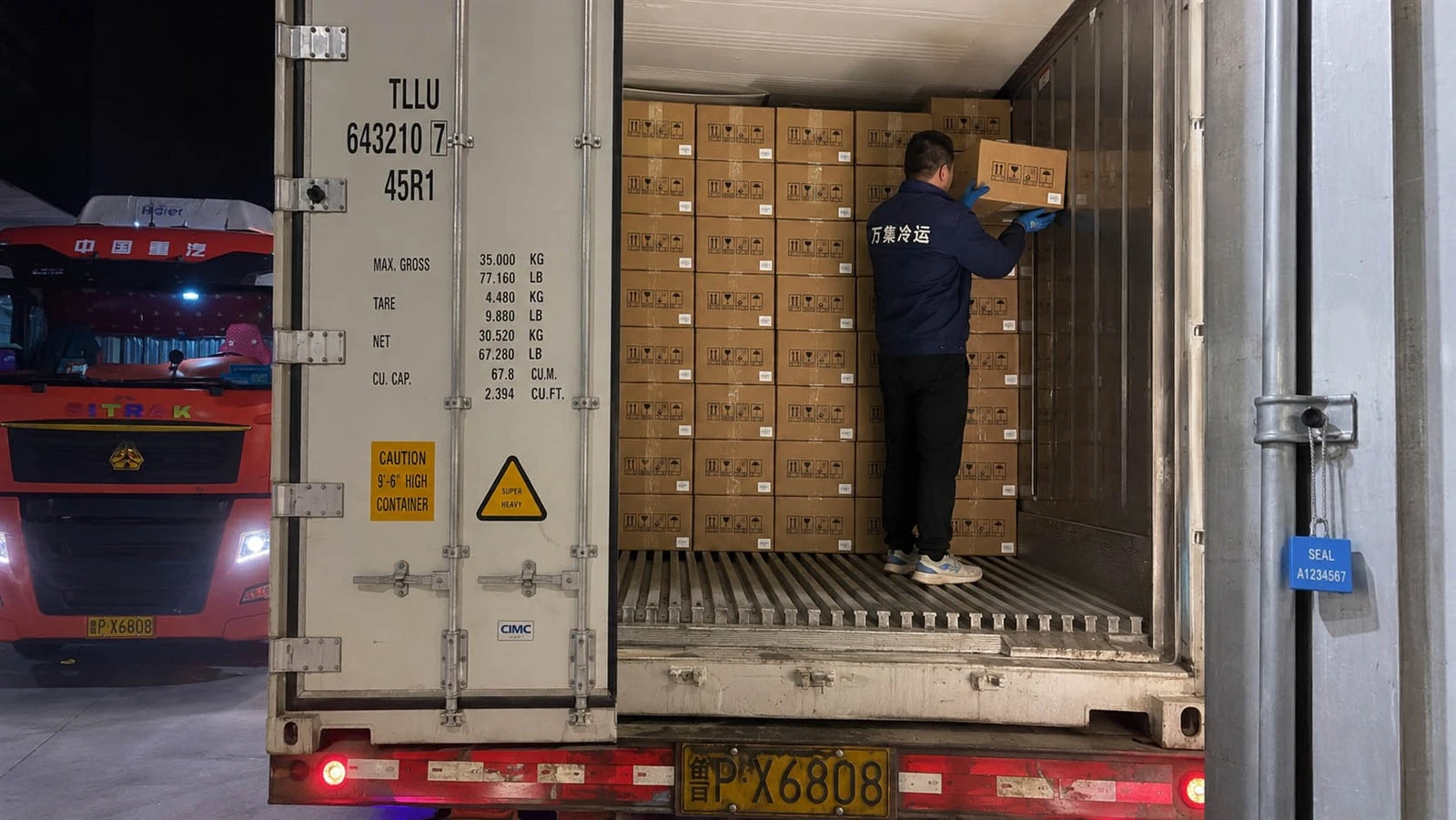
General container-loading inspection supports carton count, loading condition, container identity and seal-record control.
Cold Storage, Loading and Shipment Planning
Finished cartons are held at −18°C or below and shipped in a reefer container. We review carton condition, pallet or floor-loading arrangement, container cleanliness, set point, pre-cooling status, loading time, container number and seal number. Repeated thawing and refreezing are excluded from normal handling because temperature fluctuation increases frost, clumping and texture damage.
A 20 ft reefer commonly loads approximately 10–12 MT and a 40 ft reefer approximately 18–25 MT. The final quantity depends on carton dimensions, inner packs, palletization, weight restrictions and the number of SKUs. Mixed containers can start from 3–5 MT per SKU within a commercially workable loading plan.

General cold-storage evidence supports frozen holding and shipment-readiness control; it is not described as a king oyster-only warehouse.

General reefer-loading evidence supports carton, temperature, container and seal-record preparation.
Why Source King Oyster Mushrooms with GreenLand-food
We identify Pleurotus eryngii and state cut direction, thickness, length, width and tolerance.
Grade names are connected to breakage, discoloration, texture, clumping and drip-loss limits.
The COA lists actual results for the corresponding production batch and links them to traceability records.
Bulk, foodservice, retail and private-label formats are tied to carton strength, label and loading requirements.
MOQ, lead time, port, reefer capacity, trade terms and mixed-load bands appear in the buying file.
We connect coin, plank, strip, dice and pulled formats with the buyer's dosing, texture and yield target.
Compare Quotations by Delivered Usable Cost
A lower price per kilogram can produce a higher cost in the finished product when the carton contains more drip loss, clumps, broken pieces, off-size cuts or unusable fragments. We recommend placing the quoted net price beside the frozen usable rate, drained yield, application loss, packing cost and expected labor requirement.
| Comparison Field | Required Data | Commercial Effect |
|---|---|---|
| Product identity | Pleurotus eryngii, form, route and grade | Prevents unlike species or routes from being compared as one product. |
| Cut performance | Dimensions, size conformity, breakage and fines | Determines dosing, visual yield and preparation labor. |
| Moisture performance | Drip-loss method and batch result | Changes drained cost and sauce or filling balance. |
| Packing and freight | Inner pack, carton dimensions, pallet plan and reefer load | Changes landed cost, warehouse handling and damage risk. |
| QA and documents | COA fields, test scope, traceability and shipment file | Reduces release delays and missing-document costs. |
A simple usable-cost calculation is: delivered carton cost divided by kilograms that remain usable after agreed defects, drip loss and application preparation. Using the same sample method and cut specification across suppliers makes this comparison commercially meaningful.
Frequently Asked Questions
1. Is "King of Oysters" the correct product name?
The formal commercial name is king oyster mushroom or king trumpet mushroom, with the botanical name Pleurotus eryngii. We use "IQF Frozen King Oyster Mushrooms" on specifications and shipment files.
2. Is king oyster mushroom the same as ordinary oyster mushroom?
No. King oyster mushroom is Pleurotus eryngii, while common oyster mushroom is usually Pleurotus ostreatus. Their shape, stem structure and processing performance differ.
3. Which frozen forms are available?
We quote whole, cross-cut coins, lengthwise planks, strips, dices, random pieces, halves and pulled or shredded forms. Each offer states dimensions and tolerances.
4. What is the standard slice thickness?
Cross-cut slices are commonly quoted at 5–7 mm. A 5–10 mm band or another exact thickness can be quoted through the inquiry form.
5. What whole-mushroom size can you quote?
The standard quotation band is 30–70 mm cap diameter and 80–150 mm total length. The order also states trimming and off-size tolerance.
6. What is the difference between Grade A and Premium A+?
Premium A+ uses tighter limits: ≥90% size conformity, ≤5% broken pieces, ≤2% serious discoloration and ≤15% drip loss. Grade A uses ≥85%, ≤10%, ≤5% and ≤20% respectively.
7. How is drip loss tested?
A 500 g sample is thawed at 4±2°C for 16 hours and drained for 2 minutes without pressing. The loss is calculated from frozen and drained weights.
8. Are the mushrooms blanched before freezing?
The main offer can use an unblanched or blanched IQF route. The selected route appears in the specification and ingredient declaration because it changes texture and water release.
9. What microbiological limits are used?
Our standard includes APC ≤50,000 CFU/g, coliforms ≤200, E. coli <10, coagulase-positive S. aureus <10, yeast/mould ≤200, and Salmonella and Listeria negative in 25 g.
10. Does the COA show actual test results?
Yes. The Actual Result column contains the value measured for the corresponding production batch. The specification limit appears in a separate column.
11. What bulk and foodservice packing is available?
Options include 1×10 kg, 2×5 kg, 4×2.5 kg, 10×1 kg, 20 lb and 40 lb cartons. Retail formats include 20×500 g and other OEM sizes.
12. What is the MOQ and can products be mixed in one container?
The standard MOQ is 10 MT per specification. Mixed loading can be planned from 3–5 MT per SKU within the available reefer capacity.
13. What documents are supplied?
The file can include specification, batch COA, microbiological and chemical reports, ingredient and allergen statements, packing list, invoice, certificate of origin, health certificate and shipment records.
14. How should frozen king oyster mushrooms be stored?
Keep the unopened product at −18°C or below under stable frozen conditions. The stated shelf life is 24 months when the cold chain and packaging remain intact.
Send Your King Oyster Mushroom RFQ
Send the product form, whole diameter or cut dimensions, processing route, grade, broken-piece and discoloration limits, drip-loss target, pack size, quantity, destination port, application, private-label requirement, certificate and document list, delivery window and mixed-container plan.
We will return an offer that places product, quality, packing, batch documentation and shipment scope on the same commercial basis.
Hot Tags: king of oysters, China king of oysters manufacturers, suppliers, factory, king of oysters, trumpet king mushrooms, king oyster mushroom
Technical specification · reference schedule
Frozen King Oyster Mushrooms
We review the selected form, grade, process and packing against the technical schedule below. Published and TDS values are specification references for order review. External benchmarks apply only within their stated scope. Acceptance is governed by the signed SKU specification; the identified lot COA reports actual measured results.
01 / Physical & Sensory
| Parameter | Specification / reference | Verification & order basis |
|---|---|---|
| Botanical Name | Pleurotus eryngiiPublished reference | Check raw-material identity and variety/source declaration against the ordered programme. |
| Origin & Supply | China; cultivated production allows year-round frozen supply planningPublished reference | Reconcile source declaration, intake lot and shipment documents. |
| Related form options | Whole, cross-cut coin, lengthwise plank, strip, dice, piece, half, pulled or shreddedPublished reference | The selected form shown above governs this schedule. Other published forms require their own cut, process and acceptance specification. |
| Cross-Cut Slice | 5–7 mm standard; 5–10 mm wider commercial bandPublished reference | Measure a defined frozen sample with caliper or size gauge; report distribution and tolerance. |
| Lengthwise Plank | 6–10 mm thick; 60–120 mm longPublished reference | Measure a defined frozen sample with caliper or size gauge; report distribution and tolerance. |
| Grade | Grade A or Premium A+ as the named order gradePublished reference | Confirm method, representative sample and acceptance basis in the signed specification. |
| Appearance | Natural ivory-white to cream stem with light tan to brown cap; clean, properly trimmed and free-flowingPublished reference | Compare with the approved sensory reference using the stated frozen/thawed/prepared condition. |
| Texture | Firm, dense and characteristic of king oyster mushroom after the stated preparation testPublished reference | Compare with the approved sensory reference using the stated frozen/thawed/prepared condition. |
| Flavor & Odor | Clean, mild mushroom aroma; no sour, fermented, musty or other objectionable odorPublished reference | Compare with the approved sensory reference using the stated frozen/thawed/prepared condition. |
| Style-specific measurement | For solid cuts, report each required dimension and the in-size fraction; for minced material, report particle distribution; for moulded puree or portions, report unit mass and refining grade separately. | Apply the measurement method to the selected physical style; do not use a portion weight as a solid-cut dimension. |
| Sensory acceptance | Characteristic colour, flavour and texture for the declared product; no abnormal odour or visibly deteriorated material.External reference Codex | Compare an identified frozen sample with the approved grade and defect schedule. External technical reference; confirm SKU and market applicability. |
02 / Physicochemical & Residue Controls
| Parameter | Specification / reference | Verification & order basis |
|---|---|---|
| Codex reference: mineral impurities | ≤0.2 % m/mExternal reference Codex | Residue insoluble in hydrochloric acid after ashing; use relevant CXS 234-1999 method. No fixed sample mass stated in §3.3.6. Only a single-species quick-frozen edible-fungus SKU meeting CXS 38 §2.1.12: cleaned, washed and blanched before freezing. Confirm botanical species and blanching route; unblanched supply is outside this definition. |
| Prepared yield / water release | Evaluate thawed or cooked yield under one agreed preparation protocol; differentiate natural exudate from added water or loose ice. | Report initial mass, preparation conditions, drained edible mass and yield percentage. |
| Pesticide residue schedule | Named active ingredients and commodity-specific limits are selected for the destination market. EU source | Link farm spray history, laboratory LOQ and batch result to the destination MRL. EU database is one market reference; apply the actual destination rule. |
| Lead, cadmium and other contaminants | Apply the limit for the exact commodity and processed form in the destination market. EU source | State analyte, preparation basis, method, LOQ and lot result. Do not transfer a fresh-commodity limit to a processed form without the required assessment. |
03 / Microbiological Criteria
| Parameter | Specification / reference | Verification & order basis |
|---|---|---|
| Aerobic Plate Count | ≤50,000 CFU/gPublished reference | Report the named organism, analytical method, sample mass, sampling plan and lot result; use CFU/g for enumeration and a stated mass for detection. |
| Coliforms | ≤200 CFU/gPublished reference | Report the named organism, analytical method, sample mass, sampling plan and lot result; use CFU/g for enumeration and a stated mass for detection. |
| E. coli | <10 CFU/gPublished reference | Report the named organism, analytical method, sample mass, sampling plan and lot result; use CFU/g for enumeration and a stated mass for detection. |
| Coagulase-positive Staphylococcus aureus | <10 CFU/gPublished reference | Report the named organism, analytical method, sample mass, sampling plan and lot result; use CFU/g for enumeration and a stated mass for detection. |
| Yeast and Mould | ≤200 CFU/gPublished reference | Report the named organism, analytical method, sample mass, sampling plan and lot result; use CFU/g for enumeration and a stated mass for detection. |
| Salmonella | Negative in 25 gPublished reference | Report the named organism, analytical method, sample mass, sampling plan and lot result; use CFU/g for enumeration and a stated mass for detection. |
| Listeria monocytogenes | Negative in 25 gPublished reference | Report the named organism, analytical method, sample mass, sampling plan and lot result; use CFU/g for enumeration and a stated mass for detection. |
| Acceptance schedule | Select the test panel and limits by intended use (ready-to-eat or further processing), product form and destination. EU source | State organism, analytical method, sample mass and n/c plan; report actual lot results. A universal APC, coliform, Salmonella or Listeria limit is not assigned to every frozen product. |
04 / Freezing & Cold Chain
| Parameter | Specification / reference | Verification & order basis |
|---|---|---|
| Storage Temperature | −18°C or belowPublished reference | Probe the product thermal centre after stabilization; retain cold-chain records. |
| Separation & loose-ice assessment | Keep inherent moisture, loose ice and permanently frozen clusters as separate inspection categories. | Weigh separated loose ice and welded clusters against initial sample mass; distinguish natural paired pieces or blocks. |
| Product thermal centre | −18°C or colder after freezing and thermal stabilization; maintain the agreed frozen distribution condition.External reference Codex | Probe the thickest representative pack and retain storage/transport temperature records. Codex quick-frozen reference; selected product form and route must be frozen. |
| Frozen condition at dispatch | Hard frozen, correctly sealed and coded, without thaw/refreeze evidence or excessive loose ice. Codex | Check pack integrity, free-flow or block condition as declared, carton condition and loading temperature. |
05 / Pack Size & Shelf Life
| Parameter | Specification / reference | Verification & order basis |
|---|---|---|
| Packing | 1 × 10 kg, 2 × 5 kg, 4 × 2.5 kg, 10 × 1 kg, 20 × 500 g, 20 lb, 40 lb or OEM/private labelPublished reference | Check approved pack drawing, calibrated scale and production records. |
| Shelf Life | 24 months in unopened packaging under stable frozen storagePublished reference | Verify unopened-pack validation, declared storage condition and production/best-before coding. |
| Declared net contents | Verify each selected pack format against the artwork and applicable quantity-control rule. Codex | Calibrated checkweigher or scale; defined sample and tare. |
| Shelf-life basis | The labelled period applies only to its validated pack and continuous stated storage condition. Codex | Review stability study or approved shelf-life file and production-date code. |
06 / Process Controls
| Parameter | Specification / reference | Verification & order basis |
|---|---|---|
| Processing | Selected, trimmed, washed, cut as specified, pretreated by declared route, IQF frozen, graded, metal detected and packedPublished reference | Check the approved product flow, line settings and identified production record; validate numerical critical limits within the site HACCP plan. |
| Raw-material preparation checks | State cap-to-stem proportion and cross-cut coin versus lengthwise plank; measure each independently. | Verify the selected product flow and the relevant trimming, sorting and pretreatment record. |
| CCP designation | Use the site-approved HACCP plan to identify true CCPs and their validated critical limits. Codex | Check hazard analysis, monitoring, deviation and corrective-action records. A quality-control step is not automatically a CCP. |
07 / Ingredients, Additives & Allergens
| Parameter | Specification / reference | Verification & order basis |
|---|---|---|
| Ingredient | Cultivated king oyster mushroom; any pretreatment ingredient is declared separatelyPublished reference | Verify approved formula, supplier declarations and line-specific allergen assessment. |
| Added glaze / coating declaration | Declare any intentionally added water glaze, syrup, oil or coating and the measurement basis; loose ice is assessed separately. | Verify formula/addition records; agree a deglazing or coating test and net-content basis where applicable. |
| Additive use | Declare any colour-protection agent, acidulant or other additive by ingredient and maximum permitted use for the target market. NHC standard | Check approved formula, actual addition record and market-specific additive category. GB 2760-2024 applies to China; export rules are checked separately. |
| Allergen and cross-contact assessment | Declare inherent allergens and assess shared-line cross-contact from the actual facility schedule. FDA | Review line matrix, cleaning validation and buyer label approval. Do not claim a shared-line allergen or allergen-free status without facility evidence. |
08 / Defects & Foreign Matter
| Parameter | Specification / reference | Verification & order basis |
|---|---|---|
| Size conformity - Premium A+ | ≥90% by weightPublished reference | Measure a defined frozen sample with caliper or size gauge; report distribution and tolerance. Programme: Premium A+. |
| Size conformity - Grade A | ≥85% by weightPublished reference | Measure a defined frozen sample with caliper or size gauge; report distribution and tolerance. Programme: Grade A. |
| Broken or ragged pieces - Premium A+ | ≤5% by weightPublished reference | Inspect a defined representative sample; record count or mass basis and disposition. Programme: Premium A+. |
| Broken or ragged pieces - Grade A | ≤10% by weightPublished reference | Inspect a defined representative sample; record count or mass basis and disposition. Programme: Grade A. |
| Serious discoloration / dark spots - Premium A+ | ≤2% by weightPublished reference | Compare with the approved sensory reference using the stated frozen/thawed/prepared condition. Programme: Premium A+. |
| Serious discoloration / dark spots - Grade A | ≤5% by weightPublished reference | Compare with the approved sensory reference using the stated frozen/thawed/prepared condition. Programme: Grade A. |
| Clumps larger than 25 mm - Premium A+ | ≤5% by weightPublished reference | Classify on the defined sample by count or mass; record individual categories, denominator and any combined limit. Programme: Premium A+. |
| Clumps larger than 25 mm - Grade A | ≤10% by weightPublished reference | Classify on the defined sample by count or mass; record individual categories, denominator and any combined limit. Programme: Grade A. |
| Harmless extraneous material - Premium A+ | ≤1 piece per 2.8 kgPublished reference | Classify on the defined sample by count or mass; record individual categories, denominator and any combined limit. Programme: Premium A+. |
| Harmless extraneous material - Grade A | ≤1 piece per 2.8 kgPublished reference | Classify on the defined sample by count or mass; record individual categories, denominator and any combined limit. Programme: Grade A. |
| Foreign material - Premium A+ | AbsentPublished reference | Inspect a defined representative sample; record count or mass basis and disposition. Programme: Premium A+. |
| Foreign material - Grade A | AbsentPublished reference | Inspect a defined representative sample; record count or mass basis and disposition. Programme: Grade A. |
| Codex reference: organic impurities of vegetable origin | ≤0.02 % m/mExternal reference Codex | Vegetable-origin admixture as defined in §2.2.6; no fixed sample mass stated in §3.3.6. Only a single-species quick-frozen edible-fungus SKU meeting CXS 38 §2.1.12: cleaned, washed and blanched before freezing. Confirm botanical species and blanching route; unblanched supply is outside this definition. |
| Codex reference: maggot damage for cultivated fungi | total ≤1; serious subset ≤0.5 % m/mExternal reference Codex | Serious damage means ≥4 maggot holes; separate damaged material by mass; no fixed sample mass stated. Only a single-species quick-frozen edible-fungus SKU meeting CXS 38 §2.1.12: cleaned, washed and blanched before freezing. Confirm botanical species and blanching route; unblanched supply is outside this definition. Applies only when raw material is documented as cultivated. |
| Intrinsic defect classification | Root/substrate, discoloured stems, damaged caps and wrong cut orientation. | Record each defect class separately by count or mass; state sample size, denominator and combined-limit rules. |
| Hazardous foreign matter | No foreign matter detected in the defined inspection sample; reject and investigate any finding.External reference Codex | Define visual-inspection sample size and detector challenge in the signed quality schedule. "None detected" is a sampling statement, not an absolute guarantee of zero particles. |
09 / Packaging Materials & Label
| Parameter | Specification / reference | Verification & order basis |
|---|---|---|
| Food-contact pack | Specify inner-contact material and obtain the applicable food-contact compliance declaration. NHC standard | Review film structure, supplier DoC, migration evidence and actual intended conditions. GB 4806 series is China-specific; EU export also checks Regulations 1935/2004 and 10/2011. |
| Carton and seal integrity | Define carton stacking strength, bag seal and puncture resistance for the confirmed net weight and pallet plan. EU source | Inspect pack drawing, compression/seal test and shipment configuration. |
| Label verification | Match product name, ingredient/allergen statement, net weight, lot/date, shelf life and storage instruction to the destination artwork. Codex | Approve artwork against the signed specification and destination rules. |
10 / Detection & Traceability
| Parameter | Specification / reference | Verification & order basis |
|---|---|---|
| Species and source identity | Link declared edible species, cultivated/wild status and source lot to the packing lot; retain component identity for a blend. Codex | Reconcile source declaration, intake record and final ingredient statement. |
| Foreign-body detector | Validate Fe, non-Fe and stainless-steel challenge pieces for the actual product, aperture, pack and line; record the proven sensitivity. Codex | Challenge at defined start, changeover, interval and end points; retain rejection records. Do not copy generic detector sizes into a plant capability claim. |
| Lot traceability | Link input source lot, processing run, packaging code, test records, frozen storage and shipment to one finished lot. Codex | Trace one sample lot forward and backward in a recorded mock recall. Recall speed is stated only when the site has a validated target and record. |
Previous
Trumpet King MushroomsNext
No Information


